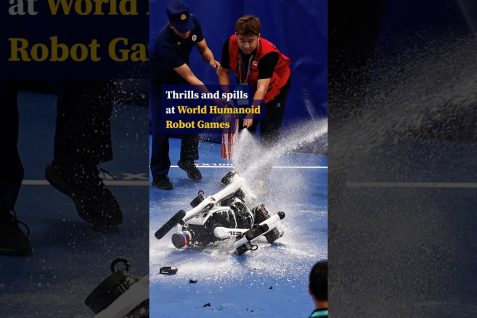
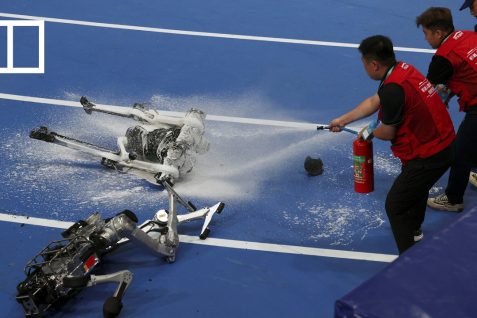
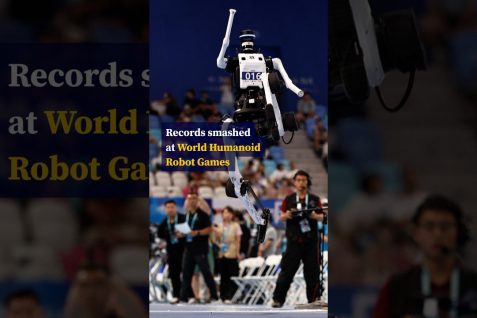
A robot that burst into flames at the World Humanoid Robot Games in Beijing was one of many unexpected moments that have happened so far at the five-day event. This year’s games feature 51 events and 1,301 matches and involve more than 600 teams and 2,056 humanoid robots, according to the organiser.
A robot that burst into flames at the World Humanoid Robot Games in Beijing was one of many unexpected moments that have happened so far at the five-day event. This year’s games feature 51 events and 1,301 matches and involve more than 600 teams and 2,056 humanoid robots, according to the organiser.
The hashtag , an acronym for narcissistic personality disorder, is trending on Chinese social media. The disorder has become a hot topic of discussion on RedNote, with so-called NPD influencers sharing their experiences with toxic relationships and offering advice and even paid courses on how to identify narcissists and deal with them.
The hashtag , an acronym for narcissistic personality disorder, is trending on Chinese social media. The disorder has become a hot topic of discussion on RedNote, with so-called NPD influencers sharing their experiences with toxic relationships and offering advice and even paid courses on how to identify narcissists and deal with them.
A robot that burst into flames at the World Humanoid Robot Games in Beijing was one of many unexpected moments that have happened so far at the five-day event. This year’s games feature 51 events and 1,301 matches and involve more than 600 teams and 2,056 humanoid robots, according to the organiser.
A robot that burst into flames at the World Humanoid Robot Games in Beijing was one of many unexpected moments that have happened so far at the five-day event. This year’s games feature 51 events and 1,301 matches and involve more than 600 teams and 2,056 humanoid robots, according to the organiser.
A Mercedes-Benz backed into an escalator at a mall in northern China’s Hebei province on Sunday, damaging a glass barrier and railings. Falling debris damaged an ice cream shop on the floor below and a staff member reportedly suffered slight injuries. Local media reported the incident happened when a customer accidentally stepped on the display car’s accelerator.
A Mercedes-Benz backed into an escalator at a mall in northern China’s Hebei province on Sunday, damaging a glass barrier and railings. Falling debris damaged an ice cream shop on the floor below and a staff member reportedly suffered slight injuries. Local media reported the incident happened when a customer accidentally stepped on the display car’s accelerator.
A robot that burst into flames at the World Humanoid Robot Games in Beijing was one of many unexpected moments that have happened so far at the five-day event. This year’s games feature 51 events and 1,301 matches and involve more than 600 teams and 2,056 humanoid robots, according to the organiser.
A robot that burst into flames at the World Humanoid Robot Games in Beijing was one of many unexpected moments that have happened so far at the five-day event. This year’s games feature 51 events and 1,301 matches and involve more than 600 teams and 2,056 humanoid robots, according to the organiser.
The anti-corruption campaign has been President Xi Jinping’s signature policy since he rose to power in the autumn of 2012. Xi has linked fighting corruption to the Communist Party’s ability to stay in power and, more than a decade on, the campaign continues apace.
The South China Morning Post took a deep dive into the cases of the top officials, known as “tigers”, brought down between 2013 and 2025 to see what those investigations could tell us about the crusade. Most of these officials were at least vice-ministers and all were investigated by the Central Commission for Discipline Inspection (CCDI) – China’s top anti-corruption watchdog.
The anti-corruption campaign has been President Xi Jinping’s signature policy since he rose to power in the autumn of 2012. Xi has linked fighting corruption to the Communist Party’s ability to stay in power and, more than a decade on, the campaign continues apace.
The South China Morning Post took a deep dive into the cases of the top officials, known as “tigers”, brought down between 2013 and 2025 to see what those investigations could tell us about the crusade. Most of these officials were at least vice-ministers and all were investigated by the Central Commission for Discipline Inspection (CCDI) – China’s top anti-corruption watchdog.
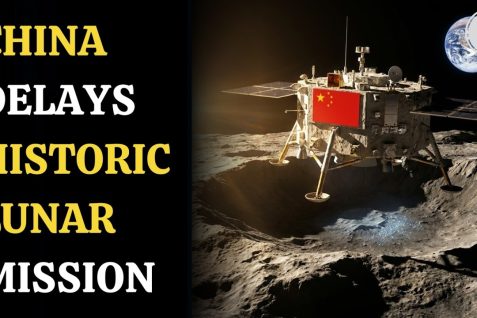
China’s ambitious Chang’e 7 mission to explore the Moon’s south pole and search for water ice has been postponed from its expected launch window. The robotic mission is designed to investigate one of the most scientifically valuable regions on the lunar surface, including areas near Shackleton Crater. With no confirmed new launch date, speculation is growing over when China will resume its latest lunar exploration push. The mission also highlights the intensifying global race to understand and eventually use frozen water believed to exist inside permanently shadowed lunar craters. What could Chang’e 7 discover beneath the Moon’s unexplored south pole?
WION The World is One News examines global issues with in-depth analysis. We provide much more than the news of the day. Our aim is to empower people to explore their world. With our Global headquarters in New Delhi, we bring you news on the hour, by the hour. We deliver information that is not biased. We are journalists who are neutral to the core and non-partisan when it comes to world politics. People are tired of biased reportage and we stand for a globalized united world. So for us, the World is truly One.
Please keep discussions on this channel clean and respectful and refrain from using racist or sexist slurs and personal insults.
China’s ambitious Chang’e 7 mission to explore the Moon’s south pole and search for water ice has been postponed from its expected launch window. The robotic mission is designed to investigate one of the most scientifically valuable regions on the lunar surface, including areas near Shackleton Crater. With no confirmed new launch date, speculation is growing over when China will resume its latest lunar exploration push. The mission also highlights the intensifying global race to understand and eventually use frozen water believed to exist inside permanently shadowed lunar craters. What could Chang’e 7 discover beneath the Moon’s unexplored south pole?
WION The World is One News examines global issues with in-depth analysis. We provide much more than the news of the day. Our aim is to empower people to explore their world. With our Global headquarters in New Delhi, we bring you news on the hour, by the hour. We deliver information that is not biased. We are journalists who are neutral to the core and non-partisan when it comes to world politics. People are tired of biased reportage and we stand for a globalized united world. So for us, the World is truly One.
Please keep discussions on this channel clean and respectful and refrain from using racist or sexist slurs and personal insults.
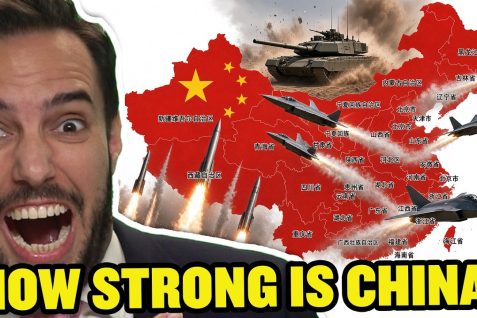
China’s military has gone from decades behind the US to a force that now rivals America across multiple domains. And as China’s military power grows, too many people in the West still aren’t taking the threat seriously.
Operation Honey Pot: Paste this emoji 🍯 in your comment below.
China’s military is strong. But not as strong as the China Uncensored 50 Cent Army! Join NOW!!!
China’s military has gone from decades behind the US to a force that now rivals America across multiple domains. And as China’s military power grows, too many people in the West still aren’t taking the threat seriously.
Operation Honey Pot: Paste this emoji 🍯 in your comment below.
China's military is strong. But not as strong as the China Uncensored 50 Cent Army! Join NOW!!!
Boxing robots, robot dogs and lifelike humanoids are taking center stage in Beijing. WSJ’s Jonathan Cheng reports from the World Robot Conference on China’s push to lead the future of robotics.
Boxing robots, robot dogs and lifelike humanoids are taking center stage in Beijing. WSJ’s Jonathan Cheng reports from the World Robot Conference on China’s push to lead the future of robotics.
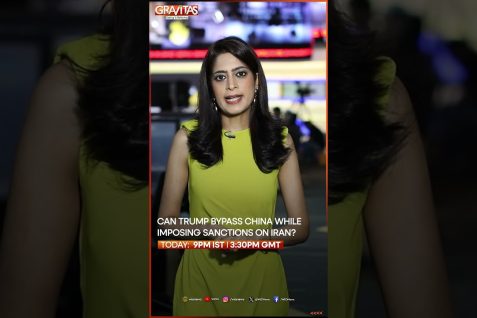
US President Donald Trump’s administration has said it aims to sever “every” economic lifeline sustaining Iran in what officials have warned will be the toughest sanctions campaign ever seen.
The threat, if followed through, would mean putting China, Iran’s biggest trade partner, squarely in the crosshairs of US sanctions.
WION The World is One News examines global issues with in-depth analysis. We provide much more than the news of the day. Our aim is to empower people to explore their world. With our Global headquarters in New Delhi, we bring you news on the hour, by the hour. We deliver information that is not biased. We are journalists who are neutral to the core and non-partisan when it comes to world politics. People are tired of biased reportage and we stand for a globalized united world. So for us, the World is truly One.
Please keep discussions on this channel clean and respectful and refrain from using racist or sexist slurs and personal insults.
US President Donald Trump’s administration has said it aims to sever “every” economic lifeline sustaining Iran in what officials have warned will be the toughest sanctions campaign ever seen.
The threat, if followed through, would mean putting China, Iran’s biggest trade partner, squarely in the crosshairs of US sanctions.
WION The World is One News examines global issues with in-depth analysis. We provide much more than the news of the day. Our aim is to empower people to explore their world. With our Global headquarters in New Delhi, we bring you news on the hour, by the hour. We deliver information that is not biased. We are journalists who are neutral to the core and non-partisan when it comes to world politics. People are tired of biased reportage and we stand for a globalized united world. So for us, the World is truly One.
Please keep discussions on this channel clean and respectful and refrain from using racist or sexist slurs and personal insults.
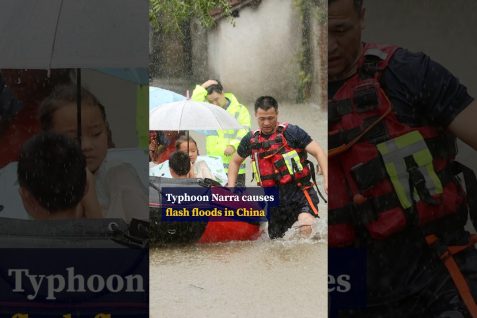
Typhoon Narra has caused widespread flooding across southern China’s Guangxi region after days of non-stop downpours. Buildings, including a tourist centre, stand partially submerged. Forecasters warn that the heavy rain will continue to pound the region through Wednesday, with Guangxi, Guangdong, Hainan and Fujian provinces all bracing for another round of torrential downpours.
Typhoon Narra has caused widespread flooding across southern China’s Guangxi region after days of non-stop downpours. Buildings, including a tourist centre, stand partially submerged. Forecasters warn that the heavy rain will continue to pound the region through Wednesday, with Guangxi, Guangdong, Hainan and Fujian provinces all bracing for another round of torrential downpours.
China’s State Administration for Market Regulation has initiated the country’s largest automotive recall on record, affecting approximately 4.3 million vehicles across nine major manufacturers, including Tesla and Xiaomi. Prompted by mounting safety scrutiny over sleek, flush-mounted electronic door handles, regulators flagged critical risks following collisions where electrical system failures left occupants trapped and hindered emergency rescue operations.
WION The World is One News examines global issues with in-depth analysis. We provide much more than the news of the day. Our aim is to empower people to explore their world. With our Global headquarters in New Delhi, we bring you news on the hour, by the hour. We deliver information that is not biased. We are journalists who are neutral to the core and non-partisan when it comes to world politics. People are tired of biased reportage and we stand for a globalized united world. So for us, the World is truly One.
Please keep discussions on this channel clean and respectful and refrain from using racist or sexist slurs and personal insults.
China’s State Administration for Market Regulation has initiated the country’s largest automotive recall on record, affecting approximately 4.3 million vehicles across nine major manufacturers, including Tesla and Xiaomi. Prompted by mounting safety scrutiny over sleek, flush-mounted electronic door handles, regulators flagged critical risks following collisions where electrical system failures left occupants trapped and hindered emergency rescue operations.
WION The World is One News examines global issues with in-depth analysis. We provide much more than the news of the day. Our aim is to empower people to explore their world. With our Global headquarters in New Delhi, we bring you news on the hour, by the hour. We deliver information that is not biased. We are journalists who are neutral to the core and non-partisan when it comes to world politics. People are tired of biased reportage and we stand for a globalized united world. So for us, the World is truly One.
Please keep discussions on this channel clean and respectful and refrain from using racist or sexist slurs and personal insults.
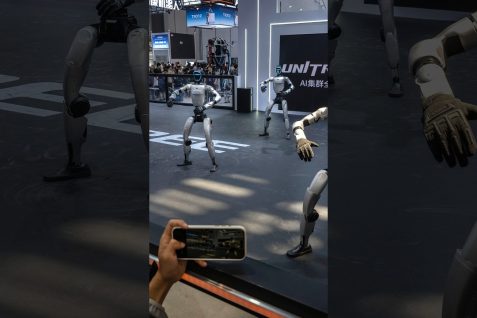
More than 2,000 robots took part in competitions at the World Humanoid Robot Games in Beijing over the weekend. The five-day event saw more than 600 teams competing across 51 distinct events and 1,301 matches. The expanded schedule featured traditional sports like track events, football as well as some new additions, such as kickboxing and table tennis. This year’s games also presented some practical challenges meant to test how the machines could be used for real-world applications in manufacturing, hospitality, home care and logistics.
More than 2,000 robots took part in competitions at the World Humanoid Robot Games in Beijing over the weekend. The five-day event saw more than 600 teams competing across 51 distinct events and 1,301 matches. The expanded schedule featured traditional sports like track events, football as well as some new additions, such as kickboxing and table tennis. This year’s games also presented some practical challenges meant to test how the machines could be used for real-world applications in manufacturing, hospitality, home care and logistics.
China has unexpectedly delayed the launch of its Chang’e-7 lunar mission, a key part of Beijing’s plan to put astronauts on the Moon before 2030. The spacecraft was expected to begin its journey to the Moon’s south pole in search of water ice, but officials now say the mission does not meet launch conditions. The postponement comes less than two weeks after a Long March rocket suffered a rare failure, raising fresh questions about China’s lunar timeline and its growing space ambitions.
WION The World is One News examines global issues with in-depth analysis. We provide much more than the news of the day. Our aim is to empower people to explore their world. With our Global headquarters in New Delhi, we bring you news on the hour, by the hour. We deliver information that is not biased. We are journalists who are neutral to the core and non-partisan when it comes to world politics. People are tired of biased reportage and we stand for a globalized united world. So for us, the World is truly One.
Please keep discussions on this channel clean and respectful and refrain from using racist or sexist slurs and personal insults.
China has unexpectedly delayed the launch of its Chang’e-7 lunar mission, a key part of Beijing’s plan to put astronauts on the Moon before 2030. The spacecraft was expected to begin its journey to the Moon’s south pole in search of water ice, but officials now say the mission does not meet launch conditions. The postponement comes less than two weeks after a Long March rocket suffered a rare failure, raising fresh questions about China’s lunar timeline and its growing space ambitions.
WION The World is One News examines global issues with in-depth analysis. We provide much more than the news of the day. Our aim is to empower people to explore their world. With our Global headquarters in New Delhi, we bring you news on the hour, by the hour. We deliver information that is not biased. We are journalists who are neutral to the core and non-partisan when it comes to world politics. People are tired of biased reportage and we stand for a globalized united world. So for us, the World is truly One.
Please keep discussions on this channel clean and respectful and refrain from using racist or sexist slurs and personal insults.
The second annual World Humanoid Robot Games kicked off at Beijing’s National Speed Skating Oval, bringing together over 2,000 advanced humanoid robots from 16 countries. Running through August, this five-year-milestone exhibition and competition combines high-octane sports events—such as record-shattering 100-meter sprints and high jumps that outperformed human benchmarks—with rigorous, real-world scenario challenges designed to test industrial automation, autonomous navigation, and dexterity.
WION The World is One News examines global issues with in-depth analysis. We provide much more than the news of the day. Our aim is to empower people to explore their world. With our Global headquarters in New Delhi, we bring you news on the hour, by the hour. We deliver information that is not biased. We are journalists who are neutral to the core and non-partisan when it comes to world politics. People are tired of biased reportage and we stand for a globalized united world. So for us, the World is truly One.
Please keep discussions on this channel clean and respectful and refrain from using racist or sexist slurs and personal insults.
The second annual World Humanoid Robot Games kicked off at Beijing’s National Speed Skating Oval, bringing together over 2,000 advanced humanoid robots from 16 countries. Running through August, this five-year-milestone exhibition and competition combines high-octane sports events—such as record-shattering 100-meter sprints and high jumps that outperformed human benchmarks—with rigorous, real-world scenario challenges designed to test industrial automation, autonomous navigation, and dexterity.
WION The World is One News examines global issues with in-depth analysis. We provide much more than the news of the day. Our aim is to empower people to explore their world. With our Global headquarters in New Delhi, we bring you news on the hour, by the hour. We deliver information that is not biased. We are journalists who are neutral to the core and non-partisan when it comes to world politics. People are tired of biased reportage and we stand for a globalized united world. So for us, the World is truly One.
Please keep discussions on this channel clean and respectful and refrain from using racist or sexist slurs and personal insults.
China is dodging US tariffs through a massive transshipment network—and some of America’s closest allies may be helping.A new White House report estimates th
China is dodging US tariffs through a massive transshipment network—and some of America’s closest allies may be helping. A new White House report estimates the scheme could be costing the US billions in lost tariff revenue, jobs, and economic output. Now the Trump administration wants to use AI to track suspicious shipments around the world. How does the scheme work, and can the US actually stop it?
“No underwear.” That’s the line alleged Chinese spy Fang Fang aka Christine Fang used to seduce former US Congressman Eric Swalwell. Newly declassified FBI d
"No underwear." That's the line alleged Chinese spy Fang Fang aka Christine Fang used to seduce former US Congressman Eric Swalwell. Newly declassified FBI documents about this scandal are absolutely wild. And I'm here for it.
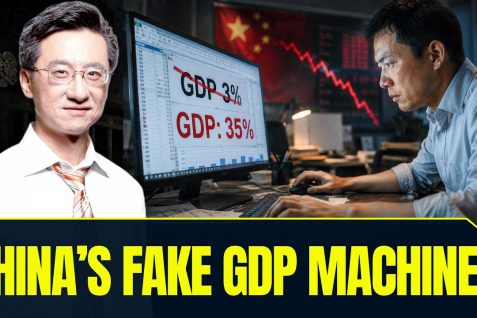
China’s GDP figures are treated as objective economic reality, but past state press releases lies a system trapped by Goodhart’s Law. For decades, local bure
China’s GDP figures are treated as objective economic reality, but past state press releases lies a system trapped by Goodhart’s Law. For decades, local bureaucrats have been promoted based on hitting arbitrary growth targets, structurally incentivizing them to pad the numbers. To meet these quotas, local officials use raw coercion: threatening business owners, seizing corporate data tokens, and forcing companies to input fabricated revenue goals into central portals. Sophisticated grey-market schemes like circular "invoicing economies" and territorial double-counting create trillions of RMB in paper turnover with zero physical output. Even late Premier Li Keqiang admitted regional data was "man-made," relying instead on electricity and rail metrics. While Beijing centralized data collection in 2019 to stop local embarrassment, it maintains the macroeconomic illusion to preserve public confidence. Independent research suggests China’s historical GDP is inflated by 11% to 35%, leaving a global superpower making massive capital decisions based on a statistical mirage.
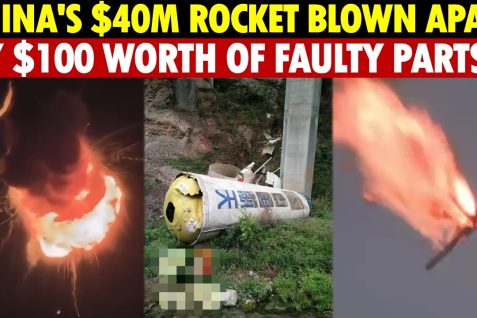
On the night of August 10, at 8:02 p.m., China launched the Zhongxing-4B satellite from Wenchang, Hainan, aboard a Long March 7A rocket.Just 85 seconds into
On the night of August 10, at 8:02 p.m., China launched the Zhongxing-4B satellite from Wenchang, Hainan, aboard a Long March 7A rocket. Just 85 seconds into the flight, a bright flash suddenly lit up the night sky. The rocket broke apart, with debris falling while trailing smoke. That same night, Xinhua reported that the rocket had experienced a flight failure, and investigators were working to determine the cause.
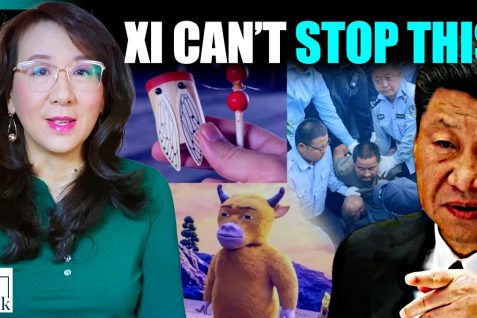
China is getting weird—and the weirdness may be telling us something important. A fugitive becomes a folk hero, a terrible animated movie turns into a surpri
China is getting weird—and the weirdness may be telling us something important. A fugitive becomes a folk hero, a terrible animated movie turns into a surprise box-office hit, and a simple bamboo toy becomes a nationwide joke aimed at Huawei. These three bizarre stories reveal a deeper mood spreading across China: frustration, distrust, dark humor, and new ways of pushing back when people feel they have little power. Behind the jokes and absurdity is a growing sense that many Chinese are becoming more skeptical of official narratives—and more willing to express their discontent in indirect, creative ways.
Taiwan’s semiconductor and AI revenue windfall is supercharging its asymmetric defence budget, even as Beijing stress-tests critical energy imports and accel
Taiwan’s semiconductor and AI revenue windfall is supercharging its asymmetric defence budget, even as Beijing stress-tests critical energy imports and accelerates strategic oil stockpiling across the mainland.
China has deployed its J-16 fighter jets to Egypt for the Eagles of Civilization 2026 joint military exercise, marking a significant development in Beijing’s growing defence cooperation with Cairo.
A fleet of Chinese People’s Liberation Army Air Force aircraft, led by heavy twin-seat J-16 multirole fighter jets, arrived at an Egyptian air base to participate in the second edition of the Eagles of Civilization exercise.
The Chinese fighters reportedly travelled around 6,000 kilometres across two continents and four countries in nearly nine hours. The deployment required midair refuelling, highlighting the operational range and logistical capabilities involved in the mission.
The joint drills are focused on offensive and defensive air combat tactics, air superiority operations, combat search and rescue, electronic warfare and joint battle management.
The J-16 deployment is particularly significant because it represents the first reported deployment of China’s heavyweight fighter aircraft to the African continent. Military analysts say the mission provides an important test of pilot endurance, aircraft performance and China’s ability to project military power over long distances.
China previously deployed lighter J-10C fighter jets during the inaugural Eagles of Civilization exercise. The arrival of the heavier J-16s signals a potential expansion in the scale and sophistication of China-Egypt military cooperation.
The exercise also carries wider geopolitical significance. Egypt has been seeking to diversify its defence partnerships and reduce reliance on traditional suppliers by evaluating advanced military technologies from China.
The growing military relationship between Beijing and Cairo is being closely watched by Washington, as deeper Chinese defence cooperation could challenge established US influence in the region.
China has deployed its J-16 fighter jets to Egypt for the Eagles of Civilization 2026 joint military exercise, marking a significant development in Beijing’s growing defence cooperation with Cairo.
A fleet of Chinese People’s Liberation Army Air Force aircraft, led by heavy twin-seat J-16 multirole fighter jets, arrived at an Egyptian air base to participate in the second edition of the Eagles of Civilization exercise.
The Chinese fighters reportedly travelled around 6,000 kilometres across two continents and four countries in nearly nine hours. The deployment required midair refuelling, highlighting the operational range and logistical capabilities involved in the mission.
The joint drills are focused on offensive and defensive air combat tactics, air superiority operations, combat search and rescue, electronic warfare and joint battle management.
The J-16 deployment is particularly significant because it represents the first reported deployment of China’s heavyweight fighter aircraft to the African continent. Military analysts say the mission provides an important test of pilot endurance, aircraft performance and China’s ability to project military power over long distances.
China previously deployed lighter J-10C fighter jets during the inaugural Eagles of Civilization exercise. The arrival of the heavier J-16s signals a potential expansion in the scale and sophistication of China-Egypt military cooperation.
The exercise also carries wider geopolitical significance. Egypt has been seeking to diversify its defence partnerships and reduce reliance on traditional suppliers by evaluating advanced military technologies from China.
The growing military relationship between Beijing and Cairo is being closely watched by Washington, as deeper Chinese defence cooperation could challenge established US influence in the region.
Pakistan Immediate Threat, China Long-Term Challenge: Ex-Army Chief Naravane
WION The World is One News examines global issues with in-depth analysis. We provide much more than the news of the day. Our aim is to empower people to explore their world. With our Global headquarters in New Delhi, we bring you news on the hour, by the hour. We deliver information that is not biased. We are journalists who are neutral to the core and non-partisan when it comes to world politics. People are tired of biased reportage and we stand for a globalized united world. So for us, the World is truly One.
Please keep discussions on this channel clean and respectful and refrain from using racist or sexist slurs and personal insults.
Pakistan Immediate Threat, China Long-Term Challenge: Ex-Army Chief Naravane
WION The World is One News examines global issues with in-depth analysis. We provide much more than the news of the day. Our aim is to empower people to explore their world. With our Global headquarters in New Delhi, we bring you news on the hour, by the hour. We deliver information that is not biased. We are journalists who are neutral to the core and non-partisan when it comes to world politics. People are tired of biased reportage and we stand for a globalized united world. So for us, the World is truly One.
Please keep discussions on this channel clean and respectful and refrain from using racist or sexist slurs and personal insults.
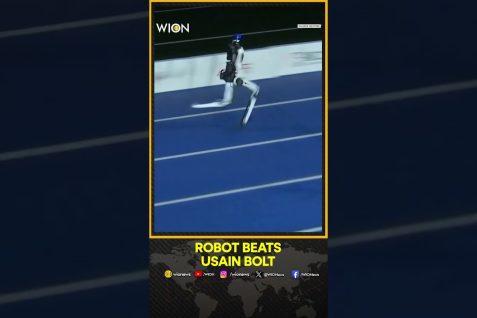
In a dramatic leap for robotics and artificial intelligence, Chinese humanoid robots have shattered sprinting legend Usain Bolt’s iconic 9.58-second 100-meter world record. At the 2nd World Humanoid Robot Games in Beijing, Honor’s humanoid robot Lightning clocked an astonishing 9.32 seconds in a test run—reaching a peak velocity of 14.5 meters per second—while Tiangong Ultra won a preliminary heat in 9.39 seconds.
WION The World is One News examines global issues with in-depth analysis. We provide much more than the news of the day. Our aim is to empower people to explore their world. With our Global headquarters in New Delhi, we bring you news on the hour, by the hour. We deliver information that is not biased. We are journalists who are neutral to the core and non-partisan when it comes to world politics. People are tired of biased reportage and we stand for a globalized united world. So for us, the World is truly One.
Please keep discussions on this channel clean and respectful and refrain from using racist or sexist slurs and personal insults.
In a dramatic leap for robotics and artificial intelligence, Chinese humanoid robots have shattered sprinting legend Usain Bolt’s iconic 9.58-second 100-meter world record. At the 2nd World Humanoid Robot Games in Beijing, Honor's humanoid robot Lightning clocked an astonishing 9.32 seconds in a test run—reaching a peak velocity of 14.5 meters per second—while Tiangong Ultra won a preliminary heat in 9.39 seconds.
WION The World is One News examines global issues with in-depth analysis. We provide much more than the news of the day. Our aim is to empower people to explore their world. With our Global headquarters in New Delhi, we bring you news on the hour, by the hour. We deliver information that is not biased. We are journalists who are neutral to the core and non-partisan when it comes to world politics. People are tired of biased reportage and we stand for a globalized united world. So for us, the World is truly One.
Please keep discussions on this channel clean and respectful and refrain from using racist or sexist slurs and personal insults.
China’s luxury market is showing signs of a sharp slowdown, and a tax crackdown targeting wealth held overseas may be making wealthy shoppers think twice before spending.
Sales at China’s 25 biggest luxury brands fell more than 10 percent in July, according to three research firms surveyed by Bloomberg.
That is a steeper decline than in June and a major reversal from stronger sales earlier this year.
WION The World is One News examines global issues with in-depth analysis. We provide much more than the news of the day. Our aim is to empower people to explore their world. With our Global headquarters in New Delhi, we bring you news on the hour, by the hour. We deliver information that is not biased. We are journalists who are neutral to the core and non-partisan when it comes to world politics. People are tired of biased reportage and we stand for a globalized united world. So for us, the World is truly One.
Please keep discussions on this channel clean and respectful and refrain from using racist or sexist slurs and personal insults.
China’s luxury market is showing signs of a sharp slowdown, and a tax crackdown targeting wealth held overseas may be making wealthy shoppers think twice before spending.
Sales at China’s 25 biggest luxury brands fell more than 10 percent in July, according to three research firms surveyed by Bloomberg.
That is a steeper decline than in June and a major reversal from stronger sales earlier this year.
WION The World is One News examines global issues with in-depth analysis. We provide much more than the news of the day. Our aim is to empower people to explore their world. With our Global headquarters in New Delhi, we bring you news on the hour, by the hour. We deliver information that is not biased. We are journalists who are neutral to the core and non-partisan when it comes to world politics. People are tired of biased reportage and we stand for a globalized united world. So for us, the World is truly One.
Please keep discussions on this channel clean and respectful and refrain from using racist or sexist slurs and personal insults.
China Analyst Tony Fiddis breaks down the life sentence handed to Evergrande founder Hui Ka Yan and examines why China’s property crisis continues to deterio
China Analyst Tony Fiddis breaks down the life sentence handed to Evergrande founder Hui Ka Yan and examines why China's property crisis continues to deteriorate.
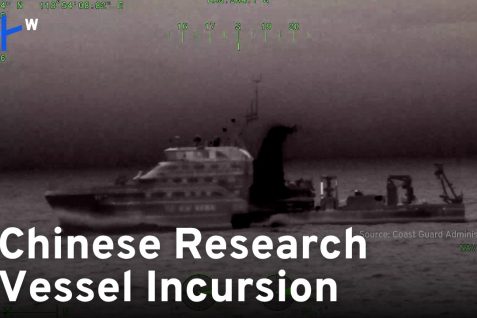
Taiwan’s coast guard says it shadowed a Chinese research vessel and warned it away from the country’s restricted waters Thursday night. The Tong Ji was spott
Taiwan's coast guard says it shadowed a Chinese research vessel and warned it away from the country’s restricted waters Thursday night. The Tong Ji was spotted northwest of Huayu in the outlying Penghu Islands, with media reports suggesting it may have been conducting maritime surveillance. 📹 Reporter(s): TaiwanPlus #TaiwanPlus #TaiwanPlusNews #TaiwanNews –
Japan’s Nuclear Potential: Tensions have flared following statements from Chinese officials alleging that Japan currently possesses enough separated plutoniu
Japan's Nuclear Potential: Tensions have flared following statements from Chinese officials alleging that Japan currently possesses enough separated plutonium to produce approximately 5,500 nuclear warheads. #china #japan #nuclearwar #wion
From Asia’s richest man to life in prison: Evergrande founder Hui Ka Yan’s rise and fall mirrors that of China’s real estate industry—one of the pillars of t
From Asia’s richest man to life in prison: Evergrande founder Hui Ka Yan’s rise and fall mirrors that of China’s real estate industry—one of the pillars of the Chinese economy. A group of senators is calling on the U.S. attorney general and the secretary of state to investigate California’s policy ties with the Chinese Communist Party. Voter fraud in the 2024 presidential election: A Massachusetts man—a Chinese national—is accused of using someone else’s identity to cast a ballot … and then turning that person in to federal authorities. Here’s what prosecutors say happened next. The U.S. State Department is declaring that an American has been wrongfully detained in China. Here’s what this means—and why the timing matters. A major legal battle is unfolding over a proposed Chinese mega-embassy in London. A U.K. High Court ruling dealt a blow to residents fighting the project—but they’re not giving up. Why does the U.K. say the embassy could pose a national security threat? And how could it affect American financial services? American Thought Leaders host Jan Jekielek speaks with Luke de Pulford, co-founder and executive director of the Inter-Parliamentary Alliance on China. For the full interview, visit American Thought Leaders on Epoch TV. 00:00 Intro 01:01 Evergrande Founder Sentenced to Life in Prison 01:58 Evergrande’s Rise and Fall Mirrors China’s Crisis 03:02 CCP Infiltration in U.S. Universities 05:44 Senators Call on U.S. to Probe California-China Ties 08:02 Chinese National Charged With Voter Fraud 09:03 U.S. State Dept.: American Wrongfully Detained in China 10:16 Ford to Shift Some Production From China to U.S. 12:03 Documents Reveal CCP Interference in 2020 Election 14:50 Taiwan Proposes Record-High 2027 Defense Budget 15:38 Alibaba Net Profit Falls 76 Percent Due to AI Spending 16:26 Pulford: China’s London Embassy Could Endanger U.S. Finance
Zhu Rongji helped reshape modern China—but his real legacy is far more complicated than Beijing’s official obituary suggests. From Tiananmen and Falun Gong t
Zhu Rongji helped reshape modern China—but his real legacy is far more complicated than Beijing’s official obituary suggests. From Tiananmen and Falun Gong to SOE layoffs, the WTO and China’s rise as the world’s factory, we look at what Zhu changed, what it cost, and what Beijing left out.
When companies look at the China market, they see potentially 1.4 billion consumers. That’s a lie, says our guest David Day, who is the Chairman of the Global Risk Mitigation Foundation.
China analyst Tony Fiddis breaks down the latest economic distress signals emerging across China as state-driven capital accelerates a massive bubble in artificial intelligence and robotics. Read the full, in-depth analysis on China News Update: https://chinanewsupdate.com/chinas-ec… Please Support the Channel (It's just me making China Update): Patreon Link: / chinaupdate One-off Tips Here: https://www.buymeacoffee.com/chinaupdate Video Timestamps: 00:00 Introduction 00:21 China’s Economy: Falling Bond Yields & Youth Unemployment 05:22 Black Forrest 07:01 Unitree’s ‘Blockbuster’ Shanghai IPO 10:10 Global Tech War: The AI Gap EPISODE SUMMARY & BREAKDOWN: In this briefing, China analyst Tony Fiddis examines the stark divergence currently defining the world’s second-largest economy. On one side, core macroeconomic indicators—including persistent deflationary pressures, sluggish domestic consumption, and mounting local government debt—continue to flash warning signs across traditional industrial and property sectors. On the other side, Beijing’s aggressive push into high-tech self-reliance has triggered an unprecedented surge of capital into artificial intelligence, humanoid robotics, and advanced automation. While state directives aim to establish global technological dominance, market realities reveal growing risks of overcapacity, speculative valuation bubbles, and severe resource misallocation. Tony analyses whether these state-backed technological investments can realistically offset broader macroeconomic stagnation, or if the rush into frontier tech is masking deeper structural vulnerabilities. We explore the ripple effects for international investors, domestic employment, and global supply chain realignments as China navigates this high-stakes industrial transition.
Taiwan has announced that its US tariff rate has been reduced from 20 percent to 15 percent, matching Japan, South Korea and the EU, as part of a sweeping tr
Taiwan has announced that its US tariff rate has been reduced from 20 percent to 15 percent, matching Japan, South Korea and the EU, as part of a sweeping trade and investment framework with Washington. The deal includes large-scale Taiwanese investment in the US semiconductor, AI and energy industries, along with government-backed credit guarantees and new industrial parks. Supporters argue the agreement strengthens economic integration and resilience, but critics warn it could hollow out Taiwan’s chip industry and weaken its so-called “Silicon Shield” that theoretically deters Chinese aggression. How does Taiwan’s model differ from Japan’s and South Korea’s? And what lessons should Taiwan take from the rise and sudden fall of Japan’s DRAM chip industry in late 20th century? In this episode, we discuss the US–Taiwan trade deal, comparisons with Japan and South Korea, historical lessons from past chip wars, and what the agreement means for Taiwan’s security and future position in global supply chains.
A warning one day. A confrontation the next. China has escalated tensions in the South China Sea, warning the Philippines and telling Australia to stay out.
A warning one day. A confrontation the next. China has escalated tensions in the South China Sea, warning the Philippines and telling Australia to stay out.