China claims to have brotherhood-like relations with several authoritarian countries, but that brotherhood is being put to the test as the US attacks China’s supposed allies. Source: China Watches Helplessly as …
China claims to have brotherhood-like relations with several authoritarian countries, but that brotherhood is being put to the test as the US attacks China’s supposed allies.
This episode of China Unscripted explores the complex dynamics between China and its so-called allies in the face of United States pressure. The program examines how Beijing maintains rhetoric about brotherly relations with various authoritarian nations while those same countries encounter significant challenges from Washington. The discussion highlights a perceived contradiction where China's diplomatic stance appears to be tested as the US engages in actions that affect these partner states.
The video analyzes whether China will remain passive or intervene when its allies face difficulties imposed by American policy. It questions the depth of these international bonds and considers how geopolitical interests might override stated commitments to mutual support. The content suggests that while China publicly champions solidarity with other non-Western governments, practical outcomes may differ significantly from official narratives.
Listeners are directed to the full podcast version for a more detailed examination of these global relations. The segment serves as an overview of current tensions without offering definitive conclusions on future diplomatic shifts or specific military engagements involving the nations discussed.
But this time, Beijing miscalculated. They underestimated the institutional safeguards of Europe’s independent regulators—and they underestimated the non-negotiable “physical red line” of civil aviation safety. Source: C919 Is Truly Doomed This …
But this time, Beijing miscalculated. They underestimated the institutional safeguards of Europe’s independent regulators—and they underestimated the non-negotiable “physical red line” of civil aviation safety.
The video titled C919 Is Truly Doomed This Time! Entire Production Line May Be Paralyzed, Planes Become Scrap is presented by the channel China Observer. The content suggests that Beijing has miscalculated in its approach to the C919 aircraft program. According to the public description provided, the analysis focuses on two main points regarding potential setbacks for the project. First, it claims that European independent regulators possess institutional safeguards that were underestimated by Chinese authorities. Second, it argues that civil aviation safety represents a non-negotiable physical red line that cannot be compromised. The title implies severe consequences, suggesting the possibility of an entire production line becoming paralyzed and existing planes turning into scrap. The video duration is listed as 1135 seconds. No transcript or specific event details are available in the provided source material, so the overview relies solely on these descriptive elements without inventing facts or quoting unseen content.
Two deadly explosions. Dozens dead. Hundreds injured. But in China, major disasters often trigger more than safety investigations. They can reshape political careers, derail rising officials, and alter the balance of …
Two deadly explosions. Dozens dead. Hundreds injured. But in China, major disasters often trigger more than safety investigations. They can reshape political careers, derail rising officials, and alter the balance of power inside the CCP. In this episode, we examine the Hunan fireworks factory explosion, the Shanxi coal mine disaster, the mystery surrounding the casualty figures, Xi Jinping’s unusually rapid response, and why some China observers believe these tragedies became part of a much larger political struggle ahead of the CCP’s next leadership transition.
This video from Lei's Real Talk explores how major disasters in China often trigger political consequences beyond standard safety investigations. The episode examines specific incidents, including a deadly fireworks factory explosion in Hunan and a coal mine disaster in Shanxi, where dozens lost their lives and hundreds were injured. Rather than focusing solely on the tragedies themselves, the analysis highlights how these events can reshape political careers and derail the advancement of rising officials within the Communist Party of China. The discussion also addresses the mystery surrounding casualty figures and notes President Xi Jinping's unusually rapid response to these incidents. Some observers suggest that these tragedies have become part of a larger political struggle occurring ahead of the party's next leadership transition, potentially altering the internal balance of power. The channel focuses on world economy, history, and politics with a main emphasis on U.S.-China relations, aiming to reveal hidden stories through short video formats. Viewers are invited to explore further content across the creator's various platforms and support the work through donations or online shop purchases.
After May 25th, Xi Jinping and his defense minister disappeared and suddenly reappeared. Meanwhile, Xi Jinping lost key loyalists one after another. The Politburo suddenly went silent in May. Senior officials …
After May 25th, Xi Jinping and his defense minister disappeared and suddenly reappeared. Meanwhile, Xi Jinping lost key loyalists one after another. The Politburo suddenly went silent in May. Senior officials disappearing from public view. And inside the military, new calls for transparency, collective leadership, and tighter oversight of senior commanders. We examine the latest signals emerging from Beijing, the PLA, and the Chinese political establishment. Is this simply another round of elite power struggles behind closed doors? Or are we witnessing the early stages of a much larger shift inside the Chinese Communist Party?
This video from Lei's Real Talk examines recent unusual developments within the Chinese political and military leadership following May 25th. The overview highlights reports that President Xi Jinping and his defense minister seemingly disappeared before suddenly reappearing, while key loyalists reportedly vanished one after another. During this period, the Politburo remained notably silent, and senior officials were absent from public view. Simultaneously, new directives emerged within the military calling for greater transparency, collective leadership, and stricter oversight of high-ranking commanders. The content explores whether these events represent routine elite power struggles occurring behind closed doors or indicate the beginning of a significant internal shift inside the Chinese Communist Party. The analysis focuses on signals emerging from Beijing, the People's Liberation Army, and the broader political establishment. Viewers are invited to consider the implications of these sudden changes in visibility and authority structure. The video also includes links to related content, such as a segment on a Chinese spy who influenced American counterintelligence agents, as well as promotional information for the channel's other platforms and support options.
Southeast Asia is in the middle of an unprecedented military buildup — and it traces directly back to one country’s decision to stand its ground. From the water cannon attacks at …
Southeast Asia is in the middle of an unprecedented military buildup — and it traces directly back to one country’s decision to stand its ground. From the water cannon attacks at Second Thomas Shoal to Japan donating destroyers, South Korea selling fighter jets, and the US deploying missiles to Philippine bases, this video maps the full arc of how Chinese aggression in the West Philippine Sea triggered a regional arms race. We break down every major acquisition, every key alliance, and what it all means for the balance of power in Asia. #Philippines #SouthChinaSea #WestPhilippineSea #SoutheastAsia #IndoPacific
The video titled Why Southeast Asia Is Rearming — And the Philippines Is the Reason Why is presented by the channel Global Front and runs for approximately nine minutes. It examines a significant military expansion occurring across Southeast Asia, attributing this trend directly to actions taken by one nation in the region. The content outlines how specific events, including water cannon incidents at Second Thomas Shoal, have influenced regional security dynamics. According to the description, various countries are responding to perceived aggression in the West Philippine Sea through increased defense capabilities. Japan is noted for donating destroyers, while South Korea is mentioned as selling fighter jets to allies. Additionally, the United States is described as deploying missiles to bases within the Philippines. The overview suggests these developments form a chain reaction where initial confrontations have triggered a broader arms race involving multiple nations. The analysis aims to map how these acquisitions and new alliances affect the overall balance of power in Asia. By breaking down major equipment purchases and strategic partnerships, the video seeks to explain the shifting geopolitical landscape driven by tensions in the South China Sea.
New satellite imagery has revealed a massive new Chinese military complex surrounding key nuclear missile fields in Xinjiang. The CCP is building an unprecedented network of launch sites, command facilities, and …
New satellite imagery has revealed a massive new Chinese military complex surrounding key nuclear missile fields in Xinjiang. The CCP is building an unprecedented network of launch sites, command facilities, and defensive infrastructure designed to ensure its nuclear forces survive any first strike. What does this mean for Taiwan, the United States, and the future of deterrence?
New satellite imagery has uncovered a significant development in Chinese military infrastructure, specifically within the Xinjiang region. Reports indicate the construction of a vast complex encircling key nuclear missile fields. This network reportedly includes new launch sites, command facilities, and defensive structures intended to enhance the survivability of China's nuclear forces against potential first strikes. The emergence of this infrastructure raises questions regarding its implications for regional security dynamics involving Taiwan and the United States. Analysts are examining how such developments might alter future deterrence strategies in the Indo-Pacific theater. The video highlights these findings as a major shift, suggesting an unprecedented level of investment in defensive capabilities designed to ensure nuclear assets remain operational under extreme pressure. Viewers are encouraged to engage with the content by leaving a specific emoji in the comments section. Additional resources, including a weekly newsletter and mobile applications, are available for those seeking further information on these geopolitical topics. The channel directs audiences to its website and various social media platforms for ongoing updates and deeper analysis of international affairs.
Why is Xi Jinping suddenly rushing to North Korea after months of staying inside China? This trip may be far bigger than routine diplomacy. Behind the scenes are growing Russia–North Korea …
Why is Xi Jinping suddenly rushing to North Korea after months of staying inside China? This trip may be far bigger than routine diplomacy. Behind the scenes are growing Russia–North Korea ties, rising Taiwan tensions, U.S.–Japan–South Korea coordination, and Beijing’s fear of losing leverage on the Korean Peninsula. In this episode, we break down why Kim Jong Un may now hold more strategic value than ever — and why some analysts believe Xi Jinping suddenly needs Kim more than Kim needs Xi. you
This video from Lei's Real Talk examines the recent visit by Chinese President Xi Jinping to North Korea, suggesting the trip carries significance beyond standard diplomatic protocol. The analysis highlights several underlying factors driving this engagement, including strengthening ties between Russia and North Korea, escalating tensions involving Taiwan, and increased coordination among the United States, Japan, and South Korea. These developments appear to have influenced Beijing's strategic calculations regarding its leverage on the Korean Peninsula. The content explores the possibility that Kim Jong Un currently holds greater strategic value for China than previously assumed. Some analysts discussed in the context of the video suggest a shift where Xi Jinping may require Kim's cooperation more urgently than vice versa. The channel focuses primarily on U.S.-China relations while also covering broader topics such as world economy, history, and politics. Through short-form content, the series aims to reveal hidden stories behind major geopolitical events. Viewers are invited to explore further discussions on related economic and political themes through linked resources provided in the description.
Why are anti-Xi posts, Tiananmen images, and anti-CCP slogans suddenly appearing on Douyin? And why did China’s most powerful propaganda outlet, CCTV, repeatedly broadcast upside-down footage for two consecutive days? Technical …
Why are anti-Xi posts, Tiananmen images, and anti-CCP slogans suddenly appearing on Douyin? And why did China’s most powerful propaganda outlet, CCTV, repeatedly broadcast upside-down footage for two consecutive days? Technical glitches, censorship failures, acts of dissent, or signs of deeper tensions inside the system? In this episode, we examine a series of strange incidents that have sparked intense speculation across China’s internet. From politically sensitive memes and public anti-regime messages to the bizarre CCTV broadcasts that many interpreted as symbolic political signals, we explore what these events may reveal about public frustration, growing political boundary-testing, and the changing atmosphere inside China in 2026.
This video from Lei's Real Talk examines a series of unusual events occurring in China during 2026, specifically focusing on the sudden appearance of anti-Xi posts and Tiananmen images on Douyin. The episode also addresses why CCTV, described as the nation's most powerful propaganda outlet, broadcast upside-down footage for two consecutive days. These incidents have sparked intense speculation across the Chinese internet regarding whether they stem from technical glitches, censorship failures, acts of dissent, or deeper internal tensions within the system.
The analysis explores what these bizarre occurrences may reveal about growing public frustration and political boundary-testing. The content suggests that these events indicate a shifting atmosphere inside China, where citizens are increasingly testing political limits. By looking at politically sensitive memes and anti-regime messages alongside the symbolic nature of the inverted broadcasts, the video aims to shed light on the changing dynamics of the Chinese political landscape. The discussion centers on world economy, history, and politics, with a main focus on U.S.-China relations, while telling hidden stories behind these strange incidents that have captured significant attention.
Nvidia is doubling down on Taiwan, with plans to invest up to $150 billion a year for the new headquarters in Taipei. Meanwhile, Jensen Huang met with TSMC’s chairman to explore …
Nvidia is doubling down on Taiwan, with plans to invest up to $150 billion a year for the new headquarters in Taipei. Meanwhile, Jensen Huang met with TSMC’s chairman to explore expanding advanced packaging. A special gift for President Donald Trump: Taiwan’s president presents a tech memoir at a major U.S. celebration aimed at boosting ties. The United States is set to begin the process of lowering tariffs on $30 billion worth of Chinese goods. And what happens next with the 10 percent global tariffs when they expire this July? A new Chinese warship joins the Liaoning carrier group in the Western Pacific, as Japan closely tracks the formation operating near its waters. Lawmakers and experts are calling out foreign billionaires and Chinese Communist Party-linked networks for funding groups to oppose U.S. tech projects. Who’s really behind the protests? 00:00 Intro 1:30 Nvidia to Invest Up to $150 Billion a Year in Taiwan 3:08 Taiwan Leader Gifts Trump TSMC Memoir at AIT Gala 4:31 U.S. Seeks Comment on Chinese Goods Eligible for Tariff Cuts 8:19 USTR Speaks on USMCA Agreement, WTO 11:07 Trump Admin Pays $20 Billion to Importers 11:45 Trump: Primary Urgency Is Iran Can’t Have a Nuclear Weapon 16:06 Israel Kills Hamas Armed Wing Chief 17:10 Japan Tracks Chinese Frigate Deployment 18:27 Chinese Dissident Detained After Sea Escape to Korea 19:19 New Report: China Funding U.S. Tech Opposition
This segment from China in Focus on NTD examines significant developments in technology, trade, and geopolitics. Nvidia is reportedly planning to invest up to $150 billion annually for a new headquarters in Taipei, while also exploring expanded advanced packaging with TSMC following a meeting between Jensen Huang and the company's chairman. In diplomatic news, Taiwan's president presented a tech memoir to Donald Trump at a major U.S. celebration designed to strengthen bilateral ties. Trade policy updates include the United States beginning to lower tariffs on $30 billion worth of Chinese goods, with discussions ongoing regarding the expiration of global tariffs in July and comments from the USTR on USMCA and WTO matters. The administration also paid $20 billion to importers. Security situations are highlighted by a new Chinese warship joining the Liaoning carrier group near Japan, which is closely tracking the formation. Additionally, reports indicate that lawmakers and experts are investigating foreign billionaires and Chinese Communist Party-linked networks for funding groups opposing U.S. tech projects. The broadcast also covers other topics such as Iran's nuclear program, military actions in Israel and Gaza, and a detained Chinese dissident who escaped to Korea.
In May 2026, a massive fireworks factory explosion in Hunan and a deadly coal mine disaster in Shanxi triggered political shockwaves that reached all the way to Beijing. Rising provincial leaders …
In May 2026, a massive fireworks factory explosion in Hunan and a deadly coal mine disaster in Shanxi triggered political shockwaves that reached all the way to Beijing. Rising provincial leaders suddenly found their careers in jeopardy. Then came a series of unexpected developments: Defense Minister Dong Jun vanished from public view, senior official Xu Liuping was placed under investigation, and Peking University President Gong Qihuang was abruptly removed just days after appearing alongside Xi Jinping and Vladimir Putin. Were these merely unrelated events? Or are we witnessing a deeper power struggle ahead of the CCP’s 21st Party Congress? In this episode, we examine the disasters, the political fallout, and the remarkable sequence of events that has many China observers asking the same question: How many coincidences are too many coincidences?
In May 2026, two major industrial accidents occurred in China: a massive explosion at a fireworks factory in Hunan and a deadly coal mine disaster in Shanxi. These events reportedly triggered significant political repercussions that extended to the highest levels of leadership in Beijing. Following these incidents, several provincial leaders faced potential career jeopardy. Subsequently, a series of unexpected personnel changes emerged within the government and party structures. Defense Minister Dong Jun disappeared from public view, senior official Xu Liuping was placed under investigation, and Peking University President Gong Qihuang was abruptly removed shortly after appearing alongside national leadership figures.
The video explores whether these events were merely unrelated occurrences or signs of a deeper power struggle occurring ahead of the 21st Party Congress. The narrative examines the disasters themselves, the subsequent political fallout, and the sequence of high-profile removals that have led many observers to question the coincidence of these developments. The content focuses on analyzing how these incidents might be interconnected within the broader context of Chinese politics during this specific timeframe.
Japan is expanding its alliances across the Indo-Pacific, strengthening ties with the Philippines, Indonesia, Vietnam and Australia as part of a broader diplomatic push by PM Takaichi Sanae and Defense Minister …
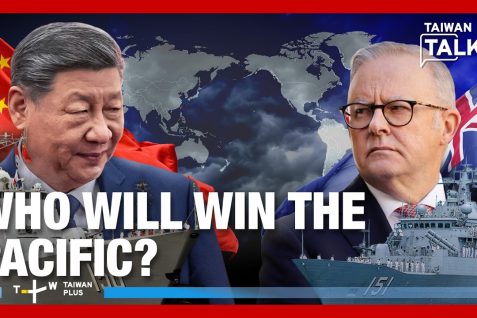
Japan is expanding its alliances across the Indo-Pacific, strengthening ties with the Philippines, Indonesia, Vietnam and Australia as part of a broader diplomatic push by PM Takaichi Sanae and Defense Minister Koizumi Shinjiro. At the center of these efforts are deepening security links with the US and the Philippines, including the transfer of Japanese Abukuma-class destroyers to Manila — a first since the lifting of its post-WWII arms export ban. It comes as the Philippines conducts its first test of a Tomahawk missile from a Typhon launcher. Together, these moves signal a shift toward more integrated form of regional deterrence. But how are Tokyo’s moves being greeted by Washington and Beijing? In this episode, we examine Japan’s growing network of partnerships, the strategic importance of key maritime routes and what this evolving alignment means for Taiwan and the Indo-Pacific balance of power. *Recorded on May 7, 2026 at 4pm Taiwan Standard Time Host/Senior Producer: Yin Khvat Consultant: George Nee Research Assistant: April Lin Our guests: Tsai Jung-hsiang National Chung Cheng University Political Science Professor Guermantes Lailari Jewish Policy Center Senior Non-Resident Fellow Chapters: 00:00:00 – Japan’s New Alliance Model 00:03:00 – Philippines Conducts Tomahawk Test 00:09:41 – Tokyo To Provide Destroyers to Manila, Jakarta 00:14:50 – US, Japan Reach Deals With Indonesia 00:18:48 – Japan’s Ties With SE Asia, Australia
This episode from Taiwan Talks examines Japan's expanding security alliances across the Indo-Pacific, driven by diplomatic efforts from Prime Minister Takaichi Sanae and Defense Minister Koizumi Shinjiro. Key developments include deepening ties with the Philippines, Indonesia, Vietnam, and Australia, alongside strengthened links to the United States. A significant milestone involves the planned transfer of Japanese Abukuma-class destroyers to Manila, marking the first such arms export since World War II restrictions were lifted. Concurrently, the Philippines conducted its initial test firing of a Tomahawk missile from a Typhon launcher. These actions collectively signal a shift toward more integrated regional deterrence strategies. The program explores how Washington and Beijing are reacting to Tokyo's growing network of partnerships. Discussion also covers the strategic importance of key maritime routes and the implications of these evolving alignments for Taiwan and the broader balance of power in the Indo-Pacific. The episode features analysis from Professor Tsai Jung-hsiang and Guermantes Lailari, recorded on May 7, 2026.
Watch the full podcast! https://chinauncensored.tv/programs/p… When Russian President Vladimir Putin visited China, his hosts played a part of the Russian ballet “Swan Lake” for him, which would be perfectly OK except …
Watch the full podcast! https://chinauncensored.tv/programs/p… When Russian President Vladimir Putin visited China, his hosts played a part of the Russian ballet “Swan Lake” for him, which would be perfectly OK except that it’s become a Putin resistance song that has political connotations tied to the fall of the Soviet Union. Was China trying to send a message? Or was this just an error? Matt, Chris and Shelley get into that and more in this episode.
In this episode of China Unscripted, hosts Matt, Chris, and Shelley examine a notable moment during Russian President Vladimir Putin's visit to China. The discussion centers on the performance of a specific segment from the ballet Swan Lake for the visiting leader. While such cultural exchanges are standard diplomatic protocol, this particular piece has acquired significant political weight within Russia. It is now viewed by many as a symbol of resistance against Putin and carries connotations linked to the collapse of the Soviet Union. The hosts explore whether the inclusion of this music was an intentional message from Chinese officials or merely an oversight. They analyze the potential implications of using a song that holds such strong oppositional meaning in a state-to-state setting. The conversation delves into the complexities of cultural diplomacy and how historical narratives influence current political interactions between major powers. Listeners are directed to the full podcast for a deeper dive into these geopolitical nuances and the broader context of Sino-Russian relations as portrayed in this specific incident.
Even Xi Jinping may no longer trust China’s official economic data. According to former CCP insider Du Wen, Xi’s inner circle has allegedly built its own independent data network to bypass …
Even Xi Jinping may no longer trust China’s official economic data. According to former CCP insider Du Wen, Xi’s inner circle has allegedly built its own independent data network to bypass China’s statistics bureau. And the numbers are alarming: factory deflation lasting 42 months, collapsing corporate profits, rising costs, and a deepening confidence crisis across China’s economy. At the same time, Beijing has launched a sweeping crackdown on offshore brokerage firms used by mainland Chinese investors to buy U.S. and Hong Kong stocks. Authorities are investigating platforms like Futu, Tiger Brokers, and Longbridge, while tightening cross-border capital controls and restricting overseas investment channels. Is China entering a slow-motion economic crisis hidden beneath official GDP growth? In this episode, we break down the hidden signals behind China’s worsening deflation, collapsing confidence, capital flight fears, and Beijing’s growing efforts to seal financial exits.
This video from Lei's Real Talk explores the possibility that China's official economic data may no longer reflect reality, even in the eyes of President Xi Jinping. The episode suggests that an independent data network has allegedly been established within Xi's inner circle to bypass the national statistics bureau due to concerns over reported figures. According to former CCP insider Du Wen cited in the description, current indicators include factory deflation lasting 42 months, collapsing corporate profits, rising costs, and a deepening confidence crisis.
Simultaneously, Beijing is reportedly launching a crackdown on offshore brokerage firms used by mainland investors for overseas stock purchases. Authorities are investigating platforms such as Futu, Tiger Brokers, and Longbridge while tightening cross-border capital controls to restrict investment channels. The content questions whether China is entering a slow-motion economic crisis concealed beneath official GDP growth numbers. The discussion covers hidden signals regarding worsening deflation, eroding confidence, fears of capital flight, and the government's efforts to seal financial exits. The video aims to break down these developments without relying on official narratives, offering context on the broader implications for China's financial stability and global markets.
Why is Xi Jinping suddenly rushing to North Korea right after hosting both Trump and Putin in Beijing? And what were those strange signals coming out of the state banquets — …
Why is Xi Jinping suddenly rushing to North Korea right after hosting both Trump and Putin in Beijing? And what were those strange signals coming out of the state banquets — the mysterious “special-agent” waitresses, the eerie performance of Swan Lake for Putin, and the growing atmosphere of tension inside Zhongnanhai? In this program, we break down the deeper geopolitical calculations behind Xi’s upcoming meeting with Kim Jong Un, including Russia-North Korea ties, Taiwan pressure, the U.S.-Japan-South Korea alignment, and why Kim may now have more leverage over China than many realize. We also examine the darker theories now circulating online about instability, elite politics, and the fear of crisis in East Asia.
The video titled Putin Heard Soviet Coup Music… Then Xi Rushed to North Korea, produced by Lei's Real Talk and running for approximately 54 minutes, explores the geopolitical implications of recent diplomatic movements in East Asia. It questions why Chinese leader Xi Jinping traveled to North Korea shortly after hosting both Donald Trump and Vladimir Putin in Beijing. The program examines unusual signals reported from state banquets, including specific waitstaff roles and a particular performance of Swan Lake intended for the Russian leader. These elements are presented as part of a growing atmosphere of tension within Chinese political circles.
The overview breaks down deeper calculations regarding Russia-North Korea relations, pressure on Taiwan, and the shifting alignment between the United States, Japan, and South Korea. The content suggests that Kim Jong Un may possess more leverage over Beijing than previously understood. Additionally, the video addresses darker theories circulating online concerning instability, elite politics, and fears of crisis in the region. The description notes these topics are analyzed to provide context on the upcoming meeting between Xi and Kim. The program also includes promotional links for related content and support channels associated with the creator.
China’s debt problem may be far worse than Beijing officially admits. In this deep-dive analysis, we break down China’s hidden debt system — from LGFVs and local government borrowing to policy …
China’s debt problem may be far worse than Beijing officially admits. In this deep-dive analysis, we break down China’s hidden debt system — from LGFVs and local government borrowing to policy banks, pension liabilities, Central Huijin, and the collapse of the land-finance model. Why did local debt surpass central government debt? Why did Beijing’s “front door, back door” reforms fail? And could China’s real debt burden already exceed 170%–180% of GDP — or even far higher if the economy itself has been overstated? Let’s untangle the real size of China’s hidden debt problem.

This video from Lei's Real Talk examines the potential severity of China's debt crisis, suggesting it may be significantly worse than official Beijing figures indicate. The analysis explores a complex hidden debt system involving local government financing vehicles, policy banks, pension liabilities, and Central Huijin. A central focus is the collapse of the land-finance model that previously supported economic growth. The content questions why local debt levels have surpassed those of the central government and investigates the reasons behind the failure of Beijing's so-called front door and back door reforms.
The discussion considers whether China's actual debt burden already exceeds 170 to 180 percent of GDP, or if the figure is even higher given potential overstatements in economic data. The overview aims to untangle the true scale of these financial challenges without relying on official narratives. By breaking down these interconnected issues, the video provides context on how these structural problems could impact the broader economy. Viewers are encouraged to consider alternative perspectives on China's financial stability beyond standard government reports.
If 1984, Minority Report, Person of Interest, and Black Mirror had an orgy, you’d get China. Source: 🚨 I’M BEGGING YOU DON’T GO TO CHINA Summary This video from the channel …
This video from the channel China Uncensored explores a newly exposed surveillance platform within China, suggesting that the nation's advanced urban infrastructure conceals a more restrictive reality. The content focuses on claims regarding how the Chinese Communist Party allegedly monitors foreigners in real time. According to the description, this monitoring system reportedly tracks movements, relationships, daily routines, and personal data through an extensive network of cameras, mobile applications, and databases. The video is titled with a strong warning against visiting China, framing the surveillance capabilities as a significant concern for individuals planning travel or interaction within the country. The presentation aims to highlight these alleged tracking mechanisms without providing specific technical details on how the system operates beyond the general description of a vast network. Viewers are directed to external resources such as the channel's website and newsletter for further information, while social media links encourage continued engagement with the platform's updates. The overall tone emphasizes the potential risks associated with the described surveillance infrastructure, urging caution regarding personal data and freedom of movement in the region.
“In all DJI stores in Beijing, you can no longer find drones for sale. Some netizens are commenting, ‘It’s so sad, are they really that scared?’ ‘What are they really afraid …
“In all DJI stores in Beijing, you can no longer find drones for sale. Some netizens are commenting, ‘It’s so sad, are they really that scared?’ ‘What are they really afraid of?’ ‘Next step, maybe they’ll ban phones too, since they can record everywhere.’ Others are saying, ‘So this proves that top tech companies can’t survive here.’ And even more netizens are commenting, ‘They know their retribution is coming soon.'”
China's drone manufacturer DJI has reportedly ceased operations in its domestic market, with stores across Beijing no longer stocking their products. This development has sparked significant discussion among online users regarding the reasons behind such a decisive move. Some observers express sadness over the situation, questioning whether authorities are overly cautious or fearful of specific threats posed by surveillance technology. Others speculate that the restrictions might extend to other devices capable of recording in the future, suggesting a broader crackdown on consumer electronics. A segment of the public interprets this event as evidence that leading technology firms cannot sustain business within the country under current conditions. Conversely, another group believes these actions are merely preliminary steps, anticipating further retribution against the company soon. The situation highlights the complex relationship between domestic tech giants and national security concerns. While the exact motivations remain unclear to the general public, the ban represents a major shift for one of the world's largest drone producers. The incident underscores the volatile nature of the regulatory environment facing high-tech enterprises operating within China today.
At a Xiaomi YU7GT launch in Beijing on May 21, CEO Lei Jun took the stage under the spotlight, passionately presenting the company’s new vehicle. Behind him, a massive LED screen …
At a Xiaomi YU7GT launch in Beijing on May 21, CEO Lei Jun took the stage under the spotlight, passionately presenting the company’s new vehicle. Behind him, a massive LED screen displayed bold slogans: “Beat Tesla,” “Conquer Tesla,” and simply, “Impressive!” Lei Jun then went on to explain:
During a vehicle launch event in Beijing on May 21, Xiaomi CEO Lei Jun presented the company's new YU7GT model. The presentation featured a large LED screen displaying aggressive slogans such as "Beat Tesla," "Conquer Tesla," and "Impressive." Lei Jun used this platform to passionately explain the company's strategy regarding its latest automotive product. The event highlighted the marketing approach taken by the Chinese technology firm as it entered the competitive electric vehicle market.
The video, produced by China Observer, documents this specific moment in the launch sequence. It captures the visual elements of the stage setup and the messaging directed at the audience. The content focuses on the public statements made during the event without adding external interpretation or unverified details. The summary relies strictly on the provided description of the scene and the visible text presented by the executive. This overview reflects the available information regarding the specific launch date, location, and key slogans used to promote the new vehicle model.
China’s economic slowdown is no longer just about GDP—it’s showing up in unpaid wages, shrinking local revenues, and rising fiscal pressure at the grassroots level. Behind the headline numbers, a deeper …
China’s economic slowdown is no longer just about GDP—it’s showing up in unpaid wages, shrinking local revenues, and rising fiscal pressure at the grassroots level. Behind the headline numbers, a deeper problem is unfolding: 👉 Beijing controls the revenue 👉 Local governments carry the burden From collapsing land sales to growing debt and widening budget gaps, this video breaks down the numbers behind China’s hidden fiscal crisis—and why the system is increasingly under strain from the bottom up.
This video from Lei's Real Talk examines the deepening fiscal challenges facing China, arguing that the nation's economic slowdown extends beyond standard GDP metrics to affect unpaid wages and local government finances. The analysis highlights a structural imbalance where Beijing retains control over major revenue streams while local authorities bear the operational burden. As land sales decline, these pressures manifest as rising debt and widening budget gaps at the grassroots level. The content suggests that the system is increasingly strained from below due to these compounding factors. Viewers are presented with a breakdown of the numerical data behind this hidden crisis, illustrating how the disconnect between central revenue collection and local spending obligations creates significant systemic stress. The discussion frames these issues not merely as temporary fluctuations but as fundamental shifts in the economic landscape that threaten stability at the municipal level. Without specific transcript details or additional commentary from the video itself, the overview remains focused on the core themes of fiscal pressure, debt accumulation, and the shifting dynamics between central and local governance in China's current economic environment.
Rep. Michael McCaul (R-Texas) joined NTD’s Steve Lance to discuss President Donald Trump’s forthcoming phone call with Taiwanese President Lai Ching-te, how it would deter China from invading Taiwan, and how …
Rep. Michael McCaul (R-Texas) joined NTD’s Steve Lance to discuss President Donald Trump’s forthcoming phone call with Taiwanese President Lai Ching-te, how it would deter China from invading Taiwan, and how U.S. policy of strategic ambiguity is an effective doctrine in preventing war. —
In this segment from NTD, Representative Michael McCaul joins host Steve Lance to examine the diplomatic efforts surrounding Taiwan and China. The discussion centers on an anticipated phone call between President Donald Trump and Taiwanese President Lai Ching-te. Both speakers explore how such high-level communication could serve as a deterrent against potential Chinese military aggression toward the island. A significant portion of the conversation addresses the United States policy of strategic ambiguity. The representatives analyze whether maintaining this doctrine effectively prevents war or if clearer commitments are necessary. McCaul outlines his perspective on how allies can work in unison to safeguard regional stability. The dialogue highlights the complexities of current geopolitical tensions involving China, Taiwan, and the United States. Throughout the interview, the focus remains on preventing an invasion through diplomatic channels and strategic alignment among nations. The program aims to provide viewers with insights into these critical international relations issues without speculating beyond the stated topics.
Source: J – 20 Embarrassment at Airshow! China’s 5th – Gen Jets Are Just Wobbly Prototype Runs Summary The video titled J-20 Embarrassment at Airshow! China's 5th-Gen Jets Are Just Wobbly …
The video titled J-20 Embarrassment at Airshow! China's 5th-Gen Jets Are Just Wobbly Prototype Runs is presented by the channel China Observer. The content has a duration of approximately twenty minutes and focuses on the performance of Chinese fifth-generation fighter jets during an airshow event. The public description invites viewers to join the channel for perks and provides links to support the independent news outlet through donations or business cooperation inquiries. The title suggests a critical perspective regarding the stability of these aircraft, characterizing them as prototype runs that exhibit wobbliness. No specific technical details, quotes, or conclusions from the video content are available in the provided source material. The description also includes standard copyright notices and social media hashtags associated with the channel. Without further information from the transcript or additional public data, the overview remains limited to these structural elements and the thematic implication found in the title. The absence of a detailed public Google summary means the narrative relies solely on the descriptive text and title provided for context.
$2 Trillion has just been wiped out on the Chinese stock market. Source: China’s Stock Market Just Crashed Summary The video titled China's Stock Market Just Crashed is produced by the …
The video titled China's Stock Market Just Crashed is produced by the channel China Uncensored and has a duration of 620 seconds. The public description states that two trillion dollars have been wiped out on the Chinese stock market. This significant financial event serves as the primary subject matter presented in the content. The description also includes promotional information for a live event scheduled for Saturday, May 23 at 8pm EST, referred to as the 50-Cent Army Live Event. Viewers are directed to the channel's website for deeper access beyond YouTube limitations and can subscribe to a weekly newsletter or download a mobile application for further updates. Social media links are provided for platforms including X, Facebook, Instagram, and Rumble. The description concludes with copyright information indicating all rights are reserved. No transcript or additional narrative details are available in the supplied material, so the overview relies solely on these stated facts regarding the market crash and associated promotional content.
Chinese President Xi Jinping reportedly became agitated during talks with US President Donald Trump over Japan’s expanding defense spending, according to the Financial Times. The report comes as Washington reportedly informed …
Chinese President Xi Jinping reportedly became agitated during talks with US President Donald Trump over Japan’s expanding defense spending, according to the Financial Times. The report comes as Washington reportedly informed Tokyo it would delay deliveries of Tomahawk cruise missiles due to supply concerns linked to the war in Iran.
According to a report by the Financial Times, Chinese President Xi Jinping reportedly grew agitated during discussions with US President Donald Trump regarding Japan's increasing defense expenditures. This diplomatic tension emerges alongside developments in Washington, where officials allegedly informed Tokyo that deliveries of Tomahawk cruise missiles would be delayed due to supply constraints connected to the ongoing conflict in Iran. The news outlet TaiwanPlus News covered this story, highlighting the reported friction between Beijing and its allies over security spending policies. The brief segment, lasting thirty-six seconds, focuses on these international relations dynamics without providing further elaboration on the specific nature of Xi's reaction or the full extent of the missile supply issues. Viewers are directed to the channel for additional context on local and global events as presented by TaiwanPlus. The report underscores the complex interplay between US defense logistics, regional security concerns in Asia, and high-level diplomatic exchanges involving major world powers. No further details regarding the outcome of these talks or subsequent actions were included in the available public description.
Source: U.S. Pauses $14 Billion Arms Sales to Taiwan | China in Focus Summary This program from China in Focus examines several major geopolitical developments involving the United States, China, and …
This program from China in Focus examines several major geopolitical developments involving the United States, China, and their regional allies. A significant portion of the broadcast addresses a reported pause on a fourteen billion dollar arms sale to Taiwan by the U.S. Navy chief, attributing the delay to ongoing conflicts in Iran while questioning if other factors are involved. The segment also highlights tensions in the technology sector, noting Taiwan's efforts to stop illegal exports of advanced chips to China and specific allegations regarding suspected smuggling involving Nvidia products.
The discussion extends to the global fentanyl crisis, where China is tightening export controls on chemicals used in production following recent diplomatic talks between Trump and Xi. Security cooperation is explored through a potential defense triangle formed by Japan, the Philippines, and the United States, alongside reports of a classified data pact between the latter two nations. The program further investigates a leaked database revealing a Chinese surveillance system that tracks foreigners in real time. Finally, former National Security Council officials provide analysis on back-to-back visits to Beijing by Trump and Putin, assessing whether these events expose Russian weakness or suggest a need for the U.S. to shift its strategic focus toward the Indo-Pacific region.
Source: Things With China Just Got Incredibly Dangerous | Shenzhou 23 | Mine Explosion | EU – China Summary This video from the China Update channel examines several significant developments involving …
This video from the China Update channel examines several significant developments involving China, ranging from industrial accidents to rising geopolitical tensions. The overview begins by addressing the catastrophic aftermath of a mine explosion, highlighting the severe safety concerns and human cost associated with such incidents within the country's industrial sector. Following this, the narrative shifts to the escalating friction between Europe and China, exploring how diplomatic and economic relations are becoming increasingly strained in recent months.
The content then transitions to space exploration achievements, specifically detailing the launch of the Shenzhou 23 mission. This segment underscores China's continued advancements in its aerospace program and its strategic goals for future manned missions. Finally, the video addresses growing anxieties regarding regional security, focusing on heightened tensions between China and Japan. These discussions include fears surrounding military activities and potential conflicts in the East China Sea. Throughout the presentation, the channel emphasizes its independent approach to analyzing political, economic, and geopolitical news based on various international reports and government statements. Viewers are reminded that while the creator strives for accuracy, all claims should be independently verified before drawing conclusions or making investment decisions.
One week, two world leaders—U.S. President Donald Trump and Russian President Vladimir Putin—were both in Beijing on different days. Same stage, very different agendas. So who came out on top? Following …
One week, two world leaders—U.S. President Donald Trump and Russian President Vladimir Putin—were both in Beijing on different days. Same stage, very different agendas. So who came out on top? Following closely on the heels of Trump’s visit, Putin was in Beijing on Wednesday, securing some new China-Russia agreements and drawing reactions from U.S. allies across the Indo-Pacific. Taiwan President Lai Ching-te said he is open to speaking directly with Trump. Both Beijing and Taipei are now reacting as Washington weighs a major arms sale to the island. Two China hawks were nominated as ambassadors to key U.S. allies in the Indo-Pacific region. Both signaled a tougher approach toward the Chinese Communist Party. When it comes to the AI race, what is the scale of Chinese infrastructure supporting data centers? And what steps would be needed to unwind it? Rex Lee joins us. 00:00 Intro 01:12 First Trump, Then Putin: Who Came Out on Top? 05:48 Response to Possible Trump Call With Taiwan Leader 06:47 China Hawks Brat, Steel Testify for Ambassador Roles 09:52 Russia and Belarus Hold Major Nuclear Military Drills 11:51 U.S. Awarding $2 Billion to Computing Companies 12:57 Putin’s Visit After Trump: Power Rivalry Clashes in Beijing 13:37 China-Russia Boost Ties, Push ‘Multipolar’ Vision 14:11 No Major Breakthrough on Power of Siberia 2 Pipeline 14:35 First Island Chain Allies Respond to Trump’s China Visit 15:07 Scale of Chinese Infrastructure in U.S. Data Centers
This episode of China in Focus examines the contrasting diplomatic outcomes of recent visits by U.S. President Donald Trump and Russian President Vladimir Putin to Beijing. The program analyzes whether either leader achieved a decisive advantage following their separate appearances on the same stage with very different agendas. Following Trump's trip, Putin visited China to secure new agreements while drawing reactions from allies across the Indo-Pacific region. The discussion includes responses regarding potential direct communication between Washington and Taipei, as well as the impact of proposed major arms sales to Taiwan.
The report also covers the nomination of two U.S. hawks for ambassador roles in key Indo-Pacific nations, signaling a tougher stance toward Beijing. Additional segments explore Russia and Belarus's recent nuclear military drills and the status of the Power of Siberia 2 pipeline negotiations. The program addresses how first island chain allies are reacting to Trump's visit and discusses the scale of Chinese infrastructure supporting data centers within the United States. Experts join the conversation to outline necessary steps for unwinding such dependencies. The broadcast provides context on these geopolitical shifts without inventing specific conclusions or events beyond the supplied information.
Was the Trump–Xi summit really a “win-win” — or did one side walk away stronger? In this deep analysis, we break down the real winners and losers of Trump’s China visit: …
Was the Trump–Xi summit really a “win-win” — or did one side walk away stronger? In this deep analysis, we break down the real winners and losers of Trump’s China visit: Xi Jinping’s push for strategic stability, Trump’s controversial Taiwan remarks, the Iran nuclear issue, Jimmy Lai, rare earths, trade negotiations, and the CCP’s political messaging strategy. Did Beijing gain more from the optics while America gained only temporary stabilization? And what do Trump’s comments reveal about the future of U.S.–China relations, Taiwan security, and the global balance of power?
This video from Lei's Real Talk examines the outcomes of Donald Trump's visit to China, questioning whether the summit represented a mutual victory or if one party emerged significantly stronger. The analysis explores multiple dimensions of the engagement, including Xi Jinping's efforts to promote strategic stability and Trump's controversial statements regarding Taiwan. Key topics covered in the deep dive include the ongoing Iran nuclear negotiations, the detention case involving Jimmy Lai, restrictions on rare earth exports, and the specifics of trade talks. The content also addresses how the Chinese Communist Party utilized political messaging during this period. A central question posed is whether Beijing achieved lasting gains through favorable optics while the United States secured only temporary stabilization. Furthermore, the discussion considers what these interactions reveal about the future trajectory of U.S.-China relations, regional security concerns involving Taiwan, and the shifting global balance of power. The overview invites viewers to consider if the diplomatic encounter was truly a win-win scenario or if underlying tensions remained unresolved despite high-level meetings.
Xi Jinping has spent the last decade turning China’s outdated military into a deadly modern fighting force. Maybe Trump’s $1.5 trillion dollar military budget isn’t such a bad idea, after all. …
Xi Jinping has spent the last decade turning China’s outdated military into a deadly modern fighting force. Maybe Trump’s $1.5 trillion dollar military budget isn’t such a bad idea, after all.
This video from the channel China Uncensored examines recent developments regarding the modernization of the Chinese military under President Xi Jinping. The content suggests that over the last ten years, efforts have been made to transform what was previously considered an outdated force into a highly capable and modern fighting unit. The narrative draws a comparison between these advancements and the substantial United States defense budget, implying that the scale of American spending might be justified in light of China's progress.
The video is presented as a revelation concerning the state of Chinese military capabilities. It includes a call to action for viewers to engage with the content by leaving a specific emoji in the comments section, labeled as Operation Honey Pot. Throughout the presentation, there are multiple references directing the audience to external resources such as a newsletter, mobile applications, and social media platforms associated with the channel. The description also promotes a separate two-day AI mastermind event with a limited-time discount offer. The overall tone focuses on geopolitical shifts without providing specific technical details or operational data regarding the military upgrades discussed.
Just before Trump’s visit to China, he delivered a strong warning to Xi Jinping! On May 11, the U.S. Department of Justice made a major announcement revealing that the Mayor of …
Just before Trump’s visit to China, he delivered a strong warning to Xi Jinping! On May 11, the U.S. Department of Justice made a major announcement revealing that the Mayor of Arcadia, Eileen Wang, was an agent sent by Beijing. She formally signed a plea agreement, admitting to secretly carrying out tasks for the Chinese Communist Party (CCP). This case uncovers a glimpse into how the CCP quietly influences U.S. public opinion and local politics through its agents.
The video titled Trump Slaps Xi Hard as Chinese American Mayor Is Arrested as CCP Agent is produced by the China Observer channel and runs for approximately seventeen minutes. The content focuses on a significant development in U.S.-China relations involving the arrest of Eileen Wang, the mayor of Arcadia. According to the provided description, the U.S. Department of Justice announced her status as an agent sent by Beijing on May 11. She reportedly signed a plea agreement admitting to secretly performing tasks for the Chinese Communist Party. The narrative suggests this event occurred just before a visit by Donald Trump to China, during which he allegedly delivered a strong warning to Xi Jinping. The video aims to illustrate how the CCP influences American public opinion and local politics through such agents. No specific details regarding the nature of the tasks performed or the content of any warnings are included in the available source material. The description also contains standard channel promotion links for membership, donations, and business inquiries, which are not part of the core narrative overview.
At the Xponential drone expo in Detroit, global tech companies are addressing supply chain resiliency by actively reducing reliance on Chinese components. Taiwan is emerging as a critical partner, leveraging its …
At the Xponential drone expo in Detroit, global tech companies are addressing supply chain resiliency by actively reducing reliance on Chinese components. Taiwan is emerging as a critical partner, leveraging its advanced manufacturing expertise to scale production free of Chinese influence. Organizers are even considering Taiwan as a future host for the event.
At the Xponential drone expo held in Detroit, global technology companies are focusing on supply chain resiliency by actively reducing dependence on Chinese components. During the event, Taiwan has emerged as a critical partner, utilizing its advanced manufacturing expertise to scale production independently of Chinese influence. This strategic shift highlights the growing importance of alternative sourcing regions in the tech sector. Organizers at the expo have even begun considering Taiwan as a potential future host for the event, signaling a significant change in the industry's geographic outlook. The coverage was reported by Howard Chang and Alan Lu for TaiwanPlus News. The news outlet presents unique perspectives on both local issues and global events, aiming to provide a distinct voice on world affairs. Viewers can connect with TaiwanPlus through their various social media platforms, including Facebook, Twitter, and Instagram, or visit their official website for more information. The video runs for approximately two minutes and forty-five seconds, offering insights into how international partnerships are reshaping the drone industry landscape away from traditional supply chains.
President Donald Trump makes no promises to Beijing—but gives no clear answer on defending Taiwan. After the Trump–Xi summit, Taiwan’s leader responds to Trump’s concerns. Russian President Vladimir Putin is heading …
President Donald Trump makes no promises to Beijing—but gives no clear answer on defending Taiwan. After the Trump–Xi summit, Taiwan’s leader responds to Trump’s concerns. Russian President Vladimir Putin is heading to China, just days after Trump’s meeting with Xi Jinping. The Kremlin says it has “serious expectations” for the meeting. More on what Russia hopes to get out of the talks. A powerful documentary on forced organ harvesting in China premiered over the weekend in Washington. We’ll hear why the experts behind the film say the world can’t stay silent. Australia is forcing China-linked investors out of a key rare earths mining company. Officials are ordering major shareholders to divest over national security concerns tied to Chinese influence. CIA Director John Ratcliffe visited communist Cuba in the shadow of Trump’s visit to China. A former CIA agent breaks it down for us. 00:00 intro 01:07 U.S. Announces New Farm Products Deal With China 02:17 China Eases Restrictions on U.S. Beef, Poultry 04:07 Taiwan Leader Responds to Trump Concerns on Independence 05:19 President Trump Declines to Speak on Taiwan Defense 06:51 Kremlin: “Serious Expectations” for Putin’s China Trip 07:28 What China and Russia Seek to Gain From Each Other 08:18 Putin Visit Announced Shortly After President Trump’s Trip 08:51 Gas Pipeline Could Be Part of Putin-Xi Talks 09:38 Long-Awaited Documentary “Silent Harvest” Debuts 11:19 Experts Warn of Hidden Ethics in Organ Trade 12:02 Australia Forcing China-Linked Investors Out 12:54 Japan Reaffirms Commitment to Stable China Relations 14:20 What’s Next for Cuba After CIA Director’s Rare Visit 14:40 Cuban Intelligence Targets U.S. Across All Sectors 15:56 Who Really Controls Cuba Behind the Scenes? 18:22 Cuba’s China Ties Raise U.S. Security Concerns 20:42 Evergrande Seeks $8.4B From Major Accounting Firm PwC
This episode of China in Focus examines the shifting geopolitical landscape following a summit between President Donald Trump and Chinese leader Xi Jinping. The program highlights Taiwan's response to Trump's ambiguous stance on defense, noting that while no promises were made to Beijing, clarity on protecting Taiwan was also absent. Concurrently, Russian President Vladimir Putin travels to China shortly after the American visit, with Moscow expressing serious expectations for the talks. Potential outcomes include a new gas pipeline agreement and broader strategic cooperation between the two nations.
The broadcast also covers international trade developments, including a new U.S. farm product deal with China and eased restrictions on American beef and poultry imports. Security concerns remain a central theme as Australia moves to force Chinese-linked investors out of a rare earths mining company due to national security risks. Additionally, the episode features a premiere of a documentary regarding forced organ harvesting in China, alongside analysis of Cuba's intelligence activities and its deepening ties with Beijing. The segment concludes by discussing financial troubles facing Evergrande as it seeks billions from accounting firm PwC.
US Secretary of State Marco Rubio told NBC News it would be a “terrible mistake” if China used force to change the situation across the Taiwan Strait. His warning came hours …
US Secretary of State Marco Rubio told NBC News it would be a “terrible mistake” if China used force to change the situation across the Taiwan Strait. His warning came hours after Chinese leader Xi Jinping issued a veiled threat to US President Donald Trump. At the highly anticipated Beijing summit, Xi warned that the US and China are on a ‘collision course’ over Taiwan. China is pushing the US to reduce support for Taiwan following the high-stakes Trump–Xi summit in Beijing. While both leaders publicly emphasized “strategic stability,” the real focus of the meeting appeared to be Taiwan and the future of the Indo-Pacific security order. Beijing is expected to have pressed Washington on arms sales and sought changes to long-standing US language on Taiwan — moves that could carry major implications for deterrence and the First Island Chain. At the same time, US officials warned against any forced change to the status quo. We break down the chilling “Thucydides Trap” warning, the secret negotiations, and what it means for US allies.
This episode of Taiwan Talks examines the geopolitical tensions surrounding the recent high-stakes summit between US President Donald Trump and Chinese leader Xi Jinping in Beijing. The discussion centers on reports that China issued a veiled threat regarding its stance toward the United States, specifically warning of a potential collision course over the issue of Taiwan. In response to these developments, US Secretary of State Marco Rubio stated to NBC News that any attempt by China to use force to alter the status quo across the Taiwan Strait would constitute a terrible mistake.
The program analyzes how Beijing is reportedly urging Washington to reduce its support for Taiwan following the summit, despite both leaders publicly emphasizing strategic stability. The conversation explores the implications of these interactions for arms sales and long-standing US language regarding Taiwan, which could significantly impact deterrence within the First Island Chain. Experts on the show break down the concept of the Thucydides Trap in this context and discuss secret negotiations that may have occurred. Recorded on May 15, 2026, the episode features guests including Andrew Yang, Jason Hsu, and Michael Chen, who provide analysis on what these events mean for US allies and the broader Indo-Pacific security order. The segment concludes by considering whether current diplomatic efforts can prevent a potential crisis or conflict in the region.
What does a CCP soft coup actually look like? China has seen one before. After Mao Zedong’s death, Hua Guofeng briefly controlled the Party, the state, and the military — only …
What does a CCP soft coup actually look like? China has seen one before. After Mao Zedong’s death, Hua Guofeng briefly controlled the Party, the state, and the military — only to be quietly pushed aside by Deng Xiaoping in one of the most important power struggles in CCP history. In this video, we break down the three turning points that allowed Deng to slowly dismantle Mao’s chosen successor, how power inside Zhongnanhai really shifts, and why many Chinese observers believe this history suddenly matters again today.
This video from Lei's Looking Glass examines the historical concept of a soft coup within the Chinese Communist Party, focusing on the power transition following Mao Zedong's death. The narrative centers on Hua Guofeng, who briefly held control over the party, state, and military before being quietly displaced by Deng Xiaoping. This event is presented as one of the most significant power struggles in CCP history. The content outlines three specific turning points that enabled Deng to gradually dismantle the authority of Mao's chosen successor. It also explores how power dynamics shift within Zhongnanhai and discusses why many Chinese observers believe this historical episode holds renewed relevance today. The overview avoids making definitive claims about current events beyond what is suggested in the description, noting instead that viewers are invited to consider the implications of this history for contemporary understanding. The segment serves as an analytical look at internal party mechanisms without inventing specific details or quotes not provided in the source material.
The Strait of Malacca is once again at the center of global geopolitics as the Iran conflict disrupts energy flows and exposes the vulnerability of maritime choke points. Carrying a massive …
The Strait of Malacca is once again at the center of global geopolitics as the Iran conflict disrupts energy flows and exposes the vulnerability of maritime choke points. Carrying a massive share of the world’s oil shipments — and around 80% of China’s crude imports — the strait has long been viewed as a strategic weak point for Beijing. Now, rising tensions, soaring shipping costs and even proposals for transit tolls are raising new concerns across Asia. At the same time, Southeast Asian perceptions of the United States and China appear to be shifting. In this episode, we examine why the Strait of Malacca matters more than ever, how regional countries are responding and what it could mean for the Indo-Pacific balance of power.
The Strait of Malacca has re-emerged as a focal point of global geopolitics, particularly as conflicts involving Iran disrupt energy flows and highlight the fragility of critical maritime choke points. This waterway transports a significant portion of the world's oil shipments and approximately eighty percent of China's crude imports, making it a strategic vulnerability for Beijing. Current tensions are driving up shipping costs and sparking new concerns across Asia, including proposals for transit tolls that alter regional dynamics. Simultaneously, perceptions of both the United States and China among Southeast Asian nations appear to be shifting. The episode examines why this strait is more significant than ever, how neighboring countries are responding to these pressures, and what implications this holds for the broader balance of power in the Indo-Pacific. Recorded on May 7, 2026, the discussion features Professor Tsai Jung-hsiang from National Chung Cheng University and RSIS Maritime Security Research Analyst Joseph Kristanto. They explore the high-risk nature of the strait as a chokepoint, the shockwaves sent through Southeast Asia by the Iran situation, and evolving opinions regarding US decline. The conversation addresses how these factors intersect to influence regional stability, economic fallout, and international relations within the Asia-Pacific region.
Don’t miss our exclusive livestream breakdown of the Trump-Xi meeting! https://chinauncensored.tv/programs/m… Two former Chinese defense ministers, Wei Fenghe and Li Shangfu, have been given suspended death sentences! It’s time for another …
Don’t miss our exclusive livestream breakdown of the Trump-Xi meeting! https://chinauncensored.tv/programs/m… Two former Chinese defense ministers, Wei Fenghe and Li Shangfu, have been given suspended death sentences! It’s time for another episode of the People’s Favorite Communist soap opera, General Hostility.
This video from the channel China Uncensored, titled Xi Jinping Is Out For Blood, examines recent political developments within China involving high-level defense officials. The content highlights reports that two former Chinese defense ministers, Wei Fenghe and Li Shangfu, have received suspended death sentences. The presentation frames these events as part of a recurring narrative described by the creators as a People's Favorite Communist soap opera known as General Hostility. The video serves as an exclusive livestream breakdown regarding a meeting between Donald Trump and Xi Jinping, scheduled for May 2026 according to the description. Viewers are directed to the channel's website for deeper analysis beyond YouTube restrictions. The overview also notes promotional elements encouraging subscriptions to the channel, newsletter signups, and app downloads across various platforms including iOS, Android, X, Facebook, Instagram, and Rumble. The duration of the video is listed as 710 seconds. No external facts or conclusions are presented beyond the information provided in the public description and title.
Chinese officials increasingly warn about the so-called “Thucydides Trap,” the idea that a rising China and an established United States are destined for war. But the historical comparison falls apart under …
Chinese officials increasingly warn about the so-called “Thucydides Trap,” the idea that a rising China and an established United States are destined for war. But the historical comparison falls apart under closer examination. From ancient Athens and Sparta to modern America and China, Hanson breaks down why the analogy is flawed, why the United States is not a declining power, and why China may be facing deeper long term problems than many in the West are willing to admit. Despite endless predictions of American decline, the United States still leads China in energy production, military power, food security, technological dominance, alliances, and economic productivity, while China faces mounting problems with demographics, debt, energy dependence, and slowing growth.
Victor Davis Hanson from The Daily Signal presents an analysis challenging the popular notion that a rising China and established United States are destined for conflict due to the so-called Thucydides Trap. Hanson argues that this historical analogy fails under scrutiny when comparing ancient Athens and Sparta to modern geopolitical realities. He asserts that contrary to widespread predictions of American decline, the United States maintains significant advantages over China in critical areas including energy production, military capabilities, food security, technological dominance, alliance networks, and economic productivity. Meanwhile, China confronts substantial long-term challenges such as demographic shifts, heavy debt burdens, reliance on foreign energy sources, and slowing economic growth. The discussion suggests that Western observers often overlook these deeper structural issues facing the Chinese economy. Hanson breaks down why the comparison between current events and ancient history is flawed, emphasizing that the United States remains a leading global power while China faces internal problems that many in the West are reluctant to admit publicly.