Limited Time: Get your free Tank Man set when you join the 50-Cent Army:
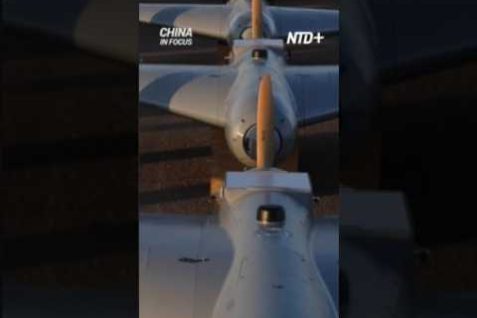
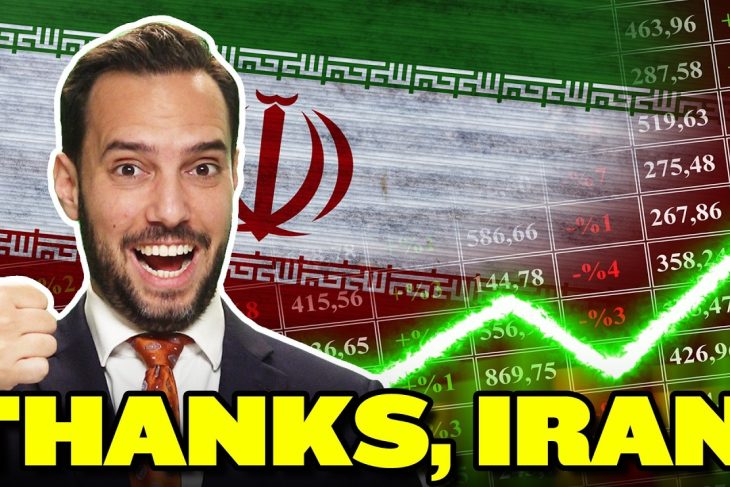
The Iran War may have revealed a surprisingly cheap way for America to defend Taiwan from a Chinese invasion. Could $35,000 drones help stop the Chinese military—and change the future of warfare?
Want to go deeper than YouTube will let us? Check out our website:
Limited Time: Get your free Tank Man set when you join the 50-Cent Army:
The Iran War may have revealed a surprisingly cheap way for America to defend Taiwan from a Chinese invasion. Could $35,000 drones help stop the Chinese military—and change the future of warfare?
Want to go deeper than YouTube will let us? Check out our website:
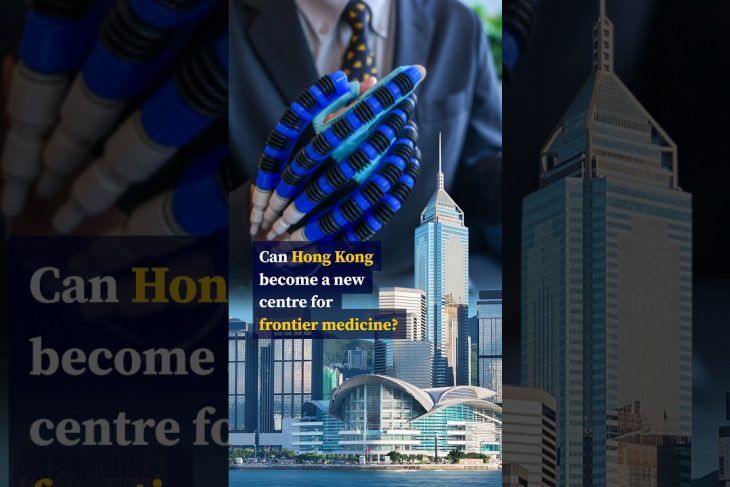
Hong Kong is pouring vast resources into healthcare innovation, developing breakthroughs ranging from high-speed diagnostic chips to surgical robots. But the city’s researchers and universities face steep hurdles when it comes to finding private investment, local manufacturing and commercialisation of what is developed.
In a four-part series, the SCMP takes you inside the local laboratories shaping the future of global healthcare innovation, from treatment, diagnostics to prevention, and explores what it might take for Hong Kong to become the “Silicon Valley of the East”.
Hong Kong is pouring vast resources into healthcare innovation, developing breakthroughs ranging from high-speed diagnostic chips to surgical robots. But the city’s researchers and universities face steep hurdles when it comes to finding private investment, local manufacturing and commercialisation of what is developed.
In a four-part series, the SCMP takes you inside the local laboratories shaping the future of global healthcare innovation, from treatment, diagnostics to prevention, and explores what it might take for Hong Kong to become the “Silicon Valley of the East”.
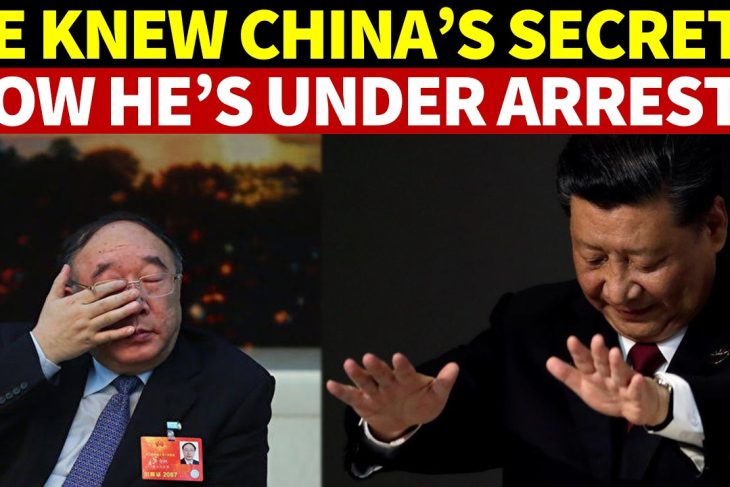
On October 13, 2026, authorities announced that Huang Qifan, the former mayor of Chongqing, China, was under investigation. The veteran financial technocrat continued giving speeches across China after retirement and became a celebrity economist online. The reasons for his downfall remain unclear.
On October 13, 2026, authorities announced that Huang Qifan, the former mayor of Chongqing, China, was under investigation. The veteran financial technocrat continued giving speeches across China after retirement and became a celebrity economist online. The reasons for his downfall remain unclear.
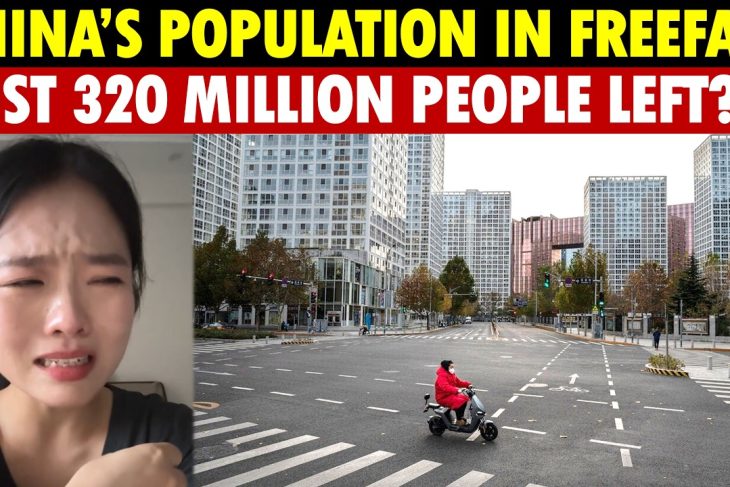
The report explains how such a steep decline could happen within 74 years, a period approaching an average human lifespan. As people age and die, the population can shrink rapidly if births remain too low to replace them. Still, Yi’s projection of 320 million depends on a specific starting population and fertility trends. It is not a certain outcome.
The report explains how such a steep decline could happen within 74 years, a period approaching an average human lifespan. As people age and die, the population can shrink rapidly if births remain too low to replace them. Still, Yi’s projection of 320 million depends on a specific starting population and fertility trends. It is not a certain outcome.
According to China’s Ministry of Education, the number of college graduates in 2026 is expected to reach a record 12.7 million, about 480,000 more than in 2025. Including unemployed graduates from previous years and students returning from overseas, the total number of job seekers is expected to double.
According to China’s Ministry of Education, the number of college graduates in 2026 is expected to reach a record 12.7 million, about 480,000 more than in 2025. Including unemployed graduates from previous years and students returning from overseas, the total number of job seekers is expected to double.
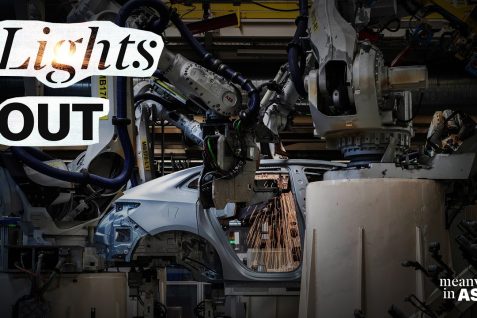
Trump wants American factory jobs back. In China, “dark factories” run with the lights off and a fraction of the workers. CNN’s Mike Valerio takes our hosts inside a factory that hardly needs humans.
Stream the rest of Meanwhile in Asia on the CNN app:
Watch 24/7 live news with CNN Headlines:
Stream more on CNN with an All Access subscription:
Trump wants American factory jobs back. In China, “dark factories” run with the lights off and a fraction of the workers. CNN’s Mike Valerio takes our hosts inside a factory that hardly needs humans.
Stream the rest of Meanwhile in Asia on the CNN app:
Watch 24/7 live news with CNN Headlines:
Stream more on CNN with an All Access subscription:
State authorities are turning to generative AI to produce microdramas that promote Chinese culture, history and values in the latest propaganda push from Beijing. Can they find an audience amid a flood of cheaply made dramas for small screens? SCMP’s Caroline Lin reports.
State authorities are turning to generative AI to produce microdramas that promote Chinese culture, history and values in the latest propaganda push from Beijing. Can they find an audience amid a flood of cheaply made dramas for small screens? SCMP’s Caroline Lin reports.
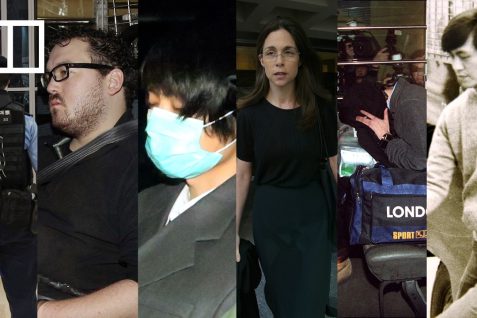
Amid the ongoing trial over the murder of 28-year-old socialite Abby Choi Tin-fung in 2023, we revisit some of the most shocking crimes in Hong Kong’s history.
Amid the ongoing trial over the murder of 28-year-old socialite Abby Choi Tin-fung in 2023, we revisit some of the most shocking crimes in Hong Kong’s history.
In recent years, wave after wave of P2P lending defaults has swept across China, wiping out the life savings of countless families and tearing households apart. Yet, just when people thought the dust had finally settled on this fintech meltdown, the ultimate bombshell detonated—CreditEase, a colossal titan that dominated China’s shadow banking landscape for two full decades, widely recognized as the ‘forefather of P2P’ of the industry, has completely imploded!
In recent years, wave after wave of P2P lending defaults has swept across China, wiping out the life savings of countless families and tearing households apart. Yet, just when people thought the dust had finally settled on this fintech meltdown, the ultimate bombshell detonated—CreditEase, a colossal titan that dominated China’s shadow banking landscape for two full decades, widely recognized as the 'forefather of P2P' of the industry, has completely imploded!
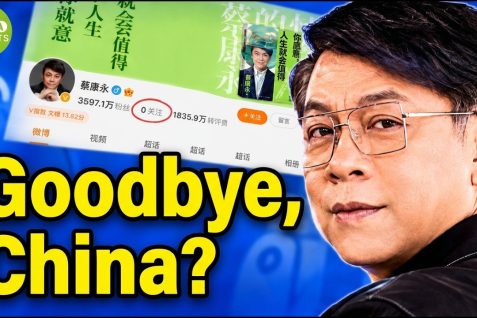
A Taiwanese TV star attended a political rally in Taipei—and suddenly found himself at the center of a cross-strait controversy.
Kevin Tsai, a popular television host who built a successful career in mainland China, appeared at a campaign event for Taipei mayoral candidate Puma Shen. Chinese state-linked media criticized his appearance, and a major Chinese brand moved to distance itself from him.
Is Tsai walking away from the Chinese entertainment market? And why has Shen’s growing campaign attracted so much attention from Beijing?
We examine the controversy, Tsai’s remarkable family history, and the political battle unfolding ahead of Taipei’s mayoral election.
A Taiwanese TV star attended a political rally in Taipei—and suddenly found himself at the center of a cross-strait controversy.
Kevin Tsai, a popular television host who built a successful career in mainland China, appeared at a campaign event for Taipei mayoral candidate Puma Shen. Chinese state-linked media criticized his appearance, and a major Chinese brand moved to distance itself from him.
Is Tsai walking away from the Chinese entertainment market? And why has Shen's growing campaign attracted so much attention from Beijing?
We examine the controversy, Tsai's remarkable family history, and the political battle unfolding ahead of Taipei's mayoral election.
A security expert warns that reported Chinese missile components and targeting assistance to the Houthis could escalate the conflict with Saudi Arabia, raisi
A security expert warns that reported Chinese missile components and targeting assistance to the Houthis could escalate the conflict with Saudi Arabia, raising questions about Beijing's involvement and the threat to U.S. interests. #FoxNews #China #Houthis #SaudiArabia #MiddleEast #Missiles #NationalSecurity #BreakingNews
Do you have an insider tip or unique information on a story? Do you have a suggestion for a story you want us to cover? Submit to the Tip Line: https://docs.google.com/forms/d/e/1FA… — VIDEO CHAPTERS — 00:00 Intro 4:42 Chinese Characteristics 10:11 Party-State 15:38 Modest Prosperity 22:53 Eating In Separate Kitchens 29:29 To Get Rich, First Build Roads 33:59 Lying Flat 38:24 Maintaining Stability 42:18 A Pat on the Shoulder 46:38 The New Era Correction: 35:35 – This timeline incorrectly labels Hua Guofeng in Chinese using his birth name, 苏铸. He adopted the name 华国锋 in the 1930s and was known by that name during his political career.
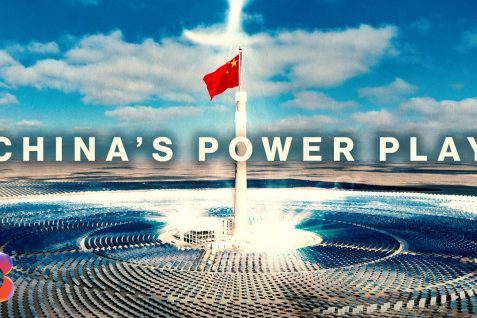
China is racing to power a future of artificial intelligence and robots with renewables. But as it builds more electricity capacity than ever before, it face
China is racing to power a future of artificial intelligence and robots with renewables. But as it builds more electricity capacity than ever before, it faces a new challenge: whether the grid can keep up. #China #Energy #Power
Mammouth AI gives you access to the best AI models (Claude, GPT, Gemini, Mistral, Grok and more) in a single interface, from €10/month 👉 https://mammouth.ai Timestamps: 00:00 – Chinese AI Infrastructure Boom 6:36 – Closer Look at the AI Chips
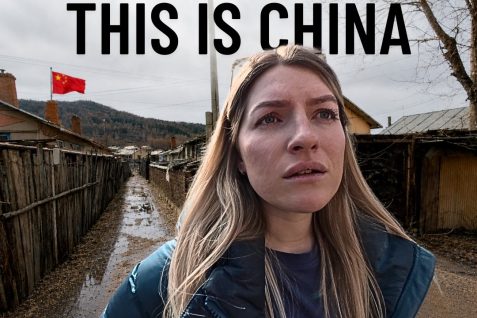
China, this, China that. China is everywhere in 2026, from videos of flashy modern mega cities, to delivery drones, and clips of their bustling streets. But there are two sides to China, the reality in the cities, and real life in small towns and rural villages. But how different is life in the remote, rural communities? There is only one way to find out what real life is like out here, lets leave the China we all know (& see every day on social media), and travel in to rural Manchuria and enter the other side of the Middle Kingdom.
China’s military expansion defies easy summary. Its navy outsails America’s in hull count, its air force produces stealth fighters at staggering rates, and i
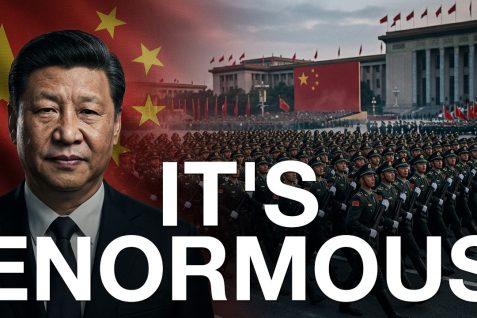
China's military expansion defies easy summary. Its navy outsails America's in hull count, its air force produces stealth fighters at staggering rates, and its nuclear arsenal has doubled since 2020. From AI-driven drone swarms to unmatched shipbuilding capacity, Beijing builds both quality and quantity at a pace no rival matches.
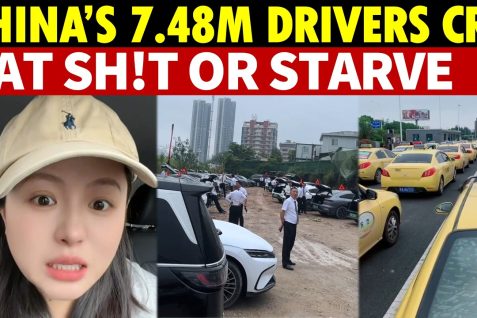
By July 2026, China had more than 7.48 million licensed ride-hailing drivers and 402 platforms. Their numbers were growing faster than demand. Beijing had about 580,000 gig workers in ride-hailing and food delivery: 250,000 delivery workers and 330,000 drivers. In Guangzhou, average daily active drivers rose from more than 70,000 in January 2025 to over 100,000 in January 2026, an increase of nearly 30,000 in a year. Driver numbers have outpaced demand for rides. The industry, sometimes called a refuge for middle-aged men, is getting increasingly crowded.
By July 2026, China had more than 7.48 million licensed ride-hailing drivers and 402 platforms. Their numbers were growing faster than demand. Beijing had about 580,000 gig workers in ride-hailing and food delivery: 250,000 delivery workers and 330,000 drivers. In Guangzhou, average daily active drivers rose from more than 70,000 in January 2025 to over 100,000 in January 2026, an increase of nearly 30,000 in a year. Driver numbers have outpaced demand for rides. The industry, sometimes called a refuge for middle-aged men, is getting increasingly crowded.
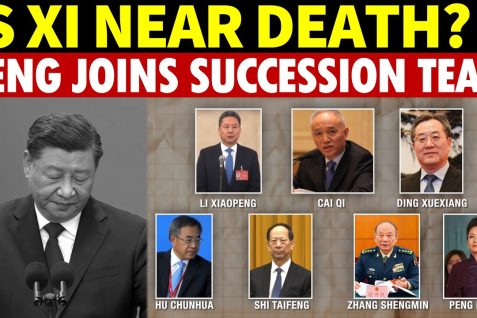
On October 9, independent Chinese political commentator Cai Shenkun said on his program that sources in Zhongnanhai had raised serious concerns about Xi Jinping’s health. Senior Chinese officials had secretly set up a seven-member emergency group, including Xi’s wife, Peng Liyuan. The group would handle a political crisis and a transfer of power if Xi died or suddenly became severely incapacitated.
On October 9, independent Chinese political commentator Cai Shenkun said on his program that sources in Zhongnanhai had raised serious concerns about Xi Jinping's health. Senior Chinese officials had secretly set up a seven-member emergency group, including Xi's wife, Peng Liyuan. The group would handle a political crisis and a transfer of power if Xi died or suddenly became severely incapacitated.
Limited Time: Get your free Tank Man set when you join the 50-Cent Army:
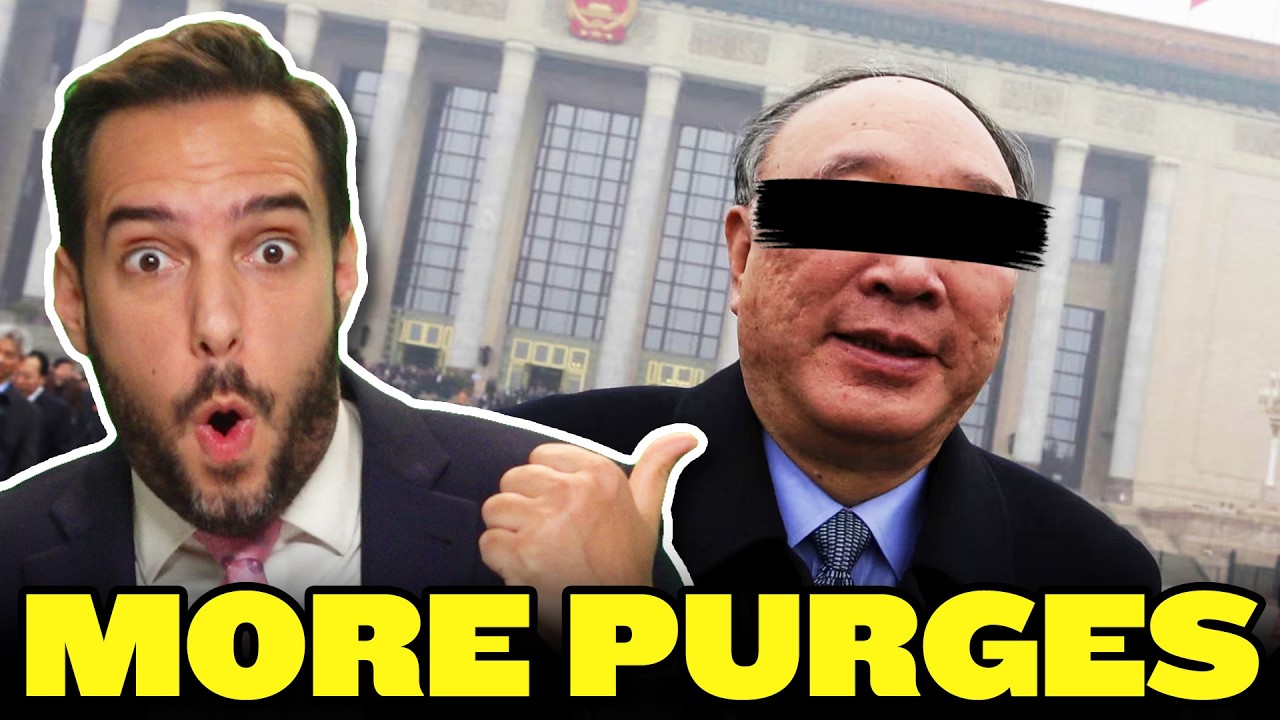
Chinese workers return from vacation to find EVERYTHING GONE! A once untouchable Chinese official has been purged. And more in Europe’s ongoing failure to China. That and more on this week’s China news headlines.
Operation Honey Pot: Paste this emoji 🍯 in your comment below.
Want to go deeper than YouTube will let us? Check out our website:
Limited Time: Get your free Tank Man set when you join the 50-Cent Army:
Chinese workers return from vacation to find EVERYTHING GONE! A once untouchable Chinese official has been purged. And more in Europe’s ongoing failure to China. That and more on this week's China news headlines.
Operation Honey Pot: Paste this emoji 🍯 in your comment below.
Want to go deeper than YouTube will let us? Check out our website:
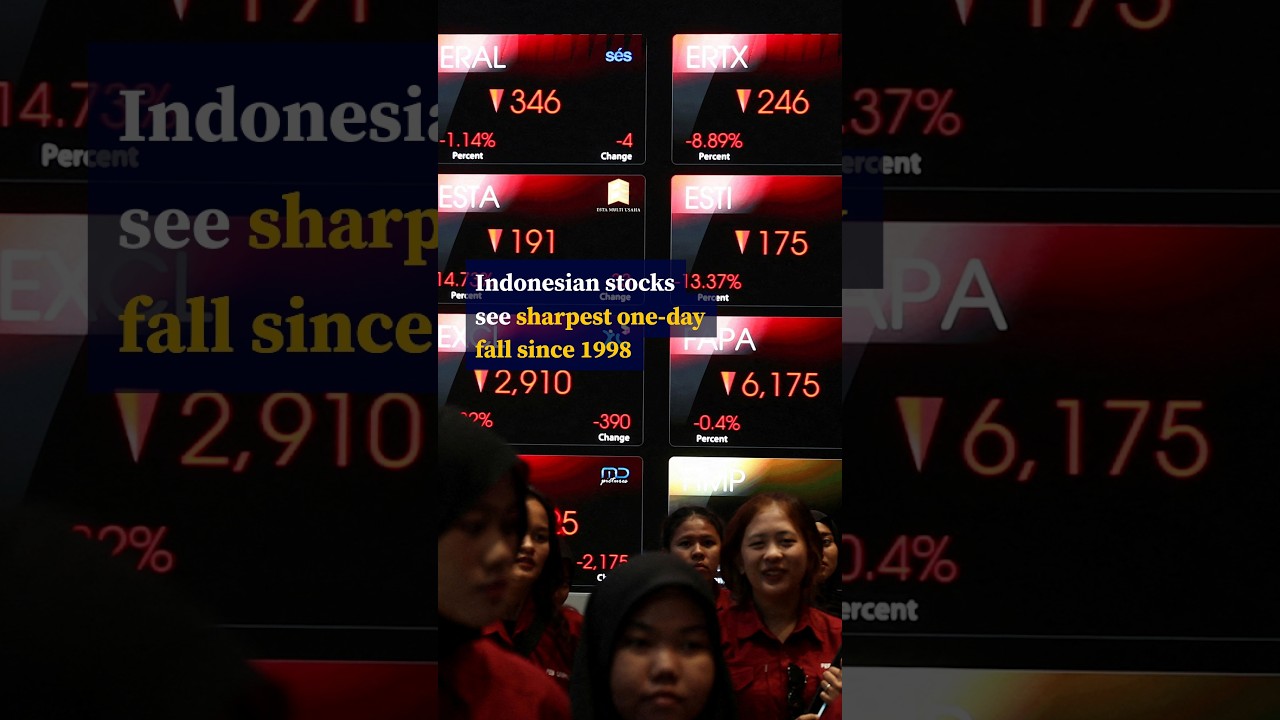
Indonesian stocks suffered their worst one-day drop in 28 years on Friday, with the Jakarta Composite Index plunging as much as 11.4 per cent after MSCI proposed stripping the country of its “emerging market” status.
Indonesia’s stock market suffered its worst day in nearly three decades on Friday, as the benchmark Jakarta Composite Index collapsed more than 11 percent after global index provider MSCI declared the country’s market no longer worthy of emerging-market status. The index plunged 8 percent within minutes of the opening bell, triggering an automatic 30-minute trading halt, and then sank even further when trading resumed — putting it on course for its steepest single-day decline since January 1998, when the Asian Financial Crisis was tearing through Southeast Asia. The rupiah crumbled alongside equities, sliding to 18,070 per U.S. dollar, its weakest level since late July and within sight of its all-time low. For Southeast Asia’s largest economy, already the world’s worst-performing major stock market this year, Friday’s rout was a humiliation years in the making. MSCI’s verdict was blunt: Indonesia’s continued classification as an emerging market, it said, is “no longer appropriate.”
What MSCI Announced
MSCI said Friday it was launching a formal consultation on a proposal to reclassify Indonesia as a “standalone” market — a category that sits outside its main global groupings of developed, emerging and frontier markets. The proposed change would skip over frontier status entirely and drop Indonesia into a grouping it would share with markets like Jamaica, Panama and Palestine, a remarkable demotion for an economy of nearly 280 million people. Standalone status would exclude Indonesian stocks from the global indexes tracked by trillions of dollars in passive investment, forcing index funds and benchmark-hugging managers to sell their Indonesian holdings whether they want to or not. The announcement came a full month ahead of a scheduled review, and its severity stunned even investors who had been bracing for bad news. Jakarta authorities had spent months insisting that reforms were underway; MSCI’s answer was that those efforts had not gone nearly far enough.
A Year of Warnings Ignored
The seeds of Friday’s crash were planted in January, when MSCI froze Indonesia in its indexes and threatened a downgrade to frontier status over deep concerns about market opacity. Investors had flagged murky shareholding structures, suspected coordinated trading and what MSCI described as “significant concerns” around market dysfunction — problems that made it genuinely difficult to know who really owned what on the Jakarta exchange. Indonesian authorities announced a package of reforms in April and later said the work was complete, insisting the threat of a downgrade had been addressed and the market was on a sound footing. MSCI disagreed with that assessment in the strongest possible terms. On Friday the index provider said the reforms had not made sufficient progress and, in a striking escalation, declared that even a downgrade to frontier status would not adequately reflect the severity of the problems it had found.
The consultation now underway gives Jakarta one final window to demonstrate meaningful improvement, but MSCI made clear it will proceed with the reclassification unless it sees clear evidence of genuine change. That sets up a high-stakes race between Indonesian regulators and the calendar, with billions of dollars in forced selling hanging on the outcome. Market participants who raised the original alarms — unclear ownership, coordinated trading patterns, dysfunctional price discovery — will be watching to see whether this time the promises are followed by action. For an index provider that typically moves with glacial caution, the decision to jump straight past frontier status signals a loss of patience that is hard to walk back.
The Billions at Stake
The financial consequences of a standalone reclassification are enormous and largely mechanical. UBS estimated the move could trigger about $4 billion in forced selling from passive funds alone, with active investors potentially pulling another $15 billion on top of that as they reposition ahead of the exclusion. Foreign investors have already been heading for the exits all year, net selling $4.7 billion worth of Indonesian stocks in 2026 before Friday’s crash even began. The benchmark index has now lost nearly 40 percent of its value this year, making it the worst-performing share market in the region by a wide margin, and it closed Friday at a six-year low. The rupiah’s slide to 18,070 per dollar — approaching its lifetime low of 18,190 — adds a currency loss on top of the equity losses for any foreign investor still holding Indonesian assets.
The contrast with Indonesia’s neighbors could hardly be sharper. On the same Friday that Jakarta was in freefall, South Korean equities rebounded more than 2 percent, while stocks in Taiwan and Singapore each gained about 1 percent. Indonesia stood alone in the red, a regional outlier in the worst possible way. That divergence tells its own story: this was not a global risk-off day or an Asia-wide selloff, but a verdict rendered specifically on Indonesia’s market governance. When capital flees one country while flowing into its neighbors, the problem is not the weather — it is the house.
Jakarta Fires Back
Indonesian officials did not take the news quietly. Senior economic minister Airlangga Hartarto said there was “a big question mark” over MSCI’s decision, noting that the index provider had met with Indonesian officials in Bangkok earlier in the week without ever raising the possibility of a standalone downgrade. The timing — arriving a month before the scheduled review — added to Jakarta’s sense of grievance, and officials framed the move as an ambush rather than the conclusion of a transparent process. Behind the public anger lies a deeper embarrassment for a government that has spent years pitching Indonesia as Southeast Asia’s rising investment destination. A vast consumer market of 280 million people, a young workforce, abundant natural resources — Friday’s crash suggested that to global capital, the plumbing of the market matters more than any of it.
What Comes Next
The consultation process now moves into its decisive phase, with a final MSCI decision expected by the end of June 2027 — giving Jakarta roughly eight months to prove that real reform has taken hold. That means tackling the core complaints head-on: transparent ownership structures, credible enforcement against coordinated trading, and trading mechanics that foreign investors can actually trust. Whether Indonesia’s political system can deliver that kind of technocratic fix, and quickly, is an open question — the same concentrated ownership networks that MSCI is punishing are politically powerful and deeply entrenched. For now, fund managers are left to decide whether to wait for the verdict or sell into the stampede, knowing that every other passive fund will be forced to do the same thing if the downgrade goes through. Friday’s crash may not be the end of the story. If history is any guide, the selling feeds on itself until the forced sellers are done — and in Jakarta, the forced selling may only just be beginning.
Authorities in Pakistan said the owner of a school in the northwestern city of Peshawar has been arrested and an investigation has been launched, after the roof of the building collapsed during morning classes on Thursday. Police said at least 34 pupils and a teacher died and dozens more were wounded. Most of the victims were under the age of 13.
Authorities in Pakistan said the owner of a school in the northwestern city of Peshawar has been arrested and an investigation has been launched, after the roof of the building collapsed during morning classes on Thursday. Police said at least 34 pupils and a teacher died and dozens more were wounded. Most of the victims were under the age of 13.
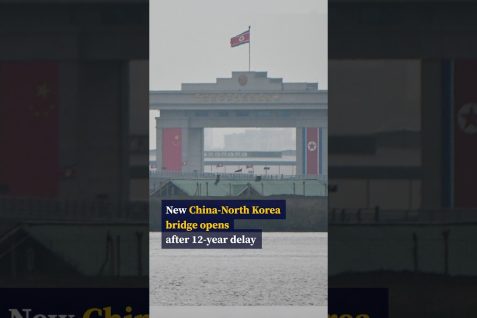
A bridge between China and North Korea that was completed 12 years ago finally opened on Thursday. The two countries held an opening ceremony to mark the official opening of the New Yalu River Bridge. The bridge links the Chinese city of Dandong with North Korea’s Sinuiju and is expected to become a major trade route between the two countries.
A bridge between China and North Korea that was completed 12 years ago finally opened on Thursday. The two countries held an opening ceremony to mark the official opening of the New Yalu River Bridge. The bridge links the Chinese city of Dandong with North Korea’s Sinuiju and is expected to become a major trade route between the two countries.
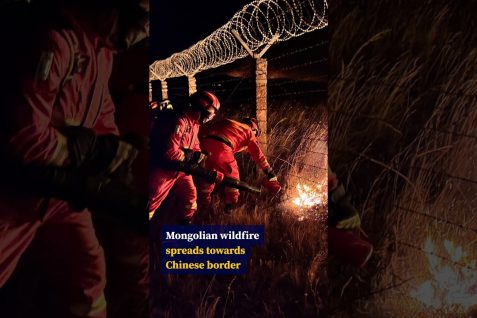
A wildfire originating from Mongolia has swept towards the Chinese border. China has deployed about 3,400 personnel to contain the blaze. Local Mongolian news reports said a vehicle from mobile operator Mobicom caused the blaze on October 8 when it caught fire. The wildfire has raised fresh concerns in China, underscoring the recurring risk of cross-border environmental hazards.
A wildfire originating from Mongolia has swept towards the Chinese border. China has deployed about 3,400 personnel to contain the blaze. Local Mongolian news reports said a vehicle from mobile operator Mobicom caused the blaze on October 8 when it caught fire. The wildfire has raised fresh concerns in China, underscoring the recurring risk of cross-border environmental hazards.
Filipino Catholics offered prayers for Pope Leo’s speedy recovery after he underwent surgery for lung cancer on October 13, 2026. The Vatican said that the 71-year-old pontiff had part of one lung removed without complications during the 90-minute procedure.
Filipino Catholics offered prayers for Pope Leo’s speedy recovery after he underwent surgery for lung cancer on October 13, 2026. The Vatican said that the 71-year-old pontiff had part of one lung removed without complications during the 90-minute procedure.
In partnership with: Abu Dhabi Department of Health
Dr Asma Al Mannaei, executive director of the health life science sector at the Department of Health – Abu Dhabi, explains why longevity is being put in the spotlight at the Abu Dhabi Future Health Summit. She shares how breakthroughs and policies emphasising prediction and prevention in healthcare can help people lead longer, healthier lives.
In partnership with: Abu Dhabi Department of Health
Dr Asma Al Mannaei, executive director of the health life science sector at the Department of Health – Abu Dhabi, explains why longevity is being put in the spotlight at the Abu Dhabi Future Health Summit. She shares how breakthroughs and policies emphasising prediction and prevention in healthcare can help people lead longer, healthier lives.
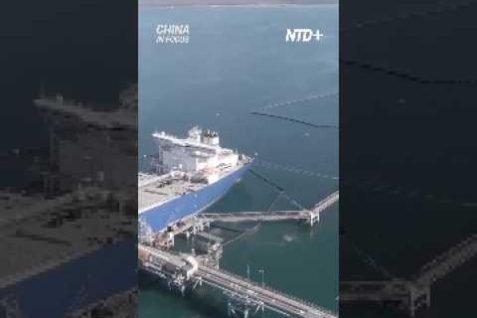
Taiwan has agreed to buy nearly a third of the liquefied natural gas from a planned export project in Alaska and invest up to $4.4 billion to help build it, in what President Donald Trump is calling one of the biggest energy deals ever made. Trump announced the commitments on Tuesday night, October 13, 2026, at a campaign rally in Wasilla, Alaska, saying the Taiwanese purchases “guarantee the success” of a development that has struggled for decades to get off the ground. Taiwan’s Ministry of Economic Affairs confirmed on Wednesday that state-owned CPC Corp has made significant progress with the project developer after nearly a year and a half of negotiations. The announcement weaves together energy security, alliance politics, and midterm election strategy in a single headline.
The numbers involved are enormous. Under the plan described by both sides, Taiwan would purchase 6 million metric tons of LNG per year from the Alaska project once production begins, roughly 30 percent of its planned 20-million-ton annual output, over a 20-year period. Commerce Secretary Howard Lutnick told the Wasilla crowd that Taiwan had committed to investing $4.4 billion to see the project completed. In a follow-up post on Truth Social, Trump put the total value of Taiwan’s 20-year purchase commitment at between $70 billion and $80 billion.
A Project Decades in the Making
The Alaska LNG venture is one of the great unbuilt projects of American energy. Discussed in various forms for decades, it would move natural gas from Alaska’s remote North Slope through an 800-mile pipeline across the state to liquefaction facilities on the coast, where the supercooled gas would be loaded onto tankers bound for Asia. The estimated price tag runs from $44.5 billion to $54.5 billion, making it one of the most expensive energy infrastructure proposals in the world. It has repeatedly failed to secure the binding long-term contracts and committed investment needed to reach a final investment decision.
The current developer, Glenfarne, is targeting mechanical completion of the roughly 739-mile pipeline in 2028 and first gas in 2029. Taiwan’s ministry said that if the project stays on schedule, deliveries to the island could begin as early as 2032. Trump’s announcement is the most serious political commitment the project has ever received, but the gap between a rally announcement and flowing gas remains vast.
Why Taiwan Wants In
For Taiwan, the logic is about survival, not just economics. The island imports nearly all of its energy, and its leaders have watched global gas markets convulse as war in the Middle East disrupts flows through the Strait of Hormuz, which used to carry roughly a fifth of the world’s LNG supplies. Diversifying supply sources has become a strategic imperative, and the United States is the diversification partner of choice. Taiwanese officials said in February 2026 that they planned to increase purchases of American natural gas to about a third of the island’s imports this year while reducing purchases from elsewhere. Last year, the government announced a goal of tripling the US share of Taiwan’s LNG imports to 30 percent over the next decade.
The courtship has been building for some time. CPC Corp signed a non-binding letter of intent with the Alaska Gasline Development Corp in March 2025 to buy LNG and explore investment, and a senior Taiwanese official visited the proposed project site in Alaska during 2025. From Taipei’s perspective, locking in American gas does double duty: it secures fuel for the island’s power plants and deepens the economic bond with the United States, Taiwan’s main informal backer and arms supplier, at a moment when China is intensifying military pressure and the island awaits a proposed $14 billion American arms package.
The Geography Argument
Supporters of the project make a straightforward geographic case. Unlike LNG shipped from the Gulf Coast, which must pass through the Panama Canal or travel around the Horn of Africa, gas from Alaska would sail directly across the Pacific to Taiwan and other Asian buyers. That means shorter transit times, lower shipping costs, and routes that avoid the world’s most contested maritime chokepoints. For an island that China claims as its own and threatens to blockade, that resilience has value far beyond the per-unit price of gas.
The Trump administration has been actively marketing the project to Asian allies on exactly these grounds, presenting Alaska LNG as a strategic alternative to Middle Eastern and Russian supplies. Taiwan is the first major buyer to step forward at this scale, and American officials clearly hope others will follow. Japan and South Korea, both heavy LNG importers with their own alliance considerations, have been lobbied on the project before. A Taiwanese anchor commitment makes the sales pitch to the next buyer considerably easier.
The Skeptics’ Case
None of this has silenced the doubters. Taiwan’s own economy ministry, while confirming the progress in talks, pointedly did not say whether a binding sale-and-purchase agreement had been signed. The letter of intent from March 2025 records a direction of travel, not a finalized commercial obligation. The ministry’s careful language, that arrangements “will be determined through subsequent negotiations and commercial contract procedures,” is the language of a government keeping its options open. Taiwan’s Premier Cho Jung-tai, asked about Trump’s remarks, offered only that the government’s responsibility was to stabilize energy supply and build resilience, like governments everywhere.
The commercial objections are real and longstanding. Building an 800-mile pipeline across Alaska to serve export markets has defeated every previous attempt, and analysts who have studied the project warn that its delivered gas would struggle to compete with cheaper Gulf Coast LNG. The three-year gap between Glenfarne’s first-gas target of 2029 and Taiwan’s earliest delivery date of 2032 hints at how much work remains between mechanical completion and actual export operations. And the entire structure rests on a political foundation: a future administration in either Washington or Taipei could lose enthusiasm, leaving the project stranded once again.
What It Means for the US-China Energy Chessboard
Step back, and the deal looks like something larger than a gas contract. The United States is using energy exports as an instrument of alliance management, binding Taiwan’s economy more tightly to America’s at the same time it is arming the island. Taiwan is using energy imports as an instrument of security policy, paying a premium for supply that cannot be cut off by a Chinese blockade. China, which watches every deepening of US-Taiwan ties with fury, now sees the island planning to anchor a decades-long energy partnership with Washington. Every element of the transaction carries a geopolitical charge.
Whether the pipeline ever gets built, the announcement itself has already done political work. Trump got a made-for-television energy triumph at a midterm rally for a Republican senator in a tight race. Taiwan got a public American embrace and a tangible deliverable to show for its courtship of Washington. The only question that matters now is the oldest one in the Alaska LNG saga: this time, will the pipeline actually get built? The answer will arrive not at a rally, but years from now, in the form of steel in the ground or another round of broken promises.
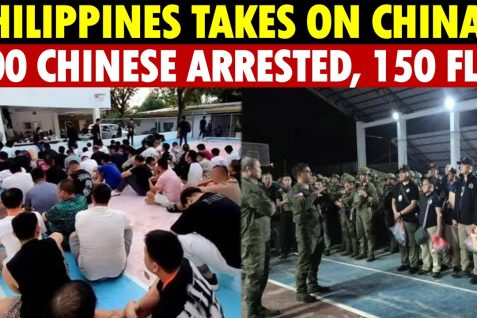
150 Chinese teachers working across the Philippines began leaving in groups to return to China in late September this year. They feared being accused of involvement in espionage. Their departure has drawn attention as already strained relations between the Philippines and China face renewed tensions.
150 Chinese teachers working across the Philippines began leaving in groups to return to China in late September this year. They feared being accused of involvement in espionage. Their departure has drawn attention as already strained relations between the Philippines and China face renewed tensions.
Empires rarely die of old age. More often, they die staring at a younger empire across the water, both convinced the mountain belongs to them alone. Because two tigers cannot share …
Empires rarely die of old age. More often, they die staring at a younger empire across the water, both convinced the mountain belongs to them alone. Because two tigers cannot share the same mountain. The Thucydides Trap is what happens when two nations each believe destiny chose them.
Last year I wrote about the old Chinese proverb. Since then, Xi Jinping has openly invoked something even darker: the “Thucydides Trap.” That’s not poetry — it’s geopolitical philosophy with a warning label attached.
The phrase comes from the ancient Greek historian Thucydides, who chronicled the war between Athens and Sparta 2,400 years ago. Athens was the rising power; Sparta the established one. Thucydides concluded that Athens’ rise — and the fear it stirred in Sparta — made war all but inevitable.
Xi raised it directly with Donald Trump while warning about Taiwan and the mounting U.S.–China tension. In diplomatic language, that was no accident. It was a message: China sees itself as the rising civilization, America as the existing empire, and history says these moments are dangerous.
And history has screened this film before. Britain and Germany before World War I. Athens and Sparta. Imperial Japan and the United States. A rising power pushes outward; the established power pushes back. Trade routes, military buildups, technology races, alliances, and national pride tangle together like dry brush waiting for a spark.
The frightening part? Wars rarely start because everyone wants one. They start because everyone assumes the other side will back down. That is the real trap.
Today’s battlefield isn’t just carriers and missiles. It’s semiconductors, AI, cyberwarfare, rare earths, satellites, shipping lanes, media influence, and financial plumbing. The 20th-century Cold War was about ideology. This one is about who controls the operating system of the 21st century.
China builds ports. America builds alliances. China builds factories. America wields finance and naval power. China wants Taiwan. America can’t let Taiwan fall without signaling weakness across Asia. And over everything hangs the awkward truth that both economies are chained together — the U.S. and China are like two men gripping each other’s throats while standing knee-deep in gasoline. Neither can fully let go. Neither can fully win. Neither can afford to lose.
That’s why Xi’s mention matters. It wasn’t a history lecture. It was Beijing signaling that it understands exactly where this road has led before — when two superpowers both believe the mountain is theirs.
The trouble with empires is they always think they’re the exception to history. Until they aren’t. And somewhere, an old Greek historian is probably shaking his head, because humanity keeps upgrading the weapons while running the same ancient software.
What Trump and Xi Actually Discussed
Taiwan — the dominant issue. Xi warned Trump that mishandling Taiwan could trigger direct U.S.–China conflict, reportedly calling it the “most important issue” in the relationship. They covered American arms sales to Taiwan, whether Washington would defend the island, and regional military tensions. Trump declined to say outright whether America would fight for Taiwan — classic “strategic ambiguity,” the long-standing U.S. posture of keeping Beijing guessing.
The Thucydides Trap itself. Xi raised it publicly, which was both symbolic and strategic: China doesn’t want containment, sees itself as an equal superpower, and believes Washington should stop treating it as an empire to be stopped. It was also a warning — Taiwan could be the trigger.
Trade and economics. Tariffs, Chinese purchases of American agriculture, Boeing aircraft deals, technology and AI cooperation, supply chains. But unlike earlier Trump-era meetings, this summit felt far more about the strategic power balance than about settling trade scores.
AI and technology rivalry. Both sides discussed artificial intelligence, including misuse by non-state actors. Both understand AI may become as strategically decisive as nuclear weapons, oil, or industrial capacity were in earlier eras.
Iran and global instability. The Middle East came up too — China depends heavily on the region’s energy routes while America still underwrites global naval security. Both have enormous stakes in keeping things stable.
Symbolism and power projection. Much of the summit was theater, and theater matters. China staged it with full ceremony — the Great Hall of the People, state banquets, meticulously choreographed visuals projecting equal-superpower status. Analysts read it as Xi positioning China not as a junior power but as America’s peer: a modern “G-2” world. Because geopolitics isn’t only weapons and economics — it’s perception, prestige, status, legitimacy. It’s about who the world believes is rising and who is fading. Xi invoking the Thucydides Trap was Beijing telling the planet: we grasp the historical danger of this moment — and we believe China has arrived.
What Came Out of It
Boeing aircraft. China reportedly agreed to buy around 200 Boeing jets immediately, with talk of 500–750 over time, plus hundreds of GE Aerospace engines. Significant — China had frozen major Boeing orders for years, and Boeing desperately needs big international wins. But details remain hazy: timelines, financing, and final contracts weren’t publicly nailed down.
Agricultural purchases. Beijing reportedly committed to large multi-year buys of American soybeans and farm goods, potentially worth double-digit billions annually — echoing earlier Trump-era arrangements where farm imports were used to cool tensions.
Market-opening talk. Xi floated further opening parts of China’s market to U.S. business. No major structural agreement, no sweeping tariff deal, no rare-earth breakthrough emerged.
AI cooperation. Discussions on AI safety and preventing misuse by rogue actors — but no treaty, no binding framework announced.
Iran and the Middle East. Talk of keeping oil lanes open, blocking Iranian nuclear weapons, possible flexibility on Chinese purchases of Iranian oil — but no joint strategic pact.
The Real Outcome Was Geopolitical, Not Economic
Most analysts agree the summit was less about inked deals and more about stabilizing a dangerous rivalry: easing Taiwan tensions, symbolically recognizing China as a peer, and reopening channels between Washington and Beijing. The optics may have outweighed the paperwork.
Xi walked away with equal-superpower treatment and a lavishly staged Beijing summit affirming that China can’t be ignored. Trump walked away with trade headlines, potential Boeing orders, farm-export promises, and the image of a leader who deals directly with Xi.
But there’s no grand trade deal. No Taiwan agreement. No military pact. No AI treaty. No Cold War-style breakthrough.
Just two tigers, circling the same mountain, each insisting it belongs to them — while an ancient Greek historian watches from the shadows, wondering how many times humanity needs to learn the same lesson.
Let me tell you the tale of the little island that could — Taiwan — home to a company that doesn’t sell shoes, ships, or social media, but sells the future …
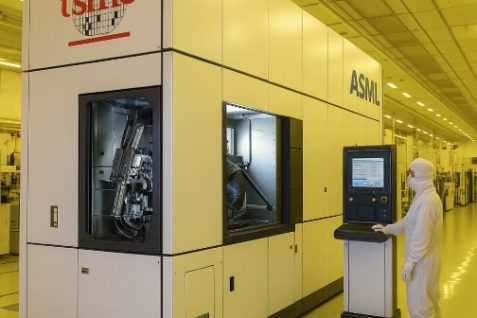
Let me tell you the tale of the little island that could — Taiwan — home to a company that doesn’t sell shoes, ships, or social media, but sells the future one microscopic chip at a time. TSMC is its name, and it’s become the beating silicon heart of the modern world. Every smartphone in your hand, every data center dreaming AI dreams, even your car that thinks it’s smarter than you — all powered by TSMC’s handiwork.
Donald Trump — love him or loathe him — calls it the most important company on Earth. And for once, the man might not be exaggerating. Because if you unplug TSMC, you don’t just switch off Taiwan; you dim the lights on global progress. But here’s the kicker: the world’s most vital company also sits on the world’s most dangerous fault line, both figuratively and geopolitically. That makes investing in it feel like buying a front-row seat to a symphony — with a slight chance of missile fire.
So yes, I’m planning to buy some more. Not because it’s safe, but because it’s essential. The only real question is when. Before the tariffs? After the tanks? Or when sanity and silicon finally learn to share a border?
Now, I’m no soothsayer, and I’ve long since retired my crystal ball — mostly because it was made in China and cracked. But I know this: there are two kinds of companies in this world — those that follow trends, and those that build the roads the trends drive on. TSMC doesn’t just build the road; it pours the concrete, lays the fiber, and charges tolls to Apple, NVIDIA, and Amazon for the privilege of driving.
Sure, it’s in a risky neighborhood. Sure, it’s first on the chopping block in any trade war or cross-strait crisis. But when the world runs on chips and one company makes the smartest ones, you don’t ignore it — you watch it closely and keep your powder dry. I’ll buy more when the price dips, when the winds settle, or when the storm is priced in.
Some companies are too big to fail. TSMC? It’s too important to ignore.
The Geopolitical Shadow
TSMC’s headquarters in Taiwan is both its identity and its greatest risk. Any conflict or blockade across the strait would shatter the global chip supply chain overnight. Washington and its allies are pouring money into domestic chipmaking, but replicating TSMC’s capabilities is brutally difficult — the know-how took decades to accumulate. TSMC is hedging by building fabs in Arizona, Japan, and Germany, spreading some capacity beyond the island. Smart move, but let’s be honest: the crown jewels stay in Taiwan.
The Competition Isn’t Close
TSMC controls roughly 60% of the global foundry market, and at the leading edge it’s barely a contest. Samsung Foundry chases TSMC at 3nm and 2nm but keeps stumbling on yields. Intel is barging back into contract manufacturing with government money behind it, yet execution remains the question mark. GlobalFoundries, UMC, and China’s SMIC compete at mature nodes — irrelevant at the frontier. Even giants like Apple and Amazon design their own silicon but still queue up at TSMC’s door to have it built. Nobody else can do what TSMC does at the scale TSMC does it.
The Roadmap: 3nm Today, 2nm Tomorrow
TSMC is shipping 3nm chips now and moving toward 2nm production, leading the industry in yields and reliability — the unglamorous metrics that actually decide who wins. Its advanced packaging technology, like CoWoS, has become essential for AI accelerators; NVIDIA’s AI boom runs on TSMC’s packaging as much as its transistors. The roadmap stretches to 2nm and beyond, and every step keeps TSMC one generation ahead of everyone else.
The Client List Reads Like a Who’s Who
Apple accounts for roughly a quarter of TSMC’s revenue — the exclusive manufacturer of Apple’s A-series and M-series chips. NVIDIA is the fastest-growing customer, riding the AI wave. AMD, Qualcomm, and MediaTek fill out the roster with steady volume. High-performance computing now makes up over half of TSMC’s revenue, driven by AI and data-center demand — a healthy shift away from maturing smartphone volumes.
The flip side is concentration risk. Apple and NVIDIA together could approach half of revenue within a couple of years. That’s a wonderful problem to have until it isn’t — if either giant stumbles or shifts sourcing, TSMC feels it. So far the symbiosis has been golden: record 2024 earnings were powered by Apple’s iPhone launch and NVIDIA’s AI explosion. But investors should keep one eye on Cupertino’s silicon roadmap and the other’s on AI demand curves.
What About the Price?
TSMC trades at around 22 times trailing earnings, with forward multiples in the high teens — reasonable next to NVIDIA’s mid-20s forward multiple, and far saner than Intel’s. Expected revenue growth runs in the high teens annually, driven by AI demand and the 2nm ramp. The financials are best-in-class: 40%-plus margins, return on equity above 30%. You’re paying a fair price for the best business in semiconductors, with a geopolitical discount baked in.
Tariffs, Export Controls, and the Tech War
TSMC sits dead center in the U.S.–China tech brawl, and the crossfire is real. American export controls have already cost TSMC its Huawei business — once 14% of revenue — and now bar leading-edge chips from Chinese customers without licenses. China-based clients have shrunk to roughly 10–15% of sales, mostly mature-node work. The controls also kneecap China’s domestic champions: SMIC can’t buy EUV lithography machines, which locks in TSMC’s lead. Painful in the short term, protective in the long term.
Then there’s tariff talk. Proposals for steep duties on Taiwanese chips would function as a massive tax on iPhones, PCs, cars, and data centers — raising U.S. chip prices by half or more, according to industry studies. It would punish American consumers and tech companies far more than TSMC, which could accelerate its Arizona output (exempt as Made-in-USA) and serve other markets from Taiwan. The consensus: extreme tariffs would backfire, so they’re unlikely — but moderate measures and endless political noise are guaranteed.
Beijing has its own retaliation toolkit: export curbs on gallium and germanium, potential squeezes on chip chemicals, selective boycotts. Mostly symbolic so far — TSMC has stockpiles and alternative sources — but it adds friction and reminds everyone the supply chain is a weapon now.
The Bottom Line
TSMC stands alone at the pinnacle of semiconductors, with a technological and market position no rival can match. Its dominance — 3nm today, 2nm coming — puts it at the heart of every major tech trend: AI, 5G, autonomous vehicles, high-performance computing. The growth story is intact, the financials are superb, and governments and customers alike have every incentive to keep TSMC thriving.
But go in with eyes open. The China–Taiwan risk is low-probability, catastrophic-impact — the kind you can’t diversify away. Trade frictions will keep generating volatility. Samsung and Intel aren’t standing still, and even Apple flirts with second sources. TSMC has to execute its node transitions flawlessly, every time.
For a risk-tolerant investor, TSMC is a chance to own a cornerstone of the digital economy’s future at a reasonable price. Just don’t kid yourself about the neighborhood. Watch the politics, watch the customers, watch the technology — and when the storm gets priced in, that’s when you buy.