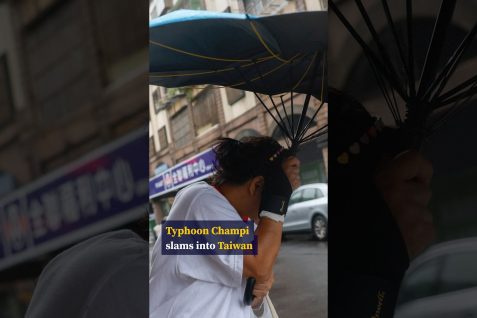
One person was killed and 616 others were injured as Typhoon Champi hit Taiwan on Saturday, according to its official news agency. The storm uprooted trees and severed power in some parts of the island. Officials estimate the storm caused US$4.2 million in agricultural losses. After moving past the island, Typhoon Champi continued towards Japan and eastern mainland China.
One person was killed and 616 others were injured as Typhoon Champi hit Taiwan on Saturday, according to its official news agency. The storm uprooted trees and severed power in some parts of the island. Officials estimate the storm caused US$4.2 million in agricultural losses. After moving past the island, Typhoon Champi continued towards Japan and eastern mainland China.
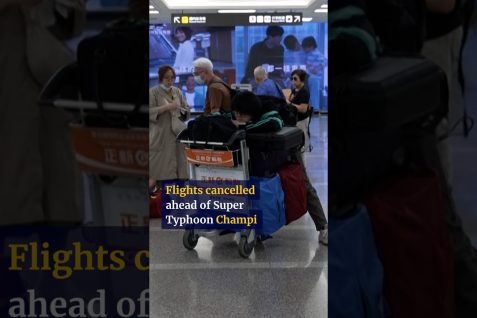
Airlines have cancelled or rescheduled more than a dozen flights to and from Taiwan and Japan because of Super Typhoon Champi, with more disruption expected in the coming days. Now the strongest storm of the year worldwide, Champi made landfall in Taiwan on Friday. It is also affecting eastern mainland China and Japan.
Airlines have cancelled or rescheduled more than a dozen flights to and from Taiwan and Japan because of Super Typhoon Champi, with more disruption expected in the coming days. Now the strongest storm of the year worldwide, Champi made landfall in Taiwan on Friday. It is also affecting eastern mainland China and Japan.
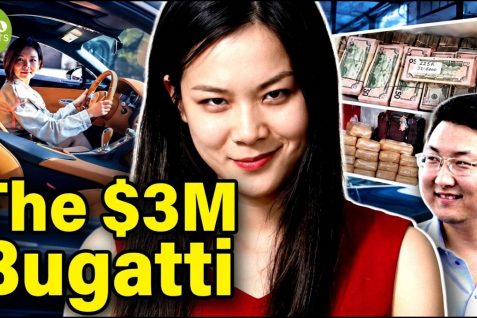
A $3 million Bugatti. A California real estate agent accused of acting on behalf of China. A mysterious business network with connections to Cambodia’s notorious scam industry.
What could these seemingly unrelated stories have in common?
As new court documents and media investigations bring additional details to light, questions are emerging about the relationships surrounding Wanying Zhang, a California real estate agent accused of conducting surveillance connected to Taiwan’s president.
The story leads from luxury homes in Southern California to suspected money-laundering operations, Cambodia’s Prince Group, and an undercover investigation by Al Jazeera into the country’s sprawling scam compounds.
Could criminal money networks also play a role in overseas intelligence operations?
In this episode, we examine the reported connections, the allegations in court documents, and the unanswered questions surrounding this extraordinary case.
Important: Some of the connections discussed in this episode are based on allegations, reported associations, or analysis. They do not establish that all individuals or organizations mentioned participated in a single coordinated criminal operation.
A $3 million Bugatti. A California real estate agent accused of acting on behalf of China. A mysterious business network with connections to Cambodia's notorious scam industry.
What could these seemingly unrelated stories have in common?
As new court documents and media investigations bring additional details to light, questions are emerging about the relationships surrounding Wanying Zhang, a California real estate agent accused of conducting surveillance connected to Taiwan's president.
The story leads from luxury homes in Southern California to suspected money-laundering operations, Cambodia's Prince Group, and an undercover investigation by Al Jazeera into the country's sprawling scam compounds.
Could criminal money networks also play a role in overseas intelligence operations?
In this episode, we examine the reported connections, the allegations in court documents, and the unanswered questions surrounding this extraordinary case.
Important: Some of the connections discussed in this episode are based on allegations, reported associations, or analysis. They do not establish that all individuals or organizations mentioned participated in a single coordinated criminal operation.
Limited Time: Get your free Tank Man set when you join the 50-Cent Army:
The Iran War may have revealed a surprisingly cheap way for America to defend Taiwan from a Chinese invasion. Could $35,000 drones help stop the Chinese military—and change the future of warfare?
Want to go deeper than YouTube will let us? Check out our website:
A Taiwanese TV star attended a political rally in Taipei—and suddenly found himself at the center of a cross-strait controversy.
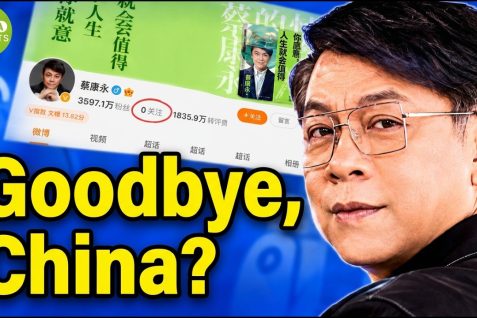
Kevin Tsai, a popular television host who built a successful career in mainland China, appeared at a campaign event for Taipei mayoral candidate Puma Shen. Chinese state-linked media criticized his appearance, and a major Chinese brand moved to distance itself from him.
Is Tsai walking away from the Chinese entertainment market? And why has Shen’s growing campaign attracted so much attention from Beijing?
We examine the controversy, Tsai’s remarkable family history, and the political battle unfolding ahead of Taipei’s mayoral election.
A Taiwanese TV star attended a political rally in Taipei—and suddenly found himself at the center of a cross-strait controversy.
Kevin Tsai, a popular television host who built a successful career in mainland China, appeared at a campaign event for Taipei mayoral candidate Puma Shen. Chinese state-linked media criticized his appearance, and a major Chinese brand moved to distance itself from him.
Is Tsai walking away from the Chinese entertainment market? And why has Shen's growing campaign attracted so much attention from Beijing?
We examine the controversy, Tsai's remarkable family history, and the political battle unfolding ahead of Taipei's mayoral election.
Taiwan has agreed to buy nearly a third of the liquefied natural gas from a planned export project in Alaska and invest up to $4.4 billion to help build it, in what President Donald Trump is calling one of the biggest energy deals ever made. Trump announced the commitments on Tuesday night, October 13, 2026, at a campaign rally in Wasilla, Alaska, saying the Taiwanese purchases “guarantee the success” of a development that has struggled for decades to get off the ground. Taiwan’s Ministry of Economic Affairs confirmed on Wednesday that state-owned CPC Corp has made significant progress with the project developer after nearly a year and a half of negotiations. The announcement weaves together energy security, alliance politics, and midterm election strategy in a single headline.
The numbers involved are enormous. Under the plan described by both sides, Taiwan would purchase 6 million metric tons of LNG per year from the Alaska project once production begins, roughly 30 percent of its planned 20-million-ton annual output, over a 20-year period. Commerce Secretary Howard Lutnick told the Wasilla crowd that Taiwan had committed to investing $4.4 billion to see the project completed. In a follow-up post on Truth Social, Trump put the total value of Taiwan’s 20-year purchase commitment at between $70 billion and $80 billion.
A Project Decades in the Making
The Alaska LNG venture is one of the great unbuilt projects of American energy. Discussed in various forms for decades, it would move natural gas from Alaska’s remote North Slope through an 800-mile pipeline across the state to liquefaction facilities on the coast, where the supercooled gas would be loaded onto tankers bound for Asia. The estimated price tag runs from $44.5 billion to $54.5 billion, making it one of the most expensive energy infrastructure proposals in the world. It has repeatedly failed to secure the binding long-term contracts and committed investment needed to reach a final investment decision.
The current developer, Glenfarne, is targeting mechanical completion of the roughly 739-mile pipeline in 2028 and first gas in 2029. Taiwan’s ministry said that if the project stays on schedule, deliveries to the island could begin as early as 2032. Trump’s announcement is the most serious political commitment the project has ever received, but the gap between a rally announcement and flowing gas remains vast.
Why Taiwan Wants In
For Taiwan, the logic is about survival, not just economics. The island imports nearly all of its energy, and its leaders have watched global gas markets convulse as war in the Middle East disrupts flows through the Strait of Hormuz, which used to carry roughly a fifth of the world’s LNG supplies. Diversifying supply sources has become a strategic imperative, and the United States is the diversification partner of choice. Taiwanese officials said in February 2026 that they planned to increase purchases of American natural gas to about a third of the island’s imports this year while reducing purchases from elsewhere. Last year, the government announced a goal of tripling the US share of Taiwan’s LNG imports to 30 percent over the next decade.
The courtship has been building for some time. CPC Corp signed a non-binding letter of intent with the Alaska Gasline Development Corp in March 2025 to buy LNG and explore investment, and a senior Taiwanese official visited the proposed project site in Alaska during 2025. From Taipei’s perspective, locking in American gas does double duty: it secures fuel for the island’s power plants and deepens the economic bond with the United States, Taiwan’s main informal backer and arms supplier, at a moment when China is intensifying military pressure and the island awaits a proposed $14 billion American arms package.
The Geography Argument
Supporters of the project make a straightforward geographic case. Unlike LNG shipped from the Gulf Coast, which must pass through the Panama Canal or travel around the Horn of Africa, gas from Alaska would sail directly across the Pacific to Taiwan and other Asian buyers. That means shorter transit times, lower shipping costs, and routes that avoid the world’s most contested maritime chokepoints. For an island that China claims as its own and threatens to blockade, that resilience has value far beyond the per-unit price of gas.
The Trump administration has been actively marketing the project to Asian allies on exactly these grounds, presenting Alaska LNG as a strategic alternative to Middle Eastern and Russian supplies. Taiwan is the first major buyer to step forward at this scale, and American officials clearly hope others will follow. Japan and South Korea, both heavy LNG importers with their own alliance considerations, have been lobbied on the project before. A Taiwanese anchor commitment makes the sales pitch to the next buyer considerably easier.
The Skeptics’ Case
None of this has silenced the doubters. Taiwan’s own economy ministry, while confirming the progress in talks, pointedly did not say whether a binding sale-and-purchase agreement had been signed. The letter of intent from March 2025 records a direction of travel, not a finalized commercial obligation. The ministry’s careful language, that arrangements “will be determined through subsequent negotiations and commercial contract procedures,” is the language of a government keeping its options open. Taiwan’s Premier Cho Jung-tai, asked about Trump’s remarks, offered only that the government’s responsibility was to stabilize energy supply and build resilience, like governments everywhere.
The commercial objections are real and longstanding. Building an 800-mile pipeline across Alaska to serve export markets has defeated every previous attempt, and analysts who have studied the project warn that its delivered gas would struggle to compete with cheaper Gulf Coast LNG. The three-year gap between Glenfarne’s first-gas target of 2029 and Taiwan’s earliest delivery date of 2032 hints at how much work remains between mechanical completion and actual export operations. And the entire structure rests on a political foundation: a future administration in either Washington or Taipei could lose enthusiasm, leaving the project stranded once again.
What It Means for the US-China Energy Chessboard
Step back, and the deal looks like something larger than a gas contract. The United States is using energy exports as an instrument of alliance management, binding Taiwan’s economy more tightly to America’s at the same time it is arming the island. Taiwan is using energy imports as an instrument of security policy, paying a premium for supply that cannot be cut off by a Chinese blockade. China, which watches every deepening of US-Taiwan ties with fury, now sees the island planning to anchor a decades-long energy partnership with Washington. Every element of the transaction carries a geopolitical charge.
Whether the pipeline ever gets built, the announcement itself has already done political work. Trump got a made-for-television energy triumph at a midterm rally for a Republican senator in a tight race. Taiwan got a public American embrace and a tangible deliverable to show for its courtship of Washington. The only question that matters now is the oldest one in the Alaska LNG saga: this time, will the pipeline actually get built? The answer will arrive not at a rally, but years from now, in the form of steel in the ground or another round of broken promises.
Empires rarely die of old age. More often, they die staring at a younger empire across the water, both convinced the mountain belongs to them alone. Because two tigers cannot share …
Empires rarely die of old age. More often, they die staring at a younger empire across the water, both convinced the mountain belongs to them alone. Because two tigers cannot share the same mountain. The Thucydides Trap is what happens when two nations each believe destiny chose them.
Last year I wrote about the old Chinese proverb. Since then, Xi Jinping has openly invoked something even darker: the “Thucydides Trap.” That’s not poetry — it’s geopolitical philosophy with a warning label attached.
The phrase comes from the ancient Greek historian Thucydides, who chronicled the war between Athens and Sparta 2,400 years ago. Athens was the rising power; Sparta the established one. Thucydides concluded that Athens’ rise — and the fear it stirred in Sparta — made war all but inevitable.
Xi raised it directly with Donald Trump while warning about Taiwan and the mounting U.S.–China tension. In diplomatic language, that was no accident. It was a message: China sees itself as the rising civilization, America as the existing empire, and history says these moments are dangerous.
And history has screened this film before. Britain and Germany before World War I. Athens and Sparta. Imperial Japan and the United States. A rising power pushes outward; the established power pushes back. Trade routes, military buildups, technology races, alliances, and national pride tangle together like dry brush waiting for a spark.
The frightening part? Wars rarely start because everyone wants one. They start because everyone assumes the other side will back down. That is the real trap.
Today’s battlefield isn’t just carriers and missiles. It’s semiconductors, AI, cyberwarfare, rare earths, satellites, shipping lanes, media influence, and financial plumbing. The 20th-century Cold War was about ideology. This one is about who controls the operating system of the 21st century.
China builds ports. America builds alliances. China builds factories. America wields finance and naval power. China wants Taiwan. America can’t let Taiwan fall without signaling weakness across Asia. And over everything hangs the awkward truth that both economies are chained together — the U.S. and China are like two men gripping each other’s throats while standing knee-deep in gasoline. Neither can fully let go. Neither can fully win. Neither can afford to lose.
That’s why Xi’s mention matters. It wasn’t a history lecture. It was Beijing signaling that it understands exactly where this road has led before — when two superpowers both believe the mountain is theirs.
The trouble with empires is they always think they’re the exception to history. Until they aren’t. And somewhere, an old Greek historian is probably shaking his head, because humanity keeps upgrading the weapons while running the same ancient software.
What Trump and Xi Actually Discussed
Taiwan — the dominant issue. Xi warned Trump that mishandling Taiwan could trigger direct U.S.–China conflict, reportedly calling it the “most important issue” in the relationship. They covered American arms sales to Taiwan, whether Washington would defend the island, and regional military tensions. Trump declined to say outright whether America would fight for Taiwan — classic “strategic ambiguity,” the long-standing U.S. posture of keeping Beijing guessing.
The Thucydides Trap itself. Xi raised it publicly, which was both symbolic and strategic: China doesn’t want containment, sees itself as an equal superpower, and believes Washington should stop treating it as an empire to be stopped. It was also a warning — Taiwan could be the trigger.
Trade and economics. Tariffs, Chinese purchases of American agriculture, Boeing aircraft deals, technology and AI cooperation, supply chains. But unlike earlier Trump-era meetings, this summit felt far more about the strategic power balance than about settling trade scores.
AI and technology rivalry. Both sides discussed artificial intelligence, including misuse by non-state actors. Both understand AI may become as strategically decisive as nuclear weapons, oil, or industrial capacity were in earlier eras.
Iran and global instability. The Middle East came up too — China depends heavily on the region’s energy routes while America still underwrites global naval security. Both have enormous stakes in keeping things stable.
Symbolism and power projection. Much of the summit was theater, and theater matters. China staged it with full ceremony — the Great Hall of the People, state banquets, meticulously choreographed visuals projecting equal-superpower status. Analysts read it as Xi positioning China not as a junior power but as America’s peer: a modern “G-2” world. Because geopolitics isn’t only weapons and economics — it’s perception, prestige, status, legitimacy. It’s about who the world believes is rising and who is fading. Xi invoking the Thucydides Trap was Beijing telling the planet: we grasp the historical danger of this moment — and we believe China has arrived.
What Came Out of It
Boeing aircraft. China reportedly agreed to buy around 200 Boeing jets immediately, with talk of 500–750 over time, plus hundreds of GE Aerospace engines. Significant — China had frozen major Boeing orders for years, and Boeing desperately needs big international wins. But details remain hazy: timelines, financing, and final contracts weren’t publicly nailed down.
Agricultural purchases. Beijing reportedly committed to large multi-year buys of American soybeans and farm goods, potentially worth double-digit billions annually — echoing earlier Trump-era arrangements where farm imports were used to cool tensions.
Market-opening talk. Xi floated further opening parts of China’s market to U.S. business. No major structural agreement, no sweeping tariff deal, no rare-earth breakthrough emerged.
AI cooperation. Discussions on AI safety and preventing misuse by rogue actors — but no treaty, no binding framework announced.
Iran and the Middle East. Talk of keeping oil lanes open, blocking Iranian nuclear weapons, possible flexibility on Chinese purchases of Iranian oil — but no joint strategic pact.
The Real Outcome Was Geopolitical, Not Economic
Most analysts agree the summit was less about inked deals and more about stabilizing a dangerous rivalry: easing Taiwan tensions, symbolically recognizing China as a peer, and reopening channels between Washington and Beijing. The optics may have outweighed the paperwork.
Xi walked away with equal-superpower treatment and a lavishly staged Beijing summit affirming that China can’t be ignored. Trump walked away with trade headlines, potential Boeing orders, farm-export promises, and the image of a leader who deals directly with Xi.
But there’s no grand trade deal. No Taiwan agreement. No military pact. No AI treaty. No Cold War-style breakthrough.
Just two tigers, circling the same mountain, each insisting it belongs to them — while an ancient Greek historian watches from the shadows, wondering how many times humanity needs to learn the same lesson.
Let me tell you the tale of the little island that could — Taiwan — home to a company that doesn’t sell shoes, ships, or social media, but sells the future …
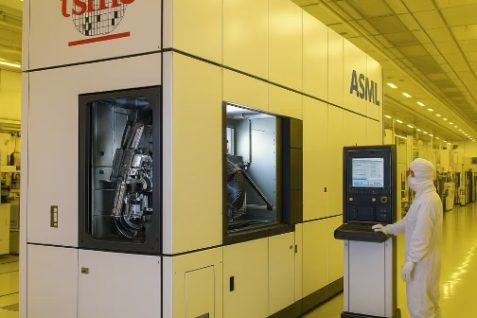
Let me tell you the tale of the little island that could — Taiwan — home to a company that doesn’t sell shoes, ships, or social media, but sells the future one microscopic chip at a time. TSMC is its name, and it’s become the beating silicon heart of the modern world. Every smartphone in your hand, every data center dreaming AI dreams, even your car that thinks it’s smarter than you — all powered by TSMC’s handiwork.
Donald Trump — love him or loathe him — calls it the most important company on Earth. And for once, the man might not be exaggerating. Because if you unplug TSMC, you don’t just switch off Taiwan; you dim the lights on global progress. But here’s the kicker: the world’s most vital company also sits on the world’s most dangerous fault line, both figuratively and geopolitically. That makes investing in it feel like buying a front-row seat to a symphony — with a slight chance of missile fire.
So yes, I’m planning to buy some more. Not because it’s safe, but because it’s essential. The only real question is when. Before the tariffs? After the tanks? Or when sanity and silicon finally learn to share a border?
Now, I’m no soothsayer, and I’ve long since retired my crystal ball — mostly because it was made in China and cracked. But I know this: there are two kinds of companies in this world — those that follow trends, and those that build the roads the trends drive on. TSMC doesn’t just build the road; it pours the concrete, lays the fiber, and charges tolls to Apple, NVIDIA, and Amazon for the privilege of driving.
Sure, it’s in a risky neighborhood. Sure, it’s first on the chopping block in any trade war or cross-strait crisis. But when the world runs on chips and one company makes the smartest ones, you don’t ignore it — you watch it closely and keep your powder dry. I’ll buy more when the price dips, when the winds settle, or when the storm is priced in.
Some companies are too big to fail. TSMC? It’s too important to ignore.
The Geopolitical Shadow
TSMC’s headquarters in Taiwan is both its identity and its greatest risk. Any conflict or blockade across the strait would shatter the global chip supply chain overnight. Washington and its allies are pouring money into domestic chipmaking, but replicating TSMC’s capabilities is brutally difficult — the know-how took decades to accumulate. TSMC is hedging by building fabs in Arizona, Japan, and Germany, spreading some capacity beyond the island. Smart move, but let’s be honest: the crown jewels stay in Taiwan.
The Competition Isn’t Close
TSMC controls roughly 60% of the global foundry market, and at the leading edge it’s barely a contest. Samsung Foundry chases TSMC at 3nm and 2nm but keeps stumbling on yields. Intel is barging back into contract manufacturing with government money behind it, yet execution remains the question mark. GlobalFoundries, UMC, and China’s SMIC compete at mature nodes — irrelevant at the frontier. Even giants like Apple and Amazon design their own silicon but still queue up at TSMC’s door to have it built. Nobody else can do what TSMC does at the scale TSMC does it.
The Roadmap: 3nm Today, 2nm Tomorrow
TSMC is shipping 3nm chips now and moving toward 2nm production, leading the industry in yields and reliability — the unglamorous metrics that actually decide who wins. Its advanced packaging technology, like CoWoS, has become essential for AI accelerators; NVIDIA’s AI boom runs on TSMC’s packaging as much as its transistors. The roadmap stretches to 2nm and beyond, and every step keeps TSMC one generation ahead of everyone else.
The Client List Reads Like a Who’s Who
Apple accounts for roughly a quarter of TSMC’s revenue — the exclusive manufacturer of Apple’s A-series and M-series chips. NVIDIA is the fastest-growing customer, riding the AI wave. AMD, Qualcomm, and MediaTek fill out the roster with steady volume. High-performance computing now makes up over half of TSMC’s revenue, driven by AI and data-center demand — a healthy shift away from maturing smartphone volumes.
The flip side is concentration risk. Apple and NVIDIA together could approach half of revenue within a couple of years. That’s a wonderful problem to have until it isn’t — if either giant stumbles or shifts sourcing, TSMC feels it. So far the symbiosis has been golden: record 2024 earnings were powered by Apple’s iPhone launch and NVIDIA’s AI explosion. But investors should keep one eye on Cupertino’s silicon roadmap and the other’s on AI demand curves.
What About the Price?
TSMC trades at around 22 times trailing earnings, with forward multiples in the high teens — reasonable next to NVIDIA’s mid-20s forward multiple, and far saner than Intel’s. Expected revenue growth runs in the high teens annually, driven by AI demand and the 2nm ramp. The financials are best-in-class: 40%-plus margins, return on equity above 30%. You’re paying a fair price for the best business in semiconductors, with a geopolitical discount baked in.
Tariffs, Export Controls, and the Tech War
TSMC sits dead center in the U.S.–China tech brawl, and the crossfire is real. American export controls have already cost TSMC its Huawei business — once 14% of revenue — and now bar leading-edge chips from Chinese customers without licenses. China-based clients have shrunk to roughly 10–15% of sales, mostly mature-node work. The controls also kneecap China’s domestic champions: SMIC can’t buy EUV lithography machines, which locks in TSMC’s lead. Painful in the short term, protective in the long term.
Then there’s tariff talk. Proposals for steep duties on Taiwanese chips would function as a massive tax on iPhones, PCs, cars, and data centers — raising U.S. chip prices by half or more, according to industry studies. It would punish American consumers and tech companies far more than TSMC, which could accelerate its Arizona output (exempt as Made-in-USA) and serve other markets from Taiwan. The consensus: extreme tariffs would backfire, so they’re unlikely — but moderate measures and endless political noise are guaranteed.
Beijing has its own retaliation toolkit: export curbs on gallium and germanium, potential squeezes on chip chemicals, selective boycotts. Mostly symbolic so far — TSMC has stockpiles and alternative sources — but it adds friction and reminds everyone the supply chain is a weapon now.
The Bottom Line
TSMC stands alone at the pinnacle of semiconductors, with a technological and market position no rival can match. Its dominance — 3nm today, 2nm coming — puts it at the heart of every major tech trend: AI, 5G, autonomous vehicles, high-performance computing. The growth story is intact, the financials are superb, and governments and customers alike have every incentive to keep TSMC thriving.
But go in with eyes open. The China–Taiwan risk is low-probability, catastrophic-impact — the kind you can’t diversify away. Trade frictions will keep generating volatility. Samsung and Intel aren’t standing still, and even Apple flirts with second sources. TSMC has to execute its node transitions flawlessly, every time.
For a risk-tolerant investor, TSMC is a chance to own a cornerstone of the digital economy’s future at a reasonable price. Just don’t kid yourself about the neighborhood. Watch the politics, watch the customers, watch the technology — and when the storm gets priced in, that’s when you buy.
Every great power has a back door. China’s problem is that it’s ringed by them — and everyone knows where they are. Certain words keep surfacing whenever you study China seriously. …
Every great power has a back door. China’s problem is that it’s ringed by them — and everyone knows where they are.
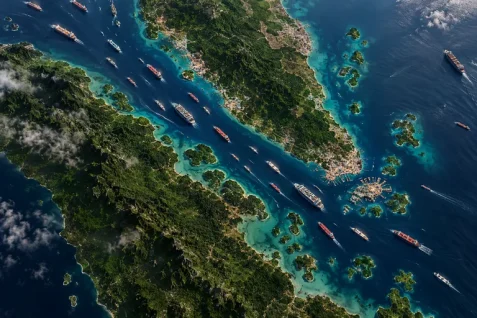
Certain words keep surfacing whenever you study China seriously. Taiwan. Semiconductors. Oil. The South China Sea. But there’s another word that ought to be painted on the wall in Beijing in letters ten feet tall: Malacca. Malacca. Malacca.
Because for all the aircraft carriers, missiles, factories, satellites, cyberwarfare, AI, and ever-grander military parades, China still has a stubbornly old-fashioned problem. Ships have to get there. And a staggering number of those ships must squeeze through one narrow ribbon of water: the Strait of Malacca.
The Malacca Dilemma
This isn’t some theory cooked up in an American think tank. The Chinese have fretted about it themselves for decades. In 2003, leader Hu Jintao famously described the “Malacca Dilemma”: China’s dependence on maritime trade routes threading through a narrow strategic chokepoint that China does not control.
And Beijing has every reason to worry. A huge share of the energy powering China’s industrial economy arrives by sea. Much of the petroleum from the Persian Gulf and Africa crosses the Indian Ocean, threads through the Strait of Malacca, passes Singapore, and enters the South China Sea before reaching Chinese ports. That’s an extraordinary vulnerability for a country aiming to dominate Asia.
China may build the television. China may build the batteries. China may build the solar panels. China may build the drones. But somebody still has to deliver the oil. And oil doesn’t care how many followers you have online.
Geography Is Still Undefeated
We sometimes talk as if technology abolished geography. It hasn’t.
The Strait of Malacca lies between the Malay Peninsula and Indonesia’s Sumatra. Near Singapore, at the Phillips Channel, the usable passage narrows to roughly 1.7 miles — and the maximum ship class that fits is literally called “Malaccamax.” Through this funnel flows an enormous share of the commerce linking the Indian Ocean with East Asia.
Which forces an uncomfortable question in Beijing: what happens if we go to war and those ships stop coming?
Factories need energy. Trucks need diesel. Aircraft need fuel. Petrochemical plants need feedstocks. Modern civilization is basically an elaborate machine for converting energy into everything else. China built perhaps the greatest manufacturing machine in history — but the machine needs to eat.
The figures are stark: roughly 80% of China’s imported oil and about two-thirds of its trade pass through the Strait, while China accounts for nearly half of all oil transiting Malacca. In the first half of 2025, an estimated 23.2 million barrels of petroleum per day moved through Malacca — more than through Hormuz.
Enter India
Now look west — not toward America, but toward India.
India holds something fascinating: the Andaman and Nicobar Islands, stretching south through the Bay of Bengal, ending at remote Great Nicobar Island. For decades nobody paid it much attention. That’s changing. India is planning major infrastructure there — a container port, airport, power systems — sitting near the shipping lanes approaching Malacca. Suddenly that forgotten island looks a lot less forgotten, because geography has handed India something money can’t easily buy: position.
The String of Pearls
China understands the problem and has spent decades trying to solve it, building ports, infrastructure, and relationships across the Indian Ocean — Djibouti, Pakistan, Sri Lanka, Myanmar, Bangladesh. The collection is often called China’s “String of Pearls.” Look at a map and the logic is obvious: China wants places where its ships can operate, where energy can arrive, where dependence on foreign-dominated sea lanes shrinks. Above all, China wants alternatives — because great powers hate having only one road into town.
One of the biggest escape attempts is Pakistan. The idea was elegant: build the port of Gwadar on the Arabian Sea, unload oil and cargo there, move it north through Pakistan toward western China. A back door to the Indian Ocean — no Malacca. But between a port on the Arabian Sea and western China sit Pakistan, mountains, distance, cost, and politics. Infrastructure can overcome geography, but geography charges rent — sometimes enormous rent.
China tried Myanmar too: bring oil in from the Bay of Bengal and pipe it to Yunnan province. It works, to a point. But it can’t replace the vast volume of maritime commerce flowing through Southeast Asia — and Myanmar’s recent years of military rule and armed conflict mean China’s solution to one vulnerability created another. Welcome to geopolitics: there are very few solutions, mostly different collections of problems.
Someone always asks: why not just sail around Malacca? They can — via Indonesia’s Sunda and Lombok Straits. But longer routes mean more sailing, more fuel, more tankers, more money, fewer deliveries per ship per year. And in a major conflict, a longer detour doesn’t erase the strategic problem; it just moves it a few hundred miles down the ocean.
Then There’s Taiwan
This is where Malacca gets especially interesting. People picture a Taiwan war as a military contest — missiles versus defenses, aircraft versus aircraft, ships versus submarines. But wars aren’t only fought by soldiers. They’re fought by economies.
Imagine China launching a major operation against Taiwan. The first question is whether China can take Taiwan. But the second is whether China can keep feeding a gigantic industrial economy while doing it. China imports vast quantities of petroleum, natural gas, minerals, food, and industrial commodities — shipped through waters where Beijing lacks uncontested control. China wouldn’t just be attacking Taiwan; it would be betting that its entire global logistics system keeps functioning during the conflict. That’s a much bigger bet.
Don’t Get Carried Away
There’s another side to this. People talk about “closing Malacca” as if someone strolls over and shuts a gate. It isn’t that simple. Indonesia exists. Malaysia exists. Singapore exists. International shipping law exists. Japan needs the route. South Korea needs it. India needs it. Europe needs it. America’s containers are mixed in with everyone else’s. An Indian naval officer made the essential point: strangling Malacca would damage far more than China — and sustaining a blockade involving three sovereign neighbors would be far harder than announcing one. Never confuse having someone’s throat within reach with being able to squeeze it without breaking your own fingers.
So Why Does It Matter?
Because deterrence isn’t always about doing something. Sometimes it’s enough that the other fellow knows you could. India doesn’t need to close Malacca. America doesn’t need to close it. Nobody needs to close anything. The strategic value lies partly in Beijing having to think about the possibility — every tanker, every pipeline, every port, every naval base, every alternate route, every petroleum reserve, every ship China builds. Buried inside all those decisions is the same little geographical problem. Malacca.
The Great Irony
China has spent decades trying to reduce this vulnerability — ports, pipelines, railroads, the Belt and Road, naval expansion, overseas bases, strategic reserves, alternate routes. And yet geography stays stubborn. China sits on the Pacific; much of its energy sits across the Indian Ocean; between them lie narrow passages controlled or influenced by countries that aren’t China.
That doesn’t make China helpless — far from it. It’s building one of the world’s most powerful navies precisely because it grasps the problem. But it does mean China’s enormous industrial strength contains an equally enormous logistical dependency.
Every great power has an Achilles’ heel. America has debt. Russia has demographics. Europe has fragmentation. China has several — but the easiest to find requires nothing more than opening a map. Follow the oil tankers across the Persian Gulf, across the Indian Ocean, past India, toward Singapore. And eventually the ocean becomes very narrow.
Malacca. Malacca. Malacca.
China knows where its weakness is. The interesting question isn’t whether Beijing understands it. It’s what China is willing to do to make sure nobody ever gets the chance to use it.
History has a nasty habit of circling back to bite folks where it hurts. In the 1800s, it was the British loading ships with opium to turn China into a nation …
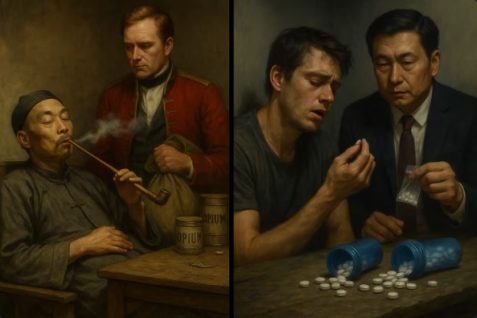
History has a nasty habit of circling back to bite folks where it hurts. In the 1800s, it was the British loading ships with opium to turn China into a nation of glassy-eyed addicts spending their silver on oblivion. Now it’s China shipping out powders so potent they could drop an elephant — and America is the one face-down on the table. The past isn’t dead; it’s alive and flying a different flag. There’s something almost poetic in the tragedy: the country hooked on foreign drugs two centuries ago may now be returning the favor. And as the body count climbs, we should remember addiction has always been a handy tool for anyone with something to sell — or a score to settle.
If there’s one lesson here, it’s that a nation’s weakness can be plain as day and easy for an old rival to exploit. Britain learned that when China’s hunger for silver became an opium nightmare. Now it’s America’s turn, strung out on a high so cheap it kills by the thousands. But raging about foreign devils won’t cure the homegrown hunger driving people toward that lethal comfort — and as long as poison turns a profit, somebody will keep it flowing.
Britain’s 19th-Century Opium Play Against China
In the early 1800s, the British Empire deliberately used opium as a weapon to bring China to its knees. British traders, with London’s blessing, flooded Qing China with opium grown in British India, sparking mass addiction and social breakdown. When Chinese officials seized and destroyed millions of pounds of illegal opium in 1839, Britain answered with warships. The First Opium War ended in swift Chinese defeat; the treaties pried open China’s ports to foreign commerce and handed over Hong Kong. A second war twenty years later deepened the humiliation, launching China’s “Century of Humiliation” — foreign powers got rich while a drug-sickened China lost sovereignty. Opium wrecked millions of lives, proving narcotics could serve as an instrument of empire.
China’s Role in Today’s Fentanyl Epidemic
Fast-forward to America’s fentanyl crisis, and the tables look ironically turned. China — once the victim of Britain’s opium scheme — has become the chief source of the chemicals behind the U.S. epidemic. Over the last decade, Chinese labs and trading firms became the main suppliers of fentanyl itself, and more recently of the precursor chemicals used to cook it. From roughly 2013 to 2018, large volumes of finished fentanyl flowed straight from China to American buyers, often by international mail, fueling a surge in fatal overdoses. In 2019, under American pressure, Beijing banned the entire fentanyl family — the first country to do so — sharply cutting direct shipments.
But Chinese suppliers adapted fast. Instead of shipping finished product, they began exporting the raw ingredients in bulk, frequently mislabeled and routed to Mexico. There, the Sinaloa and Jalisco cartels synthesize them into fentanyl pills and powder, then smuggle them across the U.S. border. In effect, Mexico became the visible face of the trade while Chinese chemicals stayed at its core.
Criminal networks on both sides of the Pacific keep this lethal pipeline running. Investigations show how easily fentanyl precursors can be bought online from Chinese vendors and shipped amid mountains of legitimate cargo. Many of the firms involved pose as ordinary chemical companies exploiting China’s vast chemical sector, operating in legal gray zones and selling substances not yet banned. Freelance middlemen broker deals with Mexican traffickers and even supply synthesis instructions, while Chinese money-laundering networks clean cartel profits hand-in-glove with the gangs. Put simply, China is the linchpin of the modern fentanyl supply chain — playing the producer-and-financier role that 19th-century Britain once played in the opium trade.
Is Beijing Looking the Other Way?
The parallel raises an uncomfortable question: is Beijing willfully ignoring — or quietly enabling — the synthetic opioid flood devastating America? Recent investigations (2023–2025) suggest elements of the Chinese state may be tolerating or assisting this deadly commerce. A bipartisan House committee report in April 2024 accused Beijing of directly subsidizing the fentanyl supply chain, uncovering government records showing tax rebates for manufacturers of specific fentanyl precursors — as long as the chemicals were exported. The same report charged that the Party lets known drug networks operate freely “as long as their efforts are focused abroad,” tolerating crime that feeds America’s epidemic while keeping China untouched.
More disturbing still, the committee found Chinese officials had sabotaged narcotics investigations — tipping off suspects inside China when U.S. law enforcement sought help, giving them time to destroy evidence. Former Attorney General William Barr told Congress it’s “hard to believe” a country with China’s surveillance apparatus is “not fully aware” of large-scale fentanyl production, citing “persuasive evidence” Beijing was “knee deep in sponsoring and facilitating the export of fentanyl precursors.” Some analysts now openly call it a “reverse Opium War” — the deliberate destabilization of American society through drugs.
Beijing’s motives are debated. One theory is plain economics: the opioid pipeline is wildly profitable, and Chinese chemical makers earn billions from precursor sales. Another is strategic: hardliners steeped in nationalist narratives of past exploitation may quietly view America’s suffering as vengeance. Direct proof of a centrally ordered plot is missing — U.S. intelligence has found no official “drug warfare” policy. But the net result is undeniable: China profits while its chief rival buries over 100,000 overdose victims a year. A government that executes domestic drug dealers yet can’t stop the outflow? That smells like a lack of political will, not capability.
The Regulatory Loopholes That Keep It Flowing
China’s chemical controls are riddled with gaps. Despite boasting some of the toughest drug laws on paper — a legacy of the Opium Wars — traffickers exploit weak enforcement. Most fentanyl precursors remain unscheduled under Chinese law; chemists keep inventing analogs outside each ban. These dual-use chemicals face minimal oversight, and Beijing claims that if a substance isn’t scheduled, it “cannot prosecute” the makers. Washington has pushed for conspiracy charges and “know-your-customer” rules; Beijing has refused. So Chinese firms plead ignorance, insisting they sell ordinary industrial chemicals.
Critics call this a loophole by design. China could pass licensing and vetting laws — but hasn’t. Enforcement has been feeble: a handful of indictments, usually under U.S. pressure. “We have not seen robust prosecution in China,” observed Brookings expert Vanda Felbab-Brown. The kingpins operate with near impunity, as long as they spare China’s own population — a stark contrast with how Germany or Japan would respond to the same diversion.
When Cooperation Became a Bargaining Chip
Fentanyl has become tangled in the broader U.S.–China rivalry. In August 2022, after Nancy Pelosi’s Taiwan visit, Beijing suspended all drug-enforcement collaboration — even as American overdoses soared — openly tying the cutoff to U.S. “hostility.” Beijing habitually links law-enforcement cooperation to the political weather: bad relations, no help. Talks stayed frozen until Washington lifted sanctions on a Chinese police forensics institute, after which Xi and Biden announced renewed cooperation in November 2023.
Some progress followed — more precursors scheduled, agency talks resumed. But trust is paper-thin. U.S. officials accuse Beijing of “slow-walking” action against big suppliers and money launderers, while Washington’s indictments and sanctions draw Chinese warnings that pressure will “undermine the foundation” of joint efforts. Every diplomatic dip now threatens the fragile cooperation.
Beijing’s Denials Versus the Evidence
Beijing furiously rejects the accusation. “China was a painful victim of opium in history,” then-Ambassador Qin Gang said in 2022, claiming that legacy makes China empathize with America’s plight. Chinese diplomats call the payback theory “false and misleading,” cite the 2019 ban as proof of good faith, and insist China has “done everything possible.” “The root cause of the drug epidemic in the U.S. lies in the U.S. itself,” spokeswoman Mao Ning declared.
Yet investigators keep punching holes in the story. The precursor tax rebates are documented on Chinese government websites. No Chinese kingpins have faced serious punishment — a striking contrast with China’s death-penalty treatment of domestic drug crime. Reuters stings found Chinese firms openly marketing fentanyl ingredients online and offering to mislabel shipments. Given China’s vast surveillance powers, this open black market suggests unspoken tolerance. As Brookings put it, the “lack of will” in Beijing is the core problem.
Breaking the Cycle
The British opium campaign and China’s fentanyl connection are 180 years apart — yet the parallels are jarring. In both cases, a great power’s hunger for profit unleashed a drug epidemic on a rival. History doesn’t repeat exactly, but it sure does rhyme. There are glimmers of hope: diplomacy has worked before — the 2019 ban, the recent precursor additions. A sustained, verifiable crackdown on China’s illicit chemical exporters, paired with demand-reduction and treatment in America, could turn the tide.
For China, which celebrates its victory over opium, profiting from a new narcotic scourge stains its reputation. For America, beating fentanyl is a domestic priority and a geopolitical imperative. Weaponized drugs can fell nations — learning from that past, instead of letting cynical economics or revenge keep the suffering alive, is the only way this chapter ends with lives saved rather than another nation laid low.
Limited Time: Get your free Tank Man set when you join the 50-Cent Army:
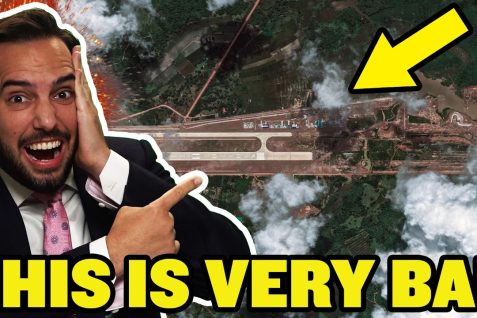
China is expanding its military presence in Laos—and this new base could have major implications for a future war over Taiwan. Could it help China threaten critical US military supply routes and project power across Southeast Asia?
Operation Honey Pot: Paste this emoji 🍯 in your comment below.
Want to go deeper than YouTube will let us? Check out our website:
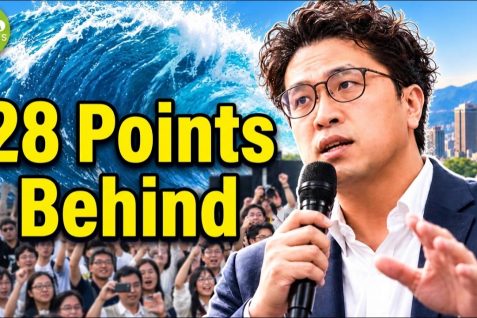
Puma Shen, a Taiwanese lawmaker and researcher known for his work on Chinese disinformation, is challenging incumbent Taipei Mayor Chiang Wan-an in one of Taiwan’s most closely watched local elections.
Beijing has labeled Shen a separatist and launched a criminal investigation against him. Meanwhile, his campaign has attracted large crowds, and one September poll showed him just 1.2 percentage points behind Chiang.
Who is Puma Shen? How did he become such a prominent political figure, and what does his campaign reveal about Taiwan’s increasingly contested political landscape?
Puma Shen, a Taiwanese lawmaker and researcher known for his work on Chinese disinformation, is challenging incumbent Taipei Mayor Chiang Wan-an in one of Taiwan's most closely watched local elections.
Beijing has labeled Shen a separatist and launched a criminal investigation against him. Meanwhile, his campaign has attracted large crowds, and one September poll showed him just 1.2 percentage points behind Chiang.
Who is Puma Shen? How did he become such a prominent political figure, and what does his campaign reveal about Taiwan's increasingly contested political landscape?
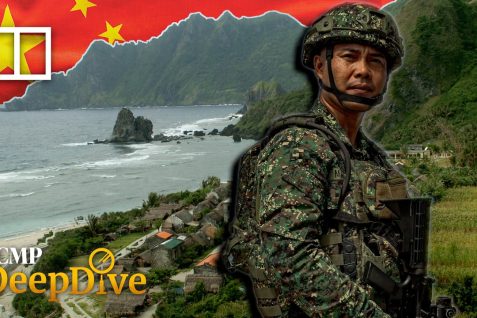
A group of Chinese scholars has claimed that the Batanes islands were historically part of Taiwan and therefore are part of China. The remarks emerged during an academic discussion on June 30, 2026, at Jinan University in Guangzhou. Although the claim was not made by Beijing, it has sparked controversy and outrage in the Philippines, where the Batanes islands form the nation’s northernmost province.
A group of Chinese scholars has claimed that the Batanes islands were historically part of Taiwan and therefore are part of China. The remarks emerged during an academic discussion on June 30, 2026, at Jinan University in Guangzhou. Although the claim was not made by Beijing, it has sparked controversy and outrage in the Philippines, where the Batanes islands form the nation’s northernmost province.
A video circulating on X shows a lawyer and vlogger from mainland China describing how a trip to Taiwan completely changed his perspective. What he saw and experienced challenged everything he had expected.
A video circulating on X shows a lawyer and vlogger from mainland China describing how a trip to Taiwan completely changed his perspective. What he saw and experienced challenged everything he had expected.
Limited Time: Get your free Tank Man set when you join the 50-Cent Army:
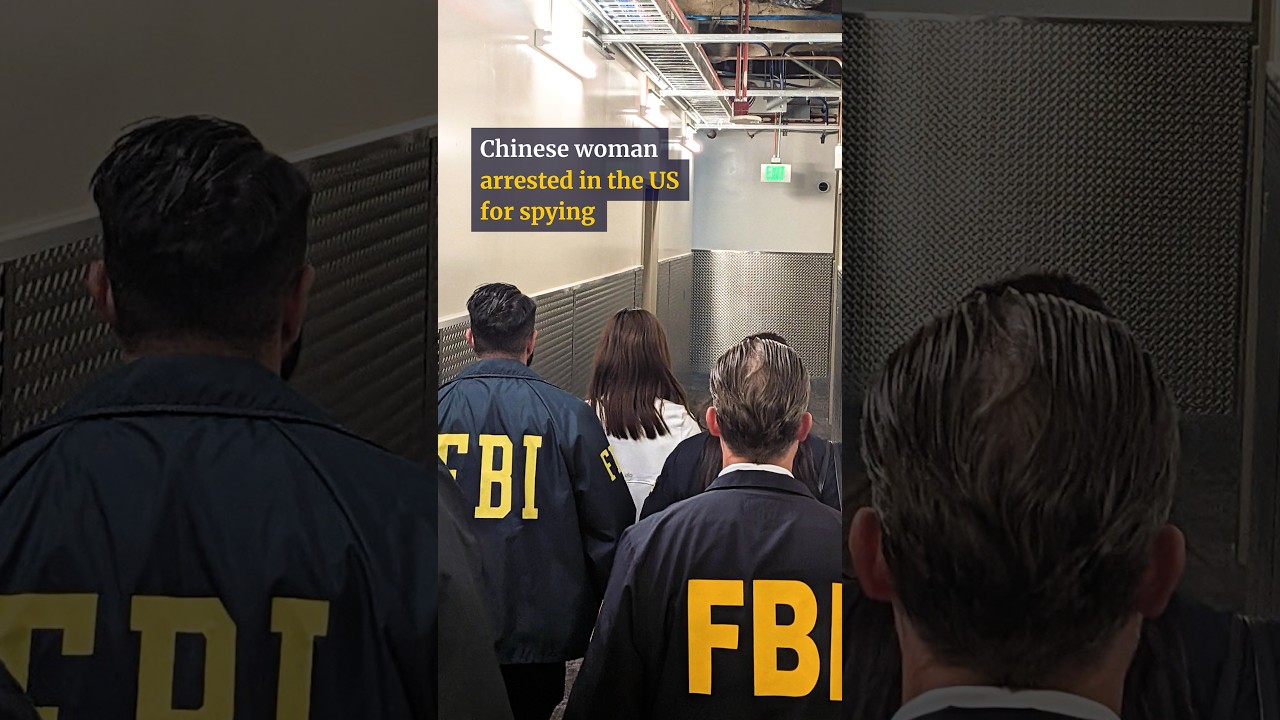
A Chinese national was arrested in California after allegedly spying on the son of Taiwan’s president—and the FBI says the operation went far beyond simple surveillance.
From tracking Lai Ching-te’s son in Seattle to alleged connections with Chinese intelligence and a broader pro-CCP influence network, the case offers a glimpse into how China’s operations can reach far beyond its borders.
Operation Honey Pot: Paste this emoji 🍯 in your comment below.
Want to go deeper than YouTube will let us? Check out our website:
Watch the full podcast!
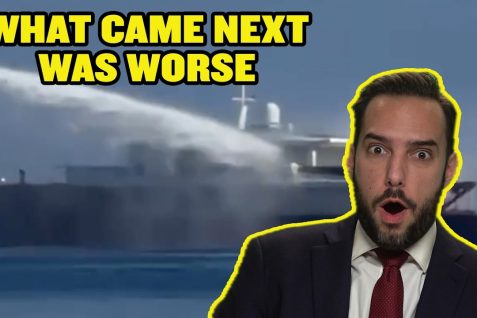
If you mess around in Taiwanese waters, be prepared for some super soaking and… Taiwan hospitality? Here’s what happened when a Chinese boat refused to leave Taiwan’s territory.
Join our fight to expose the CCP at and get ALL the new full-length interviews!
And check out our other channel, China Uncensored:
The United States has accused mainland China of hiring an American citizen of Chinese origin to surveil the family of Taiwanese leader William Lai Ching-te. The US Federal Bureau of Investigation (FBI) arrested Zhang Wanying days after Chinese President Xi Jinping made a state visit to Washington. Beijing sees Taiwan as part of China to be reunited by force if necessary. Most countries, including the US, do not recognise Taiwan as an independent state, but Washington is opposed to any attempt to take the self-governed island by force and is committed to supplying it with weapons.
The United States has accused mainland China of hiring an American citizen of Chinese origin to surveil the family of Taiwanese leader William Lai Ching-te. The US Federal Bureau of Investigation (FBI) arrested Zhang Wanying days after Chinese President Xi Jinping made a state visit to Washington. Beijing sees Taiwan as part of China to be reunited by force if necessary. Most countries, including the US, do not recognise Taiwan as an independent state, but Washington is opposed to any attempt to take the self-governed island by force and is committed to supplying it with weapons.
This 34-year-old real estate agent living in Irvine, California is facing serious charges. The FBI arrested her at Los Angeles airport on October 4 as she tried to board a flight to Shanghai. She is accused of acting as an unregistered CCP agent and conducting surveillance on Ting-Yu Lai, the son of Taiwan’s president, Lai Ching-te, who works in Seattle.
This 34-year-old real estate agent living in Irvine, California is facing serious charges. The FBI arrested her at Los Angeles airport on October 4 as she tried to board a flight to Shanghai. She is accused of acting as an unregistered CCP agent and conducting surveillance on Ting-Yu Lai, the son of Taiwan’s president, Lai Ching-te, who works in Seattle.
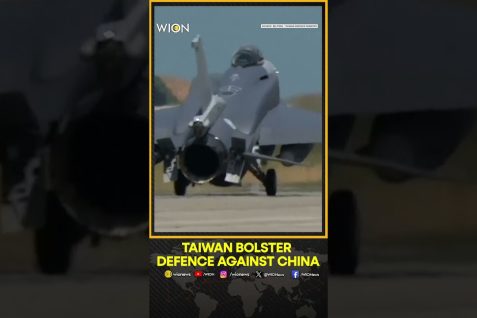
First two new F-16V fighter jets arrive in Taiwan | WION Shorts
WION The World is One News examines global issues with in-depth analysis. We provide much more than the news of the day. Our aim is to empower people to explore their world. With our Global headquarters in New Delhi, we bring you news on the hour, by the hour. We deliver information that is not biased. We are journalists who are neutral to the core and non-partisan when it comes to world politics. People are tired of biased reportage and we stand for a globalized united world. So for us, the World is truly One.
Please keep discussions on this channel clean and respectful and refrain from using racist or sexist slurs and personal insults.
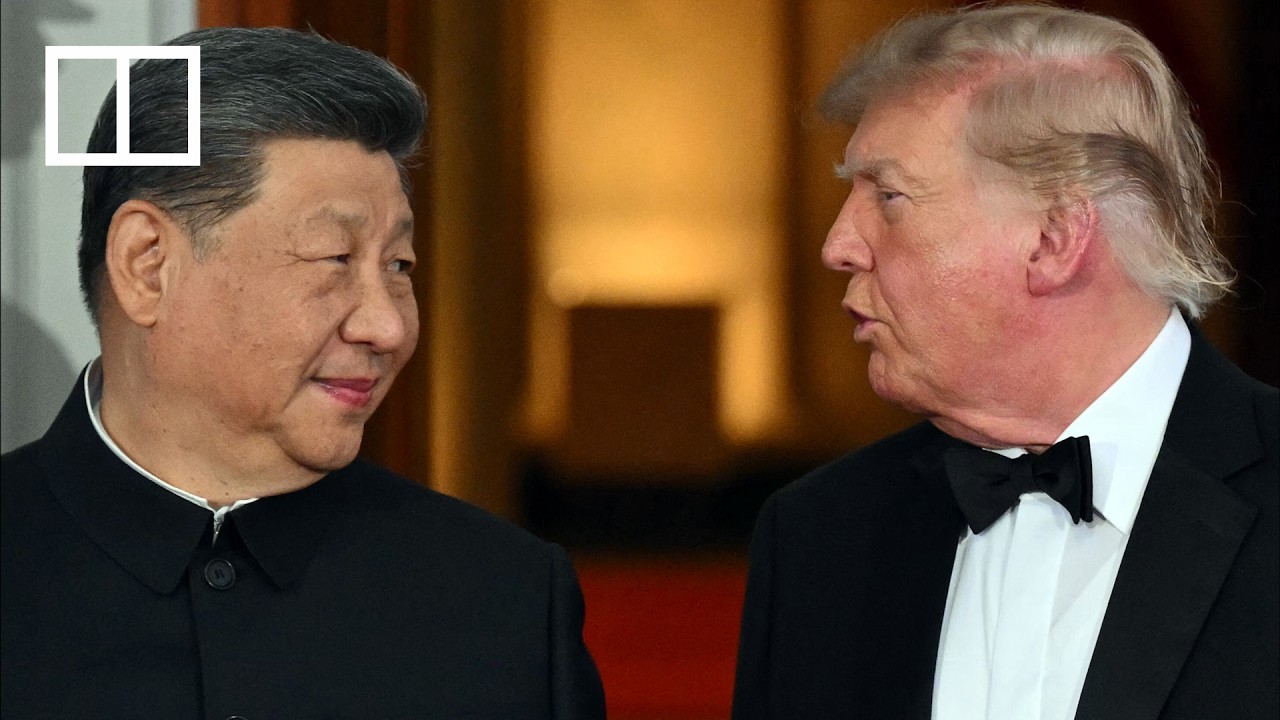
A “new joint arrangement” on trade was reached after a new round of negotiations between US President Donald Trump and Chinese President Xi Jinping, according to Chinese state media. Xi is making his first state visit to the US in more than a decade and met Trump for the first time at the White House. The leaders reportedly also discussed the war in the Middle East, AI and Taiwan in their closed-door meeting at the Oval Office on Thursday. In speeches, both leaders spoke positively about their friendship and stressed the need for cooperation between the two countries.
A “new joint arrangement” on trade was reached after a new round of negotiations between US President Donald Trump and Chinese President Xi Jinping, according to Chinese state media. Xi is making his first state visit to the US in more than a decade and met Trump for the first time at the White House. The leaders reportedly also discussed the war in the Middle East, AI and Taiwan in their closed-door meeting at the Oval Office on Thursday. In speeches, both leaders spoke positively about their friendship and stressed the need for cooperation between the two countries.
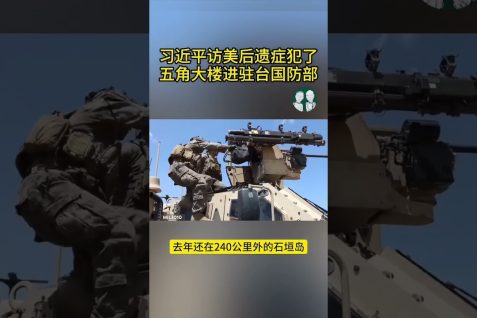
Japan is debating one of the biggest shifts in its postwar defense policy: whether to acquire nuclear-powered submarines. The discussion comes as Tokyo accel
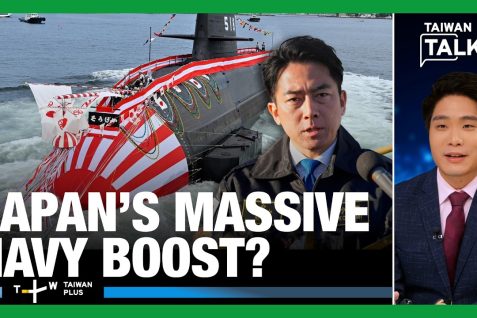
Japan is debating one of the biggest shifts in its postwar defense policy: whether to acquire nuclear-powered submarines. The discussion comes as Tokyo accelerates its military buildup in response to growing pressure from China, Russia and North Korea, while expanding joint exercises with the United States and Australia. At the same time, Okinawa has elected a new governor who supports relocating the US Marine Corps' Futenma Air Station to Henoko, potentially giving Japan's government greater freedom to strengthen its southwestern defenses near Taiwan. As Chinese and Russian military activity intensifies around Japan and North Korea expands its naval capabilities, is Tokyo entering a new era of deterrence? In this episode, we examine Japan's submarine debate, the strategic significance of Okinawa, and what these developments could mean for Taiwan, the First Island Chain and security across the Indo-Pacific.
STR8 Industries is using Taiwan as a research, development and manufacturing hub for its latest unmanned surface vessel, the Ghostwake. The country’s experti
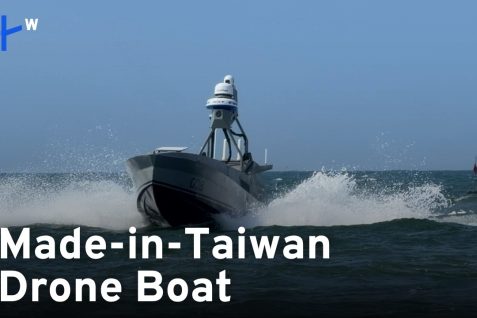
STR8 Industries is using Taiwan as a research, development and manufacturing hub for its latest unmanned surface vessel, the Ghostwake. The country's expertise in robotics, electronics, shipbuilding and advanced manufacturing has played a key role in encouraging the country to innovate domestically.
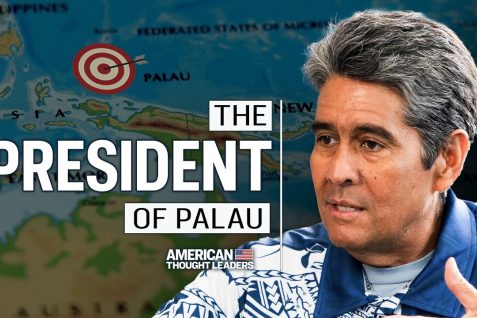
During World War II, America learned a hard lesson about the strategic importance of the small island nations scattered across the Pacific. Among them is Palau, a nation of just 18,000 people in what’s known as the second island chain. It’s home to the bloodiest battlefield of the Pacific theater, on the island of Peleliu. Today, as the Chinese regime prepares for a possible invasion of Taiwan, Palau finds itself on the front lines again. It's one of only 12 countries that diplomatically recognize Taiwan, and one of only three with a Compact of Free Association with the United States—an agreement that gives the U.S. exclusive military access to Palauan waters in exchange for providing defense, postal service, economic assistance, and other benefits to Palauans. Palau’s strategic position has made it a target. The Chinese Communist Party has ramped up gray-zone tactics and information warfare across the region to pull small Pacific nations away from Taiwan and the United States. In this episode, I’m sitting down with the President of Palau Surangel Whipps Jr. Half-American and half-Palauan and born in Baltimore, Whipps decided to give up his American citizenship to serve as President of his father’s homeland and chart a new course for its development. In this episode, Whipps explains how Palau is defending its sovereignty against foreign encroachment and shares his vision for the country's future. We cover: How has the CCP threatened Palau? How does the Compact of Free Association shape U.S. regional defense strategy? Why is the U.S. military building radar sites on the island? And how can Western private sector investment help secure a free Indo-Pacific?
In a keynote speech at Beijing’s Xiangshan Defense Forum, China’s defense minister Dong Jun called for countries to seek new ways to resolve disputes, avoidi
In a keynote speech at Beijing's Xiangshan Defense Forum, China’s defense minister Dong Jun called for countries to seek new ways to resolve disputes, avoiding mentions of Taiwan and tensions with the United States. Institute for National Defense and Security Research analyst Shen Ming-shih says the lack of direct references to Taiwan may reflect Beijing’s focus on managing US-China relations ahead of Chinese President Xi Jinping’s planned meeting with US President Donald Trump.
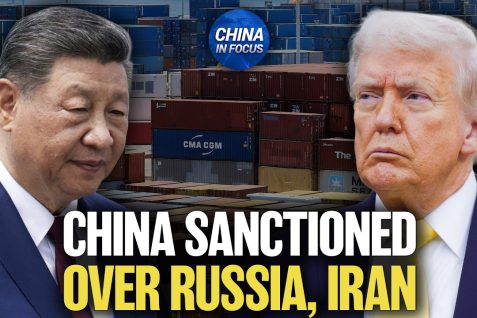
A bipartisan bill aims to expand sanctions on Russia and Iran. China, a major buyer of Russian oil, could also be targeted.Concerns about artificial intellig
A bipartisan bill aims to expand sanctions on Russia and Iran. China, a major buyer of Russian oil, could also be targeted. Concerns about artificial intelligence are emerging in both the West and the East. Epoch Times reporter Nathan Su says a change in mindset is needed. “China has been conducting unrestricted warfare against the United States since the mid-'90s. They are at war with us, but we think they are our competitor. You can’t win a war when you go into it with the mentality of competition,” he said. A former U.S. soldier pleads guilty to collecting sensitive information about U.S. weapons for Beijing. And a proposed sale of advanced U.S. fighter jets to Saudi Arabia is raising concerns among American officials over the kingdom’s ties to China. We’ll look at the deal and what’s at stake. 00:00 Intro 01:11 China Targeted Over U.S. Sanctions on Russia, Iran 02:33 House Bill Requires Data Centers to Pay for Electricity Spikes 03:34 OpenAI Found More Instances of Deceptive Models 04:11 China’s Spy Chief Warns AI Is a Threat to Party Rule 06:34 What’s Behind Beijing’s AI Warning? 08:44 U.S. Must Recognize China Is at War With Us 10:17 Huawei Staff Allegedly Took Photos of T-Mobile Robot 11:48 Former U.S. Soldier Pleads Guilty in China Spy Case 12:20 F-35 Sale Raises Concerns Over Saudi-China Ties 13:44 House Hearing Probes CCP, North Korean Repression 16:47 Jimmy Lai’s Son Appeals to Xi for Father’s Freedom 19:38 Carney: Canada Will Decide Its Own Partnerships 20:48 Trump Threatens EU With Tariffs Over Canada Association 21:42 Taiwan Plans Rare Philippines Visit Amid China Tensions
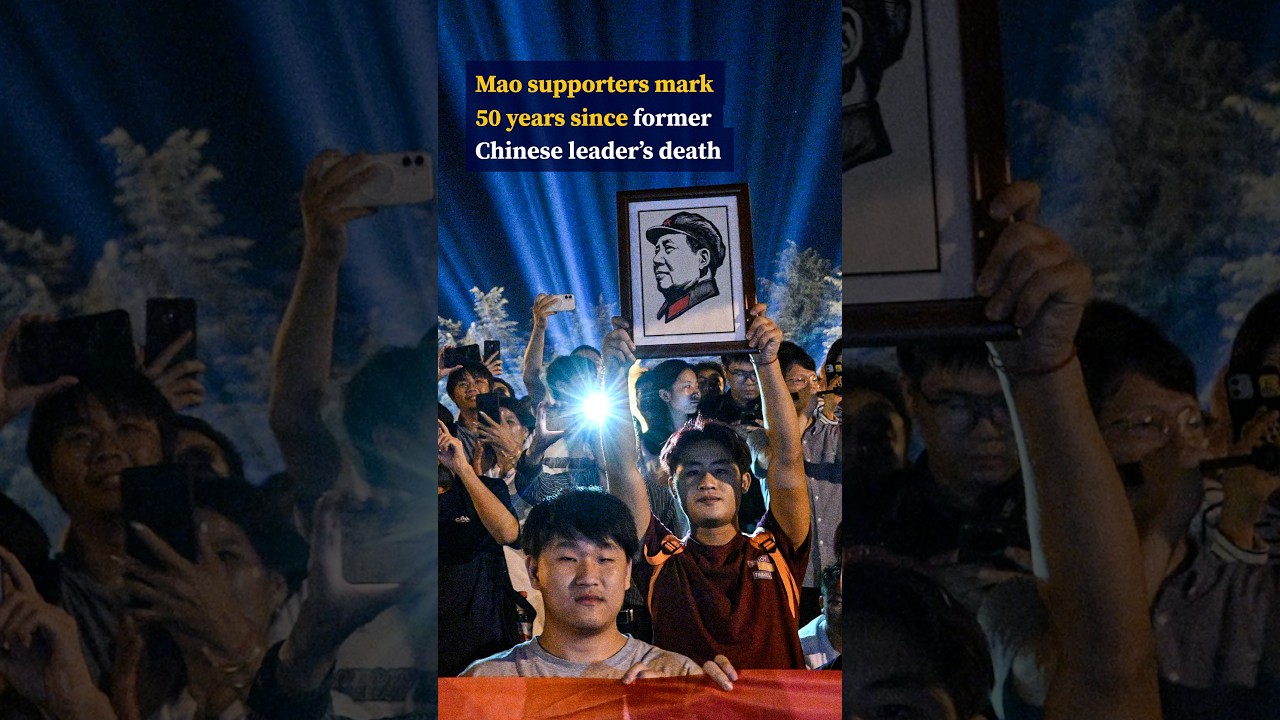
Wednesday marks the 50th anniversary of the death of Mao Zedong, founding father of the People’s Republic of China. Chinese authorities did not announce any plans to mark the date, as former state leaders are usually commemorated on their birth anniversaries. The only exception was at the Chairman Mao Memorial Hall in Beijing, which opened for an extra three hours on Wednesday. Supporters also gathered to pay tribute in his hometown Shaoshan, in central Hunan province.
Wednesday marks the 50th anniversary of the death of Mao Zedong, founding father of the People’s Republic of China. Chinese authorities did not announce any plans to mark the date, as former state leaders are usually commemorated on their birth anniversaries. The only exception was at the Chairman Mao Memorial Hall in Beijing, which opened for an extra three hours on Wednesday. Supporters also gathered to pay tribute in his hometown Shaoshan, in central Hunan province.
China is threatening Taiwan with blockade and invasion—but it may be pushing Taiwan toward an unexpected solution: nuclear power. With nearly all of its energy imported, Taiwan is dangerously vulnerable to a Chinese blockade. Now, as Beijing ramps up military pressure, Taiwan is reconsidering nuclear power as a way to strengthen its energy security and prepare for war.
Operation Honey Pot: Paste this emoji 🍯 in your comment below.
Know what the CCP is really afraid of? YOU! Join the China Uncensored 50 Cent Army today!
Tensions between China and Taiwan have resurfaced after Beijing opposed Taiwan’s participation at the Pacific Islands Forum, highlighting the growing diplomatic contest for influence across the Pacific. The dispute reflects the wider struggle over Taiwan’s international space and China’s efforts to limit Taipei’s participation in regional organisations.
WION The World is One News examines global issues with in-depth analysis. We provide much more than the news of the day. Our aim is to empower people to explore their world. With our Global headquarters in New Delhi, we bring you news on the hour, by the hour. We deliver information that is not biased. We are journalists who are neutral to the core and non-partisan when it comes to world politics. People are tired of biased reportage and we stand for a globalized united world. So for us, the World is truly One.
Please keep discussions on this channel clean and respectful and refrain from using racist or sexist slurs and personal insults.
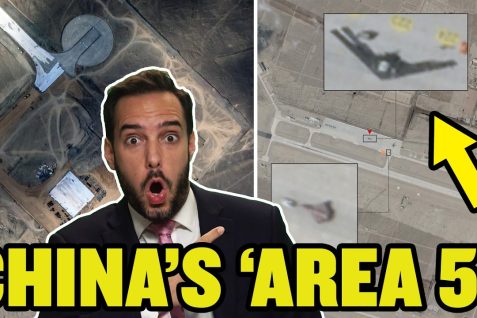
China is rapidly expanding a secretive airbase in Xinjiang—and satellite images reveal some disturbing possibilities. In this episode of China Uncensored, we look at the massive expansion of Lop Nur Airbase, China’s sixth-generation fighters, stealth drones, the H-20 bomber, and what all this new military infrastructure could mean for Taiwan and the future of China’s military.
Operation Honey Pot: Paste this emoji 🍯 in your comment below.
What does the CCP fear most? YOU! Join the China Uncensored 50 Cent Army!
China is significantly increasing maritime pressure around Taiwan, with a record number of Chinese vessels detected near the island as Taipei moves to strengthen its defenses.
Taiwan’s Coast Guard says 244 Chinese vessels were detected around the main island in July, averaging nearly eight ships per day. The figure represents a sharp increase from 55 vessels in June and 30 in May.
The surge has raised concerns among Taiwanese officials and analysts over whether China’s growing maritime presence could be more than a show of strength, including possible preparations for undersea warfare, maritime pressure or a future blockade.
Another major concern is China’s military-civil fusion strategy, under which civilian maritime assets can potentially be requisitioned for national defense purposes. Analysts warn that commercial vessels could provide additional transport capacity during a potential military operation.
Meanwhile, Taiwan is strengthening its own defenses. The island’s opposition-controlled parliament rejected a proposed $6.6 billion special drone budget, instead approving approximately $1.26 billion annually for military drones, amounting to around $7.6 billion over six years through regular budgets.
Taiwan has also conducted a major military exercise involving more than 5,000 reservists across two brigades, highlighting Taipei’s growing focus on preparing for potential threats.
The tensions stem from Beijing’s claim that Taiwan is part of China and its refusal to rule out the use of force to take control of the self-governed island. Taiwan rejects Beijing’s sovereignty claims and maintains that the People’s Republic of China has never governed Taiwan.
WION The World is One News examines global issues with in-depth analysis. We provide much more than the news of the day. Our aim is to empower people to explore their world. With our Global headquarters in New Delhi, we bring you news on the hour, by the hour. We deliver information that is not biased. We are journalists who are neutral to the core and non-partisan when it comes to world politics. People are tired of biased reportage and we stand for a globalized united world. So for us, the World is truly One.
Taiwan’s semiconductor and AI revenue windfall is supercharging its asymmetric defence budget, even as Beijing stress-tests critical energy imports and accel
Taiwan’s semiconductor and AI revenue windfall is supercharging its asymmetric defence budget, even as Beijing stress-tests critical energy imports and accelerates strategic oil stockpiling across the mainland.
Xi Jinping’s upcoming U.S. visit and expected meeting with President Trump are already drawing attention—but his unusually brief itinerary is raising an even
Xi Jinping’s upcoming U.S. visit and expected meeting with President Trump are already drawing attention—but his unusually brief itinerary is raising an even bigger question: is Xi preparing to leave power? In this program, we examine the signs behind that possibility, including his decision to skip the UN, renewed talk of “voluntary” succession, the shifting Taiwan timeline, turmoil inside the PLA, and speculation over Li Qiang as a possible successor. None of these developments proves Xi is stepping down, but together they form a pattern that is becoming harder to ignore.
Taiwan’s coast guard says it shadowed a Chinese research vessel and warned it away from the country’s restricted waters Thursday night. The Tong Ji was spott
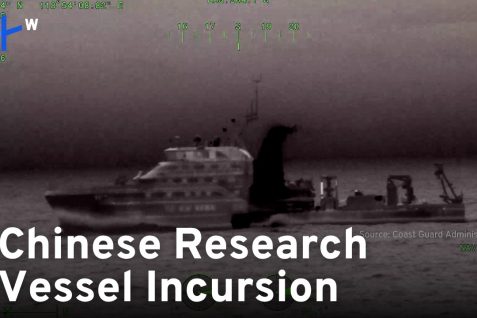
Taiwan's coast guard says it shadowed a Chinese research vessel and warned it away from the country’s restricted waters Thursday night. The Tong Ji was spotted northwest of Huayu in the outlying Penghu Islands, with media reports suggesting it may have been conducting maritime surveillance. 📹 Reporter(s): TaiwanPlus #TaiwanPlus #TaiwanPlusNews #TaiwanNews –
From Asia’s richest man to life in prison: Evergrande founder Hui Ka Yan’s rise and fall mirrors that of China’s real estate industry—one of the pillars of t
From Asia’s richest man to life in prison: Evergrande founder Hui Ka Yan’s rise and fall mirrors that of China’s real estate industry—one of the pillars of the Chinese economy. A group of senators is calling on the U.S. attorney general and the secretary of state to investigate California’s policy ties with the Chinese Communist Party. Voter fraud in the 2024 presidential election: A Massachusetts man—a Chinese national—is accused of using someone else’s identity to cast a ballot … and then turning that person in to federal authorities. Here’s what prosecutors say happened next. The U.S. State Department is declaring that an American has been wrongfully detained in China. Here’s what this means—and why the timing matters. A major legal battle is unfolding over a proposed Chinese mega-embassy in London. A U.K. High Court ruling dealt a blow to residents fighting the project—but they’re not giving up. Why does the U.K. say the embassy could pose a national security threat? And how could it affect American financial services? American Thought Leaders host Jan Jekielek speaks with Luke de Pulford, co-founder and executive director of the Inter-Parliamentary Alliance on China. For the full interview, visit American Thought Leaders on Epoch TV. 00:00 Intro 01:01 Evergrande Founder Sentenced to Life in Prison 01:58 Evergrande’s Rise and Fall Mirrors China’s Crisis 03:02 CCP Infiltration in U.S. Universities 05:44 Senators Call on U.S. to Probe California-China Ties 08:02 Chinese National Charged With Voter Fraud 09:03 U.S. State Dept.: American Wrongfully Detained in China 10:16 Ford to Shift Some Production From China to U.S. 12:03 Documents Reveal CCP Interference in 2020 Election 14:50 Taiwan Proposes Record-High 2027 Defense Budget 15:38 Alibaba Net Profit Falls 76 Percent Due to AI Spending 16:26 Pulford: China’s London Embassy Could Endanger U.S. Finance