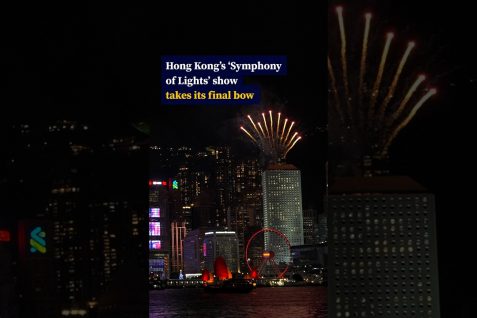
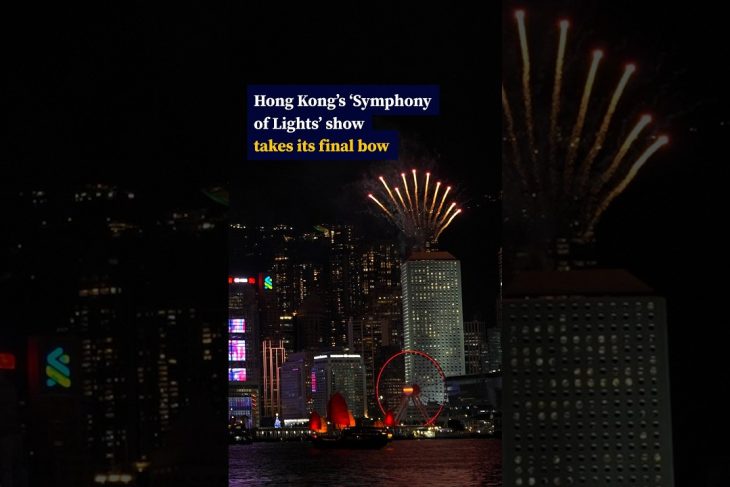
After 22 years, Hong Kong’s nightly synchronised light show, “A Symphony of Lights”, lit up Victoria Harbour for a final time before being permanently switched off on Wednesday. The nightly spectacle will be replaced by seasonal light shows across different districts as authorities seek to refresh the city’s tourism offerings.
After 22 years, Hong Kong’s nightly synchronised light show, “A Symphony of Lights”, lit up Victoria Harbour for a final time before being permanently switched off on Wednesday. The nightly spectacle will be replaced by seasonal light shows across different districts as authorities seek to refresh the city’s tourism offerings.
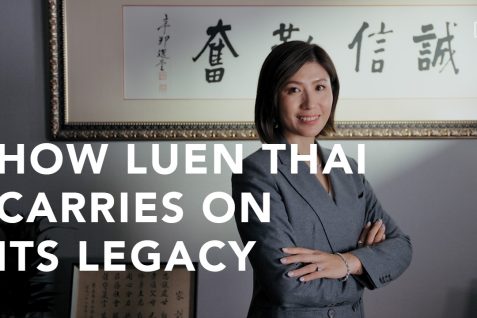
The third-generation executive at the Hong Kong-headquartered conglomerate reflects on how the family’s motto of “integrity and diligence” and her own global experience have helped her expand its hospitality business.
The third-generation executive at the Hong Kong-headquartered conglomerate reflects on how the family’s motto of “integrity and diligence” and her own global experience have helped her expand its hospitality business.
An investigation by the South China Morning Post has found that Vocational Training Council (VTC) courses are being marketed to pregnant women in mainland China as the lowest-cost route to secure Hong Kong passports for their newborns. Posing as a potential client, an SCMP reporter contacted one of the agencies behind the posts to learn more about the scheme. Senior reporter Vivian Au walks us through the investigation.
Agencies in mainland China are marketing vocational courses in Hong Kong to pregnant women as the cheapest available route to a Hong Kong passport for their unborn children, an investigation by the South China Morning Post has found. The packages, sold for less than HK$100,000 (about US$12,600) including the agency’s commission, centre on courses run by the Vocational Training Council, Hong Kong’s largest vocational education provider. An SCMP reporter posed as a potential client to learn how the scheme is sold, and senior reporter Vivian Au walked readers through what the investigation uncovered. The sales pitch, according to the Post, is explicit: enrol, come to Hong Kong lawfully as a student, give birth in the city — and the baby starts life with Hong Kong residency.
The reason the pitch works at all is a quirk of Hong Kong law with a long and politically charged history. Under Article 24 of the Basic Law, Hong Kong’s mini-constitution, a Chinese citizen born in Hong Kong is a Hong Kong permanent resident, with the right of abode in the city. The Court of Final Appeal confirmed in its landmark 2001 Chong Fung Yuen ruling that this applies regardless of the parents’ own status. A child born in Hong Kong to mainland parents therefore holds, from birth, rights that most migrants spend seven years of ordinary residence earning — and with them, access to Hong Kong schooling, healthcare, and a Hong Kong passport in later life.
How the route is supposed to work
The obstacle for mainland mothers has never been the child’s status; it has been getting lawfully into a Hong Kong delivery room. After a surge of “anchor baby” births in the 2000s — more than 170,000 babies were born in Hong Kong to mainland parents between 2001 and 2011 — the Hong Kong government moved to shut the door: from 2013, public hospitals reserved all obstetric beds for local women, and private hospitals agreed to stop accepting bookings from mainland women whose husbands were not Hong Kong residents. A woman who simply arrives as a visitor cannot book a delivery. A woman who is genuinely resident in Hong Kong, holding a Hong Kong identity card, is in a different position — and that is exactly the gap the agencies are selling their way through.
On the agencies’ account, a place on a VTC course brings a student visa, the visa brings lawful residence and an identity card, and lawful residence brings access to the obstetric services closed to visitors. The claimed rewards, as marketed, go well beyond the passport itself: the agencies told prospective clients the path would let their children enter top-tier mainland universities more easily and could even position them for a Hong Kong civil service job in the future. Those are the agencies’ claims, repeated here as claims — the Post’s investigation is a story about how the route is sold, and a sales pitch is not a guarantee that any of it survives contact with an admissions officer or an immigration officer.
An old loophole in new packaging
None of this is entirely new, and Hong Kong legislators have seen the study route used this way before. As long ago as 2013, the government was answering Legislative Council questions about mainland agents helping pregnant women apply to study at Hong Kong institutions, obtain identity cards, apply for suspension of their studies, and then stay on to give birth as residents. The government’s answer then was the framework that still applies: deferrals are judged by the same standards for local and non-local students, student entry permits require accurate and truthful information, and the obstetric system gives priority to Hong Kong residents. The VTC marketing matters because it suggests the same workaround is now being packaged, priced, and advertised at scale on mainland social media — with a price tag low enough to open it to middle-class families, not just the wealthy.
The risks in the pitch are real, and they fall on the mothers. A student visa is granted for genuine study; Hong Kong’s Immigration Department has repeatedly warned, in the parallel debate over the city’s talent schemes, that entry can be refused where the real purpose of travel differs from the purpose declared, and providing false information to immigration authorities is a criminal offence. A woman whose enrolment is treated as a device rather than an education has no secure platform at all — and a baby’s delivery cannot be rescheduled around a visa problem. Critics of the schemes make the same point from the other side: selling a course mainly as a residency product misleads the buyer and damages the institution whose name is on the advert, whether or not the institution knew anything about it.
Why Hong Kong is arguing about this again
The VTC story has landed in the middle of a wider Hong Kong argument about student visas and residency that has been running all month. In mid-November, HKU SPACE cancelled several postgraduate diploma intakes and promised refunds after some student visas were still pending when classes should have started, and commentators were soon warning that one-year diplomas have been openly sold online for years as the quickest, cheapest door to a Hong Kong identity card — through the graduate scheme that lets non-local graduates stay for two years without a job offer, and onward to permanent residency after seven years. The government’s own position is double-edged: it defends its talent and student schemes as rigorously vetted, points to the billions of dollars of economic contribution it attributes to them, and has told legislators that children born to newcomer families are a welcome answer to Hong Kong’s ageing population and low birth rate.
That tension — a city that needs people, selling education the world wants to buy, while trying to keep its immigration categories honest — is the real story behind the agencies’ pitch. Hong Kong’s residency is valuable precisely because the Basic Law makes a Hong Kong birth so consequential for a Chinese child, and because the city’s schools, universities, and passport still open doors that mainland documents do not. Wherever a legal status is that valuable, someone will package a shortcut to it, and someone else will have to decide whether the shortcut is a legitimate use of the rules or an abuse of them. The SCMP’s undercover reporting has put the VTC version of that question on the record. What the Immigration Department and the VTC do with it is the next part of the story.
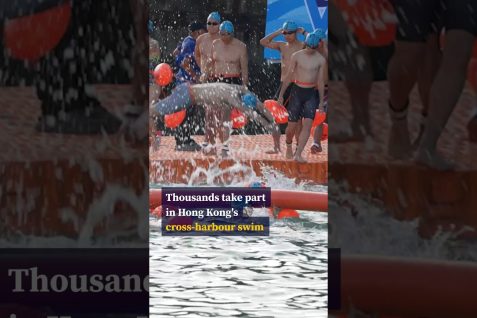
More than 3,000 people took part in the annual Victoria Harbour swim on Sunday. Participants set off from Golden Bauhinia Square Public Pier in Wan Chai on Hong Kong Island and swam about 1 kilometre across the harbour, finishing at the Avenue of the Stars in Tsim Sha Tsui in Kowloon. But the final wave of the leisure group was cancelled because the current became too strong. About 700 swimmers were affected and will be issued refunds.
More than 3,000 people took part in the annual Victoria Harbour swim on Sunday. Participants set off from Golden Bauhinia Square Public Pier in Wan Chai on Hong Kong Island and swam about 1 kilometre across the harbour, finishing at the Avenue of the Stars in Tsim Sha Tsui in Kowloon. But the final wave of the leisure group was cancelled because the current became too strong. About 700 swimmers were affected and will be issued refunds.
Nearly 30 Japanese adult-video (AV) performers said they were denied entry upon arrival at Hong Kong International Airport on Wednesday. Some later said on social media that they were deported back to Japan. The incident was shortly followed by the cancellation of the “Mega Fans Expo 2026”, which had been scheduled to run for three days starting Friday. Hong Kong’s Immigration Department rejected the claims, adding that those involved in the expo had not been denied entry.
Nearly 30 Japanese adult-video (AV) performers said they were denied entry upon arrival at Hong Kong International Airport on Wednesday. Some later said on social media that they were deported back to Japan. The incident was shortly followed by the cancellation of the “Mega Fans Expo 2026”, which had been scheduled to run for three days starting Friday. Hong Kong’s Immigration Department rejected the claims, adding that those involved in the expo had not been denied entry.
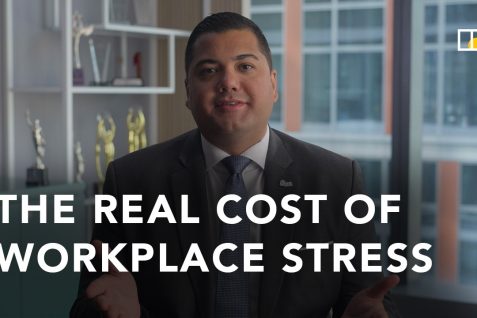
In today’s high-pressure working environment, employee stress and mental well-being can no longer be treated as personal issues. Michael Khan, CEO of Cigna Healthcare Hong Kong, discusses how mental health can affect productivity and workforce resilience, and why employers need to take a more proactive approach to the health of their staff.
Citing findings from Cigna Healthcare’s “International Health Study 2026”, Khan highlights how stress can affect employee productivity, and why business leaders need to view employee health as a strategic asset.
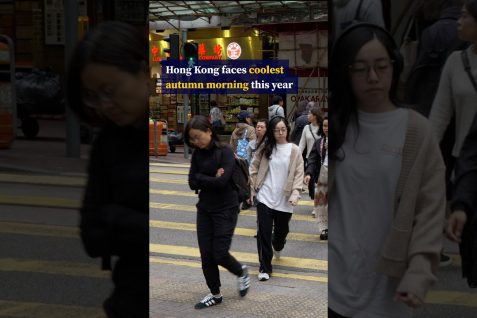
Hong Kong recorded its coolest morning so far this autumn on Tuesday, with the city’s weather forecaster posting a minimum temperature of 17.5 degrees Celsius (63.5 Fahrenheit). A strong northeast monsoon has brought cool and windy weather for the day, but temperatures are expected to rise again later in the week as the monsoon eases.
Hong Kong recorded its coolest morning so far this autumn on Tuesday, with the city’s weather forecaster posting a minimum temperature of 17.5 degrees Celsius (63.5 Fahrenheit). A strong northeast monsoon has brought cool and windy weather for the day, but temperatures are expected to rise again later in the week as the monsoon eases.
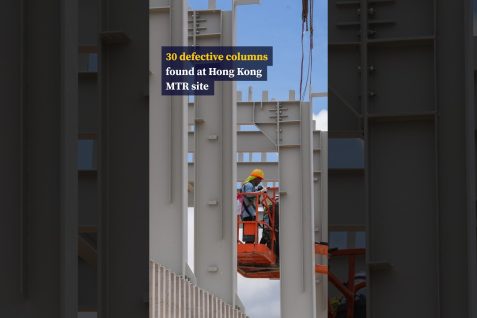
Engineers have identified about 30 “substandard” columns at a Hong Kong railway station under construction, building authorities have revealed. The MTR Corporation has ordered the contractor to rectify the structures after discovering unauthorised remedial works.
About thirty concrete columns at a Hong Kong railway station still under construction have been found defective, in a quality failure that engineers and lawmakers have called almost unimaginable for a project of this scale. The station is Tung Chung West, part of the Tung Chung Line Extension on Lantau Island, and the defects were confirmed by the Buildings Department after formwork was progressively removed. Photographs circulated in Hong Kong media showed columns whose concrete stopped short of the slab above them, leaving clear voids at the top. The MTR Corporation has ordered the main contractor to rectify the structures and has halted the related work while investigators establish how so many columns could be poured short. For a city that prides itself on building some of the most complex rail infrastructure in the world, the episode is an embarrassment that has landed squarely on the desks of two government departments.
The fullest account, pieced together from the Buildings Department and MTR statements, runs in stages. The project’s registered structural engineer’s team first spotted one defective concrete column in early October and ordered the registered contractor to rectify it. On October 27, Buildings Department officers carrying out a routine site inspection and quality audit reviewed the same issue and confirmed two defective columns on the spot. As formwork and concrete were progressively removed for a wider check, similar defects appeared in column after column. By November 6, after all the formwork had come down, about thirty columns showed the problem.
Reporting by HK01, which broke the story, put the alleged shortfall at roughly twenty to thirty centimetres between the tops of the concourse columns and the underside of the floor above, with steel reinforcement exposed. The concourse reportedly contains about sixty columns, meaning roughly half of them may be affected. MTR’s own confirmed discovery concerns the platform level, where a routine October inspection found that material had been used to fill the upper ends of some columns without the corporation’s prior approval. The operator has not publicly confirmed the concourse figure of thirty short-poured columns itself, and it has not directly answered whether those columns were poured short of the floor above. Keeping those two threads separate — the reported concourse gaps and the confirmed unapproved platform repairs — is essential to understanding what is established and what is still allegation.
An Unapproved Repair Made It Worse
What transformed a construction defect into a governance story was the discovery that remedial work had already begun without permission. MTR said its inspectors found that the tops of some platform-level columns had undergone a material-filling repair that the corporation had never approved. It immediately ordered the main contractor, the Bouygues-Dragages joint venture, to stop that repair process and to examine columns and construction procedures across both the platform and concourse levels. The Highways Department formally learned of the problem on November 2, then carried out site checks and met the operator before setting its deadline. A contractor that quietly patches a defect, rather than reporting it up the chain, breaks the supervision system that projects like this depend on.
The official line, from both MTR and the departments, is that the station is not in danger. The temporary supports propping the floor slabs have not been removed, so the defective columns are not yet carrying the loads they were designed for, and officials say the flaws pose no risk to the structural integrity of the unfinished station. The Buildings Department’s preliminary review found no evidence of an intentional deviation from the approved plans, and no sign that the personnel in charge broke the relevant codes in their follow-up actions. That framing matters, because it points the investigation toward procedure and supervision rather than deliberate corner-cutting. It does not, however, answer the basic question of how a pour could finish twenty or thirty centimetres short and pass unnoticed until the formwork came off.
Deadlines, Costs and a 2029 Opening Under Scrutiny
The accountability machinery is now moving on a tight timetable. The Buildings Department has told the registered structural engineer to submit an investigation report and proposed remedial measures by the middle of this month. The Highways Department has separately required MTR to submit a detailed investigation report by November 16, and has instructed it to press the contractor to prepare a detailed repair plan. Remedial work is to be carried out at the contractor’s own expense, and no restart date for the stopped repairs has been announced. The Tung Chung Line Extension carries a budget of about HK$19.5 billion, so even a localised rebuild sits inside a very expensive programme.
Officials are holding the public schedule steady for now. The Highways Department says the extension’s target of opening in 2029 remains unchanged, and the station’s main structure is still aimed for completion in the first half of 2027. Tung Chung West is being built as a three-level station — ground, concourse and platform — using a top-down method in which slabs are cast first and the structural columns and walls follow. That method is precisely why the temporary supports matter so much to the official safety case. The supports may be struck only when the structural engineer’s team is satisfied, which gives engineers a hard checkpoint before the station ever carries a passenger.
Why a Simple Pour Became a Political Problem
The professional reaction has been disbelief as much as anger. Engineering-sector lawmaker Aaron Bok Kwok-ming, deputy chairman of the Legislative Council’s railways subcommittee, said filling concrete into columns was a simple task and that such a mistake should not happen. He called the failure unimaginable and very rare for a contractor of Bouygues-Dragages’ experience. Senior engineer Ho Wing-ip offered a cooler reading, arguing that no contractor would deliberately save about one percent of concrete only to cripple a column. Together, those reactions sketch the puzzle investigators face: the defect looks too basic to be sabotage and too widespread to be a single worker’s slip.
For MTR, which is developing the extension under an ownership model that makes it responsible for design, construction, operation and maintenance, the deeper issue is oversight. Lawmakers have urged the corporation to strengthen supervision and to make it easier for frontline workers to flag problems before they are patched over. The Highways Department, for its part, says it monitors progress, safety and quality through site visits and checks of key construction processes, and that it will review supervision and acceptance procedures. The mid-November reports will be the first real test of whether the explanations match the photographs. Until then, thirty short columns under a propped slab in Tung Chung stand as a rare, visible crack in Hong Kong’s reputation for getting big infrastructure right.
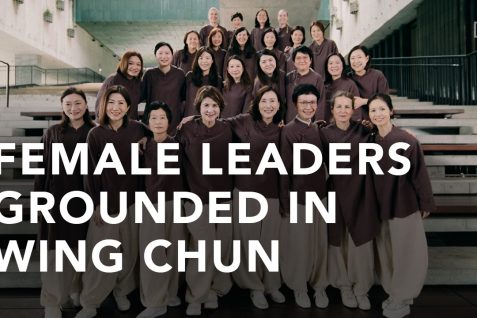
In partnership with: Women Chief Executives Hong Kong
Ahead of their annual summit, members of Women Chief Executives Hong Kong gathered to practice wing chun. The Chinese martial art is grounded in the principles of sensitivity, focus and adaptability, providing these leaders with a blueprint to guide them as they seek to redefine opportunities for female talent.
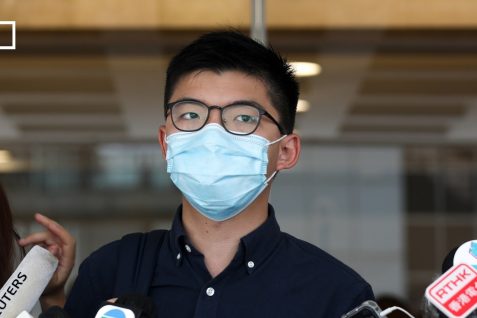
Jailed Hong Kong opposition activist Joshua Wong Chi-fung has been sentenced to 10 years behind bars for his role in a global campaign to instigate sanctions against mainland China and the city in the aftermath of the 2019 anti-government protests. Wong had been scheduled to complete a sentence of four years and eight months for conspiracy to commit subversion on January 7 next year. The court ordered two months and two days, representing the remaining time Wong is to serve his sentence in the previous national security case, to run concurrently with his latest jail term, meaning the activist’s expected release date is pushed back to November 2036.
Hong Kong activist Joshua Wong Chi-fung was sentenced on Thursday to 10 years in prison for conspiring to collude with foreign forces, in a second national security conviction that extends his time behind bars by a decade. Wong, who turned 30 last month, had pleaded guilty in September to conspiring with fellow activists to invite foreign sanctions against mainland China and Hong Kong in the aftermath of the 2019 anti-government protests. High Court Judge William Tam called the case “grave” and said the punishment had to fit the gravity of the crime. The sentence was shorter than the maximum penalty of life imprisonment, but far longer than the four and a half years Wong’s lawyers had asked for. It means the best-known face of Hong Kong’s pro-democracy generation will be 40 years old before he leaves prison.
The mechanics of the sentence underline how close Wong had come to freedom. He was already serving four years and eight months for conspiracy to commit subversion, a sentence imposed in the city’s landmark unofficial-primaries case, and that term was due to finish on January 7 next year, with only about two months left to run. The court ordered that remaining time — two months and two days — to run concurrently with the new 10-year term. Even with that small overlap, the effect is to push his expected release back to November 2036. Judge Tam said he had taken 13 years as the starting point for the sentence and reduced it because Wong pleaded guilty, while rejecting the argument that the activist’s role in the conspiracy had been limited.
From Teenage Protest Leader to Prisoner
Wong’s rise began when he was barely into his teens. At 14 he helped found the student group Scholarism, which in 2012 forced the Hong Kong government to shelve plans for patriotic national education in schools, an early and startling victory over Beijing-backed policy. In 2014 he became one of the most recognisable leaders of the Umbrella Movement, when tens of thousands of protesters occupied Hong Kong’s streets for 79 days demanding genuine universal suffrage. He later co-founded the political party Demosisto and travelled the world lobbying foreign governments to support Hong Kong’s democracy movement. That international advocacy — speeches, meetings and testimony abroad — built his global profile, and it is the same activity that prosecutors later placed at the centre of their case against him.
The turning point came in 2019, when mass protests against a proposed extradition bill convulsed the city for months and at times turned violent. Beijing responded in June 2020 by imposing a sweeping National Security Law on Hong Kong, criminalising secession, subversion, terrorism and collusion with foreign forces. The law transformed the legal landscape overnight, and much of the advocacy that Wong and his peers had practised openly for a decade fell within its reach. Wong has been in detention continuously since late 2020, through a succession of cases arising from the protest era. Thursday’s sentence is the heaviest single punishment he has received.
Two National Security Cases, Six Years Apart in Court
The subversion sentence Wong is finishing came from Hong Kong’s largest national security prosecution. He was one of 47 opposition figures charged over an unofficial primary election held in 2020 to choose candidates for the Legislative Council, and one of 45 ultimately jailed in 2024 after the trial concluded. His four years and eight months in that case made him one of the more lightly sentenced defendants, in part because of his early guilty plea. Before the collusion charge was brought in 2025, he was on course to walk free in January and resume life outside prison for the first time in more than six years. The new prosecution, filed while he was still serving the first sentence, reset that clock entirely.
The collusion case concerned events between July 1 and November 23, 2020 — the first months after the security law took effect. Prosecutors accused Wong of conspiring with self-exiled activist Nathan Law and others to ask foreign countries and organisations to impose sanctions, blockades or other hostile measures against Hong Kong and China. The judge pointed to real-world measures of that period, including the United States revoking Hong Kong’s preferential special status and sanctioning Chinese and Hong Kong officials, as the kind of actions the conspiracy had sought. The court said the conviction rested on Wong’s conduct after the law was enacted, though his earlier activities informed the assessment of gravity. Wong, for his part, said he had mistakenly believed his actions were within the law, and that he had never advocated Hong Kong independence or the collapse of China.
Reactions at Home and Abroad
Hong Kong’s leadership defended the sentence in the strongest terms. Chief Executive John Lee, himself a former security chief, said after the hearing that Wong and Law had committed “extremely serious offences” that undermined national sovereignty, security and development interests and prejudiced the well-being of the public. Beijing, through its officials, warned foreign governments against making what it called irresponsible remarks about the trial. Supporters of the law argue that lobbying foreign states to sanction one’s own city crosses a line that many countries police in their own statutes. To the authorities, the length of the sentence reflects both the seriousness of that offence and a deterrent message to anyone considering similar campaigns.
Abroad, the reaction was sharply critical. The United States consulate in Hong Kong said it strongly condemned the 10-year sentence, and American officials described Wong as unjustly imprisoned for advocating fundamental freedoms. Amnesty International said the case showed the National Security Law being used as a tool to punish dissent, noting that the conduct punished was a campaign of international advocacy rather than violence. Human rights groups argue that the law’s broad wording has swept up peaceful political activity that was legal and commonplace in Hong Kong before 2020. The divide in reactions mirrors the divide over the law itself, which supporters call a restoration of stability and critics call the end of the city’s promised autonomy.
For Hong Kong’s pro-democracy movement, the sentence closes another door. Its best-known figures are now in prison, in exile like Nathan Law, or silent under the pressure of the security law, and the parties and newsrooms that once sustained the movement have been dissolved or closed. Wong entered prison at 23 as a former student leader with a political future in front of him; on Thursday’s sentence he will leave it, if the term runs in full, at 40. Whatever view is taken of his case, its symbolism is hard to miss. The teenager who once filled Hong Kong’s streets with supporters will spend the whole of his thirties in a cell, under a law written for the protests he helped to lead.
Chinese basketball icon Yao Ming on Wednesday spoke with primary school students and led a non-contact rugby clinic at the Hong Kong Football Club as part of the “Mental Wellbeing Through Sport initiative”. The former perennial NBA All-star was joined by decorated Olympic gymnast Li Xiaopeng and table tennis legend Deng Yaping.
Chinese basketball icon Yao Ming on Wednesday spoke with primary school students and led a non-contact rugby clinic at the Hong Kong Football Club as part of the “Mental Wellbeing Through Sport initiative”. The former perennial NBA All-star was joined by decorated Olympic gymnast Li Xiaopeng and table tennis legend Deng Yaping.
Some 15 years ago, then-high school student Joshua Wong was a rising political star in Hong Kong’s pro-democracy movement. Now 30, he has been sentenced for the second time under a Beijing-imposed national security law that effectively crushed the movement he once championed. Despite being behind bars, Wong continues to focus on self-improvement, reading books, taking university courses and learning guitar, according to his friend Louis Lee.
Some 15 years ago, then-high school student Joshua Wong was a rising political star in Hong Kong's pro-democracy movement. Now 30, he has been sentenced for the second time under a Beijing-imposed national security law that effectively crushed the movement he once championed. Despite being behind bars, Wong continues to focus on self-improvement, reading books, taking university courses and learning guitar, according to his friend Louis Lee.
Hong Kong may be small but it boasts some of the world’s most biodiverse unspoilt countryside and coastlines. The city is renowned for its dramatic mountains, many of which feel otherworldly and offer breathtaking views, and all are within easy reach of the urban centre.
Hong Kong may be small but it boasts some of the world’s most biodiverse unspoilt countryside and coastlines. The city is renowned for its dramatic mountains, many of which feel otherworldly and offer breathtaking views, and all are within easy reach of the urban centre.
Democrats won a major victory in the U.S. midterm elections, giving them control of both the House and the Senate. What could this mean for U.S.–China relati
Democrats won a major victory in the U.S. midterm elections, giving them control of both the House and the Senate. What could this mean for U.S.–China relations? And how might it affect Taiwan? Do you have Chinese stocks in your portfolio? You may not know what you’re actually investing in—or what Chinese companies are concealing from American investors. A multibillion-dollar artificial intelligence (AI) deal between a U.S. tech giant and a Chinese company has been called off. Oracle scrapped its $7 billion deal with Tencent under pressure from the U.S. government. China is expanding its dominance in another key sector, potentially gaining a powerful new source of leverage in its competition with the West. 00:00 Intro 01:06 How US Midterms Affect U.S.–China Relations 04:51 China Hides Key Information From Foreign Investors 06:39 Oracle Cancels $7 Billion Chinese Tencent AI Deal 08:17 Chinese Chemical Exports Threaten Foreign Countries 09:19 How China Surveils Tibet, Xinjiang, and Hong Kong 11:27 China Seen Testing New Stealth Technology 12:51 Chinese Information Warfare, Biological Threats, & More 13:15 China Targets State and Local Elections 14:37 Congress Took Years to Close Visa Gap 15:47 China’s Growth Rate Is Near Zero: Expert 18:08 China Hides True Trade Figures: Expert
A growing interest among Hong Kong women in an anti-ageing injection containing human tissue has prompted a recent crackdown by health authorities, as the product, widely known in Chinese as the “cadaver skin jab”, has not been registered for use in the city.
This story has been updated to clarify that Singapore health authorities have not approved the product as a drug, and that it is listed only in a government self-declaration database.
Hong Kong police arrested a 61-year-old man on Monday for allegedly spiking the drink of Japanese DJ Mao Hamasaki at a Hong Kong nightclub Halloween event over the weekend. The incident incapacitated Hamasaki and left her hospitalised in intensive care. The man is being investigated for allegedly administering poison with intent to injure.
Hong Kong police arrested a 61-year-old man on Monday for allegedly spiking the drink of Japanese DJ Mao Hamasaki at a Hong Kong nightclub Halloween event over the weekend. The incident incapacitated Hamasaki and left her hospitalised in intensive care. The man is being investigated for allegedly administering poison with intent to injure.
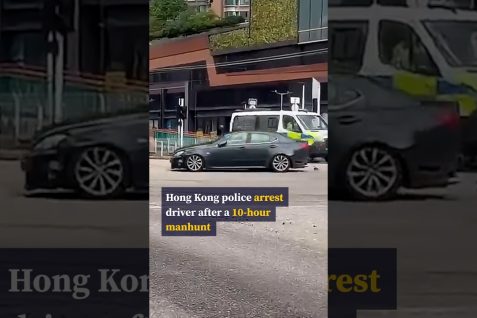
A hit-and-run accident at a cross-boundary checkpoint in Hong Kong triggered a 10-hour manhunt as a black Lexus evaded officers during a chase, according to police. The driver struck a barrier gate on the Hong Kong-Zhuhai-Macau Bridge before fleeing the scene. He was later arrested.
A hit-and-run accident at a cross-boundary checkpoint in Hong Kong triggered a 10-hour manhunt as a black Lexus evaded officers during a chase, according to police. The driver struck a barrier gate on the Hong Kong-Zhuhai-Macau Bridge before fleeing the scene. He was later arrested.
A Japanese disc jockey known as DJ Mao has regained consciousness following an alleged drugging at a Hong Kong club early Sunday morning. The victim, Mao Hamasaki, was admitted to a hospital intensive care unit and tested positive for four types of drugs, according to her manager. An unknown man reportedly asked Hamasaki to DJ at a private event and gave her a glass of orange juice after she turned down the work offer.
A Japanese disc jockey known as DJ Mao has regained consciousness following an alleged drugging at a Hong Kong club early Sunday morning. The victim, Mao Hamasaki, was admitted to a hospital intensive care unit and tested positive for four types of drugs, according to her manager. An unknown man reportedly asked Hamasaki to DJ at a private event and gave her a glass of orange juice after she turned down the work offer.
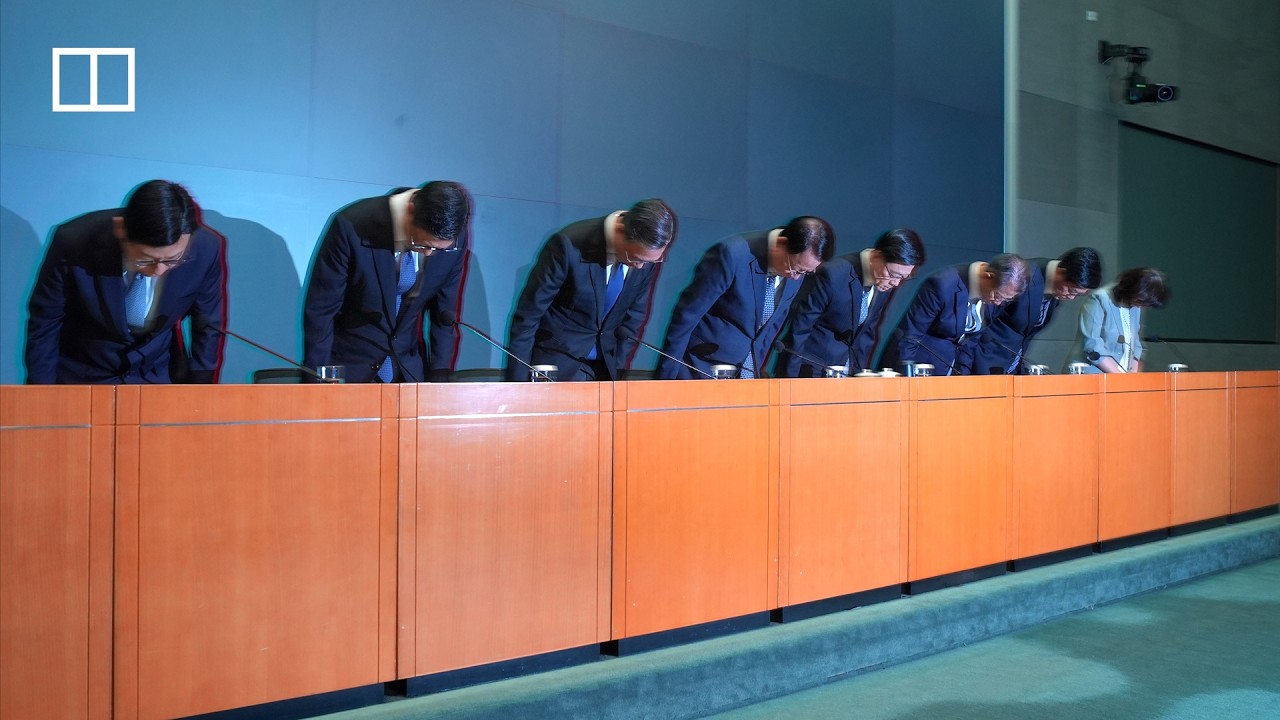
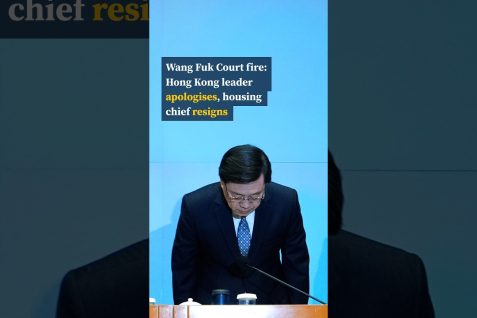
Hong Kong’s Chief Executive John Lee and other senior officials from his administration formally apologised for the city’s deadliest fire in decades at the beginning of a press conference on Thursday. Lee announced that housing secretary Winnie Ho was being held politically accountable for last November’s blaze at Wang Fuk Court in Tai Po, and that she had resigned on Wednesday. Lee then introduced a number of actions and reforms his administration would implement in response to a scathing report by an independent committee that investigated the Wang Fuk Court tragedy. The government received the report last week and released it to the public on Thursday.
Hong Kong’s Chief Executive John Lee and other senior officials from his administration formally apologised for the city’s deadliest fire in decades at the beginning of a press conference on Thursday. Lee announced that housing secretary Winnie Ho was being held politically accountable for last November’s blaze at Wang Fuk Court in Tai Po, and that she had resigned on Wednesday. Lee then introduced a number of actions and reforms his administration would implement in response to a scathing report by an independent committee that investigated the Wang Fuk Court tragedy. The government received the report last week and released it to the public on Thursday.
Hong Kong Chief Executive John Lee Ka-chiu and senior administration officials issued a formal apology on Thursday for the city’s deadliest fire in decades. Lee announced that secretary for housing Winnie Ho Wing-yin had stepped down on Wednesday after being held politically accountable for last November’s blaze at Wang Fuk Court in Tai Po. The city leader also unveiled a series of follow-up actions and systemic reforms to be implemented in response to a scathing report by an independent committee appointed to investigate the disaster.
Hong Kong’s leader stood before the cameras on Thursday, bowed alongside seven of his most senior officials, and apologised for the fire that killed 168 people — nearly a year after it happened. Chief Executive John Lee Ka-chiu used the release of a sweeping independent inquiry report into last November’s blaze at the Wang Fuk Court housing estate in Tai Po to announce the first political casualty of the disaster: Secretary for Housing Winnie Ho Wing-yin, who resigned on Wednesday after being held politically accountable for the failures the report describes. It was a rare scene of official contrition in Hong Kong, and it came only after a judge-led committee spent months picking apart how a renovation project on a subsidised housing estate turned into the city’s deadliest fire since 1948.
The fire broke out on November 26 last year at Wang Fuk Court, a government-subsidised estate of 31-storey towers that was in the middle of large-scale maintenance work, its buildings wrapped in scaffolding and protective netting. The flames ripped through seven of the estate’s eight towers, killing 168 people and displacing more than 4,600 residents, many of whom have spent the months since in temporary accommodation, waiting for answers. The committee’s answer, delivered in a report of more than 1,000 pages, is that the disaster was not simply a fire. It was a system failure, years in the making, in which warnings were raised, complaints were filed, and no one in authority took ownership of any of it.
A Bow, an Apology and a Resignation
“On behalf of the SAR government, I offer my apologies to the victims and the public at large,” Lee said, describing himself as deeply saddened as chief executive and head of the government. He said Ho should bear political responsibility for the disaster even though the inquiry found no personal wrongdoing on her part, and he confirmed that he had accepted her resignation, which took effect on Wednesday. Ho later issued a statement echoing that position. She is the first official to step down over the fire, and Lee signalled she may not be the last: the government is setting up an independent team to examine which officials should be held accountable and what disciplinary action should follow.
For many Wang Fuk Court residents and families of the dead, the apology arrived late. Critics have spent months accusing the government of moving too slowly on accountability, and the sight of the city’s leadership bowing in unison — a gesture of contrition more familiar from mainland China — was carefully calibrated to acknowledge that anger. Whether it satisfies the families will depend less on the bow than on what happens next: the disciplinary process, the criminal cases still moving through the courts, and the harder question of where thousands of displaced residents will ultimately live.
What the Inquiry Found
The committee, appointed by the government and led by a judge, examined more than a million files and heard testimony from 80 witnesses at hearings held between March and July. Its central finding is devastating in its simplicity: no government department took effective ownership of the fire safety issues at Wang Fuk Court, and complaints about hazards “fell into a vacuum.” Residents had raised safety concerns about the renovation work for more than a year before the fire, the report found, and those concerns went unheeded. The failings, in the committee’s words, were “systemic and pervasive.”
Four government bodies were held partially responsible, including the Housing Bureau’s independent checking unit, which the committee found had failed in its duty to supervise the maintenance work properly. The report concluded that the fire was most likely started by a “glowing source — likely a cigarette,” a small spark that became a catastrophe because of everything around it: flammable conditions on a scaffolded estate, oversight that existed on paper but not in practice, and a regulatory structure in which responsibility was so widely shared that, in the end, it belonged to no one. “The fire has been put out, but the reform has only just begun,” the report concluded.
The Companies at the Centre of the Case
While officials carry the political blame, the committee placed primary responsibility for the fire on two private firms: the contractor Prestige Construction & Engineering and the project consultant Will Power Architects. The inquiry described widespread unlawful and questionable practices in the building maintenance industry, including bid-rigging involving parties the report linked to organised crime. Its work runs alongside a separate criminal investigation in which at least 25 charges have been brought against the two companies and seven individuals, covering offences that include manslaughter, conspiracy to defraud, money laundering and tax evasion.
Prosecutors allege that the companies and some of the defendants conspired to defraud the estate’s owners by concealing the litigation history of the firm that was ultimately awarded the renovation contract — a deal worth more than 300 million Hong Kong dollars, over $38 million. For owners in estates like Wang Fuk Court, who are required by law to maintain their ageing buildings but depend entirely on contractors and consultants to do it honestly, the allegations describe a market that was rigged against them at every step. The criminal cases will decide individual guilt, but the committee’s verdict on the industry itself is already in, and it is scathing.
120 Recommendations — and a Promise to Criminalise Bid-Rigging
Lee promised swift but extensive reform, and put Chief Secretary Eric Chan in charge of a steering committee to drive it through. The inquiry made 120 recommendations, and the government’s headline response is a plan to criminalise bid-rigging across the construction industry, with proposed penalties of up to HK$10 million in fines and 10 years in prison. Alongside that, officials pledged to overhaul how renovation projects on housing estates are supervised, so that fire safety complaints land on a desk that is actually responsible for acting on them. It is, in effect, an admission that Hong Kong’s system for keeping its vast stock of ageing high-rises safe was built on trust — trust in contractors, trust in consultants, trust in paperwork — and that the trust was abused.
The stakes extend far beyond one estate in Tai Po. Hong Kong is one of the most densely built cities on earth, full of towers of exactly Wang Fuk Court’s vintage undergoing exactly the kind of maintenance work that preceded the fire, and every one of those projects now sits under a cloud of justified suspicion. The families of the 168 people who died cannot be given back what they lost in November. What they have been promised, at last and in public, is a government that owns its share of the blame — and a system rebuilt so that the next complaint about a dangerous building is answered before, not after, the fire.
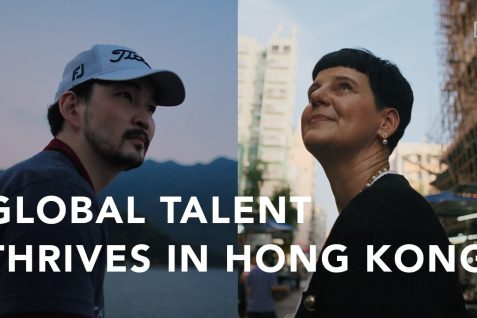
Since moving to Hong Kong in the early 2020s, Kazakh ophthalmologist Mukhit Kulmaganbetov and German museum curator Silke Schmickl have both expanded their careers while the city continues to inspire them personally and professionally.
Since moving to Hong Kong in the early 2020s, Kazakh ophthalmologist Mukhit Kulmaganbetov and German museum curator Silke Schmickl have both expanded their careers while the city continues to inspire them personally and professionally.
Kylian Mbappe was dropped by major Chinese brands after a video circulated of the Real Madrid and France superstar apparently joking about Mao Zedong. Video: Alfred Davies/AFP.
More at – ‘s only non-profit, independent English-language news source – impartial, governed by an ethics code. HKFP is a member of the Trust Project, visit hongkongfp.com/ethics to view our journalistic standards.
Kylian Mbappe was dropped by major Chinese brands after a video circulated of the Real Madrid and France superstar apparently joking about Mao Zedong. Video: Alfred Davies/AFP.
More at – 's only non-profit, independent English-language news source – impartial, governed by an ethics code. HKFP is a member of the Trust Project, visit hongkongfp.com/ethics to view our journalistic standards.
A growing interest among Hong Kong women in an anti-ageing injection containing human tissue has prompted a recent crackdown by health authorities, as the product, widely known in Chinese as the “cadaver skin jab”, has not been registered for use in the city.
A growing interest among Hong Kong women in an anti-ageing injection containing human tissue has prompted a recent crackdown by health authorities, as the product, widely known in Chinese as the “cadaver skin jab”, has not been registered for use in the city.
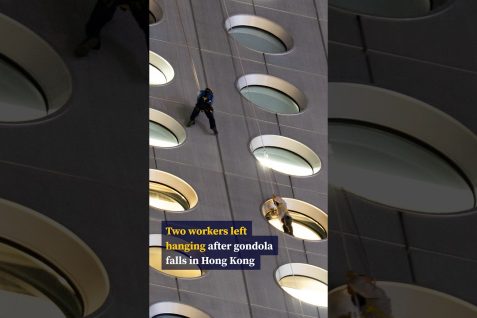
Firefighters rushed to rescue two workers left dangling on safety harnesses more than 30 storeys above ground outside a skyscraper in Hong Kong’s Central district. The incident took place on Monday evening, after their suspended working platform apparently malfunctioned and dropped.
Firefighters rushed to rescue two workers left dangling on safety harnesses more than 30 storeys above ground outside a skyscraper in Hong Kong’s Central district. The incident took place on Monday evening, after their suspended working platform apparently malfunctioned and dropped.
A growing interest among Hong Kong women in an anti-ageing injection containing human tissue has prompted a recent crackdown by health authorities, as the product, widely known in Chinese as the “cadaver skin jab”, has not been registered for use in the city.
A growing interest among Hong Kong women in an anti-ageing injection containing human tissue has prompted a recent crackdown by health authorities, as the product, widely known in Chinese as the “cadaver skin jab”, has not been registered for use in the city.
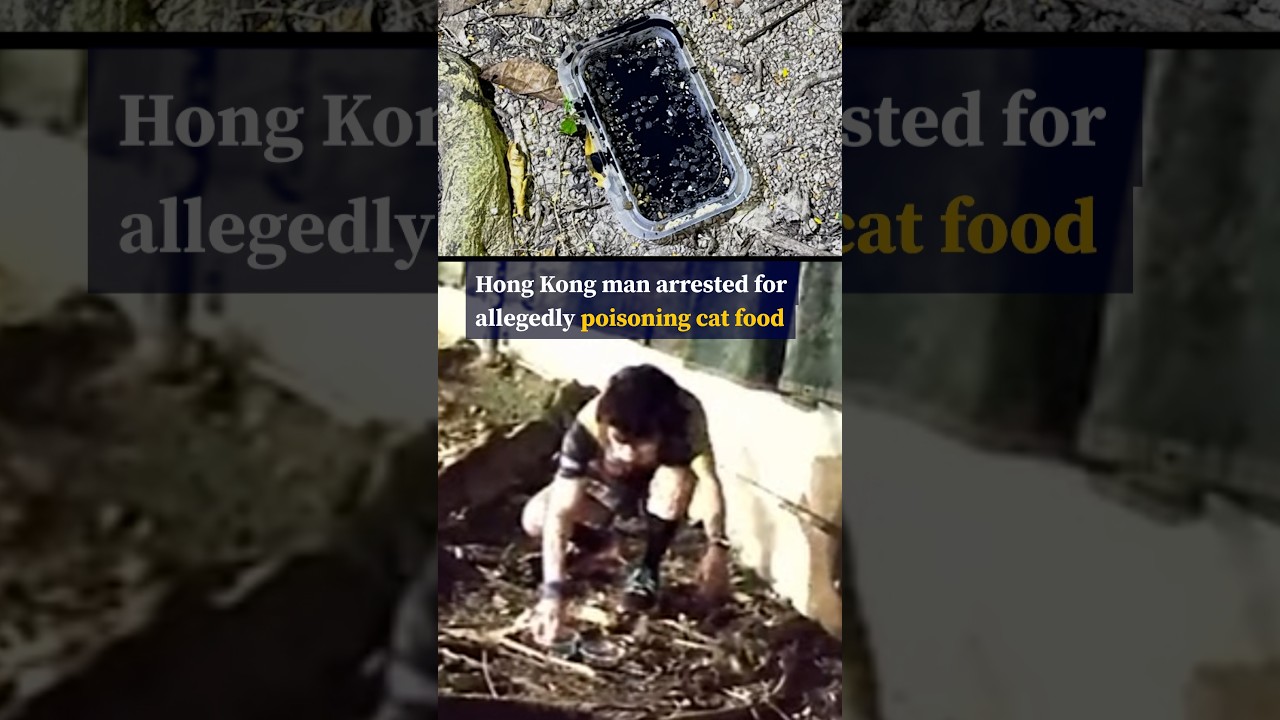
Police have arrested a 34-year-old man for allegedly mixing rat poison into food left for stray cats in a Hong Kong park. Animal welfare volunteers had confronted the man following a two-month sting operation using hidden cameras. Officers who arrested the man said they seized a packet of suspected rat poison and a 14cm (5.5 inches) fruit knife at the scene.
Police have arrested a 34-year-old man for allegedly mixing rat poison into food left for stray cats in a Hong Kong park. Animal welfare volunteers had confronted the man following a two-month sting operation using hidden cameras. Officers who arrested the man said they seized a packet of suspected rat poison and a 14cm (5.5 inches) fruit knife at the scene.
This video is part of a series produced with support from the Hong Kong SAR government.
Foreign commerce chambers in Hong Kong are optimistic about the city’s first five-year road map, saying that shedding light on the city’s general strategic direction gives businesses ample opportunity to plan. They also note that having a general timeline for megaprojects like the Northern Metropolis is key to attracting foreign investment.
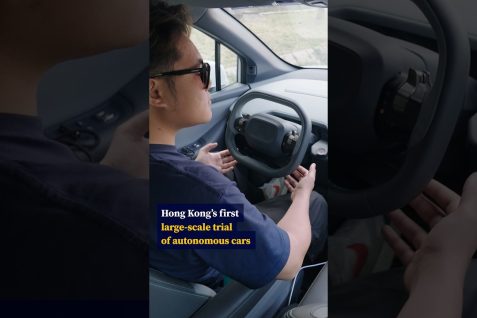
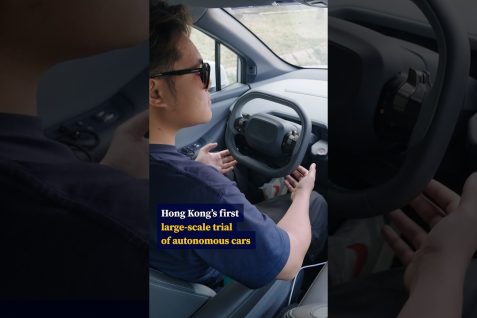
More than 1,000 residents are expected to ride in autonomous vehicles (AVs) as Chinese tech giant Baidu launches Hong Kong’s first large-scale public trial.
More than 1,000 residents are expected to ride in autonomous vehicles (AVs) as Chinese tech giant Baidu launches Hong Kong’s first large-scale public trial.
More than 1,000 residents are expected to ride in autonomous vehicles (AVs) as Chinese tech giant Baidu launches Hong Kong’s first large-scale public trial.
More than 1,000 residents are expected to ride in autonomous vehicles (AVs) as Chinese tech giant Baidu launches Hong Kong’s first large-scale public trial.
The grand finale of EQT Impact Challenge 2026 at Hong Kong’s M+ Museum in September saw some of Asia’s most promising deep-tech founders tackling challenges across climate and health.
The initiative, backed by global investment firm EQT and its philanthropic arm EQT Foundation, provides young companies with crucial early-stage investment alongside access to a global network of industry experts, investors and mentors.
After a seven-month journey that attracted more than 200 applicants and almost 6,000 public votes, five finalists took to the stage.
Advent Gene Therapeutics, which was named this year’s winner, has received investment of €500,000 (US$560,000) from EQT Foundation. The AI-driven biotech start-up develops next-generation viral vectors which enable safer, more precise and effective delivery of genetic medicines.
Okosix, which develops biopolymers that can reduce the use of plastic, and C2iTech, which hopes to use laboratory-grown cells to support the treatment of lung cancer , were named runners-up. They have both received support from Central Cove Group, the family office of Jean Eric Salata, chair of EQT Group.
SCMP Live of the South China Morning Post was an organising partner of EQT Impact Challenge 2026.
For years, Li Zhanshu was one of Xi Jinping’s most trusted political allies—a man who survived repeated controversies and rose to become China’s third-highest-ranking official.
Now, new rumors surrounding his daughter, Li Qianxin, and her business connections in Hong Kong have brought renewed attention to the former Chinese leader’s family.
How did Li Zhanshu rise from a provincial official to the heart of Xi Jinping’s inner circle? What do past investigations reveal about his family’s business interests? And why are questions about his political future resurfacing now?
In this episode, we trace Li Zhanshu’s remarkable rise, the controversies surrounding his family, and the political tensions behind Beijing’s closed doors.
We also examine the speculation surrounding actress Tong Liya and her changing career. What is documented, and what remains rumor?
**Note:** Reports and allegations discussed in this episode do not establish that Li Zhanshu or his family members have been detained or charged with wrongdoing.
For years, Li Zhanshu was one of Xi Jinping's most trusted political allies—a man who survived repeated controversies and rose to become China's third-highest-ranking official.
Now, new rumors surrounding his daughter, Li Qianxin, and her business connections in Hong Kong have brought renewed attention to the former Chinese leader's family.
How did Li Zhanshu rise from a provincial official to the heart of Xi Jinping's inner circle? What do past investigations reveal about his family's business interests? And why are questions about his political future resurfacing now?
In this episode, we trace Li Zhanshu's remarkable rise, the controversies surrounding his family, and the political tensions behind Beijing's closed doors.
We also examine the speculation surrounding actress Tong Liya and her changing career. What is documented, and what remains rumor?
**Note:** Reports and allegations discussed in this episode do not establish that Li Zhanshu or his family members have been detained or charged with wrongdoing.
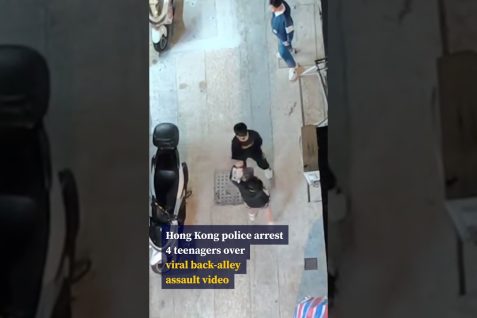
Hong Kong police have arrested four teenagers seen in a viral video punching, slapping and swearing at a boy in an alley in Hong Kong’s Sai Wan Ho neighbourhood. The group has been charged with assault and gang-related offences.
Hong Kong police have arrested four teenagers seen in a viral video punching, slapping and swearing at a boy in an alley in Hong Kong’s Sai Wan Ho neighbourhood. The group has been charged with assault and gang-related offences.
This video is part of a series produced with support from the Hong Kong SAR government.
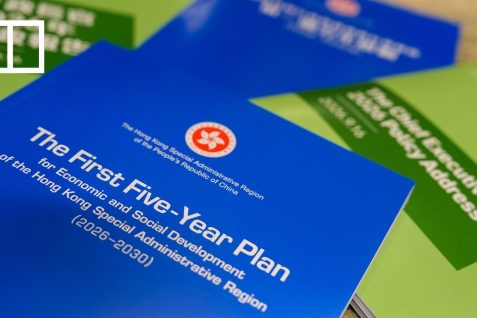
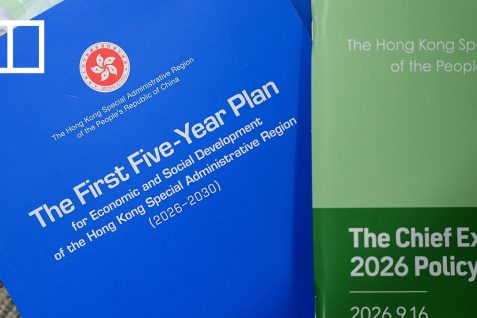
Hong Kong Chief Executive John Lee unveiled the city’s first five-year plan in September, setting out five binding and 17 aspirational goals aimed at keeping the city competitive and attractive to international investors, while improving the livelihoods of its residents. Lee also unveiled the final annual policy address of his current term, which contained a series of concrete measures to help the city attain the ambitious goals outlined in the five-year plan.
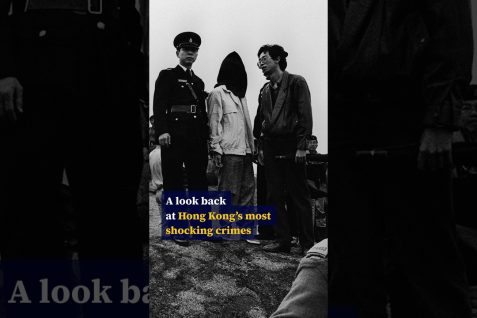
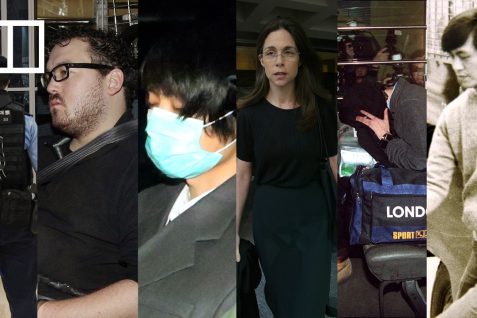
Amid the ongoing trial over the murder of 28-year-old socialite Abby Choi Tin-fung in 2023, we revisit some of the other shocking crimes in Hong Kong’s history.
Amid the ongoing trial over the murder of 28-year-old socialite Abby Choi Tin-fung in 2023, we revisit some of the other shocking crimes in Hong Kong’s history.
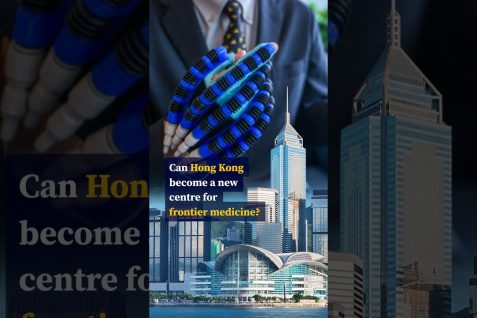
Hong Kong is pouring vast resources into healthcare innovation, developing breakthroughs ranging from high-speed diagnostic chips to surgical robots. But the city’s researchers and universities face steep hurdles when it comes to finding private investment, local manufacturing and commercialisation of what is developed.
In a four-part series, the SCMP takes you inside the local laboratories shaping the future of global healthcare innovation, from treatment, diagnostics to prevention, and explores what it might take for Hong Kong to become the “Silicon Valley of the East”.
Hong Kong has world-class universities, deep capital markets and some of the most densely packed hospital talent in Asia. What it has never quite had is a medical-technology industry to match. A four-part South China Morning Post series asks whether that is finally changing, touring the laboratories where researchers are building high-speed diagnostic chips, surgical robots and AI-driven treatment tools. The ambition, as the series frames it, is nothing less than becoming a “Silicon Valley of the East” for healthcare. The obstacles, it makes equally clear, are money, manufacturing and the long road from a working prototype to a product a hospital will actually buy.
The question is not whether the science is real — on the evidence of the past two years, it plainly is. Hong Kong teams have produced a string of results that would flatter any research hub on earth. The harder question is whether a city built on finance and property can learn the slower, messier business of turning discoveries into companies. That tension, between laboratory brilliance and commercial follow-through, runs through every part of the series. It is also what makes Hong Kong’s experiment worth watching for anyone interested in where medical innovation happens next.
Robots Smaller Than a Grain of Rice
Start with the machines. Engineers at the Hong Kong University of Science and Technology have built what they describe as the world’s smallest multifunctional surgical robot: a device 0.95 millimetres across, some 60 percent smaller than existing endoscopic robots. It combines imaging, high-precision motion and multiple functions — sampling, drug delivery and laser ablation — in a single hollow-skeleton body threaded with an optical-fibre array. In laboratory tests it widened the imaging field dramatically and detected obstacles well beyond previous theoretical limits. Lead researcher Professor Shen Yajing argues that solving this “impossible trinity” of size, vision and function opens the way to diagnosis and treatment in parts of the body that today’s instruments simply cannot reach, with in-vivo trials the next step.
Across the harbour of academia, a Chinese University of Hong Kong team led by Professor Zhang Li has tackled the companion problem: knowing where a tiny robot is once it is inside a patient. Their AI-powered magnetic tracking system follows millimetre-scale wireless medical robots in real time, achieving millimetre-level accuracy at depths of up to ten centimetres in tissue, even amid the magnetic interference of a working clinical environment. Published in Science Robotics, the work was validated in animal tests that steered micro-robots through the spinal canal and bile duct. Tracking sounds like a footnote to robotics; in practice it is the difference between a laboratory curiosity and a tool a surgeon can trust.
From the Laboratory to the Operating Theatre
Hong Kong’s flagship bet on this translation problem is the Multi-Scale Medical Robotics Center, part of the government’s InnoHK research clusters, where medicine and engineering faculty work on endoluminal robots, magnetically guided endoscopes and image-guided surgical platforms under one roof. The centre has already produced a demonstration with genuine symbolic weight: an intercontinental telesurgery exercise in which specialists in Shanghai and London remotely operated a robotic platform hosted in Hong Kong on a live model, in real time. CUHK’s Professor Philip Chiu framed the point explicitly — Hong Kong sits at the heart of Asia, and the exercise showcased the city as the connective tissue between world-class surgical teams. Two local medical students took part, and nearly 200 secondary school students watched, a deliberate investment in the talent pipeline.
The commercial proof point arrived from the private market. Cornerstone Robotics, a Hong Kong surgical-robotics company founded by Professor Kwok Wai Samuel Au, drew a strategic investment of roughly US$700 million from Medtronic, the global medical-device giant, which also took distribution rights for Cornerstone’s Sentire surgical system in markets outside the United States. Sentire had already won approval from China’s National Medical Products Administration in 2024, and in May 2026 added a European CE Mark and Singapore approval covering general, gynaecological, thoracic and urological procedures. A Hong Kong-designed robot, approved on three regulatory regimes and backed by the industry’s largest player, is exactly the trajectory the city’s planners describe. It is also, so far, the exception rather than the rule.
The Valley Between Discovery and Product
The SCMP series is candid about why such cases remain rare. Hong Kong researchers compete well for grants and publications, but private investment in local medical technology is thin, and the city’s near-total lack of manufacturing means prototypes must be built elsewhere — usually across the border in Shenzhen and the Greater Bay Area. Commercialisation expertise, from regulatory strategy to clinical-trial management to hospital procurement, is scarce and expensive. A diagnostic chip that performs beautifully in a university laboratory still faces years of validation before a single patient benefits. Many Hong Kong inventions have historically been sold, licensed or simply lost at precisely this stage.
Artificial intelligence is the newest front in the same contest. The Centre for Artificial Intelligence and Robotics in Hong Kong has unveiled systems such as the CARES multimodal clinical AI agent, alongside diagnostic agents, ultrasound foundation models and an embodied-intelligence operating room, presented to hospital leaders from Hong Kong and Shenzhen at its CREATE Symposium. The pitch is end-to-end: AI that assists diagnosis, guides robots and supports surgery, developed where the patients and clinicians are. Whether hospitals adopt such systems at scale will depend less on demonstrations than on evidence, liability frameworks and budgets. Those are unglamorous determinants, but they decide which technologies survive.
What Success Would Look Like
Hong Kong does hold structural cards few rivals can match. It offers common-law intellectual-property protection, internationally recognised universities and hospitals, free movement of capital, and a position inside China’s vast healthcare market without being wholly of it — a combination neither Singapore nor Shenzhen can replicate exactly. An ageing population across the region guarantees demand for exactly the minimally invasive, AI-assisted, robot-delivered care its laboratories are building. If the Greater Bay Area supplies manufacturing scale while Hong Kong supplies research, regulation and finance, the “frontier medicine centre” stops being a slogan. The next few years will show whether more Cornerstone-style deals follow, or whether the valley between discovery and product keeps claiming the city’s best ideas. On the laboratory evidence alone, the raw material for success is already there.
Amid the ongoing trial over the murder of 28-year-old socialite Abby Choi Tin-fung in 2023, we revisit some of the most shocking crimes in Hong Kong’s history.
Amid the ongoing trial over the murder of 28-year-old socialite Abby Choi Tin-fung in 2023, we revisit some of the most shocking crimes in Hong Kong’s history.