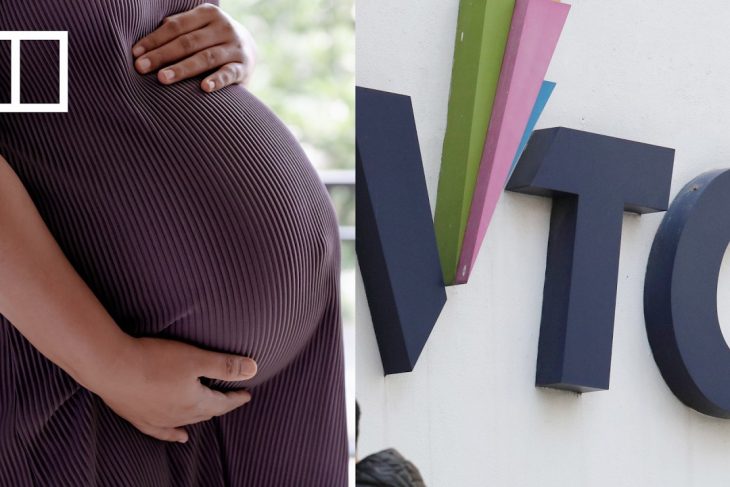
Agencies in mainland China are marketing vocational courses in Hong Kong to pregnant women as the cheapest available route to a Hong Kong passport for their unborn children, an investigation by the South China Morning Post has found. The packages, sold for less than HK$100,000 (about US$12,600) including the agency’s commission, centre on courses run by the Vocational Training Council, Hong Kong’s largest vocational education provider. An SCMP reporter posed as a potential client to learn how the scheme is sold, and senior reporter Vivian Au walked readers through what the investigation uncovered. The sales pitch, according to the Post, is explicit: enrol, come to Hong Kong lawfully as a student, give birth in the city — and the baby starts life with Hong Kong residency.
The reason the pitch works at all is a quirk of Hong Kong law with a long and politically charged history. Under Article 24 of the Basic Law, Hong Kong’s mini-constitution, a Chinese citizen born in Hong Kong is a Hong Kong permanent resident, with the right of abode in the city. The Court of Final Appeal confirmed in its landmark 2001 Chong Fung Yuen ruling that this applies regardless of the parents’ own status. A child born in Hong Kong to mainland parents therefore holds, from birth, rights that most migrants spend seven years of ordinary residence earning — and with them, access to Hong Kong schooling, healthcare, and a Hong Kong passport in later life.
How the route is supposed to work
The obstacle for mainland mothers has never been the child’s status; it has been getting lawfully into a Hong Kong delivery room. After a surge of “anchor baby” births in the 2000s — more than 170,000 babies were born in Hong Kong to mainland parents between 2001 and 2011 — the Hong Kong government moved to shut the door: from 2013, public hospitals reserved all obstetric beds for local women, and private hospitals agreed to stop accepting bookings from mainland women whose husbands were not Hong Kong residents. A woman who simply arrives as a visitor cannot book a delivery. A woman who is genuinely resident in Hong Kong, holding a Hong Kong identity card, is in a different position — and that is exactly the gap the agencies are selling their way through.
On the agencies’ account, a place on a VTC course brings a student visa, the visa brings lawful residence and an identity card, and lawful residence brings access to the obstetric services closed to visitors. The claimed rewards, as marketed, go well beyond the passport itself: the agencies told prospective clients the path would let their children enter top-tier mainland universities more easily and could even position them for a Hong Kong civil service job in the future. Those are the agencies’ claims, repeated here as claims — the Post’s investigation is a story about how the route is sold, and a sales pitch is not a guarantee that any of it survives contact with an admissions officer or an immigration officer.
An old loophole in new packaging
None of this is entirely new, and Hong Kong legislators have seen the study route used this way before. As long ago as 2013, the government was answering Legislative Council questions about mainland agents helping pregnant women apply to study at Hong Kong institutions, obtain identity cards, apply for suspension of their studies, and then stay on to give birth as residents. The government’s answer then was the framework that still applies: deferrals are judged by the same standards for local and non-local students, student entry permits require accurate and truthful information, and the obstetric system gives priority to Hong Kong residents. The VTC marketing matters because it suggests the same workaround is now being packaged, priced, and advertised at scale on mainland social media — with a price tag low enough to open it to middle-class families, not just the wealthy.
The risks in the pitch are real, and they fall on the mothers. A student visa is granted for genuine study; Hong Kong’s Immigration Department has repeatedly warned, in the parallel debate over the city’s talent schemes, that entry can be refused where the real purpose of travel differs from the purpose declared, and providing false information to immigration authorities is a criminal offence. A woman whose enrolment is treated as a device rather than an education has no secure platform at all — and a baby’s delivery cannot be rescheduled around a visa problem. Critics of the schemes make the same point from the other side: selling a course mainly as a residency product misleads the buyer and damages the institution whose name is on the advert, whether or not the institution knew anything about it.
Why Hong Kong is arguing about this again
The VTC story has landed in the middle of a wider Hong Kong argument about student visas and residency that has been running all month. In mid-November, HKU SPACE cancelled several postgraduate diploma intakes and promised refunds after some student visas were still pending when classes should have started, and commentators were soon warning that one-year diplomas have been openly sold online for years as the quickest, cheapest door to a Hong Kong identity card — through the graduate scheme that lets non-local graduates stay for two years without a job offer, and onward to permanent residency after seven years. The government’s own position is double-edged: it defends its talent and student schemes as rigorously vetted, points to the billions of dollars of economic contribution it attributes to them, and has told legislators that children born to newcomer families are a welcome answer to Hong Kong’s ageing population and low birth rate.
That tension — a city that needs people, selling education the world wants to buy, while trying to keep its immigration categories honest — is the real story behind the agencies’ pitch. Hong Kong’s residency is valuable precisely because the Basic Law makes a Hong Kong birth so consequential for a Chinese child, and because the city’s schools, universities, and passport still open doors that mainland documents do not. Wherever a legal status is that valuable, someone will package a shortcut to it, and someone else will have to decide whether the shortcut is a legitimate use of the rules or an abuse of them. The SCMP’s undercover reporting has put the VTC version of that question on the record. What the Immigration Department and the VTC do with it is the next part of the story.
Source: South China Morning Post