Help us make your Unmade in China 2026 Christmas Catalog!
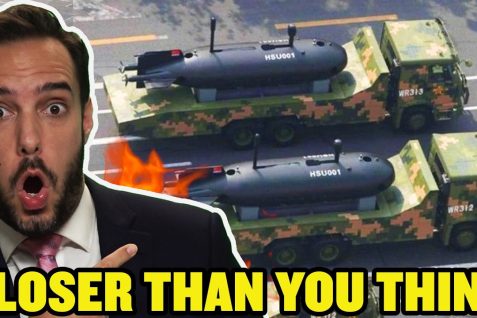
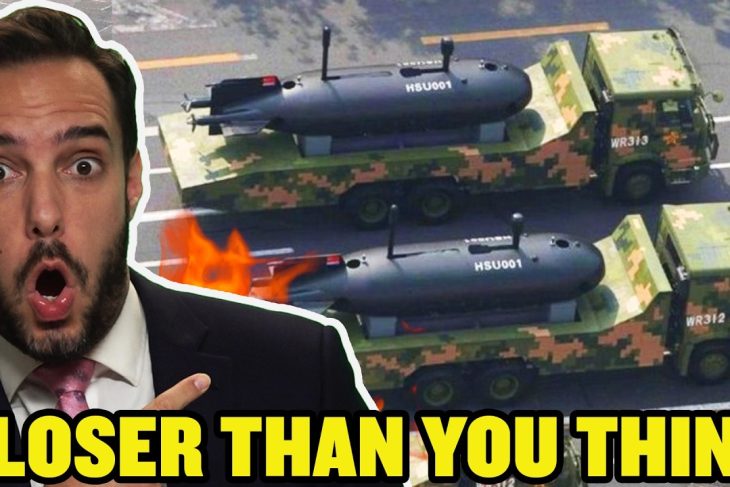
China is building a massive fleet of underwater drones, giant unmanned submarines, and ships designed to launch them. These weapons could change the balance of power in the Pacific—and potentially threaten America’s West Coast. Meanwhile, the US Navy is struggling to catch up. Is America already falling behind in the next underwater arms race?
Operation Honey Pot: Paste this emoji 🍯 in your comment below.
Want to go deeper than YouTube will let us? Check out our website:
Help us make your Unmade in China 2026 Christmas Catalog!
China is building a massive fleet of underwater drones, giant unmanned submarines, and ships designed to launch them. These weapons could change the balance of power in the Pacific—and potentially threaten America's West Coast. Meanwhile, the US Navy is struggling to catch up. Is America already falling behind in the next underwater arms race?
Operation Honey Pot: Paste this emoji 🍯 in your comment below.
Want to go deeper than YouTube will let us? Check out our website:
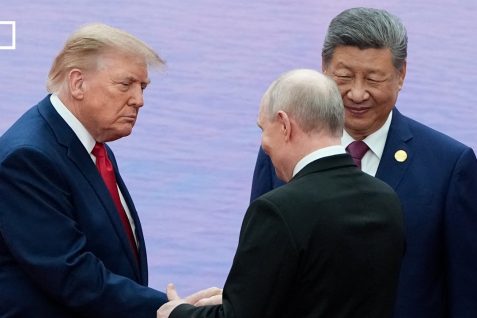
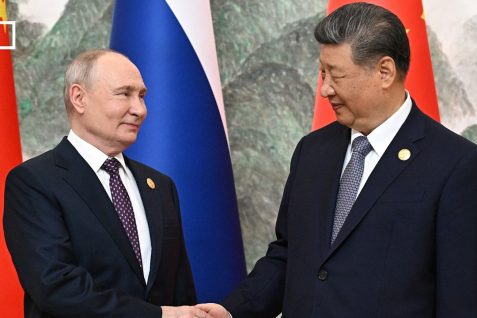
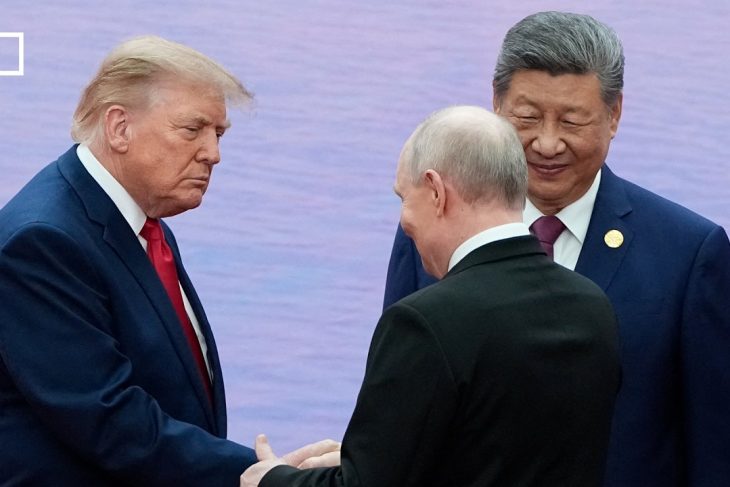
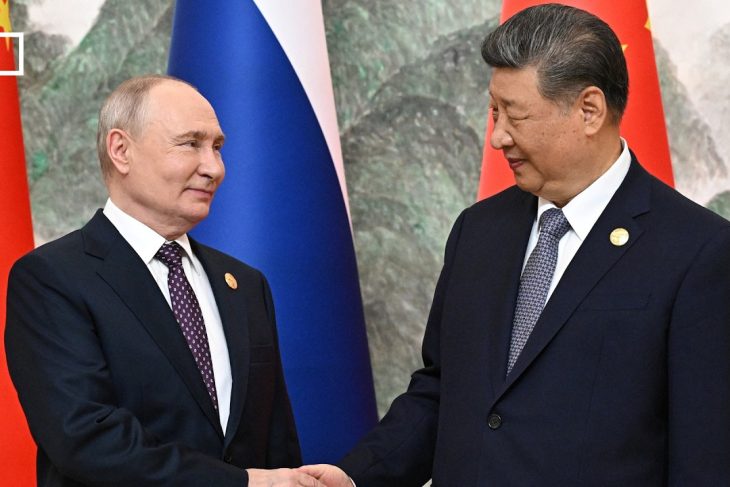
Chinese President Xi Jinping and Russian President Vladimir Putin met on the sidelines of the Apec summit in Shenzhen on Wednesday to reaffirm their strategic partnership and discuss a multipolar world order ahead of a historic trilateral summit with US President Donald Trump. The SCMP reported last week that the trilateral meeting could yield a commitment to control AI in nuclear arsenals as part of a broader agenda on global governance.
Chinese President Xi Jinping and Russian President Vladimir Putin met on the sidelines of the Apec summit in Shenzhen on Wednesday to reaffirm their strategic partnership and discuss a multipolar world order ahead of a historic trilateral summit with US President Donald Trump. The SCMP reported last week that the trilateral meeting could yield a commitment to control AI in nuclear arsenals as part of a broader agenda on global governance.
Russian President Vladimir Putin said on Wednesday that he expects “big potential benefits” from his coming trilateral talks with US President Donald Trump and Chinese President Xi Jinping at the Apec summit in Shenzhen.
Russian President Vladimir Putin said on Wednesday that he expects “big potential benefits” from his coming trilateral talks with US President Donald Trump and Chinese President Xi Jinping at the Apec summit in Shenzhen.
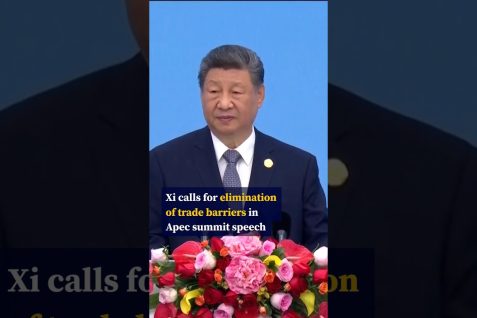
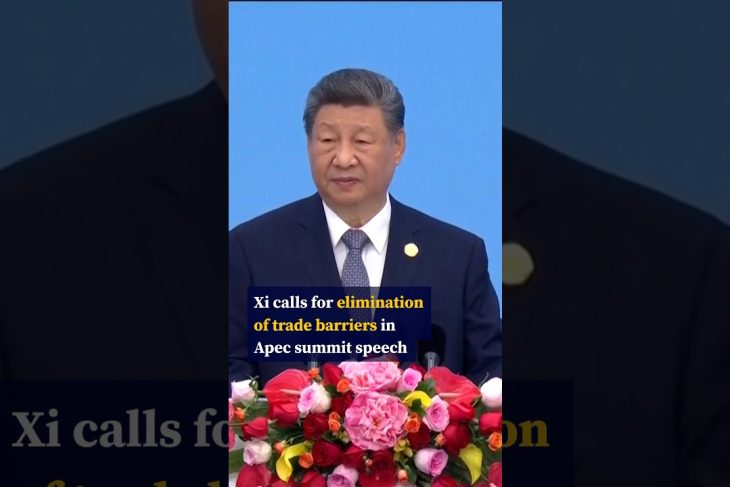
Chinese President Xi Jinping described the current geopolitical situation as “complex and volatile” during his speech to open the 2026 Apec summit in the southern Chinese city of Shenzhen on Wednesday. Xi cited rising protectionism, weak growth momentum and new challenges posed by emerging technologies, and called for the elimination of trade barriers.
Chinese President Xi Jinping described the current geopolitical situation as “complex and volatile” during his speech to open the 2026 Apec summit in the southern Chinese city of Shenzhen on Wednesday. Xi cited rising protectionism, weak growth momentum and new challenges posed by emerging technologies, and called for the elimination of trade barriers.
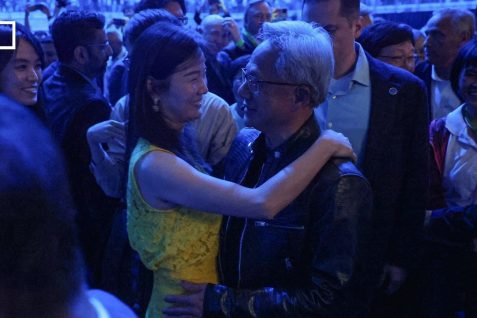
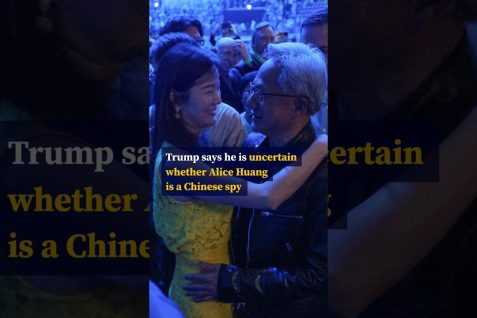
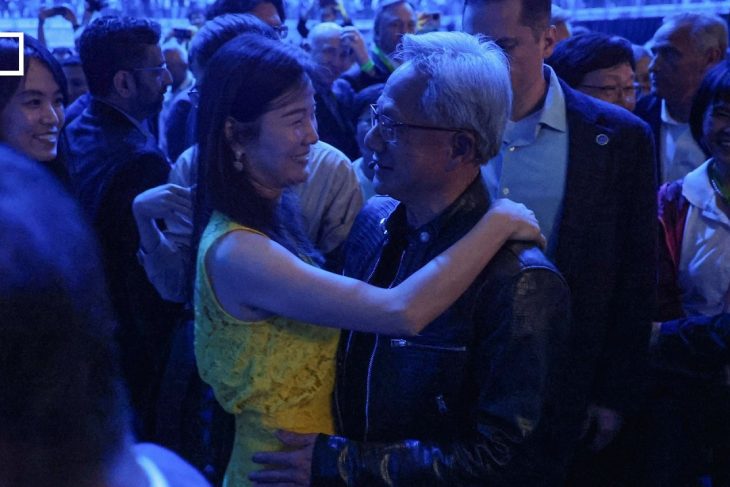
US President Donald Trump said on Monday that he is uncertain whether one of the women with whom former Nvidia CEO Jensen Huang had an alleged affair is a Chinese spy. Trump said that many “beautiful” Chinese women like Alice Huang often faced spying accusations.
US President Donald Trump said on Monday that he is uncertain whether one of the women with whom former Nvidia CEO Jensen Huang had an alleged affair is a Chinese spy. Trump said that many “beautiful” Chinese women like Alice Huang often faced spying accusations.
US President Donald Trump said on Monday that he is uncertain whether one of the women with whom former Nvidia CEO Jensen Huang had an alleged affair is a Chinese spy. Trump said that many “beautiful” Chinese women like Alice Huang often faced spying accusations.
US President Donald Trump said on Monday that he is uncertain whether one of the women with whom former Nvidia CEO Jensen Huang had an alleged affair is a Chinese spy. Trump said that many “beautiful” Chinese women like Alice Huang often faced spying accusations.
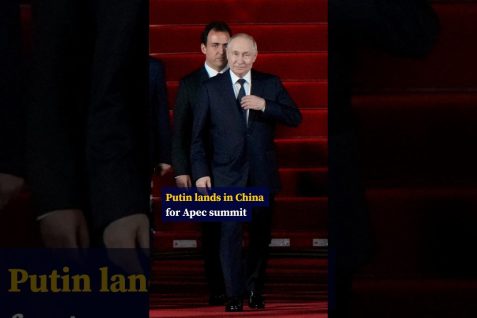
Russian President Vladimir Putin arrived in Shenzhen for the 2026 Apec summit early Wednesday morning. He was greeted on the tarmac by Politburo Standing Committee member Cai Qi. Putin, Chinese President Xi Jinping and US President Donald Trump will hold a trilateral meeting on Thursday.
Russian President Vladimir Putin arrived in Shenzhen for the 2026 Apec summit early Wednesday morning. He was greeted on the tarmac by Politburo Standing Committee member Cai Qi. Putin, Chinese President Xi Jinping and US President Donald Trump will hold a trilateral meeting on Thursday.
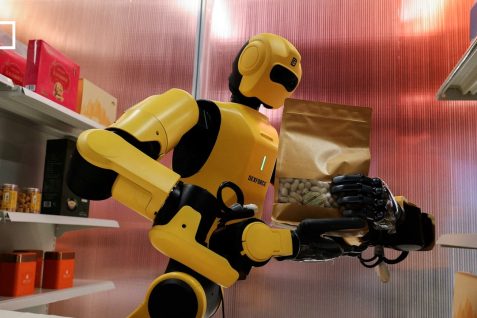
In the southern Chinese city of Shenzhen, a “Robot Valley” has gradually taken shape, located in the narrow valley between the Yangtai and Tanglang mountains. With more than 200 robotics companies gathered here, a complete robotics production chain has formed. Ahead of the upcoming Asia-Pacific Economic Cooperation (Apec) summit in the city, SCMP’s senior AI reporter, Vincent Chow, visited Robot Valley to explore China’s latest progress in robotics.
In the southern Chinese city of Shenzhen, a “Robot Valley” has gradually taken shape, located in the narrow valley between the Yangtai and Tanglang mountains. With more than 200 robotics companies gathered here, a complete robotics production chain has formed. Ahead of the upcoming Asia-Pacific Economic Cooperation (Apec) summit in the city, SCMP’s senior AI reporter, Vincent Chow, visited Robot Valley to explore China’s latest progress in robotics.
Watch the full podcast!
The CCP has become emboldened in recent years, showing its true colors to the world with speeches like Xi Jinping’s CCP 100th anniversary speech in which he said foreign adversaries who try to suppress China will have their heads bashed bloody against the Great Wall of steel forged by over 1.4 billion Chinese people. Here’s what keeps U.S advisors up at night about China, according to our guest Robert Kaplan, author of “China Whisperers.”
Join our fight to expose the CCP at and get ALL the new full-length interviews!
And check out our other channel, China Uncensored:
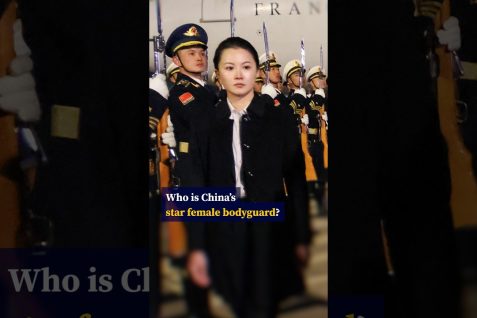
China’s most recognisable female bodyguard returned to the spotlight on Monday, following closely behind Mexican President Claudia Sheinbaum as she arrived in Shenzhen for the Asia-Pacific Economic Cooperation summit. While Chinese authorities have not officially confirmed the officer’s identity, she has been widely identified online as Xu Jin of the Ministry of Public Security’s Special Service Bureau.
China’s most recognisable female bodyguard returned to the spotlight on Monday, following closely behind Mexican President Claudia Sheinbaum as she arrived in Shenzhen for the Asia-Pacific Economic Cooperation summit. While Chinese authorities have not officially confirmed the officer’s identity, she has been widely identified online as Xu Jin of the Ministry of Public Security’s Special Service Bureau.
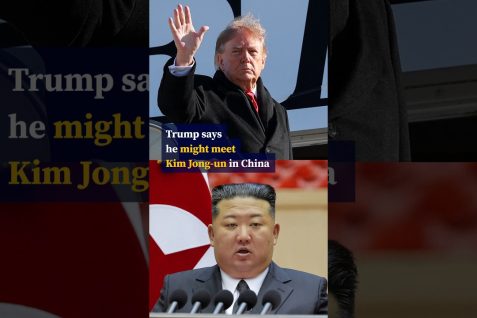
On Monday, US President Donald Trump hinted at a possible meeting with North Korean leader Kim Jong-un during his trip to Shenzhen for the Asia-Pacific Economic Cooperation (Apec) summit.
US President Donald Trump has raised the possibility of meeting North Korean leader Kim Jong-un in China this week, on the sidelines of the Asia-Pacific Economic Cooperation summit in Shenzhen. Trump said on Monday that any meeting with Kim would take place in China, and he placed the decision largely in the hands of the Chinese host. “(Xi) was here, and we’re also going to meet with (Russian) President Putin, and we may meet with Kim Jong-un also,” Trump said. “He may come. I don’t know. That’s up to President Xi.” The South China Morning Post reported the remarks as Trump travelled to Shenzhen for the APEC leaders’ meeting, which runs on November 18 and 19.
A Kremlin Comment That Moved the Odds
The speculation gained force on Tuesday after Russia’s Interfax news agency quoted the Kremlin on a possible meeting between Kim and Russian President Vladimir Putin. Kremlin spokesman Dmitry Peskov said Putin could meet Kim, adding: “Of course, if he is at the APEC summit.” Analysts told Reuters that the Kremlin comment shifted expectations, because Moscow would be unlikely to float such a meeting publicly without some confidence behind it. Sydney Seiler, a former US national intelligence officer for North Korea now at the Center for Strategic and International Studies, said the Kremlin “wouldn’t do that unless they were certain he was going to meet.” John Delury, a professor at the Hopkins-Nanjing Center, put it more bluntly: “If Kim goes to Shenzhen, he’s going to talk to Donald Trump.”
Trump, Xi Jinping and Putin are already scheduled to meet on Thursday in Shenzhen on the sidelines of the summit, in what would be the first summit ever held among the leaders of the three countries, with Beijing confirming that meeting on Monday. Adding Kim to that gathering would turn an already historic week of diplomacy into something without precedent. North Korea is not an APEC member, so Kim would attend as a guest rather than as a summit participant in his own right. His presence would also put four leaders with nuclear arsenals, or nuclear ambitions at the centre of their security policies, in the same city at the same time. That is precisely why officials are being careful not to confirm anything before it is certain.
Plenty of Reasons for Caution
Against the rising speculation stand several hard facts, and they deserve equal weight in any honest account of this story. US and South Korean officials had previously said the chances of a Trump-Kim meeting were low, and South Korea’s foreign ministry told local media on Tuesday that it still viewed the possibility as low. China’s foreign ministry, asked on Tuesday whether Kim had been invited to the APEC summit, said it had no information to share. The APEC secretariat likewise said it had no information about China and its guests, and neither China’s foreign ministry, the North Korean embassy in Beijing nor APEC immediately responded to Reuters requests for comment. Reuters also reported that there is little sign that China is making preparations for Kim to travel, which would normally be visible well before a visit of this sensitivity.
Kim Jong-un also travels rarely, and every foreign trip he takes is choreographed for maximum security and maximum symbolism. A journey to Shenzhen would be his most consequential outing in years, placing him alongside the leaders of China, Russia and the United States in a single frame. For Beijing, hosting such a gathering would underline its claim to be the indispensable broker in Northeast Asian security. For Moscow, a Putin-Kim meeting on Chinese soil would showcase the partnership the two countries have built since Russia’s full-scale war in Ukraine began. For Trump, a handshake with Kim would revive the most theatrical strand of diplomacy from his first term, whether or not it produced any agreement.
What a Meeting Could — and Could Not — Do
Trump and Kim met three times during Trump’s first presidency, and those encounters remain the high-water mark of direct US-North Korea diplomacy. Their first summit, in Singapore in June 2018, produced a broad statement on denuclearisation and new relations but no detailed commitments. A second summit, in Hanoi in February 2019, ended early without a deal, after the two sides failed to agree on sanctions relief and nuclear steps. A brief third meeting at the demilitarised zone in June 2019 restarted talks symbolically, but working-level negotiations never recovered, and no agreement followed. Since then North Korea has expanded its nuclear and missile programmes and deepened its ties with Russia, which makes any new meeting a very different negotiation from the ones of 2018 and 2019.
That record is why experienced Korea watchers separate the theatre of a meeting from the substance of one. A handshake in Shenzhen would dominate headlines worldwide and would signal that the door to diplomacy is not closed, and that alone would matter to Seoul, Tokyo and every capital watching the peninsula. It would not, by itself, roll back a single North Korean warhead, reopen inspections, or settle the sanctions that have accumulated over years of missile tests. The most a first encounter could realistically produce is an agreement to talk again, possibly with working-level teams and a defined agenda. Even that modest outcome would require preparation that, on the public evidence available on Tuesday, has not visibly taken place.
For South Korea, the stakes are immediate and practical rather than theatrical. Seoul has the most to gain from any easing of tensions on the peninsula, and the most to lose if it is cut out of a conversation about its own security. Its foreign ministry’s insistence that the chances remain low may reflect genuine information, a wish to lower expectations, or both at once. Japan, which lives within range of North Korean missiles, would also watch a Shenzhen meeting closely for any sign of what it means for regional deterrence. The coming days will settle the question one way or the other, because Kim either appears in Shenzhen or he does not.
As of Tuesday, then, the accurate summary is a narrow one: Trump has said a meeting might happen in China, the Kremlin has said a Putin-Kim meeting is possible if Kim attends, and analysts say those two comments together have raised the odds. No government has confirmed that Kim is coming, China says it has no information to share, and South Korea still rates the chances as low. Previously mooted Trump-Kim meetings have repeatedly failed to take place, and this one may join that list by the end of the week. If Kim does walk into Shenzhen, however, the APEC summit will be remembered less for trade than for the most unexpected diplomatic photograph of the year.
Dashcam video captured the terrifying moment a huge boulder rolled off a mountain in China’s Sichuan province and smashed into the rear of a car along a highway on Saturday. Traffic was moving slowly because of the high volume of tourists during the holidays. Authorities confirmed no one was hurt.
Dashcam video captured the terrifying moment a huge boulder rolled off a mountain in China’s Sichuan province and smashed into the rear of a car along a highway on Saturday. Traffic was moving slowly because of the high volume of tourists during the holidays. Authorities confirmed no one was hurt.
More young people in China are living alone, and recently released official Chinese Communist Party figures have drawn attention. The China Statistical Yearbook 2026 shows that one-person households made up 26.4% of all households in 2025, while two-person households accounted for 33.2%. Together, they represented 59.6%, nearly 60%. Add the 19% with three people, and small households accounted for almost 80%. The once-familiar scene of three generations sharing a home and gathering around a lively dinner table is no longer the norm.
More young people in China are living alone, and recently released official Chinese Communist Party figures have drawn attention. The China Statistical Yearbook 2026 shows that one-person households made up 26.4% of all households in 2025, while two-person households accounted for 33.2%. Together, they represented 59.6%, nearly 60%. Add the 19% with three people, and small households accounted for almost 80%. The once-familiar scene of three generations sharing a home and gathering around a lively dinner table is no longer the norm.
An unusual scene is unfolding in some urban housing complexes in China. Modern apartment towers rise dozens of stories overhead, while the landscaped lawns below have turned into busy livestock yards. Chickens, ducks, and geese run everywhere. Even cattle and sheep have appeared.
An unusual scene is unfolding in some urban housing complexes in China. Modern apartment towers rise dozens of stories overhead, while the landscaped lawns below have turned into busy livestock yards. Chickens, ducks, and geese run everywhere. Even cattle and sheep have appeared.
In the late 1800s, Chinese immigrants arrived in the Wild West boomtown of El Paso, Texas, to build America’s railways.
SCMP visits the Concordia Cemetery, the only Chinese burial ground in the state, to uncover the forgotten hardships of the Chinese Exclusion Act and the remarkable legacy of Herlinda Wong Chew, a Chinese-Mexican dynamo known as the “Queen of the Chinese” who helped immigrants navigate strict US border authorities.
A powerful explosion shattered the night in Xinghua, part of Taizhou in Jiangsu Province, at 11:36 p.m. on November 14, 2026. The blast erupted inside a local company’s factory compound and could be heard miles away. Residents less than mile from the site said the shock wave cracked doors and windows or knocked them out of place. Many said they were caught completely off guard and left shaken.
A powerful explosion shattered the night in Xinghua, part of Taizhou in Jiangsu Province, at 11:36 p.m. on November 14, 2026. The blast erupted inside a local company's factory compound and could be heard miles away. Residents less than mile from the site said the shock wave cracked doors and windows or knocked them out of place. Many said they were caught completely off guard and left shaken.
One of the hottest topics in China’s dating circles is what happens to older single women born in the 1980s and 1990s as women born in the 2000s enter the matchmaking scene and change what people look for in a spouse.
One of the hottest topics in China’s dating circles is what happens to older single women born in the 1980s and 1990s as women born in the 2000s enter the matchmaking scene and change what people look for in a spouse.
Help us make your Unmade in China 2026 Christmas Catalog!
One Chinese bank just saw its quarterly profits collapse by 93%. From politically connected billionaires to debt-fueled infrastructure projects, China’s economy is drowning in bad investments—and ordinary Chinese families are stuck with the bill. So why is Xi Jinping refusing to give people a bigger safety net?
Operation Honey Pot: Paste this emoji 🍯 in your comment below.
Want to go deeper than YouTube will let us? Check out our website:
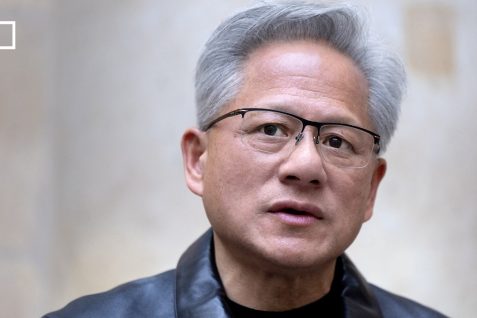
Nvidia founder Jensen Huang abruptly resigned as CEO and a board member on November 12, 2026, effective immediately. Few expected the man who led Nvidia to the top of the global technology industry to fall this way. His downfall came through a political storm involving an affair scandal and an investigation into where AI chips were ending up.
Nvidia founder Jensen Huang abruptly resigned as CEO and a board member on November 12, 2026, effective immediately. Few expected the man who led Nvidia to the top of the global technology industry to fall this way. His downfall came through a political storm involving an affair scandal and an investigation into where AI chips were ending up.
As stories emerged of people in their 30s suffering sudden strokes, many realized that strokes aren’t limited to older adults. People in their 30s, and even younger, can also be affected.
As stories emerged of people in their 30s suffering sudden strokes, many realized that strokes aren't limited to older adults. People in their 30s, and even younger, can also be affected.
A striking scene unfolded at the unloading area of a major Chinese logistics center on the evening of November 11, 2026. The once noisy, busy workplace had just a handful of people standing around with nothing to do. A few pallets were stacked in an area once piled high with packages. The conveyor belts had stopped, and a woman finished early and headed home. People commenting online could hardly believe this was a delivery center on Singles’ Day. They wondered how things had come to this and said this year had been exceptionally tough.
On the evening of November 11, the unloading area of a major Chinese logistics centre looked like the set of a film about an abandoned town. A handful of workers stood around with nothing to do, a few pallets sat where mountains of parcels used to pile up, and the conveyor belts had stopped. One woman finished her shift early and went home. The footage spread quickly online because of the date on the calendar: this was Singles’ Day, China’s biggest shopping festival, the night that used to bury warehouses like this one under an avalanche of orders. Commenters could hardly believe what they were seeing, and many said the scene summed up a year that had been exceptionally tough.
The numbers released over the following two days explain both the quiet warehouse and why the story is more complicated than an empty floor. Retail data provider Syntun put total sales for the festival, which this year ran from October 7 to November 11, at 1.78 trillion yuan, about 267 billion dollars. That is an enormous sum by any standard, and it is also the problem: it was only 4.8 percent higher than last year, after growth of 14.2 percent a year earlier. Through October 31, cumulative sales had reached just over 1 trillion yuan, up only about 2.4 percent on the same window last year. A festival that once reliably posted explosive double-digit growth now barely grows faster than inflation, and everyone in Chinese retail can feel the difference.
How the World’s Biggest Sale Lost Its Urgency
Singles’ Day began in 2009, when Alibaba turned November 11 — a date written as a row of ones — into a celebration of being single and a reason to discount. For a decade it grew into the largest shopping event on Earth, bigger than Black Friday and Cyber Monday combined, complete with televised galas and a giant screen counting the sales total in real time. Much of that theatre is now gone: Chinese analysts noted this year that the gala was cancelled, the big sales screen stayed dark, and online search interest in Double 11 has fallen by more than 70 percent in five years. The platforms themselves have stopped publishing headline sales totals, preferring to highlight selected categories and brands instead. When the sellers stop bragging about the score, it usually means the score stopped being impressive.
The festival has also diluted itself. What was once a single frantic day is now a promotion season stretching over five weeks, spread across Alibaba’s Taobao and Tmall, JD.com, Douyin and others, each with its own start date and rules. Discounts, coupons and government subsidies are available somewhere in Chinese e-commerce almost all year round, which pulls purchases forward and leaves little pent-up demand for November. As one Beijing technology analyst put it, when a sale lasts for weeks the feeling that you have to grab the deal tonight simply fades. Shoppers interviewed during this year’s campaign described the new mood precisely: they postponed big purchases, compared prices longer, and spent mainly on things they needed.
The Real Story Is the Chinese Consumer
Underneath the calendar games sits a household balance sheet that has not recovered. China’s property downturn, running since 2021, has cut home prices by roughly 20 percent from their peak, and because housing is where most Chinese families store their wealth, that fall has erased confidence along with paper value. Youth unemployment near 18 percent compounds the anxiety, and uncertain income prospects push families toward saving rather than spending. The official figures tell the same story as the empty warehouse: China’s National Bureau of Statistics reported retail sales growth of just 1.1 percent in the first nine months of 2026, down sharply from 4.5 percent a year earlier, even as the wider economy grew 4.6 percent on the strength of exports. Households were not just spending cautiously; by some measures they were actively retreating, with People’s Bank data cited by analysts showing mortgage prepayments of more than a trillion yuan as families paid down debt instead of shopping.
What did sell is revealing. Shoppers concentrated on everyday necessities — food and daily goods outperformed while big-ticket categories such as cars slumped — and the one booming exception was technology: Syntun reported that transaction value for AI personal computers, AI workstations, AI cameras, AI glasses and AI recording devices more than doubled from a year earlier. So Singles’ Day is not literally dead, whatever the warehouse video suggests; 267 billion dollars of sales is not a corpse. What has died is the festival’s old job as proof that the Chinese consumer was unstoppable. In 2026 it has become the opposite kind of evidence — an annual health check on a consumer who is cautious, indebted, worried about house prices and jobs, and willing to spend freely on almost nothing except food, essentials and the occasional gadget. Until property prices and youth employment turn, every November 11 is likely to look a little more like that quiet warehouse.
For decades, Nvidia’s Jensen Huang built a reputation as an AI pioneer and a devoted husband and family man. But recent reports of alleged extramarital affairs, including one with a Chinese businesswoman, have triggered swift backlash, prompting Huang to step down as CEO. The SCMP tracks Huang’s beginnings in Taiwan to his recent fall from grace.
For decades, Nvidia’s Jensen Huang built a reputation as an AI pioneer and a devoted husband and family man. But recent reports of alleged extramarital affairs, including one with a Chinese businesswoman, have triggered swift backlash, prompting Huang to step down as CEO. The SCMP tracks Huang’s beginnings in Taiwan to his recent fall from grace.
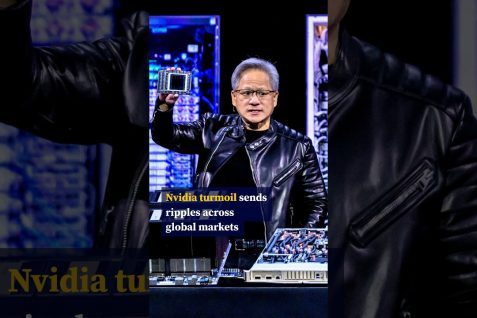
Jensen Huang has resigned as Nvidia CEO after a scandal involving extramarital affairs, including one with a woman US authorities suspect of spying for China, a claim that the Chinese Foreign Ministry has called “groundless”. The stock has plunged from its recent peak, wiping out hundreds of billions in value and weighing on non-US markets, including those in key Asian tech hubs.
The saga stopped being gossip this week and became a market event. Nvidia announced on November 12, 2026 that Jensen Huang, the co-founder who built the company into the centre of the artificial intelligence boom, has resigned as president, chief executive and board member, effective immediately. The board accepted his resignation on November 11, according to the company’s filing with the US Securities and Exchange Commission, and the release announcing it gave no reason for his departure. There was no quote from Huang, no farewell statement and no new role for him at the company he founded in 1993. As the South China Morning Post video above reports, the stock has plunged from its recent peak, wiping out hundreds of billions of dollars in market value and weighing on technology shares far beyond the United States.
A CFO in the Chair, Five Days Before Earnings
Into the vacuum steps the safest pair of hands Nvidia has. Colette Kress, 59, the company’s executive vice president and chief financial officer since September 2013, will serve as interim chief executive while keeping her finance job. The board also named Harvey C. Jones, 73, as its chair, the first time Nvidia has had one, and said it will consider both internal and external candidates for the permanent job. No timeline for that search has been given. Kress inherits the top job at the worst possible moment on the calendar: Nvidia reports its third-quarter fiscal 2027 results on Tuesday, November 17, at about 1:20 p.m. Pacific time, with the earnings call an hour later. That call, unchanged despite the upheaval, will now be her first public performance as chief executive, and an employee meeting is scheduled for November 18.
Investors have not waited for the earnings to deliver their verdict. When reports first circulated that the board was considering removing Huang, Nvidia’s shares fell more than 8 percent in after-hours trading, and the selling deepened after the resignation was confirmed. The numbers matter because Nvidia is not an ordinary stock: it is the largest single weight in the AI trade, and its chips sit inside the data centres of nearly every major technology company. A plunge in its value drags index funds, pension portfolios and rival chipmakers with it. In Asia, where Nvidia’s supply chain runs through Taiwan, South Korea and Japan, the shock travelled through the region’s technology-heavy markets within hours. Traders in those hubs are now pricing something they never had to price before, which is Nvidia without the man who personified it.
The China Question at the Centre of the Storm
What makes this resignation a Two Tigers story, rather than just a business story, is the allegation running underneath it. In the weeks before his departure, Huang was engulfed by reports of extramarital affairs, including one with a Chinese businesswoman whom American authorities reportedly suspect of passing information to Beijing. China’s Foreign Ministry has called the spying claim “groundless,” and Nvidia itself opened an independent investigation, announced on November 8, into reports that its chief executive had been targeted by a foreign intelligence operation. A second reported relationship, with Nvidia’s own vice-president of healthcare, Kimberly Powell, added a governance scandal inside the company to the espionage questions outside it. None of the underlying allegations has been proven, and the company’s filing pointedly says nothing about any of them. What is established is narrower and still remarkable: the most important technology executive in the US-China rivalry has fallen in a scandal that touches China itself.
The timing could hardly be more sensitive for policy. Huang was the loudest corporate voice arguing that American leadership in AI depends on openness, warning that if the United States restricts its technology while China distributes capable systems freely, the world’s developers will drift to Chinese platforms. That argument now loses its most credible messenger at the exact moment Washington is deciding how far export controls on advanced chips should go. Analysts quoted in regional coverage warn that the media storm could intensify calls for even stricter semiconductor controls, on the logic that the industry’s human links to China are as risky as its supply chains. Beijing, for its part, gains a propaganda gift it did not have to manufacture: the spectacle of America’s AI champion brought down by suspicion of Chinese influence. Whether any secrets actually changed hands remains unknown, and that unknown will hang over every hearing the scandal produces.
What the Market Is Really Pricing Now
Strip away the scandal and the market is repricing three concrete things. The first is succession risk: Huang led Nvidia for 33 years, and no interim appointment, however competent, answers who sets strategy for the next decade of AI hardware. The second is China revenue, because tighter controls written in the emotional aftermath of this affair could close markets Nvidia still serves and accelerate China’s domestic chip industry. The third is simple uncertainty, since a board investigation whose findings have not been published leaves investors guessing about what else might emerge. Kress can address the first of these only slowly, the second is largely in Washington’s hands, and the third will last until the board says what it found. Her November 17 earnings call is therefore more than a results briefing; it is the company’s first attempt to persuade the world that Nvidia the institution is bigger than Nvidia the founder.
However that call goes, the Huang era has ended in a way nobody in the industry forecast a month ago. A Taiwanese-born engineer who founded a graphics-chip company in a California diner became, over three decades, the indispensable man of the AI age, courted by presidents and treated as a head of state in Taipei and Beijing alike. His fall now tests whether the AI boom was built on one company’s technology or on one man’s judgment, and the answer will move markets on three continents. It also leaves the US-China technology contest without its most visible referee at the moment the contest is turning hardest. The leather jackets are gone from the keynote stage. What replaces them, in Santa Clara and in the rivalry beyond it, is the story of 2027.