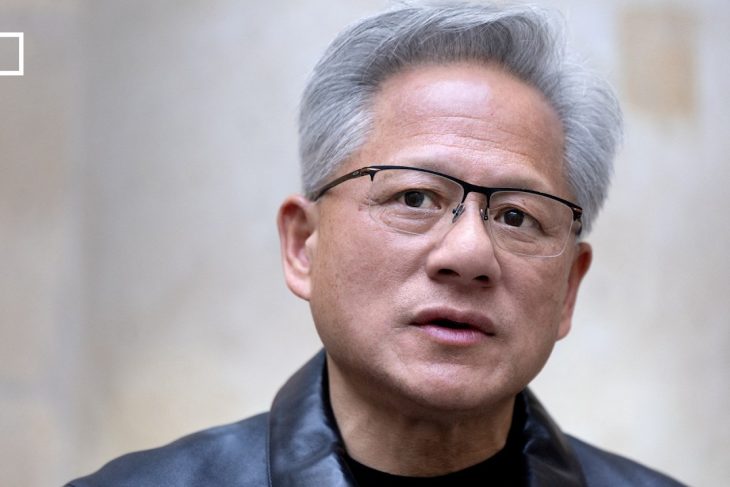
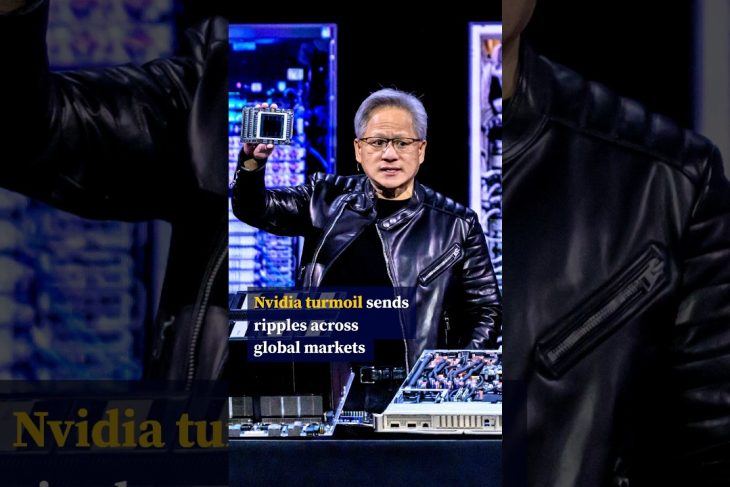
The saga stopped being gossip this week and became a market event. Nvidia announced on November 12, 2026 that Jensen Huang, the co-founder who built the company into the centre of the artificial intelligence boom, has resigned as president, chief executive and board member, effective immediately. The board accepted his resignation on November 11, according to the company’s filing with the US Securities and Exchange Commission, and the release announcing it gave no reason for his departure. There was no quote from Huang, no farewell statement and no new role for him at the company he founded in 1993. As the South China Morning Post video above reports, the stock has plunged from its recent peak, wiping out hundreds of billions of dollars in market value and weighing on technology shares far beyond the United States.
A CFO in the Chair, Five Days Before Earnings
Into the vacuum steps the safest pair of hands Nvidia has. Colette Kress, 59, the company’s executive vice president and chief financial officer since September 2013, will serve as interim chief executive while keeping her finance job. The board also named Harvey C. Jones, 73, as its chair, the first time Nvidia has had one, and said it will consider both internal and external candidates for the permanent job. No timeline for that search has been given. Kress inherits the top job at the worst possible moment on the calendar: Nvidia reports its third-quarter fiscal 2027 results on Tuesday, November 17, at about 1:20 p.m. Pacific time, with the earnings call an hour later. That call, unchanged despite the upheaval, will now be her first public performance as chief executive, and an employee meeting is scheduled for November 18.
Investors have not waited for the earnings to deliver their verdict. When reports first circulated that the board was considering removing Huang, Nvidia’s shares fell more than 8 percent in after-hours trading, and the selling deepened after the resignation was confirmed. The numbers matter because Nvidia is not an ordinary stock: it is the largest single weight in the AI trade, and its chips sit inside the data centres of nearly every major technology company. A plunge in its value drags index funds, pension portfolios and rival chipmakers with it. In Asia, where Nvidia’s supply chain runs through Taiwan, South Korea and Japan, the shock travelled through the region’s technology-heavy markets within hours. Traders in those hubs are now pricing something they never had to price before, which is Nvidia without the man who personified it.
The China Question at the Centre of the Storm
What makes this resignation a Two Tigers story, rather than just a business story, is the allegation running underneath it. In the weeks before his departure, Huang was engulfed by reports of extramarital affairs, including one with a Chinese businesswoman whom American authorities reportedly suspect of passing information to Beijing. China’s Foreign Ministry has called the spying claim “groundless,” and Nvidia itself opened an independent investigation, announced on November 8, into reports that its chief executive had been targeted by a foreign intelligence operation. A second reported relationship, with Nvidia’s own vice-president of healthcare, Kimberly Powell, added a governance scandal inside the company to the espionage questions outside it. None of the underlying allegations has been proven, and the company’s filing pointedly says nothing about any of them. What is established is narrower and still remarkable: the most important technology executive in the US-China rivalry has fallen in a scandal that touches China itself.
The timing could hardly be more sensitive for policy. Huang was the loudest corporate voice arguing that American leadership in AI depends on openness, warning that if the United States restricts its technology while China distributes capable systems freely, the world’s developers will drift to Chinese platforms. That argument now loses its most credible messenger at the exact moment Washington is deciding how far export controls on advanced chips should go. Analysts quoted in regional coverage warn that the media storm could intensify calls for even stricter semiconductor controls, on the logic that the industry’s human links to China are as risky as its supply chains. Beijing, for its part, gains a propaganda gift it did not have to manufacture: the spectacle of America’s AI champion brought down by suspicion of Chinese influence. Whether any secrets actually changed hands remains unknown, and that unknown will hang over every hearing the scandal produces.
What the Market Is Really Pricing Now
Strip away the scandal and the market is repricing three concrete things. The first is succession risk: Huang led Nvidia for 33 years, and no interim appointment, however competent, answers who sets strategy for the next decade of AI hardware. The second is China revenue, because tighter controls written in the emotional aftermath of this affair could close markets Nvidia still serves and accelerate China’s domestic chip industry. The third is simple uncertainty, since a board investigation whose findings have not been published leaves investors guessing about what else might emerge. Kress can address the first of these only slowly, the second is largely in Washington’s hands, and the third will last until the board says what it found. Her November 17 earnings call is therefore more than a results briefing; it is the company’s first attempt to persuade the world that Nvidia the institution is bigger than Nvidia the founder.
However that call goes, the Huang era has ended in a way nobody in the industry forecast a month ago. A Taiwanese-born engineer who founded a graphics-chip company in a California diner became, over three decades, the indispensable man of the AI age, courted by presidents and treated as a head of state in Taipei and Beijing alike. His fall now tests whether the AI boom was built on one company’s technology or on one man’s judgment, and the answer will move markets on three continents. It also leaves the US-China technology contest without its most visible referee at the moment the contest is turning hardest. The leather jackets are gone from the keynote stage. What replaces them, in Santa Clara and in the rivalry beyond it, is the story of 2027.
Source: South China Morning Post