Watch the full podcast!
President Trump didn’t meet Xi on the tarmac of his September visit to show him a warm welcome, it was to show him just how powerful the American military is. In this episode, we talk with Dave Stilwell, former Assistant Secretary of State, about all the ways the White House pretended to be extending an olive branch while actually poking fun at its guests.
Join our fight to expose the CCP at and get ALL the new full-length interviews!
And check out our other channel, China Uncensored:
Angry residents of Indonesia’s Batam island staged spontaneous protests in October 2026, outside a park where a new cluster of data centres is under construction. Taps at home had run dry for the residents for months, which they blamed on severe outages that hit the municipal water service after the arrival of the data centres.
Batam has everything a data centre developer could want: cheap land, a free-trade zone, generous tax treatment and a location just a short ferry ride from Singapore, the region’s digital capital. What it does not have is water to spare. The Indonesian island’s push to become Southeast Asia’s next data centre powerhouse has collided with a basic physical fact — Batam has no rivers of consequence and no natural freshwater sources, and its 1.3 million people depend entirely on rain collected in a handful of artificial reservoirs. When residents of one village found their taps dry for three months while server halls rose nearby, the island’s grand digital ambitions met their first serious public test.
The confrontation came to a head on October 5, when around 300 residents of Bakau Serip village marched on the entrance of Nongsa Digital Park carrying empty bottles and jerry cans. Their message, repeated in interviews since, was stark: not a single drop had come through their taps in three months, and their supply had been reliable until the data centres came. Protesters blocked access roads and demanded to know why facilities cooling the world’s AI models could find water that households could not. It was the third month of protests, following earlier demonstrations in August and September, and it turned a local utility failure into an international story about the hidden costs of the AI boom.
Why Batam, and Why So Fast
Batam’s rise is no accident. Singapore, facing land and power constraints and having imposed a moratorium on new data centres between 2019 and 2022, pushed demand outward, and Batam — along with Malaysia’s Johor — was positioned to catch it. The island’s free-trade status, administered by the agency BP Batam, offers investors streamlined permits and fiscal incentives a short distance from one of the world’s great internet exchanges. Subsea cables already link Batam into regional networks, and Nongsa Digital Park was purpose-built as the landing zone for the industry. For developers serving Singaporean and regional demand, Batam promised Singapore-grade connectivity without Singapore-grade prices.
The money followed quickly. BP Batam has approved ten data centres on the island, six of them inside Nongsa Digital Park, with at least six more applications under review and total investment officially put at more than US$6.7 billion as of mid-2026. Committed projects include a facility by Hong Kong’s Gaw Capital with Indonesian developer Sinar Primera, a planned 450-megawatt campus by Singapore’s DayOne, and a 360-megawatt AI data centre announced in June by Nvidia-backed Firmus, also with DayOne. Official estimates put Batam’s data centre power demand above 1,100 megawatts by 2030.
The Water Underneath the Story
The problem is what data centres drink. Modern facilities use enormous volumes of water to cool the servers and graphics processors that train and run AI systems, and the industry’s standard figures are sobering: a typical data centre consumes around 300,000 gallons of water a day, roughly the usage of a thousand American households, and larger campuses use far more. Indonesia’s environmental forum Walhi has estimated that around ten AI data centres could require some 32 million litres a day — the daily needs of roughly 320,000 people. Batam’s actual facilities do not publish their consumption, which is itself part of the grievance. Residents are being asked to trust that the numbers are small, in a place where every litre is counted by the weather.
Batam’s supply system was fragile before the first server hall was built. The island’s reservoirs — six by most official counts — are filled by rainfall, and a prolonged dry spell this year, possibly linked to a strong El Niño, has drawn levels down sharply. Local environmental group Akar Bhumi Indonesia has simulated that the Nongsa reservoir, which supplies Bakau Serip, could run dry within a month without rain, and its output reportedly fell from around 90 litres per second to 25 during the October drought. Ageing pipes and weak interconnections between reservoir networks mean water cannot easily be moved to where it is needed. In January, the regional ombudsman had already identified 18 water-stressed areas on the island, some receiving water for only a few hours a day.
Drought, Say the Authorities — Diversion, Say the Villagers
BP Batam and the island’s water utility deny that household water is being diverted to data centres, blaming the shortages squarely on the prolonged dry spell. The agency has pointed out that Nongsa Digital Park was promised supply through a dedicated pipeline from the much larger Duriangkang Reservoir, while Bakau Serip depends on the small Nongsa reservoir — a structural separation, officials argue, not a diversion. As an emergency measure, BP Batam has connected Nongsa’s distribution network to Duriangkang, while warning that the fix could reduce pressure and supply hours elsewhere on the island. The utility says it is working to improve supplies but has not publicly addressed whether data centre demand is contributing to the shortage.
The villagers’ counter-argument is about priorities rather than plumbing. From Bakau Serip, the visible facts are dry taps at home and construction cranes at the digital park, and the assurance that the two are unrelated requires a trust that three months without water has exhausted. Their protests have already changed policy: after the August and September demonstrations, Batam authorities instructed data centre developers to build their own seawater desalination plants rather than draw on the island’s freshwater reservoirs. That instruction is a significant precedent. It concedes, in practice, that a rain-dependent island cannot simply allocate its drinking water to the AI industry and hope the weather cooperates.
A Test Case for Asia’s AI Build-Out
Batam is not an outlier; it is an early example of a collision now repeating across the region. Malaysia’s data centre boom has raised the same questions about power grids and water, with a single 300-megawatt facility reported to consume more energy and water than many residential townships. Environmental groups in Indonesia are calling for a moratorium on new data centres until comprehensive rules on water and environmental protection exist. The Indonesia Data Center Ecosystem Council is due to bring operators, regulators and community representatives together in Batam later this month to address power, water and community impact. What is decided there will be watched from Johor to Jakarta, because every government courting AI investment faces the same equation.
So can Batam be Asia’s next data centre powerhouse? The honest answer is that the question has changed. A decade ago it was a question about land, cables and tax breaks, and Batam wins on all three. Today it is a question about whether an island that runs on captured rainwater can host one of the thirstiest industries on Earth without taking water out of its own residents’ taps. Desalination, if the operators actually build it, could square that circle — at a price that will test the economics that drew them to Batam in the first place. The cranes at Nongsa are still moving, and the investment figures are still rising. But the villagers of Bakau Serip, carrying their empty jerry cans, have made sure that the next chapter of Batam’s digital story will be written in water as much as in data.
An explosion in Wuhan could be revenge against society. And Iranian ghost fleets head to China beat Trump’s blockade.
Operation Honey Pot: Paste this emoji 🍯 in your comment below.
Want to know what the CCP is REALLY afraid of? YOU! Join the China Uncensored 50 Cent Army!
An explosion in Wuhan could be revenge against society. And Iranian ghost fleets head to China beat Trump's blockade.
Operation Honey Pot: Paste this emoji 🍯 in your comment below.
Want to know what the CCP is REALLY afraid of? YOU! Join the China Uncensored 50 Cent Army!
Football superstar Cristiano Ronaldo announced in an Instagram video on Thursday that he was stepping down from the Portuguese national team. “A journey that began in August 2003 and changed my life forever has come to an end,” Ronaldo told his 679 million followers. Ronaldo’s farewell comes after criticism over his performance at the 2026 Fifa World Cup and a recent falling out with the national team’s new coach.
Football superstar Cristiano Ronaldo announced in an Instagram video on Thursday that he was stepping down from the Portuguese national team. “A journey that began in August 2003 and changed my life forever has come to an end,” Ronaldo told his 679 million followers. Ronaldo’s farewell comes after criticism over his performance at the 2026 Fifa World Cup and a recent falling out with the national team’s new coach.
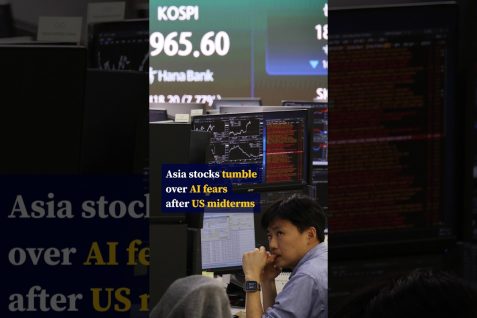
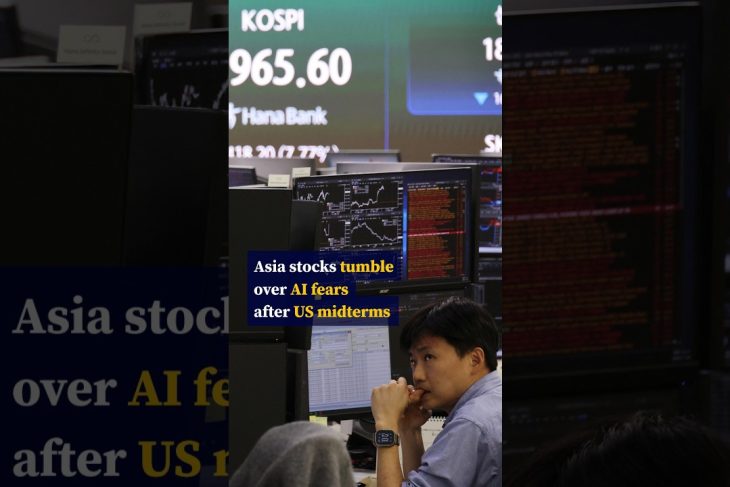
Asian tech stocks experienced steep declines early Friday on fears that Democrats’ gains in the US midterms would ramp up regulatory scrutiny of AI. Key tech stocks felt the hit, including Korean AI chipmakers Samsung Electronics and SK Hynix. Markets across the region showed signs of stabilising later in the day after interventions by regional financial authorities.
Asian tech stocks experienced steep declines early Friday on fears that Democrats’ gains in the US midterms would ramp up regulatory scrutiny of AI. Key tech stocks felt the hit, including Korean AI chipmakers Samsung Electronics and SK Hynix. Markets across the region showed signs of stabilising later in the day after interventions by regional financial authorities.
In partnership with: Women Chief Executives Hong Kong
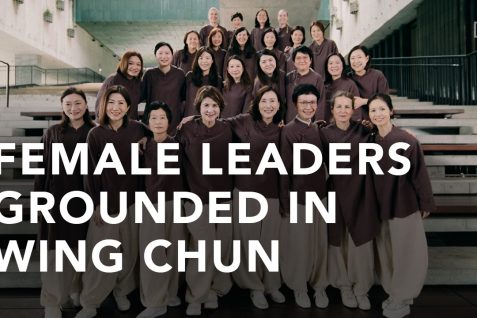
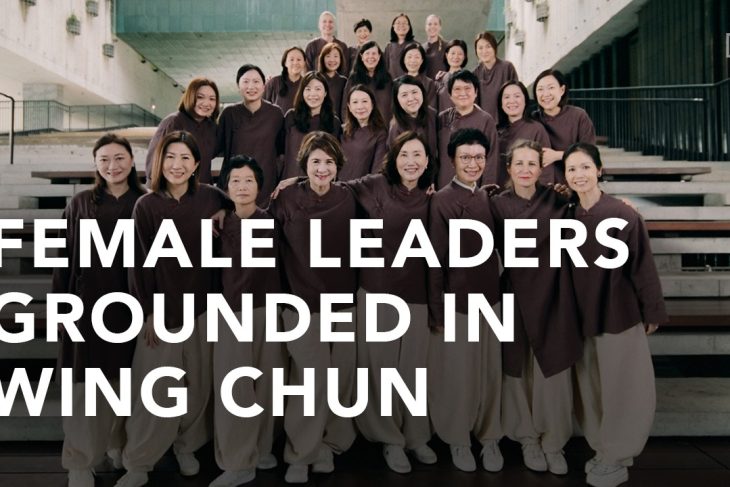
Ahead of their annual summit, members of Women Chief Executives Hong Kong gathered to practice wing chun. The Chinese martial art is grounded in the principles of sensitivity, focus and adaptability, providing these leaders with a blueprint to guide them as they seek to redefine opportunities for female talent.
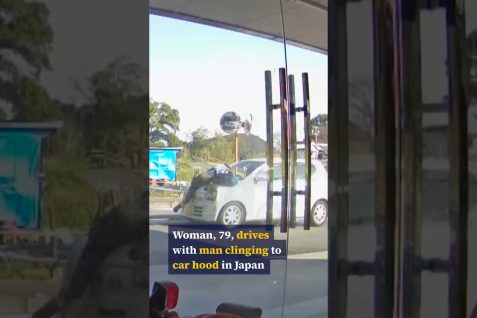
A dispute over a parking space in Japan’s Nara prefecture took a dangerous turn when a 79-year-old woman sped off with a man clinging to the bonnet of her car in Kashihara City. The woman drove for 2.2km (1.4 miles) with the man on her car before she was arrested. She faces charges of attempted murder.
A dispute over a parking space in Japan’s Nara prefecture took a dangerous turn when a 79-year-old woman sped off with a man clinging to the bonnet of her car in Kashihara City. The woman drove for 2.2km (1.4 miles) with the man on her car before she was arrested. She faces charges of attempted murder.
Historic midterm gains and surging youth voter turnout have supercharged the American left, expanding the DSA’s congressional presence from two seats to eight. While progressive allies like Michigan’s Abdul El-Sayed push populist agendas, internal friction is boiling over.
Senior US Correspondent Khushboo Razdan breaks down whether moderate Democrats and the ascendant left can maintain party unity – or if a deepening ideological rift will split the Democratic Party from within.
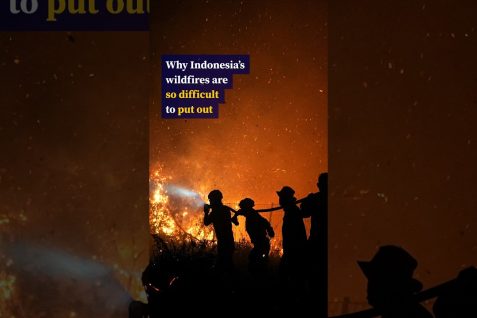
Experts say that despite regulatory frameworks, years of draining carbon-rich peatlands for commercial plantations have left vast ecosystems in Indonesia fragile and fire prone.
Experts say that despite regulatory frameworks, years of draining carbon-rich peatlands for commercial plantations have left vast ecosystems in Indonesia fragile and fire prone.
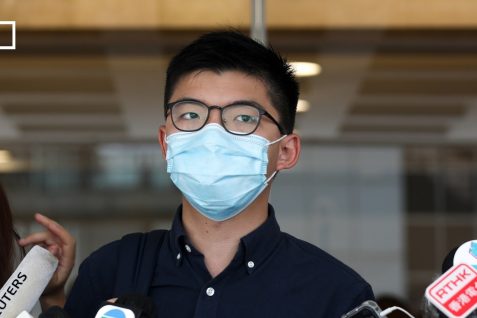
Jailed Hong Kong opposition activist Joshua Wong Chi-fung has been sentenced to 10 years behind bars for his role in a global campaign to instigate sanctions against mainland China and the city in the aftermath of the 2019 anti-government protests. Wong had been scheduled to complete a sentence of four years and eight months for conspiracy to commit subversion on January 7 next year. The court ordered two months and two days, representing the remaining time Wong is to serve his sentence in the previous national security case, to run concurrently with his latest jail term, meaning the activist’s expected release date is pushed back to November 2036.
Hong Kong activist Joshua Wong Chi-fung was sentenced on Thursday to 10 years in prison for conspiring to collude with foreign forces, in a second national security conviction that extends his time behind bars by a decade. Wong, who turned 30 last month, had pleaded guilty in September to conspiring with fellow activists to invite foreign sanctions against mainland China and Hong Kong in the aftermath of the 2019 anti-government protests. High Court Judge William Tam called the case “grave” and said the punishment had to fit the gravity of the crime. The sentence was shorter than the maximum penalty of life imprisonment, but far longer than the four and a half years Wong’s lawyers had asked for. It means the best-known face of Hong Kong’s pro-democracy generation will be 40 years old before he leaves prison.
The mechanics of the sentence underline how close Wong had come to freedom. He was already serving four years and eight months for conspiracy to commit subversion, a sentence imposed in the city’s landmark unofficial-primaries case, and that term was due to finish on January 7 next year, with only about two months left to run. The court ordered that remaining time — two months and two days — to run concurrently with the new 10-year term. Even with that small overlap, the effect is to push his expected release back to November 2036. Judge Tam said he had taken 13 years as the starting point for the sentence and reduced it because Wong pleaded guilty, while rejecting the argument that the activist’s role in the conspiracy had been limited.
From Teenage Protest Leader to Prisoner
Wong’s rise began when he was barely into his teens. At 14 he helped found the student group Scholarism, which in 2012 forced the Hong Kong government to shelve plans for patriotic national education in schools, an early and startling victory over Beijing-backed policy. In 2014 he became one of the most recognisable leaders of the Umbrella Movement, when tens of thousands of protesters occupied Hong Kong’s streets for 79 days demanding genuine universal suffrage. He later co-founded the political party Demosisto and travelled the world lobbying foreign governments to support Hong Kong’s democracy movement. That international advocacy — speeches, meetings and testimony abroad — built his global profile, and it is the same activity that prosecutors later placed at the centre of their case against him.
The turning point came in 2019, when mass protests against a proposed extradition bill convulsed the city for months and at times turned violent. Beijing responded in June 2020 by imposing a sweeping National Security Law on Hong Kong, criminalising secession, subversion, terrorism and collusion with foreign forces. The law transformed the legal landscape overnight, and much of the advocacy that Wong and his peers had practised openly for a decade fell within its reach. Wong has been in detention continuously since late 2020, through a succession of cases arising from the protest era. Thursday’s sentence is the heaviest single punishment he has received.
Two National Security Cases, Six Years Apart in Court
The subversion sentence Wong is finishing came from Hong Kong’s largest national security prosecution. He was one of 47 opposition figures charged over an unofficial primary election held in 2020 to choose candidates for the Legislative Council, and one of 45 ultimately jailed in 2024 after the trial concluded. His four years and eight months in that case made him one of the more lightly sentenced defendants, in part because of his early guilty plea. Before the collusion charge was brought in 2025, he was on course to walk free in January and resume life outside prison for the first time in more than six years. The new prosecution, filed while he was still serving the first sentence, reset that clock entirely.
The collusion case concerned events between July 1 and November 23, 2020 — the first months after the security law took effect. Prosecutors accused Wong of conspiring with self-exiled activist Nathan Law and others to ask foreign countries and organisations to impose sanctions, blockades or other hostile measures against Hong Kong and China. The judge pointed to real-world measures of that period, including the United States revoking Hong Kong’s preferential special status and sanctioning Chinese and Hong Kong officials, as the kind of actions the conspiracy had sought. The court said the conviction rested on Wong’s conduct after the law was enacted, though his earlier activities informed the assessment of gravity. Wong, for his part, said he had mistakenly believed his actions were within the law, and that he had never advocated Hong Kong independence or the collapse of China.
Reactions at Home and Abroad
Hong Kong’s leadership defended the sentence in the strongest terms. Chief Executive John Lee, himself a former security chief, said after the hearing that Wong and Law had committed “extremely serious offences” that undermined national sovereignty, security and development interests and prejudiced the well-being of the public. Beijing, through its officials, warned foreign governments against making what it called irresponsible remarks about the trial. Supporters of the law argue that lobbying foreign states to sanction one’s own city crosses a line that many countries police in their own statutes. To the authorities, the length of the sentence reflects both the seriousness of that offence and a deterrent message to anyone considering similar campaigns.
Abroad, the reaction was sharply critical. The United States consulate in Hong Kong said it strongly condemned the 10-year sentence, and American officials described Wong as unjustly imprisoned for advocating fundamental freedoms. Amnesty International said the case showed the National Security Law being used as a tool to punish dissent, noting that the conduct punished was a campaign of international advocacy rather than violence. Human rights groups argue that the law’s broad wording has swept up peaceful political activity that was legal and commonplace in Hong Kong before 2020. The divide in reactions mirrors the divide over the law itself, which supporters call a restoration of stability and critics call the end of the city’s promised autonomy.
For Hong Kong’s pro-democracy movement, the sentence closes another door. Its best-known figures are now in prison, in exile like Nathan Law, or silent under the pressure of the security law, and the parties and newsrooms that once sustained the movement have been dissolved or closed. Wong entered prison at 23 as a former student leader with a political future in front of him; on Thursday’s sentence he will leave it, if the term runs in full, at 40. Whatever view is taken of his case, its symbolism is hard to miss. The teenager who once filled Hong Kong’s streets with supporters will spend the whole of his thirties in a cell, under a law written for the protests he helped to lead.
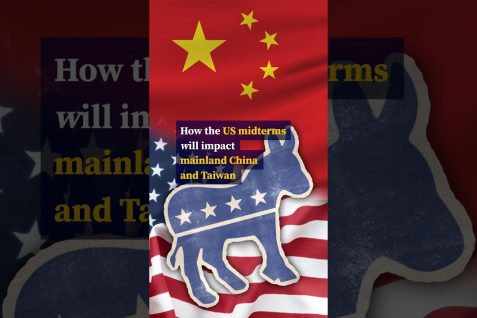
The US midterm elections 2026 have brought massive political shifts, but what do these results mean for the rest of the world? SCMP’s US deputy bureau chief Mark Magnier breaks down the global ramifications, exploring how the power shift in Washington will alter foreign policy. From a potential resurgence of support for Taipei, to Beijing’s strategic manoeuvers with a weakened US president, we analyse the future of US-China relations, tariffs and key alliances.
The US midterm elections 2026 have brought massive political shifts, but what do these results mean for the rest of the world? SCMP’s US deputy bureau chief Mark Magnier breaks down the global ramifications, exploring how the power shift in Washington will alter foreign policy. From a potential resurgence of support for Taipei, to Beijing’s strategic manoeuvers with a weakened US president, we analyse the future of US-China relations, tariffs and key alliances.
Chinese basketball icon Yao Ming on Wednesday spoke with primary school students and led a non-contact rugby clinic at the Hong Kong Football Club as part of the “Mental Wellbeing Through Sport initiative”. The former perennial NBA All-star was joined by decorated Olympic gymnast Li Xiaopeng and table tennis legend Deng Yaping.
Chinese basketball icon Yao Ming on Wednesday spoke with primary school students and led a non-contact rugby clinic at the Hong Kong Football Club as part of the “Mental Wellbeing Through Sport initiative”. The former perennial NBA All-star was joined by decorated Olympic gymnast Li Xiaopeng and table tennis legend Deng Yaping.
Some 15 years ago, then-high school student Joshua Wong was a rising political star in Hong Kong’s pro-democracy movement. Now 30, he has been sentenced for the second time under a Beijing-imposed national security law that effectively crushed the movement he once championed. Despite being behind bars, Wong continues to focus on self-improvement, reading books, taking university courses and learning guitar, according to his friend Louis Lee.
Some 15 years ago, then-high school student Joshua Wong was a rising political star in Hong Kong's pro-democracy movement. Now 30, he has been sentenced for the second time under a Beijing-imposed national security law that effectively crushed the movement he once championed. Despite being behind bars, Wong continues to focus on self-improvement, reading books, taking university courses and learning guitar, according to his friend Louis Lee.
Hong Kong may be small but it boasts some of the world’s most biodiverse unspoilt countryside and coastlines. The city is renowned for its dramatic mountains, many of which feel otherworldly and offer breathtaking views, and all are within easy reach of the urban centre.
Hong Kong may be small but it boasts some of the world’s most biodiverse unspoilt countryside and coastlines. The city is renowned for its dramatic mountains, many of which feel otherworldly and offer breathtaking views, and all are within easy reach of the urban centre.
Physiotherapist and entrepreneur Dinesh Verma has established successful healthcare and physical rehabilitation businesses in Asia. He shares how his clinical background, which focuses on prevention and preparation, has shaped his approach to decision-making. This helps him manage his regional business operations as well as his personal investment portfolio.
Physiotherapist and entrepreneur Dinesh Verma has established successful healthcare and physical rehabilitation businesses in Asia. He shares how his clinical background, which focuses on prevention and preparation, has shaped his approach to decision-making. This helps him manage his regional business operations as well as his personal investment portfolio.
Democrats won a major victory in the U.S. midterm elections, giving them control of both the House and the Senate. What could this mean for U.S.–China relati
Democrats won a major victory in the U.S. midterm elections, giving them control of both the House and the Senate. What could this mean for U.S.–China relations? And how might it affect Taiwan? Do you have Chinese stocks in your portfolio? You may not know what you’re actually investing in—or what Chinese companies are concealing from American investors. A multibillion-dollar artificial intelligence (AI) deal between a U.S. tech giant and a Chinese company has been called off. Oracle scrapped its $7 billion deal with Tencent under pressure from the U.S. government. China is expanding its dominance in another key sector, potentially gaining a powerful new source of leverage in its competition with the West. 00:00 Intro 01:06 How US Midterms Affect U.S.–China Relations 04:51 China Hides Key Information From Foreign Investors 06:39 Oracle Cancels $7 Billion Chinese Tencent AI Deal 08:17 Chinese Chemical Exports Threaten Foreign Countries 09:19 How China Surveils Tibet, Xinjiang, and Hong Kong 11:27 China Seen Testing New Stealth Technology 12:51 Chinese Information Warfare, Biological Threats, & More 13:15 China Targets State and Local Elections 14:37 Congress Took Years to Close Visa Gap 15:47 China’s Growth Rate Is Near Zero: Expert 18:08 China Hides True Trade Figures: Expert
Watch the full podcast!
Marxism is supposed to uplift the proletariat and overthrow the oppressing power structures that keep them subordinate. The Chinese Communist Party has turned its back on Chinese workers,a possibly fatal mistake.
Join our fight to expose the CCP at and get ALL the new full-length interviews!
And check out our other channel, China Uncensored:
China is rapidly expanding its navy, building new bases, aircraft carriers, submarines, drones, and research ships. Its military is preparing to operate across the Pacific—and some US commanders warn that a conflict over Taiwan could come as soon as 2027. Is China preparing for war, and can America keep up?
Operation Honey Pot: Paste this emoji 🍯 in your comment below.
Want to know what the CCP is REALLY afraid of? YOU! Join the China Uncensored 50 Cent Army!
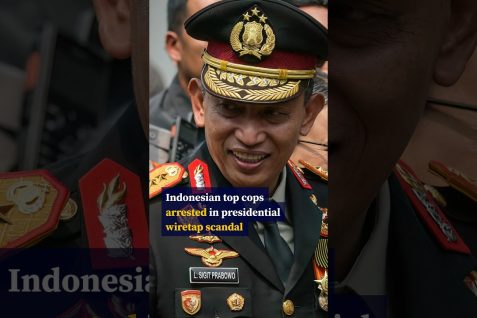
Indonesian authorities have arrested three top police officers for allegedly wiretapping President Prabowo Subianto’s phone, as well as those of political figures, media, NGOs and entrepreneurs. Former national police chief Listyo Sigit Prabowo is among those allegedly named as suspects in the case. If convicted, Listyo, along with two others, could face up to 10 years behind bars.
Indonesian authorities have arrested three top police officers for allegedly wiretapping President Prabowo Subianto’s phone, as well as those of political figures, media, NGOs and entrepreneurs. Former national police chief Listyo Sigit Prabowo is among those allegedly named as suspects in the case. If convicted, Listyo, along with two others, could face up to 10 years behind bars.
An Indian national was killed and a New Zealander was injured after two helicopters collided as they prepared to land in Nepal’s Mount Everest region on Tuesday, authorities said. Both pilots survived the accident.
An Indian tourist was killed and a New Zealand tourist injured on Tuesday morning when two helicopters collided as they came in to land in Nepal’s Mount Everest region, in one of the most serious accidents in years on the crowded aerial highway that serves the world’s highest peak. The collision happened at about 8:15 a.m. local time at a helipad in Pheriche village, in Solukhumbu district, as both aircraft were on final approach to the same high-altitude landing site. A Nepali pilot was also injured in the crash, while both pilots survived, authorities said. The dead man, a 47-year-old Indian national, was a passenger aboard a Fishtail Air helicopter and died at the scene. His injured New Zealand fellow passenger was rescued from the wreckage and flown to a hospital in Kathmandu for treatment.
The two aircraft belonged to Fishtail Air and Air Dynasty, two of the private operators that dominate helicopter traffic in the Everest region. According to a preliminary report received by the Civil Aviation Authority of Nepal, the main rotors of the two helicopters struck each other during the landing sequence, bringing both machines down at the edge of the helipad. Fishtail Air said its helicopter was carrying passengers who had been rescued from the Everest region when it crashed while landing. The Air Dynasty aircraft was reported to be flying a cargo run into the village. Investigators from the civil aviation authority and local officials were examining the wreckage on Tuesday to establish the exact sequence of the collision.
A Landing Gone Wrong at 4,200 Metres
Pheriche sits at roughly 4,200 metres (13,800 feet) above sea level, a windswept acclimatisation stop on the trail between Lukla and Everest Base Camp. It is one of the busiest helicopter landing points in the Khumbu valley during the autumn trekking season, when thousands of visitors are moving up and down the trail. At that altitude the air is thin, helicopters have far less lift in reserve than they do at sea level, and pilots have very little margin for error on approach. Landing pads in villages like Pheriche are small, shared by every operator in the valley, and worked on a first-come basis rather than under the kind of controlled sequencing used at an airport. When two aircraft converge on the same small pad in gusty mountain conditions, the distance between a routine landing and a rotor strike can shrink to almost nothing.
Early accounts suggest that is close to what happened on Tuesday. Witness descriptions and the regulator’s preliminary finding both point to the two helicopters’ rotors making contact as they manoeuvred to land, rather than a mechanical failure in flight. A rotor strike at low altitude leaves a pilot almost no time or height in which to recover, and both aircraft came down hard beside the helipad. Photographs from the scene showed at least one helicopter badly damaged on the ground as rescuers and local people gathered around it. The injured pilot received treatment locally, while the more seriously hurt tourist was evacuated down the valley and on to the capital.
The Village That Runs on Helicopters
There are no roads to Pheriche, or to anywhere else in the high Everest region. Everything and everyone that does not walk in on foot arrives by air, which makes helicopters the valley’s ambulance service, cargo fleet and taxi rank combined. Aircraft ferry trekkers who have been struck down by altitude sickness, carry building materials and food up to the teahouses, and shuttle climbers and their equipment towards Base Camp each season. Fishtail Air, one of the companies involved in Tuesday’s crash, built much of its reputation on exactly that rescue work in the high Himalaya. In the peak weeks of the spring climbing season and the autumn trekking season, the same handful of helipads can handle a near-constant rotation of arrivals and departures from first light.
That dependence on helicopters has grown steadily as Everest tourism has expanded and as visitors with limited time increasingly fly sections of a route their predecessors walked. It has also brought recurring scrutiny of safety standards in Nepal’s aviation sector, which has a long record of fatal accidents in difficult mountain terrain. Regulators have repeatedly tightened rules on mountain flying, load limits and weather minima, but the economics of the industry push in the other direction, towards more flights by more operators into the same confined landing sites. Tuesday’s collision, involving two aircraft from two different companies at a single small pad, is likely to focus attention on how arrivals at shared high-altitude helipads are coordinated. Questions about who controls sequencing, radio communication and right of way at uncontrolled pads are expected to sit at the centre of the investigation.
What Happens Next
Solukhumbu’s chief district officer, Kaman Singh Thapa Magar, confirmed the casualty figures to reporters and said the injured New Zealander had been rescued from the site. The Civil Aviation Authority of Nepal will lead the formal investigation, working from the wreckage, the operators’ records and whatever recordings exist of the final approach. Its preliminary rotor-contact finding will now be tested against the physical evidence, including the damage patterns on both aircraft. Both Fishtail Air and Air Dynasty are expected to cooperate with investigators, and Fishtail has already issued a public statement describing the flight its aircraft was operating. No official cause has been announced, and authorities have cautioned that a full finding will take time.
For the Everest region, the accident is a grim reminder that the most dangerous part of a Himalayan journey is not always the mountain itself. Thousands of trekkers will continue to pass through Pheriche this season, and helicopters will keep landing at its small pad because there is simply no alternative way to move the sick, the injured and the supplies the valley depends on. The task for Nepal’s regulators is to make that traffic safer without grounding the lifeline it provides. Whether Tuesday’s collision leads to controlled landing slots, a permanent coordinator at busy pads or tighter separation rules, it has already made its point in the hardest possible way. One tourist who came to see the highest place on Earth never made it home, and the investigation now owes his family an explanation.
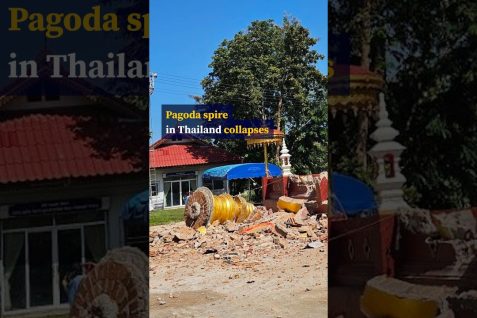
The upper section of a spire at Wat Mai Nong Hoi temple in Chiang Mai, Thailand, collapsed Tuesday morning, damaging parts of the structure. No injuries were initially reported. Video captured a cracking sound just before the summit crumbled and fell to the ground.
The upper section of a spire at Wat Mai Nong Hoi temple in Chiang Mai, Thailand, collapsed Tuesday morning, damaging parts of the structure. No injuries were initially reported. Video captured a cracking sound just before the summit crumbled and fell to the ground.
Spanning more than four hectares, the park’s blooming pink grass creates a soft, cloudlike sea against a backdrop of distant hills and autumn woodlands. What was once an abandoned mining site has been revived through ecological restoration efforts into a vibrant park. Today, visitors can explore the landscape thanks to winding boardwalks, scenic viewing platforms and a direct shuttle service.
Spanning more than four hectares, the park’s blooming pink grass creates a soft, cloudlike sea against a backdrop of distant hills and autumn woodlands. What was once an abandoned mining site has been revived through ecological restoration efforts into a vibrant park. Today, visitors can explore the landscape thanks to winding boardwalks, scenic viewing platforms and a direct shuttle service.
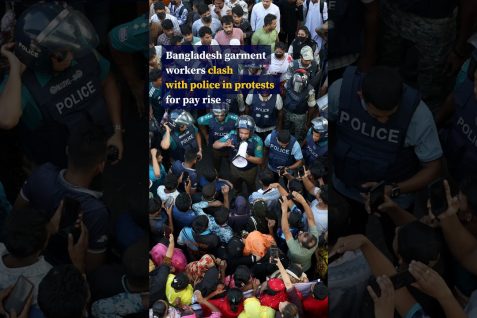
Thousands of Bangladeshi garment workers blocked highways and clashed with police on Sunday and Monday. The workers are demanding a 30,000 taka monthly wage (US$241), more than double their current pay. The protests came despite a government announcement on Sunday to establish a wage board to review the minimum wage in the country’s garment industry, which employs millions of people and generates the bulk of Bangladesh’s export earnings.
Thousands of garment workers across Bangladesh’s industrial belt have spent four days on the streets, blocking highways and facing tear gas and water cannon in the country’s most serious labour unrest in years. The workers are demanding a minimum monthly wage of 30,000 taka, about 245 US dollars, which is more than double the current minimum of 12,500 taka. The protests began on Saturday in Ashulia, a major garment manufacturing hub on the outskirts of Dhaka, and quickly spread to Gazipur and the capital itself. On Sunday the government announced it was setting up a wage board to review pay, but the announcement did not calm the streets. According to the Bangladesh Garment Manufacturers and Exporters Association, the unrest forced 529 factories to shut down, leaving 987,190 workers temporarily out of work across the main industrial hubs.
The Pay Packet That No Longer Covers Life
For the workers on the roadblocks, the dispute is arithmetic rather than politics: the price of food, housing, transport and healthcare has risen sharply while their pay has stood still. The current minimum of 12,500 taka was set in 2023, when it already represented a hard-fought compromise between unions and factory owners. Since then, persistent inflation has steadily eaten away at its real value, and workers say a month’s wages no longer cover a family’s basic needs. Much of the garment workforce is made up of women whose earnings support entire households, often including remittances to villages far from the factory districts. Union leaders argue that 30,000 taka is not a windfall but a survival figure, the minimum at which a worker can eat adequately, pay rent near the factories and still send something home. Factory owners counter that their margins are squeezed by the global brands that buy the clothes, and that a sudden doubling of wages would push orders to cheaper countries.
Roadblocks, Tear Gas and Shuttered Factories
The confrontation turned violent as demonstrators blocked a busy intersection in Dhaka and threw bricks at police, who responded with tear gas and water cannon. A police vehicle and a police box were set on fire in separate incidents as the clashes spread. In Gazipur, hundreds of workers blocked a major highway, disrupting transport through one of the country’s key industrial belts, and authorities deployed Border Guard Bangladesh personnel to help keep order. Gazipur’s industrial police said owners there shut 25 to 30 factories as the protests rolled on, on top of the dozens that had already suspended operations in Ashulia on Saturday. By Tuesday the protests had entered a fourth day, with police again firing tear gas to disperse demonstrators as unrest continued to disrupt factory operations and transport links.
A Wage Board, and a Race Against Patience
Labour and Employment Minister Ariful Haque Choudhury said the six-member wage board was formed after discussions with workers’ representatives and industry leaders, and he urged employees to return to work. The board is balanced by design, with two representatives each from workers and employers, alongside a government representative and a neutral member. Its task is to review wages across the garment sector and recommend revised pay rates. Wage boards in Bangladesh have historically moved slowly, however, and previous rounds have taken months of negotiation before producing a figure. That history explains the scepticism on the streets: without a number and a date attached, many workers see the board as a device for cooling the protests rather than answering them, and the demonstrations have continued despite its creation.
Why the World Is Watching Bangladesh’s Factory Gates
The stakes extend far beyond Dhaka’s suburbs, because Bangladesh is the world’s second-largest apparel exporter after China. The garment industry employs millions of people and generates the bulk of the country’s export earnings, making it the backbone of the national economy. The clothes sewn in Ashulia and Gazipur fill the shelves of major retailers in Europe and North America, so a prolonged shutdown ripples quickly through global supply chains. For the government, the dispute is a balancing act between keeping Bangladesh competitive as a low-cost manufacturing hub and ensuring the workers who built that status can live on what they earn. Until the wage board produces a figure the streets will accept, both the sewing lines and the roadblocks are likely to remain a daily fact of life in the world’s garment workshop.
This is not the first time Bangladesh’s wage question has spilled into the streets, and the pattern is well established. The last minimum wage settlement, in 2023, followed weeks of protests and roadblocks before the figure of 12,500 taka was announced, below what unions had demanded then as well. International brands that source from Bangladesh routinely publish commitments on living wages, yet factory owners say the prices those brands pay per garment have barely moved in years. That squeeze, between Western pledges and Eastern price tags, is passed down the chain until it lands on the sewing floor. Resolving it, economists say, requires the brands, the owners and the government to move together, because no wage board in Dhaka can rewrite the economics of a five-dollar T-shirt on its own.
A growing interest among Hong Kong women in an anti-ageing injection containing human tissue has prompted a recent crackdown by health authorities, as the product, widely known in Chinese as the “cadaver skin jab”, has not been registered for use in the city.
This story has been updated to clarify that Singapore health authorities have not approved the product as a drug, and that it is listed only in a government self-declaration database.
CCTV footage captured a fleeing driver stopping to pay a highway toll during a police chase in Malaysia on Saturday. Police said the 25km (15.5 mile) chase began in a suburb of Kuala Lumpur when the driver refused to pull over after police spotted him using his phone. The 41-year-old tested positive for methamphetamine after he was eventually stopped and arrested, according to police.
CCTV footage captured a fleeing driver stopping to pay a highway toll during a police chase in Malaysia on Saturday. Police said the 25km (15.5 mile) chase began in a suburb of Kuala Lumpur when the driver refused to pull over after police spotted him using his phone. The 41-year-old tested positive for methamphetamine after he was eventually stopped and arrested, according to police.
Hong Kong police arrested a 61-year-old man on Monday for allegedly spiking the drink of Japanese DJ Mao Hamasaki at a Hong Kong nightclub Halloween event over the weekend. The incident incapacitated Hamasaki and left her hospitalised in intensive care. The man is being investigated for allegedly administering poison with intent to injure.
Hong Kong police arrested a 61-year-old man on Monday for allegedly spiking the drink of Japanese DJ Mao Hamasaki at a Hong Kong nightclub Halloween event over the weekend. The incident incapacitated Hamasaki and left her hospitalised in intensive care. The man is being investigated for allegedly administering poison with intent to injure.
Amid a prolonged wave of inflation, arcades in Japan’s suburbs are filling claw machines with staples like eggs, rice, and detergent. These destinations blend shopping with entertainment, giving families a fun, cost-effective way to get essentials.
Amid a prolonged wave of inflation, arcades in Japan’s suburbs are filling claw machines with staples like eggs, rice, and detergent. These destinations blend shopping with entertainment, giving families a fun, cost-effective way to get essentials.
Watch the full podcast!
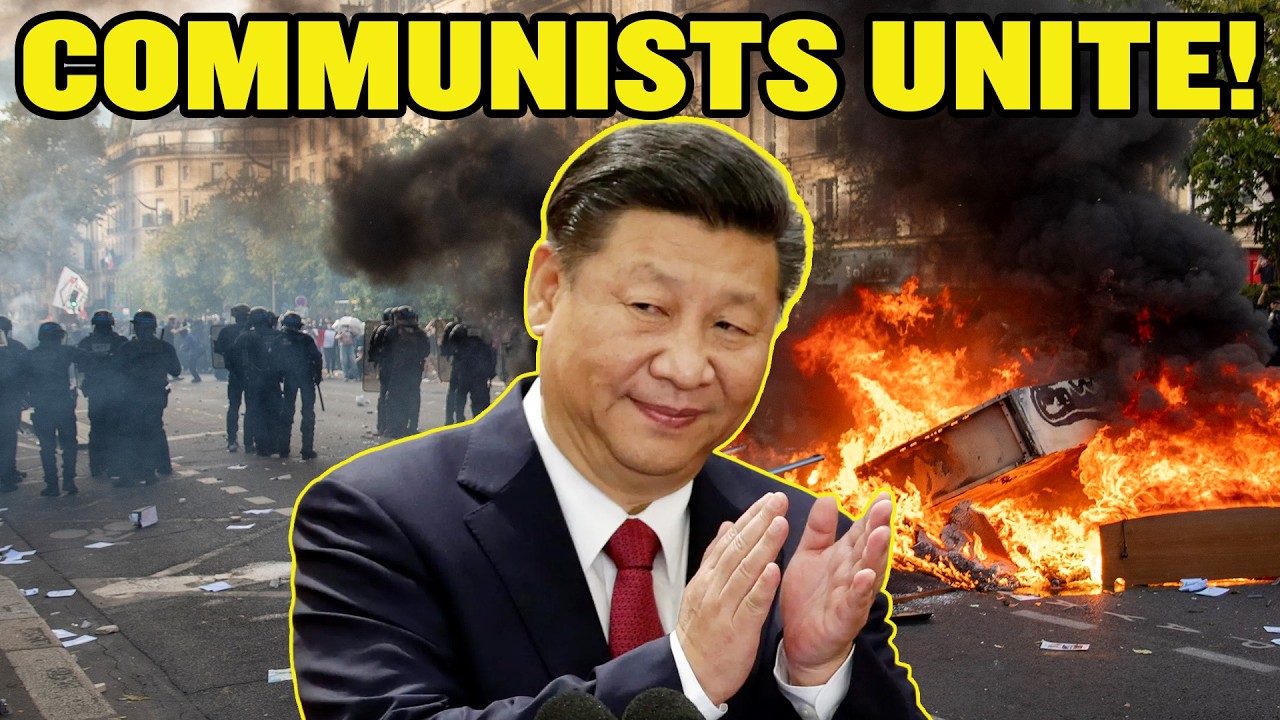
Protests in democratic countries have become fertile ground for China to sow its seeds of communism. In this episode we discuss China’s influence in the French riots, CODEPINK’s role in shilling for China, and China influence in data center protests in the U.S.
Joining us today is Piero Tozzi. He’s the Senior Director for China Policy at America First Policy Institute.
Join our fight to expose the CCP at and get ALL the new full-length interviews!
And check out our other channel, China Uncensored:
China claims you’re free to criticize the Communist Party—but speaking out can come with serious consequences. From mass surveillance and online harassment to arbitrary detention and physical violence, here are four ways the CCP silences its critics—and why visiting China might be riskier than you think.
Operation Honey Pot: Paste this emoji 🍯 in your comment below.
Want to know what the CCP is REALLY afraid of? YOU! Join the China Uncensored 50 Cent Army!
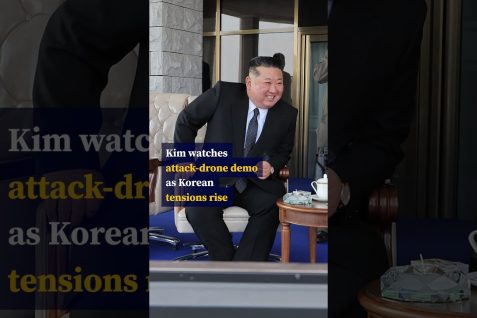
North Korea staged a rocket and missile demonstration last Thursday, attended by the supreme leader, his wife and his daughter. The missile tests came a day after Seoul said Pyongyang had fired “around a dozen” short-range ballistic missiles off its east coast. It was not immediately clear whether the reported launches were linked to the demonstration.
North Korea staged a rocket and missile demonstration last Thursday, attended by the supreme leader, his wife and his daughter. The missile tests came a day after Seoul said Pyongyang had fired “around a dozen” short-range ballistic missiles off its east coast. It was not immediately clear whether the reported launches were linked to the demonstration.
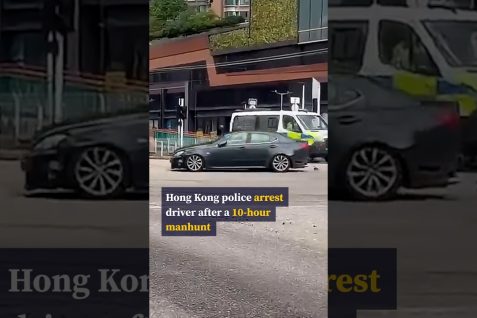
A hit-and-run accident at a cross-boundary checkpoint in Hong Kong triggered a 10-hour manhunt as a black Lexus evaded officers during a chase, according to police. The driver struck a barrier gate on the Hong Kong-Zhuhai-Macau Bridge before fleeing the scene. He was later arrested.
A hit-and-run accident at a cross-boundary checkpoint in Hong Kong triggered a 10-hour manhunt as a black Lexus evaded officers during a chase, according to police. The driver struck a barrier gate on the Hong Kong-Zhuhai-Macau Bridge before fleeing the scene. He was later arrested.
A private jet bound for the Bahamas crashed next to a busy road in a residential area in Florida on Sunday, killing all 9 passengers on board. The plane came down less than 11km (7 miles) from US President Donald Trump’s Mar-a-Lago estate, and around an hour after Trump left Florida after spending Sunday at the property.
A private jet bound for the Bahamas crashed next to a busy road in a residential area in Florida on Sunday, killing all 9 passengers on board. The plane came down less than 11km (7 miles) from US President Donald Trump’s Mar-a-Lago estate, and around an hour after Trump left Florida after spending Sunday at the property.
A Japanese disc jockey known as DJ Mao has regained consciousness following an alleged drugging at a Hong Kong club early Sunday morning. The victim, Mao Hamasaki, was admitted to a hospital intensive care unit and tested positive for four types of drugs, according to her manager. An unknown man reportedly asked Hamasaki to DJ at a private event and gave her a glass of orange juice after she turned down the work offer.
A Japanese disc jockey known as DJ Mao has regained consciousness following an alleged drugging at a Hong Kong club early Sunday morning. The victim, Mao Hamasaki, was admitted to a hospital intensive care unit and tested positive for four types of drugs, according to her manager. An unknown man reportedly asked Hamasaki to DJ at a private event and gave her a glass of orange juice after she turned down the work offer.