In Myanmar, a country consumed by conflict, one sport defined by brutality dominates. Considered too dangerous even for the Ultimate Fighting Championship (UFC), lethwei is a martial art where headbutts are encouraged and knockout blows are the aim of the game.
In Myanmar, a country consumed by conflict, one sport defined by brutality dominates. Considered too dangerous even for the Ultimate Fighting Championship (UFC), lethwei is a martial art where headbutts are encouraged and knockout blows are the aim of the game.
All efforts need to be focused on search and rescue for survivors and treating the injured, President Xi Jinping instructed on the morning of October 23, after a 7.0-magnitude earthquake killed 16 and injured 76 in China’s Tibet autonomous region overnight.
All efforts need to be focused on search and rescue for survivors and treating the injured, President Xi Jinping instructed on the morning of October 23, after a 7.0-magnitude earthquake killed 16 and injured 76 in China’s Tibet autonomous region overnight.
More than 126,000 Rohingya refugees who fled systemic persecution in Myanmar have settled in Malaysia over the past decade. But an initial wave of hospitality has since been replaced by hostility, mostly driven by online misinformation campaigns. Amid the growing resentment, Malaysian Prime Minister Anwar Ibrahim has pledged to repatriate asylum seekers back to a country still gripped by war.
More than 126,000 Rohingya refugees have settled in Malaysia over the past decade, fleeing a Myanmar that tried to erase them. For years, Muslim-majority Malaysia received them with a measure of hospitality that few other countries in the region offered. That welcome has curdled into open hostility, and much of the change was manufactured online. A wave of misinformation and hate speech has moved from phone screens into housing blocks, schools and government policy. The story of the Rohingya in Malaysia is now a case study in how online hate becomes real-world harm.
A Welcome That Wore Out
The Rohingya are a Muslim minority from Myanmar’s Rakhine State, denied citizenship by a country that refuses to count them among its official ethnic groups. In 2017, a brutal military crackdown drove more than 700,000 of them out of Myanmar in a campaign now before the International Court of Justice as a genocide case. Malaysia took in one of the largest shares of those who fled by sea and land, and ordinary Malaysians initially responded with charity and solidarity. United Nations figures put the number of registered refugees and asylum seekers from Myanmar in Malaysia at roughly 193,000, about two-thirds of them Rohingya. They built lives in the shadows of Kuala Lumpur and Penang, working the construction sites, markets and plantations that local workers often avoid.
How Misinformation Turned Neighbours Into Enemies
The turning point was not a single event but a steady drip of falsehoods shared online. Viral posts blamed Rohingya families for crime, disease and rising prices, and recycled old photographs as fresh evidence of bad behaviour. During a surge of hostile content this year, petitions calling for the Rohingya to be expelled gathered hundreds of thousands of signatures. Rights monitors linked the online campaign to real consequences, including harassment on the street and pressure that forced community schools to close. In July, more than a hundred Rohingya were evicted from their homes on Penang by local residents and had to be relocated by the authorities. The pattern is familiar from other countries: the lie travels first, and the eviction notice, the slur and the closed school follow behind it.
Refugees Without a Legal Floor
What makes the Rohingya in Malaysia so exposed is that the law offers them almost nothing to stand on. Malaysia is not a signatory to the UN Refugee Convention, so even people registered with the UN refugee agency are officially treated as illegal migrants. That status bars Rohingya children from public schools and adults from legal work, pushing families into exactly the informal economy that critics then blame them for dominating. It also means any encounter with enforcement can end in detention, regardless of a person’s UNHCR card. Community leaders have reported asylum seekers, including card holders, being swept up in repatriation drives. A population with no legal floor beneath it has no defence when public opinion turns, which is why an online narrative can translate so quickly into policy.
Anwar’s Bargain With the Generals
Prime Minister Anwar Ibrahim, long marketed abroad as a reformist, has moved with the public mood rather than against it. In September he stunned refugee advocates by saying he would invite Myanmar’s leader, Min Aung Hlaing, for an official visit in return for Myanmar accepting thousands of Rohingya back. This is the same general whose military drove the Rohingya out in 2017 and seized power in a 2021 coup that plunged Myanmar into civil war. Malaysia says Myanmar agreed in July to take back as many as 5,000 Rohingya, and Anwar has said roughly 10,000 Myanmar nationals have already been repatriated since January. The two leaders have since met, with Malaysia promising to work toward Myanmar’s reintegration into the ASEAN bloc. For Naypyidaw, the red carpet is a prize; for the Rohingya, the price of that prize may be their refuge.
Sent Back to a War
The United Nations refugee agency has stated plainly that conditions in Myanmar do not support the safe and sustainable return of refugees, and that it has not been involved in identifying who is being sent back. Myanmar’s civil war is still burning across multiple frontlines, and Rakhine State itself is a battlefield. Refugee advocates warn that returnees risk detention or forced conscription into the very military they fled. Community representatives describe repatriation for many Rohingya as a death sentence delivered by paperwork. Malaysia insists the returns are voluntary and that Myanmar has given assurances returnees will not be harmed. Those assurances come from a junta that much of the world holds responsible for the original persecution, which is why rights groups are urging Kuala Lumpur to halt the programme entirely.
What Malaysia Decides About Itself
Every refugee-hosting country eventually faces the question Malaysia faces now: whether hospitality was a value or merely a mood. The Rohingya did not change; the information environment around them did, and a government chose to follow it rather than lead it. If the repatriations proceed, Malaysia will have let viral falsehoods set the terms of a decision about tens of thousands of human lives. If it pauses them, it will have to confront the harder work of giving a stateless people some legal standing at home. Either way, the lesson travels far beyond Malaysia. Online hate is cheap to produce and expensive to undo, and by the time it reaches the street, the school gate and the deportation ship, the people who posted it have usually moved on to the next target.
France has been rocked by protests and political unrest. But a much bigger question is emerging: who funds the activist networks that operate across borders?
At the center of this investigation is Neville Roy Singham, an American technology entrepreneur who founded ThoughtWorks, worked as an adviser to Huawei, and later became a major financial supporter of left-wing organizations around the world.
After selling his company, Singham helped fund a network of nonprofit organizations, media outlets, and political advocacy groups spanning multiple continents. His activities and reported connections to China have attracted scrutiny from American lawmakers.
How does this network operate? What role do media organizations play in amplifying protest movements? And what do Singham’s connections to Shanghai reveal about the relationship between political activism and China’s global influence?
In this episode, we trace Singham’s journey from a young Maoist activist in Detroit to a wealthy technology entrepreneur, and examine the funding networks, political relationships, and allegations surrounding his activities.
France has been rocked by protests and political unrest. But a much bigger question is emerging: who funds the activist networks that operate across borders?
At the center of this investigation is Neville Roy Singham, an American technology entrepreneur who founded ThoughtWorks, worked as an adviser to Huawei, and later became a major financial supporter of left-wing organizations around the world.
After selling his company, Singham helped fund a network of nonprofit organizations, media outlets, and political advocacy groups spanning multiple continents. His activities and reported connections to China have attracted scrutiny from American lawmakers.
How does this network operate? What role do media organizations play in amplifying protest movements? And what do Singham's connections to Shanghai reveal about the relationship between political activism and China's global influence?
In this episode, we trace Singham's journey from a young Maoist activist in Detroit to a wealthy technology entrepreneur, and examine the funding networks, political relationships, and allegations surrounding his activities.
COVID cases continue to rise in China, and virology researchers are warning about emerging variants. Respiratory illnesses become more common in fall and winter. Air pollution could add to the health risks for people who become infected.
COVID cases continue to rise in China, and virology researchers are warning about emerging variants. Respiratory illnesses become more common in fall and winter. Air pollution could add to the health risks for people who become infected.
Limited Time: Get your free Tank Man set when you join the 50-Cent Army:
Get your illegal Xi Jinpooh shirt:
Is Kim Jong Un Dead?! China’s ambassador threatens the Philippines. Why is Shanghai full of empty office buildings? That and more on this week’s China news headlines.
Operation Honey Pot: Paste this emoji 🍯 in your comment below.
Want to go deeper than YouTube will let us? Check out our website:
Veteran actors including Shu Chen and Yu Qingbin have drawn attention for filming during the day and delivering food at night in Hengdian, a film and television production hub in Zhejiang.
Veteran actors including Shu Chen and Yu Qingbin have drawn attention for filming during the day and delivering food at night in Hengdian, a film and television production hub in Zhejiang.
In China, “zombie companies” generally means businesses that can no longer sustain themselves. They have lost money for years and owe more than their assets are worth. They survive mainly on government subsidies or renewed bank loans. They used to be mostly local state-owned companies or traditional manufacturers with excess capacity, including state-run steel and cement plants. Now many companies in emerging industries backed by Chinese Communist Party policies, such as electric vehicles and solar power, have also become zombies with help from local subsidies. Lists of these companies touch on highly sensitive financial risks, including bad bank loans, local government finances, jobs and social stability. Officials and financial institutions usually keep those lists confidential and rarely release them.
In China, “zombie companies” generally means businesses that can no longer sustain themselves. They have lost money for years and owe more than their assets are worth. They survive mainly on government subsidies or renewed bank loans. They used to be mostly local state-owned companies or traditional manufacturers with excess capacity, including state-run steel and cement plants. Now many companies in emerging industries backed by Chinese Communist Party policies, such as electric vehicles and solar power, have also become zombies with help from local subsidies. Lists of these companies touch on highly sensitive financial risks, including bad bank loans, local government finances, jobs and social stability. Officials and financial institutions usually keep those lists confidential and rarely release them.
This video is part of a series produced with support from the Hong Kong SAR government.
Foreign commerce chambers in Hong Kong are optimistic about the city’s first five-year road map, saying that shedding light on the city’s general strategic direction gives businesses ample opportunity to plan. They also note that having a general timeline for megaprojects like the Northern Metropolis is key to attracting foreign investment.
Rescuers pulled survivors from the rubble after a 7.0-magnitude earthquake struck China’s remote Tibet region late on Thursday. At least 16 people were killed, according to state media.
Rescuers in China’s Tibet region worked through the night and into Friday pulling survivors from collapsed homes after a magnitude 7.0 earthquake struck one of the most remote and highest inhabited places on Earth. The quake hit late on Thursday near Nagqu, a city north of the regional capital Lhasa that sits some 4,800 metres above sea level. At least 16 people were killed and 54 injured, according to Chinese state media, and at least 339 homes collapsed. More than 5,000 rescuers from three local counties have been sent into the epicentre zone. With temperatures low, snow in the forecast, and aftershocks still rolling through, officials say the search is a race against both the rubble and the altitude.
A Quake at the Top of the World
The United States Geological Survey recorded the earthquake at 10:33 p.m. local time on Thursday, with its epicentre 191 kilometres east-northeast of Nagqu and a depth of 18 kilometres. That is a shallow, powerful quake by any measure, and in this terrain its effects are amplified. Settlements across the Tibetan plateau are scattered, roads are few, and many homes are built from materials that perform badly when the ground shakes hard. The USGS recorded at least seven aftershocks between magnitude 4.3 and 5.2, each one a fresh threat to buildings already cracked by the main shock. Officials told reporters they feared further collapses from those aftershocks, as well as casualties from rockslides on the mountain roads rescuers depend on.
Three Rounds Through Every Household
By Friday afternoon, rescuers had completed three full rounds of searches, going household by household and village by village, Nagqu’s acting mayor Dunzhu told a press conference. Video from the scene shows teams climbing into the remains of collapsed buildings and carrying survivors out to open ground, where displaced families were given makeshift beds and blankets on sports fields. More than 12,400 people were forced from their homes, according to state media reporting. Relief supplies have been pushed into the region in bulk: 2,000 prefabricated housing units, around 3,400 tents, and 2,000 folding beds, along with flashlights and winter clothing. In a place where night falls hard even in October, a tent and a blanket are not comforts. They are survival equipment.
An All-Out Order From Beijing
China’s president, Xi Jinping, called for an all-out effort to find survivors, the standard signal that a disaster has become a national priority and that provincial resources will be reinforced. Xinhua, the state news agency, reported that communications were down in some of the areas hit, complicating the basic task of learning which villages are worst affected. Local railway authorities halted trains passing through the region as an emergency precaution. Rockfalls forced the closure of a section of National Highway 317, with only emergency, rescue, and official support vehicles allowed through while crews cleared debris. Every closure narrows the corridor through which help can arrive, which is why the first wave of rescuers came from the three nearest counties rather than waiting for distant reinforcements.
Why Rescue Here Is Unlike Anywhere Else
Search-and-rescue doctrine assumes ambulances, hospitals, and helicopters within reasonable reach. The Tibetan plateau rewrites every one of those assumptions. At 4,800 metres, the air holds roughly half the oxygen of sea level, and heavy physical work in rubble exhausts even acclimatised rescuers quickly, while survivors trapped in the cold lose body heat far faster than they would in a lowland disaster. Intermittent snowfall is forecast for the affected region in the coming days, threatening both the searches and the tent camps now housing the displaced. Distances are measured in hours of mountain driving, not minutes, and a single blocked highway can isolate a valley entirely. It is the combination that kills in high-altitude earthquakes: not only the shaking, but exposure, delay, and the difficulty of moving help across the landscape afterward.
What Happens Next
The immediate priorities are the ones officials listed on Friday: finish the searches, treat the injured, and get the displaced under shelter before the snow arrives, with the injured count still being updated as more villages report in. Engineers will have to judge which damaged homes can be re-entered and which must come down, a process shadowed by every new aftershock. For Beijing, the response is also a test of the emergency system it has built for the plateau, where earthquakes are a recurring fact of life along the collision zone that raised the Himalayas. Tibet has been struck hard before, and each disaster has pushed more building standards, monitoring, and pre-positioned supplies into the region. Whether those preparations were enough this time will be measured in the days ahead, in the villages above Nagqu, by the people still waiting beside the rubble of their homes. For now, the measure is simpler and more human: another survivor carried out alive, another village reached, another night in a tent survived at altitude. The rescuers pulling people from the rubble on Friday know exactly what their work is worth. So do the families watching them do it.
Airlines have cancelled or rescheduled more than a dozen flights to and from Taiwan and Japan because of Super Typhoon Champi, with more disruption expected in the coming days. Now the strongest storm of the year worldwide, Champi made landfall in Taiwan on Friday. It is also affecting eastern mainland China and Japan.
Airlines have cancelled or rescheduled more than a dozen flights to and from Taiwan and Japan because of Super Typhoon Champi, with more disruption expected in the coming days. Now the strongest storm of the year worldwide, Champi made landfall in Taiwan on Friday. It is also affecting eastern mainland China and Japan.
More than 1,000 residents are expected to ride in autonomous vehicles (AVs) as Chinese tech giant Baidu launches Hong Kong’s first large-scale public trial.
More than 1,000 residents are expected to ride in autonomous vehicles (AVs) as Chinese tech giant Baidu launches Hong Kong’s first large-scale public trial.
At least 16 people were killed when a magnitude 7 earthquake struck China’s Tibet autonomous region late Thursday. According to the US Geological Survey, the quake’s epicentre was in a mountainous region around 190km (120 miles) east-northeast of Nagqu and 390km northeast of Lhasa, the regional capital. The People’s Liberation Army said it has deployed drones and hundreds of troops to assist with rescue efforts.
At least 16 people were killed when a magnitude 7 earthquake struck China’s Tibet autonomous region late Thursday. According to the US Geological Survey, the quake’s epicentre was in a mountainous region around 190km (120 miles) east-northeast of Nagqu and 390km northeast of Lhasa, the regional capital. The People’s Liberation Army said it has deployed drones and hundreds of troops to assist with rescue efforts.
Programming used to be one of China’s best-paid careers. With its concentration of tech companies, Beijing attracted large numbers of workers born in the 1990s. Now, a weak economy, intense competition, pay cuts, and layoffs are forcing many to leave and return home to make a living. Once well-paid office workers, they now face a new struggle to support themselves.
Programming used to be one of China’s best-paid careers. With its concentration of tech companies, Beijing attracted large numbers of workers born in the 1990s. Now, a weak economy, intense competition, pay cuts, and layoffs are forcing many to leave and return home to make a living. Once well-paid office workers, they now face a new struggle to support themselves.
As DeepSeek’s servers went down, “What happened to Liang Wenfeng?” also trended on Weibo. Online speculation ranged from him fleeing the country to being arrested. The rumors grew out of talk of a technical breakthrough at DeepSeek, spawning various theories about external security threats.
As DeepSeek’s servers went down, “What happened to Liang Wenfeng?” also trended on Weibo. Online speculation ranged from him fleeing the country to being arrested. The rumors grew out of talk of a technical breakthrough at DeepSeek, spawning various theories about external security threats.
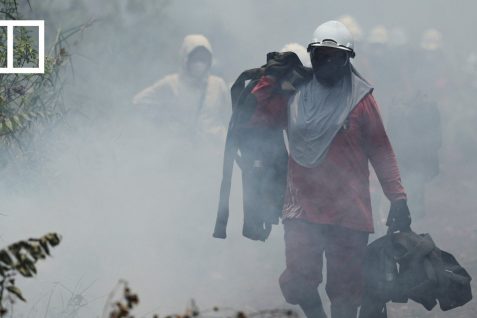
A group of all-female firefighters called the Power of Mama is rolling out on motorbikes to put out fires in Indonesia’s Ketapang Regency in West Kalimantan. The crew of more than 140 women received firefighting training from the Indonesia Nature Rehabilitation Initiative Foundation (YIARI).
They arrive on motorbikes, in a cloud of dust and smoke, carrying hoses, pumps, and hand tools into some of the most punishing terrain on Earth. The Power of Mama is an all-female firefighting crew working in Ketapang Regency, in Indonesia’s West Kalimantan province on the island of Borneo. More than 140 women have been trained for the work by the Indonesia Nature Rehabilitation Initiative Foundation, known as YIARI. Their enemy is not the dramatic wall of flame familiar from wildfire news elsewhere. It is a slower, stranger fire that burns underground in peat, sometimes for months, poisoning the air of an entire region.
Fire That Burns Beneath the Ground
Much of West Kalimantan sits on peatland, deep layers of partially decayed vegetation that hold enormous amounts of carbon and, when dry and drained, enormous fire risk. Peat fires do not rage so much as smoulder, creeping beneath the surface, surfacing where they choose, and resisting every attempt to declare them finished. Putting one out means soaking the ground itself, metre by metre, until the heat is truly gone, work that is measured in days rather than hours. A crew can drench a plot, leave, and be called back to the same smoking ground a week later. It is exhausting, unglamorous labour, and it is exactly the labour the Power of Mama was organised to do.
Why Mothers, and Why Motorbikes
The crew’s name is a statement of method as much as identity. In the villages around Ketapang, mothers are the organisers of daily life: they know every household, every path, and every patch of family land, and they are the first to feel a fire’s effects in children’s coughs and closed schools. Recruiting and training local women turns that knowledge into a fire service that outsiders cannot replicate. Motorbikes suit the reality of the work, carrying small teams quickly down narrow tracks to fires that trucks cannot reach in time. A fast first response matters enormously with peat, because a fire caught in its first hours may take a day to kill, while one left for a week can take a season.
A Crisis Measure in Hectares and Lungs
The context for their work is a national emergency that has been building for months. More than 1.9 million hectares of land, an area twelve times the size of London, have burned in wildfires across Indonesia this season. Hundreds of thousands of people in Indonesia and across Southeast Asia have suffered respiratory illnesses from the toxic haze the fires produce. The haze does not respect borders, drifting over neighbouring Malaysia and Singapore and periodically closing schools, grounding flights, and filling clinics far from any flame. Public anger has followed, with protests accusing authorities of ineptitude and corruption in handling a disaster that returns, in some form, almost every dry season. Against numbers like those, a village crew on motorbikes can look small, until you understand that nearly every hectare of that total started as a fire somebody could see from their house.
Prevention Is the Real Shift
The deeper change the Power of Mama represents is a move from response to prevention. Crews patrol during the dry season, watch for smoke, and work with farmers on the land-clearing practices that start so many fires, since burning remains the cheapest way to clear a field. A trusted local crew can make that argument in a way no distant agency can, because its members are neighbours rather than officials. YIARI’s training gives the women the technical side: pumps, hoses, fire behaviour, and safety in heat and smoke. The social side they bring themselves. A fire prevented leaves no headline, which is precisely the point, and precisely why prevention work is chronically undervalued until the haze arrives.
What Their Story Says About the Region
There is a reason this short film travels. Across Asia, the costs of environmental damage land first and hardest on rural women, who carry water, tend the sick, and keep households running when the air turns dangerous. The Power of Mama flips that script, putting the same women in the role of the region’s first responders, trained, equipped, and organised. It is also a reminder that Indonesia’s fire crisis will not be solved from Jakarta alone, or by aircraft and declarations during the worst weeks of smoke. It will be solved, if it is solved, in thousands of places like Ketapang, by people who live with the land and refuse to watch it burn. The women on the motorbikes are not waiting for that future. They are already riding into it, one smoking field at a time.
None of this work is easy on the body or the calendar. Peat smoke is thick with fine particles, the heat inside a smouldering field can defeat ordinary boots and gloves, and the fire season collides with the farming and family duties the women already carry. Shifts are arranged around school runs and harvests, which is another advantage of a local crew: it can flex in ways a posted-in unit cannot. The women describe the work plainly, as protection rather than adventure. They are defending their own children’s lungs, their own villages’ fields, and the forest their communities still depend on.
More than 1,000 residents are expected to ride in autonomous vehicles (AVs) as Chinese tech giant Baidu launches Hong Kong’s first large-scale public trial.
More than 1,000 residents are expected to ride in autonomous vehicles (AVs) as Chinese tech giant Baidu launches Hong Kong’s first large-scale public trial.
The grand finale of EQT Impact Challenge 2026 at Hong Kong’s M+ Museum in September saw some of Asia’s most promising deep-tech founders tackling challenges across climate and health.
The initiative, backed by global investment firm EQT and its philanthropic arm EQT Foundation, provides young companies with crucial early-stage investment alongside access to a global network of industry experts, investors and mentors.
After a seven-month journey that attracted more than 200 applicants and almost 6,000 public votes, five finalists took to the stage.
Advent Gene Therapeutics, which was named this year’s winner, has received investment of €500,000 (US$560,000) from EQT Foundation. The AI-driven biotech start-up develops next-generation viral vectors which enable safer, more precise and effective delivery of genetic medicines.
Okosix, which develops biopolymers that can reduce the use of plastic, and C2iTech, which hopes to use laboratory-grown cells to support the treatment of lung cancer , were named runners-up. They have both received support from Central Cove Group, the family office of Jean Eric Salata, chair of EQT Group.
SCMP Live of the South China Morning Post was an organising partner of EQT Impact Challenge 2026.
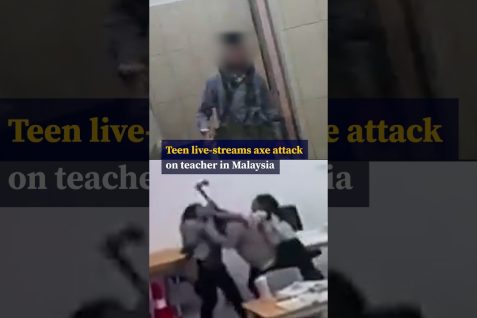
Malaysian police have arrested a 16-year-old student after he live-streamed an attack on a teacher with an axe at a private school in Kuching, the capital of Sarawak state.
Malaysian police have arrested a 16-year-old student after he live-streamed an attack on a teacher with an axe at a private school in Kuching, the capital of Sarawak state.
For years, Li Zhanshu was one of Xi Jinping’s most trusted political allies—a man who survived repeated controversies and rose to become China’s third-highest-ranking official.
Now, new rumors surrounding his daughter, Li Qianxin, and her business connections in Hong Kong have brought renewed attention to the former Chinese leader’s family.
How did Li Zhanshu rise from a provincial official to the heart of Xi Jinping’s inner circle? What do past investigations reveal about his family’s business interests? And why are questions about his political future resurfacing now?
In this episode, we trace Li Zhanshu’s remarkable rise, the controversies surrounding his family, and the political tensions behind Beijing’s closed doors.
We also examine the speculation surrounding actress Tong Liya and her changing career. What is documented, and what remains rumor?
**Note:** Reports and allegations discussed in this episode do not establish that Li Zhanshu or his family members have been detained or charged with wrongdoing.
For years, Li Zhanshu was one of Xi Jinping's most trusted political allies—a man who survived repeated controversies and rose to become China's third-highest-ranking official.
Now, new rumors surrounding his daughter, Li Qianxin, and her business connections in Hong Kong have brought renewed attention to the former Chinese leader's family.
How did Li Zhanshu rise from a provincial official to the heart of Xi Jinping's inner circle? What do past investigations reveal about his family's business interests? And why are questions about his political future resurfacing now?
In this episode, we trace Li Zhanshu's remarkable rise, the controversies surrounding his family, and the political tensions behind Beijing's closed doors.
We also examine the speculation surrounding actress Tong Liya and her changing career. What is documented, and what remains rumor?
**Note:** Reports and allegations discussed in this episode do not establish that Li Zhanshu or his family members have been detained or charged with wrongdoing.
Watch the full podcast!
What could be more innocent than pre-schoolers recreating the Chinese communists long march…with grenades? Even Chinese netizens are tearing these videos apart.
Join our fight to expose the CCP at and get ALL the new full-length interviews!
And check out our other channel, China Uncensored:
Limited Time: Get your free Tank Man set when you join the 50-Cent Army:
Join the Oct 24 China Uncensored Horror Livestream
France is on fire, communists and Islamists are joining forces, and China may be helping fan the flames.
Meet the Red-Green Alliance: an unlikely coalition of revolutionary leftists, Islamist radicals, and China-linked activists united by one big goal—sticking it to the West. We’re following the money, the organizations, and the very questionable connections linking Beijing, Tehran, and radical movements around the world.
Operation Honey Pot: Paste this emoji 🍯 in your comment below.
Want to go deeper than YouTube will let us? Check out our website:
Unitree Robotics released a video showcasing a new humanoid robot model, H2-X. Dubbed the ‘Kung Fu Legend: Guardian’, the robot can be seen performing various action stunts and acting as a bodyguard. Unitree did not confirm whether the actions in the video were performed autonomously, remote-controlled or choreographed. The footage also does not establish whether the H2-X can identify a threat and respond safely in an unplanned situation.
Unitree Robotics released a video showcasing a new humanoid robot model, H2-X. Dubbed the ‘Kung Fu Legend: Guardian’, the robot can be seen performing various action stunts and acting as a bodyguard. Unitree did not confirm whether the actions in the video were performed autonomously, remote-controlled or choreographed. The footage also does not establish whether the H2-X can identify a threat and respond safely in an unplanned situation.
Nvidia CEO Jensen Huang says nobody manufactures chips, open models, or AI researchers at scale better than China does, and that America faces “very, very serious competition.” He told veteran business journalist Deirdre Bosa at GTC Berlin that US frontier labs and chips are still the world’s best, and that Nvidia plans to stay ahead. Asked whether Washington is listening before the midterms, Huang says the US government wants American companies competing everywhere, from Africa and Central Asia to Brazil and Egypt.
Nvidia CEO Jensen Huang says nobody manufactures chips, open models, or AI researchers at scale better than China does, and that America faces "very, very serious competition." He told veteran business journalist Deirdre Bosa at GTC Berlin that US frontier labs and chips are still the world's best, and that Nvidia plans to stay ahead. Asked whether Washington is listening before the midterms, Huang says the US government wants American companies competing everywhere, from Africa and Central Asia to Brazil and Egypt.
Hong Kong police have arrested four teenagers seen in a viral video punching, slapping and swearing at a boy in an alley in Hong Kong’s Sai Wan Ho neighbourhood. The group has been charged with assault and gang-related offences.
Hong Kong police have arrested four teenagers seen in a viral video punching, slapping and swearing at a boy in an alley in Hong Kong’s Sai Wan Ho neighbourhood. The group has been charged with assault and gang-related offences.