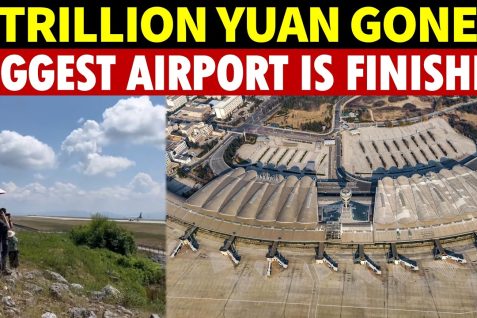
Some Chinese airports didn’t see a single passenger in the first 10 months of this year, yet government subsidies still keep them running. More than 70% of China’s commercial airports handle fewer than 2 million passenger trips a year. Some handled zero passengers or saw traffic in the single digits in the first 10 months of this year. That’s earned them the nickname “ghost airports.” Government subsidies still cover their basic operations.
Some Chinese airports didn’t see a single passenger in the first 10 months of this year, yet government subsidies still keep them running. More than 70% of China’s commercial airports handle fewer than 2 million passenger trips a year. Some handled zero passengers or saw traffic in the single digits in the first 10 months of this year. That’s earned them the nickname “ghost airports.” Government subsidies still cover their basic operations.
For more than 1.5 billion people experiencing hair loss, combing their hair each morning can be a source of quiet anxiety. Now, researchers from City University of Hong Kong and Beihang University say that routine could be the key to hair loss reversal.
South China Morning Post science reporter Shi Huang breaks down a study the team published in Nature Communications on the Detangle system – a microelectronic comb they developed that delivers medication deep into hair follicles using a pulsed electric field.
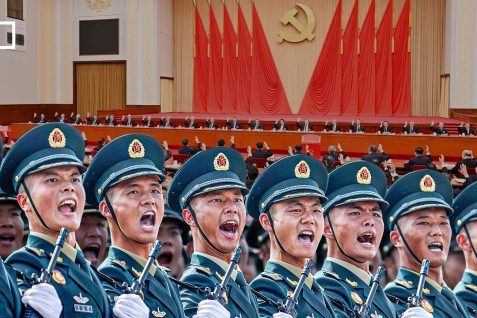
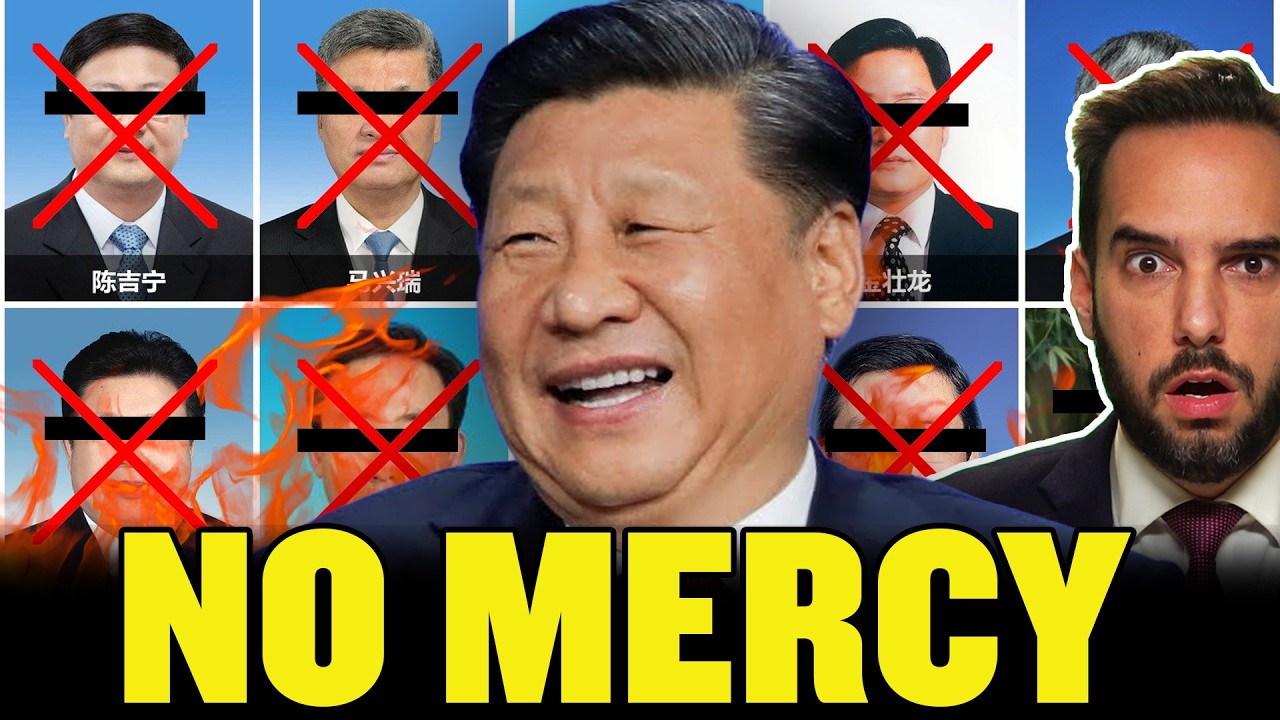
Beijing has hinted at the new leadership line-up in its military theatre commands, with fresh faces emerging during late October’s party conclave in the seating area reserved for key commanders, filling vacancies left by China’s anti-corruption drive.
Beijing has hinted at the new leadership line-up in its military theatre commands, with fresh faces emerging during late October’s party conclave in the seating area reserved for key commanders, filling vacancies left by China’s anti-corruption drive.
Why did Trump mention a “two or three years” timeline when discussing Blackwell sales to China? This episode also covers Elon Musk’s comparison of Jensen Huang to Michael Jordan at his peak, Muddy Waters’ mention of an Nvidia veteran, and the executive smuggling case highlighted in the thumbnail.
Why did Trump mention a “two or three years” timeline when discussing Blackwell sales to China? This episode also covers Elon Musk’s comparison of Jensen Huang to Michael Jordan at his peak, Muddy Waters’ mention of an Nvidia veteran, and the executive smuggling case highlighted in the thumbnail.
Hon Hai Technology Group, better known as Foxconn, is betting on AI infrastructure to drive its next phase of growth.
Chairman Young Liu tells Christine Tan that AI infrastructure could account for more than 60% to 65% of the company’s revenue within three to five years. He discusses Foxconn’s partnership with Nvidia, growing demand for AI servers and data centers, and why he sees no signs of AI overcapacity.
Liu also reflects on the challenges facing Foxconn’s electric vehicle ambitions, its push into satellites and space-based computing, and his efforts to build a new legacy after succeeding founder Terry Gou.
Watch the interview on “Managing Asia with Christine Tan” in the video above.
Dimpee Brar, founder of the 49th Parallel Project, joins David Pollack Primetime to discuss President Trump’s meetings with world leaders and the contrast between Trump’s approach to China and Canadian Prime Minister Mark Carney’s strategy. Brar criticizes Canada’s decision to waive tariffs on Chinese steel and aluminum entities, warning that the move could threaten U.S. industries and national security while undermining U.S.-Canada trade relations.
Join this channel to get access to OAN Live & perks:
These staged arguments over prices play out like clockwork every day on Douyin, Kuaishou, and Xiaohongshu. The hosts shout themselves hoarse and act like they’re moments away from losing everything.
These staged arguments over prices play out like clockwork every day on Douyin, Kuaishou, and Xiaohongshu. The hosts shout themselves hoarse and act like they’re moments away from losing everything.
Ocarina of Time Is A Fundamentally Conservative Game
Help us make your Unmade in China 2026 Christmas Catalog!
Trump meets Xi at APEC and has a tender moment. Meanwhile, IS CHINA HACKING THE US?!
Operation Honey Pot: Paste this emoji 🍯 in your comment below.
Want to go deeper than YouTube will let us? Check out our website:
Just one day after its launch, Grand Theft Auto VI players discovered a 1987 Cantopop classic on the in-game radio. George Lam’s “Gan Ai Gan Zuo” (“Dare to Love, Dare to Act”) is the first Chinese-language song ever featured in a mainline GTA game, appearing among more than 840 licensed tracks.
Just one day after its launch, Grand Theft Auto VI players discovered a 1987 Cantopop classic on the in-game radio. George Lam’s “Gan Ai Gan Zuo” (“Dare to Love, Dare to Act”) is the first Chinese-language song ever featured in a mainline GTA game, appearing among more than 840 licensed tracks.
Chinese tech giant ByteDance is facing a setback. On November 17, Bloomberg, citing people familiar with the matter, revealed that a $480 million loan linked to the company’s chip purchases had been put on hold.
Chinese tech giant ByteDance is facing a setback. On November 17, Bloomberg, citing people familiar with the matter, revealed that a $480 million loan linked to the company’s chip purchases had been put on hold.
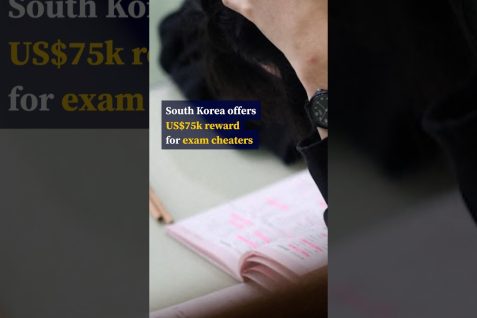
South Korea rolled out its strictest rules yet for students taking the Suneung university entrance exam after a top scorer admitted to using micro cameras and AI to cheat on a national test. Over half a million South Koreans sat the nearly nine-hour exam on Thursday. The exam is widely seen as a ticket to prestigious universities, well-paid jobs and even better marriage prospects in this highly competitive country. New anti-cheating measures include Wi-fi jamming, inspections of glasses and clothing and a US$75,000 reward to those who report AI-assisted cheating.
South Korea rolled out its strictest rules yet for students taking the Suneung university entrance exam after a top scorer admitted to using micro cameras and AI to cheat on a national test. Over half a million South Koreans sat the nearly nine-hour exam on Thursday. The exam is widely seen as a ticket to prestigious universities, well-paid jobs and even better marriage prospects in this highly competitive country. New anti-cheating measures include Wi-fi jamming, inspections of glasses and clothing and a US$75,000 reward to those who report AI-assisted cheating.
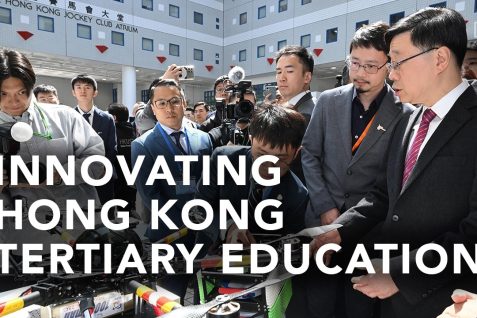
Although Hong Kong was globally famous as a successful trade and finance hub, it was not known for scientific research. But that started to change 35 years ago, when US-educated physicist Woo Chia-wei founded the Hong Kong University of Science and Technology (HKUST) with a vision of the city propelling the region’s transformation into an innovation hub.
After nurturing more than 2,000 start-ups, including 11 unicorns, and seven world-class InnoHK research centres spanning neuroscience, AI chips and space robotics, HKUST is now preparing to run the city’s third medical school.
Carrying that founding vision forward are HKUST’s president, Professor Nancy Ip, and the university council’s chairman, Professor Harry Shum. Hear from them as they reflect on 35 years of growth from a single campus to an “innovation corridor” that now stretches through Hong Kong’s Northern Metropolis mega development and across the border into Shenzhen, Guangzhou and beyond.
In the second episode of this video series, Audemars Piguet’s Lucas Raggi, chief industrial officer, and Sebastian Vivas, its heritage and museum director, explain the intricacies of the chronograph.
In the second episode of this video series, Audemars Piguet’s Lucas Raggi, chief industrial officer, and Sebastian Vivas, its heritage and museum director, explain the intricacies of the chronograph.
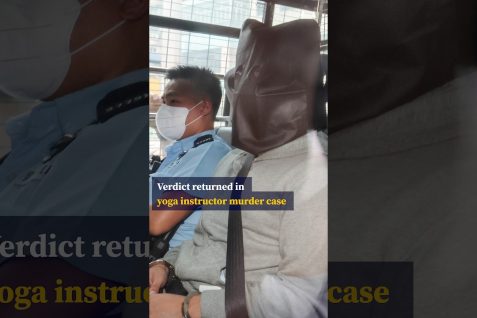
A High Court jury in Hong Kong on Thursday unanimously found Lo Chun-ming, a former legal assistant, guilty of murdering his yoga instructor ex-girlfriend and leaving her body in a blood-filled bathtub in a Ritz-Carlton hotel room. The murder occurred over four years earlier, on June 29 and 30, 2022.
A High Court jury in Hong Kong on Thursday unanimously found Lo Chun-ming, a former legal assistant, guilty of murdering his yoga instructor ex-girlfriend and leaving her body in a blood-filled bathtub in a Ritz-Carlton hotel room. The murder occurred over four years earlier, on June 29 and 30, 2022.
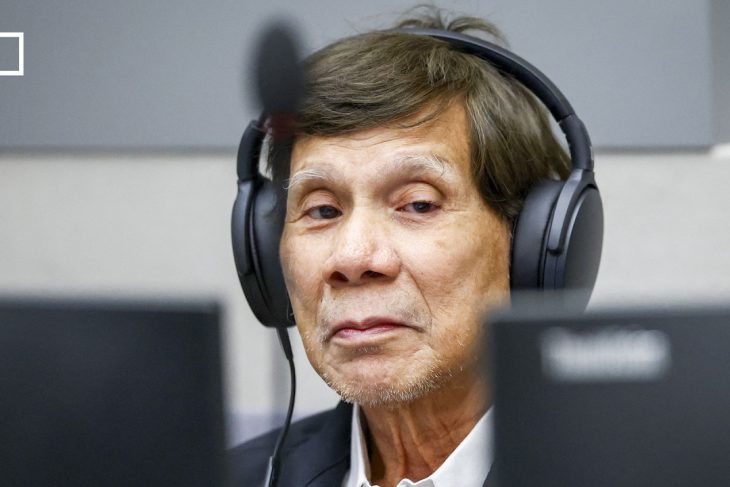
The United Nations’ top court has ruled that Myanmar “committed genocide” against the Rohingya population in a 2017 crackdown that left at least 10,000 dead and drove vast numbers into Bangladesh. The International Court of Justice (ICJ) says that Myanmar met virtually all provisions of the legal genocide convention and showed intent to “destroy a substantial part of” the minority group.
The International Court of Justice ruled on Thursday, November 19, that Myanmar committed genocide against its Rohingya Muslim minority during the military crackdown of 2017, in a judgment survivors have waited almost a decade to hear. It is the first time in its 80-year history that the United Nations’ top court has held a state legally responsible for committing genocide. Reading the verdict in The Hague, the court’s president, Yuji Iwasawa, said Myanmar had acted with an intention to destroy a substantial part of the Rohingya group in northern Rakhine State. The court found that around 10,000 Rohingya civilians were killed in a months-long campaign of mass shootings, arson and widespread sexual violence. Myanmar’s military-backed government dismissed the ruling on Friday as unfair, pointing out that the decision was not unanimous.
A Verdict Nearly a Decade in the Making
The case was brought in 2019 by The Gambia, a predominantly Muslim West African country thousands of miles from Myanmar, acting on behalf of a wider group of concerned states. The Gambia accused Myanmar of breaching its obligations under the 1948 Genocide Convention, the treaty adopted after the Second World War and the Holocaust. In 2022 the court decided it had jurisdiction to hear the case, rejecting Myanmar’s attempt to have it thrown out at an early stage. Judges then spent years weighing documentary evidence and hearing witness testimony about the 2017 operations. The final judgment runs to 191 pages and was delivered after a reading that lasted nearly three hours.
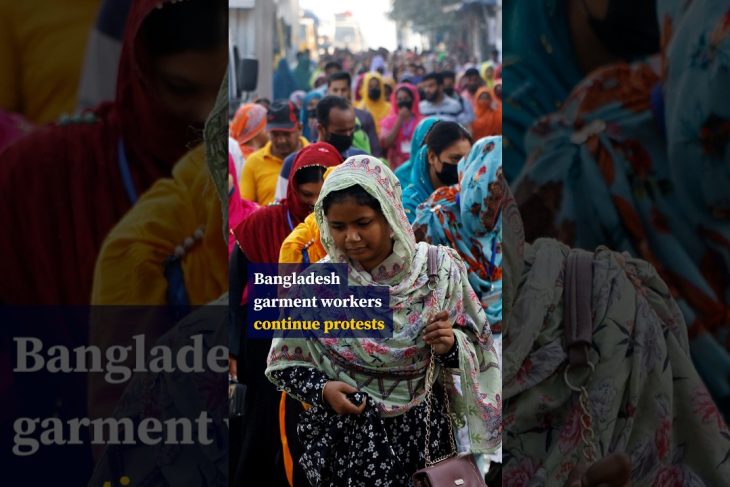
The events at the heart of the case began in 2017, when Myanmar’s security forces launched what they described as clearance operations against Rohingya communities in Rakhine State. The military said it was responding to attacks by Rohingya militants, and it maintained that defence throughout the court proceedings. The court rejected that justification, finding that the military did not distinguish between militants and civilians in its campaign. About 750,000 Rohingya fled across the border into Bangladesh in a matter of months, one of the fastest mass displacements of this century. Most of them remain there today, in sprawling refugee camps around Cox’s Bazar that now hold about 1.2 million people.
What the Court Found Happened in 2017
The judges found Myanmar responsible for three of the five categories of genocidal acts listed in the Genocide Convention. Those acts were killing members of the group, causing serious bodily and mental harm to members of the group, and imposing measures intended to prevent births within the group. The court gave particular weight to widespread sexual violence, to extreme violence against children, and to attacks on Rohingya as they tried to flee towards Bangladesh. It concluded that the scale and nature of the atrocities were characteristic of an intent to destroy a substantial part of the group. In the court’s words, the only reasonable inference that could explain Myanmar’s actions was an intention to destroy the Rohingya population of northern Rakhine.
That finding on intent is legally the most demanding part of any genocide case, and it is where this judgment breaks new ground. The court clarified that a genocidal intent can exist alongside other stated goals, including claimed military aims, rather than needing to be the sole motive. It also treated genocide not as a single event but as a process, built up through a pattern of acts over time. The decision was taken by nine votes to six, underlining how contested the legal questions remained even after years of evidence. Even so, a majority ruling of the World Court is final and binding on the state concerned, with no appeal available.
Reparations Ordered, Enforcement Uncertain
Alongside the finding of genocide itself, the court ordered Myanmar to take measures to repair some of the harm it caused. The orders include facilitating the safe, voluntary and dignified return of displaced Rohingya to their places of residence in Rakhine, and reuniting families separated by the violence. Myanmar was also ordered to provide compensation for suffering and lost property, and to allow the Rohingya to identify and bury their dead. The court further required a guarantee of non-repetition, a formal assurance that the crimes will not happen again. Those orders give Bangladesh and the Rohingya a powerful legal document to point to in any future negotiation over repatriation.
What the court cannot do is enforce its own judgment. The ICJ settles disputes between states and has no police force, no sanctions arm and no power to compel a government that refuses to comply. Myanmar’s first response suggests compliance will not come quickly, with a government spokesperson calling the ruling unfair and stressing that not all of the judges agreed. The country has also been consumed by a civil war since the military seized power in a coup in 2021, and renewed fighting in Rakhine since late 2023 has driven still more Rohingya into Bangladesh. The former armed forces chief who oversaw the 2017 campaign, Senior General Min Aung Hlaing, is now Myanmar’s president following elections widely described as engineered. For families in the Cox’s Bazar camps who celebrated the verdict this week, a safe return home still looks distant.
Why the Ruling Matters Far Beyond Myanmar
Because this is the first time the court has ever found a state responsible for genocide, lawyers and governments around the world are reading the judgment for what it says about proof, intent and state responsibility. Rights groups such as Amnesty International called the ruling a rare and unequivocal victory for survivors, and a permanent rebuttal of Myanmar’s long-standing denial. The United Nations human rights chief, Volker Türk, was among the senior figures whose reactions were gathered as the verdict landed. The court’s reasoning on intent is expected to be studied closely in other pending cases, including the genocide case brought by South Africa against Israel over Gaza, which Amnesty specifically cited. A ruling that intent can coexist with military objectives lowers one of the highest barriers that has historically protected states in such cases.
For China and the wider Asia-Pacific region, the judgment also lands in a complicated neighbourhood. Myanmar sits on China’s southwestern border, hosts major Chinese infrastructure investments, and has depended on diplomatic cover from Beijing and other regional partners throughout its isolation. A binding finding of genocide by the world’s highest court raises the reputational cost of that cover, even if it changes no government’s policy overnight. It also strengthens the hand of Bangladesh, which has carried the burden of hosting 1.2 million refugees while international aid has dwindled. Dhaka has already signalled that it sees the verdict as leverage for an eventual repatriation process. Whether that process ever begins will depend on politics in Myanmar, not on the law in The Hague, but the law has now spoken in terms no future negotiator can ignore.
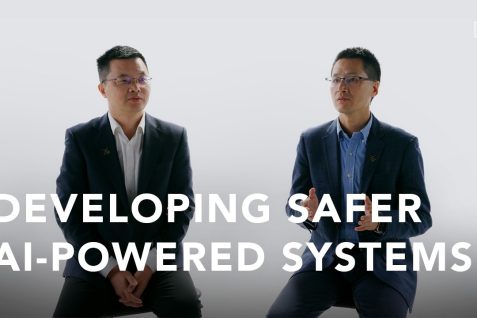
Professors Xu Jianliang and Han Bo, from Hong Kong Baptist University’s department of computer science, gain international recognition for research that makes AI-powered digital systems more secure and reliable.
Professors Xu Jianliang and Han Bo, from Hong Kong Baptist University’s department of computer science, gain international recognition for research that makes AI-powered digital systems more secure and reliable.
At the sprawling Hengdian World Studios — often referred to as “China’s Hollywood” — they can pay to appear in a miniature production, assisted by a team including camera operators, lighting assistants and a director. Microdramas – mostly vertical soap opera-like series with episodes as short as 30 seconds – have become popular across China, and with tourists. Video: Ye Qian/AFPTV.
More at – ‘s only non-profit, independent English-language news source – impartial, governed by an ethics code. HKFP is a member of the Trust Project, visit hongkongfp.com/ethics to view our journalistic standards.
At the sprawling Hengdian World Studios — often referred to as "China's Hollywood" — they can pay to appear in a miniature production, assisted by a team including camera operators, lighting assistants and a director. Microdramas – mostly vertical soap opera-like series with episodes as short as 30 seconds – have become popular across China, and with tourists. Video: Ye Qian/AFPTV.
More at – 's only non-profit, independent English-language news source – impartial, governed by an ethics code. HKFP is a member of the Trust Project, visit hongkongfp.com/ethics to view our journalistic standards.
🔐 Learn about finance with us in a simple, free, and straight-to-the-point way:
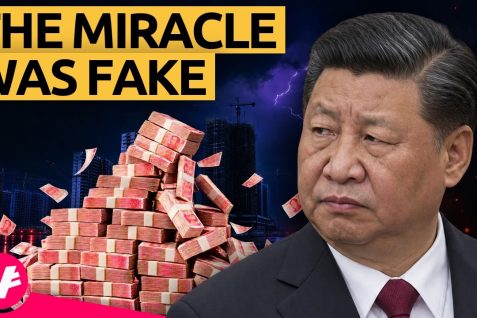
China’s public debt is far bigger than the official figures suggest. By the end of 2022, twelve of its thirty-one provinces were already spending more than their entire revenue on debt payments, and today the provinces devote, on average, six out of every ten yuan they collect in taxes to servicing their debts.
Since the 1994 tax reform, local governments have collected less while spending more. To fill the gap, they set up local government financing vehicles that borrowed against ever-rising land values. It was a pyramid scheme, and it collapsed when the property bubble burst.
Now Beijing is rescuing them with a ten-trillion-yuan debt swap, but in exchange it is taking control of their finances. That threatens the competition between provinces that made China rich, and the bill will end up with Chinese households, who keep saving instead of spending.
🔐 Learn about finance with us in a simple, free, and straight-to-the-point way:
China's public debt is far bigger than the official figures suggest. By the end of 2022, twelve of its thirty-one provinces were already spending more than their entire revenue on debt payments, and today the provinces devote, on average, six out of every ten yuan they collect in taxes to servicing their debts.
Since the 1994 tax reform, local governments have collected less while spending more. To fill the gap, they set up local government financing vehicles that borrowed against ever-rising land values. It was a pyramid scheme, and it collapsed when the property bubble burst.
Now Beijing is rescuing them with a ten-trillion-yuan debt swap, but in exchange it is taking control of their finances. That threatens the competition between provinces that made China rich, and the bill will end up with Chinese households, who keep saving instead of spending.
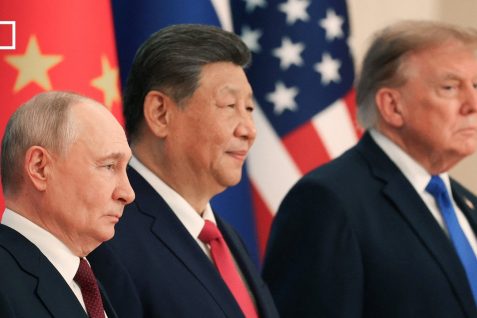
Chinese President Xi Jinping, Russian President Vladimir Putin and US President Donald Trump held their first trilateral meeting on the sidelines of the Asia-Pacific Economic Cooperation (Apec) summit in Shenzhen. At a round table, the leaders of the world’s biggest nuclear powers discussed global stability, nuclear arms and the conflicts in the Middle East and Ukraine.
Chinese President Xi Jinping, Russian President Vladimir Putin and US President Donald Trump held their first trilateral meeting on the sidelines of the Asia-Pacific Economic Cooperation (Apec) summit in Shenzhen. At a round table, the leaders of the world’s biggest nuclear powers discussed global stability, nuclear arms and the conflicts in the Middle East and Ukraine.
Grand Theft Auto VI has not been approved for sale in mainland China, yet playing the game isn’t officially banned. Some analysts predict up to four million copies will be bought there through unofficial channels, which would make it the first instalment in the franchise to achieve significant commercial success in China. Here’s how the mainland’s massive gaming community is navigating the grey area around the biggest video game release of all time.
Grand Theft Auto VI has not been approved for sale in mainland China, yet playing the game isn’t officially banned. Some analysts predict up to four million copies will be bought there through unofficial channels, which would make it the first instalment in the franchise to achieve significant commercial success in China. Here’s how the mainland’s massive gaming community is navigating the grey area around the biggest video game release of all time.
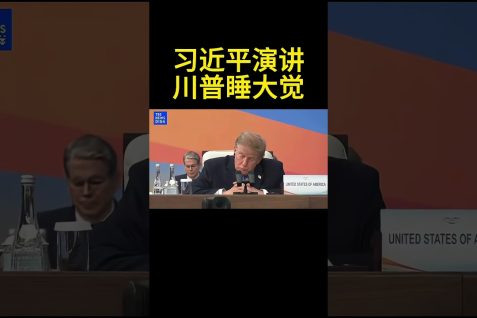
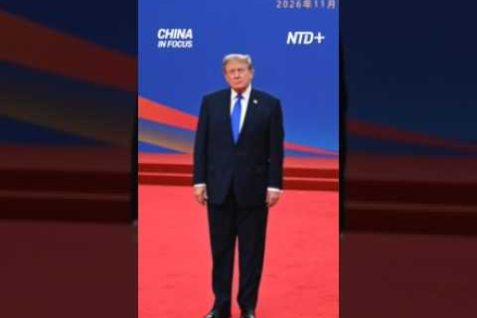
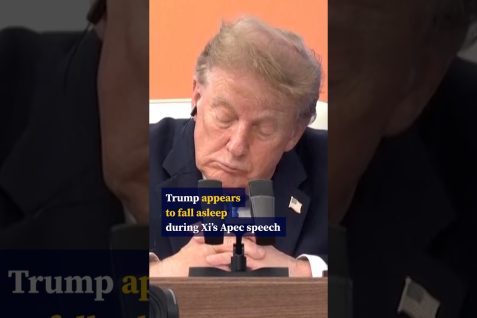
US President Donald Trump appeared to fall asleep during Chinese President Xi Jinping’s speech at the APEC summit in Shenzhen on Thursday following several days of travel and diplomatic meetings. In his address, President Xi called for openness, regional economic integration and free trade to drive growth across the Asia-Pacific region.
US President Donald Trump appeared to fall asleep during Chinese President Xi Jinping’s speech at the APEC summit in Shenzhen on Thursday following several days of travel and diplomatic meetings. In his address, President Xi called for openness, regional economic integration and free trade to drive growth across the Asia-Pacific region.
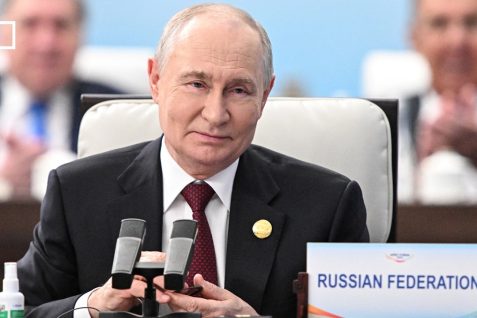
Russian President Vladimir Putin described Russia as a valuable supplier of energy resources, grain and fertilisers to the Asia-Pacific region during the Apec summit in Shenzhen on Thursday. Putin said that “creative partnership” with economies in the region was a “strategic course” for Russia.
Russian President Vladimir Putin described Russia as a valuable supplier of energy resources, grain and fertilisers to the Asia-Pacific region during the Apec summit in Shenzhen on Thursday. Putin said that “creative partnership” with economies in the region was a “strategic course” for Russia.
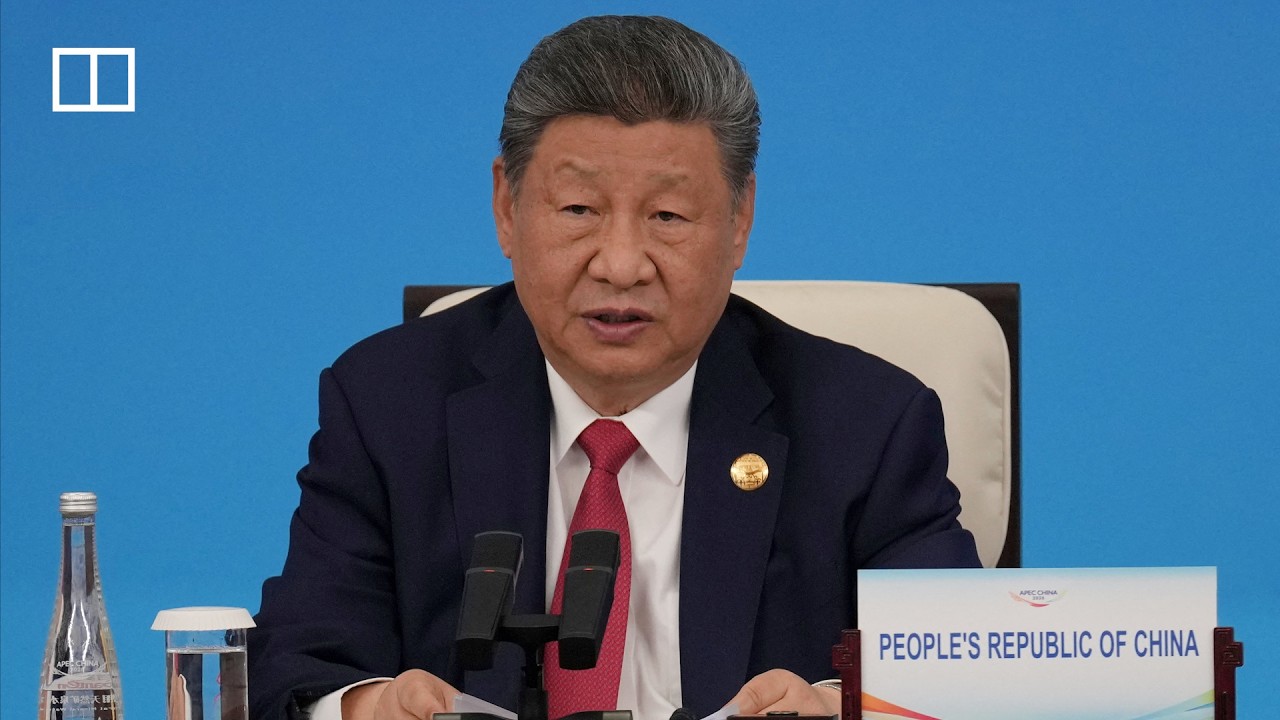
Chinese President Xi Jinping called for economic integration and technological cooperation as he addressed members at the 2026 Apec summit in Shenzhen on Thursday. Xi also announced that China will provide US$20 million to fund “practical cooperation within Apec.”
China used its home summit to make the case that the Asia-Pacific’s future is integration, and it put money and institutions behind the words. Chairing the 33rd APEC Economic Leaders’ Meeting in Shenzhen on Thursday, November 19, President Xi Jinping delivered remarks titled “Building an Asia-Pacific Community and Writing a New Chapter of the Asia-Pacific Miracle.” He told the assembled leaders that the Asia-Pacific community “sails on the same ship,” and he called for unity, open cooperation and steadily advancing economic integration across the region. Xi also announced that China will provide US$20 million to fund practical cooperation within APEC. The speech, carried in the South China Morning Post video above, was the centrepiece of a summit that also brought Presidents Donald Trump and Vladimir Putin to the same Chinese city.
Openness and Integration, With FTAAP as the Horizon
The first of the four pillars in Xi’s remarks put trade at the front. “Building an Asia-Pacific community requires openness and integration,” he said, arguing that the region should uphold open regionalism and develop a cooperation pattern that is “open and integrated, rather than exclusive or fragmented.” He championed free and open trade and investment as the way to open up more space for economic growth in the Asia-Pacific. As the long-term destination, he pointed to the Free Trade Area of the Asia-Pacific, the proposed FTAAP covering APEC’s economies, describing it as a shared vision among the forum’s members. The language was deliberately collective: no member economy was named in the remarks, and the argument was framed as a regional choice rather than a Chinese demand.
What the remarks did not contain is as notable as what they did. None of the four pillars carries a date, a target or a measure of progress, and the text does not mention tariffs or export controls, the two instruments that have done most to fragment Asia-Pacific trade in recent years. That restraint fits APEC’s character: the forum founded in 1989 works by consensus, and its commitments are voluntary rather than binding. Its 21 member economies together produce roughly 62 percent of global GDP, which gives its declarations weight even without enforcement. The APEC Policy Support Unit projected on November 17 that the region will grow 3.4 percent in 2026, a backdrop that lets leaders talk about integration as maintenance of success rather than rescue from crisis.
Money and Institutions on the Table
Xi backed the vision with specific, if modest, commitments. “I hereby announce that China will provide US$20 million to support APEC’s practical cooperation,” he told the leaders, in the foreign ministry’s English text of his remarks. He announced that China will establish a Center for Asia-Pacific Community Studies in Shenzhen to carry out policy research and exchanges and provide intellectual support. Beijing will also set up cooperation institutions in digital technology, cross-border data flow, clean energy and the development of small and medium-sized enterprises, aimed at innovation-driven and green growth. The fields chosen are telling: data flow and clean energy are areas where regional rules are still being written, and where the host of the institution that writes them gains lasting influence.
The limits of the package should be kept in view. The text gives no period over which the $20 million will be spent and no split between projects, and it names no budget, host arrangement or start date for the new institutions. Even so, the summit produced paper as well as speeches: the meeting adopted by consensus the 2026 APEC Leaders’ Declaration, setting out what was called the Shenzhen Outlook on building an Asia-Pacific community, together with three outcome documents on trade, connectivity and innovation. Declarations are APEC’s normal currency, and this one now carries China’s preferred vocabulary of community and integration. Whether the vocabulary becomes policy depends on follow-through that Thursday’s text does not schedule.
Three Presidents in One City
Shenzhen’s real drama was the guest list. Putin, addressing the same summit on Thursday, described Russia as a valuable supplier of energy resources, grain and fertilisers to the Asia-Pacific and said that “creative partnership” with the region’s economies was a “strategic course” for Russia, insisting Russia is inseparable from the region. A day earlier, Xi and Putin had pledged stable ties ahead of their meetings with Trump, presenting the China-Russia relationship as the settled fact around which the summit’s uncertainty revolved. For Moscow, an APEC stage in China is a demonstration that its economic centre of gravity can shift east when the west is closed. For Beijing, hosting both men at once is a demonstration of convening power that no communique can match.
The bilateral that mattered most followed on Thursday afternoon, when Xi met Trump in Shenzhen. China’s foreign ministry said Xi called for stronger communication on economic and trade issues, and that Trump said the two sides should cooperate more in agricultural products, energy and superintelligence. Neither government had published a tariff, purchase or other trade figure by the time the first detailed accounts appeared, so the meeting’s concrete yield remains unproven. A three-way meeting of Trump, Xi and Putin was also expected around the summit, with the Kremlin saying it should last less than an hour and Ukraine, Iran and trade expected on the agenda. An hour is a photo opportunity with an agenda attached, not a negotiation, and nothing in the summit’s published outcomes should be read as a trilateral agreement.
The Gap Between Vision and Timetable
Xi’s Shenzhen pitch is best understood as an offer of architecture. China is offering the region a framework — community language, a research centre in the host city, institutes in the technologies where rules are unwritten, and a long-term free trade horizon in FTAAP — and asking members to build inside it. The offer is inexpensive for Beijing and difficult for others to refuse outright, because every element is voluntary and none of it requires a member to concede anything on tariffs today. Its weakness is the same as its strength: without dates, budgets or binding commitments, integration advances at the speed of the slowest consensus. The coming months will show whether the Shenzhen institutions acquire budgets and opening dates, and whether the Xi-Trump channel produces the figures it has so far withheld.
Help us make your Unmade in China 2026 Christmas Catalog!
China is building a massive fleet of underwater drones, giant unmanned submarines, and ships designed to launch them. These weapons could change the balance of power in the Pacific—and potentially threaten America’s West Coast. Meanwhile, the US Navy is struggling to catch up. Is America already falling behind in the next underwater arms race?
Operation Honey Pot: Paste this emoji 🍯 in your comment below.
Want to go deeper than YouTube will let us? Check out our website:
Help us make your Unmade in China 2026 Christmas Catalog!
China is building a massive fleet of underwater drones, giant unmanned submarines, and ships designed to launch them. These weapons could change the balance of power in the Pacific—and potentially threaten America's West Coast. Meanwhile, the US Navy is struggling to catch up. Is America already falling behind in the next underwater arms race?
Operation Honey Pot: Paste this emoji 🍯 in your comment below.
Want to go deeper than YouTube will let us? Check out our website:
After 22 years, Hong Kong’s nightly synchronised light show, “A Symphony of Lights”, lit up Victoria Harbour for a final time before being permanently switched off on Wednesday. The nightly spectacle will be replaced by seasonal light shows across different districts as authorities seek to refresh the city’s tourism offerings.
After 22 years, Hong Kong’s nightly synchronised light show, “A Symphony of Lights”, lit up Victoria Harbour for a final time before being permanently switched off on Wednesday. The nightly spectacle will be replaced by seasonal light shows across different districts as authorities seek to refresh the city’s tourism offerings.