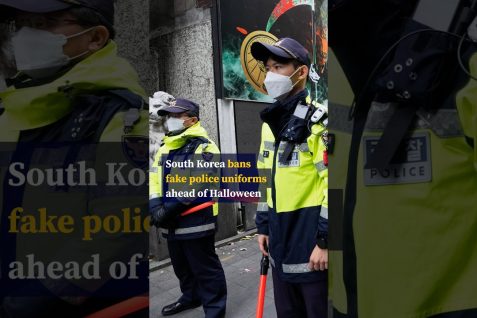
This Thursday marks the fourth anniversary of Seoul’s Halloween crowd crush, a tragedy in which rescue efforts were reportedly delayed because party-goers wearing police uniforms caused confusion. The disaster, which left more than 150 people dead, prompted South Korean police to launch a nationwide crackdown on imitation police uniforms and equipment sold online and in local costume shops.
This Thursday marks the fourth anniversary of Seoul’s Halloween crowd crush, a tragedy in which rescue efforts were reportedly delayed because party-goers wearing police uniforms caused confusion. The disaster, which left more than 150 people dead, prompted South Korean police to launch a nationwide crackdown on imitation police uniforms and equipment sold online and in local costume shops.
A growing interest among Hong Kong women in an anti-ageing injection containing human tissue has prompted a recent crackdown by health authorities, as the product, widely known in Chinese as the “cadaver skin jab”, has not been registered for use in the city.
A growing interest among Hong Kong women in an anti-ageing injection containing human tissue has prompted a recent crackdown by health authorities, as the product, widely known in Chinese as the “cadaver skin jab”, has not been registered for use in the city.
Limited Time: Get your free Tank Man set when you join the 50-Cent Army:
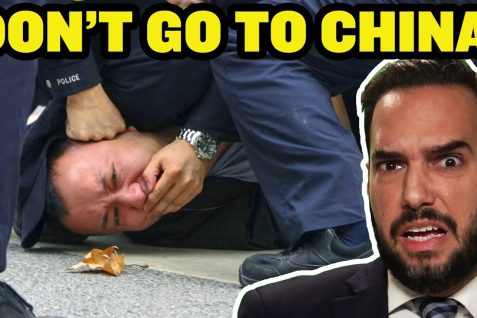
China has just made it legal to kidnap foreigners in China if they obey US law.
New regulations could put foreign companies in a legal Catch-22: investigate forced labor in Chinese supply chains and risk violating Chinese law, or follow Chinese rules and risk breaking Western law. And with China expanding its power to stop people from leaving the country, even a business trip could turn into an unwanted extended stay.
Operation Honey Pot: Paste this emoji 🍯 in your comment below.
Want to go deeper than YouTube will let us? Check out our website:
A growing interest among Hong Kong women in an anti-ageing injection containing human tissue has prompted a recent crackdown by health authorities, as the product, widely known in Chinese as the “cadaver skin jab”, has not been registered for use in the city.
A growing interest among Hong Kong women in an anti-ageing injection containing human tissue has prompted a recent crackdown by health authorities, as the product, widely known in Chinese as the “cadaver skin jab”, has not been registered for use in the city.
More than 126,000 Rohingya refugees who fled systemic persecution in Myanmar have settled in Malaysia over the past decade. But an initial wave of hospitality has since been replaced by hostility, mostly driven by online misinformation campaigns. Amid the growing resentment, Malaysian Prime Minister Anwar Ibrahim has pledged to repatriate asylum seekers back to a country still gripped by war.
More than 126,000 Rohingya refugees have settled in Malaysia over the past decade, fleeing a Myanmar that tried to erase them. For years, Muslim-majority Malaysia received them with a measure of hospitality that few other countries in the region offered. That welcome has curdled into open hostility, and much of the change was manufactured online. A wave of misinformation and hate speech has moved from phone screens into housing blocks, schools and government policy. The story of the Rohingya in Malaysia is now a case study in how online hate becomes real-world harm.
A Welcome That Wore Out
The Rohingya are a Muslim minority from Myanmar’s Rakhine State, denied citizenship by a country that refuses to count them among its official ethnic groups. In 2017, a brutal military crackdown drove more than 700,000 of them out of Myanmar in a campaign now before the International Court of Justice as a genocide case. Malaysia took in one of the largest shares of those who fled by sea and land, and ordinary Malaysians initially responded with charity and solidarity. United Nations figures put the number of registered refugees and asylum seekers from Myanmar in Malaysia at roughly 193,000, about two-thirds of them Rohingya. They built lives in the shadows of Kuala Lumpur and Penang, working the construction sites, markets and plantations that local workers often avoid.
How Misinformation Turned Neighbours Into Enemies
The turning point was not a single event but a steady drip of falsehoods shared online. Viral posts blamed Rohingya families for crime, disease and rising prices, and recycled old photographs as fresh evidence of bad behaviour. During a surge of hostile content this year, petitions calling for the Rohingya to be expelled gathered hundreds of thousands of signatures. Rights monitors linked the online campaign to real consequences, including harassment on the street and pressure that forced community schools to close. In July, more than a hundred Rohingya were evicted from their homes on Penang by local residents and had to be relocated by the authorities. The pattern is familiar from other countries: the lie travels first, and the eviction notice, the slur and the closed school follow behind it.
Refugees Without a Legal Floor
What makes the Rohingya in Malaysia so exposed is that the law offers them almost nothing to stand on. Malaysia is not a signatory to the UN Refugee Convention, so even people registered with the UN refugee agency are officially treated as illegal migrants. That status bars Rohingya children from public schools and adults from legal work, pushing families into exactly the informal economy that critics then blame them for dominating. It also means any encounter with enforcement can end in detention, regardless of a person’s UNHCR card. Community leaders have reported asylum seekers, including card holders, being swept up in repatriation drives. A population with no legal floor beneath it has no defence when public opinion turns, which is why an online narrative can translate so quickly into policy.
Anwar’s Bargain With the Generals
Prime Minister Anwar Ibrahim, long marketed abroad as a reformist, has moved with the public mood rather than against it. In September he stunned refugee advocates by saying he would invite Myanmar’s leader, Min Aung Hlaing, for an official visit in return for Myanmar accepting thousands of Rohingya back. This is the same general whose military drove the Rohingya out in 2017 and seized power in a 2021 coup that plunged Myanmar into civil war. Malaysia says Myanmar agreed in July to take back as many as 5,000 Rohingya, and Anwar has said roughly 10,000 Myanmar nationals have already been repatriated since January. The two leaders have since met, with Malaysia promising to work toward Myanmar’s reintegration into the ASEAN bloc. For Naypyidaw, the red carpet is a prize; for the Rohingya, the price of that prize may be their refuge.
Sent Back to a War
The United Nations refugee agency has stated plainly that conditions in Myanmar do not support the safe and sustainable return of refugees, and that it has not been involved in identifying who is being sent back. Myanmar’s civil war is still burning across multiple frontlines, and Rakhine State itself is a battlefield. Refugee advocates warn that returnees risk detention or forced conscription into the very military they fled. Community representatives describe repatriation for many Rohingya as a death sentence delivered by paperwork. Malaysia insists the returns are voluntary and that Myanmar has given assurances returnees will not be harmed. Those assurances come from a junta that much of the world holds responsible for the original persecution, which is why rights groups are urging Kuala Lumpur to halt the programme entirely.
What Malaysia Decides About Itself
Every refugee-hosting country eventually faces the question Malaysia faces now: whether hospitality was a value or merely a mood. The Rohingya did not change; the information environment around them did, and a government chose to follow it rather than lead it. If the repatriations proceed, Malaysia will have let viral falsehoods set the terms of a decision about tens of thousands of human lives. If it pauses them, it will have to confront the harder work of giving a stateless people some legal standing at home. Either way, the lesson travels far beyond Malaysia. Online hate is cheap to produce and expensive to undo, and by the time it reaches the street, the school gate and the deportation ship, the people who posted it have usually moved on to the next target.
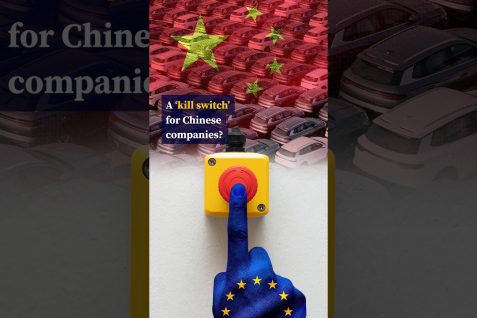
Emboldened by a recent deal capping hybrid car exports, the EU is preparing to accelerate a crackdown on Chinese trade practices. Backed by a dramatic pivot from Germany, Brussels is developing a new “kill switch” that could immediately kick Chinese companies out of the single market if Beijing is deemed to be engaging in economic coercion. In response, Beijing has warned the bloc not to “fantasise” that a hardline approach will foarce it into further concessions.
The European Union is preparing the most aggressive trade weapon in its history, and officials in Brussels are not shy about the nickname it has acquired: a “kill switch” for Chinese companies. The proposed instrument would let the bloc cut off access to its single market — the richest consumer market on earth — if a trading partner is found to be flooding Europe with subsidised goods or using trade itself as a tool of economic coercion. EU leaders broadly backed the idea at a summit in Brussels on October 15–16 and asked the European Commission to turn the concept into a formal proposal by the end of the year. What began as a Franco-German initiative has, in the space of a few weeks, become the centrepiece of Europe’s new China policy. For Beijing, which has warned Brussels not to “fantasise” about forcing concessions, the message is that the era of case-by-case complaints is ending.
From Hybrid Cars to a Standing Weapon
The immediate trigger was a deal, struck only days before the summit, under which China accepted a cap on hybrid car exports to Europe, set at 350,000 vehicles a year from 2027. That agreement followed the tariffs the EU had already imposed on Chinese battery-electric vehicles after a long anti-subsidy investigation. Rather than treating the hybrid cap as a settlement, Brussels treated it as proof of concept: if export volumes could be negotiated for cars, similar safeguards could be extended sector by sector. Commission President Ursula von der Leyen told reporters after the summit that the car deal would not fix the structural imbalance and that more safeguards were coming. The Commission has already begun analysing trade data to see where the hybrid template might be applied next.
The numbers behind the urgency are stark. Von der Leyen has noted that the EU’s goods trade deficit with China is running at more than €1 billion a day, a figure she has repeatedly called unsustainable. Chinese exports to the Union expanded by a further 25 per cent in the first eight months of 2026 alone, and the pressure has spread far beyond the car industry. A decade ago Europe ran a €71 billion deficit with China in industrial machinery and a €6 billion surplus in chemicals; today the machinery deficit has ballooned to €206 billion and chemicals have swung to a €24 billion annual deficit. Those two sectors — chemicals and machinery — are now named by von der Leyen as needing swift protection, with wind turbines also in the frame. Anti-dumping investigations into chemicals, pharmaceuticals and machinery are expected within weeks.
Germany’s Pivot Changes the Politics
None of this would be possible without the dramatic pivot in Berlin. Germany, whose carmakers and chemical giants depend heavily on the Chinese market, spent decades as the brake on any European trade confrontation with Beijing. That changed with the joint letter sent on October 5 by French President Emmanuel Macron and German Chancellor Friedrich Merz, arguing that the Commission should be granted powers to, in their words, “cut off access to the European single market if needed if another trading nation deliberately ignores calls for the restoration of fair trade conditions.” France and Germany formally proposed the kill-switch mechanism that leaders then discussed at the summit. When the EU’s two largest economies sponsor a measure together, the rest of the bloc usually follows. Belgium and Denmark were among the member states backing fast action, and officials described support for the instrument as broad.
Lithuanian President Gitanas Nausėda gave the bluntest public account of what the tool could mean in practice. If China engages in specific unfair trade practices, he said, Europe can limit the entry of Chinese products into its market — and may consider closing the market completely. He called that an extreme measure, but also a very powerful tool. The trigger would not be limited to import surges: the proposal is also designed for coercion scenarios, such as a country cutting off supplies of critical raw materials to avoid serious discussion of trade imbalances. In that event, one German official explained, the EU must be able to inflict damage comparable to the damage being done to it. The philosophy is deterrence — a weapon built in the hope that its existence makes using it unnecessary.
Why Beijing Is Pushing Back
China’s response combined dismissal with warning. Beijing told the bloc not to fantasise that a hardline approach would force it into further concessions, a signal that Chinese officials see the kill switch less as a negotiating lever than as a precedent they cannot afford to accept. The precedent is indeed the point: a mechanism built for hybrid cars today could be aimed at chemicals, machinery and wind turbines tomorrow, and at sectors nobody has named yet the year after. Chinese exporters have spent two years absorbing EU electric-vehicle tariffs and anti-subsidy probes; a standing market-access switch would raise the stakes from individual product lines to entire industries. Beijing also holds cards of its own, from rare-earth export controls to the European companies whose factories and sales inside China could be exposed to retaliation. That mutual exposure is precisely why the debate inside the EU is not finished, even after the summit’s show of unity.
Sceptics note that a kill switch is easier to announce than to operate. EU officials have pointedly refused to name any country the provision would apply to, partly for legal reasons and partly to preserve diplomatic room. Any measure would have to survive scrutiny over proportionality, due process and the bloc’s international trade obligations, and defining “economic coercion” in a way 27 governments can apply consistently is a genuine drafting challenge. There is also the question of who pays: European manufacturers that rely on Chinese components, and European exporters selling into China, would feel a market closure as keenly as Chinese firms would. Von der Leyen has paired the stick with December proposals to reduce EU companies’ reliance on single sources for critical supplies, plus a “solidarity mechanism” to help member states or sectors hit by outside coercion or retaliation. Those companion measures acknowledge that pulling the switch would hurt inside Europe too.
What to Watch Next
The Commission’s formal proposal is expected in December, and its design will matter more than the summit rhetoric. Key questions include how quickly the instrument could be triggered, whether it requires a full investigation or can act on a faster emergency track, and whether it targets companies, sectors or entire countries. Beijing’s behaviour in the meantime — on rare earths, on the hybrid cap’s implementation, and in the follow-up to Trade Commissioner Maroš Šefčovič’s October talks in Beijing — will shape how hard a line the proposal takes. European industry, meanwhile, will be lobbying in both directions at once: protection from Chinese overcapacity on one side, protection of its own China business on the other. Either way, the direction of travel is set. Europe is moving from case-by-case anti-subsidy probes to a standing deterrent, and the kill switch — once drafted into law — will permanently change the terms on which Chinese companies operate in the world’s largest single market.
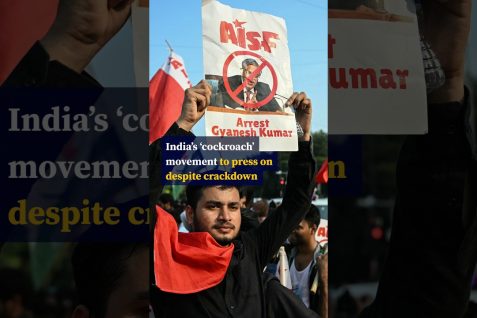
India’s opposition parties and the youth-led “cockroach” movement took to the streets on Monday, demanding action over alleged irregularities in voter rolls and calling for the chief election commissioner’s resignation. The combined pressure poses a new challenge for Prime Minister Narendra Modi’s government.
India’s opposition parties and the youth-led “cockroach” movement took to the streets on Monday, demanding action over alleged irregularities in voter rolls and calling for the chief election commissioner’s resignation. The combined pressure poses a new challenge for Prime Minister Narendra Modi’s government.
Chinese state media released a three-part documentary on police investigations into Myanmar’s scam centres on Monday. The series shows the obstacles faced by Chinese authorities and highlights the progress they have made in dismantling the operations.
Chinese state media released a three-part documentary on police investigations into Myanmar’s scam centres on Monday. The series shows the obstacles faced by Chinese authorities and highlights the progress they have made in dismantling the operations.
Hong Kong’s crackdown on visitors abusing visas to illegally offer tour guiding, photography and other services has failed to deter mainland operators from engaging in unlicensed work. The adverts for such services have appeared on mainland Chinese social media ahead of the National Day “golden week” break, the South China Morning Post has found.
Hong Kong’s crackdown on visitors abusing visas to illegally offer tour guiding, photography and other services has failed to deter mainland operators from engaging in unlicensed work. The adverts for such services have appeared on mainland Chinese social media ahead of the National Day “golden week” break, the South China Morning Post has found.
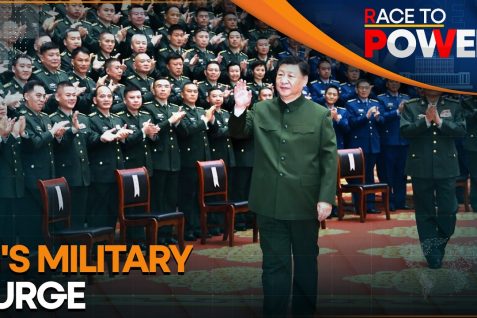
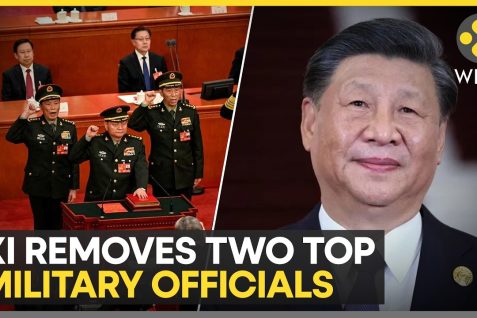
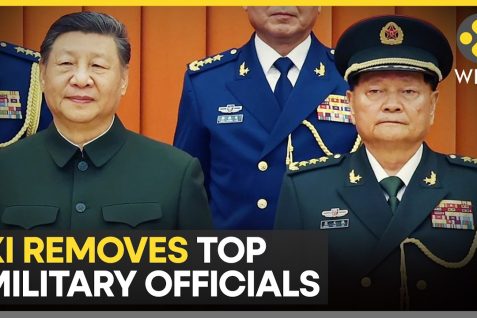
Xi Jinping’s crackdown on corruption in the military is raising a big question: how ready is China for war? Removing senior officers can clean up the ranks, but it can also shake command and confidence. We look at what the crackdown means for the People’s Liberation Army, what it could say about Xi’s priorities, and how it fits into China’s war readiness.
WION The World is One News examines global issues with in-depth analysis. We provide much more than the news of the day. Our aim is to empower people to explore their world. With our Global headquarters in New Delhi, we bring you news on the hour, by the hour. We deliver information that is not biased. We are journalists who are neutral to the core and non-partisan when it comes to world politics. People are tired of biased reportage and we stand for a globalized united world. So for us, the World is truly One.
Please keep discussions on this channel clean and respectful and refrain from using racist or sexist slurs and personal insults.
Xi Jinping's crackdown on corruption in the military is raising a big question: how ready is China for war? Removing senior officers can clean up the ranks, but it can also shake command and confidence. We look at what the crackdown means for the People's Liberation Army, what it could say about Xi's priorities, and how it fits into China's war readiness.
WION The World is One News examines global issues with in-depth analysis. We provide much more than the news of the day. Our aim is to empower people to explore their world. With our Global headquarters in New Delhi, we bring you news on the hour, by the hour. We deliver information that is not biased. We are journalists who are neutral to the core and non-partisan when it comes to world politics. People are tired of biased reportage and we stand for a globalized united world. So for us, the World is truly One.
Please keep discussions on this channel clean and respectful and refrain from using racist or sexist slurs and personal insults.
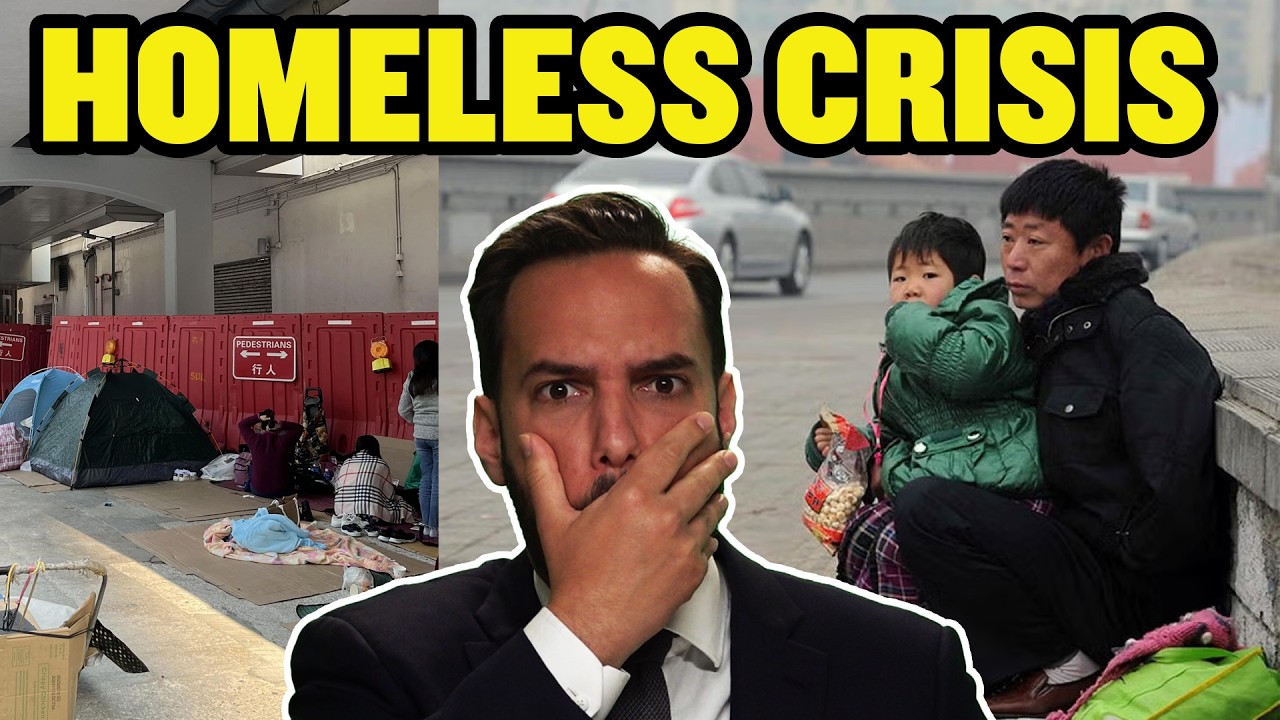
China says homelessness doesn’t exist. So why are Chinese people making viral videos about how to survive on the streets?
The CCP may have found a simple solution to homelessness: change the definition. As China’s economy struggles, young people face unemployment and growing pessimism—and Beijing is rewriting the language around poverty, homelessness, and even human rights.
Operation Honey Pot: Paste this emoji 🍯 in your comment below.
A bipartisan bill aims to expand sanctions on Russia and Iran. China, a major buyer of Russian oil, could also be targeted.Concerns about artificial intellig
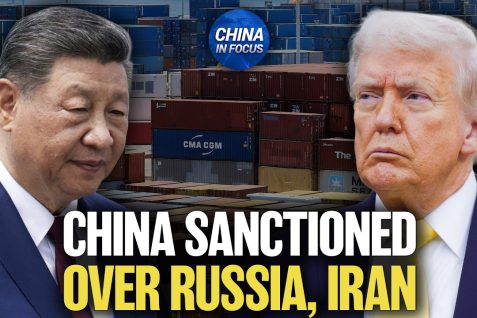
A bipartisan bill aims to expand sanctions on Russia and Iran. China, a major buyer of Russian oil, could also be targeted. Concerns about artificial intelligence are emerging in both the West and the East. Epoch Times reporter Nathan Su says a change in mindset is needed. “China has been conducting unrestricted warfare against the United States since the mid-'90s. They are at war with us, but we think they are our competitor. You can’t win a war when you go into it with the mentality of competition,” he said. A former U.S. soldier pleads guilty to collecting sensitive information about U.S. weapons for Beijing. And a proposed sale of advanced U.S. fighter jets to Saudi Arabia is raising concerns among American officials over the kingdom’s ties to China. We’ll look at the deal and what’s at stake. 00:00 Intro 01:11 China Targeted Over U.S. Sanctions on Russia, Iran 02:33 House Bill Requires Data Centers to Pay for Electricity Spikes 03:34 OpenAI Found More Instances of Deceptive Models 04:11 China’s Spy Chief Warns AI Is a Threat to Party Rule 06:34 What’s Behind Beijing’s AI Warning? 08:44 U.S. Must Recognize China Is at War With Us 10:17 Huawei Staff Allegedly Took Photos of T-Mobile Robot 11:48 Former U.S. Soldier Pleads Guilty in China Spy Case 12:20 F-35 Sale Raises Concerns Over Saudi-China Ties 13:44 House Hearing Probes CCP, North Korean Repression 16:47 Jimmy Lai’s Son Appeals to Xi for Father’s Freedom 19:38 Carney: Canada Will Decide Its Own Partnerships 20:48 Trump Threatens EU With Tariffs Over Canada Association 21:42 Taiwan Plans Rare Philippines Visit Amid China Tensions
U.S. Attorney for D.C. Jeanine Pirro joins ‘Saturday in America’ to break down the task force taking down alleged Chinese-run scam centers in Southeast Asia.
Don’t just watch Fox News—be part of it. Become a Fox News Patriot today.
U.S. Attorney for D.C. Jeanine Pirro joins ‘Saturday in America’ to break down the task force taking down alleged Chinese-run scam centers in Southeast Asia.
Don’t just watch Fox News—be part of it. Become a Fox News Patriot today.
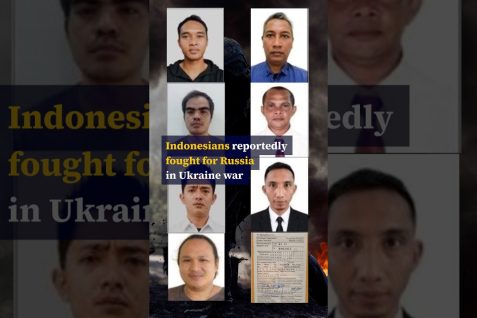
Indonesia is investigating reports that eight of its citizens who applied for civilian jobs were instead recruited to fight for Russia against Ukraine. Indonesia’s Coordinating Minister for Legal, Human Rights, Immigration and Corrections, Yusril Ihza Mahendra, said authorities are checking the identities and hiring processes of the individuals, who were allegedly lured by promises of high-paying, non-combat roles as well as fast-tracked Russian citizenship.
Indonesia is investigating reports that eight of its citizens who applied for civilian jobs were instead recruited to fight for Russia against Ukraine. Indonesia’s Coordinating Minister for Legal, Human Rights, Immigration and Corrections, Yusril Ihza Mahendra, said authorities are checking the identities and hiring processes of the individuals, who were allegedly lured by promises of high-paying, non-combat roles as well as fast-tracked Russian citizenship.
China’s economy is struggling—and the CCP’s answer is increasingly looking like a crackdown. As jobs disappear, real estate collapses, and consumer spending weakens, Beijing is tightening controls on the very people who might want to leave. From purged financial officials to restrictions on wealthy elites and AI talent, China’s economic crisis is turning into a freedom crisis.
Operation Honey Pot: Paste this emoji 🍯 in your comment below.
Clasping her hands together in prayer, four-year-old Huanle tells God she misses her mum, whom she hasn’t seen since Chinese authorities raided their home last year in a crackdown on their unregistered church.
Last October, Chinese authorities cracked down on the Zion Church, one of the largest underground churches in China, detaining more than 20 of its members, including 43-year-old Wang, Huanle’s mother.
Video: Michael Zhang/AFP.
More at – ‘s only non-profit, independent English-language news source – impartial, governed by an ethics code. HKFP is a member of the Trust Project, visit hongkongfp.com/ethics to view our journalistic standards.
Clasping her hands together in prayer, four-year-old Huanle tells God she misses her mum, whom she hasn't seen since Chinese authorities raided their home last year in a crackdown on their unregistered church.
Last October, Chinese authorities cracked down on the Zion Church, one of the largest underground churches in China, detaining more than 20 of its members, including 43-year-old Wang, Huanle's mother.
Video: Michael Zhang/AFP.
More at – 's only non-profit, independent English-language news source – impartial, governed by an ethics code. HKFP is a member of the Trust Project, visit hongkongfp.com/ethics to view our journalistic standards.
Xi Jinping Purges Top PLA Generals | Galwan-Era Commander Removed | India-China Border In Focus
Xi Jinping has intensified his crackdown on corruption and alleged discipline violations inside China’s People’s Liberation Army, with several senior military figures removed from key positions.
The latest military shake-up has drawn attention in India because of the background of some of the officials involved. A former commander of China’s Western Theater Command, which oversees the region facing India, has been removed from the party and military establishment.
The Western Theater Command played a major role during the 2017 Doklam standoff and the 2020 Galwan clash, making the latest developments particularly significant for India-China relations.
Several other senior PLA figures have also faced investigations and removal amid Xi Jinping’s broader anti-corruption campaign. The move is being viewed not only as an effort to tackle corruption but also as part of Xi’s drive to strengthen political loyalty and his control over the Chinese military.
The development comes as India-China relations, the unresolved border dispute and a possible Modi-Xi meeting at the upcoming BRICS summit remain closely watched.
Former Indian diplomat Suresh K. Goel joins the discussion to examine Xi Jinping’s military purge, the Galwan and Doklam connection, the India-China border dispute, possible areas of future cooperation and what the developments could mean for bilateral ties.
Watch the full discussion for the latest updates on Xi Jinping, China’s PLA, Galwan clash, Doklam standoff, India-China border tensions, BRICS, Narendra Modi and China military news.
Xi Jinping Purges Top PLA Generals | Galwan-Era Commander Removed | India-China Border In Focus
Xi Jinping has intensified his crackdown on corruption and alleged discipline violations inside China's People's Liberation Army, with several senior military figures removed from key positions.
The latest military shake-up has drawn attention in India because of the background of some of the officials involved. A former commander of China's Western Theater Command, which oversees the region facing India, has been removed from the party and military establishment.
The Western Theater Command played a major role during the 2017 Doklam standoff and the 2020 Galwan clash, making the latest developments particularly significant for India-China relations.
Several other senior PLA figures have also faced investigations and removal amid Xi Jinping's broader anti-corruption campaign. The move is being viewed not only as an effort to tackle corruption but also as part of Xi's drive to strengthen political loyalty and his control over the Chinese military.
The development comes as India-China relations, the unresolved border dispute and a possible Modi-Xi meeting at the upcoming BRICS summit remain closely watched.
Former Indian diplomat Suresh K. Goel joins the discussion to examine Xi Jinping's military purge, the Galwan and Doklam connection, the India-China border dispute, possible areas of future cooperation and what the developments could mean for bilateral ties.
Watch the full discussion for the latest updates on Xi Jinping, China's PLA, Galwan clash, Doklam standoff, India-China border tensions, BRICS, Narendra Modi and China military news.
Chinese President Xi Jinping has placed senior military leaders Zhang Youxia and Liu Zhenli under investigation for alleged corruption, in a major shake-up of China’s top military leadership. The move reportedly leaves the Central Military Commission with just two active members, raising fresh questions over Xi’s control of the PLA and the scale of the ongoing military purge.
WION The World is One News examines global issues with in-depth analysis. We provide much more than the news of the day. Our aim is to empower people to explore their world. With our Global headquarters in New Delhi, we bring you news on the hour, by the hour. We deliver information that is not biased. We are journalists who are neutral to the core and non-partisan when it comes to world politics. People are tired of biased reportage and we stand for a globalized united world. So for us, the World is truly One.
Please keep discussions on this channel clean and respectful and refrain from using racist or sexist slurs and personal insults.
China’s luxury market is showing signs of a sharp slowdown, and a tax crackdown targeting wealth held overseas may be making wealthy shoppers think twice before spending.
Sales at China’s 25 biggest luxury brands fell more than 10 percent in July, according to three research firms surveyed by Bloomberg.
That is a steeper decline than in June and a major reversal from stronger sales earlier this year.
WION The World is One News examines global issues with in-depth analysis. We provide much more than the news of the day. Our aim is to empower people to explore their world. With our Global headquarters in New Delhi, we bring you news on the hour, by the hour. We deliver information that is not biased. We are journalists who are neutral to the core and non-partisan when it comes to world politics. People are tired of biased reportage and we stand for a globalized united world. So for us, the World is truly One.
Please keep discussions on this channel clean and respectful and refrain from using racist or sexist slurs and personal insults.
Gatestone Institute senior fellow Gordon Chang discusses China’s push for ‘digital sovereignty’ and the threat of Chinese-made products slipping into U.S. go
Gatestone Institute senior fellow Gordon Chang discusses China's push for 'digital sovereignty' and the threat of Chinese-made products slipping into U.S. government procurement supply chains.
Art historian Nathalie Trouveroy has shared never-before-seen footage of the Tiananmen Square protests with Le Monde, shedding new light on how the Chinese regime violently repressed the student protests in June …
Art historian Nathalie Trouveroy has shared never-before-seen footage of the Tiananmen Square protests with Le Monde, shedding new light on how the Chinese regime violently repressed the student protests in June 1989.
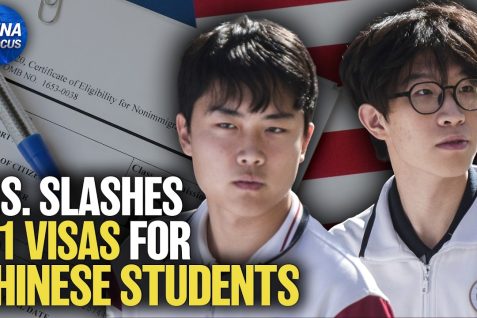
The United States has cut F-1 visas for Chinese students by nearly 50 percent. What does this mean for American students and U.S. national security? A record the FBI says underscores …
The United States has cut F-1 visas for Chinese students by nearly 50 percent. What does this mean for American students and U.S. national security? A record the FBI says underscores growing threats: More than 700 terror plots were foiled in the U.S. last year. Espionage arrests also climbed sharply. A warning sign for China's fast-growing biotech industry: The reported death of a child following a gene therapy trial is raising questions about safety reviews and transparency in Beijing. The company involved notably has an office in the United States. Fighter jets scrambling, the internet slowing: Taiwan has kicked off its most realistic war games yet as the threat of a Chinese invasion looms. 00:00 Intro 01:20 U.S. Cuts F-1 Visas for Chinese Students by 46% 03:37 U.S. to Reject More Visa Applications From China 04:20 FBI Says It Prevented 715 Terror Plots in U.S. 05:25 Death of Child Puts China Biotech Under Scrutiny 06:21 Han Kuang 42: Taiwan Trains Forces for a China Invasion 08:43 Taiwan Trains for Real War as 2027 Window Nears 08:57 Brazil Steelmaker Pushes Back on China Steel Growth 10:08 U.S. Plans to Close Five Diplomatic Missions 11:40 Shen Yun Documentary 'Unbroken' Premieres in Sydney 16:00 UK OKs Plans for Chinese ‘Mega Embassy’ 17:18 Residents Seek to Block Mega Chinese Embassy 17:57 China's Mega London Embassy Raises Security Concerns 20:42 Beijing's Ethnic Unity Law: Transnational Repression Tool?
China's wealthy thought they could protect their money by moving it overseas. Now the Chinese Communist Party is making sure they can't escape. In this episode of China Uncensored, we look …
China's wealthy thought they could protect their money by moving it overseas. Now the Chinese Communist Party is making sure they can't escape. In this episode of China Uncensored, we look at China's new exit regulations, the CCP's crackdown on private wealth, and why these changes could mark the end of Chinese entrepreneurship as we know it.
This news packed episode opens with an extensive discussion about alleged illegal fishing activities conducted by vessels linked to the Chinese Communist Party. The Senator argues that Chinese distant-water fishing fleets …
This news packed episode opens with an extensive discussion about alleged illegal fishing activities conducted by vessels linked to the Chinese Communist Party. The Senator argues that Chinese distant-water fishing fleets operate on a massive scale, engaging in illegal, unreported, and unregulated (IUU) fishing that harms marine ecosystems, depletes fish populations, damages local fishing industries, and relies on forced labor practices. He describes efforts to combat these operations through sanctions and increased Coast Guard monitoring.
New U.S. tariffs reignite trade tensions with China. Beijing says Washington agreed to cap forced labor-related tariffs on Chinese goods at 20 percent. We look at what the new tariffs mean …
New U.S. tariffs reignite trade tensions with China. Beijing says Washington agreed to cap forced labor-related tariffs on Chinese goods at 20 percent. We look at what the new tariffs mean for U.S.–China trade. Allen Zhang, research assistant at the Heritage Foundation, says, "A lot of Chinese products are flowing into different markets, undercutting American prices and generally making it hard for American businesses to sustain their operations." The race for 6G is already underway. The United States is teaming up with allies to shape the next wireless era—and counter China's influence. China's influence operations in the United States are under scrutiny. Federal records show Beijing spent about $100 million in a single year to shape policy and public opinion in America. Severe flooding continues in China. A typhoon has been sweeping through southern parts of the country, submerging streets and in one case sending a freezer sliding down a flooded roadway. 00:00 Intro 01:14 China: U.S. Forced Labor Tariffs Capped at 20% 02:28 Trump Imposes Forced-Labor Tariffs on 60 Economies 02:37 China's Forced Labor Faces U.S. Crackdown 04:12 Low-Cost China Imports Hurt U.S. Business 05:55 Tariffs May Pressure Countries to Reform Trade 06:56 U.S. Leads New 6G Coalition to Counter China 08:30 Trump Admin Builds Global Alliance for Secure 6G 08:45 China's Influence Operations in U.S. Under Scrutiny 10:07 Streets Flooded as Typhoon Noul Hits Southern China 11:46 China Hits 14 EU Firms With Export Controls 12:36 Ford, Chinese Automaker Geely to Partner in Europe 13:05 Chinese Cars Raise Global Auto Industry Concerns 16:13 U.S. Lawmakers Move to Block Chinese Cars 17:11 Chinese Cars Collect Americans' Data Without Consent 18:12 Calls Grow for Protections Against Car Data Risks 19:50 France, Germany Seek to Revive EU Auto Industry
Secretary of State Marco Rubio meets with China’s top diplomat as both sides prepare for a possible leaders’ summit in Washington this fall. Meanwhile, the Quad sends a strong message on …
Secretary of State Marco Rubio meets with China’s top diplomat as both sides prepare for a possible leaders’ summit in Washington this fall. Meanwhile, the Quad sends a strong message on Indo-Pacific security. The United States is weighing new sanctions on China. This time, the fight is over artificial intelligence and alleged technology theft. U.S. Treasury Secretary Scott Bessent said, “We are finding watermarks of our U.S. large language models on many of the Chinese models.” Flooding has swept across China, including the financial hub of Shanghai. Rainwater leaked through roofs, pouring down like waterfalls, while sewage surged from toilets and flooded entire apartments. China’s housing slump isn’t over yet. It’s now in its fourth year. Experts explain why a recovery could still be years away. The human cost of socialism: From Cuba to Venezuela, critics say decades of authoritarian rule have crushed freedom and opportunity. We hear from an expert on what lies ahead. 00:00 Intro 01:06 Rubio, Wang Yi Set Stage for September Trump-Xi Summit 02:15 Quad Ministers Push Back on Coercion in Indo-Pacific 02:46 Philippine Foreign Minister Protests China’s Actions 03:58 Australia to Warn China Over Provocative Actions 04:21 Bessent Considers Sanctioning China for AI Model Theft 05:26 Bessent: China Buys Significantly Less Iranian Oil 05:40 China’s Multi-Front Assault on Free Societies 06:47 CCP Atrocity: Forced Organ Harvesting 07:16 Panels Highlight China’s Human Rights Abuses, Cyberattacks 09:27 Rainstorm Floods Parts of China’s Financial Hub 10:17 China’s Housing Slump Enters Fourth Year 12:08 Former TSMC Manager Faces China Espionage Charges 14:33 Venezuela Eyes Economic Turnaround 15:18 Venezuela Sees Democratic Progress 16:02 Americas Have to Be Free From Communism: Jraissati 17:55 Socialism Brings Poverty and Repression 19:20 China’s Venezuela Influence Faces Shift
From maritime clashes to a potential fall summit: Secretary of State Marco Rubio lands in the Philippines with a firm message for China that America is staying focused on the Pacific. …
From maritime clashes to a potential fall summit: Secretary of State Marco Rubio lands in the Philippines with a firm message for China that America is staying focused on the Pacific. President Donald Trump is taking aim at U.S. reliance on China. The Pentagon is rolling out tougher rules for defense supply chains. We’ll break down what’s in the order. Harvard University is under investigation. The Justice Department says the Ivy League school may be providing financial aid to foreign students, presumably from China, at the expense of American students. In the space race between the United States and China, NASA’s Artemis III mission is moving forward despite an explosion in May. This year marks the 27th anniversary of the start of the deadly persecution of the Falun Gong meditation practice in China. We spoke with Steve Lance, host of NTD’s Capitol Report and executive producer of the award-winning documentary “Unbroken: The Untold Story of Shen Yun.” Rubio Pushes Back on China’s Influence in Southeast Asia Rubio to Meet China’s Wang Yi Amid Escalating Tensions U.S. Condemns China’s Actions Against Philippine Navy Trump Tightens Defense Supply Chain Rules DOJ Probes Harvard’s Financial Aid Practices New State Department Report Describes Cuban Infiltration in U.S. Report: Cuba Recruits American University Students as Agents Cuban Regime’s Strategic Partnerships With China, Russia U.S. Imposes 50 Percent Tariffs on $20 Billion of Canadian Goods Trump Administration to Unveil Forced Labor Trade Action NASA’s Artemis III Mission Still on Track for 2027 2026 Rally to End Persecution of Falun Dafa
Even Xi Jinping may no longer trust China’s official economic data. According to former CCP insider Du Wen, Xi’s inner circle has allegedly built its own independent data network to bypass …
Even Xi Jinping may no longer trust China’s official economic data. According to former CCP insider Du Wen, Xi’s inner circle has allegedly built its own independent data network to bypass China’s statistics bureau. And the numbers are alarming: factory deflation lasting 42 months, collapsing corporate profits, rising costs, and a deepening confidence crisis across China’s economy. At the same time, Beijing has launched a sweeping crackdown on offshore brokerage firms used by mainland Chinese investors to buy U.S. and Hong Kong stocks. Authorities are investigating platforms like Futu, Tiger Brokers, and Longbridge, while tightening cross-border capital controls and restricting overseas investment channels. Is China entering a slow-motion economic crisis hidden beneath official GDP growth? In this episode, we break down the hidden signals behind China’s worsening deflation, collapsing confidence, capital flight fears, and Beijing’s growing efforts to seal financial exits.
This video from Lei's Real Talk explores the possibility that China's official economic data may no longer reflect reality, even in the eyes of President Xi Jinping. The episode suggests that an independent data network has allegedly been established within Xi's inner circle to bypass the national statistics bureau due to concerns over reported figures. According to former CCP insider Du Wen cited in the description, current indicators include factory deflation lasting 42 months, collapsing corporate profits, rising costs, and a deepening confidence crisis.
Simultaneously, Beijing is reportedly launching a crackdown on offshore brokerage firms used by mainland investors for overseas stock purchases. Authorities are investigating platforms such as Futu, Tiger Brokers, and Longbridge while tightening cross-border capital controls to restrict investment channels. The content questions whether China is entering a slow-motion economic crisis concealed beneath official GDP growth numbers. The discussion covers hidden signals regarding worsening deflation, eroding confidence, fears of capital flight, and the government's efforts to seal financial exits. The video aims to break down these developments without relying on official narratives, offering context on the broader implications for China's financial stability and global markets.
“In all DJI stores in Beijing, you can no longer find drones for sale. Some netizens are commenting, ‘It’s so sad, are they really that scared?’ ‘What are they really afraid …
“In all DJI stores in Beijing, you can no longer find drones for sale. Some netizens are commenting, ‘It’s so sad, are they really that scared?’ ‘What are they really afraid of?’ ‘Next step, maybe they’ll ban phones too, since they can record everywhere.’ Others are saying, ‘So this proves that top tech companies can’t survive here.’ And even more netizens are commenting, ‘They know their retribution is coming soon.'”
China's drone manufacturer DJI has reportedly ceased operations in its domestic market, with stores across Beijing no longer stocking their products. This development has sparked significant discussion among online users regarding the reasons behind such a decisive move. Some observers express sadness over the situation, questioning whether authorities are overly cautious or fearful of specific threats posed by surveillance technology. Others speculate that the restrictions might extend to other devices capable of recording in the future, suggesting a broader crackdown on consumer electronics. A segment of the public interprets this event as evidence that leading technology firms cannot sustain business within the country under current conditions. Conversely, another group believes these actions are merely preliminary steps, anticipating further retribution against the company soon. The situation highlights the complex relationship between domestic tech giants and national security concerns. While the exact motivations remain unclear to the general public, the ban represents a major shift for one of the world's largest drone producers. The incident underscores the volatile nature of the regulatory environment facing high-tech enterprises operating within China today.
President Donald Trump says a deal to end the Iran war is possible before his visit to China next week. This comes as Iran’s foreign minister meets with China’s top diplomat …
President Donald Trump says a deal to end the Iran war is possible before his visit to China next week. This comes as Iran’s foreign minister meets with China’s top diplomat in Beijing at China’s invitation. We have the key takeaways. A man accused of opening a secret Chinese police station in New York is on trial this week. What prosecutors say he did to help Beijing carry out its agenda on U.S. soil—and why the case matters. Flora Hua reports from the courtroom. China is reportedly still supplying key drone parts to Russia and Iran despite U.S. sanctions. A new report shows the flow may be increasing. Japanese and U.S. forces conduct live-fire drills in a major regional exercise as security cooperation grows amid rising tensions with Beijing in the South China Sea. A brazen act of foreign interference in Canada: The Chinese Consulate pressured Vancouver city officials to cancel a Shen Yun performance—but failed. 00:00 Intro 01:18 Trump: Deal to End Iran War Possible Before China Visit 01:34 China Top Diplomat Meets With Iran Foreign Minister 02:33 Expert: China, Iran Likely Discussed How to Cope With U.S. 03:14 Greer: Trump, Xi to Discuss China’s Iran Oil Purchases 03:45 U.S. to Address Human Rights During China Visit 04:32 Satellite Chinese Police Station in NYC on Trial: Day 3 07:172.5 Million Tons of Lithium Found in U.S. 07:54 China Still Supplying Drone Parts to Russia, Iran: WSJ 09:02 Japan, U.S. Hold Live-Fire Drills Facing South China Sea 10:45 China Pressured Vancouver Official to Cancel Shen Yun 13:44 Lee Smith on Trump’s Leverage Heading Into Xi Summit 14:02 China Loses Edge as Trump Gains Energy Upper Hand 15:28 Break From Past: Trump to Press Xi on Human Rights 17:29 Trump Faces China Strategy Shaped by Elites 19:57 Taiwan Tied to Broader U.S.-China Strategy 21:31 Trump 2.0: More Leverage, Broader China Push
This episode of China in Focus examines ongoing diplomatic and strategic developments between the United States, China, and other global powers. President Donald Trump suggests a potential agreement to end the war in Iran could be reached before his upcoming visit to Beijing, where he is scheduled to meet with Chinese leader Xi Jinping. Concurrently, Iranian and Chinese diplomats are holding discussions in Beijing at the invitation of China's leadership. A significant portion of the report addresses allegations that China continues to supply critical drone components to both Russia and Iran, despite existing U.S. sanctions, with some reports indicating this flow may be increasing.
The program also covers a trial involving an individual accused of establishing a secret Chinese police station in New York, highlighting concerns over Beijing's activities on U.S. soil. In the region, Japan and the United States are conducting live-fire drills as security cooperation intensifies amid rising tensions in the South China Sea. Additionally, the episode details an incident where the Chinese Consulate in Canada reportedly pressured Vancouver officials to cancel a Shen Yun performance, though the request was unsuccessful. The broadcast further explores topics such as lithium reserves found in the U.S., human rights discussions expected during the summit, and broader strategies regarding Taiwan and energy leverage.
A former senior adviser to Dr. Anthony Fauci at the U.S. National Institute of Allergy and Infectious Diseases has been indicted. David Morens has been accused of suppressing evidence supporting the …
A former senior adviser to Dr. Anthony Fauci at the U.S. National Institute of Allergy and Infectious Diseases has been indicted. David Morens has been accused of suppressing evidence supporting the Wuhan lab-leak theory. Artificial intelligence tensions flare over a forum hosted by Sen. Bernie Sanders (I-Vt.) featuring U.S. and Chinese scientists. Treasury Secretary Scott Bessent says the real danger is allowing any country other than the United States to set global AI standards. A U.S. company is testing a brain implant in China, marking a rare disclosure in the fast-moving and controversial race for neurotechnology. Meanwhile, experts are raising ethical concerns. An American company may be complicit in human rights violations in China. The Supreme Court is weighing in on the case. A new documentary reveals a chilling reality: China has been waging a silent war against America for years through fentanyl, apps, farmland, ports, and even our power grids. How should the U.S. government—and everyday Americans—respond? 00:00 Intro 01:05 Former Fauci Advisor Indicted Over COVID 01:27 Morens Accused in Wuhan COVID Cover-Up 02:19 Pompeo: Wuhan Lab Theory Was Undermined 02:48 Bessent: China Should Not Set Global AI Standard 03:45 China AI Firms Accused of Distillation Attacks 04:51 Cisco Accused of Aiding CCP Persecution of Falun Gong 08:03 Stealth Invasion: CCP’s Silent War on America 10:51 Attacks on Shen Yun: CCP’s Warfare Against the U.S. 12:44 U.S., Allies Back Panama’s Sovereignty 14:48 House Dems Urge Trump to Maintain Ban on Chinese Cars 15:57 BYD Posts Steepest Profit Drop in 6 Years 16:46 VOC President: Global Propaganda to Soften Image of China 17:02 China Influence Campaigns Target America’s Youth 19:20 U.S. States Add Anti-Communism Curriculum 20:30 Patterson: Reject China Model Over U.S. Values
This episode of China in Focus examines several developing stories regarding U.S.-China relations and domestic policy issues. A former senior adviser to Dr. Anthony Fauci at the National Institute of Allergy and Infectious Diseases has faced indictment, with accusations that he suppressed evidence related to the Wuhan lab-leak theory. The program also covers rising tensions in artificial intelligence following a forum hosted by Senator Bernie Sanders featuring scientists from both nations. Treasury Secretary Scott Bessent expressed concerns about allowing foreign countries to establish global AI standards.
Additional segments discuss a U.S. company testing brain implants in China, raising ethical questions within the competitive neurotechnology sector. The broadcast addresses potential human rights violations involving an American firm operating in China, noting that the Supreme Court is reviewing the matter. A documentary highlights allegations of a silent war waged by China against America through various channels including fentanyl distribution, digital applications, agricultural land, ports, and power grids. The episode further explores attacks on Shen Yun performances as part of broader accusations of warfare against the United States, alongside discussions on Panama's sovereignty and trade restrictions on Chinese vehicles.
The United States is waging economic warfare against Iran. Treasury Secretary Scott Bessent says he warned Chinese banks that doing business with Iran could trigger U.S. sanctions. New details are emerging …
The United States is waging economic warfare against Iran. Treasury Secretary Scott Bessent says he warned Chinese banks that doing business with Iran could trigger U.S. sanctions. New details are emerging about China’s theft of cutting-edge U.S. AI technology. Lawmakers warn it is a growing national security threat. China is growing upset over a Japanese warship passing through the Taiwan Strait. Meanwhile, Japan is taking a more assertive defense stance—preparing to relax weapons export restrictions and secure Pacific sea lanes. New Zealand is sending surveillance aircraft to waters near China. Why is the island nation deploying military planes thousands of miles away? 00:00 Intro 01:08 Bessent Warns of Sanctions on Chinese Banks Aiding Iran 03:56 Trump: Hormuz Strait Completely Open & Ready for Business 05:35 Trump: Israel Banned from Bombing Lebanon, ‘Enough Is Enough’ 06:15 U.S. Blockade to Target Iranian Ships Worldwide | Analysis 06:45 China-Linked “Dark Fleet” Evades U.S. Sanctions 08:26 U.S. Intensifies Crackdown on “Dark Fleet” Ships 10:34 U.S. Authorizes Warning Shots for Non-Compliant Ships 12:57 Lawmakers Warn of China’s AI Chip Smuggling Tactics 14:57 U.S. Expands Visa Restrictions in Western Hemisphere 15:46 Japanese Warship Transits Through the Taiwan Strait 16:38 Japan to Relax Weapons Export Restrictions 17:42 Australia to Buy Naval Frigates from Japan 18:12 Japan to Strengthen Defense of Pacific Sea Lanes 18:43 NZ Surveillance Flights Near China; Beijing Protests 19:44 Philippines, U.S. to Build Supply Chain Hub 20:27 Indonesia Identifies Mysterious Chinese Sea Device
This video report from China in Focus on NTD examines escalating tensions between the United States, China, and Iran. Treasury Secretary Scott Bessent warns that Chinese banks assisting Iran face potential U.S. sanctions as part of an ongoing economic strategy against Tehran. The segment also highlights President Trump's stance regarding the Strait of Hormuz, asserting it remains open for commerce while prohibiting Israeli airstrikes on Lebanon. Analysis suggests a broader U.S. blockade targeting Iranian vessels globally, with specific attention given to China-linked shadow fleets attempting to evade these restrictions.
The program addresses growing concerns over national security, noting lawmaker warnings about Chinese theft of advanced American artificial intelligence technology and related chip smuggling tactics. In the Pacific region, geopolitical friction intensifies as a Japanese warship transits the Taiwan Strait, prompting complaints from Beijing. Japan signals a shift toward a more assertive defense posture by preparing to relax weapons export restrictions and secure sea lanes, with Australia reportedly planning naval frigate purchases. Additionally, New Zealand deploys surveillance aircraft near China, drawing protests from Beijing. The report concludes by mentioning supply chain initiatives between the Philippines and the U.S., as well as Indonesia's discovery of mysterious Chinese sea devices.
Washington announces a win in its latest tit-for-tat cyber battle with Beijing. The FBI says it countered a massive Beijing-backed hacking network. Key U.S. infrastructure, organizations, and U.S. allies were among …
Washington announces a win in its latest tit-for-tat cyber battle with Beijing. The FBI says it countered a massive Beijing-backed hacking network. Key U.S. infrastructure, organizations, and U.S. allies were among its targets. And efforts are underway to counter the Chinese Communist Party’s unfair business practices, such as large state subsidies and slave labor. A panel on Capitol Hill analyzes what could happen if they continue. A Japanese boy dies hours after a violent attack by a man in China on Wednesday. Senior Japanese officials are urging Beijing to provide an explanation. And, a firsthand account from a young man tortured in a Chinese mental hospital. He says he was held there after he exposed a massacre conducted by the Chinese Communist Party. 00:00 Intro 01:16 FBI Disrupted Major China Hacking Plan in the U.S. 03:51 Panel: Countering CCP’s Unfair Market Practices 05:58 Expert on Risk of TikTok Shaping American Opinion 10:15 Japanese Boy Dies After Being Stabbed in China 11:43 Deadly Attack Mirrored by Rising Maritime Conflicts 13:24 Taiwan Warns Against Rumors Over Pager Explosions 14:27 2 European Firms Potentially Linked to Pager Explosion 14:56 Escapee Exposes Brutal Chinese Mental Hospital 18:05 Top Global Food Buyer China Reduces Its Demand 19:27 Why Is GM’s $5,000 EV Available Only in China?
This episode of China in Focus reports that the FBI announced a significant disruption of a major hacking plan originating from China within the United States. Authorities state that this Beijing-backed network targeted key U.S. infrastructure, various organizations, and allied nations. The broadcast also covers a Capitol Hill panel discussion regarding strategies to counter alleged unfair business practices by the Chinese Communist Party, including claims of large state subsidies and forced labor issues.
Additional segments address international incidents, noting the death of a Japanese boy following a stabbing attack in China, which has prompted senior officials to demand an explanation from Beijing. The program features a firsthand account from an individual who escaped a Chinese mental hospital after exposing alleged massacres conducted by the party. Other topics include expert analysis on the risks associated with TikTok influencing American public opinion, warnings from Taiwan concerning rumors about pager explosions, and reports linking two European firms to those incidents. The episode concludes with discussions on China reducing its demand for global food supplies and questions regarding why General Motors offers a specific electric vehicle model exclusively in the Chinese market.
On March 31, 2026, a U.S. federal court delivered a major blow to the Chinese Communist Party. In a landmark ruling, Judge Jon Tigar upheld Li Nanyang’s donation of her father …
On March 31, 2026, a U.S. federal court delivered a major blow to the Chinese Communist Party. In a landmark ruling, Judge Jon Tigar upheld Li Nanyang’s donation of her father Li Rui’s diaries to Stanford’s Hoover Institution, rejecting Beijing’s efforts to seize them. Spanning 83 years and roughly 10 million words, the diaries of Mao’s former secretary contain explosive firsthand accounts of the Lushan Conference, the 1989 Tiananmen crackdown, and candid observations about Xi Jinping. Fearing the truth inside these 40 boxes, the CCP waged a seven-year legal battle across two countries — using consulates, courts, and even family members. The court victory ensures these rare historical records remain open to the public in America. This case reveals how far Beijing will go to control its past — and how one daughter’s determination protected a lifetime of hidden truths.
On March 31, 2026, a U.S. federal court issued a significant ruling against the Chinese Communist Party regarding a collection of historical documents. Judge Jon Tigar supported the donation of Li Nanyang's father, Li Rui, to Stanford University's Hoover Institution, effectively rejecting Beijing's attempts to reclaim the materials. The diaries span 83 years and contain approximately 10 million words, offering firsthand accounts from Mao Zedong's former secretary. These records include sensitive details about the Lushan Conference, events surrounding 1989, and observations regarding Xi Jinping.
The Chinese government engaged in a seven-year legal struggle across two nations to seize the forty boxes of documents, utilizing consulates, courts, and family members in their efforts. Despite these extensive measures, the court decision ensures that these rare historical records remain accessible to the public within the United States. This case highlights the extent to which Beijing has sought to control its own past while demonstrating how one individual's determination helped preserve a lifetime of hidden truths. The video provides context on this landmark legal battle and its implications for understanding modern Chinese history through publicly available information.
Communist China’s purge has cut deep into the heart of its power structure, targeting key members of the politburo—the committee that makes the top decisions in the country. Beijing announced on …
Communist China’s purge has cut deep into the heart of its power structure, targeting key members of the politburo—the committee that makes the top decisions in the country. Beijing announced on Friday that Ma Xing-Rui, the former party head of Xinjiang, is now under investigation for ‘severe violations’ of laws and party discipline, which usually means corruption. That makes him the third politburo member targeted in the past six months. Who is Ma, and why do analysts say his purge sets a precedent for shakeups within China’s defense industry?
Communist China has intensified its internal crackdown, extending the purge to high-ranking officials within its power structure. The Politburo, responsible for making top national decisions, is now facing scrutiny as Beijing announced on Friday that Ma Xing-Rui, the former party head of Xinjiang, is under investigation. Authorities cite severe violations of laws and party discipline, a phrase typically indicating corruption. This development marks Ma as the third member of the Politburo to be targeted in just six months. The video explores the background of Ma Xing-Rui and analyzes why his removal could set a significant precedent for future shakeups within China's defense industry. Analysts suggest that these actions reflect deepening internal conflicts or a broader effort to consolidate power at the highest levels of the regime. As investigations continue, the implications for stability within the party and its military sectors remain a subject of intense observation. Viewers are directed to NTD News for ongoing coverage of this developing story, which highlights the shifting dynamics inside one of the world's most influential governments. The report underscores how such purges can reshape leadership hierarchies and potentially alter policy directions across various sectors of Chinese society.
China is quietly purging its top weapons scientists—including the chief designer of the J-20 stealth fighter. From radar to missiles to nuclear research, key figures are disappearing. What triggered this sweeping …
China is quietly purging its top weapons scientists—including the chief designer of the J-20 stealth fighter. From radar to missiles to nuclear research, key figures are disappearing. What triggered this sweeping crackdown? After real combat failures in Iran and Venezuela, serious questions are emerging about China’s military technology. Is this corruption—or something deeper?
This video from Lei's Real Talk examines reports that China is conducting a quiet purge of its leading weapons scientists. The content highlights the disappearance of key figures across various defense sectors, including radar systems, missile technology, and nuclear research. Notably, the chief designer of the J-20 stealth fighter is mentioned among those affected by this sweeping crackdown. The overview suggests that these actions may be linked to serious questions regarding China's military technology following reported combat failures in Iran and Venezuela. The narrative explores whether these developments stem from internal corruption or indicate deeper systemic issues within the nation's defense establishment. The channel focuses on U.S.-China relations, aiming to reveal hidden stories behind world economy, history, and politics. While specific details are sparse, the video prompts viewers to consider the implications of removing top scientific talent from critical military projects. The segment invites further discussion on the potential causes behind these personnel changes and their impact on global strategic dynamics without inventing facts or quoting directly from unavailable transcripts.