Monsters and Humans Cannot Coexist—Lindsay Clancy and the Monsters of Undertale
China is helping Russia’s war machine—and now there’s proof. Meanwhile, the Philippines just gave Beijing a brutal public reality check.
In this episode of China Uncensored, we look at China secretly supplying Russia with technology for attack drones, and the incredible moment the Philippines’ defense secretary called out China’s bullying over the South China Sea.
Operation Honey Pot: Paste this emoji 🍯 in your comment below.
Want to go deeper than YouTube will let us? Check out our website:
Monsters and Humans Cannot Coexist—Lindsay Clancy and the Monsters of Undertale
China is helping Russia’s war machine—and now there’s proof. Meanwhile, the Philippines just gave Beijing a brutal public reality check.
In this episode of China Uncensored, we look at China secretly supplying Russia with technology for attack drones, and the incredible moment the Philippines’ defense secretary called out China’s bullying over the South China Sea.
Operation Honey Pot: Paste this emoji 🍯 in your comment below.
Want to go deeper than YouTube will let us? Check out our website:
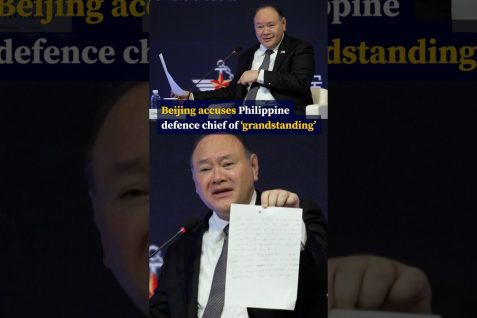
China has accused Philippine officials of “grandstanding” after Manila’s defence secretary publicly read aloud a Chinese diplomat’s note reiterating Beijing’s stance on the South China Sea arbitration. Gilberto Teodoro described the incident, which happened at the Seoul Defence Dialogue on Tuesday, as “coercion, bullying and aggression”.
China has accused Philippine officials of “grandstanding” after Manila’s defence secretary publicly read aloud a Chinese diplomat’s note reiterating Beijing’s stance on the South China Sea arbitration. Gilberto Teodoro described the incident, which happened at the Seoul Defence Dialogue on Tuesday, as “coercion, bullying and aggression”.
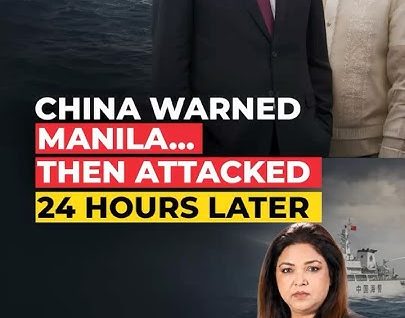
A warning one day. A confrontation the next. China has escalated tensions in the South China Sea, warning the Philippines and telling Australia to stay out.
A warning one day. A confrontation the next. China has escalated tensions in the South China Sea, warning the Philippines and telling Australia to stay out.
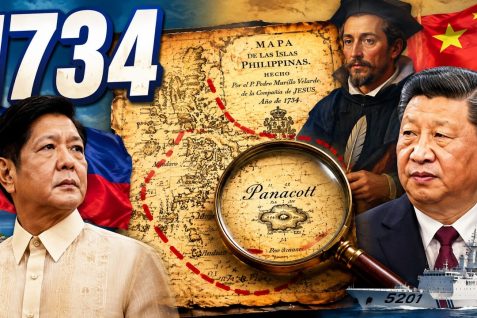
A 300-year-old Spanish map is quietly deciding one of the most dangerous territorial disputes on Earth. When China claims the South China Sea through its nine-dash line, the Philippines answers with …
A 300-year-old Spanish map is quietly deciding one of the most dangerous territorial disputes on Earth. When China claims the South China Sea through its nine-dash line, the Philippines answers with something far older — the 1734 Murillo Velarde map, drawn by a Jesuit priest and Filipino collaborators, showing Scarborough Shoal as Philippine territory centuries before Beijing's claim even existed. This is the story of how the "mother of all Philippine maps" helped win the 2016 arbitration at The Hague — and why history itself may be the Philippines' strongest weapon in the West Philippine Sea. ⚓ Chapters: 0:00 The map that stood between nations 0:50 The West Philippine Sea standoff 2:30 Why a map is the weapon 4:00 Two centuries ahead of China's claim 6:00 The 2016 arbitration victory 8:30 China's own maps, and the question they can't answer 10:30 The modern echo — 2023, 2024, and Pag-asa Island #WestPhilippineSea #SouthChinaSea #Philippines #ScarboroughShoal #History
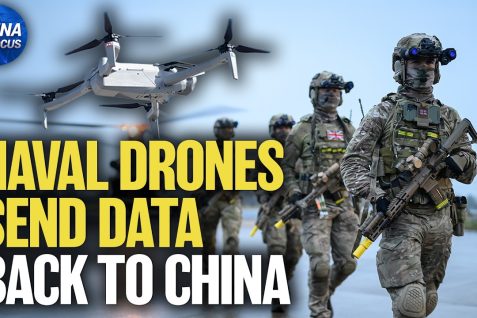
Cameras on British naval drones are sending data back to China. A look at how the West is trying to break free from a Chinese-dominated drone supply chain. A Chinese national …
Cameras on British naval drones are sending data back to China. A look at how the West is trying to break free from a Chinese-dominated drone supply chain. A Chinese national pleads guilty to trying to smuggle U.S. military equipment to China. Cryptocurrency was also part of the case. A Chinese rocket exploded shortly after liftoff. Is it an isolated setback—or a systemic problem? Vietnam’s top leader is meeting with his Australian counterpart amid growing tensions across the Indo-Pacific. The two nations are deepening security and economic ties, with critical minerals and the South China Sea high on the agenda. One of Washington’s major allies in Asia is changing its defense strategy, with the Chinese Communist Party in its sights. What’s next for the U.S.-Japan alliance? Retired Marine Colonel Grant Newsham, a senior fellow at the Center for Security Policy, says: “Now we do have the prospects of Japan becoming a much better ally, not just politically, but in concrete operational terms.” 00:00 Intro 01:14 Cameras on UK Naval Drones Sending Data Back to China 02:06 U.S. Reliance on Chinese Drones, Components 03:09 Chinese Man Pleads Guilty to Attempted U.S. Arms Smuggling 04:17 Chinese Rocket Explodes After Liftoff 05:12 AUS, Vietnam Deepen Security, Critical Mineral Ties 06:56 Japan Signals Urgency in Defense Shift: Newsham 08:43 Japan Moves to Become a Stronger U.S. Ally 09:59 Newsham: China Is Looking for a Fight With Japan 11:20 Beijing Views Iran as Proxy: Gaub 13:28 New Meta AI Model Aims to Compete With Chinese Rivals 14:37 China Uses AI to Influence U.S. Voters: Expert
Marcos Jr Confronts Beijing Over Dangerous South China Sea Encounter Ferdinand Marcos Jr. challenges Beijing following another tense South China Sea encounter involving Philippine and Chinese vessels. This video explains Manila’s …
Marcos Jr Confronts Beijing Over Dangerous South China Sea Encounter Ferdinand Marcos Jr. challenges Beijing following another tense South China Sea encounter involving Philippine and Chinese vessels. This video explains Manila’s maritime position, China’s response, the role of international law, growing diplomatic pressure, and why repeated encounters around disputed waters continue raising regional security concerns across Southeast Asia. #CrossWorldNews #MarcosJr #XiJinping #SouthChinaSea #Philippines #China #WestPhilippineSea #Beijing #MaritimeDispute #AsiaNews #Geopolitics
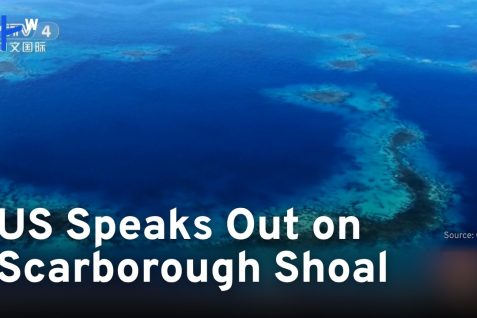
The US State Department says it firmly rejects China's efforts to enforce its territorial claim over Scarborough Shoal in the South China Sea. Beijing has long claimed sovereignty over the reef, …
The US State Department says it firmly rejects China's efforts to enforce its territorial claim over Scarborough Shoal in the South China Sea. Beijing has long claimed sovereignty over the reef, rejecting an international ruling in favor of the Philippines. Washington calls Beijing's declaration of a national nature reserve around the shoal "destabilizing" and says China has no right to deny Fillipino fishers access to a traditional fishing ground.
Ferdinand Marcos Jr. Challenges China as South China Sea Erupts This video examines rising tensions between the Philippines and China in the South China Sea, focusing on confrontations near Second Thomas …
Ferdinand Marcos Jr. Challenges China as South China Sea Erupts This video examines rising tensions between the Philippines and China in the South China Sea, focusing on confrontations near Second Thomas Shoal and Scarborough Shoal. It covers Ferdinand Marcos Jr.’s response, China’s military and coast guard activity, the 2016 arbitration ruling, growing U.S. and Japanese support for Manila, and ongoing ASEAN diplomacy as regional leaders try to prevent further escalation while defending competing maritime claims, security interests, and regional stability. Footage, images, and other visual materials may include content licensed from Agence France-Presse (AFP) and other authorized sources where applicable. Such materials are incorporated into original editorial coverage and transformed through reporting, analysis, narration, context, and editing. All editorial decisions, opinions, and analysis are solely those of Insight 24. #SouthChinaSea #Philippines #China #FerdinandMarcosJr #XiJinping #WestPhilippineSea #ScarboroughShoal #SecondThomasShoal #PhilippineCoastGuard #ChinaCoastGuard #ASEAN #MaritimeSecurity
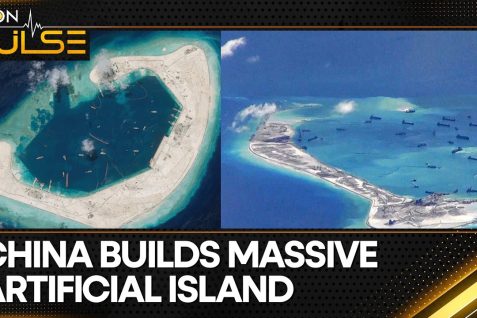
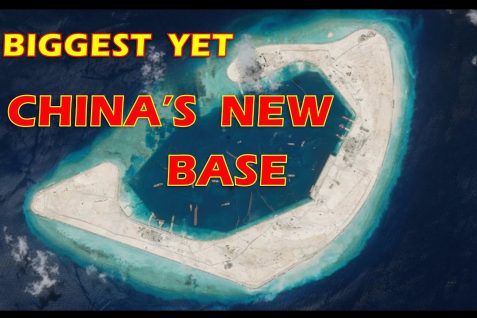
This briefing will look at the construction of military facilities on Antelope Reef, Paracel Islands, and what it means for China’s military capabilities in the South China Sea. Source: China’s New …
This briefing will look at the construction of military facilities on Antelope Reef, Paracel Islands, and what it means for China’s military capabilities in the South China Sea.
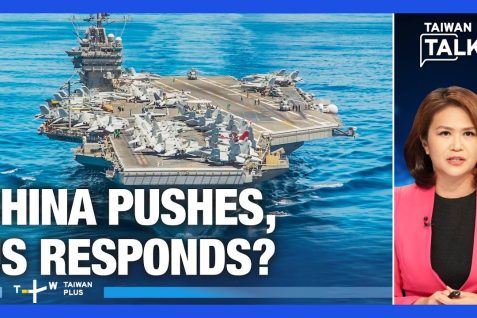
The USS George Washington has returned to the South China Sea as tensions escalate across the region, with China conducting live-fire drills near Taiwan and clashing with Philippine vessels at Scarborough …
The USS George Washington has returned to the South China Sea as tensions escalate across the region, with China conducting live-fire drills near Taiwan and clashing with Philippine vessels at Scarborough and Second Thomas Shoal. The US carrier strike group's deployment included a port call in Vietnam — the first since 2023 — and joint operations and training with regional partners. Meanwhile, the Chinese government-linked Grandview Institution think tank issued an unusual report in English outlining China’s maritime enforcement strategy, including its gray-zone tactics. Was the report’s publication an accident, or yet another tactic by Beijing to intimidate its neighbors? In this episode, we examine the strategic significance of the USS George Washington's deployment, China's evolving maritime strategy and what the latest developments mean for Indo-Pacific security.
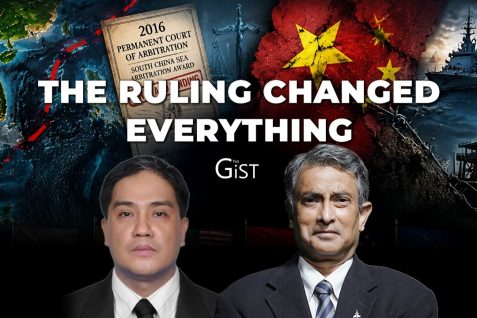
Ten years after the landmark South China Sea arbitration ruling, its biggest legacy may not be the legal defeat of China’s Nine-Dash Line claim but what Beijing’s response revealed about its …
Ten years after the landmark South China Sea arbitration ruling, its biggest legacy may not be the legal defeat of China’s Nine-Dash Line claim but what Beijing’s response revealed about its strategic ambitions. Speaking to StratNewsGlobal, Philippine strategic affairs expert Dr Renato Cruz de Castro argues that China’s refusal to recognise the 2016 Permanent Court of Arbitration award fundamentally changed how countries across the Indo-Pacific viewed its rise. “The ruling revealed to us what kind of a great power China would be,” he says, arguing that Beijing demonstrated its willingness to ignore international law in pursuit of broader geopolitical objectives. According to de Castro, China’s ambitions extend beyond the South China Sea to controlling the First Island Chain and eventually replacing the United States as the region’s principal maritime power. He believes Japan, Australia, the United States, the European Union and India have all adjusted their strategic outlook in response. For the Philippines, the turning point came after years of attempting accommodation with Beijing. “Whether you appease or challenge China, you will get the same result—subjugation and expansion,” he says. De Castro also highlights India’s growing importance in regional security, describing the BrahMos missile sale as a significant step in strengthening Philippine deterrence. Looking ahead, he argues that New Delhi and Manila should deepen cooperation beyond defence trade into a broader security partnership to counter coercion, influence operations and what he describes as China’s continuing regional expansion.
No peace talks between the United States and Iran took place on Friday, and no new date has been announced. We have the latest updates. Ukrainian drones have helped repel Russian …
No peace talks between the United States and Iran took place on Friday, and no new date has been announced. We have the latest updates. Ukrainian drones have helped repel Russian attacks for years. Now, China’s neighbors—including Taiwan and Japan—are eager to learn from Ukraine’s experience as they prepare to deter a potential conflict. Taiwan is pushing a new bill to invest billions in drone technology to counter China. Meanwhile, Australia is sending drones to the Philippines to strengthen maritime defenses. A historic shift in Cuba. The communist island is opening up to free-market reforms amid severe U.S. sanctions and secret diplomatic talks. Is Havana opening a new chapter—and how will Washington respond? 00:00 Intro 01:04 US-Iran Talks in Switzerland Postponed 03:21 Trump Criticizes Democrats Over Iran Deal Comments 03:55 Strait of Hormuz: Shipping Traffic Recovering 04:23 Israel–Hezbollah Ceasefire Takes Effect in Lebanon 05:04 U.S. Policy Shift: From Obama to Trump 06:53 Gulf Nations Fed Up With Iran Strikes 08:08 Ukrainian Drone Makers Target Taiwan, Japan 10:03 Taiwan Approves $6.7 Billion Domestic Drone Defense Plan 11:20 Australia Donates Drones to Philippine Coast Guard 13:04 Cuba Passes Historic Free-Market Economic Reforms 15:23 Trump: Cuba Operation May Mirror Venezuela 17:11 France Dismantles 9 Chinese Police Outposts 18:08 AI Data Center Boom Drives Solar Power Demand
This report from China in Focus on NTD examines several developing international situations, with a primary focus on regional defense strategies in the Pacific. The segment highlights that Taiwan is advancing legislation to invest approximately 6.7 billion dollars in domestic drone technology aimed at countering potential threats from China. This initiative reflects a broader trend where neighbors of China, including Japan, are looking to Ukraine's experience with drone warfare for inspiration as they prepare to deter future conflicts. In related maritime developments, Australia has donated drones to the Philippine Coast Guard to bolster their defensive capabilities in the region.
The broadcast also covers other significant global events without detailed elaboration on each. Updates indicate that peace talks between the United States and Iran were postponed with no new date set, while diplomatic efforts continue behind closed doors. Additionally, the report notes historic economic reforms passing in Cuba despite ongoing sanctions, a move that may influence future U.S. policy similar to actions taken regarding Venezuela. Other brief mentions include shifting dynamics in the Strait of Hormuz, developments between Israel and Hezbollah, and environmental impacts driven by an AI data center boom increasing demand for solar power. The program serves as a news update covering these diverse topics within its runtime.
The Philippines and Taiwan are facing a surge in Chinese pressure across multiple flashpoints, as Beijing defends what it describes as “scientific research” activities at Scarborough Shoal (Minzhu Reef) and conducts …
The Philippines and Taiwan are facing a surge in Chinese pressure across multiple flashpoints, as Beijing defends what it describes as “scientific research” activities at Scarborough Shoal (Minzhu Reef) and conducts operations near Pratas (Dongsha) Island. It comes as Beijing has sanctioned Philippine Defense Secretary Gilberto Teodoro for calling out China’s “deception” and growing maritime aggression. Meanwhile, Taiwan has launched major live-fire exercises featuring HIMARS, drones and long-range rocket systems designed to counter a potential amphibious assault along its west coast. Are China’s latest activities in the South China Sea isolated incidents or part of a broader campaign to reshape the region’s status quo? In this episode, we examine China’s expanding gray-zone activities, the strategic importance of these islands and how Taiwan and the Philippines are responding.
This episode of Taiwan Talks examines escalating tensions in the South China Sea, focusing on Beijing's intensified activities at Scarborough Shoal and operations near Pratas Island. The discussion highlights a perceived surge in Chinese pressure against both the Philippines and Taiwan. Beijing frames its actions as scientific research, yet these moves coincide with sanctions imposed on Philippine Defense Secretary Gilberto Teodoro for criticizing what it terms deception and maritime aggression. Simultaneously, Taiwan is conducting significant live-fire exercises involving HIMARS, drones, and long-range rockets to prepare for potential amphibious threats along its western coast. The program explores whether these incidents represent isolated events or a coordinated campaign to alter the regional status quo. Experts analyze China's expanding gray-zone tactics and the strategic value of these islands. The conversation covers how neighboring nations are responding to coercive measures and artificial island construction. Recorded on June 12, 2026, the session features insights from Lai I-chung and Tony Hu, addressing broader implications for Indo-Pacific security and sovereignty disputes involving the Exclusive Economic Zone and freedom of navigation.
President Donald Trump’s eldest son says he wouldn’t consider investing in China and is warning others about the risks. An American journalist pleads guilty to acting as a foreign agent of …
President Donald Trump’s eldest son says he wouldn’t consider investing in China and is warning others about the risks. An American journalist pleads guilty to acting as a foreign agent of the Chinese Communist Party. Trump was asked whether he’s concerned China is funding the anti-data center movement in the United States. We unpack the controversy. The head of the Chinese Communist Party, Xi Jinping, will visit North Korea next week. What message does the trip send? A key Pacific island nation is moving closer to the West. The Solomon Islands’ new leader is seeking to reset relations with Australia and review a security pact with China. What does this mean for U.S.–China competition in the Pacific? Chinese and Taiwanese coast guards face off in the South China Sea as a Chinese vessel moves into Taiwan-controlled waters. 00:00 Intro 01:08 Trump Jr. Warns Investors to Avoid China 01:55 French Company Ousted After Partnership Dispute 02:52 American Journalist Pleads Guilty to Spying for China 04:02 China Eyes US Officials, Researchers, Journalists 04:44 Lawmakers Probe CCP Threat Inside America 05:37 Olympic Champion Alysa Liu’s Father Targeted by Spy 06:29 Activist Targeted by Beijing After Testifying to Congress 06:52 Lawmakers Probe China Role in Fentanyl Crisis 08:28 Trump Asked If China Is Behind Anti-Data Center Movement 09:01 Lawmakers: China May Be Fueling Data Center Opposition 10:47 Anthropic’s Warning: AI Could Soon Build Itself 11:07 Xi Jinping to Visit North Korea on Monday 12:56 New Solomon Islands PM to Review Security Pact With China 15:01 Expert on Risks of Chinese Military Base in Pacific 16:11 Solomon Islands: We Will Review Pact With China 16:36 Solomon Islands’ Nuanced Relations With China, Australia 18:08 Taiwan, China Coast Guards Face Off in South China Sea 19:12 Japan to Start Talks on Exporting Destroyer to Indonesia 19:46 Panama Canal the Most Critical Choke Point: Maness 20:07 China’s Influence Receding Globally 22:20 Why Many Countries Are Rethinking China Ties
This episode of China in Focus features commentary from Donald Trump Jr., who advises against investing in China due to perceived risks, while also reporting on an American journalist who pleaded guilty to acting as a foreign agent for the Chinese Communist Party. The program explores allegations that China is targeting U.S. officials, researchers, and journalists, including specific cases involving Olympic champion Alysa Liu's father and an activist who testified before Congress. Additionally, lawmakers are investigating China's potential role in the fentanyl crisis and its influence on opposition to data center development in the United States. The broadcast examines geopolitical shifts, noting that Chinese President Xi Jinping is scheduled to visit North Korea and that the Solomon Islands' new leader intends to review its security pact with China while seeking closer ties with Australia. Tensions are highlighted by recent confrontations between Chinese and Taiwanese coast guards in the South China Sea. The segment also touches on Japan's discussions regarding exporting a destroyer to Indonesia, the strategic importance of the Panama Canal, and broader questions about whether China's global influence is receding as nations reconsider their relationships with Beijing.
Southeast Asia is in the middle of an unprecedented military buildup — and it traces directly back to one country’s decision to stand its ground. From the water cannon attacks at …
Southeast Asia is in the middle of an unprecedented military buildup — and it traces directly back to one country’s decision to stand its ground. From the water cannon attacks at Second Thomas Shoal to Japan donating destroyers, South Korea selling fighter jets, and the US deploying missiles to Philippine bases, this video maps the full arc of how Chinese aggression in the West Philippine Sea triggered a regional arms race. We break down every major acquisition, every key alliance, and what it all means for the balance of power in Asia. #Philippines #SouthChinaSea #WestPhilippineSea #SoutheastAsia #IndoPacific
The video titled Why Southeast Asia Is Rearming — And the Philippines Is the Reason Why is presented by the channel Global Front and runs for approximately nine minutes. It examines a significant military expansion occurring across Southeast Asia, attributing this trend directly to actions taken by one nation in the region. The content outlines how specific events, including water cannon incidents at Second Thomas Shoal, have influenced regional security dynamics. According to the description, various countries are responding to perceived aggression in the West Philippine Sea through increased defense capabilities. Japan is noted for donating destroyers, while South Korea is mentioned as selling fighter jets to allies. Additionally, the United States is described as deploying missiles to bases within the Philippines. The overview suggests these developments form a chain reaction where initial confrontations have triggered a broader arms race involving multiple nations. The analysis aims to map how these acquisitions and new alliances affect the overall balance of power in Asia. By breaking down major equipment purchases and strategic partnerships, the video seeks to explain the shifting geopolitical landscape driven by tensions in the South China Sea.
Philippines’ Miguel Malvar Ships Add VLS Capability, Escalating Sea Deterrence Ten years after the Scarborough Shoal standoff, the Philippines drastically upgraded its navy with the Miguel Malvar-class frigates. These 3,200-ton ships …
Philippines’ Miguel Malvar Ships Add VLS Capability, Escalating Sea Deterrence Ten years after the Scarborough Shoal standoff, the Philippines drastically upgraded its navy with the Miguel Malvar-class frigates. These 3,200-ton ships feature a 16-cell VLS, AESA radar, anti-ship missiles, torpedoes, and helicopter facilities, extending patrol endurance to about 20 days. Delivered on schedule, they enhance deterrence, maritime presence, and interoperability with allies. The program highlights procurement momentum but requires sustained training, logistics, and diplomacy to realize strategic benefits long-term readiness. #MiguelMalvar#PhilippineNavy#NavalModernization#SouthChinaSea#MaritimeSecurity
The Philippines has significantly upgraded its naval capabilities with the introduction of the Miguel Malvar-class frigates, marking a major shift in maritime strategy ten years after the Scarborough Shoal standoff. These vessels, weighing approximately 3,200 tons, are equipped with advanced features including a sixteen-cell vertical launch system for missiles, AESA radar, anti-ship weaponry, torpedoes, and facilities to support helicopters. This modernization extends their operational endurance to roughly twenty days, allowing for longer patrols. Delivered according to schedule, these ships aim to strengthen deterrence, increase maritime presence, and improve interoperability with allied forces. While the procurement program demonstrates momentum in acquiring new assets, realizing long-term strategic benefits depends on sustained efforts in training, logistics, and diplomacy. The acquisition highlights a broader trend of naval modernization focused on enhancing security in the South China Sea region. Success will require consistent investment beyond the initial delivery to ensure readiness and effective integration into existing fleet operations.
President Donald Trump says a deal to end the Iran war is possible before his visit to China next week. This comes as Iran’s foreign minister meets with China’s top diplomat …
President Donald Trump says a deal to end the Iran war is possible before his visit to China next week. This comes as Iran’s foreign minister meets with China’s top diplomat in Beijing at China’s invitation. We have the key takeaways. A man accused of opening a secret Chinese police station in New York is on trial this week. What prosecutors say he did to help Beijing carry out its agenda on U.S. soil—and why the case matters. Flora Hua reports from the courtroom. China is reportedly still supplying key drone parts to Russia and Iran despite U.S. sanctions. A new report shows the flow may be increasing. Japanese and U.S. forces conduct live-fire drills in a major regional exercise as security cooperation grows amid rising tensions with Beijing in the South China Sea. A brazen act of foreign interference in Canada: The Chinese Consulate pressured Vancouver city officials to cancel a Shen Yun performance—but failed. 00:00 Intro 01:18 Trump: Deal to End Iran War Possible Before China Visit 01:34 China Top Diplomat Meets With Iran Foreign Minister 02:33 Expert: China, Iran Likely Discussed How to Cope With U.S. 03:14 Greer: Trump, Xi to Discuss China’s Iran Oil Purchases 03:45 U.S. to Address Human Rights During China Visit 04:32 Satellite Chinese Police Station in NYC on Trial: Day 3 07:172.5 Million Tons of Lithium Found in U.S. 07:54 China Still Supplying Drone Parts to Russia, Iran: WSJ 09:02 Japan, U.S. Hold Live-Fire Drills Facing South China Sea 10:45 China Pressured Vancouver Official to Cancel Shen Yun 13:44 Lee Smith on Trump’s Leverage Heading Into Xi Summit 14:02 China Loses Edge as Trump Gains Energy Upper Hand 15:28 Break From Past: Trump to Press Xi on Human Rights 17:29 Trump Faces China Strategy Shaped by Elites 19:57 Taiwan Tied to Broader U.S.-China Strategy 21:31 Trump 2.0: More Leverage, Broader China Push
This episode of China in Focus examines ongoing diplomatic and strategic developments between the United States, China, and other global powers. President Donald Trump suggests a potential agreement to end the war in Iran could be reached before his upcoming visit to Beijing, where he is scheduled to meet with Chinese leader Xi Jinping. Concurrently, Iranian and Chinese diplomats are holding discussions in Beijing at the invitation of China's leadership. A significant portion of the report addresses allegations that China continues to supply critical drone components to both Russia and Iran, despite existing U.S. sanctions, with some reports indicating this flow may be increasing.
The program also covers a trial involving an individual accused of establishing a secret Chinese police station in New York, highlighting concerns over Beijing's activities on U.S. soil. In the region, Japan and the United States are conducting live-fire drills as security cooperation intensifies amid rising tensions in the South China Sea. Additionally, the episode details an incident where the Chinese Consulate in Canada reportedly pressured Vancouver officials to cancel a Shen Yun performance, though the request was unsuccessful. The broadcast further explores topics such as lithium reserves found in the U.S., human rights discussions expected during the summit, and broader strategies regarding Taiwan and energy leverage.
Over in the South China Sea, a dispute is flaring between Manila and Beijing. The Philippines said Chinese vessels were conducting illegal marine scientific research in its waters, warning that aircraft …
Over in the South China Sea, a dispute is flaring between Manila and Beijing. The Philippines said Chinese vessels were conducting illegal marine scientific research in its waters, warning that aircraft and boats would be deployed to remove the Chinese ships. Cha Yun-kyung reports. The Philippine Coast Guard (PCG) said on Sunday, local time, that Chinese vessels were conducting illegal marine scientific research in its waters. The PCG spokesman Rear-Admiral Jay Tarriela posted a statement on Facebook, saying the “PCG has determined that they are conducting illegal marine scientific research without the legal authority or prior consent of the Philippine government, in clear violation of the United Nations Convention on the Law of the Sea.” He revealed the spots where the Chinese ships were spotted: Itbayat in the northernmost province of Batanes, near Rizal in Palawan within the vicinity of the disputed Jackson Atoll and another site close to the Scarborough Shoal. Tarriela warned that the aircraft and boats would be deployed to protect the sovereign rights of the Philippines. In response, the Chinese Foreign Ministry urged the Philippines to “immediately cease its dangerous actions” and keep its distance from Chinese boats. It said the Chinese research ships “are conducting normal scientific research activities and navigating normally in waters under Chinese jurisdiction, in accordance with Chinese domestic law and international law, including the United Nations Convention on the Law of the Sea.” The two countries are at odds over sovereignty issues regarding the South China Sea. A Chinese coastal guard said on Sunday, local time, that Philippines crewmen landed on a rock in the South China Sea illegally, and it would deal with them under the law. Bloomberg reported that the Philippines has strengthened military ties with the U.S. to safeguard its claims in the disputed area, leading to repeated clashes between Chinese and Philippine vessels. Reuters said, “The Philippines and China have criticized each other in the South China Sea, raising tensions in the area.”
Tensions in the South China Sea have escalated as the Philippines accuses Chinese vessels of conducting illegal marine scientific research without proper authorization. The Philippine Coast Guard stated that these activities violated international law and occurred at specific locations including Itbayat, near Rizal in Palawan, close to Jackson Atoll, and another site near Scarborough Shoal. Authorities warned that aircraft and boats would be deployed to remove the ships and protect sovereign rights. In response, the Chinese Foreign Ministry urged Manila to cease what it described as dangerous actions, asserting that the vessels were conducting normal research within waters under Chinese jurisdiction according to domestic and international law. The dispute centers on sovereignty issues between the two nations. Reports indicate that the Philippines has strengthened military ties with the United States to safeguard its claims in the disputed area, leading to repeated clashes between their respective vessels. A Chinese coastal guard also noted that Philippine crewmen had landed illegally on a rock and would be dealt with under the law. These reciprocal criticisms have raised overall tensions in the region, highlighting the ongoing friction over maritime boundaries and resource rights.
Marcos Responds to China’s Scarborough Shoal Barrier Amid Threats to Philippine Sovereignty Scarborough Shoal’s lagoon has a new floating rope-and-buoy barrier, satellite images show, prompting Manila to accuse Chinese cutters and …
Marcos Responds to China’s Scarborough Shoal Barrier Amid Threats to Philippine Sovereignty Scarborough Shoal’s lagoon has a new floating rope-and-buoy barrier, satellite images show, prompting Manila to accuse Chinese cutters and maritime militia of blocking Filipino fishermen. The Philippines …
The Philippines has reported the installation of a new floating barrier composed of ropes and buoys within the lagoon at Scarborough Shoal, as indicated by satellite imagery. This development follows accusations from Manila that Chinese maritime cutters and militia vessels are obstructing access for Filipino fishermen. The situation underscores ongoing tensions regarding Philippine sovereignty in the South China Sea.
In response to these challenges, the Philippines has pointed to a 2016 international tribunal ruling that supports its claims. To address the security concerns, the nation has increased coastguard escorts for fishing fleets and expanded participation in multilateral drills. Additionally, diplomatic efforts have been intensified while the country chairs ASEAN. The video examines the local economic consequences of these restrictions and highlights the rise of gray-zone tactics used by regional actors. It further explores operational responses to maintain safety and access for fishers, framing these issues as a critical test for broader regional stability. The overview focuses on how such maritime disputes impact livelihoods and international relations without attributing specific conclusions beyond the provided information.
China is responding to the Philippines’ largest-ever Balikatan exercises with military drills of its own, stretching from the South China Sea to waters east of Luzon and into the Western Pacific. …
China is responding to the Philippines’ largest-ever Balikatan exercises with military drills of its own, stretching from the South China Sea to waters east of Luzon and into the Western Pacific. Featuring the Liaoning carrier strike group and coordinated naval transits near Japan’s southern islands, Beijing’s actions are being framed as “counter-deterrence.” But are these moves simply signaling — or rehearsals for conflict? As US, Philippine and Japanese forces deepen cooperation along the First Island Chain, China appears to be testing its ability to project power and challenge this alliance. In this episode, we examine the scale and intent of China’s response, the growing “missile arc” strategy and what this evolving dynamic means for Taiwan and the Indo-Pacific.
This episode of Taiwan Talks examines China's military response to the Philippines' largest Balikatan exercises, which are taking place in April 2026. Beijing is conducting its own drills stretching from the South China Sea to waters east of Luzon and into the Western Pacific. The segment highlights the deployment of the Liaoning carrier strike group and coordinated naval movements near Japan's southern islands. These actions are framed by Chinese officials as counter-deterrence measures, though analysts question whether they represent mere signaling or rehearsals for potential conflict.
The discussion focuses on how US, Philippine, and Japanese forces are deepening cooperation along the First Island Chain while China tests its ability to project power against this alliance. The program explores the growing missile arc strategy and what these evolving dynamics mean for Taiwan and broader Indo-Pacific security. Experts analyze the scale and intent behind Beijing's maneuvers, including hints of new carrier capabilities. The episode features insights from guests Alexander Huang, Jason Hsu, and Guermantes Lailari, who discuss regional security implications alongside host Yin Khvat and consultant Max Yu.
China Faces Philippines Fury As Okinawa Radar Incident Alarms Japan China faces simultaneous tensions with the Philippines near Sabina Shoal and with Japan near Okinawa, raising concerns across East Asia. This …
China Faces Philippines Fury As Okinawa Radar Incident Alarms Japan China faces simultaneous tensions with the Philippines near Sabina Shoal and with Japan near Okinawa, raising concerns across East Asia. This video explains the maritime confrontation, radar incident, rising regional pressure, and why these two flashpoints could reshape security calculations in the Indo-Pacific if miscalculation or further escalation occurs. #China #Philippines #Japan #SouthChinaSea #Okinawa #EastAsia #IndoPacific #SabinaShoal #ChinaJapan #Geopolitics
China is out building sand castles again in the South China Sea, and I bet you can guess how it’s going to end. Source: China Tries to Build Sand Bases, Again …
In this seventeen-minute video from the channel Zeihan on Geopolitics, host Peter Zeihan discusses China's renewed efforts to construct artificial sand bases within the South China Sea. The presentation suggests that these construction projects are recurring attempts by Beijing to alter the maritime landscape in the region. Zeihan implies that while China continues these activities, the long-term outcome remains uncertain and potentially unfavorable for their strategic objectives. The content focuses on military strategy, defense issues, and broader geopolitical implications associated with these island-building initiatives. Viewers are directed toward external resources such as a Patreon page, newsletter subscriptions, podcast links, and social media profiles for further engagement with the host's work. The video serves as an analysis of current events without providing a definitive conclusion on how the situation will ultimately resolve itself. It highlights the ongoing nature of these projects and invites the audience to consider the potential consequences of such actions in international waters.
Philippines Builds Balabac Military Base As China Watches US Moves Closely The Philippines is strengthening its Balabac military base in Palawan, a key island near major sea lanes, as US defense …
Philippines Builds Balabac Military Base As China Watches US Moves Closely The Philippines is strengthening its Balabac military base in Palawan, a key island near major sea lanes, as US defense cooperation expands. The move is drawing attention from China and signals Manila’s growing focus on maritime security, regional deterrence, and strategic positioning in the South China Sea amid rising tensions. #GlobalLens #Philippines #Balabac #China #USMilitary #SouthChinaSea #MarcosJr #XiJinping #EDCA #Palawan
China is expanding its footprint in the South China Sea with rapid construction on Antelope Reef, potentially creating its largest overseas military base yet. At the same time, Beijing has imposed …
China is expanding its footprint in the South China Sea with rapid construction on Antelope Reef, potentially creating its largest overseas military base yet. At the same time, Beijing has imposed unusually large and prolonged airspace restrictions near Japan and South Korea — raising questions about whether it is preparing for something more significant. With the US focused on the Middle East, is China exploiting a strategic window to shift the status quo in Asia? From island-building to airspace control, these moves could reshape regional security and complicate any future Taiwan contingency. In this episode, we examine what China may be planning and the implications for Southeast Asia, the Taiwan Strait and the greater Indo-Pacific region.
This episode of Taiwan Talks examines recent developments in the South China Sea and surrounding regions, focusing on China's accelerated construction at Antelope Reef. The program suggests this project could result in the creation of a significant overseas military facility, marking a major expansion of Beijing's footprint in the area. Simultaneously, the discussion highlights unusual airspace restrictions imposed by China near Japan and South Korea, which have remained in effect for approximately forty days. These measures raise questions regarding whether China is preparing for larger-scale operations or attempting to exploit a strategic window while US attention is directed toward the Middle East.
The analysis explores how these actions might reshape regional security dynamics across Southeast Asia and the Indo-Pacific. Experts discuss the implications of such moves for the Taiwan Strait and potential future contingencies involving the island. The episode also addresses protests from Vietnam regarding what Beijing terms illegal activities, specifically concerning land reclamation and dredging operations. Recorded in April 2026, the program features insights from various researchers to assess whether these developments signal a shift in the status quo or represent a broader strategy of great power competition aimed at complicating international stability in the region.
Evidence shows China is building out its nuclear weapons sites in secrecy. New satellite images show major construction deep inside the country. Five Shen Yun shows were canceled in Toronto after …
Evidence shows China is building out its nuclear weapons sites in secrecy. New satellite images show major construction deep inside the country. Five Shen Yun shows were canceled in Toronto after receiving bogus bomb threats—a first in 20 years. Taiwan is strengthening defenses on the Pratas Islands. Meanwhile, China is expanding its military footprint in the South China Sea, with new construction underway on a massive base. Mass protests in China are becoming more frequent, reflecting the country’s dire economic situation. A big win for America in the critical minerals race with China. A U.S. firm has acquired one of the world’s largest cobalt producers in the Democratic Republic of the Congo. It’s one of the few remaining mines not already controlled by China. For the first time in 50 years, NASA astronauts have set off to orbit the Moon. 00:00 Intro 01:00 China Secretly Expands Nuclear Weapons Sites: Report 02:10 Beauty and Tradition Silenced in Toronto 03:38 All Theater Bomb Threats in Past 2 Years Were Hoaxes 04:27 Canadian Lawmakers Back Shen Yun, Condemn Threats 06:24 Shen Yun Faces 150 Fake Threats Within 2 Years 07:10 Taiwan Moves to Boost Pratas Islands Defenses 08:31 China Builds Massive Base in South China Sea 09:23 Mass Protests Become More Frequent in China 09:39 Jailed Reporter Zhang Zhan in Poor Health 10:11 Retired Workers Protest at Social Security Bureau 10:47 Major E-Commerce Platform Investors Protest Again 11:18 UK Navy Captain Steps Down Over China Spy Probe 11:55 US Company Acquires Huge Congolese Cobalt Miner 12:59 Nike Forecasts Sales Drop, Stock Sinks 14:45 NASA’s Artemis II Begins Journey Around the Moon 16:05 Trump Congratulates NASA, Artemis II Crew After Launch 16:24 Competition in Space Race Heating Up With China 16:51 Moon-Bound Artemis II Crew Launches Into Space | Analysis 17:03 US Leads by Example in Peaceful Space Use: Fisher 19:18 Space Policy Should Be Bipartisan: Kurdian
Gatestone Institute senior fellow Gordon Chang joins ‘Varney & Co.’ to discuss China’s cyber threats, growing aggression in the South China Sea and the escalating race for dominance in space. 0:00 …
Gatestone Institute senior fellow Gordon Chang joins ‘Varney & Co.’ to discuss China’s cyber threats, growing aggression in the South China Sea and the escalating race for dominance in space. 0:00 Is China Winning the Space Race? 0:48 How SpaceX and Artemis Changed the Game 1:09 FBI Cyber Hack: Imposing Costs on Beijing 2:14 South China Sea: The World’s Most Volatile Flashpoint 3:33 Military Purges: Why China Can’t Invade Taiwan (Yet)
Several government officials, including a ranking Philippines Coast Guard officer and a media organization, have become the latest targets of China’s aggressive assertions against those critical of their actions in the …
Several government officials, including a ranking Philippines Coast Guard officer and a media organization, have become the latest targets of China’s aggressive assertions against those critical of their actions in the South China Sea. In this episode of #CorrespondentsOnTaiwanPlus, host Andrew Ryan speaks to Summer Chen, founder of Taiwan-based initiative FactLink, and Regine Cabato, a contributor at the Philippine Center for Investigative Journalism (PCIJ), to discuss China’s information war in the region and how journalists can fight back. 00:00 – Intro 01:30 – Chinese Embassy targets media in Manila row 04:20 – Cabato: ‘Scary’ to be on China embassy radar 05:42 – Taiwan fact-checkers on alert for disinformation 06:32 – Pro-Duterte influencers get Beijing training 08:17 – Chen cautions against labeling influencers 10:05 – Is influencer diplomacy being weaponized? Watch this episode of Correspondents, where we go beyond the headlines with experts and journalists in Taiwan and the Asia-Pacific region. Subscribe to the Correspondents’ playlist to get the latest episodes: • Correspondents #TaiwanPlus #TaiwanPlusNews #TaiwanNews #CorrespondentsOnTaiwanPlus #journalists #PCIJ #FactLink #propaganda #InfluenceOperations #influencers #vloggers #Pro-Duterte #Beijing #InfluencerDiplomacy #ChineseEmbassy #Philippines #Japan #Taiwan #China –
The Philippines has unveiled a new map based on the United Nations Convention on the Law of the Sea, reinforcing its legal rights in the West Philippine Sea. This updated maritime …
The Philippines has unveiled a new map based on the United Nations Convention on the Law of the Sea, reinforcing its legal rights in the West Philippine Sea. This updated maritime map highlights the country’s Exclusive Economic Zone (EEZ) and strengthens its position amid ongoing regional tensions with China. Officials say the move is aimed at asserting sovereignty, promoting international law, and ensuring the protection of national resources. As disputes in the South China Sea continue, this development signals a firm stance by Manila in defending its territorial integrity through legal and diplomatic means. Stay updated with the latest global developments on World Code News Update. #Philippines #WestPhilippineSea #SouthChinaSea #UNCLOS #China #Geopolitics #WorldNews #AsiaNews #MaritimeDispute #BreakingNews #GlobalPolitics #TerritorialDispute #NewsUpdate #WorldCodeNewsUpdate
The US, Japan, the Philippines and Taiwan are deploying increasingly powerful coastal defense systems along the First Island Chain, creating a “missile arc” aimed at deterring China’s aggression. From Japan’s upgraded …
The US, Japan, the Philippines and Taiwan are deploying increasingly powerful coastal defense systems along the First Island Chain, creating a “missile arc” aimed at deterring China’s aggression. From Japan’s upgraded Type-12 missiles covering the Miyako Strait, to the Philippines’ Indian-made BrahMos batteries guarding the Bashi Channel, and Taiwan’s growing concentration of Hsiung Feng anti-ship missiles, these overlapping ranges could transform key maritime chokepoints into highly contested zones. It comes as Washington discusses stockpiling more weapon supplies in Taiwan, which could be accessed during an attempted blockade. In this episode, we examine how this emerging missile arc could affect China’s military operations, the implications for a potential conflict in the Taiwan Strait, and what it means for the peace and stability of the Indo-Pacific region.
Why did China send three ministers—foreign affairs, public security, and defense—to Vietnam at the same time? This rare “3+3” meeting signals something far beyond routine diplomacy. In this video, we break …
Why did China send three ministers—foreign affairs, public security, and defense—to Vietnam at the same time? This rare “3+3” meeting signals something far beyond routine diplomacy. In this video, we break down what Beijing is really trying to achieve—from South China Sea tensions to regional security coordination and growing geopolitical pressure. We also examine speculation around whether Xi Jinping is quietly preparing for contingency scenarios in southern China. As Vietnam pushes back with international law and strategic caution, one question remains: Is this cooperation—or a sign of deeper uncertainty inside China?
The US, Japan, the Philippines and Taiwan are deploying increasingly powerful coastal defense systems along the First Island Chain, creating a “missile arc” aimed at deterring China’s aggression. From Japan’s upgraded …
The US, Japan, the Philippines and Taiwan are deploying increasingly powerful coastal defense systems along the First Island Chain, creating a “missile arc” aimed at deterring China’s aggression. From Japan’s upgraded Type-12 missiles covering the Miyako Strait, to the Philippines’ Indian-made BrahMos batteries guarding the Bashi Channel, and Taiwan’s growing concentration of Hsiung Feng anti-ship missiles, these overlapping ranges could transform key maritime chokepoints into highly contested zones. It comes as Washington discusses stockpiling more weapon supplies in Taiwan, which could be accessed during an attempted blockade. In this episode, we examine how this emerging missile arc could affect China’s military operations, the implications for a potential conflict in the Taiwan Strait, and what it means for the peace and stability of the Indo-Pacific region.
Japan has received its first F-35B fighter jets from the United States, while also inking a deal to sell 11 Mogami-class frigates to Australia. Just days later, a Chinese Navy destroyer …
Japan has received its first F-35B fighter jets from the United States, while also inking a deal to sell 11 Mogami-class frigates to Australia. Just days later, a Chinese Navy destroyer crashed into a Chinese Coast Guard ship while in a reckless pursuit of a Philippine Coast Guard vessel east of Scarborough Shoal. If China had hit the Philippine ship, it would have triggered an international incident. But could it have activated Manila’s Mutual Defense Treaty with Washington? And what impact might this episode have on tensions in the region? In this episode, we discuss the significance of these major arms deals among U.S. allies in light of China’s rising maritime aggression.
Did China’s reckless actions this week near the Scarborough Shoal nearly activate the Mutual Defense Treaty between the Philippines and United States? On Monday, a Chinese Navy destroyer accidentally rammed a …
Did China’s reckless actions this week near the Scarborough Shoal nearly activate the Mutual Defense Treaty between the Philippines and United States? On Monday, a Chinese Navy destroyer accidentally rammed a Chinese Coast Guard Ship, possibly killing some of their own men. If not for the deft seamanship of the Philippine Coast Guard, however, it appears likely those casualties would have been Filipino. Less than three days later, a Chinese fighter jet flew within 60m of a Philippine plane, while the Chinese Navy shadowed two U.S. ships on a freedom-of-navigation mission near the Shoal. Is it just a matter of time until Beijing stumbles into an armed conflict with Washington? In this episode, we are joined by a new special guest — the former U.S. ambassador to Myanmar — who shares his insights on the latest events in the South China Sea as well as the rising China-U.S. competition for rare earth metals in Myanmar. Host: Yin Khvat Our guests: Alexander Huang Council on Strategic and Wargaming Studies Chair Derek Mitchell Center for Strategic and International Studies (CSIS) Asia Program Non-Resident Senior Advisor Former U.S. Ambassador to Myanmar Former U.S. Department of Defense Deputy Assistant Secretary for Asian and Pacific Security Affairs Chapters: 00:00:00 – China’s Reckless Maritime Behavior 00:01:40 – What If China’s Actions Had Killed? 00:15:02 – Philippine’s Long Seafaring History 00:18:29 – China Seized Scarborough in 2012 00:21:30 – China, U.S. Seek Influence in Myanmar #ScarboroughShoal #IndoPacific #ChineseCoastGuard #ChineseNavy #PeoplesLiberationArmy #PLA #PLANavy #PLACoastGuard #PhilippineCoastGuard #PhilippineNavy #XiJinping #FerdinandMarcosJr #USMilitary #USNavy #PACOM #USSHiggins #MutualDefenseTreaty #PhilippineUSRelations #TaiwanStrait #Myanmar #Burma #RareEarths #RareEarthMinerals #RareEarthMetals #MyanmarChinaRelations #MyanmarCivilWar #USForeignPolicy #TaiwanTalks
In January 2026, researchers detected unusually high concentrations of the radioactive isotope “Iodine-129” in the waters of the West Philippine Sea. This substance, with a half-life of 15.7 million years, is …
In January 2026, researchers detected unusually high concentrations of the radioactive isotope “Iodine-129” in the waters of the West Philippine Sea. This substance, with a half-life of 15.7 million years, is rarely produced by nature. It is also a unique “fingerprint” of human nuclear activity and disasters. A report from the University of the Philippines Marine Science Institute instantly sent shockwaves through the geopolitical landscape of the Far East.
Drone flies into Taiwan airspace over Pratas Island in South China Sea China broadcasts special ops “decapitation” drill NYT: Chinese maritime militia form massive barriers Taiwan-US coproduction of ammo Taipei says …
Drone flies into Taiwan airspace over Pratas Island in South China Sea China broadcasts special ops “decapitation” drill NYT: Chinese maritime militia form massive barriers Taiwan-US coproduction of ammo Taipei says 4 more US arms packages in pipeline Less than two weeks after the US capture of Venezuelan President Nicolás Maduro, China released video footage of its own “decapitation strike.” China’s state broadcaster CCTV says the People’s Liberation Army (PLA) exercise was meant to simulate the rescue of a hidden hostage, but the timing and similarities to the US operation led many to speculate that the target was intended to represent Taiwan President Lai Ching-te. Meanwhile, the New York Times has reported on unusual, barrier-like formations of thousands of Chinese fishing vessels, while Taiwan’s military spotted a Chinese drone over Pratas (Dongsha) Island. Could this be a new gray-zone tactic? One theory is that these “civilian” boats could be used to block access to Taiwan’s east coast during a potential crisis, thereby cutting off its critical supply routes. It comes as Taiwan’s defense officials discuss plans for boosting its ammunition stockpiles and announce that four additional US arms packages are in the pipeline. In this special episode, defense experts Guermantes Lailari and K. Tristan Tang are joined by former Czech Chamber of Deputies Speaker Markéta Pekarová Adamová, who shares some of the lessons that Europe has learned from Russian President Vladimir Putin’s ongoing war of aggression against Ukraine. *Recorded on January 19, 2026 at 3pm Taiwan Standard Time Host/Senior Producer: Yin KhvatResearch Assistant: Ryan Pham