Limited Time: Get your free Tank Man set when you join the 50-Cent Army:
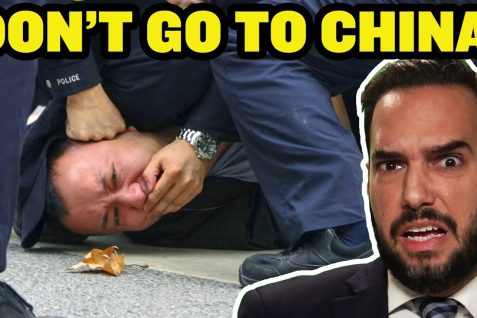
China has just made it legal to kidnap foreigners in China if they obey US law.
New regulations could put foreign companies in a legal Catch-22: investigate forced labor in Chinese supply chains and risk violating Chinese law, or follow Chinese rules and risk breaking Western law. And with China expanding its power to stop people from leaving the country, even a business trip could turn into an unwanted extended stay.
Operation Honey Pot: Paste this emoji 🍯 in your comment below.
Want to go deeper than YouTube will let us? Check out our website:
A growing interest among Hong Kong women in an anti-ageing injection containing human tissue has prompted a recent crackdown by health authorities, as the product, widely known in Chinese as the “cadaver skin jab”, has not been registered for use in the city.
A growing interest among Hong Kong women in an anti-ageing injection containing human tissue has prompted a recent crackdown by health authorities, as the product, widely known in Chinese as the “cadaver skin jab”, has not been registered for use in the city.
China’s A-share market has lost 2.4 trillion US dollars in value since its peak in May.
The International Monetary Fund’s 2026 World Economic Outlook projects South Korea’s GDP at 2.25 trillion US dollars this year and Canada’s at 2.49 trillion US dollars. The 2.4 trillion US dollars wiped off Chinese stocks in five months falls between those figures. It is nearly equal to Canada’s entire economy.
Chinese internet users are commenting on the French protests with a blend of dark humour, national pride and regret over the damage caused to historic landmarks. Some, however, have tried to provide deeper perspectives on how a protest against deteriorating school conditions spiralled into a full-blown social crisis.
Chinese internet users are commenting on the French protests with a blend of dark humour, national pride and regret over the damage caused to historic landmarks. Some, however, have tried to provide deeper perspectives on how a protest against deteriorating school conditions spiralled into a full-blown social crisis.
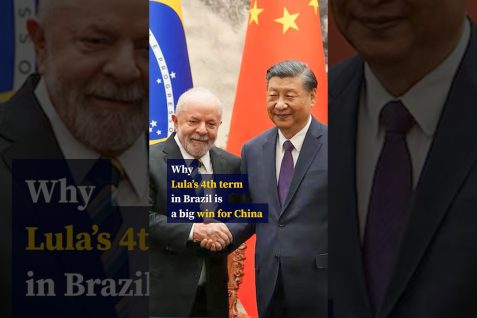
Luiz Inácio Lula da Silva has done it again. The 80-year-old Brazilian president won Sunday’s runoff election with about 51.8 percent of the vote, defeating Senator Flávio Bolsonaro and securing a historic fourth term in office. It is a comeback with no precedent in modern Brazilian democracy: Lula finished second in the first round on October 4 and overturned the result in three weeks. His rival, the eldest son of former president Jair Bolsonaro and a close ally of Donald Trump, says he will not accept the outcome. And in Beijing, officials who never comment on foreign elections have every reason to quietly welcome this one, because no leader in the Americas is more important to China’s long game in the region than Lula.
A Comeback Three Weeks in the Making
The scale of the turnaround is easy to miss in the final margin. In the first round, Flávio Bolsonaro finished ahead with roughly 47 percent of the vote to Lula’s 45 percent, and polls still had the challenger leading by two points the day before the runoff. Between the two rounds, the Workers’ Party candidate added more than ten million votes while his rival gained only a fraction of that. No candidate who lost a first round had gone on to win the presidency since Brazil returned to direct elections in 1989. Turnout surged to help him do it, with abstention falling to 19 percent, the lowest in the country’s history. Lula, who turns 81 within days of the vote, ended what he called the last campaign of his life by making history one more time.
The Loser Refuses to Lose
Flávio Bolsonaro followed his father’s script from 2022 and refused to concede. He blamed a Supreme Court decision, taken by Justice Cristiano Zanin, to extend voting by two hours in parts of the country, and said the uneven application of that measure made the result impossible to recognize. His team promised legal action to have the election annulled, a challenge Brazil’s electoral court is widely expected to reject. The defeated candidate had spent the campaign advertising his closeness to the Trump administration and suggesting constitutional changes were within reach. Instead, the Bolsonaro movement has now lost two straight presidential elections to the same man. The legal fight will dominate Brazilian headlines for weeks, but few observers expect it to change who governs in Brasília.
Washington Backed the Other Horse
The result is a direct setback for the White House’s Latin America strategy. Over the past year, Washington has openly favored conservative candidates across the hemisphere, building a string of allied governments in countries including Bolivia, Chile, Colombia, Ecuador, Honduras and Peru. Brazil, the region’s largest economy, was the biggest prize of all, and Flávio Bolsonaro campaigned as the candidate who would bring it into that orbit. Lula accused the American government of intervening to help his opponent, and he turned sovereignty into his closing argument. “This country doesn’t accept being anybody’s colony,” he told supporters on election night. Mexico’s President Claudia Sheinbaum rushed to congratulate him, while Donald Trump and Argentina’s Javier Milei stayed publicly silent.
Why Beijing Wins Without Campaigning
China did not endorse anyone in Brazil’s election, because it did not need to. China has been Brazil’s largest trading partner for well over a decade, buying vast quantities of Brazilian soy, iron ore, beef and oil, and Lula has spent his presidency deepening that relationship through the BRICS bloc and state visits. A Bolsonaro government in Brasília, aligned with Washington’s push to sideline Beijing from the hemisphere, would have put that trade under political pressure for the first time. Lula’s victory removes the risk entirely for another four years. French analysts described Washington’s regional doctrine as an effort to push China out of America’s backyard, and Brazil was its central battleground. The backyard’s biggest country just voted to keep both doors open, and the trade numbers say the Chinese door is the wider one.
What a Fourth Lula Term Means
Lula inherits the problems that nearly ended his presidency in the first round. Voters ranked the cost of living, crime and corruption above everything else, and affordability anger powered Bolsonaro’s early lead. The president promised on election night to govern differently, giving ordinary people a greater role in decisions and working with a conservative-leaning Congress he does not control. His room for manoeuvre is narrow: public finances are stretched, the currency and markets will punish missteps, and his own age shadows every long-term plan. He also returns to a region where most of his neighbours now lean right and look to Washington. How he balances a friendly Beijing, a hostile White House and an impatient electorate will define the term.
The Bigger Picture for the US-China Contest
Elections like this one are where the US-China rivalry is actually decided, far from the warships and tariff schedules. Brazil did not vote for China on Sunday; it voted on prices, safety and sovereignty, and the pro-China outcome arrived as a by-product. That is precisely what makes the result durable, because it rests on trade and sentiment rather than on any deal a future government could tear up. Washington can still compete in Latin America, but Brazil shows the cost of being seen to pick another country’s president. For Beijing, the lesson of Lula’s fourth term is the oldest one in its playbook. Show up as a customer, stay out of the campaign, and let the voters do the rest.
There’s an old joke: protect yourself from fires, thieves, and even your best friends. These days, that joke seems all too real. Some older single women see friends with similar backgrounds marry into wealth and enjoy comfortable lives. Jealousy can overwhelm their sense of right and wrong, and even close friendships fall apart over the competition for money and status.
There’s an old joke: protect yourself from fires, thieves, and even your best friends. These days, that joke seems all too real. Some older single women see friends with similar backgrounds marry into wealth and enjoy comfortable lives. Jealousy can overwhelm their sense of right and wrong, and even close friendships fall apart over the competition for money and status.
A new poll suggests a dramatic shift in Taipei’s mayoral race: challenger Puma Shen is leading incumbent Mayor Chiang Wan-an by 17 percentage points.
But the bigger story may be how Shen is running his campaign.
Instead of relying solely on traditional speeches and campaign promises, Shen’s team collected more than 60,000 public comments, held face-to-face discussions with residents, and transformed their concerns into a remarkable interactive platform called HEART Island.
The platform turns 94 policy proposals into a virtual city that voters can explore—covering everything from school lunches and public transportation to neighborhood safety and government services.
Could this approach reshape political campaigning in Taiwan?
In this episode, we examine the surprising polling numbers, the story behind HEART Island, Shen’s grassroots campaign strategy, and the challenges facing Taipei’s incumbent mayor.
We also look at how Beijing’s criticism and the approaching mayoral debate could influence the final weeks of the election.
**Note:** Poll results vary by organization and methodology. A lead in one survey does not guarantee an election victory.
A new poll suggests a dramatic shift in Taipei's mayoral race: challenger Puma Shen is leading incumbent Mayor Chiang Wan-an by 17 percentage points.
But the bigger story may be how Shen is running his campaign.
Instead of relying solely on traditional speeches and campaign promises, Shen's team collected more than 60,000 public comments, held face-to-face discussions with residents, and transformed their concerns into a remarkable interactive platform called HEART Island.
The platform turns 94 policy proposals into a virtual city that voters can explore—covering everything from school lunches and public transportation to neighborhood safety and government services.
Could this approach reshape political campaigning in Taiwan?
In this episode, we examine the surprising polling numbers, the story behind HEART Island, Shen's grassroots campaign strategy, and the challenges facing Taipei's incumbent mayor.
We also look at how Beijing's criticism and the approaching mayoral debate could influence the final weeks of the election.
**Note:** Poll results vary by organization and methodology. A lead in one survey does not guarantee an election victory.
Limited Time: Get your free Tank Man set when you join the 50-Cent Army:
China wants to beat America in the AI race—but its data centers have a serious problem: they need water, and China is running short.
Operation Honey Pot: Paste this emoji 🍯 in your comment below.
Want to go deeper than YouTube will let us? Check out our website:
Apple’s first foldable phone, the iPhone Duo, went on sale in China on October 23. Strong demand sparked a rush to line up outside stores. Many customers arrived two days early just to get the new phone as soon as possible.
Apple’s first foldable phone, the iPhone Duo, went on sale in China on October 23. Strong demand sparked a rush to line up outside stores. Many customers arrived two days early just to get the new phone as soon as possible.
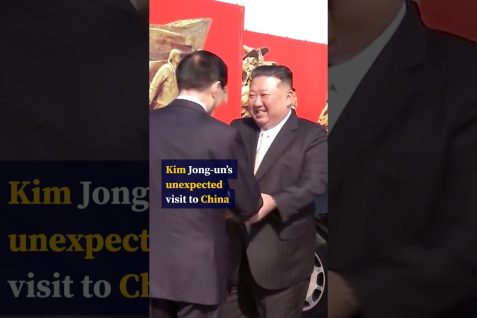
North Korean leader Kim Jong-un visited the Chinese border city of Dandong on Saturday, with both sides underlining their traditional friendship and calling to boost cooperation. The trip was Kim’s first visit to China in more than a year and had not been announced in advance.
North Korean leader Kim Jong-un visited the Chinese border city of Dandong on Saturday, with both sides underlining their traditional friendship and calling to boost cooperation. The trip was Kim’s first visit to China in more than a year and had not been announced in advance.
France has been rocked by protests and political unrest. But a much bigger question is emerging: who funds the activist networks that operate across borders?
At the center of this investigation is Neville Roy Singham, an American technology entrepreneur who founded ThoughtWorks, worked as an adviser to Huawei, and later became a major financial supporter of left-wing organizations around the world.
After selling his company, Singham helped fund a network of nonprofit organizations, media outlets, and political advocacy groups spanning multiple continents. His activities and reported connections to China have attracted scrutiny from American lawmakers.
How does this network operate? What role do media organizations play in amplifying protest movements? And what do Singham’s connections to Shanghai reveal about the relationship between political activism and China’s global influence?
In this episode, we trace Singham’s journey from a young Maoist activist in Detroit to a wealthy technology entrepreneur, and examine the funding networks, political relationships, and allegations surrounding his activities.
France has been rocked by protests and political unrest. But a much bigger question is emerging: who funds the activist networks that operate across borders?
At the center of this investigation is Neville Roy Singham, an American technology entrepreneur who founded ThoughtWorks, worked as an adviser to Huawei, and later became a major financial supporter of left-wing organizations around the world.
After selling his company, Singham helped fund a network of nonprofit organizations, media outlets, and political advocacy groups spanning multiple continents. His activities and reported connections to China have attracted scrutiny from American lawmakers.
How does this network operate? What role do media organizations play in amplifying protest movements? And what do Singham's connections to Shanghai reveal about the relationship between political activism and China's global influence?
In this episode, we trace Singham's journey from a young Maoist activist in Detroit to a wealthy technology entrepreneur, and examine the funding networks, political relationships, and allegations surrounding his activities.
COVID cases continue to rise in China, and virology researchers are warning about emerging variants. Respiratory illnesses become more common in fall and winter. Air pollution could add to the health risks for people who become infected.
COVID cases continue to rise in China, and virology researchers are warning about emerging variants. Respiratory illnesses become more common in fall and winter. Air pollution could add to the health risks for people who become infected.
Veteran actors including Shu Chen and Yu Qingbin have drawn attention for filming during the day and delivering food at night in Hengdian, a film and television production hub in Zhejiang.
Veteran actors including Shu Chen and Yu Qingbin have drawn attention for filming during the day and delivering food at night in Hengdian, a film and television production hub in Zhejiang.
In China, “zombie companies” generally means businesses that can no longer sustain themselves. They have lost money for years and owe more than their assets are worth. They survive mainly on government subsidies or renewed bank loans. They used to be mostly local state-owned companies or traditional manufacturers with excess capacity, including state-run steel and cement plants. Now many companies in emerging industries backed by Chinese Communist Party policies, such as electric vehicles and solar power, have also become zombies with help from local subsidies. Lists of these companies touch on highly sensitive financial risks, including bad bank loans, local government finances, jobs and social stability. Officials and financial institutions usually keep those lists confidential and rarely release them.
In China, “zombie companies” generally means businesses that can no longer sustain themselves. They have lost money for years and owe more than their assets are worth. They survive mainly on government subsidies or renewed bank loans. They used to be mostly local state-owned companies or traditional manufacturers with excess capacity, including state-run steel and cement plants. Now many companies in emerging industries backed by Chinese Communist Party policies, such as electric vehicles and solar power, have also become zombies with help from local subsidies. Lists of these companies touch on highly sensitive financial risks, including bad bank loans, local government finances, jobs and social stability. Officials and financial institutions usually keep those lists confidential and rarely release them.
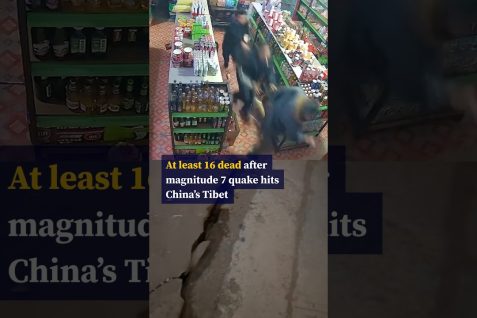
Rescuers pulled survivors from the rubble after a 7.0-magnitude earthquake struck China’s remote Tibet region late on Thursday. At least 16 people were killed, according to state media.
Rescuers in China’s Tibet region worked through the night and into Friday pulling survivors from collapsed homes after a magnitude 7.0 earthquake struck one of the most remote and highest inhabited places on Earth. The quake hit late on Thursday near Nagqu, a city north of the regional capital Lhasa that sits some 4,800 metres above sea level. At least 16 people were killed and 54 injured, according to Chinese state media, and at least 339 homes collapsed. More than 5,000 rescuers from three local counties have been sent into the epicentre zone. With temperatures low, snow in the forecast, and aftershocks still rolling through, officials say the search is a race against both the rubble and the altitude.
A Quake at the Top of the World
The United States Geological Survey recorded the earthquake at 10:33 p.m. local time on Thursday, with its epicentre 191 kilometres east-northeast of Nagqu and a depth of 18 kilometres. That is a shallow, powerful quake by any measure, and in this terrain its effects are amplified. Settlements across the Tibetan plateau are scattered, roads are few, and many homes are built from materials that perform badly when the ground shakes hard. The USGS recorded at least seven aftershocks between magnitude 4.3 and 5.2, each one a fresh threat to buildings already cracked by the main shock. Officials told reporters they feared further collapses from those aftershocks, as well as casualties from rockslides on the mountain roads rescuers depend on.
Three Rounds Through Every Household
By Friday afternoon, rescuers had completed three full rounds of searches, going household by household and village by village, Nagqu’s acting mayor Dunzhu told a press conference. Video from the scene shows teams climbing into the remains of collapsed buildings and carrying survivors out to open ground, where displaced families were given makeshift beds and blankets on sports fields. More than 12,400 people were forced from their homes, according to state media reporting. Relief supplies have been pushed into the region in bulk: 2,000 prefabricated housing units, around 3,400 tents, and 2,000 folding beds, along with flashlights and winter clothing. In a place where night falls hard even in October, a tent and a blanket are not comforts. They are survival equipment.
An All-Out Order From Beijing
China’s president, Xi Jinping, called for an all-out effort to find survivors, the standard signal that a disaster has become a national priority and that provincial resources will be reinforced. Xinhua, the state news agency, reported that communications were down in some of the areas hit, complicating the basic task of learning which villages are worst affected. Local railway authorities halted trains passing through the region as an emergency precaution. Rockfalls forced the closure of a section of National Highway 317, with only emergency, rescue, and official support vehicles allowed through while crews cleared debris. Every closure narrows the corridor through which help can arrive, which is why the first wave of rescuers came from the three nearest counties rather than waiting for distant reinforcements.
Why Rescue Here Is Unlike Anywhere Else
Search-and-rescue doctrine assumes ambulances, hospitals, and helicopters within reasonable reach. The Tibetan plateau rewrites every one of those assumptions. At 4,800 metres, the air holds roughly half the oxygen of sea level, and heavy physical work in rubble exhausts even acclimatised rescuers quickly, while survivors trapped in the cold lose body heat far faster than they would in a lowland disaster. Intermittent snowfall is forecast for the affected region in the coming days, threatening both the searches and the tent camps now housing the displaced. Distances are measured in hours of mountain driving, not minutes, and a single blocked highway can isolate a valley entirely. It is the combination that kills in high-altitude earthquakes: not only the shaking, but exposure, delay, and the difficulty of moving help across the landscape afterward.
What Happens Next
The immediate priorities are the ones officials listed on Friday: finish the searches, treat the injured, and get the displaced under shelter before the snow arrives, with the injured count still being updated as more villages report in. Engineers will have to judge which damaged homes can be re-entered and which must come down, a process shadowed by every new aftershock. For Beijing, the response is also a test of the emergency system it has built for the plateau, where earthquakes are a recurring fact of life along the collision zone that raised the Himalayas. Tibet has been struck hard before, and each disaster has pushed more building standards, monitoring, and pre-positioned supplies into the region. Whether those preparations were enough this time will be measured in the days ahead, in the villages above Nagqu, by the people still waiting beside the rubble of their homes. For now, the measure is simpler and more human: another survivor carried out alive, another village reached, another night in a tent survived at altitude. The rescuers pulling people from the rubble on Friday know exactly what their work is worth. So do the families watching them do it.
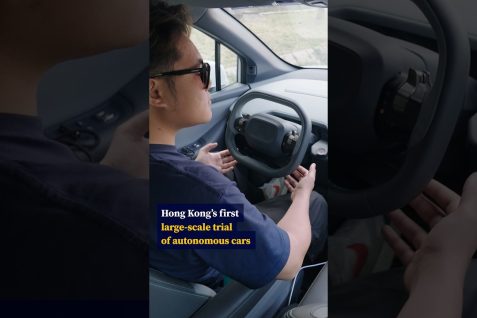
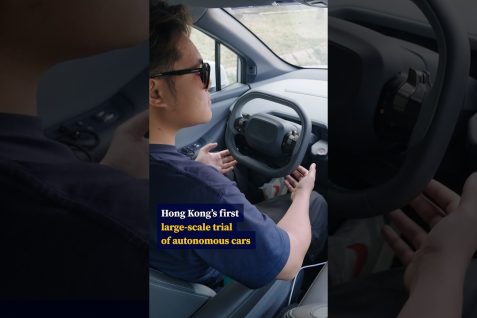
More than 1,000 residents are expected to ride in autonomous vehicles (AVs) as Chinese tech giant Baidu launches Hong Kong’s first large-scale public trial.
More than 1,000 residents are expected to ride in autonomous vehicles (AVs) as Chinese tech giant Baidu launches Hong Kong’s first large-scale public trial.
At least 16 people were killed when a magnitude 7 earthquake struck China’s Tibet autonomous region late Thursday. According to the US Geological Survey, the quake’s epicentre was in a mountainous region around 190km (120 miles) east-northeast of Nagqu and 390km northeast of Lhasa, the regional capital. The People’s Liberation Army said it has deployed drones and hundreds of troops to assist with rescue efforts.
At least 16 people were killed when a magnitude 7 earthquake struck China’s Tibet autonomous region late Thursday. According to the US Geological Survey, the quake’s epicentre was in a mountainous region around 190km (120 miles) east-northeast of Nagqu and 390km northeast of Lhasa, the regional capital. The People’s Liberation Army said it has deployed drones and hundreds of troops to assist with rescue efforts.
Programming used to be one of China’s best-paid careers. With its concentration of tech companies, Beijing attracted large numbers of workers born in the 1990s. Now, a weak economy, intense competition, pay cuts, and layoffs are forcing many to leave and return home to make a living. Once well-paid office workers, they now face a new struggle to support themselves.
Programming used to be one of China’s best-paid careers. With its concentration of tech companies, Beijing attracted large numbers of workers born in the 1990s. Now, a weak economy, intense competition, pay cuts, and layoffs are forcing many to leave and return home to make a living. Once well-paid office workers, they now face a new struggle to support themselves.
As DeepSeek’s servers went down, “What happened to Liang Wenfeng?” also trended on Weibo. Online speculation ranged from him fleeing the country to being arrested. The rumors grew out of talk of a technical breakthrough at DeepSeek, spawning various theories about external security threats.
As DeepSeek’s servers went down, “What happened to Liang Wenfeng?” also trended on Weibo. Online speculation ranged from him fleeing the country to being arrested. The rumors grew out of talk of a technical breakthrough at DeepSeek, spawning various theories about external security threats.
More than 1,000 residents are expected to ride in autonomous vehicles (AVs) as Chinese tech giant Baidu launches Hong Kong’s first large-scale public trial.
More than 1,000 residents are expected to ride in autonomous vehicles (AVs) as Chinese tech giant Baidu launches Hong Kong’s first large-scale public trial.
For years, Li Zhanshu was one of Xi Jinping’s most trusted political allies—a man who survived repeated controversies and rose to become China’s third-highest-ranking official.
Now, new rumors surrounding his daughter, Li Qianxin, and her business connections in Hong Kong have brought renewed attention to the former Chinese leader’s family.
How did Li Zhanshu rise from a provincial official to the heart of Xi Jinping’s inner circle? What do past investigations reveal about his family’s business interests? And why are questions about his political future resurfacing now?
In this episode, we trace Li Zhanshu’s remarkable rise, the controversies surrounding his family, and the political tensions behind Beijing’s closed doors.
We also examine the speculation surrounding actress Tong Liya and her changing career. What is documented, and what remains rumor?
**Note:** Reports and allegations discussed in this episode do not establish that Li Zhanshu or his family members have been detained or charged with wrongdoing.
For years, Li Zhanshu was one of Xi Jinping's most trusted political allies—a man who survived repeated controversies and rose to become China's third-highest-ranking official.
Now, new rumors surrounding his daughter, Li Qianxin, and her business connections in Hong Kong have brought renewed attention to the former Chinese leader's family.
How did Li Zhanshu rise from a provincial official to the heart of Xi Jinping's inner circle? What do past investigations reveal about his family's business interests? And why are questions about his political future resurfacing now?
In this episode, we trace Li Zhanshu's remarkable rise, the controversies surrounding his family, and the political tensions behind Beijing's closed doors.
We also examine the speculation surrounding actress Tong Liya and her changing career. What is documented, and what remains rumor?
**Note:** Reports and allegations discussed in this episode do not establish that Li Zhanshu or his family members have been detained or charged with wrongdoing.
Watch the full podcast!
What could be more innocent than pre-schoolers recreating the Chinese communists long march…with grenades? Even Chinese netizens are tearing these videos apart.
Join our fight to expose the CCP at and get ALL the new full-length interviews!
And check out our other channel, China Uncensored:
Limited Time: Get your free Tank Man set when you join the 50-Cent Army:
Join the Oct 24 China Uncensored Horror Livestream
France is on fire, communists and Islamists are joining forces, and China may be helping fan the flames.
Meet the Red-Green Alliance: an unlikely coalition of revolutionary leftists, Islamist radicals, and China-linked activists united by one big goal—sticking it to the West. We’re following the money, the organizations, and the very questionable connections linking Beijing, Tehran, and radical movements around the world.
Operation Honey Pot: Paste this emoji 🍯 in your comment below.
Want to go deeper than YouTube will let us? Check out our website:
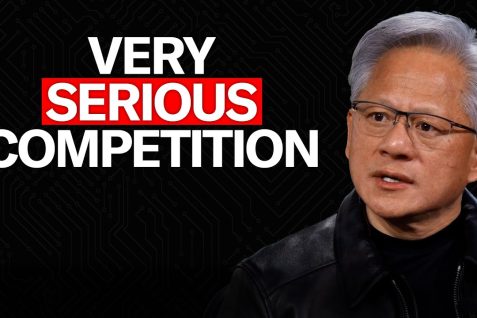
Nvidia CEO Jensen Huang says nobody manufactures chips, open models, or AI researchers at scale better than China does, and that America faces “very, very serious competition.” He told veteran business journalist Deirdre Bosa at GTC Berlin that US frontier labs and chips are still the world’s best, and that Nvidia plans to stay ahead. Asked whether Washington is listening before the midterms, Huang says the US government wants American companies competing everywhere, from Africa and Central Asia to Brazil and Egypt.
Nvidia CEO Jensen Huang says nobody manufactures chips, open models, or AI researchers at scale better than China does, and that America faces "very, very serious competition." He told veteran business journalist Deirdre Bosa at GTC Berlin that US frontier labs and chips are still the world's best, and that Nvidia plans to stay ahead. Asked whether Washington is listening before the midterms, Huang says the US government wants American companies competing everywhere, from Africa and Central Asia to Brazil and Egypt.