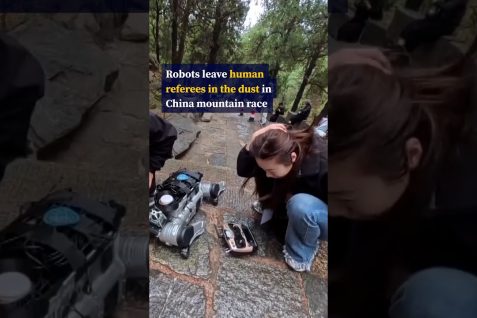
Referees at the first China Media Group (CMG) World Robot Mount Tai Climbing Competition had to draw up new rules to track robot athletes, as they had trouble keeping up with the machines.
The referees were supposed to follow each robot up the mountain, watch for rule-breaking and record the result at the top. Then the robots started climbing, and the humans could not keep up. At the qualifier for the first China Media Group World Robot Mount Tai Climbing Competition, officials discovered that their race plan assumed machines would move at a pace people could shadow on foot. On the stone steps of Mount Tai, that assumption fell apart within the first stretches of the course. The organisers did not slow the robots down. They rewrote how the race would be refereed.
Mount Tai, in Tai’an in eastern China’s Shandong province, is not a gentle test track. The competition course runs about 3.9 kilometres with roughly 3,100 stone steps and about 600 metres of climb, over continuous staircases, slopes and sharp turns. For centuries the mountain has been a pilgrimage site for emperors and a central place in Chinese mythology, and it is now a UNESCO World Heritage site. Sending robots up its ancient steps is both a sporting spectacle and a deliberately harsh engineering exam. Laboratory floors do not punish balance, perception and endurance the way wet, uneven, centuries-old stone does.
“Robots Run on Electricity, We Run on Food”
The problem was stated most plainly by Su Qingwei, chief referee for the final, after the qualifier exposed it. “Robots run on electricity, while we run on food,” Su said, explaining that a robot can swap its battery and keep accelerating while human stamina has clear limits. The original plan assigned a referee to follow each robot through the competition. On a short flat course that might have worked, but Mount Tai’s steps turn following into a race of its own. A referee who falls behind cannot judge what he cannot see, and a referee who tries to match a fresh-batteried machine risks becoming the event’s first casualty.
So the format changed from following to checkpoints. Instead of chasing the field, referees are now stationed at fixed points along the course, each responsible for a section of roughly 50 to 60 metres. In open stretches with good visibility a section can run longer, while at turns and blind corners officials must stand within sight of one another. When a robot approaches, the referee can step forward to meet it, observe it through his section and hand it on to the next pair of eyes. Su noted one comforting finding from the qualifier: there were very few rule violations to chase in the first place.
A Race Card Built to Test Real Work
The competition, held on November 2 with around 90 teams taking part, was never only about raw speed. Its official programme covered legged robot racing, legged robot load-bearing, all-terrain scouting and a humanoid robot race, with an exoskeleton assistance event in the wider programme. Those categories map onto the jobs people actually imagine for legged machines, from carrying supplies where wheels fail to scouting broken terrain after a disaster. In the load events the cargo was chosen to punish clumsiness, with machines hauling fragile goods such as fresh eggs and watermelons toward the summit. A fast robot that arrives with shattered cargo has demonstrated speed, not usefulness.
The results showed how quickly the field is moving, and how far it still has to go. A four-legged robot built by Beijing Lingyi Technology, a subsidiary of Unitree, won the four-legged speed category in 43 minutes and 41 seconds, a route state television noted takes most human tourists at least two hours. The fastest humanoid, from Beijing-based team Zhishen Lingyue, finished its shorter course in 27 minutes and 26 seconds. At the other end of the ledger, one humanoid wearing a bandana collapsed on the cobbled route and needed its engineers, another tumbled down stairs, and a Unitree G1 entry overheated mid-climb and was carried down on a stretcher. Triumph and slapstick shared the same staircase, which is usually a sign of a technology in honest transition.
Why a Mountain Race Matters Beyond the Spectacle
Events like this are China’s public way of stress-testing its embodied-intelligence industry in front of cameras. A robot that can climb 3,100 irregular steps has to solve perception, foothold planning, balance recovery, battery management and heat, all at once and all outdoors. Those are the same problems that decide whether legged robots can inspect mountain infrastructure, deliver supplies to remote sites or work in disaster zones where roads are gone. Holding the test on a famous sacred mountain also guarantees an audience that a warehouse trial would never attract. The spectacle is the point, and so is the failure footage, because both recruit talent and money into the field.
The most memorable outcome, though, happened before any medal was awarded. A sport invented for machines had to redesign its human officiating because the machines were already too fast over broken ground for people to follow. Checkpoint refereeing is a small administrative change, but it marks a quiet crossing point that sports from chess to motor racing have met before. When the competitors stop fitting the officials’ assumptions, the rulebook adapts to the machines, not the other way round. On Mount Tai, the robots did not just outrun the referees. They outran the original idea of how the race would be run.
NEW MANDARIN VERSION OF CHINA UNCENSORED!
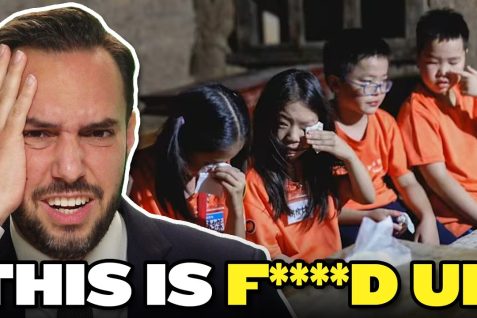
Chinese parents are paying to send their kids to brutal “hardship camps” where they labor, farm, and break down crying. Sound familiar? It echoes the trauma of the Cultural Revolution—and Xi Jinping’s philosophy of learning to “eat bitterness.” Is China passing its trauma down to the next generation?
Operation Honey Pot: Paste this emoji 🍯 in your comment below.
Join the China Uncensored 50 Cent Army!
Despite having to use a wheelchair, Chen Tsz-kin has been embracing life in a way many other teenagers only dream about. Tsz-kin was diagnosed with Duchenne muscular dystrophy at the age of one and a half, and his family was told he had only about 18 years to live. Now, as he approaches this supposed deadline, Tsz-kin shares his views on life, death and why he dares to hope for a future.
Despite having to use a wheelchair, Chen Tsz-kin has been embracing life in a way many other teenagers only dream about. Tsz-kin was diagnosed with Duchenne muscular dystrophy at the age of one and a half, and his family was told he had only about 18 years to live. Now, as he approaches this supposed deadline, Tsz-kin shares his views on life, death and why he dares to hope for a future.
Australian mushroom murderer Erin Patterson lost her appeal on Friday against three murder convictions. Patterson poisoned her relatives with a beef Wellington laced with death cap mushrooms. A panel of judges rejected her grounds for appeal and increased her sentence, removing her chance of parole and ensuring she will spend the rest of her life in prison.
Erin Patterson went to court hoping to overturn her murder convictions, and she left it with a worse sentence than the one she arrived with. On Friday, October 30, 2026, Victoria’s Court of Appeal dismissed her appeal against three murder convictions and an attempted murder conviction arising from the poisoned beef Wellington lunch that horrified Australia. In the same ruling, the three judges accepted the prosecution’s argument that her original sentence had been too lenient. They set aside her life sentence with a 33-year non-parole period and replaced it with life imprisonment without parole. Patterson, who appeared by video link from prison and reportedly showed no emotion, will now die behind bars unless Australia’s High Court intervenes.
The Lunch That Killed Three People
The crimes date back to July 29, 2023, when Patterson hosted a lunch at her home in Leongatha, a small town in rural Victoria. Her guests were her estranged husband’s parents, Don and Gail Patterson, both aged 70, and Gail’s sister Heather Wilkinson, 66, along with Heather’s husband, Baptist pastor Ian Wilkinson. The beef Wellington Patterson served was laced with death cap mushrooms, among the most toxic fungi in the world. Don, Gail and Heather died in hospital in the days after the meal. Ian Wilkinson survived after weeks of intensive care, and his survival made him a central witness in what followed.
Patterson maintained from the beginning that the poisoning was a terrible accident. She told police the mushrooms came from an Asian grocery and a dehydrator she later disposed of, accounts that investigators systematically dismantled. Detectives arrested her at her home on November 2, 2023, after months of investigation that had already made the case an international sensation. The image of an ordinary family lunch turned into a triple killing drew global attention to a quiet corner of Gippsland. It also raised questions a jury would eventually have to answer about intent, planning and a trail of lies told in the aftermath.
A Trial, a Verdict and a Sentence With a Door Left Open
Patterson’s trial in 2025 ran for months and was followed around the world. Prosecutors argued that she had deliberately sought out death cap mushrooms, prepared individual beef Wellingtons so the poison reached only her guests, and invented stories afterwards to hide what she had done. The jury convicted her of three counts of murder and one count of attempted murder. In September 2025, Justice Christopher Beale sentenced her to life imprisonment. Crucially, he fixed a non-parole period of 33 years, describing her crimes as senseless but leaving open the possibility that she could one day apply for release.
That 33-year figure became the fault line for everything that happened next. Patterson’s lawyers moved to appeal the convictions, arguing she had suffered a miscarriage of justice. At the same time, the Director of Public Prosecutions appealed the sentence, arguing it was manifestly inadequate for offending of this gravity. Two appeals pointing in opposite directions were heard together by the Court of Appeal in August 2026. One side asked the court to free her; the other asked it to ensure she was never freed at all.
An Appeal That Failed on Every Ground
The appeal panel consisted of Justices Lesley Taylor, Stephen McLeish and Peter Kidd. Patterson’s legal team raised seven grounds against her convictions, and the court granted leave on the first two before ultimately rejecting all of them. Her arguments included a mix-up over hotel bookings that had placed jurors in the same accommodation as prosecutors, a key police witness and media during the trial. She also complained of an unfair and oppressive cross-examination lasting five days, claimed the prosecution shifted its theory of motive during closing arguments, and challenged decisions about evidence concerning her foraging, phone records and social media posts. The judges were unpersuaded on every point and found no miscarriage of justice.
Delivering the decision, Justice McLeish used language rarely heard even in murder appeals. He said Patterson’s offending was extraordinarily cold and calculated and stood to be denounced in the strongest terms. The court found that her murderous intent dated back to the invitations to lunch and persisted through the meal at which the poison was administered. On the prosecution’s appeal, the judges concluded that the case involved such calculated criminality that it was inappropriate to fix a non-parole period at all. The original sentence was set aside and replaced with life imprisonment with no possibility of parole.
Life With No Way Out
The ruling places Patterson in exceptionally rare company in Australian legal history. She is reported to be only the second woman in the country’s history to receive a life sentence without parole. The outcome is also a stark lesson in appellate risk: by challenging her convictions, she kept her case in a court that simultaneously held the power to harden her punishment, and the prosecution used exactly that opening. Her original sentence would have made her eligible to seek parole in her eighties. That possibility has now been extinguished entirely.
One narrow path remains. Patterson has 28 days from the ruling to seek special leave to appeal to the High Court of Australia, the country’s final court of appeal. The High Court accepts only a small fraction of such applications, and it does not grant a fresh hearing as of right. If leave is refused or no application is made, the Court of Appeal’s sentence stands as the final word. For the families of Don and Gail Patterson and Heather Wilkinson, the ruling closes a legal chapter that began with a family lunch more than three years ago. For Patterson, held at the Dame Phyllis Frost Centre women’s prison, it means the rest of her life will be spent inside.
Limited Time: Get your free Tank Man set when you join the 50-Cent Army:
Corruption in CNMI episode:
China’s AI stock bubble is bursting. The country’s AI and chip stocks have lost $480 billion in market value, and one hyped-up robotics company has seen its shares cut in half. After pushing citizens to invest in AI, the CCP may have just created another market crash.
Operation Honey Pot: Paste this emoji 🍯 in your comment below.
Want to go deeper than YouTube will let us? Check out our website:
The US midterm elections on November 3 will serve as a critical referendum on US President Donald Trump’s presidency as Democrats and Republicans battle for control of Congress and shape the political landscape heading into the 2028 presidential election.
While a divided government could lead to domestic gridlock, there are also international implications. SCMP’s US deputy bureau chief Mark Magnier breaks down why foreign policy, trade and relations with China might see dramatic shifts if the Republican administration faces unprecedented new constraints closer to home.
Japanese character company Sanrio has suspended current and future collaborations with the television drama Vivant after strong public criticism in China. The series, which follows a fictional secret intelligence unit in Japan, had scenes in its second season depicting a Chinese-linked intelligence agency torturing Japanese operatives.
Hello Kitty has been pulled out of a spy war. Sanrio, the Japanese company behind Hello Kitty, My Melody and Cinnamoroll, has terminated its collaboration with the hit television drama Vivant after a fierce backlash in China over scenes showing Chinese-linked agents torturing Japanese operatives. The company announced the decision late on Wednesday, October 28, apologised for the concern caused, and said the partnership contained elements inconsistent with its corporate values. All related merchandise has been taken off the market, and every future promotional activity tied to the drama has been cancelled. A collaboration built to put cute characters in spy costumes ended, within days, as a case study in how quickly entertainment becomes geopolitics in Asia’s biggest consumer market.
The speed of the reversal is part of the story. The Sanrio tie-up, launched in July for the drama’s second season, dressed its characters as Vivant’s covert operatives and was meant to be ordinary cross-promotion for a popular show. Instead, Chinese state media and social media users spent days attacking both the series and the brands attached to it. By the time a state-run newspaper warned that Hello Kitty should not dance with Japanese right-wing forces, Sanrio was facing a choice between a domestic television partnership and its standing in China. It chose China, publicly and completely, and promised to strengthen how it reviews collaborations from now on.
The Scenes That Started the Storm
Vivant is a spy thriller from Japanese broadcaster TBS, starring Masato Sakai and Hiroshi Abe, whose first season in 2023 followed a salaryman drawn into international espionage in a fictional Central Asian country. The second season, which premiered in July, introduced a fictional secret intelligence storyline in which a Chinese-linked agency captures members of a Japanese covert unit known as Beppan. In an episode aired on October 4, a Chinese agent is shown cutting off the fingers of a Japanese intelligence officer and stabbing him in the abdomen. Those images, clipped and shared online, became the centre of the controversy in China.
Chinese state broadcaster CCTV accused the series of something more specific than ordinary villain casting. It said the torture methods depicted bore striking similarities to atrocities inflicted on Chinese people by Imperial Japanese troops during Japan’s invasion of China, and accused the drama of distorting history by attributing those methods to modern Chinese characters. The Global Times, affiliated with the ruling Communist Party, echoed the charge, calling the portrayal a deliberate smear and an exaggeration of a so-called China threat theory. China’s foreign ministry added official weight, describing the drama as part of an effort to vilify and smear China that should concern the international community.
Sanrio’s Apology and the Values It Cited
Sanrio’s exit came through both its Chinese and Japanese arms. Sanrio Shanghai International Trading announced the cancellation on social media on October 28, and Sanrio in Japan followed with its own statement on October 29 apologising for any discomfort caused. The company said that since its founding it has used its characters to convey values such as care and connection, under a corporate philosophy summed up as one world, connecting smiles and fostering harmony among all people. Measured against that philosophy, it concluded, the Vivant collaboration did not belong in its portfolio, however successful the show itself might be.
The practical steps matched the language. As of October 29, all Sanrio Vivant items had been removed from sale, current collaboration activities were suspended and then terminated, and all related future plans and promotions were cancelled. Sanrio also said it takes the feedback it received very seriously and will strengthen its review processes for future collaborative projects. The apology did not satisfy everyone: the Global Times noted that some Chinese internet users demanded the same statement be published on Sanrio’s international channels, not only in China — a reminder that an apology aimed at one audience is now instantly read by every audience.
TBS Defends a Work of Fiction
The broadcaster behind Vivant has not followed Sanrio out the door. TBS president Masamine Ryuho said on Wednesday that the drama is completely fictional and was never intended to disparage any particular country. The network added that it will seriously consider questions about whether the show harbours hostility toward certain countries and features excessive violence. At the same time, TBS maintained that the torture scenes were necessary to the story it was telling, while saying it would continue to consider carefully whether depictions might cause discomfort or excessive fear among viewers.
That split response — a merchandise partner apologising and withdrawing, a broadcaster defending its fiction while promising reflection — captures the different exposures of the companies involved. TBS sells a drama to a primarily domestic audience and can frame the dispute as an artistic one. Sanrio sells characters whose entire value rests on being harmless, affectionate and welcome everywhere, including in shopping malls and theme partnerships across China. A torture controversy is an inconvenience for a spy series; for a brand built on smiles, it is a direct contradiction of the product itself.
Why China Matters Too Much to Risk
The commercial stakes explain the urgency. China is one of Sanrio’s most important growth markets, with Reuters reporting that its China sales rose almost 25 percent in the first quarter to about 9.8 billion yen, roughly $62 million, and other reporting putting its Chinese revenue growth even higher across the first half of the year. Hello Kitty and her fellow characters appear on everything from plush toys to licensed cafés in China, a business that depends on official goodwill and consumer affection alike. Against numbers like those, a single television tie-up in Japan was expendable, and Sanrio treated it that way.
The episode also lands in a wider, colder climate between Tokyo and Beijing. Relations have sunk to their lowest point in years, a deterioration dating from last November, when Japanese Prime Minister Sanae Takaichi suggested Japan would activate its Self-Defense Forces if China attacked Taiwan. In that atmosphere, a fictional torture scene does not stay fictional for long; it is read as a statement about real intentions, by real governments, with real markets attached. Sanrio is unlikely to be the last Japanese brand forced to choose which audience it can afford to offend — and its answer, delivered within days, shows how that calculation is usually made.
According to recently released financial results from the Volkswagen Group subsidiary, sales revenue fell 5.9 percent from a year earlier to 25.28 billion euros, or $28.19 billion, in the first nine months. Global vehicle deliveries fell 16 percent to 178,532. Operating profit, however, rose to 1.74 billion euros, or $1.94 billion, with a margin of 6.9 percent. A year earlier, profit was just 40 million euros, with a margin of 0.2 percent.
According to recently released financial results from the Volkswagen Group subsidiary, sales revenue fell 5.9 percent from a year earlier to 25.28 billion euros, or $28.19 billion, in the first nine months. Global vehicle deliveries fell 16 percent to 178,532. Operating profit, however, rose to 1.74 billion euros, or $1.94 billion, with a margin of 6.9 percent. A year earlier, profit was just 40 million euros, with a margin of 0.2 percent.
The controversy over the Kylian Mbappé meme continues to grow. Over the past two days, a Cultural Revolution-style campaign to erase Mbappé has been sweeping across China.
The controversy over the Kylian Mbappé meme continues to grow. Over the past two days, a Cultural Revolution-style campaign to erase Mbappé has been sweeping across China.
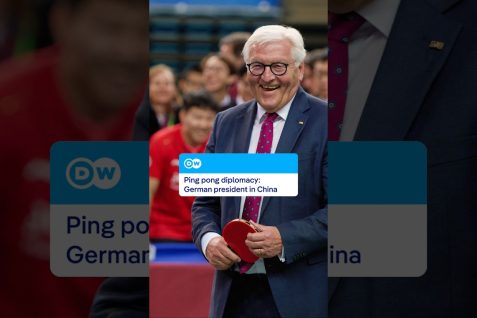
A game of table tennis – but despite the smiles, the stakes are high. German President Frank-Walter Steinmeier is visiting China at a time of growing economic and geopolitical tensions.
A game of table tennis – but despite the smiles, the stakes are high. German President Frank-Walter Steinmeier is visiting China at a time of growing economic and geopolitical tensions.
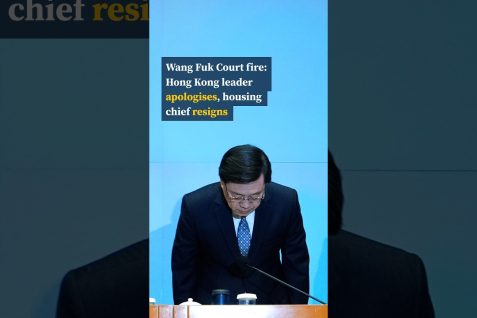
Hong Kong’s Chief Executive John Lee and other senior officials from his administration formally apologised for the city’s deadliest fire in decades at the beginning of a press conference on Thursday. Lee announced that housing secretary Winnie Ho was being held politically accountable for last November’s blaze at Wang Fuk Court in Tai Po, and that she had resigned on Wednesday. Lee then introduced a number of actions and reforms his administration would implement in response to a scathing report by an independent committee that investigated the Wang Fuk Court tragedy. The government received the report last week and released it to the public on Thursday.
Hong Kong’s Chief Executive John Lee and other senior officials from his administration formally apologised for the city’s deadliest fire in decades at the beginning of a press conference on Thursday. Lee announced that housing secretary Winnie Ho was being held politically accountable for last November’s blaze at Wang Fuk Court in Tai Po, and that she had resigned on Wednesday. Lee then introduced a number of actions and reforms his administration would implement in response to a scathing report by an independent committee that investigated the Wang Fuk Court tragedy. The government received the report last week and released it to the public on Thursday.
Watch the full podcast!
Canadian Prime Minister Mark Carney has made no secret of the fact he wants Canada to be less dependent on the United States. In doing so, he has cozied up to China, a move that tracks with his previous tenure as the head of the Bank of England.
Joining us today is Piero Tozzi. He’s the Senior Director for China Policy at America First Policy Institute.
Join our fight to expose the CCP at and get ALL the new full-length interviews!
And check out our other channel, China Uncensored:
Hong Kong Chief Executive John Lee Ka-chiu and senior administration officials issued a formal apology on Thursday for the city’s deadliest fire in decades. Lee announced that secretary for housing Winnie Ho Wing-yin had stepped down on Wednesday after being held politically accountable for last November’s blaze at Wang Fuk Court in Tai Po. The city leader also unveiled a series of follow-up actions and systemic reforms to be implemented in response to a scathing report by an independent committee appointed to investigate the disaster.
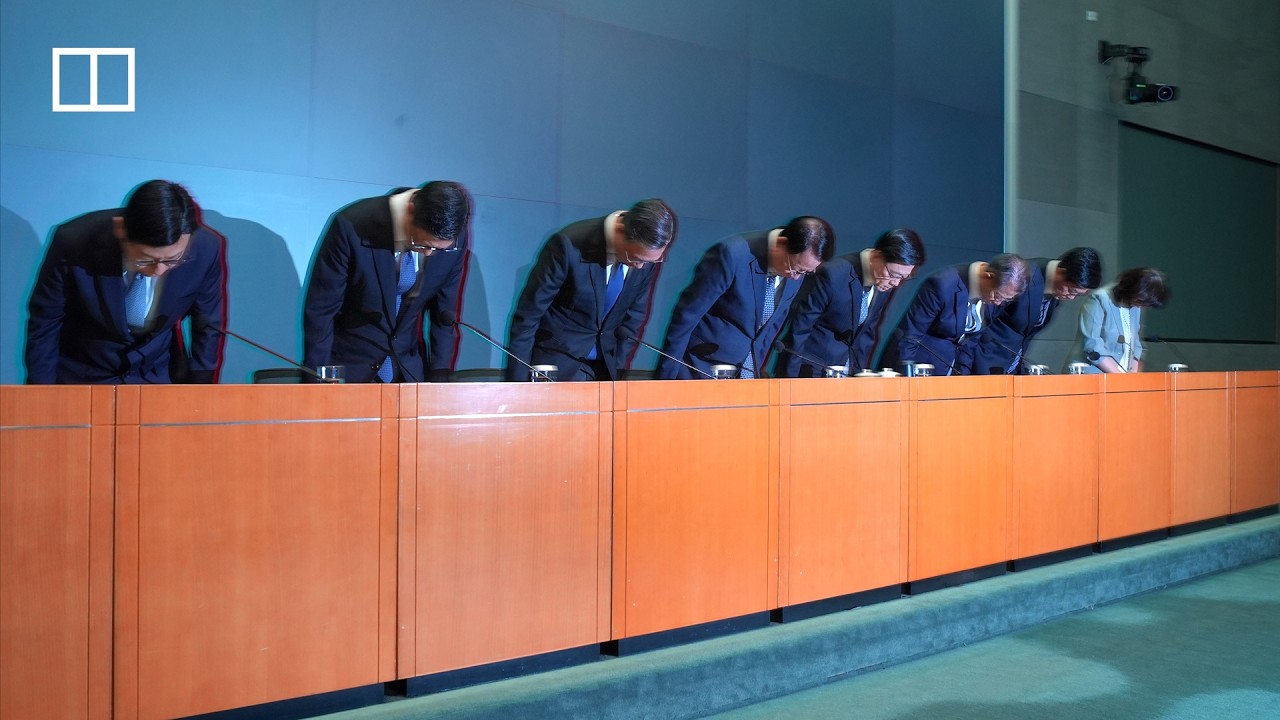
Hong Kong’s leader stood before the cameras on Thursday, bowed alongside seven of his most senior officials, and apologised for the fire that killed 168 people — nearly a year after it happened. Chief Executive John Lee Ka-chiu used the release of a sweeping independent inquiry report into last November’s blaze at the Wang Fuk Court housing estate in Tai Po to announce the first political casualty of the disaster: Secretary for Housing Winnie Ho Wing-yin, who resigned on Wednesday after being held politically accountable for the failures the report describes. It was a rare scene of official contrition in Hong Kong, and it came only after a judge-led committee spent months picking apart how a renovation project on a subsidised housing estate turned into the city’s deadliest fire since 1948.
The fire broke out on November 26 last year at Wang Fuk Court, a government-subsidised estate of 31-storey towers that was in the middle of large-scale maintenance work, its buildings wrapped in scaffolding and protective netting. The flames ripped through seven of the estate’s eight towers, killing 168 people and displacing more than 4,600 residents, many of whom have spent the months since in temporary accommodation, waiting for answers. The committee’s answer, delivered in a report of more than 1,000 pages, is that the disaster was not simply a fire. It was a system failure, years in the making, in which warnings were raised, complaints were filed, and no one in authority took ownership of any of it.
A Bow, an Apology and a Resignation
“On behalf of the SAR government, I offer my apologies to the victims and the public at large,” Lee said, describing himself as deeply saddened as chief executive and head of the government. He said Ho should bear political responsibility for the disaster even though the inquiry found no personal wrongdoing on her part, and he confirmed that he had accepted her resignation, which took effect on Wednesday. Ho later issued a statement echoing that position. She is the first official to step down over the fire, and Lee signalled she may not be the last: the government is setting up an independent team to examine which officials should be held accountable and what disciplinary action should follow.
For many Wang Fuk Court residents and families of the dead, the apology arrived late. Critics have spent months accusing the government of moving too slowly on accountability, and the sight of the city’s leadership bowing in unison — a gesture of contrition more familiar from mainland China — was carefully calibrated to acknowledge that anger. Whether it satisfies the families will depend less on the bow than on what happens next: the disciplinary process, the criminal cases still moving through the courts, and the harder question of where thousands of displaced residents will ultimately live.
What the Inquiry Found
The committee, appointed by the government and led by a judge, examined more than a million files and heard testimony from 80 witnesses at hearings held between March and July. Its central finding is devastating in its simplicity: no government department took effective ownership of the fire safety issues at Wang Fuk Court, and complaints about hazards “fell into a vacuum.” Residents had raised safety concerns about the renovation work for more than a year before the fire, the report found, and those concerns went unheeded. The failings, in the committee’s words, were “systemic and pervasive.”
Four government bodies were held partially responsible, including the Housing Bureau’s independent checking unit, which the committee found had failed in its duty to supervise the maintenance work properly. The report concluded that the fire was most likely started by a “glowing source — likely a cigarette,” a small spark that became a catastrophe because of everything around it: flammable conditions on a scaffolded estate, oversight that existed on paper but not in practice, and a regulatory structure in which responsibility was so widely shared that, in the end, it belonged to no one. “The fire has been put out, but the reform has only just begun,” the report concluded.
The Companies at the Centre of the Case
While officials carry the political blame, the committee placed primary responsibility for the fire on two private firms: the contractor Prestige Construction & Engineering and the project consultant Will Power Architects. The inquiry described widespread unlawful and questionable practices in the building maintenance industry, including bid-rigging involving parties the report linked to organised crime. Its work runs alongside a separate criminal investigation in which at least 25 charges have been brought against the two companies and seven individuals, covering offences that include manslaughter, conspiracy to defraud, money laundering and tax evasion.
Prosecutors allege that the companies and some of the defendants conspired to defraud the estate’s owners by concealing the litigation history of the firm that was ultimately awarded the renovation contract — a deal worth more than 300 million Hong Kong dollars, over $38 million. For owners in estates like Wang Fuk Court, who are required by law to maintain their ageing buildings but depend entirely on contractors and consultants to do it honestly, the allegations describe a market that was rigged against them at every step. The criminal cases will decide individual guilt, but the committee’s verdict on the industry itself is already in, and it is scathing.
120 Recommendations — and a Promise to Criminalise Bid-Rigging
Lee promised swift but extensive reform, and put Chief Secretary Eric Chan in charge of a steering committee to drive it through. The inquiry made 120 recommendations, and the government’s headline response is a plan to criminalise bid-rigging across the construction industry, with proposed penalties of up to HK$10 million in fines and 10 years in prison. Alongside that, officials pledged to overhaul how renovation projects on housing estates are supervised, so that fire safety complaints land on a desk that is actually responsible for acting on them. It is, in effect, an admission that Hong Kong’s system for keeping its vast stock of ageing high-rises safe was built on trust — trust in contractors, trust in consultants, trust in paperwork — and that the trust was abused.
The stakes extend far beyond one estate in Tai Po. Hong Kong is one of the most densely built cities on earth, full of towers of exactly Wang Fuk Court’s vintage undergoing exactly the kind of maintenance work that preceded the fire, and every one of those projects now sits under a cloud of justified suspicion. The families of the 168 people who died cannot be given back what they lost in November. What they have been promised, at last and in public, is a government that owns its share of the blame — and a system rebuilt so that the next complaint about a dangerous building is answered before, not after, the fire.
Russia and China have been growing closer. Since Vladimir Putin annexed Crimea, Russia’s president has leaned on Beijing to fund the war in Ukraine and blunt the effect of Western sanctions. But their friendship has limits. The Economist’s Russia editor, Arkady Ostrovsky, explains why Russia may have become too dependent on China.
Watch the full show:
Sign up to the Insider newsletter:
In this episode of Pekingology, Senior Fellow Henrietta Levin is joined by Gerard DiPippo, Director for Global Macro at Eurasia Group. Henrietta and Gerard unpack the Chinese government’s ambitious techno-industrial policy. They discuss the AI race between the United States and China, why it sometimes seems like Beijing can draw on infinite resources to achieve its industrial objectives, whether technology can rescue China’s stalling economy, and how Chinese leaders are trying to minimize the country’s reliance on the rest of the world.
To learn more, you can read the recent RAND report from Gerard DiPippo, Jonathon Sine, and Benjamin Lenain: China’s Techno-Industrial Strategy in the Xi Era ( , as well as Gerard’s latest work with Eurasia Group.
In this episode of Pekingology, Senior Fellow Henrietta Levin is joined by Gerard DiPippo, Director for Global Macro at Eurasia Group. Henrietta and Gerard unpack the Chinese government's ambitious techno-industrial policy. They discuss the AI race between the United States and China, why it sometimes seems like Beijing can draw on infinite resources to achieve its industrial objectives, whether technology can rescue China's stalling economy, and how Chinese leaders are trying to minimize the country's reliance on the rest of the world.
To learn more, you can read the recent RAND report from Gerard DiPippo, Jonathon Sine, and Benjamin Lenain: China’s Techno-Industrial Strategy in the Xi Era ( , as well as Gerard's latest work with Eurasia Group.
Fitness enthusiasts in Singapore recently took part in a running event inside a popular shopping centre to take refuge from the haze that has been choking the city state. Smoke from wildfires in neighbouring Indonesia has sent air quality in Singapore plummeting to its worst levels in more than a decade in recent weeks, hindering outdoor activities.
Fitness enthusiasts in Singapore recently took part in a running event inside a popular shopping centre to take refuge from the haze that has been choking the city state. Smoke from wildfires in neighbouring Indonesia has sent air quality in Singapore plummeting to its worst levels in more than a decade in recent weeks, hindering outdoor activities.
Scalpers in mainland China are slashing prices on Apple’s newly released iPhone Duo after the US company’s first foldable smartphone drew mixed early consumer reviews over durability and software glitches.
Scalpers in mainland China are slashing prices on Apple’s newly released iPhone Duo after the US company’s first foldable smartphone drew mixed early consumer reviews over durability and software glitches.
A 260 percent tariff on a Chinese product—and it’s set to remain in place for at least five years. The U.S. Commerce Department announced the measure today.
Can a joke cost millions? In China, apparently so. French soccer star Kylian Mbappé is being dropped from advertising campaigns by Chinese brands after making remarks about a meme portraying him as a dictator. What sparked the backlash?
Federal agents searched a Beverly Hills mansion as part of an investigation involving former Congressman Eric Swalwell. The former lawmaker has also faced scrutiny over his past ties to suspected Chinese spy Fang Fang, in a case involving an alleged honey trap, as well as sexual misconduct allegations made by several women.
The United States remains committed to the Indo-Pacific—that was the message Secretary of War Pete Hegseth delivered to Southeast Asian nations at a key regional meeting in the Philippines.
🔵Tiffany Meier’s documentary Hollywood Takeover – how Beijing is rewriting the script in America’s film industry: hollywoodtakeover.com
Watch the full podcast!
In 2024, Congress passed and President Biden signed into law a bill that would make it illegal for data brokers to sell American’s personal information to foreign adversaries, including China. The CCP doesn’t just want your data to sell you stuff, it wants your data so that it can topple the U.S. without a fight.
Joining us once again is Nicholas Eftimiades. He’s a retired senior intelligence officer, specializing in China. Over the past three decades, he’s written a number of books on Chinese spying operations, including “Chinese Espionage Operations and Tactics”.
Join our fight to expose the CCP at and get ALL the new full-length interviews!
And check out our other channel, China Uncensored:
Videos and photos circulating online on the afternoon of October 24, 2026, showed several cable conduits broken along one side of Lianyang Bridge in Shantou, Guangdong. The bridge is one of three major bridges in Chenghai. Online accounts said more than a dozen people standing on the conduits to fish fell into the water, causing multiple deaths. People online condemned the incident, saying, “Shoddy construction has killed people again.”
Videos and photos circulating online on the afternoon of October 24, 2026, showed several cable conduits broken along one side of Lianyang Bridge in Shantou, Guangdong. The bridge is one of three major bridges in Chenghai. Online accounts said more than a dozen people standing on the conduits to fish fell into the water, causing multiple deaths. People online condemned the incident, saying, “Shoddy construction has killed people again.”
Limited Time: Get your free Tank Man set when you join the 50-Cent Army:
Xi Jinping is tightening his grip on the Chinese Communist Party, purging powerful officials and demanding absolute loyalty. As China’s economy struggles, is Xi preparing to rule for another decade—or creating a system so fearful that nobody dares to fix the country’s problems?
Operation Honey Pot: Paste this emoji 🍯 in your comment below.
Want to go deeper than YouTube will let us? Check out our website:
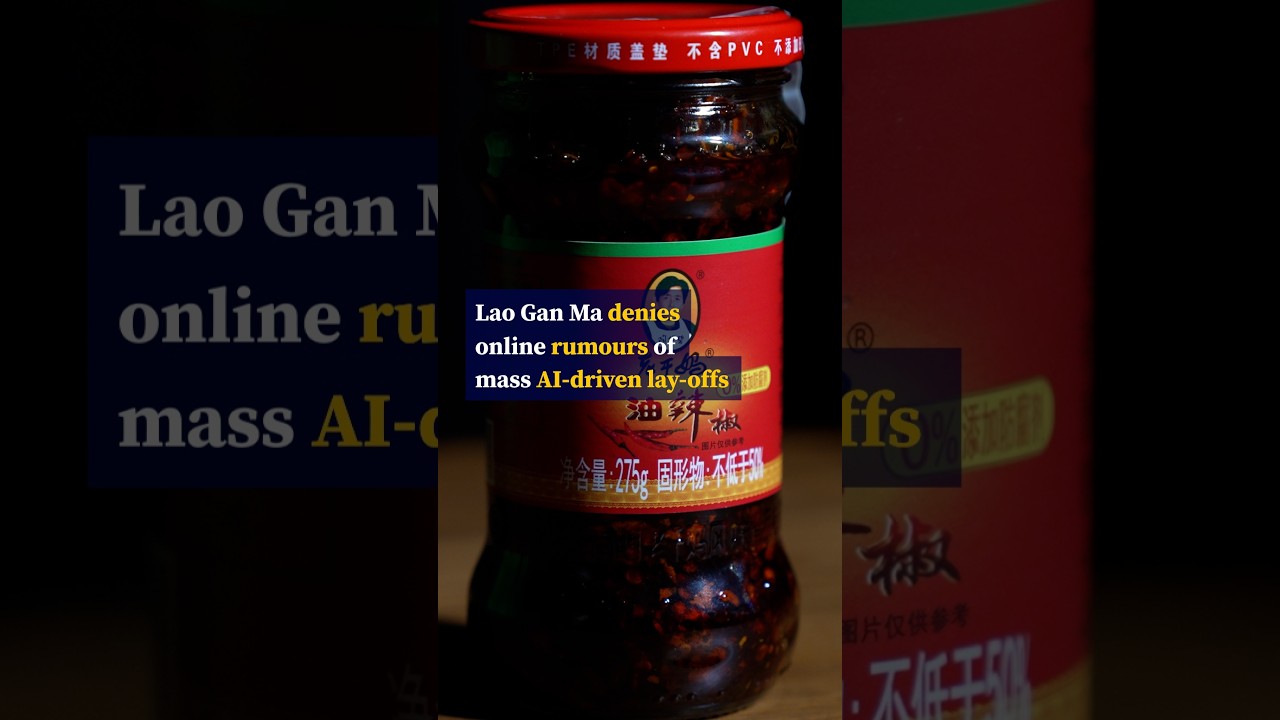
The maker of China’s most popular condiment, Lao Gan Ma chilli sauce, has denied online claims that it used AI to replace hundreds of human workers. The rumours on Weibo said the company slashed 92 per cent of its workforce after implementing an AI system. The company said its executives’ comments, made during a speech earlier this month, were edited and that it had never made lay-offs of that scale.
The maker of China’s most popular condiment, Lao Gan Ma chilli sauce, has denied online claims that it used AI to replace hundreds of human workers. The rumours on Weibo said the company slashed 92 per cent of its workforce after implementing an AI system. The company said its executives’ comments, made during a speech earlier this month, were edited and that it had never made lay-offs of that scale.
The maker of China’s most popular condiment, Lao Gan Ma chilli sauce, has denied online claims that it used AI to replace hundreds of human workers. The rumours on Weibo said the company slashed 92 per cent of its workforce after implementing an AI system. The company said its executives’ comments, made during a speech earlier this month, were edited and that it had never made lay-offs of that scale.
The maker of China’s most popular condiment, Lao Gan Ma chilli sauce, has denied online claims that it used AI to replace hundreds of human workers. The rumours on Weibo said the company slashed 92 per cent of its workforce after implementing an AI system. The company said its executives’ comments, made during a speech earlier this month, were edited and that it had never made lay-offs of that scale.
Apple’s first foldable phone, the iPhone Duo, went on sale October 23, drawing heavy interest from fans. But problems surfaced that same day. Just two days after the launch, many buyers were already regretting their purchase.
Apple’s first foldable phone, the iPhone Duo, went on sale October 23, drawing heavy interest from fans. But problems surfaced that same day. Just two days after the launch, many buyers were already regretting their purchase.
Citibank’s Yeo Wenxian, head of wealth for Asia South, and Sylvia Zhang, head of North Asia cluster at Citi’s International Personal Bank Singapore, discuss how AI and globalisation are leading to an abundance of information for investors. They also explain how the bank’s advisers are providing clarity and context by helping to distil their insights and information into clear, practical advice for clients.
Citibank’s Yeo Wenxian, head of wealth for Asia South, and Sylvia Zhang, head of North Asia cluster at Citi’s International Personal Bank Singapore, discuss how AI and globalisation are leading to an abundance of information for investors. They also explain how the bank’s advisers are providing clarity and context by helping to distil their insights and information into clear, practical advice for clients.
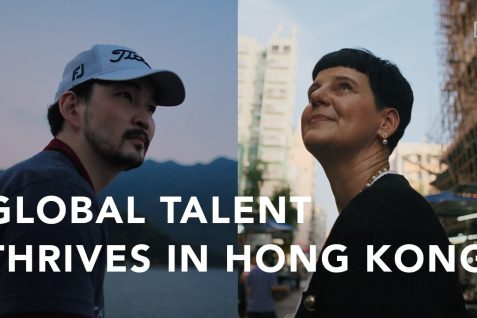
Since moving to Hong Kong in the early 2020s, Kazakh ophthalmologist Mukhit Kulmaganbetov and German museum curator Silke Schmickl have both expanded their careers while the city continues to inspire them personally and professionally.
Since moving to Hong Kong in the early 2020s, Kazakh ophthalmologist Mukhit Kulmaganbetov and German museum curator Silke Schmickl have both expanded their careers while the city continues to inspire them personally and professionally.
Kylian Mbappe was dropped by major Chinese brands after a video circulated of the Real Madrid and France superstar apparently joking about Mao Zedong. Video: Alfred Davies/AFP.
More at – ‘s only non-profit, independent English-language news source – impartial, governed by an ethics code. HKFP is a member of the Trust Project, visit hongkongfp.com/ethics to view our journalistic standards.
Kylian Mbappe was dropped by major Chinese brands after a video circulated of the Real Madrid and France superstar apparently joking about Mao Zedong. Video: Alfred Davies/AFP.
More at – 's only non-profit, independent English-language news source – impartial, governed by an ethics code. HKFP is a member of the Trust Project, visit hongkongfp.com/ethics to view our journalistic standards.
A fire in Guryong village, the last shanty town in the South Korean capital Seoul, burned for more than 13 hours before being extinguished by firefighters on Tuesday.
A fire in Guryong village, the last shanty town in the South Korean capital Seoul, burned for more than 13 hours before being extinguished by firefighters on Tuesday.

 by YNOT