Watch the full podcast!
China wants to win big in the AI race against the US and will do ANYTHING to win. And—why the Iran War “had to happen,” according to Dave Stilwell, former Assistant Secretary of State.
Join our fight to expose the CCP at and get ALL the new full-length interviews!
And check out our other channel, China Uncensored:
Watch the full podcast!
China wants to win big in the AI race against the US and will do ANYTHING to win. And—why the Iran War "had to happen," according to Dave Stilwell, former Assistant Secretary of State.
Join our fight to expose the CCP at and get ALL the new full-length interviews!
And check out our other channel, China Uncensored:
On October 29, an affair-and-spy controversy thrust Nvidia founder Jensen Huang and Chinese businesswoman Alice Huang into the spotlight. At first, it seemed like gossip about a technology executive’s private life. But as more information emerged, it developed into suspicions of espionage.
On October 29, an affair-and-spy controversy thrust Nvidia founder Jensen Huang and Chinese businesswoman Alice Huang into the spotlight. At first, it seemed like gossip about a technology executive's private life. But as more information emerged, it developed into suspicions of espionage.
Do you find yourself buying more than you need to every time there is a megasale? As China’s Double 11 shopping spree approaches, a viral mini-program on the Chinese social app WeChat is helping people curb impulse buying. Launched in early September, the free tool, called “Wallet, Please Wait”, was built in just eight days by a product manager with the help of AI. Shoppers can post their purchase requests to a public “plaza”, where strangers vote to approve or reject their potential buys. Some also use the tool to seek advice on everything from dinner choices to career paths.
Do you find yourself buying more than you need to every time there is a megasale? As China’s Double 11 shopping spree approaches, a viral mini-program on the Chinese social app WeChat is helping people curb impulse buying. Launched in early September, the free tool, called “Wallet, Please Wait”, was built in just eight days by a product manager with the help of AI. Shoppers can post their purchase requests to a public “plaza”, where strangers vote to approve or reject their potential buys. Some also use the tool to seek advice on everything from dinner choices to career paths.
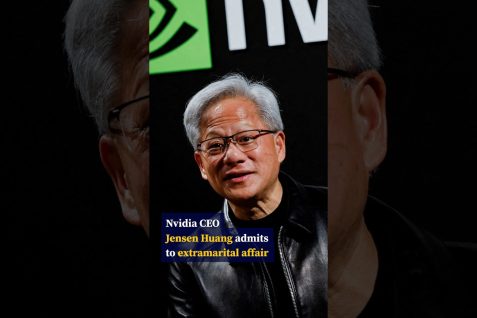
Nvidia CEO Jensen Huang admitted to having an extramarital affair in an internal memo to staff on November 8. Although Huang did not name the woman he had the affair with, she is reportedly Alice Huang, a Chinese businesswoman who once helmed Megaspeed International, a Singapore-based AI computing company that did business with Nvidia. Late last month, The New York Times reported that US intelligence assessed Alice Huang was recruited as a Chinese intelligence asset, a claim that China’s foreign ministry rejected as “groundless”.
Nvidia CEO Jensen Huang admitted to having an extramarital affair in an internal memo to staff on November 8. Although Huang did not name the woman he had the affair with, she is reportedly Alice Huang, a Chinese businesswoman who once helmed Megaspeed International, a Singapore-based AI computing company that did business with Nvidia. Late last month, The New York Times reported that US intelligence assessed Alice Huang was recruited as a Chinese intelligence asset, a claim that China’s foreign ministry rejected as “groundless”.
In today’s high-pressure working environment, employee stress and mental well-being can no longer be treated as personal issues. Michael Khan, CEO of Cigna Healthcare Hong Kong, discusses how mental health can affect productivity and workforce resilience, and why employers need to take a more proactive approach to the health of their staff.
Citing findings from Cigna Healthcare’s “International Health Study 2026”, Khan highlights how stress can affect employee productivity, and why business leaders need to view employee health as a strategic asset.
Videos circulating online Monday show an excavator tearing down the entrance and damaging the exterior of a government administrative service building in Fengdong New City in China’s northwestern Shaanxi province. Police arrested the suspect but no motive was given for his actions.
Videos circulating online Monday show an excavator tearing down the entrance and damaging the exterior of a government administrative service building in Fengdong New City in China’s northwestern Shaanxi province. Police arrested the suspect but no motive was given for his actions.
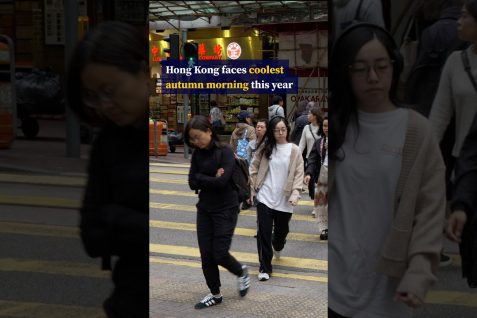
Hong Kong recorded its coolest morning so far this autumn on Tuesday, with the city’s weather forecaster posting a minimum temperature of 17.5 degrees Celsius (63.5 Fahrenheit). A strong northeast monsoon has brought cool and windy weather for the day, but temperatures are expected to rise again later in the week as the monsoon eases.
Hong Kong recorded its coolest morning so far this autumn on Tuesday, with the city’s weather forecaster posting a minimum temperature of 17.5 degrees Celsius (63.5 Fahrenheit). A strong northeast monsoon has brought cool and windy weather for the day, but temperatures are expected to rise again later in the week as the monsoon eases.
Democrats won a major victory in the U.S. midterm elections, giving them control of both the House Nvidia CEO Jensen Huang has admitted to having an affair with a Chinese woman. Alice Huang is suspected of being a Chinese spy who targeted one of America’s most critical chipmakers. We take a closer look.
Could a trilateral summit involving the leaders of the United States, Russia, and China take place next week? President Donald Trump has responded.
China has extended its tariff truce with the United States for another two months. But questions remain over whether Beijing will follow through on its commitment to purchase American agricultural products.
Taiwanese authorities have detained a Communist Party leader over alleged Chinese efforts to influence local elections.
Isaac Stone Fish, who runs China risk research firm Strategy Risks, tells veteran business journalist Deirdre Bosa it seems “very, very unlikely” Jensen Huang was the only Fortune 500 chief executive Beijing targeted, though nothing more has been documented. He calls the episode a net loss for China and expects tougher export control enforcement. Huang admitted an affair with a woman US intelligence officials believe was recruited by China; the allegations are unproven, Nvidia’s board is investigating, and China calls them a smear.
Isaac Stone Fish, Founder and Chief Executive Officer, Strategy Risks
Deirdre Bosa, Yahoo Finance
Isaac Stone Fish, who runs China risk research firm Strategy Risks, tells veteran business journalist Deirdre Bosa it seems "very, very unlikely" Jensen Huang was the only Fortune 500 chief executive Beijing targeted, though nothing more has been documented. He calls the episode a net loss for China and expects tougher export control enforcement. Huang admitted an affair with a woman US intelligence officials believe was recruited by China; the allegations are unproven, Nvidia's board is investigating, and China calls them a smear.
Isaac Stone Fish, Founder and Chief Executive Officer, Strategy Risks
Deirdre Bosa, Yahoo Finance
Watch the full podcast!
If you want the CCP back down, it turns out some guys with clipboards could be the answer. In this clip, we talk with Dave Stilwell, former Assistant Secretary of State, about how the U.S. got China to back down using just that.
Join our fight to expose the CCP at and get ALL the new full-length interviews!
And check out our other channel, China Uncensored:
Nvidia CEO Jensen Huang, who leads a computing empire valued at $4 trillion, has recently become the center of a storm over his relationship with a Chinese female spy close to him. The affair has attracted the attention of the U.S. government. There is concrete evidence, including footage showing the two behaving intimately. The scandal has also affected Huang’s family. His daughter, Madison Huang, abruptly canceled a planned visit to South Korea. His relationship with the woman has drawn scrutiny from U.S. authorities.
Nvidia CEO Jensen Huang, who leads a computing empire valued at $4 trillion, has recently become the center of a storm over his relationship with a Chinese female spy close to him. The affair has attracted the attention of the U.S. government. There is concrete evidence, including footage showing the two behaving intimately. The scandal has also affected Huang's family. His daughter, Madison Huang, abruptly canceled a planned visit to South Korea. His relationship with the woman has drawn scrutiny from U.S. authorities.
Help us make your Unmade in China 2026 Christmas Catalog!
China is building a massive floating island that could stay at sea for months, withstand typhoons, and deploy equipment deep beneath the ocean. Officially, it’s for scientific research. But with ties to China’s military and nuclear blast protection, could this be another weapon in Beijing’s growing Pacific ambitions?
Operation Honey Pot: Paste this emoji 🍯 in your comment below.
Want to go deeper than YouTube will let us? Check out our website:
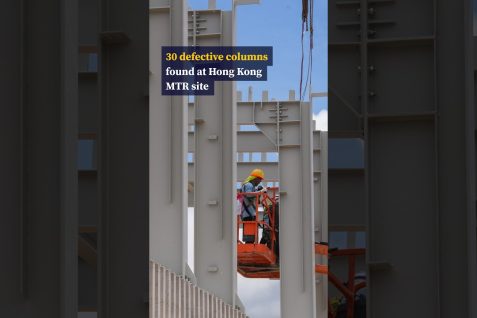
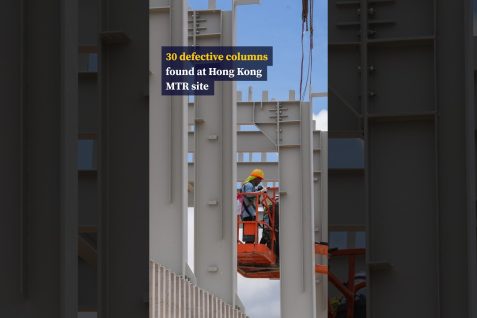
Engineers have identified about 30 “substandard” columns at a Hong Kong railway station under construction, building authorities have revealed. The MTR Corporation has ordered the contractor to rectify the structures after discovering unauthorised remedial works.
Engineers have identified about 30 “substandard” columns at a Hong Kong railway station under construction, building authorities have revealed. The MTR Corporation has ordered the contractor to rectify the structures after discovering unauthorised remedial works.
Engineers have identified about 30 “substandard” columns at a Hong Kong railway station under construction, building authorities have revealed. The MTR Corporation has ordered the contractor to rectify the structures after discovering unauthorised remedial works.
About thirty concrete columns at a Hong Kong railway station still under construction have been found defective, in a quality failure that engineers and lawmakers have called almost unimaginable for a project of this scale. The station is Tung Chung West, part of the Tung Chung Line Extension on Lantau Island, and the defects were confirmed by the Buildings Department after formwork was progressively removed. Photographs circulated in Hong Kong media showed columns whose concrete stopped short of the slab above them, leaving clear voids at the top. The MTR Corporation has ordered the main contractor to rectify the structures and has halted the related work while investigators establish how so many columns could be poured short. For a city that prides itself on building some of the most complex rail infrastructure in the world, the episode is an embarrassment that has landed squarely on the desks of two government departments.
The fullest account, pieced together from the Buildings Department and MTR statements, runs in stages. The project’s registered structural engineer’s team first spotted one defective concrete column in early October and ordered the registered contractor to rectify it. On October 27, Buildings Department officers carrying out a routine site inspection and quality audit reviewed the same issue and confirmed two defective columns on the spot. As formwork and concrete were progressively removed for a wider check, similar defects appeared in column after column. By November 6, after all the formwork had come down, about thirty columns showed the problem.
Reporting by HK01, which broke the story, put the alleged shortfall at roughly twenty to thirty centimetres between the tops of the concourse columns and the underside of the floor above, with steel reinforcement exposed. The concourse reportedly contains about sixty columns, meaning roughly half of them may be affected. MTR’s own confirmed discovery concerns the platform level, where a routine October inspection found that material had been used to fill the upper ends of some columns without the corporation’s prior approval. The operator has not publicly confirmed the concourse figure of thirty short-poured columns itself, and it has not directly answered whether those columns were poured short of the floor above. Keeping those two threads separate — the reported concourse gaps and the confirmed unapproved platform repairs — is essential to understanding what is established and what is still allegation.
An Unapproved Repair Made It Worse
What transformed a construction defect into a governance story was the discovery that remedial work had already begun without permission. MTR said its inspectors found that the tops of some platform-level columns had undergone a material-filling repair that the corporation had never approved. It immediately ordered the main contractor, the Bouygues-Dragages joint venture, to stop that repair process and to examine columns and construction procedures across both the platform and concourse levels. The Highways Department formally learned of the problem on November 2, then carried out site checks and met the operator before setting its deadline. A contractor that quietly patches a defect, rather than reporting it up the chain, breaks the supervision system that projects like this depend on.
The official line, from both MTR and the departments, is that the station is not in danger. The temporary supports propping the floor slabs have not been removed, so the defective columns are not yet carrying the loads they were designed for, and officials say the flaws pose no risk to the structural integrity of the unfinished station. The Buildings Department’s preliminary review found no evidence of an intentional deviation from the approved plans, and no sign that the personnel in charge broke the relevant codes in their follow-up actions. That framing matters, because it points the investigation toward procedure and supervision rather than deliberate corner-cutting. It does not, however, answer the basic question of how a pour could finish twenty or thirty centimetres short and pass unnoticed until the formwork came off.
Deadlines, Costs and a 2029 Opening Under Scrutiny
The accountability machinery is now moving on a tight timetable. The Buildings Department has told the registered structural engineer to submit an investigation report and proposed remedial measures by the middle of this month. The Highways Department has separately required MTR to submit a detailed investigation report by November 16, and has instructed it to press the contractor to prepare a detailed repair plan. Remedial work is to be carried out at the contractor’s own expense, and no restart date for the stopped repairs has been announced. The Tung Chung Line Extension carries a budget of about HK$19.5 billion, so even a localised rebuild sits inside a very expensive programme.
Officials are holding the public schedule steady for now. The Highways Department says the extension’s target of opening in 2029 remains unchanged, and the station’s main structure is still aimed for completion in the first half of 2027. Tung Chung West is being built as a three-level station — ground, concourse and platform — using a top-down method in which slabs are cast first and the structural columns and walls follow. That method is precisely why the temporary supports matter so much to the official safety case. The supports may be struck only when the structural engineer’s team is satisfied, which gives engineers a hard checkpoint before the station ever carries a passenger.
Why a Simple Pour Became a Political Problem
The professional reaction has been disbelief as much as anger. Engineering-sector lawmaker Aaron Bok Kwok-ming, deputy chairman of the Legislative Council’s railways subcommittee, said filling concrete into columns was a simple task and that such a mistake should not happen. He called the failure unimaginable and very rare for a contractor of Bouygues-Dragages’ experience. Senior engineer Ho Wing-ip offered a cooler reading, arguing that no contractor would deliberately save about one percent of concrete only to cripple a column. Together, those reactions sketch the puzzle investigators face: the defect looks too basic to be sabotage and too widespread to be a single worker’s slip.
For MTR, which is developing the extension under an ownership model that makes it responsible for design, construction, operation and maintenance, the deeper issue is oversight. Lawmakers have urged the corporation to strengthen supervision and to make it easier for frontline workers to flag problems before they are patched over. The Highways Department, for its part, says it monitors progress, safety and quality through site visits and checks of key construction processes, and that it will review supervision and acceptance procedures. The mid-November reports will be the first real test of whether the explanations match the photographs. Until then, thirty short columns under a propped slab in Tung Chung stand as a rare, visible crack in Hong Kong’s reputation for getting big infrastructure right.
The board of US AI chip giant Nvidia has announced an independent investigation as chief executive Jensen Huang on Sunday said in a memo to employees that he had been unfaithful to his wife. The board said the inquiry followed reports that Huang had been targeted by a foreign intelligence operation.
The chief executive of the world’s most important AI chip company has admitted to an extramarital affair, and his own board has opened an independent investigation into whether he was the target of a foreign intelligence operation. Jensen Huang, the 63-year-old founder and CEO of Nvidia, told employees in a memo on Sunday that he had been unfaithful to his wife, apologising to his family and to the company in unusually blunt language. Nvidia’s board announced the same day that a committee of independent directors, assisted by outside counsel, would examine reporting that a foreign intelligence service had targeted him. The board stressed that it has no reason to believe national security or Nvidia’s secrets were compromised, but said its inquiry would examine all available information. Huang remains in his job, with the board publicly expressing confidence in his leadership while the review runs.
Huang’s memo to staff was short and left nothing hedged. “I owe my family and all of you an apology,” he wrote. “I was unfaithful to my wife. My actions hurt her and our children. There is no excuse for what I did. I am deeply sorry.” He said he takes full responsibility for the hurt he caused, and he addressed the security reporting directly only to endorse the board’s response. “Regarding the national security concerns raised in news reports, NVIDIA’s Board of Directors has initiated an independent investigation,” he wrote. “I support the investigation and will cooperate fully.”
What the memo does not do is name the other party or confirm any connection between the affair and the intelligence allegations. Huang admitted infidelity, nothing more, and neither he nor Nvidia has publicly drawn a line from the affair to any foreign service. That distinction matters, because the espionage side of the story rests on government suspicions and press reporting rather than on anything Huang has conceded. No criminal charge has been brought against anyone in connection with the case. Huang has also committed to remaining chief executive without interruption while the investigation proceeds.
The Intelligence Allegation Behind the Probe
The board’s investigation follows a series of reports that US officials believe Huang was targeted through a close relationship with Alice Huang, a Chinese citizen and former senior executive at Megaspeed International, a Singapore-based data-centre company and major Nvidia customer. According to the reporting, the US government suspects she was recruited by a Chinese intelligence agency, and the Financial Times reported on Saturday that an American intelligence memo naming Huang exists. The New York Times reported late last month that officials believed he had struck up a close relationship with the businesswoman and that she was feeding information directly to Beijing. A further report on Sunday said Secretary of State Marco Rubio had overseen a top-secret memo this spring warning other officials about the tie.
Huang had previously described his relationship with Alice Huang as a normal business relationship, and she is no longer at Megaspeed. Nobody has publicly charged her or her former employer with a crime, and no report has accused Jensen Huang of knowing about any intelligence activity. Chinese state media have denied any Beijing link to the affair and called the spy narrative fabricated. The board’s statement framed its inquiry squarely around security rather than conduct, saying it prioritises US national and economic security. It named neither the committee members nor the law firm retained to run the review.
Washington Is Closing In
The affair has already moved from the business pages into congressional oversight. On November 5, three House Republicans — John Moolenaar of the Select Committee on China, Brian Mast of the Foreign Affairs Committee and Rick Crawford of the Permanent Select Committee on Intelligence — wrote to Huang asking him to take part in a joint closed-door briefing on November 18. Senator John Cornyn has called for a congressional investigation of his own. Analysts expect the case to draw parallel scrutiny from the board’s review, from the US government and from Congress at the same time. Each of those tracks will ask the same underlying question: whether the relationship created any channel through which information about Nvidia’s restricted AI chips could have flowed.
That question carries weight far beyond one executive’s private life because of where Nvidia sits in the US-China technology contest. The company’s accelerators are the choke point of the global AI build-out, and American export controls on those chips are a central instrument of Washington’s China policy. Huang has been a prominent public advocate for looser controls, arguing that restrictions hand the Chinese market to domestic rivals. Reporting that he may have been cultivated by a suspected intelligence asset inevitably reframes that advocacy in the eyes of investigators, whether or not any influence was ever exercised. It is precisely that gap — between suspicion and proof — that the board’s inquiry now has to work through.
A Governance Crisis at the Centre of the AI Boom
Markets reacted immediately. Nvidia shares fell about 4.2 percent in overnight trading ahead of Monday’s session, a move analysts attributed to leadership risk rather than to any change in the company’s business. Some governance specialists have speculated that Huang could ultimately lose the chief executive title even though he is not accused of a crime, on the grounds that his judgment and code of conduct will be judged harshly. Others, including veteran analyst Patrick Moorhead, have focused on the sheer number of investigations now converging on the company. The board, for its part, moved to steady the ship, saying Huang fully supports the review and that it retains confidence in him and his leadership team.
For now, the established facts are narrow: the CEO admitted an affair, the board opened an independent investigation into reported foreign targeting, and both sides say no compromise of secrets is currently believed to have occurred. Everything beyond that — the identity and role of the alleged asset, the contents of the intelligence memos, and whether Beijing gained anything at all — remains allegation and reporting, not finding. The November 18 closed-door briefing and the board’s eventual report will be the first real tests of what the US government actually holds. Until then, the world’s most valuable chipmaker is being run by a chief executive under investigation, at the exact moment its products sit at the heart of the rivalry between Washington and Beijing.
How can doctors participate in one of the world’s most horrifying human rights abuses? A new report reveals how the Chinese Communist Party controls China’s medical system, creating a system where loyalty to the Party can matter more than the lives of patients. We look at the allegations of forced organ harvesting and why doctors may be afraid to speak out.
Don’t let YouTube erase China Uncensored! Support the show at
Operation Honey Pot: Paste this emoji 🍯 in your comment below.
How can doctors participate in one of the world's most horrifying human rights abuses? A new report reveals how the Chinese Communist Party controls China's medical system, creating a system where loyalty to the Party can matter more than the lives of patients. We look at the allegations of forced organ harvesting and why doctors may be afraid to speak out.
Don't let YouTube erase China Uncensored! Support the show at
Operation Honey Pot: Paste this emoji 🍯 in your comment below.
Watch the full podcast!
President Trump didn’t meet Xi on the tarmac of his September visit to show him a warm welcome, it was to show him just how powerful the American military is. In this episode, we talk with Dave Stilwell, former Assistant Secretary of State, about all the ways the White House pretended to be extending an olive branch while actually poking fun at its guests.
Join our fight to expose the CCP at and get ALL the new full-length interviews!
And check out our other channel, China Uncensored:
Angry residents of Indonesia’s Batam island staged spontaneous protests in October 2026, outside a park where a new cluster of data centres is under construction. Taps at home had run dry for the residents for months, which they blamed on severe outages that hit the municipal water service after the arrival of the data centres.
Batam has everything a data centre developer could want: cheap land, a free-trade zone, generous tax treatment and a location just a short ferry ride from Singapore, the region’s digital capital. What it does not have is water to spare. The Indonesian island’s push to become Southeast Asia’s next data centre powerhouse has collided with a basic physical fact — Batam has no rivers of consequence and no natural freshwater sources, and its 1.3 million people depend entirely on rain collected in a handful of artificial reservoirs. When residents of one village found their taps dry for three months while server halls rose nearby, the island’s grand digital ambitions met their first serious public test.
The confrontation came to a head on October 5, when around 300 residents of Bakau Serip village marched on the entrance of Nongsa Digital Park carrying empty bottles and jerry cans. Their message, repeated in interviews since, was stark: not a single drop had come through their taps in three months, and their supply had been reliable until the data centres came. Protesters blocked access roads and demanded to know why facilities cooling the world’s AI models could find water that households could not. It was the third month of protests, following earlier demonstrations in August and September, and it turned a local utility failure into an international story about the hidden costs of the AI boom.
Why Batam, and Why So Fast
Batam’s rise is no accident. Singapore, facing land and power constraints and having imposed a moratorium on new data centres between 2019 and 2022, pushed demand outward, and Batam — along with Malaysia’s Johor — was positioned to catch it. The island’s free-trade status, administered by the agency BP Batam, offers investors streamlined permits and fiscal incentives a short distance from one of the world’s great internet exchanges. Subsea cables already link Batam into regional networks, and Nongsa Digital Park was purpose-built as the landing zone for the industry. For developers serving Singaporean and regional demand, Batam promised Singapore-grade connectivity without Singapore-grade prices.
The money followed quickly. BP Batam has approved ten data centres on the island, six of them inside Nongsa Digital Park, with at least six more applications under review and total investment officially put at more than US$6.7 billion as of mid-2026. Committed projects include a facility by Hong Kong’s Gaw Capital with Indonesian developer Sinar Primera, a planned 450-megawatt campus by Singapore’s DayOne, and a 360-megawatt AI data centre announced in June by Nvidia-backed Firmus, also with DayOne. Official estimates put Batam’s data centre power demand above 1,100 megawatts by 2030.
The Water Underneath the Story
The problem is what data centres drink. Modern facilities use enormous volumes of water to cool the servers and graphics processors that train and run AI systems, and the industry’s standard figures are sobering: a typical data centre consumes around 300,000 gallons of water a day, roughly the usage of a thousand American households, and larger campuses use far more. Indonesia’s environmental forum Walhi has estimated that around ten AI data centres could require some 32 million litres a day — the daily needs of roughly 320,000 people. Batam’s actual facilities do not publish their consumption, which is itself part of the grievance. Residents are being asked to trust that the numbers are small, in a place where every litre is counted by the weather.
Batam’s supply system was fragile before the first server hall was built. The island’s reservoirs — six by most official counts — are filled by rainfall, and a prolonged dry spell this year, possibly linked to a strong El Niño, has drawn levels down sharply. Local environmental group Akar Bhumi Indonesia has simulated that the Nongsa reservoir, which supplies Bakau Serip, could run dry within a month without rain, and its output reportedly fell from around 90 litres per second to 25 during the October drought. Ageing pipes and weak interconnections between reservoir networks mean water cannot easily be moved to where it is needed. In January, the regional ombudsman had already identified 18 water-stressed areas on the island, some receiving water for only a few hours a day.
Drought, Say the Authorities — Diversion, Say the Villagers
BP Batam and the island’s water utility deny that household water is being diverted to data centres, blaming the shortages squarely on the prolonged dry spell. The agency has pointed out that Nongsa Digital Park was promised supply through a dedicated pipeline from the much larger Duriangkang Reservoir, while Bakau Serip depends on the small Nongsa reservoir — a structural separation, officials argue, not a diversion. As an emergency measure, BP Batam has connected Nongsa’s distribution network to Duriangkang, while warning that the fix could reduce pressure and supply hours elsewhere on the island. The utility says it is working to improve supplies but has not publicly addressed whether data centre demand is contributing to the shortage.
The villagers’ counter-argument is about priorities rather than plumbing. From Bakau Serip, the visible facts are dry taps at home and construction cranes at the digital park, and the assurance that the two are unrelated requires a trust that three months without water has exhausted. Their protests have already changed policy: after the August and September demonstrations, Batam authorities instructed data centre developers to build their own seawater desalination plants rather than draw on the island’s freshwater reservoirs. That instruction is a significant precedent. It concedes, in practice, that a rain-dependent island cannot simply allocate its drinking water to the AI industry and hope the weather cooperates.
A Test Case for Asia’s AI Build-Out
Batam is not an outlier; it is an early example of a collision now repeating across the region. Malaysia’s data centre boom has raised the same questions about power grids and water, with a single 300-megawatt facility reported to consume more energy and water than many residential townships. Environmental groups in Indonesia are calling for a moratorium on new data centres until comprehensive rules on water and environmental protection exist. The Indonesia Data Center Ecosystem Council is due to bring operators, regulators and community representatives together in Batam later this month to address power, water and community impact. What is decided there will be watched from Johor to Jakarta, because every government courting AI investment faces the same equation.
So can Batam be Asia’s next data centre powerhouse? The honest answer is that the question has changed. A decade ago it was a question about land, cables and tax breaks, and Batam wins on all three. Today it is a question about whether an island that runs on captured rainwater can host one of the thirstiest industries on Earth without taking water out of its own residents’ taps. Desalination, if the operators actually build it, could square that circle — at a price that will test the economics that drew them to Batam in the first place. The cranes at Nongsa are still moving, and the investment figures are still rising. But the villagers of Bakau Serip, carrying their empty jerry cans, have made sure that the next chapter of Batam’s digital story will be written in water as much as in data.
An explosion in Wuhan could be revenge against society. And Iranian ghost fleets head to China beat Trump’s blockade.
Operation Honey Pot: Paste this emoji 🍯 in your comment below.
Want to know what the CCP is REALLY afraid of? YOU! Join the China Uncensored 50 Cent Army!
An explosion in Wuhan could be revenge against society. And Iranian ghost fleets head to China beat Trump's blockade.
Operation Honey Pot: Paste this emoji 🍯 in your comment below.
Want to know what the CCP is REALLY afraid of? YOU! Join the China Uncensored 50 Cent Army!
Football superstar Cristiano Ronaldo announced in an Instagram video on Thursday that he was stepping down from the Portuguese national team. “A journey that began in August 2003 and changed my life forever has come to an end,” Ronaldo told his 679 million followers. Ronaldo’s farewell comes after criticism over his performance at the 2026 Fifa World Cup and a recent falling out with the national team’s new coach.
Football superstar Cristiano Ronaldo announced in an Instagram video on Thursday that he was stepping down from the Portuguese national team. “A journey that began in August 2003 and changed my life forever has come to an end,” Ronaldo told his 679 million followers. Ronaldo’s farewell comes after criticism over his performance at the 2026 Fifa World Cup and a recent falling out with the national team’s new coach.
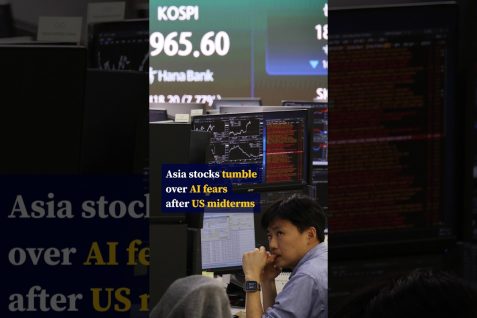
Asian tech stocks experienced steep declines early Friday on fears that Democrats’ gains in the US midterms would ramp up regulatory scrutiny of AI. Key tech stocks felt the hit, including Korean AI chipmakers Samsung Electronics and SK Hynix. Markets across the region showed signs of stabilising later in the day after interventions by regional financial authorities.
Asian tech stocks experienced steep declines early Friday on fears that Democrats’ gains in the US midterms would ramp up regulatory scrutiny of AI. Key tech stocks felt the hit, including Korean AI chipmakers Samsung Electronics and SK Hynix. Markets across the region showed signs of stabilising later in the day after interventions by regional financial authorities.
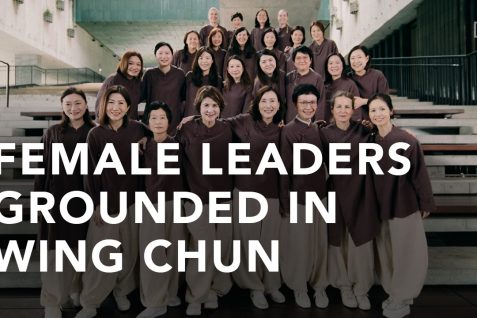
In partnership with: Women Chief Executives Hong Kong
Ahead of their annual summit, members of Women Chief Executives Hong Kong gathered to practice wing chun. The Chinese martial art is grounded in the principles of sensitivity, focus and adaptability, providing these leaders with a blueprint to guide them as they seek to redefine opportunities for female talent.
A dispute over a parking space in Japan’s Nara prefecture took a dangerous turn when a 79-year-old woman sped off with a man clinging to the bonnet of her car in Kashihara City. The woman drove for 2.2km (1.4 miles) with the man on her car before she was arrested. She faces charges of attempted murder.
A dispute over a parking space in Japan’s Nara prefecture took a dangerous turn when a 79-year-old woman sped off with a man clinging to the bonnet of her car in Kashihara City. The woman drove for 2.2km (1.4 miles) with the man on her car before she was arrested. She faces charges of attempted murder.
Historic midterm gains and surging youth voter turnout have supercharged the American left, expanding the DSA’s congressional presence from two seats to eight. While progressive allies like Michigan’s Abdul El-Sayed push populist agendas, internal friction is boiling over.
Senior US Correspondent Khushboo Razdan breaks down whether moderate Democrats and the ascendant left can maintain party unity – or if a deepening ideological rift will split the Democratic Party from within.
Experts say that despite regulatory frameworks, years of draining carbon-rich peatlands for commercial plantations have left vast ecosystems in Indonesia fragile and fire prone.
Experts say that despite regulatory frameworks, years of draining carbon-rich peatlands for commercial plantations have left vast ecosystems in Indonesia fragile and fire prone.
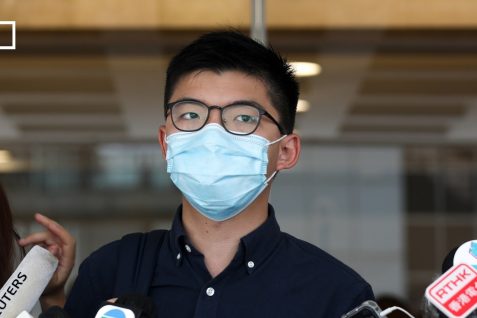
Jailed Hong Kong opposition activist Joshua Wong Chi-fung has been sentenced to 10 years behind bars for his role in a global campaign to instigate sanctions against mainland China and the city in the aftermath of the 2019 anti-government protests. Wong had been scheduled to complete a sentence of four years and eight months for conspiracy to commit subversion on January 7 next year. The court ordered two months and two days, representing the remaining time Wong is to serve his sentence in the previous national security case, to run concurrently with his latest jail term, meaning the activist’s expected release date is pushed back to November 2036.
Hong Kong activist Joshua Wong Chi-fung was sentenced on Thursday to 10 years in prison for conspiring to collude with foreign forces, in a second national security conviction that extends his time behind bars by a decade. Wong, who turned 30 last month, had pleaded guilty in September to conspiring with fellow activists to invite foreign sanctions against mainland China and Hong Kong in the aftermath of the 2019 anti-government protests. High Court Judge William Tam called the case “grave” and said the punishment had to fit the gravity of the crime. The sentence was shorter than the maximum penalty of life imprisonment, but far longer than the four and a half years Wong’s lawyers had asked for. It means the best-known face of Hong Kong’s pro-democracy generation will be 40 years old before he leaves prison.
The mechanics of the sentence underline how close Wong had come to freedom. He was already serving four years and eight months for conspiracy to commit subversion, a sentence imposed in the city’s landmark unofficial-primaries case, and that term was due to finish on January 7 next year, with only about two months left to run. The court ordered that remaining time — two months and two days — to run concurrently with the new 10-year term. Even with that small overlap, the effect is to push his expected release back to November 2036. Judge Tam said he had taken 13 years as the starting point for the sentence and reduced it because Wong pleaded guilty, while rejecting the argument that the activist’s role in the conspiracy had been limited.
From Teenage Protest Leader to Prisoner
Wong’s rise began when he was barely into his teens. At 14 he helped found the student group Scholarism, which in 2012 forced the Hong Kong government to shelve plans for patriotic national education in schools, an early and startling victory over Beijing-backed policy. In 2014 he became one of the most recognisable leaders of the Umbrella Movement, when tens of thousands of protesters occupied Hong Kong’s streets for 79 days demanding genuine universal suffrage. He later co-founded the political party Demosisto and travelled the world lobbying foreign governments to support Hong Kong’s democracy movement. That international advocacy — speeches, meetings and testimony abroad — built his global profile, and it is the same activity that prosecutors later placed at the centre of their case against him.
The turning point came in 2019, when mass protests against a proposed extradition bill convulsed the city for months and at times turned violent. Beijing responded in June 2020 by imposing a sweeping National Security Law on Hong Kong, criminalising secession, subversion, terrorism and collusion with foreign forces. The law transformed the legal landscape overnight, and much of the advocacy that Wong and his peers had practised openly for a decade fell within its reach. Wong has been in detention continuously since late 2020, through a succession of cases arising from the protest era. Thursday’s sentence is the heaviest single punishment he has received.
Two National Security Cases, Six Years Apart in Court
The subversion sentence Wong is finishing came from Hong Kong’s largest national security prosecution. He was one of 47 opposition figures charged over an unofficial primary election held in 2020 to choose candidates for the Legislative Council, and one of 45 ultimately jailed in 2024 after the trial concluded. His four years and eight months in that case made him one of the more lightly sentenced defendants, in part because of his early guilty plea. Before the collusion charge was brought in 2025, he was on course to walk free in January and resume life outside prison for the first time in more than six years. The new prosecution, filed while he was still serving the first sentence, reset that clock entirely.
The collusion case concerned events between July 1 and November 23, 2020 — the first months after the security law took effect. Prosecutors accused Wong of conspiring with self-exiled activist Nathan Law and others to ask foreign countries and organisations to impose sanctions, blockades or other hostile measures against Hong Kong and China. The judge pointed to real-world measures of that period, including the United States revoking Hong Kong’s preferential special status and sanctioning Chinese and Hong Kong officials, as the kind of actions the conspiracy had sought. The court said the conviction rested on Wong’s conduct after the law was enacted, though his earlier activities informed the assessment of gravity. Wong, for his part, said he had mistakenly believed his actions were within the law, and that he had never advocated Hong Kong independence or the collapse of China.
Reactions at Home and Abroad
Hong Kong’s leadership defended the sentence in the strongest terms. Chief Executive John Lee, himself a former security chief, said after the hearing that Wong and Law had committed “extremely serious offences” that undermined national sovereignty, security and development interests and prejudiced the well-being of the public. Beijing, through its officials, warned foreign governments against making what it called irresponsible remarks about the trial. Supporters of the law argue that lobbying foreign states to sanction one’s own city crosses a line that many countries police in their own statutes. To the authorities, the length of the sentence reflects both the seriousness of that offence and a deterrent message to anyone considering similar campaigns.
Abroad, the reaction was sharply critical. The United States consulate in Hong Kong said it strongly condemned the 10-year sentence, and American officials described Wong as unjustly imprisoned for advocating fundamental freedoms. Amnesty International said the case showed the National Security Law being used as a tool to punish dissent, noting that the conduct punished was a campaign of international advocacy rather than violence. Human rights groups argue that the law’s broad wording has swept up peaceful political activity that was legal and commonplace in Hong Kong before 2020. The divide in reactions mirrors the divide over the law itself, which supporters call a restoration of stability and critics call the end of the city’s promised autonomy.
For Hong Kong’s pro-democracy movement, the sentence closes another door. Its best-known figures are now in prison, in exile like Nathan Law, or silent under the pressure of the security law, and the parties and newsrooms that once sustained the movement have been dissolved or closed. Wong entered prison at 23 as a former student leader with a political future in front of him; on Thursday’s sentence he will leave it, if the term runs in full, at 40. Whatever view is taken of his case, its symbolism is hard to miss. The teenager who once filled Hong Kong’s streets with supporters will spend the whole of his thirties in a cell, under a law written for the protests he helped to lead.
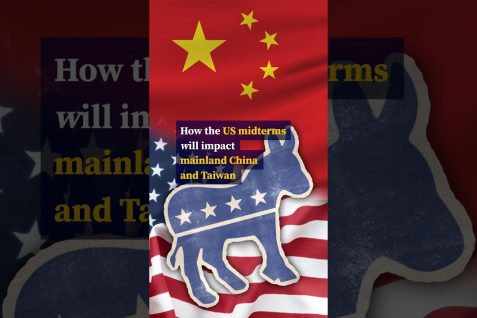
The US midterm elections 2026 have brought massive political shifts, but what do these results mean for the rest of the world? SCMP’s US deputy bureau chief Mark Magnier breaks down the global ramifications, exploring how the power shift in Washington will alter foreign policy. From a potential resurgence of support for Taipei, to Beijing’s strategic manoeuvers with a weakened US president, we analyse the future of US-China relations, tariffs and key alliances.
The US midterm elections 2026 have brought massive political shifts, but what do these results mean for the rest of the world? SCMP’s US deputy bureau chief Mark Magnier breaks down the global ramifications, exploring how the power shift in Washington will alter foreign policy. From a potential resurgence of support for Taipei, to Beijing’s strategic manoeuvers with a weakened US president, we analyse the future of US-China relations, tariffs and key alliances.
Chinese basketball icon Yao Ming on Wednesday spoke with primary school students and led a non-contact rugby clinic at the Hong Kong Football Club as part of the “Mental Wellbeing Through Sport initiative”. The former perennial NBA All-star was joined by decorated Olympic gymnast Li Xiaopeng and table tennis legend Deng Yaping.
Chinese basketball icon Yao Ming on Wednesday spoke with primary school students and led a non-contact rugby clinic at the Hong Kong Football Club as part of the “Mental Wellbeing Through Sport initiative”. The former perennial NBA All-star was joined by decorated Olympic gymnast Li Xiaopeng and table tennis legend Deng Yaping.
Some 15 years ago, then-high school student Joshua Wong was a rising political star in Hong Kong’s pro-democracy movement. Now 30, he has been sentenced for the second time under a Beijing-imposed national security law that effectively crushed the movement he once championed. Despite being behind bars, Wong continues to focus on self-improvement, reading books, taking university courses and learning guitar, according to his friend Louis Lee.
Some 15 years ago, then-high school student Joshua Wong was a rising political star in Hong Kong's pro-democracy movement. Now 30, he has been sentenced for the second time under a Beijing-imposed national security law that effectively crushed the movement he once championed. Despite being behind bars, Wong continues to focus on self-improvement, reading books, taking university courses and learning guitar, according to his friend Louis Lee.
Hong Kong may be small but it boasts some of the world’s most biodiverse unspoilt countryside and coastlines. The city is renowned for its dramatic mountains, many of which feel otherworldly and offer breathtaking views, and all are within easy reach of the urban centre.
Hong Kong may be small but it boasts some of the world’s most biodiverse unspoilt countryside and coastlines. The city is renowned for its dramatic mountains, many of which feel otherworldly and offer breathtaking views, and all are within easy reach of the urban centre.
Physiotherapist and entrepreneur Dinesh Verma has established successful healthcare and physical rehabilitation businesses in Asia. He shares how his clinical background, which focuses on prevention and preparation, has shaped his approach to decision-making. This helps him manage his regional business operations as well as his personal investment portfolio.
Physiotherapist and entrepreneur Dinesh Verma has established successful healthcare and physical rehabilitation businesses in Asia. He shares how his clinical background, which focuses on prevention and preparation, has shaped his approach to decision-making. This helps him manage his regional business operations as well as his personal investment portfolio.
Democrats won a major victory in the U.S. midterm elections, giving them control of both the House and the Senate. What could this mean for U.S.–China relati
Democrats won a major victory in the U.S. midterm elections, giving them control of both the House and the Senate. What could this mean for U.S.–China relations? And how might it affect Taiwan? Do you have Chinese stocks in your portfolio? You may not know what you’re actually investing in—or what Chinese companies are concealing from American investors. A multibillion-dollar artificial intelligence (AI) deal between a U.S. tech giant and a Chinese company has been called off. Oracle scrapped its $7 billion deal with Tencent under pressure from the U.S. government. China is expanding its dominance in another key sector, potentially gaining a powerful new source of leverage in its competition with the West. 00:00 Intro 01:06 How US Midterms Affect U.S.–China Relations 04:51 China Hides Key Information From Foreign Investors 06:39 Oracle Cancels $7 Billion Chinese Tencent AI Deal 08:17 Chinese Chemical Exports Threaten Foreign Countries 09:19 How China Surveils Tibet, Xinjiang, and Hong Kong 11:27 China Seen Testing New Stealth Technology 12:51 Chinese Information Warfare, Biological Threats, & More 13:15 China Targets State and Local Elections 14:37 Congress Took Years to Close Visa Gap 15:47 China’s Growth Rate Is Near Zero: Expert 18:08 China Hides True Trade Figures: Expert
Watch the full podcast!
Marxism is supposed to uplift the proletariat and overthrow the oppressing power structures that keep them subordinate. The Chinese Communist Party has turned its back on Chinese workers,a possibly fatal mistake.
Join our fight to expose the CCP at and get ALL the new full-length interviews!
And check out our other channel, China Uncensored:
China is rapidly expanding its navy, building new bases, aircraft carriers, submarines, drones, and research ships. Its military is preparing to operate across the Pacific—and some US commanders warn that a conflict over Taiwan could come as soon as 2027. Is China preparing for war, and can America keep up?
Operation Honey Pot: Paste this emoji 🍯 in your comment below.
Want to know what the CCP is REALLY afraid of? YOU! Join the China Uncensored 50 Cent Army!