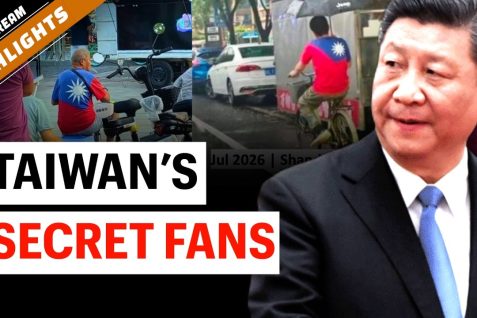
Are more people inside China beginning to see Taiwan as an alternative to Communist rule? From ROC flag shirts appearing in public to online admiration for Taiwan’s democracy, small but striking …
Are more people inside China beginning to see Taiwan as an alternative to Communist rule? From ROC flag shirts appearing in public to online admiration for Taiwan’s democracy, small but striking signs suggest that the Republic of China still holds powerful meaning for some mainland Chinese.
Secretary of State Marco Rubio meets with China’s top diplomat as both sides prepare for a possible leaders’ summit in Washington this fall. Meanwhile, the Quad sends a strong message on …
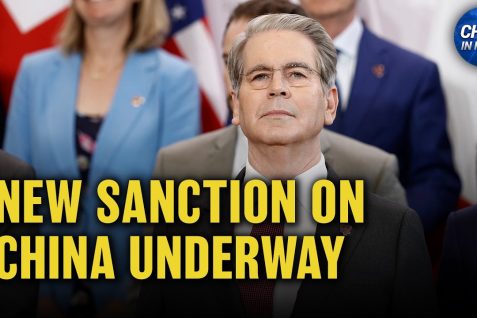
Secretary of State Marco Rubio meets with China’s top diplomat as both sides prepare for a possible leaders’ summit in Washington this fall. Meanwhile, the Quad sends a strong message on Indo-Pacific security. The United States is weighing new sanctions on China. This time, the fight is over artificial intelligence and alleged technology theft. U.S. Treasury Secretary Scott Bessent said, “We are finding watermarks of our U.S. large language models on many of the Chinese models.” Flooding has swept across China, including the financial hub of Shanghai. Rainwater leaked through roofs, pouring down like waterfalls, while sewage surged from toilets and flooded entire apartments. China’s housing slump isn’t over yet. It’s now in its fourth year. Experts explain why a recovery could still be years away. The human cost of socialism: From Cuba to Venezuela, critics say decades of authoritarian rule have crushed freedom and opportunity. We hear from an expert on what lies ahead. 00:00 Intro 01:06 Rubio, Wang Yi Set Stage for September Trump-Xi Summit 02:15 Quad Ministers Push Back on Coercion in Indo-Pacific 02:46 Philippine Foreign Minister Protests China’s Actions 03:58 Australia to Warn China Over Provocative Actions 04:21 Bessent Considers Sanctioning China for AI Model Theft 05:26 Bessent: China Buys Significantly Less Iranian Oil 05:40 China’s Multi-Front Assault on Free Societies 06:47 CCP Atrocity: Forced Organ Harvesting 07:16 Panels Highlight China’s Human Rights Abuses, Cyberattacks 09:27 Rainstorm Floods Parts of China’s Financial Hub 10:17 China’s Housing Slump Enters Fourth Year 12:08 Former TSMC Manager Faces China Espionage Charges 14:33 Venezuela Eyes Economic Turnaround 15:18 Venezuela Sees Democratic Progress 16:02 Americas Have to Be Free From Communism: Jraissati 17:55 Socialism Brings Poverty and Repression 19:20 China’s Venezuela Influence Faces Shift
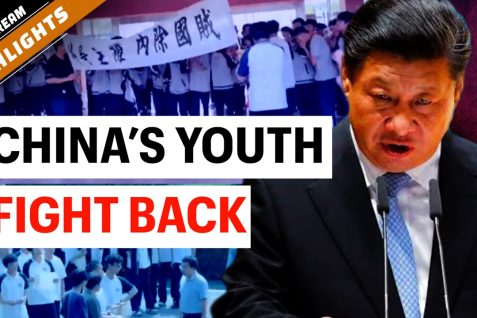
Chinese students are beginning to fight back—and some are winning. From shortened summer vacations and reduced weekends to power outages and oppressive school rules, young protesters are organizing, marching, and forcing …
Chinese students are beginning to fight back—and some are winning. From shortened summer vacations and reduced weekends to power outages and oppressive school rules, young protesters are organizing, marching, and forcing administrators to retreat. Their demands may begin with everyday grievances, but their language of freedom, equality, and resistance reveals something much bigger: China’s youth are learning that united action can work.
Read the full, detailed analysis on our portal right now: https://chinanewsupdate.com/chongqing… In this video, China analyst Tony Fiddis breaks down the multi-layered challenges facing Beijing, connecting the recent tragic Chongqing landslide …
Read the full, detailed analysis on our portal right now: https://chinanewsupdate.com/chongqing… In this video, China analyst Tony Fiddis breaks down the multi-layered challenges facing Beijing, connecting the recent tragic Chongqing landslide to broader infrastructure vulnerabilities. He explores how local governance pressures intersect with China’s current economic slowdown, wild US election interference claims, and the high-stakes battle to control China’s global image.
China is flooding again—and fears about the Three Gorges Dam are returning. But the dam may have unleashed more than an engineering crisis. From a severed “dragon vein” to the repeated …
China is flooding again—and fears about the Three Gorges Dam are returning. But the dam may have unleashed more than an engineering crisis. From a severed “dragon vein” to the repeated downfall of Chongqing’s police chiefs and political leaders, this program explores why the city associated with the Three Gorges has become known as China’s “political Bermuda Triangle”—and whether the so-called Chongqing curse is more than a legend, but a political killing field.
From maritime clashes to a potential fall summit: Secretary of State Marco Rubio lands in the Philippines with a firm message for China that America is staying focused on the Pacific. …
From maritime clashes to a potential fall summit: Secretary of State Marco Rubio lands in the Philippines with a firm message for China that America is staying focused on the Pacific. President Donald Trump is taking aim at U.S. reliance on China. The Pentagon is rolling out tougher rules for defense supply chains. We’ll break down what’s in the order. Harvard University is under investigation. The Justice Department says the Ivy League school may be providing financial aid to foreign students, presumably from China, at the expense of American students. In the space race between the United States and China, NASA’s Artemis III mission is moving forward despite an explosion in May. This year marks the 27th anniversary of the start of the deadly persecution of the Falun Gong meditation practice in China. We spoke with Steve Lance, host of NTD’s Capitol Report and executive producer of the award-winning documentary “Unbroken: The Untold Story of Shen Yun.” Rubio Pushes Back on China’s Influence in Southeast Asia Rubio to Meet China’s Wang Yi Amid Escalating Tensions U.S. Condemns China’s Actions Against Philippine Navy Trump Tightens Defense Supply Chain Rules DOJ Probes Harvard’s Financial Aid Practices New State Department Report Describes Cuban Infiltration in U.S. Report: Cuba Recruits American University Students as Agents Cuban Regime’s Strategic Partnerships With China, Russia U.S. Imposes 50 Percent Tariffs on $20 Billion of Canadian Goods Trump Administration to Unveil Forced Labor Trade Action NASA’s Artemis III Mission Still on Track for 2027 2026 Rally to End Persecution of Falun Dafa
Ten years after the landmark South China Sea arbitration ruling, its biggest legacy may not be the legal defeat of China’s Nine-Dash Line claim but what Beijing’s response revealed about its …
Ten years after the landmark South China Sea arbitration ruling, its biggest legacy may not be the legal defeat of China’s Nine-Dash Line claim but what Beijing’s response revealed about its strategic ambitions. Speaking to StratNewsGlobal, Philippine strategic affairs expert Dr Renato Cruz de Castro argues that China’s refusal to recognise the 2016 Permanent Court of Arbitration award fundamentally changed how countries across the Indo-Pacific viewed its rise. “The ruling revealed to us what kind of a great power China would be,” he says, arguing that Beijing demonstrated its willingness to ignore international law in pursuit of broader geopolitical objectives. According to de Castro, China’s ambitions extend beyond the South China Sea to controlling the First Island Chain and eventually replacing the United States as the region’s principal maritime power. He believes Japan, Australia, the United States, the European Union and India have all adjusted their strategic outlook in response. For the Philippines, the turning point came after years of attempting accommodation with Beijing. “Whether you appease or challenge China, you will get the same result—subjugation and expansion,” he says. De Castro also highlights India’s growing importance in regional security, describing the BrahMos missile sale as a significant step in strengthening Philippine deterrence. Looking ahead, he argues that New Delhi and Manila should deepen cooperation beyond defence trade into a broader security partnership to counter coercion, influence operations and what he describes as China’s continuing regional expansion.
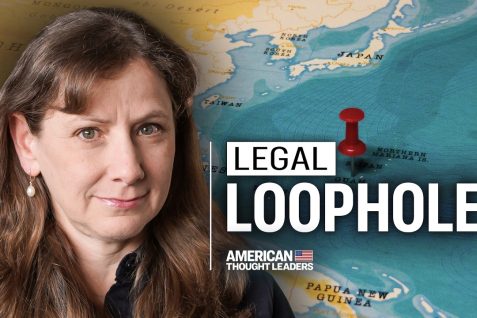
There’s one place in America where Chinese nationals can enter without a visa. It’s called the Commonwealth of the Northern Mariana Islands (CNMI), a U.S. territory in the Pacific, right by …
There’s one place in America where Chinese nationals can enter without a visa. It’s called the Commonwealth of the Northern Mariana Islands (CNMI), a U.S. territory in the Pacific, right by Guam. And it has become a major security loophole for Chinese Communist Party (CCP) influence operations as well as Chinese organized crime and birth tourism ventures, said Cleo Paskal, a senior fellow at the Compass Institute. Yet there has been little political will in Washington to close this loophole, Paskal argues. In this episode, Paskal breaks down the CCP’s aggressive influence and gray-zone warfare operations in this region—areas critical to U.S. defense in any Taiwan conflict—and why this matters for U.S. security. Every U.S. president who served in the Pacific theater in World War II understood that the security of the American mainland depends on a secure Pacific perimeter, Paskal said. As such, in addition to two U.S. territories in the region, the United States has maintained Compacts of Free Association with Palau, the Federated States of Micronesia, and the Marshall Islands since the end of World War II. These treaties give the U.S. military exclusive defense and strategic access to these countries in exchange for U.S. security guarantees and economic support. But the Chinese Communist Party has sought to aggressively expand its influence in these islands through pressure, gray zone warfare, and disinformation campaigns. Amid all this, U.S. funding for these compacts nearly lapsed in recent years, because many in Washington apparently have forgotten their importance. In this episode, Paskal walks me through a key question: if the security of America’s mainland has always depended on control of the central Pacific, what consequences will we pay now that so few Americans know these islands—or their citizens—even exist?
Do some mainland Chinese want Taiwan’s Republic of China to return and replace the Chinese Communist Party? Recent images of people openly wearing ROC flag shirts in China have sparked intense …
Do some mainland Chinese want Taiwan’s Republic of China to return and replace the Chinese Communist Party? Recent images of people openly wearing ROC flag shirts in China have sparked intense discussion online. At the same time, an alleged internal security document has drawn attention to a Taiwan-based National Restoration Party that claims to be organizing resistance inside the mainland. This program examines the party’s founder, its “Republic of China 2.0” vision, and a provocative question: could the Republic of China return to China—not through military conquest, but as a democratic alternative to CCP rule?
This video from Lei's Real Talk explores the provocative question of whether the Republic of China could ever return to mainland territory. The discussion is sparked by recent images showing individuals openly wearing ROC flag shirts within China, which has ignited intense online debate. Simultaneously, attention focuses on an alleged internal security document highlighting a Taiwan-based National Restoration Party that claims to be organizing resistance activities inside the mainland.
The program examines the founder of this party and its vision for what it terms "Republic of China 2.0." A central theme involves analyzing whether the ROC could re-emerge not through military conquest, but as a democratic alternative to current Communist Party rule. The content addresses recent public discourse regarding these political symbols and groups while noting that some mainland citizens may desire such a return. Viewers are presented with an examination of these claims without inventing specific facts or quotes beyond what is provided in the source material.
The U.S. Coast Guard has deployed forces near China as Washington seeks to counter Beijing’s maritime pressure in the region. President Donald Trump drops fees on cargo ships passing through the …
The U.S. Coast Guard has deployed forces near China as Washington seeks to counter Beijing’s maritime pressure in the region. President Donald Trump drops fees on cargo ships passing through the Strait of Hormuz, and reinstated the blockade targeting Iran’s oil shipments. What impact will these U.S. moves have on China? China fired a nuclear-capable missile into the Pacific Ocean that landed near U.S. ally Australia. What message is Beijing sending to the world? “This is really like a dog marking its territory,” Grant Newsham, a retired U.S. Marine said. David versus Goliath: UK residents take China’s mega-embassy plan to court, warning of national security risks. China’s economic growth figures for April to June are out. What broader economic trends do they reveal? 00:00 Intro 01:02 U.S. Coast Guard Deployed Near China 02:34 U.S. Targets China–Iran Oil Network 03:04 Hormuz Toll Could Set China Precedent 04:56 Trump Squeezes Iran’s Oil Revenue 07:23 Sen. Jim Banks: CCP Targets U.S. Research 08:55 China “Marking Its Territory” in the Pacific: Expert 10:51 Can Australia’s Pacific Deals Challenge China? 12:41 China Mega Embassy Plan Faces U.K. Court Challenge 14:21 China’s Q2 Economic Growth Misses Forecasts 15:39 China’s Consumption Challenge Continues 16:00 U.S. Countering China in the Western Hemisphere 🔵Tiffany Meier’s documentary Hollywood Takeover – how Beijing is rewriting the script in America’s film industry: hollywoodtakeover.com 🇺🇸 Stay updated with breaking news, special reports, and LIVE COVERAGE on NTD: https://ept.ms/NTDlive_
This report from China in Focus on NTD examines several developing international situations involving the United States and China. The segment begins by noting that U.S. Coast Guard forces have been deployed near Chinese waters as Washington attempts to counter perceived maritime pressure from Beijing. Additionally, President Donald Trump is reported to be imposing fees on cargo ships transiting the Strait of Hormuz while reinstating a blockade against Iranian oil shipments; analysts discuss how these actions might impact China's energy network and set precedents for future trade disputes.
The video also covers military developments where China launched a nuclear-capable missile into the Pacific Ocean near Australia, an action described by experts as territory marking similar to a dog claiming its space. In legal matters, residents of the United Kingdom are challenging China's plan to build a massive embassy in court over national security concerns. Economically, recent data indicates that China's growth figures for the second quarter missed forecasts, highlighting ongoing consumption challenges. The program concludes by looking at U.S. strategies to counter Chinese influence within its own Western Hemisphere and provides links to related documentaries supporting these narratives.
This master video stitches the full Taiwan PMESII story into one coherent picture of deterrence, coercion, and crisis risk. We connect the physical reality of the Taiwan Strait to the political …
This master video stitches the full Taiwan PMESII story into one coherent picture of deterrence, coercion, and crisis risk. We connect the physical reality of the Taiwan Strait to the political dynamics in Taipei, Beijing’s pressure campaign, and how a blockade or invasion could actually unfold. Then we tie the economy to TSMC and global chips, showing why markets react long before wars start. We cover the social and information battle shaping elections and identity, and the infrastructure vulnerabilities like undersea cables that can “soft-isolate” Taiwan. If you want the full strategic logic in one place, this is the complete Taiwan brief. Timeline: 0:00 Physical 10:29 Political 20:07 Military 28:33 Economic 39:21 Social 48:33 Information 55:35 Infrastructure 1:06:15 Closing Thoughts
This comprehensive video by Caleb McMurtrey synthesizes the full strategic landscape surrounding Taiwan into a single coherent narrative focusing on deterrence, coercion, and crisis risk. The presentation connects physical realities within the strait to political dynamics in Taipei while examining Beijing's pressure campaigns. It details how potential blockades or invasions could unfold militarily and explains why global markets react long before conflicts begin by linking economic stability directly to TSMC and semiconductor supply chains.
The overview also addresses social factors shaping elections and national identity, alongside an information battle influencing public perception. Infrastructure vulnerabilities are highlighted, particularly undersea cables that could lead to soft isolation of the region. The content is structured chronologically through distinct segments covering physical geography, political maneuvering, military capabilities, economic implications, social dynamics, informational warfare, infrastructure weaknesses, and concluding strategic thoughts. This briefing aims to provide viewers with a complete understanding of the complex logic governing this geopolitical situation without relying on external transcripts or inventing specific events not present in the provided description.
Millions of Chinese families believed they were doing everything right. Yet today, some young college graduates are sharing a single bed with complete strangers because they can’t afford rent. At the …
Millions of Chinese families believed they were doing everything right. Yet today, some young college graduates are sharing a single bed with complete strangers because they can’t afford rent. At the same time, a viral online discussion about the “Seven Mistakes That Bankrupt the Middle Class” has sparked a nationwide debate. Were buying a home, starting a business, investing for the future, and raising children really financial mistakes—or did China’s economic reality change? This report examines how collapsing confidence, shrinking opportunities, and a deepening economic downturn are reshaping the lives of China’s middle class and its younger generation.
This video from Lei's Real Talk explores the shifting economic landscape facing millions of Chinese families. Despite believing they were making sound financial decisions, many young college graduates now face severe housing affordability issues, forcing some to share beds with strangers due to high rent costs. A viral online discussion regarding seven specific mistakes that bankrupt the middle class has ignited a nationwide debate about these challenges. The report questions whether traditional actions like buying homes, starting businesses, investing for the future, and raising children are truly financial errors or if China's underlying economic reality has fundamentally changed.
The content examines how collapsing confidence, shrinking opportunities, and a deepening downturn are reshaping lives across the nation. While specific details on every aspect remain sparse in available descriptions, the focus remains on understanding these broader trends affecting the younger generation and middle class. The channel primarily discusses world economy, history, and politics with an emphasis on U.S.-China relations, aiming to reveal hidden stories through short video formats. Viewers are encouraged to consider how global economic shifts impact local stability without inventing specific events or quotes not present in the source material provided.
July 1 is the deadline for the renewal of the $2 trillion U.S.–Mexico–Canada Agreement (USMCA). But the United States has chosen not to renew it, triggering annual reviews between the three …
July 1 is the deadline for the renewal of the $2 trillion U.S.–Mexico–Canada Agreement (USMCA). But the United States has chosen not to renew it, triggering annual reviews between the three countries. What’s at the heart of the issue? America’s AI race with China is heating up. Why is the United States lifting export restrictions on some of its most advanced AI models? Ohio has canceled more than $20 million in tax incentives for a Chinese battery component company after it failed to deliver on its promises. July 1 marks the anniversary of the founding of the Chinese Communist Party (CCP). Outside China, it’s also observed by anti-communist Chinese communities as Global Quit the CCP Day. We take a look at how they’re marking the occasion. Beijing is stepping up its global clampdown with a new law that allows the communist regime to target people beyond China’s borders. 00:00 Intro 01:09 USMCA Review Begins as U.S. Presses to Counter China 02:29 USMCA First Review Begins With No Renewal in Sight 03:47 Chinese Battery Firm Loses $23M Ohio Incentives 06:23 Ohio Residents Concerned With Semcorp’s Operations 07:01 Report: CCP Harassment Rising Across U.S. 09:23 U.S. Lifts Anthropic Export Ban Amid AI Race With China 10:30 462 Million Chinese People Denounced CCP 11:05 End CCP Motorcade Rallies Across New York City 11:38Chinese New Yorkers Protest Before Chinese Consulate 11:58China’s Unity Law Expands Global Clampdown 13:22China Sends New Warship Into Pacific, Raising Concerns 14:30 Birthright Citizenship Fight Far From Over 15:16 Expert: 14th Amendment Blocks Birthright Changes 16:20 Expert: Congress Could Test Birthright Law 17:34 Philipp: Beijing Exploits U.S. Birthright Citizenship 18:49 Expert: Easier to Change Laws Than Constitution 🔵Tiffany Meier’s documentary Hollywood Takeover – how Beijing is rewriting the script in America’s film industry: hollywoodtakeover.com
This episode of China in Focus examines several developing issues between the United States and China as July 1 approaches. The segment begins by noting that while the deadline for renewing the USMCA has arrived, the U.S. decision not to automatically continue it triggers annual reviews among the three member nations. Simultaneously, America's competition regarding artificial intelligence intensifies, prompting questions about why Washington is lifting export restrictions on certain advanced AI models despite ongoing tensions.
Domestically in Ohio, a Chinese battery component company lost over twenty million dollars in tax incentives after failing to meet its commitments, raising concerns among local residents regarding the firm's operations. On the diplomatic front, Beijing has introduced new legislation allowing it to target individuals outside China's borders as part of an expanded global clampdown. The program also covers how anti-communist communities are observing July 1 as Global Quit the CCP Day with various rallies and protests in New York City. Additionally, experts discuss ongoing legal battles concerning birthright citizenship, suggesting that while changing federal laws is possible, altering constitutional provisions remains a significant hurdle for any legislative changes to this area of law.
The Quad is becoming an increasingly important pillar of Indo-Pacific security as the US, Japan, Australia and India deepen cooperation on maritime security, critical minerals and regional resilience. While Beijing dismisses …
The Quad is becoming an increasingly important pillar of Indo-Pacific security as the US, Japan, Australia and India deepen cooperation on maritime security, critical minerals and regional resilience. While Beijing dismisses the grouping as an “Indo-Pacific NATO” designed to contain China, the four members continue expanding practical initiatives, including maritime domain awareness and supply chain security. At the same time, China is responding with stronger diplomacy, gray-zone tactics and closer ties with countries such as Russia as it seeks to counter the Quad’s growing influence. Is the Quad evolving into a durable strategic partnership—or do differences among its members still give Beijing room to maneuver? In this episode, we examine how China views the Quad, how the grouping is adapting to the China challenge and what it means for Taiwan and the future of the Indo-Pacific. *Recorded on July 2, 2026 at 2pm Taiwan Standard Time Host: Wen-Ti Sung Producer: Suvam Pal Our guests: Stephen Nagy International Christian University Politics and International Studies Professor Ronan Fu Academia Sinica Institute of Political Science Assistant Research Fellow Chapters: 00:00:00 – Quad Consolidates Role in Indo-Pacific 00:01:57 – How Does Beijing ViewQuad? 00:13:10 – China Attempts To Counterbalance Quad 00:21:18 – Taiwan Looks to Quad #Quad #IndoPacific #Taiwan #QuadAlliance #Beijing #China #ChinaThreat #IndoPacificRegion #Geopolitics #TaiwanStrait #USChina #GlobalSecurity #InternationalRelations #AsiaPacific #MilitaryAlliance #IndoPacificStrategy #StrategicPartnership #SouthChinaSea #RegionalSecurity #GlobalPolitics #DefendTaiwan #ChinaForeignPolicy #GeopoliticalRisk #StrategicAlliances #IndoPacificGeopolitics #QuadSummit #BeijingPerspective #Counterbalance #TaiwanSecurity #EastAsia #DefensePolicy #GlobalDefense #SecurityAlliance #MaritimeSecurity #BalanceOfPower #ForeignRelations #Asiageopolitics #IndoPacificSecurity #StrategicStability #RegionalStability #GlobalStrategy #DefenseAlliance #Alliances #SecurityStrategy #IndoPacificPolicy #SuperpowerRivalry #EastAsiaSecurity #Geostrategic #TaiwanPlus #TaiwanTalks
This episode of Taiwan Talks explores the evolving dynamics between China and the Quad within the Indo-Pacific region. The discussion highlights how the United States, Japan, Australia, and India are strengthening their cooperation on maritime security, critical minerals, and regional resilience. While Beijing often characterizes this grouping as an exclusionary alliance designed to contain it similar to a NATO in Asia, the four members continue expanding practical initiatives focused on supply chain security and domain awareness. In response, China is reportedly employing stronger diplomacy, gray-zone tactics, and deepening ties with nations like Russia to counterbalance Quad influence. The program examines whether these differences among Quad members still provide Beijing strategic room for maneuver or if a durable partnership is forming. Experts analyze how the grouping adapts to Chinese challenges and what this shift means specifically for Taiwan's security posture. Recorded in July 2026, the conversation features insights from international relations scholars regarding global strategy, defense policy, and the future of regional stability as superpower rivalry intensifies across East Asia and the South China Sea.
Marcos Backs Amphibious Vehicles As Japan Tracks Chinese Carrier Threat Japan closely monitored China’s Liaoning aircraft carrier group as it operated near the Philippines and the western Pacific, raising fresh regional …
Marcos Backs Amphibious Vehicles As Japan Tracks Chinese Carrier Threat Japan closely monitored China’s Liaoning aircraft carrier group as it operated near the Philippines and the western Pacific, raising fresh regional security concerns. At the same time, President Ferdinand Marcos Jr. is pushing Philippine military modernization with new amphibious armored vehicles for the Marine Corps. This video explains how China’s naval expansion, Japan’s surveillance, and Manila’s defense upgrades are reshaping Indo-Pacific security. Global Front provides original news reporting, research, analysis, commentary, scripting, editing, and presentation. This video may contain footage, images, or other materials licensed from Agence France-Presse (AFP) and other authorized sources. Such content is incorporated into original editorial coverage and transformed through reporting, analysis, context, narration, and editing. All editorial decisions, opinions, and analysis are solely those of Global Front. #GlobalFront #MarcosJr #JapanMilitary #ChinaCarrier #LiaoningCarrier #PhilippinesDefense #IndoPacific #SouthChinaSea #PhilippineMarines #JapanNavy #ChinaNavy #MilitaryNews #DefenseUpdate #AmphibiousVehicle #PacificTensions #BreakingNews
Japan has been closely monitoring China's Liaoning aircraft carrier group as it operated near the Philippines and the western Pacific, a development that has raised fresh security concerns in the region. Concurrently, Philippine President Ferdinand Marcos Jr. is advancing military modernization efforts by introducing new amphibious armored vehicles for the Marine Corps. This video explores how these simultaneous events are reshaping security dynamics across the Indo-Pacific. The content examines China's ongoing naval expansion, Japan's increased surveillance activities, and Manila's specific defense upgrades in response to these shifting circumstances. Global Front provides original news reporting, research, analysis, commentary, scripting, editing, and presentation for this coverage. The video may include footage or images licensed from Agence France-Presse and other authorized sources, which are incorporated into original editorial coverage and transformed through reporting, analysis, context, narration, and editing. All editorial decisions, opinions, and analysis presented are solely those of Global Front. The report addresses topics including the Liaoning carrier, Philippine defense strategies, Indo-Pacific tensions, and updates on amphibious vehicle deployments within the broader Pacific security landscape.
For years, Xi Jinping looked untouchable. Then the CCP’s 105th anniversary celebration happened. Hu Jintao’s closest confidant suddenly reappeared. Xi Jinping’s closest allies quietly disappeared. A little-known diplomat appears to have …
For years, Xi Jinping looked untouchable. Then the CCP’s 105th anniversary celebration happened. Hu Jintao’s closest confidant suddenly reappeared. Xi Jinping’s closest allies quietly disappeared. A little-known diplomat appears to have been handed one of China’s most powerful security jobs. Even state media changed the way it portrayed Xi. Are these unrelated events—or signs that a quiet power shift is unfolding inside the Chinese Communist Party? Is Hu Jintao back? Let’s examine the clues one by one.
This video from Lei's Real Talk examines potential shifts within the Chinese Communist Party following its 105th anniversary celebration. The analysis suggests that events occurring during this period may indicate a quiet power transition rather than isolated occurrences. Observers note that Hu Jintao, a former leader and close confidant of Xi Jinping, has reappeared in public view after years of absence. Conversely, several allies closely associated with the current leadership have reportedly become less visible. Additionally, a diplomat previously considered little-known appears to have been appointed to a significant security role within the party structure. The video also points out changes in how state media portrays President Xi Jinping compared to previous years. These developments raise questions about whether they represent unrelated happenings or signs of a broader internal restructuring. The content invites viewers to consider if Hu Jintao has effectively returned to influence and what these clues collectively suggest about the future direction of the party. The discussion focuses on interpreting these specific signals without confirming definitive conclusions about leadership changes.
Taiwan’s government is condemning a new round of Chinese coast guard patrols east of the island. TaiwanPlus spoke with Ray Powell, founder and executive director of the SeaLight Foundation, about what …
Taiwan’s government is condemning a new round of Chinese coast guard patrols east of the island. TaiwanPlus spoke with Ray Powell, founder and executive director of the SeaLight Foundation, about what the latest moves reveal about China’s expanding maritime strategy.
Taiwan's government has issued a condemnation regarding a new series of Chinese coast guard patrols conducted east of the island. In response to these developments, TaiwanPlus News engaged in discussion with Ray Powell, who serves as the founder and executive director of the SeaLight Foundation. The conversation focused on interpreting what these latest maneuvers indicate about China's broader maritime strategy and its ongoing expansion in the region. The report highlights the tension surrounding increased naval activity near Taiwan, a topic of significant concern for local authorities. By interviewing experts like Powell, the channel aims to provide context on how these patrols fit into larger geopolitical dynamics involving cross-strait relations. The segment underscores the sensitivity of the area and the potential implications of such actions for regional stability. Viewers are presented with an analysis that connects specific patrol events to wider strategic goals without speculating beyond available information. This overview relies solely on the statements made by the featured guest and the official stance expressed by Taiwan's government regarding the incident. The report serves as a neutral platform for examining current events affecting the island and its neighbors through expert commentary.
The Great Leap Forward (1958–1962) remains history’s deadliest man-made disaster, resulting in an estimated 45 million premature deaths. Driven by Mao Zedong’s obsessive pursuit to economically surpass the West, the Chinese …
The Great Leap Forward (1958–1962) remains history’s deadliest man-made disaster, resulting in an estimated 45 million premature deaths. Driven by Mao Zedong’s obsessive pursuit to economically surpass the West, the Chinese Communist Party implemented a lethal synergy of radical, unscientific policies. The regime coerced local officials into fabricating agricultural outputs, instituted the oppressive People’s Commune system, and orchestrated the violent “Anti-Grain Concealment Campaign” to seize all rural food. Simultaneously, millions of farmers were diverted to primitive backyard steel furnaces, leaving mature harvests to rot in the fields. While a draconian household registration (Hukou) system trapped starving peasants in their villages to prevent escape, the Party leadership in Beijing enjoyed extreme luxury and exported millions of tons of grain to secure foreign political prestige. Ultimately, this peacetime catastrophe demonstrates that unchecked totalitarian dictatorship is far more destructive than conventional warfare.
The Great Leap Forward, spanning from 1958 to 1962, stands as history's deadliest man-made disaster, with estimates placing premature deaths at around 45 million. This catastrophe was driven by Mao Zedong's intense desire to economically surpass Western nations, leading the Chinese Communist Party to enforce a combination of radical and unscientific policies. Local officials were pressured to fabricate agricultural output figures, while the oppressive People's Commune system and the violent Anti-Grain Concealment Campaign allowed the regime to seize nearly all rural food supplies.
Simultaneously, millions of farmers were redirected to operate primitive backyard steel furnaces, causing mature harvests to rot in the fields. A strict household registration system trapped starving peasants in their villages, preventing escape, while Party leadership in Beijing maintained extreme luxury and exported millions of tons of grain for foreign political prestige. This peacetime event illustrates that unchecked totalitarian dictatorship can be far more destructive than conventional warfare. The video explores these historical details through the lens of the Digging into China channel, offering context on this tragic period without inventing facts or conclusions beyond the supplied information.
Source: China’s Leading the World in TOFU DREG Infrastructure! Summary The video from the channel China Fact Chasers explores the extensive infrastructure dedicated to tofu production and waste management in China. …
The video from the channel China Fact Chasers explores the extensive infrastructure dedicated to tofu production and waste management in China. Living residents of the country use bicycles to visit various locations weekly, offering comparisons between Chinese and Western systems while addressing viewer inquiries. The episode highlights how China is positioning itself as a global leader in specific industrial sectors, particularly regarding tofu processing facilities. The content aims to shed light on local situations by presenting observed facts rather than speculation. Viewers are invited to support the show through Patreon or PayPal contributions, with links provided for personal accounts and community engagement via Reddit and Facebook. The description lists numerous external sources including scientific journals, news outlets like Reuters and National Geographic, and environmental reports that likely inform the discussion on industrial development and sustainability efforts within the nation. The video runs for nearly ten minutes and encourages audience interaction through comments and subscriptions to stay updated on future topics covering different regions and subjects across China.
A small civilian aircraft flew through the heart of Beijing and exposed far more than an air-defense failure. The incident may have revealed two of Xi Jinping’s biggest political vulnerabilities: a …
A small civilian aircraft flew through the heart of Beijing and exposed far more than an air-defense failure. The incident may have revealed two of Xi Jinping’s biggest political vulnerabilities: a stalled power struggle inside the PLA surrounding Zhang Youxia and Liu Zhenli, and a growing security crisis for Xi’s closest ally, Cai Qi. Could one plane have exposed cracks in both Xi’s military control and his inner circle?
A small civilian aircraft recently flew through central Beijing, an event described as exposing significant political vulnerabilities for Chinese leadership beyond a simple air-defense failure. The incident reportedly highlighted potential internal power struggles within the People's Liberation Army involving figures such as Zhang Youxia and Liu Zhenli. Additionally, the situation may have underscored growing security concerns regarding Cai Qi, who is considered a close ally of President Xi Jinping. The video suggests that this single event could reveal cracks in both military control and the cohesion of the inner circle surrounding the top leader.
The content originates from Lei's Real Talk, a channel focused on world economy, history, and politics with a primary emphasis on U.S.-China relations. The description frames the narrative as uncovering hidden stories behind major geopolitical events. While specific details regarding the flight path or official responses are not elaborated in the provided text, the overview centers on the political implications attributed to the incident. The channel encourages viewers to subscribe for updates and supports its work through various online platforms. The discussion remains centered on interpreting these alleged weaknesses within the broader context of current leadership dynamics without inventing specific facts or quotes not present in the source material.
China’s struggle to secure the 2026 FIFA World Cup broadcasting rights may seem like a dispute over price—but it reveals something much bigger. In this video, we examine why CCTV refused …
China’s struggle to secure the 2026 FIFA World Cup broadcasting rights may seem like a dispute over price—but it reveals something much bigger. In this video, we examine why CCTV refused FIFA’s asking price, how China’s advertising market has changed, why major Chinese sponsors are pulling back, and what this tells us about the country’s slowing economy. From collapsing real estate to shrinking consumer demand and growing fiscal pressure, the World Cup has become an unexpected window into China’s deeper economic challenges. Is this simply a business decision, or a sign that China’s economic model is facing a new reality?
This video from Lei's Real Talk examines the dispute between China and FIFA regarding 2026 World Cup broadcasting rights, suggesting the conflict extends beyond simple pricing. The analysis highlights that CCTV's refusal to pay the requested fee reflects significant shifts in China's economic landscape. Major changes include a transformation in the domestic advertising market and a retreat by key Chinese sponsors. These developments are presented as indicators of a broader slowing economy characterized by collapsing real estate values, reduced consumer demand, and increasing fiscal pressure. The content frames the broadcasting rights issue as an unexpected lens through which to view deeper structural challenges facing the nation. Rather than viewing this solely as a commercial transaction, the discussion posits that it may signal a new reality for China's economic model. The video aims to explore whether these decisions represent isolated business choices or symptomatic of larger systemic issues affecting the country's financial stability and global engagement strategies in sports media.
President Donald Trump takes aim at communism, responding to New York’s congressional primaries. The House Select Committee on the Chinese Communist Party holds a hearing exposing China’s malign influence on American …
President Donald Trump takes aim at communism, responding to New York’s congressional primaries. The House Select Committee on the Chinese Communist Party holds a hearing exposing China’s malign influence on American soil. Beijing is adding another tool to its legal arsenal. A draft law would allow state prosecutors to bring public-interest lawsuits against foreign entities and individuals. Australia announces a $1.75 billion deal to export radar technology to Canada, as NATO allies ramp up efforts to safeguard the Arctic from the Chinese regime. Cheaper or better? The global AI race is heating up as lower-cost Chinese models challenge America’s push to lead the next generation of technology. 00:00 Intro 01:06 Trump Sounds Alarm on Communism 02:14 Trump Calls Progressive Candidates ‘Solid Communists’ 02:45 House Hearing Exposes CCP’s Malign Influence in US 05:08 China Adds Foreign Targets to Public Interest Lawsuits 06:14 FCC Toughens Submarine Communication Cable Rules 07:13 Small Plane Crashes Into Beijing’s Tallest Building 08:07 Australia Ships $1.75 Billion Tech to Canada for Arctic Defense 09:12 Gray: Keeping Greenland Safe Vital to US Security 10;53 Shen Yun Back in Toronto Despite Earlier Hoax Threats 13:37 Chinese Cyber Firm Claims Superior MythOS Rival 14:25 US–China AI Race: The Fight for Global Influence 15:57 Expert Backs Linux to Counter China Cyber Risks 16:12 Concerns Over Data Sharing in Global Tech Ecosystems
This video report from China in Focus examines a series of geopolitical developments involving the United States and China. President Donald Trump addresses concerns regarding communism, specifically targeting progressive candidates during New York congressional primaries. Concurrently, the House Select Committee on the Chinese Communist Party holds a hearing to reveal alleged malign influence within American institutions. Beijing is also expanding its legal capabilities by drafting laws that permit state prosecutors to initiate public-interest lawsuits against foreign entities and individuals. In defense matters, Australia finalizes a significant agreement to export radar technology to Canada, supporting NATO efforts to secure the Arctic region. Experts discuss the necessity of keeping Greenland safe for US security interests. The report covers technological competition as lower-cost Chinese artificial intelligence models challenge American leadership in the global race. Additionally, FCC regulations regarding submarine communication cables are tightened. Other segments include a plane crash near Beijing's tallest building and claims by a Chinese cyber firm about its operating system rivaling Western standards. Concerns over data sharing within the global tech ecosystem are also highlighted. The program concludes with notes on Shen Yun performing in Toronto despite previous hoax threats and recommendations for using Linux to mitigate cyber risks.
Is China’s military as strong as it looks? A sweeping new PLA audit—“Sharp Sword–2025”—is tearing open weapons depots, missiles, radars, and supply chains with no warning. Reports point to mismatched inventory, …
Is China’s military as strong as it looks? A sweeping new PLA audit—“Sharp Sword–2025”—is tearing open weapons depots, missiles, radars, and supply chains with no warning. Reports point to mismatched inventory, downgraded components, falsified test results, and even training drills that were staged for show. As anti-corruption pressure meets real war-readiness concerns, this inspection is turning into a full-scale purge. What is Beijing really finding—and what does it reveal about the PLA’s true combat capability?
This video from Lei's Real Talk examines a significant new audit within the Chinese military, referred to as Sharp Sword–2025. The inspection involves an extensive review of weapons depots, missile systems, radar installations, and supply chains without prior warning. Reports suggest that the process has uncovered discrepancies such as mismatched inventory levels, downgraded components, falsified test results, and training exercises that appear staged rather than genuine.
The narrative connects these findings to broader anti-corruption efforts and growing concerns regarding actual war readiness. The audit is described as evolving into a large-scale purge within the People's Liberation Army. The content questions whether China's military capabilities match its public appearance and explores what Beijing might be discovering about true combat effectiveness. The channel focuses on world economy, history, and politics with a primary emphasis on U.S.-China relations. It presents these hidden stories through short video formats. Viewers are encouraged to subscribe for updates and share the content with others interested in geopolitical developments.
China is expanding trade pressures on Japan. It announced new export curbs on dozens of Japanese firms amid rising tensions over Taiwan and defense. Oil prices are dropping, peace talks in …
China is expanding trade pressures on Japan. It announced new export curbs on dozens of Japanese firms amid rising tensions over Taiwan and defense. Oil prices are dropping, peace talks in the Middle East are underway, and uncertainty remains. From preschool to college, China is making artificial intelligence a mandatory subject. Why are top American CEOs ringing alarm bells for U.S. schools? President Donald Trump criticizes communism—what do three young media professionals think about the topic? The Arctic is becoming the northernmost front in countering Russia and China. Europe and Canada are showing Washington that they can help defend the Western world on its northern flank. 00:00 Intro 01:07 China Expands Export Curbs on Japan 02:22 Trump: US–Iran Talks Set for Tuesday in Doha 03:36 Mike Waltz: Iran Faces a Choice 04:20 Israel Strikes Hezbollah Terrorists in Lebanon 05:07 China Expands Nationwide AI Education Across All Grades 07:10 Top US CEOs Push for K–12 AI Classes 07:43Trump: Communism ‘Easy to Sell,’ Ends in Failure 09:06 Why Communism Goes Against Human Nature 10:49 Why Gen Z Is Embracing Socialism 12:49 Trump: Democrats Won’t Confront Communists 14:07 Are Socialists Taking Over the Democratic Party? 16:50 NATO Pledges Arctic Security to Trump 18:37 Russia Rebuilds Arctic Bases Near US 19:33Why the Arctic Matters to All Parties 20:10 Australia, Vanuatu Sign Pact Amid China Concerns
China has intensified trade tensions with Japan by announcing new export restrictions affecting dozens of Japanese companies. This move occurs amidst escalating geopolitical friction, particularly regarding Taiwan and defense issues. The report also notes that global oil prices are declining while peace negotiations continue in the Middle East, leaving significant uncertainty in international markets. Additionally, China is implementing a nationwide mandate for artificial intelligence education across all grade levels, from preschool through college. In response to these developments, prominent American business leaders are expressing concern over the lack of similar AI instruction in U.S. schools. The segment further examines President Trump's comments on communism, featuring perspectives from young media professionals who discuss why the ideology appeals to some Gen Z individuals despite historical failures. Geopolitical focus also shifts to the Arctic region, where European and Canadian nations pledge security support to the United States against Russian and Chinese influence as Russia rebuilds bases near U.S. borders. Finally, Australia and Vanuatu sign a new pact driven by shared concerns over China's expanding regional presence.
The Pentagon is facing a new legal challenge. Chinese tech giant Alibaba is suing after being designated a Chinese military company—but the Defense Department isn’t the only target. Here’s how Beijing …
The Pentagon is facing a new legal challenge. Chinese tech giant Alibaba is suing after being designated a Chinese military company—but the Defense Department isn’t the only target. Here’s how Beijing is weaponizing U.S. courts to silence critics. A new clash in the U.S.–China AI race. Anthropic is accusing Alibaba of a large-scale effort, involving thousands of fake accounts, to steal AI capabilities. A Chinese EV battery maker is demanding millions of dollars from a small Michigan township. How local backlash against a Chinese-owned factory turned into a federal lawsuit. A successful test of the Golden Dome. Defense Secretary Pete Hegseth described it as the first milestone test of the missile defense program. Which countries is the Golden Dome primarily defending against? The semiconductor industry is riding the AI boom. South Korean chip workers are reaping the rewards, enjoying high demand in both career and marriage. 00:00 Intro 01:26 Alibaba Sues Pentagon for Chinese Military Designation 02:35 Beijing Weaponizes U.S. Courts to Silence Critics 05:14 Anthropic Accuses Alibaba of Large-Scale AI Theft 06:47 Chinese Battery Firm Seeks $23.7M From Small Michigan Town 08:34 Hegseth Says Golden Dome Test a Success 09:37 U.S. University Program for Communist Elites: Report 10:30 U.S. Snubs China APEC Meeting Over Visa Dispute 11:16 Chip Workers in High Demand at Work and in Marriage 12:41 Semiconductor Industry Lures Top Students From Medicine 14:14 Expert on China Cyber Threats in U.S. Infrastructure 14:31 Experts Warn of Deep Grid Infiltration Risk 15:53 China-Made Parts Raise AI Data Center Concerns 20:16 Expert Warns of Telecom Supply Chain Vulnerabilities
This video from China in Focus examines the evolving legal and technological tensions between the United States and China. The segment begins by addressing a new legal challenge involving the Pentagon, where Chinese tech giant Alibaba has filed a lawsuit following its designation as a Chinese military company. Beyond this specific case, the report explores how Beijing allegedly utilizes U.S. courts to suppress criticism. A significant portion of the discussion focuses on the ongoing competition in artificial intelligence, highlighting accusations from Anthropic that Alibaba orchestrated a massive operation using thousands of fake accounts to steal AI capabilities.
The overview also covers economic and security disputes, including a Chinese electric vehicle battery manufacturer seeking millions from a Michigan township amid local opposition to its factory. On the defense front, Defense Secretary Pete Hegseth announced a successful test of the Golden Dome missile defense program. The video further touches on domestic impacts within South Korea's semiconductor industry, where high demand for chip workers is affecting both employment and marriage markets. Additionally, experts warn of potential risks regarding deep grid infiltration and vulnerabilities in telecom supply chains involving China-made parts. The report concludes by noting diplomatic friction, such as the U.S. decision to exclude China from an APEC meeting due to visa disputes, alongside concerns over a university program allegedly benefiting Communist elites.
Japan is undergoing a historic shift. It is abandoning previous decades of low key diplomacy and deflection and instead pushing back against China’s military narrative more forcefully than at any point …
Japan is undergoing a historic shift. It is abandoning previous decades of low key diplomacy and deflection and instead pushing back against China’s military narrative more forcefully than at any point in recent years, arguing that Beijing’s lack of transparency — not Tokyo’s defense buildup — is the real threat to regional stability. As Japan raises defense spending, expands security partnerships and eases restrictions on arms exports, China has accused it of reviving militarism. But Japanese officials counter that their policies are openly debated and publicly scrutinized, while China’s true military spending and strategic intentions remain opaque. Is Beijing’s criticism of Japan designed to shift attention away from its own unprecedented military expansion? In this episode, we examine China’s propaganda war, the debate over military transparency and what it means for security across the Indo-Pacific.
In this episode of Taiwan Talks, the focus shifts to a significant transformation in Japan's diplomatic and security posture. Tokyo is moving away from decades of low-key diplomacy to push back more forcefully against China's military narrative. Japanese officials argue that Beijing's lack of transparency regarding its defense buildup poses a greater threat to regional stability than Japan's own security enhancements. As Japan increases its defense spending, expands security partnerships, and relaxes restrictions on arms exports, it faces accusations from China of reviving militarism. The program examines whether Beijing's criticism serves to distract attention from its own unprecedented military expansion. The discussion highlights the contrast between Japan's openly debated policies and the opaque nature of China's strategic intentions. Experts analyze the implications of this dynamic for security across the Indo-Pacific, exploring the debate over military transparency and the broader propaganda war unfolding in the region. Recorded on June 25, 2026, the episode features insights from a panel including Lai I-chung, James Fanell, and Liou To-hai, who discuss the evolving geopolitical landscape and the challenges of maintaining regional stability amidst rising tensions.
It’s been over six years since the COVID-19 pandemic began, yet much of the scientific establishment still seems unwilling to acknowledge or openly debate where this virus came from. In this …
It’s been over six years since the COVID-19 pandemic began, yet much of the scientific establishment still seems unwilling to acknowledge or openly debate where this virus came from. In this episode, Matt Ridley, co-author of “Viral,” breaks down the significance of newly declassified documents released by Homeland Security Secretary Tulsi Gabbard and the evidence of a coordinated cover-up of COVID-19’s origins. Ridley delves into a key paper, “The proximal origin of SARS-CoV-2,” published by Nature Medicine, exposing how the authors themselves believed that a lab leak was a likely possibility while publicly pushing the opposite narrative. Troubling questions arise: Why hasn’t the international community held China accountable for what happened at the Wuhan lab? Why is America so attentive to cybersecurity, but completely blind to biosecurity? And why are there such close ties between Western scientific research and Chinese dual-purpose facilities like the lab in Wuhan? Views expressed in this video are opinions of the host and the guest, and do not necessarily reflect the views of The Epoch Times.
This episode of American Thought Leaders features Matt Ridley discussing newly declassified documents related to the origins of the COVID-19 pandemic. Released by Homeland Security Secretary Tulsi Gabbard, these materials reportedly indicate a coordinated effort to cover up the virus's source. Ridley examines a specific paper published in Nature Medicine titled "The proximal origin of SARS-CoV-2," noting that its authors privately considered a laboratory leak plausible while publicly advocating against it. The discussion highlights several troubling questions regarding international accountability for the Wuhan lab, the disparity between American cybersecurity focus and biosecurity neglect, and the close ties between Western research institutions and Chinese dual-purpose facilities. The segment also touches on topics such as gain-of-function research, lockdown policies, a laboratory in California, and the role of citizen science. The program aims to explore why the scientific establishment has remained reluctant to openly debate these issues for over six years since the pandemic began.
Source: This was Spying on me all Along? A Chinese DJI Drone Almost got me Arrested Summary The video titled This was Spying on me all Along? A Chinese DJI Drone …
The video titled This was Spying on me all Along? A Chinese DJI Drone Almost got me Arrested is presented by the channel serpentza and runs for approximately forty-eight minutes. The content focuses on a specific incident involving a DJI drone that the creator claims nearly resulted in their arrest. The presenter expresses disbelief regarding the perceived absurdity of the entire situation surrounding this event.
The description includes standard promotional material, such as a discount offer for the data privacy service Incogni using a specific code. It also lists various ways to support the creator financially through Patreon, Bitcoin, Ethereum, and PayPal. Several external links are provided, directing viewers to other documentary projects about China, including titles like Conquering China Boxset and Stay Awesome China. Additional resources cover motorcycle adventures and a talk-show format available on separate platforms. Social media connections via Facebook, Twitter, and Instagram are also shared within the text. The overall presentation combines a personal anecdote about surveillance concerns with extensive links to other content and sponsorship opportunities.
Source: Why Trump Flew to China with 18 CEOs Summary This video by Andrei Jikh examines the high-profile visit of Donald Trump to China accompanied by eighteen CEOs. The content explores …
This video by Andrei Jikh examines the high-profile visit of Donald Trump to China accompanied by eighteen CEOs. The content explores the strategic motivations behind bringing such a large delegation of business leaders on this international trip. The discussion likely centers on the potential economic implications for American corporations and how these executives might influence trade negotiations or policy decisions during their time in Beijing. Given the involvement of multiple top-tier company representatives, the narrative probably touches upon specific industries affected by current geopolitical tensions or trade disputes between the two nations. The analysis may also consider whether this move signals a shift in diplomatic relations or an attempt to secure favorable business terms for U.S. companies operating in the Chinese market. Viewers are presented with insights into the intersection of corporate interests and foreign policy, highlighting how private sector leaders can play a significant role in state-level engagements. The video serves as an overview of these events without offering investment advice or guaranteeing specific outcomes related to the strategies discussed within the broader context of global economics.
The Rim of the Pacific (RIMPAC) Exercise 2026 is bringing together 31 nations, more than 25,000 personnel and some of the world’s most advanced naval forces for the largest maritime exercise …
The Rim of the Pacific (RIMPAC) Exercise 2026 is bringing together 31 nations, more than 25,000 personnel and some of the world’s most advanced naval forces for the largest maritime exercise on the planet. The drills come at a time of growing tensions across the Indo-Pacific, with China excluded from the exercise for a fourth consecutive iteration and Taiwan once again left on the sidelines, despite repeated support from members of the US Congress. At the same time, questions are mounting over how closely the US and Taiwan could actually operate together in a crisis and whether existing military cooperation is enough to close critical interoperability gaps. In this episode, we examine what RIMPAC reveals about deterrence, coalition-building and the evolving state of US-Taiwan defense cooperation.
The Rim of the Pacific Exercise 2026 assembles thirty-one nations, over twenty-five thousand personnel, and advanced naval forces for the largest maritime drill globally. These exercises occur amidst rising tensions in the Indo-Pacific region. China remains excluded from the event for a fourth consecutive iteration, while Taiwan is again absent despite ongoing support from members of the US Congress. The episode explores how these drills reflect current deterrence strategies, coalition-building efforts, and the evolving nature of defense cooperation between the United States and Taiwan. Questions persist regarding the extent to which the two can operate together during a crisis and whether existing military ties sufficiently address critical interoperability gaps. Recorded on June 18, 2026, the discussion features guests from the Institute for National Defense and Security Research who analyze what RIMPAC reveals about regional security dynamics. The conversation covers whether the drills serve primarily as training or strategic messaging, reasons behind China's disinvitation related to aggression, factors preventing Taiwan's participation, and potential expansions in US-Taiwan cooperation.
Read the full, in-depth analysis on China News Update: https://chinanewsupdate.com/china-new… In today’s video, independent analyst Tony Fiddis breaks down China’s narrowing budget deficit and why Beijing is resisting aggressive stimulus despite …
Read the full, in-depth analysis on China News Update: https://chinanewsupdate.com/china-new… In today’s video, independent analyst Tony Fiddis breaks down China’s narrowing budget deficit and why Beijing is resisting aggressive stimulus despite a widening gap between thriving high-tech exports and fragile domestic consumer demand. We examine the muted results of the critical “618” shopping festival, the escalating semiconductor friction with Washington, and a high-stakes joint regulatory investigation into infant diaper chemical safety. 🕒 VIDEO TIMESTAMPS 00:00 Introduction 00:11 Chinese Economy Fiscal Space and Holiday Shopping 04:46 US-China: New Restrictions & Smuggling Concerns 09:26 Diaper Scandal
This video from the independent channel China News Update features analyst Tony Fiddis examining recent economic and geopolitical developments in China. The discussion centers on Beijing's fiscal tightening, noting a narrowing budget deficit despite a widening gap between robust high-tech exports and weak domestic consumer demand. Results from the critical 618 shopping festival are described as muted, reflecting broader challenges within the retail sector. The analysis also addresses escalating friction with Washington regarding semiconductors and emerging smuggling concerns linked to new restrictions. A significant portion of the content is dedicated to a high-stakes regulatory investigation into infant diaper chemical safety, which has drawn attention as a major scandal. The presenter aims to provide objective insights into macroeconomic shifts and trade policies, cutting through various state narratives and media biases. Viewers are directed to the channel's main portal for full in-depth analysis of these topics. The video serves an educational purpose rather than offering financial or legal advice, relying on corporate research and government statements to inform international observers about the world's second-largest economy.
With Chinese leader Xi Jinping repeatedly stating his plans to take Taiwan—by force if necessary—many are wondering: what might such an invasion look like and how prepared is Taiwan to defend …
With Chinese leader Xi Jinping repeatedly stating his plans to take Taiwan—by force if necessary—many are wondering: what might such an invasion look like and how prepared is Taiwan to defend itself and withstand such an assault? Enoch Wu is working to tip the balance in Taiwan’s favor. Born in Chicago to Taiwanese parents, he decided to quit his lucrative career as a finance executive in Hong Kong to join Taiwan’s special forces in his early 30s. And he’s since devoted his life to preventing Taiwan from being wiped from the map by its large totalitarian neighbor. In 2020, he founded Forward Alliance to train ordinary Taiwanese in trauma medicine, search and rescue, setting up communication networks, and organizing shelters in a crisis. The group has now trained tens of thousands of ordinary Taiwanese to become de facto first responders through partnerships with local churches, schools, and other community groups. Wu explains his philosophy that while the military acts as a country’s sword, societal resilience acts as a country’s shield. At the heart of our conversation is an urgent message: “The whole point of living in a democratic society,” Wu says, “is that we are all owners, and we have to take responsibility. We can’t treat democracy like a heritage that’s just passed down. You can’t take it as a given. You have to continue to nurture it. You have to invest in it. You have to improve it.” Views expressed in this video are opinions of the host and the guest, and do not necessarily reflect the views of The Epoch Times.
The video titled 4.1K is presented by the channel American Thought Leaders, which operates under The Epoch Times. This production falls within the category of public source information where only the title and channel details are currently available for verification. No specific duration or summary text has been provided in the supplied material to elaborate on the content's subject matter or narrative arc. Without access to a public Google or YouTube summary, as well as a detailed video description, it is impossible to construct an overview that describes specific events, arguments, or conclusions presented within the footage. The available data confirms the existence of the video and its origin but does not contain sufficient information to discuss the topic addressed by American Thought Leaders in this particular installment. Any attempt to describe the internal content would require fabricating details that are not present in the source text. Consequently, the overview must remain strictly limited to identifying the title and the producing organization while acknowledging the absence of further descriptive elements. This transparency ensures that no facts, quotes, or events are invented beyond what is explicitly supplied in the provided documentation for this specific entry.
No peace talks between the United States and Iran took place on Friday, and no new date has been announced. We have the latest updates. Ukrainian drones have helped repel Russian …
No peace talks between the United States and Iran took place on Friday, and no new date has been announced. We have the latest updates. Ukrainian drones have helped repel Russian attacks for years. Now, China’s neighbors—including Taiwan and Japan—are eager to learn from Ukraine’s experience as they prepare to deter a potential conflict. Taiwan is pushing a new bill to invest billions in drone technology to counter China. Meanwhile, Australia is sending drones to the Philippines to strengthen maritime defenses. A historic shift in Cuba. The communist island is opening up to free-market reforms amid severe U.S. sanctions and secret diplomatic talks. Is Havana opening a new chapter—and how will Washington respond? 00:00 Intro 01:04 US-Iran Talks in Switzerland Postponed 03:21 Trump Criticizes Democrats Over Iran Deal Comments 03:55 Strait of Hormuz: Shipping Traffic Recovering 04:23 Israel–Hezbollah Ceasefire Takes Effect in Lebanon 05:04 U.S. Policy Shift: From Obama to Trump 06:53 Gulf Nations Fed Up With Iran Strikes 08:08 Ukrainian Drone Makers Target Taiwan, Japan 10:03 Taiwan Approves $6.7 Billion Domestic Drone Defense Plan 11:20 Australia Donates Drones to Philippine Coast Guard 13:04 Cuba Passes Historic Free-Market Economic Reforms 15:23 Trump: Cuba Operation May Mirror Venezuela 17:11 France Dismantles 9 Chinese Police Outposts 18:08 AI Data Center Boom Drives Solar Power Demand
This report from China in Focus on NTD examines several developing international situations, with a primary focus on regional defense strategies in the Pacific. The segment highlights that Taiwan is advancing legislation to invest approximately 6.7 billion dollars in domestic drone technology aimed at countering potential threats from China. This initiative reflects a broader trend where neighbors of China, including Japan, are looking to Ukraine's experience with drone warfare for inspiration as they prepare to deter future conflicts. In related maritime developments, Australia has donated drones to the Philippine Coast Guard to bolster their defensive capabilities in the region.
The broadcast also covers other significant global events without detailed elaboration on each. Updates indicate that peace talks between the United States and Iran were postponed with no new date set, while diplomatic efforts continue behind closed doors. Additionally, the report notes historic economic reforms passing in Cuba despite ongoing sanctions, a move that may influence future U.S. policy similar to actions taken regarding Venezuela. Other brief mentions include shifting dynamics in the Strait of Hormuz, developments between Israel and Hezbollah, and environmental impacts driven by an AI data center boom increasing demand for solar power. The program serves as a news update covering these diverse topics within its runtime.
Beijing appears to be increasing its ability to launch nuclear strikes against countries such as the United States. What do satellite images reveal about a mysterious complex taking shape in a …
Beijing appears to be increasing its ability to launch nuclear strikes against countries such as the United States. What do satellite images reveal about a mysterious complex taking shape in a desert in the Xinjiang region? Drones are changing the battlefield—not only in the sky, but also at sea. The United States and two allies are working together to strengthen their maritime dominance and counter China. Beijing draws a dangerous new red line, expelling an American reporter over Taiwan. Washington responds in kind, while Taipei condemns Beijing’s tactics. Want to take Chinese technology, talent, or data overseas? Under Beijing’s new outbound investment rules, you’ll need permission first. Military-linked universities in China are pursuing Nvidia’s top AI chips, raising questions about U.S. efforts to control cutting-edge technology exports. China Appears to Boost Nuclear Strike Capability US Launches Golden Dome Missile Shield System US, UK, Australia to Develop Undersea Drones US Racing to Counter China’s Drone Dominance Pentagon Turns to Smaller Firms for Drones Pentagon Seeks 300,000 Low-Cost Attack Drones Security Concerns Over Chinese Drone Parts China, US Expel Each Other’s Reporters Expert: Chinese Outlets in US May Influence Elections Beijing to Lock Down Outbound Tech, Data Flows Rubio: US Must End Reliance on Chinese Supply Chains China Military-Tied Universities Seek Nvidia AI Chips EU to Join US-Led Chip Supply Initiative China Defense Minister No-Show at Asia Summit South Korea, Japan Weigh Military Logistics Deal
This video report from China in Focus examines several developing geopolitical and military tensions between the United States, China, and their respective allies. The segment begins by noting reports that Beijing may be enhancing its nuclear strike capabilities against nations like the United States, while satellite imagery investigates a mysterious construction project in the Xinjiang desert region. Simultaneously, the narrative highlights a shift in drone warfare, where drones are increasingly utilized across air and sea domains. In response to China's growing dominance in this sector, the US, UK, and Australia are collaborating to strengthen maritime control and develop undersea drone technologies. The Pentagon is also seeking partnerships with smaller firms to acquire hundreds of thousands of low-cost attack drones to counter potential threats.
Diplomatic friction remains high as Beijing expels an American reporter over Taiwan issues, prompting a reciprocal action from Washington. Taipei criticizes these tactics while experts warn that Chinese media outlets within the US could influence elections. On the economic front, new outbound investment rules require permission for moving Chinese technology or data overseas, and military-linked universities are reportedly seeking Nvidia's advanced AI chips despite export controls. The European Union is considering joining US-led initiatives to secure chip supply chains, while regional allies like South Korea and Japan weigh potential military logistics agreements.