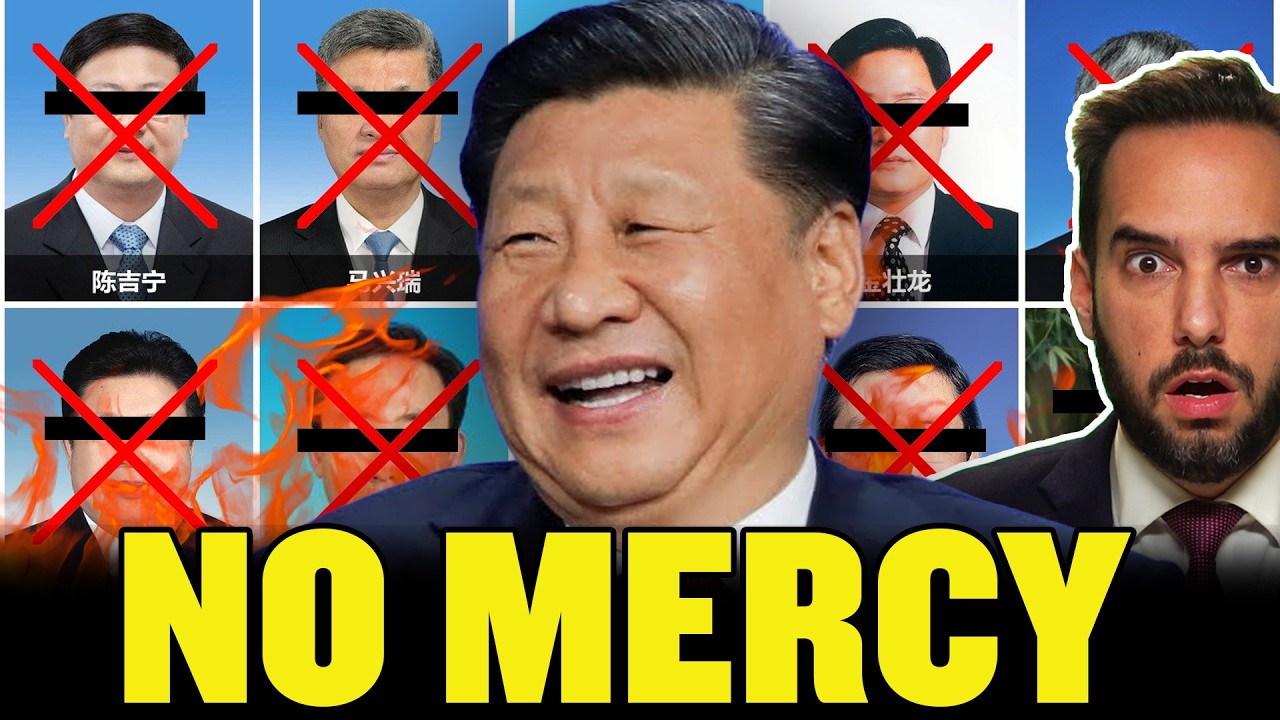
The U.S. military’s “Epic Fury Operation” has unfolded, and people are suddenly realizing that this is not just a war against Iran but a meticulously designed strangulation plan tailored for the …
The U.S. military’s “Epic Fury Operation” has unfolded, and people are suddenly realizing that this is not just a war against Iran but a meticulously designed strangulation plan tailored for the Chinese Communist Party! What’s shocking is that the progress of this plan has far exceeded expectations. As the war continues, the full range of strikes displayed by the U.S. military has left China’s top officials terrified. The U.S. may soon crush the Chinese regime without even needing to launch a war. The most pressing issue now lies in front of China’s military and leadership. Let’s break it down.
The video titled US Unleashes Massive Strike Power, Pinpoints China's Rocket Bases, Ready to Annihilate CCP is produced by the channel China Observer. The content suggests that a military campaign labeled Epic Fury Operation has progressed significantly beyond initial expectations. According to the public description provided, this operation is framed not merely as a conflict involving Iran but as a broader strategic initiative aimed at pressuring the Chinese Communist Party. The narrative claims that the United States has demonstrated an extensive range of strike capabilities that have reportedly caused concern among top Chinese officials. It further posits that these actions could potentially lead to the destabilization of the Chinese regime without necessitating a formal declaration of war. The video highlights specific targeting of rocket bases as part of this strategy. Viewers are invited to consider the implications for China's military leadership and overall national security posture in light of these alleged developments. The description concludes by directing viewers to support the channel through various means including donations and business inquiries, while noting that all rights to the content are reserved.
Officials in Taipei says a new embankment along eastern Taiwan’s Matai’an river, which overflowed and led to deadly flooding last year, will soon wrap up the first stage of construction in …
Officials in Taipei says a new embankment along eastern Taiwan’s Matai’an river, which overflowed and led to deadly flooding last year, will soon wrap up the first stage of construction in April. Some local market vendors are also back in business.
Officials in Taipei report that the first phase of construction for a new embankment along eastern Taiwan's Matai'an river is scheduled to be completed by April. This infrastructure project aims to address severe flooding issues that occurred last year, during which the river overflowed and caused deadly damage to the local area. The completion of this stage marks a significant step in restoring safety and stability to the region affected by the disaster. Alongside these major engineering efforts, signs of economic recovery are also becoming visible as some local market vendors have resumed their operations. The return of business activity suggests that daily life is gradually returning to normalcy following the previous year's tragic events. TaiwanPlus News continues to monitor the progress of these initiatives, highlighting both the ongoing construction work and the resilience of the community. As the project moves forward, it represents a commitment to preventing future disasters and supporting the livelihoods of those who call this area home. The timeline for the first stage remains on schedule, offering hope for improved flood prevention measures in the coming months.
Source: Britain Belongs to China – CCP Spies Run Rampant! Summary The video titled Britain Belongs to China, produced by the channel China Fact Chasers, runs for approximately ten minutes. The …
The video titled Britain Belongs to China, produced by the channel China Fact Chasers, runs for approximately ten minutes. The creators, who have lived in China for an extended period, aim to share comparisons between Chinese and Western societies while addressing viewer inquiries. Each episode features the hosts traveling by bicycle to a new location to cover specific topics. This particular installment focuses on alleged espionage activities involving the Chinese Communist Party, using the provocative title to frame the discussion. The description invites viewers to support the show through Patreon or PayPal and directs them to associated social media platforms and subreddits. A list of external sources from major news outlets is provided in the text, though the specific narrative details regarding the spies are not elaborated upon in the available public information. The video serves as a weekly update where the hosts explore various aspects of life in China, blending personal observation with reported events to shed light on current situations for their international audience.
Xi Jinping’s sweeping purges inside China’s military are accelerating. Top generals are disappearing, corruption probes are spreading, and loyalty to Xi now matters more than battlefield readiness. But these purges could …
Xi Jinping’s sweeping purges inside China’s military are accelerating. Top generals are disappearing, corruption probes are spreading, and loyalty to Xi now matters more than battlefield readiness. But these purges could weaken the very military Xi wants ready for conflict. What’s really happening inside the Chinese Communist Party—and why is the PLA leadership suddenly vanishing?
This video from the channel China Uncensored examines recent developments within the Chinese military under President Xi Jinping. The content suggests that sweeping purges are accelerating inside the armed forces, with top generals disappearing and corruption investigations expanding. According to the description, loyalty to the leadership is becoming a primary factor, potentially overshadowing traditional concerns regarding battlefield readiness. The overview notes that these internal actions could inadvertently weaken the military structure that the administration aims to prepare for potential conflict. The video also references an ongoing initiative titled Operation Honey Pot 2. Viewers are encouraged to engage with the channel through various platforms including their website, newsletter, and mobile applications. Social media links for X, Facebook, Instagram, and Rumble are provided for further updates. The material focuses on questions surrounding the sudden vanishing of PLA leadership and the broader implications within the Chinese Communist Party. No specific quotes or external events beyond the provided text are included in this summary.
On March 6, the Israeli military reported that around 50 Israeli Air Force jets flew in the morning, dropping approximately 100 bombs. These strikes destroyed the “underground command bunker” previously used …
On March 6, the Israeli military reported that around 50 Israeli Air Force jets flew in the morning, dropping approximately 100 bombs. These strikes destroyed the “underground command bunker” previously used by Iran’s late Supreme Leader, Khamenei.
On March 6, reports emerged from the Israeli military stating that approximately fifty Israeli Air Force jets conducted a coordinated strike early in the morning. During this operation, roughly one hundred bombs were dropped to target specific infrastructure. The attacks successfully destroyed an underground command bunker that had previously been utilized by Iran's late Supreme Leader, Khamenei. This event was highlighted in coverage by the China Observer channel, which presented the incident as a significant development involving US B-52 strikes against Iranian missile facilities and references to a doomsday bunker associated with the former leader. The video description notes that these actions effectively transformed the location into what is described as a tomb for the dictator. The report focuses on the destruction of this critical underground facility following the aerial assault. Details regarding the broader strategic implications or subsequent reactions were not included in the provided source material, which primarily concentrates on the specific date, number of aircraft involved, and the outcome of the bombing mission targeting the command center.
More than 115 million views on four Chinese-language recruitment videos released by the CIA have triggered intense discussion about loyalty inside the Chinese Communist Party. Who is watching these videos—and why? …
More than 115 million views on four Chinese-language recruitment videos released by the CIA have triggered intense discussion about loyalty inside the Chinese Communist Party. Who is watching these videos—and why? At the same time, Beijing is reportedly investigating a senior aide accused of being a double agent, while new internal orders require officials to report overseas family connections. Even the family of top ideologue Wang Huning has reportedly been moved under tight supervision. Is Xi Jinping launching a new loyalty purge? And does the surge in views signal growing uncertainty inside China’s political system? Tonight we examine whether Beijing is facing a quiet defection crisis.
This video from Lei's Real Talk examines the implications of four Chinese-language recruitment videos released by the CIA, which have garnered over 115 million views. The massive viewership has sparked intense debate regarding loyalty within the Chinese Communist Party, raising questions about who is accessing these materials and why. Concurrently, reports indicate that Beijing is investigating a senior aide accused of being a double agent. New internal directives reportedly require officials to disclose overseas family connections, while the family of top ideologue Wang Huning has allegedly been placed under strict supervision. The program explores whether these developments signal a new loyalty purge initiated by President Xi Jinping or if they reflect growing uncertainty within China's political system. The discussion centers on the possibility that Beijing is facing a quiet defection crisis. Additional segments touch upon a tycoon wanted by both China and the United States. The channel focuses on world economy, history, and politics with a primary emphasis on U.S.-China relations, aiming to reveal hidden stories through short video formats.
Pastor Bob Fu was a student leader during the 1989 Tiananmen democracy movement and later led an underground Chinese house church. In 1996, he was imprisoned for “illegal evangelism.” He later …
Pastor Bob Fu was a student leader during the 1989 Tiananmen democracy movement and later led an underground Chinese house church. In 1996, he was imprisoned for “illegal evangelism.” He later fled China and came to the United States, where he founded ChinaAid, a Christian human‑rights organization that documents cases of persecution, provides legal aid, and advocates for religious freedom in China. In this episode, we dive into the escalation of religious persecution in recent years in China, including the growing dehumanization of Christians. Echoing Mao Zedong’s targeting of “five black classes” during the Cultural Revolution, in 2012, the Chinese Communist Party (CCP) leaders labelled Christian underground churches as one of five new “black classes” or black categories. Fu says that the CCP’s leadership is determined to destroy the positive image that Chinese people have of Christian believers. “Xi Jinping wants to play God,” Fu says. “The Communist Party treats these people as a threat to the regime’s existence. The goal is to eradicate Christian faith from the map of China.” We also discuss a case now at the Supreme Court, Cisco v. Doe, which could have important repercussions for American companies that enable China’s human rights atrocities.
This episode from American Thought Leaders features Pastor Bob Fu discussing the intensification of religious persecution within China. Fu, a former student leader during the 1989 Tiananmen movement who later fled after imprisonment for evangelism, founded ChinaAid to document human rights abuses and advocate for religious freedom. The discussion highlights how the Chinese Communist Party has increasingly targeted underground Christian churches, labeling them as one of five new "black classes" in 2012, a designation echoing historical campaigns against specific social groups during the Cultural Revolution. Fu asserts that current leadership aims to destroy the positive image of Christians among the populace and eradicate their faith from the country. He describes a strategy of dehumanization where believers are viewed as an existential threat to the regime rather than citizens with rights. The conversation also touches upon the legal implications for American corporations regarding cases like Cisco v. Doe, which could influence how U.S. companies address human rights atrocities occurring in China. The segment serves to inform viewers about the escalating efforts by state authorities to control religious expression and suppress independent faith communities.
Insider sources suggest China was caught off guard by the U.S.–Israeli strike that killed Iran’s Islamic leader. We examine what Beijing expected from the operation and how its calculations were different …
Insider sources suggest China was caught off guard by the U.S.–Israeli strike that killed Iran’s Islamic leader. We examine what Beijing expected from the operation and how its calculations were different from reality. Israel’s air force struck the building of the Iranian body in charge of appointing the supreme leader. We hear from an expert who says the move could be rattling Chinese Communist Party (CCP) leader Xi Jinping. Groups in the United States linked to the CCP appear to be organizing protests to sway public opinion against the strikes on Iran. Here’s how the conflict could put China in an economic stranglehold. The CCP’s most important annual political meetings are underway in Beijing. Meanwhile, the regime is ramping up its suppression of human rights activists and protesters. 00:00 Intro 01:07 China Misjudged US–Israel Operations in Iran 02:51 Expert: Strike on Iran Sends China’s Xi Into Panic 04:23 China Stops Sending Planes Toward Taiwan for a Week 04:49 CCP-Linked Groups Stage Anti-War Protests 06:00 Experts Warn of Grim Economic Outlook for China 07:20 Beijing Tightens Grip on Activists During Major Meetings 07:43 Gold Investment Scandal Sparks Protest 08:08 Vaccine Victim’s Father Warned Not to Post Online 08:45 Rights Activist Missing After Hospital Standoff 09:18 Activist’s Home Demolished While She Was in Prison 10:27 Jimmy Lai Won’t Appeal 20-Year Sentence 11:22 How Iran War Impacts China, Its Interests in Mideast 11:36 US Forces Seen Upholding Law, China Reframes Narrative 12:49 China Exploits US Divisions: Waller 13:51 Iran Conflict Could Deepen China’s Economic Woes 15:51 Cuba’s Collapse Seen as Setback for China 16:44 US Moves to Counter China’s Influence in Latin America 18:48 Iran War Gives Trump Leverage Ahead of China Trip
This video report from China in Focus on NTD examines the impact of recent U.S. and Israeli strikes on Iran, suggesting that Beijing was caught off guard by the operation which targeted the building housing Iran's supreme leader. The segment explores how these events may have rattled Chinese Communist Party leadership, noting a temporary halt in flights toward Taiwan shortly after the attacks. The report highlights claims that groups linked to the CCP organized protests against the strikes, while experts warn of a grim economic outlook for China amidst the regional conflict.
The overview also details Beijing's intensified suppression of human rights activists and protesters during major annual political meetings in the capital. Specific incidents mentioned include the demolition of an activist's home while she was imprisoned, the disappearance of another following a hospital standoff, and warnings issued to a vaccine victim's father regarding online posts. The video further discusses how China attempts to reframe the narrative on U.S. actions versus its own influence efforts globally, including moves in Latin America. Additionally, it touches upon domestic issues such as a gold investment scandal and the sentencing of Jimmy Lai, framing these events within the broader context of the Iran conflict's potential to deepen China's economic challenges.
00:00 Introduction 00:36 Middle East War Puts China’s Strategy at Risk 07:52 Global Tech War: H200 Sales 09:18 Germany-China: Merz Trip Aftermath Source: Iran War Has China In Big Trouble | …
This video from the China Update channel examines how ongoing conflicts in the Middle East may jeopardize Beijing's broader strategic interests. The analysis also addresses the intensifying global technology war, specifically focusing on recent developments regarding H200 chip sales. Additionally, the content reviews the political aftermath of a significant diplomatic visit by German Chancellor Merz to China. The presenter notes that the channel relies on hundreds of articles, think tank reports, and government statements from both English and Chinese sources to construct its independent analysis. Viewers are reminded that the content is not financial advice and should be verified independently. The video includes timestamps for specific segments covering the introduction, regional war risks, technology market shifts, and diplomatic relations between Germany and China. Support options such as Patreon and one-off tips are mentioned in the description, alongside contact information for consulting services. The disclaimer emphasizes that while research is thorough, accuracy cannot be guaranteed and all claims require viewer verification before making investment decisions.
The US Navy is in deep trouble. China builds 200 ships for every one America makes, and the shipyards that used to power this country’s maritime dominance are rusting relics of …
The US Navy is in deep trouble. China builds 200 ships for every one America makes, and the shipyards that used to power this country’s maritime dominance are rusting relics of a previous era. Anduril, the defense tech company founded by Palmer Luckey, thinks it has an answer, albeit one without any sailors. We got on a boat in Quincy, Massachusetts to watch the Dive LD, Anduril’s autonomous submarine, slip beneath the surface of Massachusetts Bay and map the ocean floor entirely on its own. No crew. No remote control. Just a robot doing its thing while we watched on a screen. This is a story about what it looks like when a Silicon Valley-style startup tries to rebuild American military hardware from scratch. We go inside Anduril’s maritime operation, see the Lattice software that ties all of their autonomous systems together, and learn about the Dive XL, the larger, more secretive sibling developed alongside the Royal Australian Navy for missions nobody will fully describe to us. This is Part Two of our tech journey through New England. Catch the first episode here – • How Science Made Coffee Pods Worth Drinking Our host Ashlee Vance is a journalist, author, and filmmaker best known for his New York Times bestselling books, including the biography of Elon Musk and When The Heavens Went on Sale. He spent years at Bloomberg Businessweek covering Silicon Valley, space, and the people building the future, where he also created and hosted the Emmy-nominated series Hello World. His documentary work includes Wild Wild Space for HBO and Don’t Die for Netflix. Now he runs Core Memory, a media company telling stories about scientists, inventors, and startups changing the world—from biotech labs to factory floors to the edge of space.
The United States faces significant challenges in maintaining its maritime dominance, with Chinese shipbuilding output vastly exceeding American production while domestic shipyards struggle. Anduril, a defense technology company founded by Palmer Luckey, proposes an alternative approach that relies on autonomous systems rather than traditional crews. The video explores this strategy through the testing of the Dive LD, an unmanned submarine deployed in Massachusetts Bay to map the ocean floor independently. This initiative represents an attempt by a Silicon Valley startup to reconstruct American military hardware capabilities from the ground up. Viewers are taken inside Anduril's operations to examine the Lattice software platform that coordinates their autonomous fleet and learn about the larger Dive XL, developed in collaboration with the Royal Australian Navy for undisclosed missions. The narrative contrasts these technological advancements with the broader context of a shrinking US naval advantage against China. Host Ashlee Vance guides the audience through New England to understand how automation might address the nation's shipbuilding crisis without relying on sailors.
For twenty years, I’ve investigated a crime almost too horrific to name—now documented in my new book: “Killed to Order: China’s Organ Harvesting Industry and the True Nature of America’s Biggest …
For twenty years, I’ve investigated a crime almost too horrific to name—now documented in my new book: “Killed to Order: China’s Organ Harvesting Industry and the True Nature of America’s Biggest Adversary.” In America and other free countries, patients wait months or even years for an organ. But in China, transplant wait lists are measured in weeks—or even days. In this episode, the tables are turned, and I’m in the guest seat this time. I invited my good friend, actor and comedian Rob Schneider, who has become deeply personally invested in this issue, to be the guest host for this special episode. This is the dark reality: When someone decides to go to China and pay a hefty sum for a scheduled transplant, then on the other side, an incarcerated prisoner of conscience, who has already been blood-typed and tissue-typed, is likely being killed to order. China’s transplant industry began its exponential expansion at the exact same time as the state launched its aggressive, nationwide campaign to eradicate the spiritual practice of Falun Gong. There is growing evidence of Uyghurs being targeted as well. There is even an underground global market for what are called “Halal organs,” which means organs from Muslim donors. And it’s not just wealthy foreigners who travel to China for organ transplants. China’s super elite have access to a secretive longevity program dubbed “Project 981” with eerie ties to this macabre organ industry. This project entered the spotlight last year after the revealing hot mic exchange between Chinese leader Xi Jinping and Russian President Vladimir Putin, where they talked about extending lifespans in part through repeated organ transplants. American institutions have, wittingly or unwittingly, helped facilitate the rise of China’s transplant system through partnerships with Chinese transplant centers, the training of hundreds of Chinese surgeons, and the supply of China’s organ preservation solutions, surgical instruments, immunosuppressive drugs, and transplant diagnostics. The stories I share in this episode are disturbing, but we cannot afford to look away. Views expressed in this video are opinions of the host and the guest, and do not necessarily reflect the views of The Epoch Times.
This episode from American Thought Leaders features Jan Jekielek discussing the alleged mechanisms behind China's organ harvesting industry and its connection to state longevity programs. The host explains that while patients in free nations face long wait times for transplants, China reportedly offers rapid access through a system linked to political persecution. According to the description, this industry expanded alongside campaigns targeting specific spiritual groups and ethnic minorities, potentially creating an underground market for organs from Muslim donors.
The discussion highlights a secretive initiative known as Project 981, which allegedly allows China's super elite to extend their lives through repeated transplants. This program reportedly gained international attention following a conversation between Chinese and Russian leaders regarding lifespan extension techniques. The video asserts that American institutions may have inadvertently supported this system through partnerships with Chinese medical centers, training programs for surgeons, and the supply of essential surgical tools and drugs. Jan Jekielek invites actor Rob Schneider to host the special episode, emphasizing the disturbing nature of these claims while urging viewers not to ignore the alleged reality. The content presents these assertions as opinions rather than established facts, noting that American institutions may have helped facilitate the rise of this system through various forms of cooperation and resource provision.
After the U.S.-Israeli strike killed Khamenei, Tehran erupted not in fear but in celebration: fireworks, dancing, headscarves torn off, and chants of “I love Trump.” Polls reveal massive rejection—70% oppose the …
After the U.S.-Israeli strike killed Khamenei, Tehran erupted not in fear but in celebration: fireworks, dancing, headscarves torn off, and chants of “I love Trump.” Polls reveal massive rejection—70% oppose the Islamic Republic’s existence, 89% want democracy, support for the Supreme Leader below 11%, and 92% dissatisfied with the regime. Recent protests met brutal crackdowns (thousands killed), internet blackout, and a legitimacy collapse. This mirrors the CCP: ideological rule, parallel armies, economic woes, youth despair, and truth-blocking. Iran’s clerical regime lost ideological and performance legitimacy; China’s relies on economic gains now eroding fast. Reza Pahlavi positions for transition, but power struggles loom among Guard remnants, the regular army, and scattered street forces. Iran’s fall warns Beijing: performance legitimacy expires, and when a regime becomes the people’s enemy, external blows can spark joy, not resistance. Xi should watch closely—dictators rarely are the exception.
The video titled When Your Own People Cheer the Bombs: Iran's Lesson for Xi Jinping, produced by the channel Digging into China, explores parallels between the Islamic Republic of Iran and the Chinese Communist Party. It describes a hypothetical scenario where a U.S.-Israeli strike eliminates Supreme Leader Khamenei, resulting in public celebration rather than fear. The description notes that polls indicate widespread rejection of the regime, with significant portions of the population opposing its existence and demanding democracy. Following such an event, the text suggests protests would face brutal crackdowns and internet blackouts before legitimacy collapses.
The analysis draws comparisons to China, highlighting shared issues like ideological rule, parallel military structures, economic struggles, and youth despair. It argues that while Iran lost both ideological and performance legitimacy, China currently relies on economic gains that are rapidly eroding. The overview mentions Reza Pahlavi's positioning for a transition amidst looming power struggles among various military factions. Ultimately, the content warns Beijing that external blows could spark joy rather than resistance when a regime becomes an enemy to its people, urging Xi Jinping to observe these developments closely as dictators rarely serve as exceptions to such historical patterns.
Taiwanese artist Nanarih accepted the Silver Prize for her work “The Nature Chef” at Japan’s International Manga Award ceremony. The comic is about an Indigenous Amis chef during the Japanese occupation …
Taiwanese artist Nanarih accepted the Silver Prize for her work “The Nature Chef” at Japan’s International Manga Award ceremony. The comic is about an Indigenous Amis chef during the Japanese occupation of Taiwan.
Taiwanese artist Nanarih has been honored with a Silver Prize at the Japan International Manga Award ceremony for her work titled "The Nature Chef." The award recognizes her specific contribution to the international manga community. Her winning comic focuses on the story of an Indigenous Amis chef, set against the historical backdrop of the Japanese occupation of Taiwan. This narrative explores themes related to that era through the lens of culinary arts and personal history.
The news was reported by TaiwanPlus News, a channel dedicated to presenting unique perspectives on both local issues and global events. The organization aims to provide distinct voices regarding regional matters alongside international developments. TaiwanPlus maintains an active presence across various social media platforms, including Facebook, Twitter, and Instagram, where they share their content with a wider audience. Their YouTube channel hosts shows produced by the team, offering viewers access to their reporting on diverse topics. The brief report highlights this specific achievement within the broader context of Taiwanese cultural contributions recognized internationally.
China’s government has submitted a draft of its 15th Five-Year Plan to its top legislature for review. It lays out Beijing’s key priorities for the next few years. Source: China’s Next …
China’s government has submitted a draft of its 15th Five-Year Plan to its top legislature for review. It lays out Beijing’s key priorities for the next few years.
China's government has submitted a draft of its 15th Five-Year Plan to the nation's top legislature for review. This document outlines Beijing's primary strategic priorities intended to guide the country over the next several years. The initiative represents a significant step in the ongoing process of national planning, allowing lawmakers and officials time to examine the proposed goals before final approval.
The report is produced by TaiwanPlus News, an outlet that presents perspectives on both local matters and global events. The segment features reporting by Joseph Wu and Cadence Quaranta. Through this coverage, the channel aims to provide viewers with context regarding China's internal developments and policy directions. The video runs for approximately three minutes and forty seconds, offering a concise look at how these new plans might influence economic and social trajectories in the region.
Viewers are directed to TaiwanPlus for further information on such topics. The organization maintains a presence across various digital platforms, including Facebook, Twitter, and Instagram, where additional updates and discussions can be found. This overview serves to inform audiences about the procedural steps taken by Chinese authorities as they finalize their long-term strategic roadmap for development.
Did Iran’s leadership strike trigger a new wave of fear inside Beijing? As tensions rise, a troubling question may be circulating around Zhongnanhai: who can Xi Jinping still trust? Recent events …
Did Iran’s leadership strike trigger a new wave of fear inside Beijing? As tensions rise, a troubling question may be circulating around Zhongnanhai: who can Xi Jinping still trust? Recent events in the Middle East—and a bold CIA recruitment campaign targeting Chinese officials—have intensified concerns about spies, insiders, and defections within the Communist Party. At the same time, unusual moves inside China’s leadership circle are drawing attention. Reports suggest increased scrutiny around key figures, including ideological strategist Wang Huning, Public Security Minister Wang Xiaohong, and State Security Minister Chen Yixin. In this program, we explore how global shocks and internal suspicion may be fueling a growing spy hunt inside the CCP’s highest ranks.
This video from Lei's Real Talk examines whether recent military actions by Iran have sparked a new wave of suspicion within Beijing. Rising tensions in the Middle East, combined with reports of a CIA recruitment effort targeting Chinese officials, are said to have heightened fears regarding spies and defections inside the Communist Party. The program suggests that these external pressures may be driving increased scrutiny over key figures close to President Xi Jinping. Specific attention is given to potential investigations involving ideological strategist Wang Huning, Public Security Minister Wang Xiaohong, and State Security Minister Chen Yixin. The content explores how global shocks could be fueling internal suspicion among the highest ranks of the party leadership. Viewers are invited to consider if these events indicate a broader security crackdown or a shift in trust within the inner circle. The discussion frames these developments as part of a complex geopolitical landscape where external threats appear to influence domestic political dynamics. Additional resources and related content links are provided for further exploration of these topics.
A comment addressing widespread concerns: The Pentagon’s No. 3 official says the strikes on Iran will not drain munitions needed for any Taiwan contingency, and that the United States is still …
A comment addressing widespread concerns: The Pentagon’s No. 3 official says the strikes on Iran will not drain munitions needed for any Taiwan contingency, and that the United States is still laser-focused on the Indo-Pacific. Iranian air defense systems are made up of Chinese and Russian equipment, and they failed to defend against strikes by Israel and the United States. We take a closer look. To discuss, a former U.S. defense attaché in Beijing and a former assistant secretary of state weigh in. The stage is set for China’s biggest annual political event in Beijing. What’s on the CCP’s 2026–2030 agenda, and what’s in the new five-year plan aimed at competing with the United States? We bring you the highlights. Protests, largely driven by social injustice and financial hardship, continue to break out across China amid a slowing Chinese economy. And in London, a woman holding a banner describing Beijing’s decades-long persecution of her faith, Falun Gong, is brutally assaulted by a male bus driver. She shares her insight into what may be behind the violence. 00:00 Intro 01:18 Pentagon: Iran War Will Not Affect Munitions for Taiwan 02:54 Report: Defense Systems From China, Russia Fail in Iran 05:17 Allies Back U.S. in Warning to China 06:23 China Unlikely to Back Iran Beyond Own Interests 07:48 China’s Oil Dilemma After U.S.-Israeli Strikes on Iran 10:50 Chinese FM: “Indiscriminate Use of Force” Unacceptable 11:39 Spotlight on China’s New Five-Year Plan 12:07 What Are China’s “Two Sessions”? 12:23 China’s 2026 Agenda and Five-Year Plan 14:52 Protests Across China as Beijing Holds Major Event 16:36 CCP’s Annual Meeting to Unveil Tech Race Road Map 19:04 Police Probe Assault on Faith Group Adherent in London 21:55 London Police Arrest 3 on Suspicion of Spying for China
This episode of China in Focus addresses global tensions and domestic developments within China. A primary segment features a Pentagon official stating that military strikes on Iran will not deplete munitions required for potential contingencies involving Taiwan, emphasizing continued U.S. focus on the Indo-Pacific region. The report also examines the failure of Iranian air defense systems, which rely heavily on Chinese and Russian equipment, to withstand attacks by Israel and the United States.
The program explores China's strategic positioning as allies issue warnings to Beijing regarding its actions. Analysts discuss whether China will support Iran beyond its own national interests and examine the economic implications for China following U.S.-Israeli strikes, particularly concerning oil supplies. Diplomatic responses are highlighted, including Chinese foreign ministry statements condemning indiscriminate force.
The broadcast shifts to internal Chinese affairs ahead of major political events in Beijing, analyzing the upcoming five-year plan aimed at competing with the United States. Coverage includes ongoing protests driven by social injustice and financial hardship amidst a slowing economy. Additionally, the episode reports on an assault in London involving a Falun Gong adherent and subsequent police arrests related to spying suspicions. The segment concludes with insights into China's technology race roadmap unveiled during annual meetings.
On March 3rd, a Chinese seafarer was trapped aboard an oil tanker at the Port of Jebel Ali in the UAE, livestreamed a tense situation on his phone. Source: Xi Jinping …
The video titled Xi Jinping in Panic, China Runs Out of Oil! Hundreds of Tankers Trapped in Hormuz, Qatar Cuts Supply is presented by the channel China Observer. The content has a duration of 889 seconds and focuses on reported energy supply challenges involving Chinese maritime operations. According to the public description provided for this footage, an incident occurred on March 3rd where a Chinese seafarer was reportedly trapped aboard an oil tanker located at the Port of Jebel Ali in the United Arab Emirates. The individual allegedly livestreamed the situation using a mobile phone. The video title suggests broader implications regarding potential shortages of oil for China, citing claims that hundreds of tankers were trapped in the Hormuz Strait and that Qatar reduced its supply. The channel includes standard calls to action for viewers to join for perks and offers support links via donorbox as well as contact information for business cooperation. All rights to the material are reserved by the production entity.
A middle-school dropout from Fujian becomes the mastermind behind one of the world’s largest telecom-fraud empires. Chen Zhi, chairman of Cambodia’s Prince Group, built a vast network of scam compounds across …
A middle-school dropout from Fujian becomes the mastermind behind one of the world’s largest telecom-fraud empires. Chen Zhi, chairman of Cambodia’s Prince Group, built a vast network of scam compounds across Southeast Asia—laundering billions through crypto while tens of thousands of trafficked workers were forced to run online fraud operations. In 2025, the U.S. Department of Justice indicted him in a sweeping cybercrime case and seized billions in assets. But before he could face a U.S. courtroom, Cambodia abruptly stripped his citizenship and sent him back to China. Why did Beijing move so quickly to reclaim him? The rise and fall of Chen Zhi exposes the darker side of Belt and Road capital, organized crime, and the political protection behind Asia’s scam-park industry.
Chen Zhi, a former middle-school dropout from Fujian, rose to become the leader of one of the world's largest telecom fraud networks. As chairman of Cambodia's Prince Group, he established extensive scam compounds throughout Southeast Asia. These operations laundered billions using cryptocurrency while forcing tens of thousands of trafficked workers into online fraud schemes. In 2025, the U.S. Department of Justice indicted him as part of a broad cybercrime initiative and seized billions in assets. However, before Chen Zhi could appear in a U.S. courtroom, Cambodia revoked his citizenship and repatriated him to China. The rapid action by Beijing raises questions about why they moved so quickly to reclaim him. This situation highlights the complex interplay between Belt and Road capital, organized crime, and political protection within Asia's scam-park industry. The case illustrates how financial crimes can transcend borders while involving shifting legal jurisdictions. It also sheds light on the darker aspects of international investment and the mechanisms used to shield illicit activities from prosecution in major Western courts.
Source: WHO Drops Bombshell on Covid Origins Summary In a recent podcast episode titled WHO Drops Bombshell on Covid Origins, presented by the channel China Unscripted, attention focuses on an interview …
In a recent podcast episode titled WHO Drops Bombshell on Covid Origins, presented by the channel China Unscripted, attention focuses on an interview featuring Tedros Adhanom Ghebreyesus, the director general of the World Health Organization. The discussion centers on his comments regarding the potential origins of the coronavirus pandemic, specifically addressing whether the virus might have emerged from a laboratory in China. The content prompts viewers to consider how he retains his position following these revelations. Listeners are directed to access the full podcast through a provided link on the organization's website. The segment runs for approximately eight minutes and thirty-two seconds. The description highlights the gravity of the topic, suggesting that the interview offers significant insights into the ongoing debate about the pandemic's source. By presenting this material, the program invites audiences to evaluate the implications of such statements within the broader context of global health governance and scientific inquiry. The overview relies strictly on the available public information without adding external interpretations or unverified details.
The U.S. Army’s Long-Range Hypersonic Weapon, better known as Dark Eagle, just made its overseas debut at Exercise Talisman Sabre in Australia — and China is not happy about it. Dark …
The U.S. Army’s Long-Range Hypersonic Weapon, better known as Dark Eagle, just made its overseas debut at Exercise Talisman Sabre in Australia — and China is not happy about it. Dark Eagle is a new hypersonic missile designed to hit targets more than 1,700 miles away at speeds over Mach 5, giving the Army a way to punch through heavily defended airspace in minutes. After years of development, though, it only has two very recent successful test fires. So why is China so worried about it? From northern Australia, Dark Eagle can put major Chinese outposts in range. Even without a live fire, just showing up in Australia was enough to trigger warnings about destabilization and escalation. Intro – 00:00-01:28 Ad read – 01:28-02:51 What is Dark Eagle? 02:51-06:24 Test record – 06:24-08:02 Why Australia and hypocrisy – 08:02-10:10 Cold War – 10:10-12:48 Strategic Problem – 12:48-15:00 China’s Defenses – 15:00-16:47 What now? – 16:47-End
The U.S. Army recently showcased its Long-Range Hypersonic Weapon, known as Dark Eagle, during Exercise Talisman Sabre in Australia. This new missile system is designed to strike targets exceeding 1,700 miles away at speeds surpassing Mach 5, allowing forces to penetrate heavily defended airspace within minutes. Despite years of development, the weapon has achieved only two successful test fires in recent history. The deployment sparked significant concern in China, particularly because launching from northern Australia places major Chinese outposts within striking range. Even without live fire demonstrations, the mere presence of the system triggered warnings regarding potential destabilization and escalation. The video explores the strategic implications of this technology, examining why China views it as a threat and discussing the broader context of hypersonic capabilities in modern warfare. It also touches upon the geopolitical dynamics involving Australia's participation and the evolving nature of defense strategies during the current Cold War era. The discussion highlights how such advanced weaponry alters the balance of power and forces nations to reconsider their defensive postures against high-speed, long-range threats.
Iran’s decapitation after a massive U.S.–Israel strike is sending shockwaves far beyond the Middle East — all the way to Zhongnanhai. With President Trump’s visit to Beijing just weeks away, the …
Iran’s decapitation after a massive U.S.–Israel strike is sending shockwaves far beyond the Middle East — all the way to Zhongnanhai. With President Trump’s visit to Beijing just weeks away, the timing has major strategic implications. From China’s oil dependence on Iran to broader geopolitical alignments with Russia, Tehran’s crisis could reshape U.S.–China calculations. Is this just a regional conflict or a warning to authoritarian powers? We break down the strategic, economic, and psychological impact of Iran’s decapitation on global dynamics.
This video from Lei's Real Talk examines the geopolitical fallout following a reported massive U.S. and Israel strike on Iran, which has reportedly led to the death of its leadership. The analysis suggests that these events are sending shockwaves far beyond the Middle East, reaching directly into Chinese strategic circles in Zhongnanhai. With President Trump scheduled to visit Beijing shortly after the incident, the timing is presented as having significant implications for international relations.
The content explores how China's heavy reliance on Iranian oil and its broader geopolitical alignment with Russia could be affected by Tehran's crisis. The discussion questions whether this situation represents merely a regional conflict or serves as a warning to other authoritarian powers regarding U.S. military capabilities. The overview covers the strategic, economic, and psychological impacts of such an event on global dynamics. Additional context is drawn from related discussions on historical parallels involving Ming emperors and their relevance to contemporary Chinese leadership concerns. The video aims to break down these complex factors for viewers interested in current affairs and international strategy.
Did China’s reckless actions this week near the Scarborough Shoal nearly activate the Mutual Defense Treaty between the Philippines and United States? On Monday, a Chinese Navy destroyer accidentally rammed a …
Did China’s reckless actions this week near the Scarborough Shoal nearly activate the Mutual Defense Treaty between the Philippines and United States? On Monday, a Chinese Navy destroyer accidentally rammed a Chinese Coast Guard Ship, possibly killing some of their own men. If not for the deft seamanship of the Philippine Coast Guard, however, it appears likely those casualties would have been Filipino. Less than three days later, a Chinese fighter jet flew within 60m of a Philippine plane, while the Chinese Navy shadowed two U.S. ships on a freedom-of-navigation mission near the Shoal. Is it just a matter of time until Beijing stumbles into an armed conflict with Washington? In this episode, we are joined by a new special guest — the former U.S. ambassador to Myanmar — who shares his insights on the latest events in the South China Sea as well as the rising China-U.S. competition for rare earth metals in Myanmar. Host: Yin Khvat Our guests: Alexander Huang Council on Strategic and Wargaming Studies Chair Derek Mitchell Center for Strategic and International Studies (CSIS) Asia Program Non-Resident Senior Advisor Former U.S. Ambassador to Myanmar Former U.S. Department of Defense Deputy Assistant Secretary for Asian and Pacific Security Affairs Chapters: 00:00:00 – China’s Reckless Maritime Behavior 00:01:40 – What If China’s Actions Had Killed? 00:15:02 – Philippine’s Long Seafaring History 00:18:29 – China Seized Scarborough in 2012 00:21:30 – China, U.S. Seek Influence in Myanmar #ScarboroughShoal #IndoPacific #ChineseCoastGuard #ChineseNavy #PeoplesLiberationArmy #PLA #PLANavy #PLACoastGuard #PhilippineCoastGuard #PhilippineNavy #XiJinping #FerdinandMarcosJr #USMilitary #USNavy #PACOM #USSHiggins #MutualDefenseTreaty #PhilippineUSRelations #TaiwanStrait #Myanmar #Burma #RareEarths #RareEarthMinerals #RareEarthMetals #MyanmarChinaRelations #MyanmarCivilWar #USForeignPolicy #TaiwanTalks
This episode of Taiwan Talks examines escalating tensions in the South China Sea, specifically focusing on recent incidents near Scarborough Shoal. The discussion centers on a reported accidental collision between Chinese naval vessels that may have resulted in casualties, followed by an incident where a Chinese fighter jet flew dangerously close to a Philippine aircraft. Additionally, the program addresses reports of Chinese warships shadowing U.S. vessels conducting freedom-of-navigation operations in the region. These events raise questions about whether they could trigger the Mutual Defense Treaty between the United States and the Philippines. The episode features insights from former U.S. Ambassador to Myanmar Derek Mitchell and other strategic experts. They explore the historical context of Philippine maritime rights, China's 2012 seizure of Scarborough Shoal, and the broader competition for influence in Myanmar, particularly regarding rare earth metals. The conversation also touches on the potential risks of armed conflict between Beijing and Washington as geopolitical rivalries intensify. Recorded on August 15, 2025, the program provides a neutral overview of these developing situations without confirming specific casualty numbers or attributing definitive intent to any party involved.
Source: Xiaomi and Huawei EV Fakes Shock the World! 4264 KM in 24 Hours, Car Burns 270 Seconds, No Damage Summary The video titled Xiaomi and Huawei EV Fakes Shock the …
The video titled Xiaomi and Huawei EV Fakes Shock the World! is produced by the China Observer channel. The content focuses on a comparison between electric vehicle models associated with these two major Chinese technology companies. The description highlights that both brands are considered giants in advertising and marketing, engaging in fierce competition to establish themselves as leaders in the automotive sector. This rivalry has resulted in numerous notable instances that have captured consumer attention. The video aims to showcase iconic cases involving these crossover powerhouses, emphasizing their significant market presence. Viewers are invited to explore how these manufacturers vie for dominance in the electric vehicle industry through various demonstrations and comparisons. The presentation seeks to inform audiences about the intensity of the competition between Xiaomi and Huawei regarding their automotive products. No specific technical details or event outcomes are provided beyond the general context of their marketing rivalry and public perception as leading brands in this emerging field.
Rumors exploded across Chinese social media claiming that Zhang Youxia and Liu Zhenli had died in detention. Beijing quickly pushed back — but the signals didn’t stop there. A nationwide “Delta …
Rumors exploded across Chinese social media claiming that Zhang Youxia and Liu Zhenli had died in detention. Beijing quickly pushed back — but the signals didn’t stop there. A nationwide “Delta Action” ad featuring decapitation imagery flooded major cities. Then Xinhua aired a carefully staged “bite the bun” video that many netizens read as dark political satire aimed at Xi Jinping. Coincidence? Or coded messaging in the middle of a high-level power struggle? In this episode, we break down the execution rumors, the symbolism, and the growing information war shaping China’s political atmosphere.
This video from Lei's Real Talk examines recent tensions within China's political landscape, focusing on a series of coordinated events that have sparked public speculation. The episode begins with rumors circulating on Chinese social media suggesting the deaths of officials Zhang Youxia and Liu Zhenli while they were in detention. Beijing authorities quickly issued denials to counter these claims. However, the narrative did not end there. A nationwide advertising campaign known as "Delta Action," which featured imagery of decapitation, appeared simultaneously in major cities. Shortly after, state media outlet Xinhua broadcast a staged video depicting someone biting into a bun, an image that many internet users interpreted as dark political satire targeting President Xi Jinping.
The content explores whether these occurrences were mere coincidences or part of a deliberate information war reflecting a high-level power struggle behind closed doors in Zhongnanhai. The analysis delves into the symbolism present in these events and how they contribute to shaping the current atmosphere in China's politics. By connecting execution rumors with specific visual propaganda, the overview highlights the complex ways in which messaging is used to influence public perception during sensitive political transitions.
00:00 Introduction 00:14 US-China Relations: Strategic Rivalry and Political Uncertainty 07:49 Military Purges: New Report 11:05 Chinese Economy: Consumption Debate Source: China’s Military Purges: Shocking New Details Emerge | US – …
00:00 Introduction 00:14 US-China Relations: Strategic Rivalry and Political Uncertainty 07:49 Military Purges: New Report 11:05 Chinese Economy: Consumption Debate
This video from the independent channel China Update examines recent developments regarding US-China relations, focusing on emerging details about military purges and ongoing economic debates. The content is derived from hundreds of articles, think tank reports, government statements, and resources available in both English and Chinese. The analysis covers strategic rivalry between the two nations and highlights political uncertainty affecting their diplomatic landscape. A significant portion of the discussion addresses a new report concerning internal military actions within China, providing context on these shifting dynamics without guaranteeing absolute accuracy for all claims made. Additionally, the overview explores the current state of the Chinese economy, specifically centering on the debate surrounding consumption patterns. Viewers are encouraged to verify information independently and consult professionals before making investment decisions, as the channel explicitly states it does not offer financial advice. The video aims to deliver up-to-date geopolitical news and analysis while maintaining full editorial independence from external influences or funding sources beyond direct viewer support.
Americans lose an estimated $10 billion a year to Chinese crypto fraud schemes. U.S. authorities say they are working to seize and return stolen funds linked to scams run by transnational …
Americans lose an estimated $10 billion a year to Chinese crypto fraud schemes. U.S. authorities say they are working to seize and return stolen funds linked to scams run by transnational criminal organizations tied to the Chinese Communist Party (CCP). Three Chinese scientists are now off the hook after authorities in Beijing intervened in an alleged biological smuggling case in the United States.
This episode of China in Focus examines the significant financial impact of Chinese-linked cryptocurrency fraud on Americans, with authorities estimating annual losses at ten billion dollars. U.S. officials state they are actively working to seize and return funds stolen by transnational criminal organizations connected to the Chinese Communist Party. The program also reports that three Chinese scientists have been cleared following intervention from Beijing in an alleged biological smuggling case involving worms. Additionally, investigations reveal stories of children born via surrogacy in California centers operated by Chinese nationals, noting there are at least one hundred such facilities where these individuals were raised and may now be eligible to vote.
Geopolitical tensions are highlighted through China's urging its citizens to leave Iran amid looming military conflict and fading diplomatic hopes. The report details Beijing's waning influence in South America, specifically Panama forcing a Hong Kong company out of the canal. A new book titled Killed to Order is discussed, exposing allegations of forced organ harvesting linked to the Chinese Communist Party over two decades. The episode further covers sentencing for a Hong Kong activist's father and an incident involving Cuba and a U.S. boat.
For the first time, a local company is laying an undersea cable connecting Taiwan’s main island to the outlying Matsu islands. The project comes after the Matsu cables were severed over …
For the first time, a local company is laying an undersea cable connecting Taiwan’s main island to the outlying Matsu islands. The project comes after the Matsu cables were severed over 20 times in the past five years, most notably in 2023 when Chinese ships cut both lines, leaving 13,000 residents without internet for 50 days.
Taiwanese firm has undertaken the historic task of laying an undersea cable to connect the main island with the outlying Matsu islands for the first time. This initiative follows a period of significant disruption, where existing cables connecting the region were severed more than twenty times over the last five years. The most severe incident occurred in 2023 when Chinese vessels cut both lines simultaneously. That event left approximately 13,000 residents without internet access for fifty days, highlighting the vulnerability of the current infrastructure.
The project aims to restore reliable connectivity and prevent future outages caused by repeated severing incidents. By establishing a new direct link, the local company hopes to improve communication stability for the Matsu population. The report was produced by TaiwanPlus News, which focuses on presenting unique perspectives on both local issues and global events. The video runs for roughly two minutes and features reporting by Dolphine Chen and Chris Gorin. This development marks a significant step forward in addressing the chronic connectivity challenges faced by the island community amidst ongoing regional tensions.
Japan says it plans to deploy surface-to-air missiles on Yonaguni Island by 2030, just 110 kilometers from Taiwan. TaiwanPlus spoke to Professor Tsai Hsi-hsun from Tamkang University for more on what …
Japan says it plans to deploy surface-to-air missiles on Yonaguni Island by 2030, just 110 kilometers from Taiwan. TaiwanPlus spoke to Professor Tsai Hsi-hsun from Tamkang University for more on what this could mean moving forward.
Japan has announced plans to deploy surface-to-air missiles on Yonaguni Island by the year 2030. This location is situated approximately 110 kilometers from Taiwan, placing it in close proximity to the island nation. The report highlights this strategic development as a significant move that could influence regional security dynamics in the coming years. To provide further context regarding the implications of this deployment, TaiwanPlus News interviewed Professor Tsai Hsi-hsun from Tamkang University. The discussion aims to explore what these changes might mean for future interactions and stability in the area. Produced by reporters Kris Ma and Lery Hiciano, this segment is part of TaiwanPlus News coverage which focuses on local issues as well as global events affecting the region. The channel presents a unique perspective on world affairs, offering viewers insights into how such military adjustments could shape the geopolitical landscape between Japan, Taiwan, and their neighbors. This overview relies solely on the provided information without adding external details or interpretations beyond what was reported.
Source: Finding Rare Earths in Japanese Mud | | Peter Zeihan Summary This video from the channel Zeihan on Geopolitics, hosted by Peter Zeihan, explores the topic of locating rare earth …
This video from the channel Zeihan on Geopolitics, hosted by Peter Zeihan, explores the topic of locating rare earth elements within Japanese soil. The segment is part of a broader discussion on geopolitical resources and their strategic importance. At 282 seconds in length, the content focuses specifically on the potential presence of these critical minerals in mud deposits found in Japan. The presentation aims to inform viewers about where such valuable materials can be sourced, highlighting Japan's specific geological context regarding rare earth extraction.
The video serves as an educational resource for those interested in understanding global supply chains and mineral distribution. It does not provide a transcript or detailed technical analysis beyond the general premise of finding these elements in Japanese mud. Viewers are directed to external links for further engagement, including a Patreon page, newsletter subscriptions, podcast episodes, and social media platforms like Twitter, LinkedIn, Instagram, and Facebook. The description also mentions purchasing webinars through a dedicated Shopify store. No specific quotes or detailed conclusions are presented within the provided text, leaving the core narrative focused on the initial premise of resource location in Japan.
Source: They’re preparing for another war Summary The video titled They're preparing for another war, produced by the Geopolitical Economy Report, examines shifting dynamics in the Asia-Pacific region. The public description …
The video titled They're preparing for another war, produced by the Geopolitical Economy Report, examines shifting dynamics in the Asia-Pacific region. The public description suggests that the United States is currently engaged in a new cold war against China while attempting to enlist other nations in the region to support this stance. In contrast, Vietnam is reportedly refusing participation in these efforts and instead formulating plans for a potential second conflict with the United States. The content aims to explain the intricate geopolitical landscape of Southeast Asia and outlines what the description characterizes as the strategic approach of the US empire. The segment runs for approximately three minutes and focuses on how regional powers are navigating external pressures. Viewers are invited to explore further details through associated newsletters or support channels mentioned in the video metadata. The report does not provide specific dates, direct quotes, or additional event details beyond these core assertions regarding international relations and strategic positioning among key nations in the area.
Peru’s president Jose Jeri has been ousted over a growing Chinese scandal. And with the Chinese fishing fleet massing around Peru’s waters, the question is becoming—has China already invaded? Source: China …
Peru’s president Jose Jeri has been ousted over a growing Chinese scandal. And with the Chinese fishing fleet massing around Peru’s waters, the question is becoming—has China already invaded?
The video titled China Invaded and A President Falls, produced by the channel China Uncensored, examines recent geopolitical developments involving Peru and China. The public description highlights that Peruvian President Jose Jeri has been ousted amid a growing scandal linked to Chinese interests. Simultaneously, reports indicate a significant massing of Chinese fishing fleets around Peruvian waters, prompting questions about whether this constitutes an invasion. The content suggests these events are connected under the label Operation Honey Pot.
The video aims to inform viewers about these unfolding situations and encourages engagement through comments and subscriptions. It directs audiences to external resources such as a newsletter, mobile app, and social media platforms for further updates on China-related news. The description also promotes a free two-day AI mastermind event with bonuses, though this appears separate from the main geopolitical narrative. Overall, the material presents a scenario where political instability in Peru coincides with increased Chinese maritime presence, leaving the nature of these actions open to interpretation by the viewer.
Four weeks after Xi Jinping moved against his two most powerful generals, Beijing remains locked in a dangerous stalemate. No official charges. No confirmed detention site. Not even confirmation of whether …
Four weeks after Xi Jinping moved against his two most powerful generals, Beijing remains locked in a dangerous stalemate. No official charges. No confirmed detention site. Not even confirmation of whether Zhang Youxia is still alive. As rumors swirl and red aristocratic families demand answers, the CCP’s silence itself has become the crisis. This episode breaks down why Xi’s camp can’t “produce” Zhang Youxia, how using public security to seize military leaders humiliates the PLA, and why elites are starting to build their own protection networks—an early warning sign of systemic breakdown inside the regime.
Four weeks after President Xi Jinping targeted two of his most senior generals, Beijing finds itself in a precarious stalemate regarding the fate of Zhang Youxia. Official charges remain unissued, detention locations are unconfirmed, and there is no verification of whether Zhang is still alive. Amidst swirling rumors and demands from powerful families for answers, the Communist Party's silence has effectively become the central crisis. This episode examines why Xi's leadership team cannot publicly produce Zhang, analyzing how utilizing public security forces to detain military leaders potentially humiliates the People's Liberation Army. The discussion also explores why political elites are reportedly constructing their own protective networks, suggesting an early warning sign of systemic instability within the regime. The video further contextualizes current events by drawing parallels between a Ming Emperor's historical death and contemporary challenges facing China. Produced by Lei's Real Talk, this content focuses on world economy, history, and politics with a primary emphasis on U.S.-China relations, aiming to reveal hidden stories behind major geopolitical shifts.
With the Fujian ship (Type 003) joining the fleet and undergoing intensive sea trials, both official media and online communities have entered an unprecedented “Three Aircraft Carrier Era” frenzy. In carefully …
With the Fujian ship (Type 003) joining the fleet and undergoing intensive sea trials, both official media and online communities have entered an unprecedented “Three Aircraft Carrier Era” frenzy. In carefully edited promotional videos, set to dramatic music and slow-motion shots, and with overwhelming praise proclaiming “far ahead,” an inflated strategic illusion is spreading: it seems that as long as these three steel giants line up in the Western Pacific, America’s half-century of naval dominance will instantly vanish.
The video titled China's 3 Carriers Combined Can't Beat U.S. Nimitz—Only 60 Sorties vs. Nimitz's 240 is presented by the channel China Observer and runs for approximately fourteen minutes and thirty seconds. The content addresses the recent entry of the Fujian ship, designated as Type 003, into service alongside ongoing sea trials. This development has sparked significant interest among official media outlets and online communities, leading to a surge in enthusiasm often described as an unprecedented frenzy regarding a so-called Three Aircraft Carrier Era.
Promotional materials frequently utilize dramatic music, slow-motion imagery, and enthusiastic commentary to suggest that China's naval capabilities have surpassed previous benchmarks. These presentations aim to convey the impression that the presence of three large aircraft carriers in the Western Pacific would immediately diminish American naval dominance accumulated over fifty years. The video challenges this narrative by contrasting operational sortie numbers, specifically comparing the combined sortie capacity of China's three carriers against that of a single U.S. Nimitz-class carrier. The description notes that while public perception is inflating strategic illusions through edited content, the actual operational disparity remains significant. The channel invites viewers to support independent news reporting and provides contact information for business inquiries, maintaining a focus on analyzing these naval developments without inventing specific tactical outcomes or quotes not found in the provided source material.
In China, new players in energy storage, virtual power plants and smart microgrids are helping develop and expand the country’s new energy market. Officials from China Southern Power Grid say the …
In China, new players in energy storage, virtual power plants and smart microgrids are helping develop and expand the country’s new energy market. Officials from China Southern Power Grid say the total access capacity connected to virtual power plants exceed 14 million kilowatts.
This brief overview from ShanghaiEye highlights how China is advancing its artificial intelligence capabilities through significant investments in new energy infrastructure. The video focuses on the roles of emerging players within the sector, specifically virtual power plants and smart microgrids, which are essential for expanding the nation's renewable energy market. According to officials from China Southern Power Grid, the total access capacity connected to these virtual power plants has surpassed 14 million kilowatts. This substantial growth demonstrates a concerted effort to integrate advanced storage solutions with modern grid technologies. By leveraging these innovations, the country aims to support its technological development while managing energy demands more efficiently. The content serves as an introduction to these specific developments within the broader context of China's evolving power landscape. Viewers are directed to additional playlists covering current events in Shanghai, local culture, post-pandemic life, and perspectives from foreign scholars. The channel emphasizes its commitment to delivering high-quality content about the city and encourages subscriptions for further updates on regional news and stories.
Source: China’s AI Slop is Hilarious! Summary The video titled China's AI Slop is Hilarious! from the channel China Fact Chasers offers a comparative look at situations between China and the …
The video titled China's AI Slop is Hilarious! from the channel China Fact Chasers offers a comparative look at situations between China and the West. Hosted by individuals who have lived in China for an extended period, the program takes viewers on weekly bike rides to explore new locations while addressing specific topics and audience inquiries. The episode focuses on artificial intelligence content generated within China, presenting examples that the creators find amusing. This segment aims to shed light on current developments through direct observation and comparison rather than relying solely on external reports.
The production is supported by various platforms including Patreon and PayPal, with additional community engagement occurring on Reddit and Facebook. Musical credits are given to a specific track used in the video. The content draws upon a range of external sources covering diverse subjects such as legal cases, intelligence activities, trade relations, and university rankings. These references provide context for the broader discussion on international dynamics and technological advancements. The overall tone seeks to inform viewers about these complex issues through personal experience and curated information available from public records and news outlets.
With Trump’s “liberation day” tariffs struck down, the ratification of Taiwan’s trade pact with the US faces new challenges. TaiwanPlus spoke to economist Dachrahn Wu, head of the Taiwan Economic Development …
With Trump’s “liberation day” tariffs struck down, the ratification of Taiwan’s trade pact with the US faces new challenges. TaiwanPlus spoke to economist Dachrahn Wu, head of the Taiwan Economic Development Research Center at National Central University, to learn more. Wu says key semiconductor exports are protected and warns that reopening talks could backfire, adding that US–China talks will likely focus on security over trade, with limited impact on Taiwan. 📹 Reporter(s): Patrick Chen/Ai Chi #TaiwanPlus #TaiwanPlusNews #TaiwanNews –
TaiwanPlus News presents an analysis regarding the shifting landscape of trade relations between Taiwan and the United States. Following the legal overturning of former President Trump's so-called "liberation day" tariffs, the ratification of a proposed trade pact encounters fresh obstacles. The segment features commentary from economist Dachrahn Wu, who leads the Taiwan Economic Development Research Center at National Central University. According to Wu, critical semiconductor exports remain protected under current arrangements. He cautions that restarting negotiations could produce unfavorable outcomes for the region. Furthermore, the discussion suggests that future dialogues between Washington and Beijing will primarily center on security matters rather than commercial issues, limiting their direct impact on Taiwan's specific trade interests. The report highlights these developments as key factors influencing the economic outlook amidst ongoing political uncertainty.