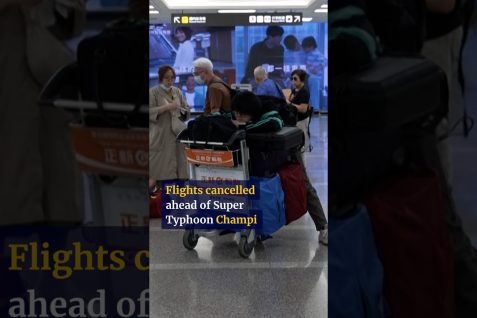
Airlines have cancelled or rescheduled more than a dozen flights to and from Taiwan and Japan because of Super Typhoon Champi, with more disruption expected in the coming days. Now the strongest storm of the year worldwide, Champi made landfall in Taiwan on Friday. It is also affecting eastern mainland China and Japan.
Airlines have cancelled or rescheduled more than a dozen flights to and from Taiwan and Japan because of Super Typhoon Champi, with more disruption expected in the coming days. Now the strongest storm of the year worldwide, Champi made landfall in Taiwan on Friday. It is also affecting eastern mainland China and Japan.
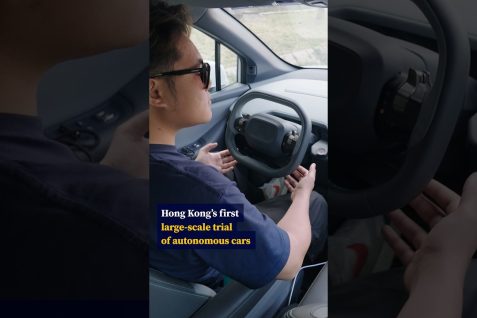
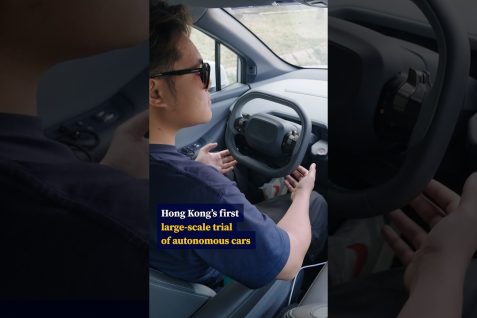
More than 1,000 residents are expected to ride in autonomous vehicles (AVs) as Chinese tech giant Baidu launches Hong Kong’s first large-scale public trial.
More than 1,000 residents are expected to ride in autonomous vehicles (AVs) as Chinese tech giant Baidu launches Hong Kong’s first large-scale public trial.
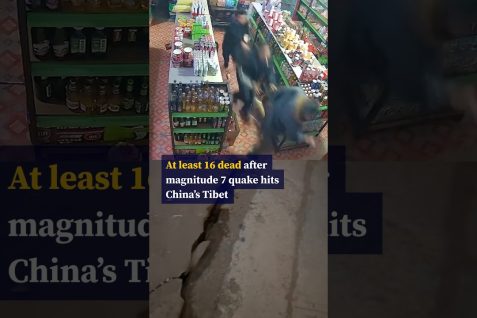
At least 16 people were killed when a magnitude 7 earthquake struck China’s Tibet autonomous region late Thursday. According to the US Geological Survey, the quake’s epicentre was in a mountainous region around 190km (120 miles) east-northeast of Nagqu and 390km northeast of Lhasa, the regional capital. The People’s Liberation Army said it has deployed drones and hundreds of troops to assist with rescue efforts.
At least 16 people were killed when a magnitude 7 earthquake struck China’s Tibet autonomous region late Thursday. According to the US Geological Survey, the quake’s epicentre was in a mountainous region around 190km (120 miles) east-northeast of Nagqu and 390km northeast of Lhasa, the regional capital. The People’s Liberation Army said it has deployed drones and hundreds of troops to assist with rescue efforts.
Programming used to be one of China’s best-paid careers. With its concentration of tech companies, Beijing attracted large numbers of workers born in the 1990s. Now, a weak economy, intense competition, pay cuts, and layoffs are forcing many to leave and return home to make a living. Once well-paid office workers, they now face a new struggle to support themselves.
Programming used to be one of China’s best-paid careers. With its concentration of tech companies, Beijing attracted large numbers of workers born in the 1990s. Now, a weak economy, intense competition, pay cuts, and layoffs are forcing many to leave and return home to make a living. Once well-paid office workers, they now face a new struggle to support themselves.
As DeepSeek’s servers went down, “What happened to Liang Wenfeng?” also trended on Weibo. Online speculation ranged from him fleeing the country to being arrested. The rumors grew out of talk of a technical breakthrough at DeepSeek, spawning various theories about external security threats.
As DeepSeek’s servers went down, “What happened to Liang Wenfeng?” also trended on Weibo. Online speculation ranged from him fleeing the country to being arrested. The rumors grew out of talk of a technical breakthrough at DeepSeek, spawning various theories about external security threats.
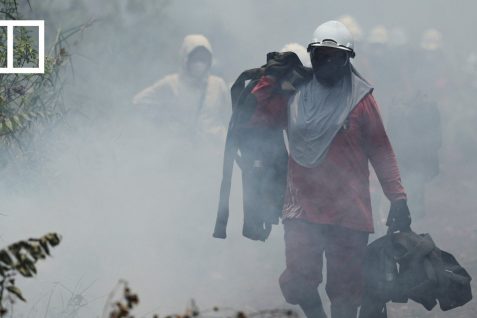
A group of all-female firefighters called the Power of Mama is rolling out on motorbikes to put out fires in Indonesia’s Ketapang Regency in West Kalimantan. The crew of more than 140 women received firefighting training from the Indonesia Nature Rehabilitation Initiative Foundation (YIARI).
They arrive on motorbikes, in a cloud of dust and smoke, carrying hoses, pumps, and hand tools into some of the most punishing terrain on Earth. The Power of Mama is an all-female firefighting crew working in Ketapang Regency, in Indonesia’s West Kalimantan province on the island of Borneo. More than 140 women have been trained for the work by the Indonesia Nature Rehabilitation Initiative Foundation, known as YIARI. Their enemy is not the dramatic wall of flame familiar from wildfire news elsewhere. It is a slower, stranger fire that burns underground in peat, sometimes for months, poisoning the air of an entire region.
Fire That Burns Beneath the Ground
Much of West Kalimantan sits on peatland, deep layers of partially decayed vegetation that hold enormous amounts of carbon and, when dry and drained, enormous fire risk. Peat fires do not rage so much as smoulder, creeping beneath the surface, surfacing where they choose, and resisting every attempt to declare them finished. Putting one out means soaking the ground itself, metre by metre, until the heat is truly gone, work that is measured in days rather than hours. A crew can drench a plot, leave, and be called back to the same smoking ground a week later. It is exhausting, unglamorous labour, and it is exactly the labour the Power of Mama was organised to do.
Why Mothers, and Why Motorbikes
The crew’s name is a statement of method as much as identity. In the villages around Ketapang, mothers are the organisers of daily life: they know every household, every path, and every patch of family land, and they are the first to feel a fire’s effects in children’s coughs and closed schools. Recruiting and training local women turns that knowledge into a fire service that outsiders cannot replicate. Motorbikes suit the reality of the work, carrying small teams quickly down narrow tracks to fires that trucks cannot reach in time. A fast first response matters enormously with peat, because a fire caught in its first hours may take a day to kill, while one left for a week can take a season.
A Crisis Measure in Hectares and Lungs
The context for their work is a national emergency that has been building for months. More than 1.9 million hectares of land, an area twelve times the size of London, have burned in wildfires across Indonesia this season. Hundreds of thousands of people in Indonesia and across Southeast Asia have suffered respiratory illnesses from the toxic haze the fires produce. The haze does not respect borders, drifting over neighbouring Malaysia and Singapore and periodically closing schools, grounding flights, and filling clinics far from any flame. Public anger has followed, with protests accusing authorities of ineptitude and corruption in handling a disaster that returns, in some form, almost every dry season. Against numbers like those, a village crew on motorbikes can look small, until you understand that nearly every hectare of that total started as a fire somebody could see from their house.
Prevention Is the Real Shift
The deeper change the Power of Mama represents is a move from response to prevention. Crews patrol during the dry season, watch for smoke, and work with farmers on the land-clearing practices that start so many fires, since burning remains the cheapest way to clear a field. A trusted local crew can make that argument in a way no distant agency can, because its members are neighbours rather than officials. YIARI’s training gives the women the technical side: pumps, hoses, fire behaviour, and safety in heat and smoke. The social side they bring themselves. A fire prevented leaves no headline, which is precisely the point, and precisely why prevention work is chronically undervalued until the haze arrives.
What Their Story Says About the Region
There is a reason this short film travels. Across Asia, the costs of environmental damage land first and hardest on rural women, who carry water, tend the sick, and keep households running when the air turns dangerous. The Power of Mama flips that script, putting the same women in the role of the region’s first responders, trained, equipped, and organised. It is also a reminder that Indonesia’s fire crisis will not be solved from Jakarta alone, or by aircraft and declarations during the worst weeks of smoke. It will be solved, if it is solved, in thousands of places like Ketapang, by people who live with the land and refuse to watch it burn. The women on the motorbikes are not waiting for that future. They are already riding into it, one smoking field at a time.
None of this work is easy on the body or the calendar. Peat smoke is thick with fine particles, the heat inside a smouldering field can defeat ordinary boots and gloves, and the fire season collides with the farming and family duties the women already carry. Shifts are arranged around school runs and harvests, which is another advantage of a local crew: it can flex in ways a posted-in unit cannot. The women describe the work plainly, as protection rather than adventure. They are defending their own children’s lungs, their own villages’ fields, and the forest their communities still depend on.
More than 1,000 residents are expected to ride in autonomous vehicles (AVs) as Chinese tech giant Baidu launches Hong Kong’s first large-scale public trial.
More than 1,000 residents are expected to ride in autonomous vehicles (AVs) as Chinese tech giant Baidu launches Hong Kong’s first large-scale public trial.
The grand finale of EQT Impact Challenge 2026 at Hong Kong’s M+ Museum in September saw some of Asia’s most promising deep-tech founders tackling challenges across climate and health.
The initiative, backed by global investment firm EQT and its philanthropic arm EQT Foundation, provides young companies with crucial early-stage investment alongside access to a global network of industry experts, investors and mentors.
After a seven-month journey that attracted more than 200 applicants and almost 6,000 public votes, five finalists took to the stage.
Advent Gene Therapeutics, which was named this year’s winner, has received investment of €500,000 (US$560,000) from EQT Foundation. The AI-driven biotech start-up develops next-generation viral vectors which enable safer, more precise and effective delivery of genetic medicines.
Okosix, which develops biopolymers that can reduce the use of plastic, and C2iTech, which hopes to use laboratory-grown cells to support the treatment of lung cancer , were named runners-up. They have both received support from Central Cove Group, the family office of Jean Eric Salata, chair of EQT Group.
SCMP Live of the South China Morning Post was an organising partner of EQT Impact Challenge 2026.
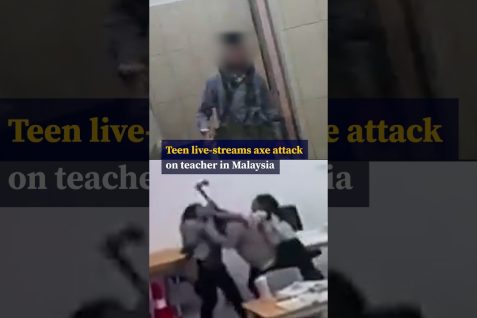
Malaysian police have arrested a 16-year-old student after he live-streamed an attack on a teacher with an axe at a private school in Kuching, the capital of Sarawak state.
Malaysian police have arrested a 16-year-old student after he live-streamed an attack on a teacher with an axe at a private school in Kuching, the capital of Sarawak state.
For years, Li Zhanshu was one of Xi Jinping’s most trusted political allies—a man who survived repeated controversies and rose to become China’s third-highest-ranking official.
Now, new rumors surrounding his daughter, Li Qianxin, and her business connections in Hong Kong have brought renewed attention to the former Chinese leader’s family.
How did Li Zhanshu rise from a provincial official to the heart of Xi Jinping’s inner circle? What do past investigations reveal about his family’s business interests? And why are questions about his political future resurfacing now?
In this episode, we trace Li Zhanshu’s remarkable rise, the controversies surrounding his family, and the political tensions behind Beijing’s closed doors.
We also examine the speculation surrounding actress Tong Liya and her changing career. What is documented, and what remains rumor?
**Note:** Reports and allegations discussed in this episode do not establish that Li Zhanshu or his family members have been detained or charged with wrongdoing.
For years, Li Zhanshu was one of Xi Jinping's most trusted political allies—a man who survived repeated controversies and rose to become China's third-highest-ranking official.
Now, new rumors surrounding his daughter, Li Qianxin, and her business connections in Hong Kong have brought renewed attention to the former Chinese leader's family.
How did Li Zhanshu rise from a provincial official to the heart of Xi Jinping's inner circle? What do past investigations reveal about his family's business interests? And why are questions about his political future resurfacing now?
In this episode, we trace Li Zhanshu's remarkable rise, the controversies surrounding his family, and the political tensions behind Beijing's closed doors.
We also examine the speculation surrounding actress Tong Liya and her changing career. What is documented, and what remains rumor?
**Note:** Reports and allegations discussed in this episode do not establish that Li Zhanshu or his family members have been detained or charged with wrongdoing.
Watch the full podcast!
What could be more innocent than pre-schoolers recreating the Chinese communists long march…with grenades? Even Chinese netizens are tearing these videos apart.
Join our fight to expose the CCP at and get ALL the new full-length interviews!
And check out our other channel, China Uncensored:
Limited Time: Get your free Tank Man set when you join the 50-Cent Army:
Join the Oct 24 China Uncensored Horror Livestream
France is on fire, communists and Islamists are joining forces, and China may be helping fan the flames.
Meet the Red-Green Alliance: an unlikely coalition of revolutionary leftists, Islamist radicals, and China-linked activists united by one big goal—sticking it to the West. We’re following the money, the organizations, and the very questionable connections linking Beijing, Tehran, and radical movements around the world.
Operation Honey Pot: Paste this emoji 🍯 in your comment below.
Want to go deeper than YouTube will let us? Check out our website:
Unitree Robotics released a video showcasing a new humanoid robot model, H2-X. Dubbed the ‘Kung Fu Legend: Guardian’, the robot can be seen performing various action stunts and acting as a bodyguard. Unitree did not confirm whether the actions in the video were performed autonomously, remote-controlled or choreographed. The footage also does not establish whether the H2-X can identify a threat and respond safely in an unplanned situation.
Unitree Robotics released a video showcasing a new humanoid robot model, H2-X. Dubbed the ‘Kung Fu Legend: Guardian’, the robot can be seen performing various action stunts and acting as a bodyguard. Unitree did not confirm whether the actions in the video were performed autonomously, remote-controlled or choreographed. The footage also does not establish whether the H2-X can identify a threat and respond safely in an unplanned situation.
Nvidia CEO Jensen Huang says nobody manufactures chips, open models, or AI researchers at scale better than China does, and that America faces “very, very serious competition.” He told veteran business journalist Deirdre Bosa at GTC Berlin that US frontier labs and chips are still the world’s best, and that Nvidia plans to stay ahead. Asked whether Washington is listening before the midterms, Huang says the US government wants American companies competing everywhere, from Africa and Central Asia to Brazil and Egypt.
Nvidia CEO Jensen Huang says nobody manufactures chips, open models, or AI researchers at scale better than China does, and that America faces "very, very serious competition." He told veteran business journalist Deirdre Bosa at GTC Berlin that US frontier labs and chips are still the world's best, and that Nvidia plans to stay ahead. Asked whether Washington is listening before the midterms, Huang says the US government wants American companies competing everywhere, from Africa and Central Asia to Brazil and Egypt.
Hong Kong police have arrested four teenagers seen in a viral video punching, slapping and swearing at a boy in an alley in Hong Kong’s Sai Wan Ho neighbourhood. The group has been charged with assault and gang-related offences.
Hong Kong police have arrested four teenagers seen in a viral video punching, slapping and swearing at a boy in an alley in Hong Kong’s Sai Wan Ho neighbourhood. The group has been charged with assault and gang-related offences.
A user posted a video showing that many young people are now collecting trash for resale. Their equipment is more professional than that of older scavengers, with headlamps and grabbers. Different groups search the bins throughout the day. They can even be seen in the early hours of the morning. The user wondered: Has scrap become more valuable, or are people unable to find jobs?
A user posted a video showing that many young people are now collecting trash for resale. Their equipment is more professional than that of older scavengers, with headlamps and grabbers. Different groups search the bins throughout the day. They can even be seen in the early hours of the morning. The user wondered: Has scrap become more valuable, or are people unable to find jobs?
Driscoll’s executives went to China 15 years ago with a goal of turning blueberries—a fruit few Chinese people then ate—into the country’s next big food trend. By 2020, it was cranking out thousands of tons of blueberries for Chinese supermarkets.
Then came Chinese competition and IP theft.
Driscoll's executives went to China 15 years ago with a goal of turning blueberries—a fruit few Chinese people then ate—into the country’s next big food trend. By 2020, it was cranking out thousands of tons of blueberries for Chinese supermarkets.
Then came Chinese competition and IP theft.
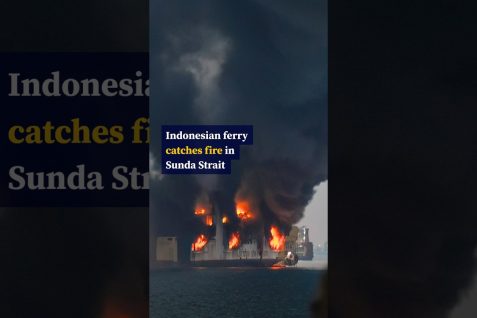
All 460 people on board a ferry that caught fire en route to Indonesia’s Java island were safely evacuated. The ferry, KMP Batumandi, had been crossing from Bakauheni Port in Lampung when the incident occurred on Tuesday. Rescue teams were immediately dispatched to the scene.
All 460 people on board a ferry that caught fire en route to Indonesia’s Java island were safely evacuated. The ferry, KMP Batumandi, had been crossing from Bakauheni Port in Lampung when the incident occurred on Tuesday. Rescue teams were immediately dispatched to the scene.
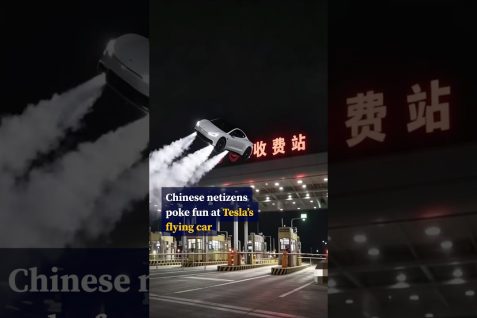
Tesla’s new “flying car” has drawn mixed reactions on Chinese social media. While many supporters and critics have debated whether the car is science fiction or hi-tech fact, some netizens have gone online to brainstorm ways to integrate the car into everyday life.
Tesla’s new “flying car” has drawn mixed reactions on Chinese social media. While many supporters and critics have debated whether the car is science fiction or hi-tech fact, some netizens have gone online to brainstorm ways to integrate the car into everyday life.
More than 1.9 million hectares of land, an area 12 times the size of London, have burned in wildfires that have raged for months across Indonesia. Hundreds of thousands of people in the country and across Southeast Asia have suffered from respiratory illnesses related to toxic haze from the fires. Protests have also erupted in Indonesia against authorities blamed for ineptitude and corruption in handling the fires.
More than 1.9 million hectares of land, an area 12 times the size of London, have burned in wildfires that have raged for months across Indonesia. Hundreds of thousands of people in the country and across Southeast Asia have suffered from respiratory illnesses related to toxic haze from the fires. Protests have also erupted in Indonesia against authorities blamed for ineptitude and corruption in handling the fires.
This video is part of a series produced with support from the Hong Kong SAR government.
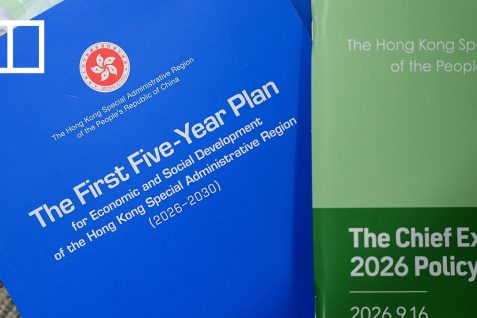
Hong Kong Chief Executive John Lee unveiled the city’s first five-year plan in September, setting out five binding and 17 aspirational goals aimed at keeping the city competitive and attractive to international investors, while improving the livelihoods of its residents. Lee also unveiled the final annual policy address of his current term, which contained a series of concrete measures to help the city attain the ambitious goals outlined in the five-year plan.
Elon Musk has really pushed the limits this time! Tesla’s new Roadster 2 made a stunning debut. It can drive upside down like Spider-Man, launch into the air, flip over, and land safely. It left people across China stunned.
Elon Musk has really pushed the limits this time! Tesla’s new Roadster 2 made a stunning debut. It can drive upside down like Spider-Man, launch into the air, flip over, and land safely. It left people across China stunned.
The staff across from our booth spent the first three days just playing on their phones, and today’s day four of the Canton Fair. Today they’re taking it even further—they’re already asleep in their booth.
The staff across from our booth spent the first three days just playing on their phones, and today's day four of the Canton Fair. Today they're taking it even further—they're already asleep in their booth.
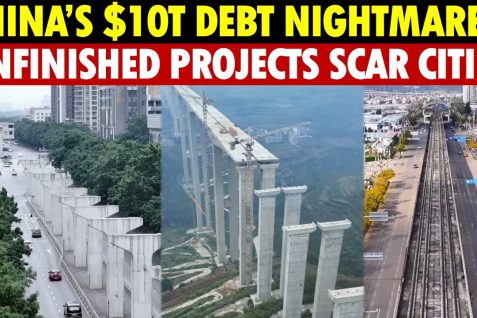
A vlogger posted a video on October 15, 2026, showing an unfinished light rail project in Liuzhou, Guangxi. He said construction was already underway when he arrived in 2017. Nearly 10 years later, it remained unfinished. Judging by the number of people around, he said, it would lose money even if it opened.
A vlogger posted a video on October 15, 2026, showing an unfinished light rail project in Liuzhou, Guangxi. He said construction was already underway when he arrived in 2017. Nearly 10 years later, it remained unfinished. Judging by the number of people around, he said, it would lose money even if it opened.
A 3-year-old girl was spotted hanging from a window screen in Zhangping, China. Her mother had reportedly left her alone in the 12th-floor flat to go grocery shopping. Neighbours and a security guard held out a stool to support the girl while they waited for firefighters to arrive.
A 3-year-old girl was spotted hanging from a window screen in Zhangping, China. Her mother had reportedly left her alone in the 12th-floor flat to go grocery shopping. Neighbours and a security guard held out a stool to support the girl while they waited for firefighters to arrive.
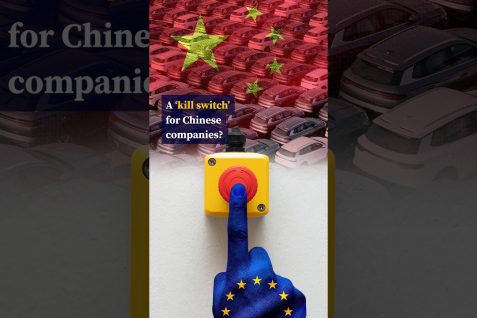
Emboldened by a recent deal capping hybrid car exports, the EU is preparing to accelerate a crackdown on Chinese trade practices. Backed by a dramatic pivot from Germany, Brussels is developing a new “kill switch” that could immediately kick Chinese companies out of the single market if Beijing is deemed to be engaging in economic coercion. In response, Beijing has warned the bloc not to “fantasise” that a hardline approach will foarce it into further concessions.
The European Union is preparing the most aggressive trade weapon in its history, and officials in Brussels are not shy about the nickname it has acquired: a “kill switch” for Chinese companies. The proposed instrument would let the bloc cut off access to its single market — the richest consumer market on earth — if a trading partner is found to be flooding Europe with subsidised goods or using trade itself as a tool of economic coercion. EU leaders broadly backed the idea at a summit in Brussels on October 15–16 and asked the European Commission to turn the concept into a formal proposal by the end of the year. What began as a Franco-German initiative has, in the space of a few weeks, become the centrepiece of Europe’s new China policy. For Beijing, which has warned Brussels not to “fantasise” about forcing concessions, the message is that the era of case-by-case complaints is ending.
From Hybrid Cars to a Standing Weapon
The immediate trigger was a deal, struck only days before the summit, under which China accepted a cap on hybrid car exports to Europe, set at 350,000 vehicles a year from 2027. That agreement followed the tariffs the EU had already imposed on Chinese battery-electric vehicles after a long anti-subsidy investigation. Rather than treating the hybrid cap as a settlement, Brussels treated it as proof of concept: if export volumes could be negotiated for cars, similar safeguards could be extended sector by sector. Commission President Ursula von der Leyen told reporters after the summit that the car deal would not fix the structural imbalance and that more safeguards were coming. The Commission has already begun analysing trade data to see where the hybrid template might be applied next.
The numbers behind the urgency are stark. Von der Leyen has noted that the EU’s goods trade deficit with China is running at more than €1 billion a day, a figure she has repeatedly called unsustainable. Chinese exports to the Union expanded by a further 25 per cent in the first eight months of 2026 alone, and the pressure has spread far beyond the car industry. A decade ago Europe ran a €71 billion deficit with China in industrial machinery and a €6 billion surplus in chemicals; today the machinery deficit has ballooned to €206 billion and chemicals have swung to a €24 billion annual deficit. Those two sectors — chemicals and machinery — are now named by von der Leyen as needing swift protection, with wind turbines also in the frame. Anti-dumping investigations into chemicals, pharmaceuticals and machinery are expected within weeks.
Germany’s Pivot Changes the Politics
None of this would be possible without the dramatic pivot in Berlin. Germany, whose carmakers and chemical giants depend heavily on the Chinese market, spent decades as the brake on any European trade confrontation with Beijing. That changed with the joint letter sent on October 5 by French President Emmanuel Macron and German Chancellor Friedrich Merz, arguing that the Commission should be granted powers to, in their words, “cut off access to the European single market if needed if another trading nation deliberately ignores calls for the restoration of fair trade conditions.” France and Germany formally proposed the kill-switch mechanism that leaders then discussed at the summit. When the EU’s two largest economies sponsor a measure together, the rest of the bloc usually follows. Belgium and Denmark were among the member states backing fast action, and officials described support for the instrument as broad.
Lithuanian President Gitanas Nausėda gave the bluntest public account of what the tool could mean in practice. If China engages in specific unfair trade practices, he said, Europe can limit the entry of Chinese products into its market — and may consider closing the market completely. He called that an extreme measure, but also a very powerful tool. The trigger would not be limited to import surges: the proposal is also designed for coercion scenarios, such as a country cutting off supplies of critical raw materials to avoid serious discussion of trade imbalances. In that event, one German official explained, the EU must be able to inflict damage comparable to the damage being done to it. The philosophy is deterrence — a weapon built in the hope that its existence makes using it unnecessary.
Why Beijing Is Pushing Back
China’s response combined dismissal with warning. Beijing told the bloc not to fantasise that a hardline approach would force it into further concessions, a signal that Chinese officials see the kill switch less as a negotiating lever than as a precedent they cannot afford to accept. The precedent is indeed the point: a mechanism built for hybrid cars today could be aimed at chemicals, machinery and wind turbines tomorrow, and at sectors nobody has named yet the year after. Chinese exporters have spent two years absorbing EU electric-vehicle tariffs and anti-subsidy probes; a standing market-access switch would raise the stakes from individual product lines to entire industries. Beijing also holds cards of its own, from rare-earth export controls to the European companies whose factories and sales inside China could be exposed to retaliation. That mutual exposure is precisely why the debate inside the EU is not finished, even after the summit’s show of unity.
Sceptics note that a kill switch is easier to announce than to operate. EU officials have pointedly refused to name any country the provision would apply to, partly for legal reasons and partly to preserve diplomatic room. Any measure would have to survive scrutiny over proportionality, due process and the bloc’s international trade obligations, and defining “economic coercion” in a way 27 governments can apply consistently is a genuine drafting challenge. There is also the question of who pays: European manufacturers that rely on Chinese components, and European exporters selling into China, would feel a market closure as keenly as Chinese firms would. Von der Leyen has paired the stick with December proposals to reduce EU companies’ reliance on single sources for critical supplies, plus a “solidarity mechanism” to help member states or sectors hit by outside coercion or retaliation. Those companion measures acknowledge that pulling the switch would hurt inside Europe too.
What to Watch Next
The Commission’s formal proposal is expected in December, and its design will matter more than the summit rhetoric. Key questions include how quickly the instrument could be triggered, whether it requires a full investigation or can act on a faster emergency track, and whether it targets companies, sectors or entire countries. Beijing’s behaviour in the meantime — on rare earths, on the hybrid cap’s implementation, and in the follow-up to Trade Commissioner Maroš Šefčovič’s October talks in Beijing — will shape how hard a line the proposal takes. European industry, meanwhile, will be lobbying in both directions at once: protection from Chinese overcapacity on one side, protection of its own China business on the other. Either way, the direction of travel is set. Europe is moving from case-by-case anti-subsidy probes to a standing deterrent, and the kill switch — once drafted into law — will permanently change the terms on which Chinese companies operate in the world’s largest single market.
Title: How Are Countries Weaponising the World’s Sea Routes?
Thumbnail: HORMUZ. RED SEA. BLACK SEA. TRADE UNDER ATTACK
Two commercial ships have sunk near the Strait of Hormuz. Drone attacks have damaged vessels in the Black Sea. And shipping through the Red Sea continues to face security risks following repeated Houthi attacks.
These are not isolated incidents. They show how conflicts in different parts of the world are disrupting the routes that keep global trade moving.
And India’s Defence Minister Rajnath Singh has now warned about precisely this problem: the weaponisation of critical trade routes, vital sea lanes and vulnerable maritime chokepoints.
But how does a narrow stretch of water become a weapon? And why can a conflict thousands of kilometres away affect the entire world?
Let’s start with the Strait of Hormuz.
Before the current conflict, roughly one-fifth of global oil and liquefied natural gas trade passed through this narrow waterway connecting the Persian Gulf with the Gulf of Oman.
Title: How Are Countries Weaponising the World’s Sea Routes?
Thumbnail: HORMUZ. RED SEA. BLACK SEA. TRADE UNDER ATTACK
Two commercial ships have sunk near the Strait of Hormuz. Drone attacks have damaged vessels in the Black Sea. And shipping through the Red Sea continues to face security risks following repeated Houthi attacks.
These are not isolated incidents. They show how conflicts in different parts of the world are disrupting the routes that keep global trade moving.
And India's Defence Minister Rajnath Singh has now warned about precisely this problem: the weaponisation of critical trade routes, vital sea lanes and vulnerable maritime chokepoints.
But how does a narrow stretch of water become a weapon? And why can a conflict thousands of kilometres away affect the entire world?
Let's start with the Strait of Hormuz.
Before the current conflict, roughly one-fifth of global oil and liquefied natural gas trade passed through this narrow waterway connecting the Persian Gulf with the Gulf of Oman.