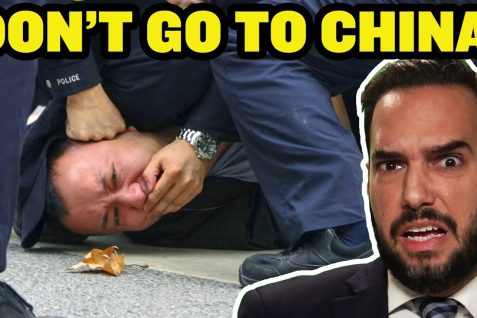
A Chinese restaurant owner was stopped and arrested by Immigration and Customs Enforcement, or ICE, on his way to work in New York on October 20. Local media identified him as Dian Zhao Lin. He is being held at an ICE detention facility in Batavia NY.
A Chinese restaurant owner was stopped and arrested by Immigration and Customs Enforcement, or ICE, on his way to work in New York on October 20. Local media identified him as Dian Zhao Lin. He is being held at an ICE detention facility in Batavia NY.
Watch the full podcast!
Wanying “Heather” Zhang seemed to have it all – tons of money, a husband, child and a successful career. Then she was arrested for spying for China.
Joining us is Nicholas Eftimiades, a former senior intel officer and author of “Chinese Espionage Operations and Tactics”
Join our fight to expose the CCP at and get ALL the new full-length interviews!
And check out our other channel, China Uncensored:
Watch the full podcast!
Wanying "Heather" Zhang seemed to have it all – tons of money, a husband, child and a successful career. Then she was arrested for spying for China.
Joining us is Nicholas Eftimiades, a former senior intel officer and author of “Chinese Espionage Operations and Tactics”
Join our fight to expose the CCP at and get ALL the new full-length interviews!
And check out our other channel, China Uncensored:
Limited Time: Get your free Tank Man set when you join the 50-Cent Army:
China has just made it legal to kidnap foreigners in China if they obey US law.
New regulations could put foreign companies in a legal Catch-22: investigate forced labor in Chinese supply chains and risk violating Chinese law, or follow Chinese rules and risk breaking Western law. And with China expanding its power to stop people from leaving the country, even a business trip could turn into an unwanted extended stay.
Operation Honey Pot: Paste this emoji 🍯 in your comment below.
Want to go deeper than YouTube will let us? Check out our website:
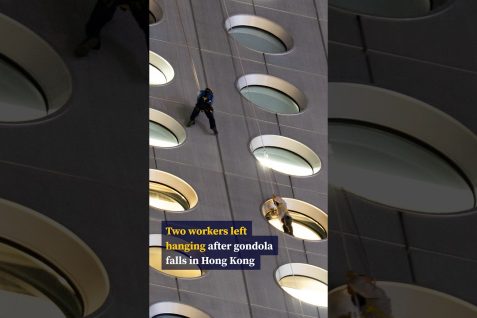
Firefighters rushed to rescue two workers left dangling on safety harnesses more than 30 storeys above ground outside a skyscraper in Hong Kong’s Central district. The incident took place on Monday evening, after their suspended working platform apparently malfunctioned and dropped.
Firefighters rushed to rescue two workers left dangling on safety harnesses more than 30 storeys above ground outside a skyscraper in Hong Kong’s Central district. The incident took place on Monday evening, after their suspended working platform apparently malfunctioned and dropped.
A growing interest among Hong Kong women in an anti-ageing injection containing human tissue has prompted a recent crackdown by health authorities, as the product, widely known in Chinese as the “cadaver skin jab”, has not been registered for use in the city.
A growing interest among Hong Kong women in an anti-ageing injection containing human tissue has prompted a recent crackdown by health authorities, as the product, widely known in Chinese as the “cadaver skin jab”, has not been registered for use in the city.
China’s A-share market has lost 2.4 trillion US dollars in value since its peak in May.
The International Monetary Fund’s 2026 World Economic Outlook projects South Korea’s GDP at 2.25 trillion US dollars this year and Canada’s at 2.49 trillion US dollars. The 2.4 trillion US dollars wiped off Chinese stocks in five months falls between those figures. It is nearly equal to Canada’s entire economy.
Chinese internet users are commenting on the French protests with a blend of dark humour, national pride and regret over the damage caused to historic landmarks. Some, however, have tried to provide deeper perspectives on how a protest against deteriorating school conditions spiralled into a full-blown social crisis.
Chinese internet users are commenting on the French protests with a blend of dark humour, national pride and regret over the damage caused to historic landmarks. Some, however, have tried to provide deeper perspectives on how a protest against deteriorating school conditions spiralled into a full-blown social crisis.
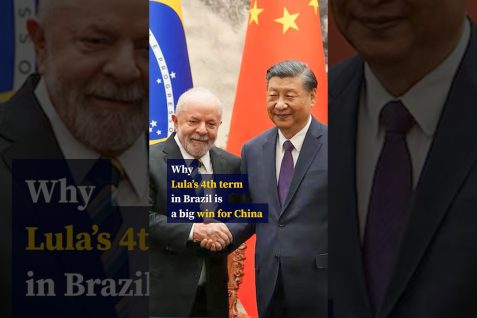
Luiz Inácio Lula da Silva has done it again. The 80-year-old Brazilian president won Sunday’s runoff election with about 51.8 percent of the vote, defeating Senator Flávio Bolsonaro and securing a historic fourth term in office. It is a comeback with no precedent in modern Brazilian democracy: Lula finished second in the first round on October 4 and overturned the result in three weeks. His rival, the eldest son of former president Jair Bolsonaro and a close ally of Donald Trump, says he will not accept the outcome. And in Beijing, officials who never comment on foreign elections have every reason to quietly welcome this one, because no leader in the Americas is more important to China’s long game in the region than Lula.
A Comeback Three Weeks in the Making
The scale of the turnaround is easy to miss in the final margin. In the first round, Flávio Bolsonaro finished ahead with roughly 47 percent of the vote to Lula’s 45 percent, and polls still had the challenger leading by two points the day before the runoff. Between the two rounds, the Workers’ Party candidate added more than ten million votes while his rival gained only a fraction of that. No candidate who lost a first round had gone on to win the presidency since Brazil returned to direct elections in 1989. Turnout surged to help him do it, with abstention falling to 19 percent, the lowest in the country’s history. Lula, who turns 81 within days of the vote, ended what he called the last campaign of his life by making history one more time.
The Loser Refuses to Lose
Flávio Bolsonaro followed his father’s script from 2022 and refused to concede. He blamed a Supreme Court decision, taken by Justice Cristiano Zanin, to extend voting by two hours in parts of the country, and said the uneven application of that measure made the result impossible to recognize. His team promised legal action to have the election annulled, a challenge Brazil’s electoral court is widely expected to reject. The defeated candidate had spent the campaign advertising his closeness to the Trump administration and suggesting constitutional changes were within reach. Instead, the Bolsonaro movement has now lost two straight presidential elections to the same man. The legal fight will dominate Brazilian headlines for weeks, but few observers expect it to change who governs in Brasília.
Washington Backed the Other Horse
The result is a direct setback for the White House’s Latin America strategy. Over the past year, Washington has openly favored conservative candidates across the hemisphere, building a string of allied governments in countries including Bolivia, Chile, Colombia, Ecuador, Honduras and Peru. Brazil, the region’s largest economy, was the biggest prize of all, and Flávio Bolsonaro campaigned as the candidate who would bring it into that orbit. Lula accused the American government of intervening to help his opponent, and he turned sovereignty into his closing argument. “This country doesn’t accept being anybody’s colony,” he told supporters on election night. Mexico’s President Claudia Sheinbaum rushed to congratulate him, while Donald Trump and Argentina’s Javier Milei stayed publicly silent.
Why Beijing Wins Without Campaigning
China did not endorse anyone in Brazil’s election, because it did not need to. China has been Brazil’s largest trading partner for well over a decade, buying vast quantities of Brazilian soy, iron ore, beef and oil, and Lula has spent his presidency deepening that relationship through the BRICS bloc and state visits. A Bolsonaro government in Brasília, aligned with Washington’s push to sideline Beijing from the hemisphere, would have put that trade under political pressure for the first time. Lula’s victory removes the risk entirely for another four years. French analysts described Washington’s regional doctrine as an effort to push China out of America’s backyard, and Brazil was its central battleground. The backyard’s biggest country just voted to keep both doors open, and the trade numbers say the Chinese door is the wider one.
What a Fourth Lula Term Means
Lula inherits the problems that nearly ended his presidency in the first round. Voters ranked the cost of living, crime and corruption above everything else, and affordability anger powered Bolsonaro’s early lead. The president promised on election night to govern differently, giving ordinary people a greater role in decisions and working with a conservative-leaning Congress he does not control. His room for manoeuvre is narrow: public finances are stretched, the currency and markets will punish missteps, and his own age shadows every long-term plan. He also returns to a region where most of his neighbours now lean right and look to Washington. How he balances a friendly Beijing, a hostile White House and an impatient electorate will define the term.
The Bigger Picture for the US-China Contest
Elections like this one are where the US-China rivalry is actually decided, far from the warships and tariff schedules. Brazil did not vote for China on Sunday; it voted on prices, safety and sovereignty, and the pro-China outcome arrived as a by-product. That is precisely what makes the result durable, because it rests on trade and sentiment rather than on any deal a future government could tear up. Washington can still compete in Latin America, but Brazil shows the cost of being seen to pick another country’s president. For Beijing, the lesson of Lula’s fourth term is the oldest one in its playbook. Show up as a customer, stay out of the campaign, and let the voters do the rest.
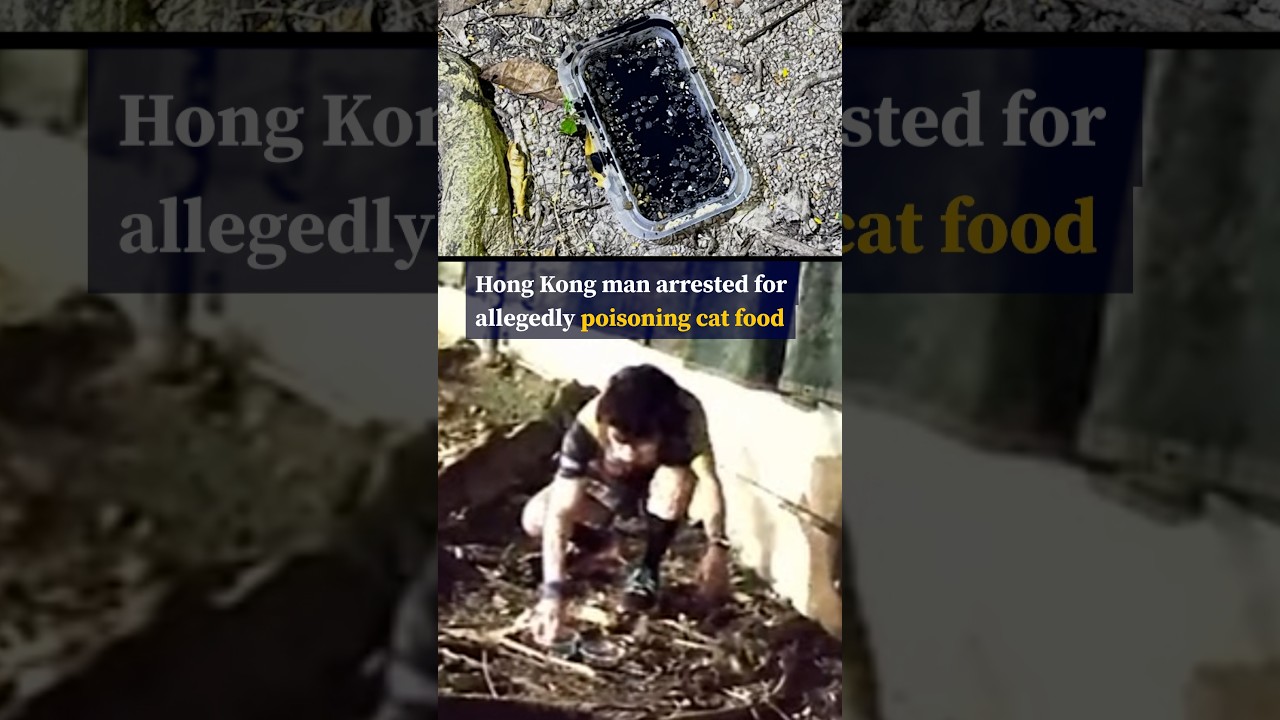
Police have arrested a 34-year-old man for allegedly mixing rat poison into food left for stray cats in a Hong Kong park. Animal welfare volunteers had confronted the man following a two-month sting operation using hidden cameras. Officers who arrested the man said they seized a packet of suspected rat poison and a 14cm (5.5 inches) fruit knife at the scene.
Police have arrested a 34-year-old man for allegedly mixing rat poison into food left for stray cats in a Hong Kong park. Animal welfare volunteers had confronted the man following a two-month sting operation using hidden cameras. Officers who arrested the man said they seized a packet of suspected rat poison and a 14cm (5.5 inches) fruit knife at the scene.
There’s an old joke: protect yourself from fires, thieves, and even your best friends. These days, that joke seems all too real. Some older single women see friends with similar backgrounds marry into wealth and enjoy comfortable lives. Jealousy can overwhelm their sense of right and wrong, and even close friendships fall apart over the competition for money and status.
There’s an old joke: protect yourself from fires, thieves, and even your best friends. These days, that joke seems all too real. Some older single women see friends with similar backgrounds marry into wealth and enjoy comfortable lives. Jealousy can overwhelm their sense of right and wrong, and even close friendships fall apart over the competition for money and status.
A new poll suggests a dramatic shift in Taipei’s mayoral race: challenger Puma Shen is leading incumbent Mayor Chiang Wan-an by 17 percentage points.
But the bigger story may be how Shen is running his campaign.
Instead of relying solely on traditional speeches and campaign promises, Shen’s team collected more than 60,000 public comments, held face-to-face discussions with residents, and transformed their concerns into a remarkable interactive platform called HEART Island.
The platform turns 94 policy proposals into a virtual city that voters can explore—covering everything from school lunches and public transportation to neighborhood safety and government services.
Could this approach reshape political campaigning in Taiwan?
In this episode, we examine the surprising polling numbers, the story behind HEART Island, Shen’s grassroots campaign strategy, and the challenges facing Taipei’s incumbent mayor.
We also look at how Beijing’s criticism and the approaching mayoral debate could influence the final weeks of the election.
**Note:** Poll results vary by organization and methodology. A lead in one survey does not guarantee an election victory.
A new poll suggests a dramatic shift in Taipei's mayoral race: challenger Puma Shen is leading incumbent Mayor Chiang Wan-an by 17 percentage points.
But the bigger story may be how Shen is running his campaign.
Instead of relying solely on traditional speeches and campaign promises, Shen's team collected more than 60,000 public comments, held face-to-face discussions with residents, and transformed their concerns into a remarkable interactive platform called HEART Island.
The platform turns 94 policy proposals into a virtual city that voters can explore—covering everything from school lunches and public transportation to neighborhood safety and government services.
Could this approach reshape political campaigning in Taiwan?
In this episode, we examine the surprising polling numbers, the story behind HEART Island, Shen's grassroots campaign strategy, and the challenges facing Taipei's incumbent mayor.
We also look at how Beijing's criticism and the approaching mayoral debate could influence the final weeks of the election.
**Note:** Poll results vary by organization and methodology. A lead in one survey does not guarantee an election victory.
Limited Time: Get your free Tank Man set when you join the 50-Cent Army:
China wants to beat America in the AI race—but its data centers have a serious problem: they need water, and China is running short.
Operation Honey Pot: Paste this emoji 🍯 in your comment below.
Want to go deeper than YouTube will let us? Check out our website:
Apple’s first foldable phone, the iPhone Duo, went on sale in China on October 23. Strong demand sparked a rush to line up outside stores. Many customers arrived two days early just to get the new phone as soon as possible.
Apple’s first foldable phone, the iPhone Duo, went on sale in China on October 23. Strong demand sparked a rush to line up outside stores. Many customers arrived two days early just to get the new phone as soon as possible.
North Korean leader Kim Jong-un visited the Chinese border city of Dandong on Saturday, with both sides underlining their traditional friendship and calling to boost cooperation. The trip was Kim’s first visit to China in more than a year and had not been announced in advance.
North Korean leader Kim Jong-un visited the Chinese border city of Dandong on Saturday, with both sides underlining their traditional friendship and calling to boost cooperation. The trip was Kim’s first visit to China in more than a year and had not been announced in advance.
One person was killed and 616 others were injured as Typhoon Champi hit Taiwan on Saturday, according to its official news agency. The storm uprooted trees and severed power in some parts of the island. Officials estimate the storm caused US$4.2 million in agricultural losses. After moving past the island, Typhoon Champi continued towards Japan and eastern mainland China.
One person was killed and 616 others were injured as Typhoon Champi hit Taiwan on Saturday, according to its official news agency. The storm uprooted trees and severed power in some parts of the island. Officials estimate the storm caused US$4.2 million in agricultural losses. After moving past the island, Typhoon Champi continued towards Japan and eastern mainland China.
In Myanmar, a country consumed by conflict, one sport defined by brutality dominates. Considered too dangerous even for the Ultimate Fighting Championship (UFC), lethwei is a martial art where headbutts are encouraged and knockout blows are the aim of the game.
In Myanmar, a country consumed by conflict, one sport defined by brutality dominates. Considered too dangerous even for the Ultimate Fighting Championship (UFC), lethwei is a martial art where headbutts are encouraged and knockout blows are the aim of the game.
All efforts need to be focused on search and rescue for survivors and treating the injured, President Xi Jinping instructed on the morning of October 23, after a 7.0-magnitude earthquake killed 16 and injured 76 in China’s Tibet autonomous region overnight.
All efforts need to be focused on search and rescue for survivors and treating the injured, President Xi Jinping instructed on the morning of October 23, after a 7.0-magnitude earthquake killed 16 and injured 76 in China’s Tibet autonomous region overnight.
More than 126,000 Rohingya refugees who fled systemic persecution in Myanmar have settled in Malaysia over the past decade. But an initial wave of hospitality has since been replaced by hostility, mostly driven by online misinformation campaigns. Amid the growing resentment, Malaysian Prime Minister Anwar Ibrahim has pledged to repatriate asylum seekers back to a country still gripped by war.
More than 126,000 Rohingya refugees have settled in Malaysia over the past decade, fleeing a Myanmar that tried to erase them. For years, Muslim-majority Malaysia received them with a measure of hospitality that few other countries in the region offered. That welcome has curdled into open hostility, and much of the change was manufactured online. A wave of misinformation and hate speech has moved from phone screens into housing blocks, schools and government policy. The story of the Rohingya in Malaysia is now a case study in how online hate becomes real-world harm.
A Welcome That Wore Out
The Rohingya are a Muslim minority from Myanmar’s Rakhine State, denied citizenship by a country that refuses to count them among its official ethnic groups. In 2017, a brutal military crackdown drove more than 700,000 of them out of Myanmar in a campaign now before the International Court of Justice as a genocide case. Malaysia took in one of the largest shares of those who fled by sea and land, and ordinary Malaysians initially responded with charity and solidarity. United Nations figures put the number of registered refugees and asylum seekers from Myanmar in Malaysia at roughly 193,000, about two-thirds of them Rohingya. They built lives in the shadows of Kuala Lumpur and Penang, working the construction sites, markets and plantations that local workers often avoid.
How Misinformation Turned Neighbours Into Enemies
The turning point was not a single event but a steady drip of falsehoods shared online. Viral posts blamed Rohingya families for crime, disease and rising prices, and recycled old photographs as fresh evidence of bad behaviour. During a surge of hostile content this year, petitions calling for the Rohingya to be expelled gathered hundreds of thousands of signatures. Rights monitors linked the online campaign to real consequences, including harassment on the street and pressure that forced community schools to close. In July, more than a hundred Rohingya were evicted from their homes on Penang by local residents and had to be relocated by the authorities. The pattern is familiar from other countries: the lie travels first, and the eviction notice, the slur and the closed school follow behind it.
Refugees Without a Legal Floor
What makes the Rohingya in Malaysia so exposed is that the law offers them almost nothing to stand on. Malaysia is not a signatory to the UN Refugee Convention, so even people registered with the UN refugee agency are officially treated as illegal migrants. That status bars Rohingya children from public schools and adults from legal work, pushing families into exactly the informal economy that critics then blame them for dominating. It also means any encounter with enforcement can end in detention, regardless of a person’s UNHCR card. Community leaders have reported asylum seekers, including card holders, being swept up in repatriation drives. A population with no legal floor beneath it has no defence when public opinion turns, which is why an online narrative can translate so quickly into policy.
Anwar’s Bargain With the Generals
Prime Minister Anwar Ibrahim, long marketed abroad as a reformist, has moved with the public mood rather than against it. In September he stunned refugee advocates by saying he would invite Myanmar’s leader, Min Aung Hlaing, for an official visit in return for Myanmar accepting thousands of Rohingya back. This is the same general whose military drove the Rohingya out in 2017 and seized power in a 2021 coup that plunged Myanmar into civil war. Malaysia says Myanmar agreed in July to take back as many as 5,000 Rohingya, and Anwar has said roughly 10,000 Myanmar nationals have already been repatriated since January. The two leaders have since met, with Malaysia promising to work toward Myanmar’s reintegration into the ASEAN bloc. For Naypyidaw, the red carpet is a prize; for the Rohingya, the price of that prize may be their refuge.
Sent Back to a War
The United Nations refugee agency has stated plainly that conditions in Myanmar do not support the safe and sustainable return of refugees, and that it has not been involved in identifying who is being sent back. Myanmar’s civil war is still burning across multiple frontlines, and Rakhine State itself is a battlefield. Refugee advocates warn that returnees risk detention or forced conscription into the very military they fled. Community representatives describe repatriation for many Rohingya as a death sentence delivered by paperwork. Malaysia insists the returns are voluntary and that Myanmar has given assurances returnees will not be harmed. Those assurances come from a junta that much of the world holds responsible for the original persecution, which is why rights groups are urging Kuala Lumpur to halt the programme entirely.
What Malaysia Decides About Itself
Every refugee-hosting country eventually faces the question Malaysia faces now: whether hospitality was a value or merely a mood. The Rohingya did not change; the information environment around them did, and a government chose to follow it rather than lead it. If the repatriations proceed, Malaysia will have let viral falsehoods set the terms of a decision about tens of thousands of human lives. If it pauses them, it will have to confront the harder work of giving a stateless people some legal standing at home. Either way, the lesson travels far beyond Malaysia. Online hate is cheap to produce and expensive to undo, and by the time it reaches the street, the school gate and the deportation ship, the people who posted it have usually moved on to the next target.
France has been rocked by protests and political unrest. But a much bigger question is emerging: who funds the activist networks that operate across borders?
At the center of this investigation is Neville Roy Singham, an American technology entrepreneur who founded ThoughtWorks, worked as an adviser to Huawei, and later became a major financial supporter of left-wing organizations around the world.
After selling his company, Singham helped fund a network of nonprofit organizations, media outlets, and political advocacy groups spanning multiple continents. His activities and reported connections to China have attracted scrutiny from American lawmakers.
How does this network operate? What role do media organizations play in amplifying protest movements? And what do Singham’s connections to Shanghai reveal about the relationship between political activism and China’s global influence?
In this episode, we trace Singham’s journey from a young Maoist activist in Detroit to a wealthy technology entrepreneur, and examine the funding networks, political relationships, and allegations surrounding his activities.
France has been rocked by protests and political unrest. But a much bigger question is emerging: who funds the activist networks that operate across borders?
At the center of this investigation is Neville Roy Singham, an American technology entrepreneur who founded ThoughtWorks, worked as an adviser to Huawei, and later became a major financial supporter of left-wing organizations around the world.
After selling his company, Singham helped fund a network of nonprofit organizations, media outlets, and political advocacy groups spanning multiple continents. His activities and reported connections to China have attracted scrutiny from American lawmakers.
How does this network operate? What role do media organizations play in amplifying protest movements? And what do Singham's connections to Shanghai reveal about the relationship between political activism and China's global influence?
In this episode, we trace Singham's journey from a young Maoist activist in Detroit to a wealthy technology entrepreneur, and examine the funding networks, political relationships, and allegations surrounding his activities.
COVID cases continue to rise in China, and virology researchers are warning about emerging variants. Respiratory illnesses become more common in fall and winter. Air pollution could add to the health risks for people who become infected.
COVID cases continue to rise in China, and virology researchers are warning about emerging variants. Respiratory illnesses become more common in fall and winter. Air pollution could add to the health risks for people who become infected.
Limited Time: Get your free Tank Man set when you join the 50-Cent Army:
Get your illegal Xi Jinpooh shirt:
Is Kim Jong Un Dead?! China’s ambassador threatens the Philippines. Why is Shanghai full of empty office buildings? That and more on this week’s China news headlines.
Operation Honey Pot: Paste this emoji 🍯 in your comment below.
Want to go deeper than YouTube will let us? Check out our website:
Veteran actors including Shu Chen and Yu Qingbin have drawn attention for filming during the day and delivering food at night in Hengdian, a film and television production hub in Zhejiang.
Veteran actors including Shu Chen and Yu Qingbin have drawn attention for filming during the day and delivering food at night in Hengdian, a film and television production hub in Zhejiang.
In China, “zombie companies” generally means businesses that can no longer sustain themselves. They have lost money for years and owe more than their assets are worth. They survive mainly on government subsidies or renewed bank loans. They used to be mostly local state-owned companies or traditional manufacturers with excess capacity, including state-run steel and cement plants. Now many companies in emerging industries backed by Chinese Communist Party policies, such as electric vehicles and solar power, have also become zombies with help from local subsidies. Lists of these companies touch on highly sensitive financial risks, including bad bank loans, local government finances, jobs and social stability. Officials and financial institutions usually keep those lists confidential and rarely release them.
In China, “zombie companies” generally means businesses that can no longer sustain themselves. They have lost money for years and owe more than their assets are worth. They survive mainly on government subsidies or renewed bank loans. They used to be mostly local state-owned companies or traditional manufacturers with excess capacity, including state-run steel and cement plants. Now many companies in emerging industries backed by Chinese Communist Party policies, such as electric vehicles and solar power, have also become zombies with help from local subsidies. Lists of these companies touch on highly sensitive financial risks, including bad bank loans, local government finances, jobs and social stability. Officials and financial institutions usually keep those lists confidential and rarely release them.
This video is part of a series produced with support from the Hong Kong SAR government.
Foreign commerce chambers in Hong Kong are optimistic about the city’s first five-year road map, saying that shedding light on the city’s general strategic direction gives businesses ample opportunity to plan. They also note that having a general timeline for megaprojects like the Northern Metropolis is key to attracting foreign investment.
Rescuers pulled survivors from the rubble after a 7.0-magnitude earthquake struck China’s remote Tibet region late on Thursday. At least 16 people were killed, according to state media.
Rescuers in China’s Tibet region worked through the night and into Friday pulling survivors from collapsed homes after a magnitude 7.0 earthquake struck one of the most remote and highest inhabited places on Earth. The quake hit late on Thursday near Nagqu, a city north of the regional capital Lhasa that sits some 4,800 metres above sea level. At least 16 people were killed and 54 injured, according to Chinese state media, and at least 339 homes collapsed. More than 5,000 rescuers from three local counties have been sent into the epicentre zone. With temperatures low, snow in the forecast, and aftershocks still rolling through, officials say the search is a race against both the rubble and the altitude.
A Quake at the Top of the World
The United States Geological Survey recorded the earthquake at 10:33 p.m. local time on Thursday, with its epicentre 191 kilometres east-northeast of Nagqu and a depth of 18 kilometres. That is a shallow, powerful quake by any measure, and in this terrain its effects are amplified. Settlements across the Tibetan plateau are scattered, roads are few, and many homes are built from materials that perform badly when the ground shakes hard. The USGS recorded at least seven aftershocks between magnitude 4.3 and 5.2, each one a fresh threat to buildings already cracked by the main shock. Officials told reporters they feared further collapses from those aftershocks, as well as casualties from rockslides on the mountain roads rescuers depend on.
Three Rounds Through Every Household
By Friday afternoon, rescuers had completed three full rounds of searches, going household by household and village by village, Nagqu’s acting mayor Dunzhu told a press conference. Video from the scene shows teams climbing into the remains of collapsed buildings and carrying survivors out to open ground, where displaced families were given makeshift beds and blankets on sports fields. More than 12,400 people were forced from their homes, according to state media reporting. Relief supplies have been pushed into the region in bulk: 2,000 prefabricated housing units, around 3,400 tents, and 2,000 folding beds, along with flashlights and winter clothing. In a place where night falls hard even in October, a tent and a blanket are not comforts. They are survival equipment.
An All-Out Order From Beijing
China’s president, Xi Jinping, called for an all-out effort to find survivors, the standard signal that a disaster has become a national priority and that provincial resources will be reinforced. Xinhua, the state news agency, reported that communications were down in some of the areas hit, complicating the basic task of learning which villages are worst affected. Local railway authorities halted trains passing through the region as an emergency precaution. Rockfalls forced the closure of a section of National Highway 317, with only emergency, rescue, and official support vehicles allowed through while crews cleared debris. Every closure narrows the corridor through which help can arrive, which is why the first wave of rescuers came from the three nearest counties rather than waiting for distant reinforcements.
Why Rescue Here Is Unlike Anywhere Else
Search-and-rescue doctrine assumes ambulances, hospitals, and helicopters within reasonable reach. The Tibetan plateau rewrites every one of those assumptions. At 4,800 metres, the air holds roughly half the oxygen of sea level, and heavy physical work in rubble exhausts even acclimatised rescuers quickly, while survivors trapped in the cold lose body heat far faster than they would in a lowland disaster. Intermittent snowfall is forecast for the affected region in the coming days, threatening both the searches and the tent camps now housing the displaced. Distances are measured in hours of mountain driving, not minutes, and a single blocked highway can isolate a valley entirely. It is the combination that kills in high-altitude earthquakes: not only the shaking, but exposure, delay, and the difficulty of moving help across the landscape afterward.
What Happens Next
The immediate priorities are the ones officials listed on Friday: finish the searches, treat the injured, and get the displaced under shelter before the snow arrives, with the injured count still being updated as more villages report in. Engineers will have to judge which damaged homes can be re-entered and which must come down, a process shadowed by every new aftershock. For Beijing, the response is also a test of the emergency system it has built for the plateau, where earthquakes are a recurring fact of life along the collision zone that raised the Himalayas. Tibet has been struck hard before, and each disaster has pushed more building standards, monitoring, and pre-positioned supplies into the region. Whether those preparations were enough this time will be measured in the days ahead, in the villages above Nagqu, by the people still waiting beside the rubble of their homes. For now, the measure is simpler and more human: another survivor carried out alive, another village reached, another night in a tent survived at altitude. The rescuers pulling people from the rubble on Friday know exactly what their work is worth. So do the families watching them do it.