A 17-year-old Australian has been found alive after being reported missing six days earlier in bushland east of Melbourne. William, whose surname has not been released, went missing on Friday while camping with a friend at Walhalla East, prompting a search operation involving police divers, dog squads and helicopters. His family shared that William has Level 2 autism and requires substantial support.
A 17-year-old Australian has been found alive after being reported missing six days earlier in bushland east of Melbourne. William, whose surname has not been released, went missing on Friday while camping with a friend at Walhalla East, prompting a search operation involving police divers, dog squads and helicopters. His family shared that William has Level 2 autism and requires substantial support.
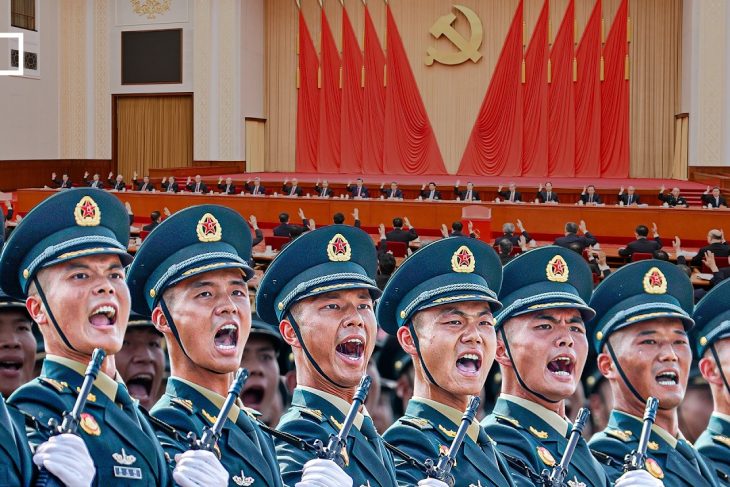
Is China rehearsing a strategy to isolate Taiwan and keep the US out of a potential conflict?
With more than 100 Chinese naval and coast guard vessels reportedly operating across the western Pacific, the South China Sea and waters around Taiwan, Beijing’s latest maritime movements are raising serious strategic questions.
This video examines China’s Anti-Access/Area Denial (A2/AD) strategy, the PLA’s naval deployments, the Liaoning aircraft carrier’s movements and the potential challenges facing US intervention in a Taiwan conflict.
Can China really block American and allied forces from reaching Taiwan?
Is China rehearsing a strategy to isolate Taiwan and keep the US out of a potential conflict?
With more than 100 Chinese naval and coast guard vessels reportedly operating across the western Pacific, the South China Sea and waters around Taiwan, Beijing's latest maritime movements are raising serious strategic questions.
This video examines China's Anti-Access/Area Denial (A2/AD) strategy, the PLA's naval deployments, the Liaoning aircraft carrier's movements and the potential challenges facing US intervention in a Taiwan conflict.
Can China really block American and allied forces from reaching Taiwan?
Nvidia’s shares dropped by over 8 per cent in US after-hours trading amid reports that the board is considering removing CEO Jensen Huang. This follows allegations of a second extramarital affair with Kimberly Powell, Nvidia’s vice-president of healthcare, after earlier reports linked Huang to Chinese businesswoman Alice Huang. Analysts warn the continuing media storm could further intensify calls for stricter US semiconductor export controls.
Nvidia’s shares dropped by over 8 per cent in US after-hours trading amid reports that the board is considering removing CEO Jensen Huang. This follows allegations of a second extramarital affair with Kimberly Powell, Nvidia’s vice-president of healthcare, after earlier reports linked Huang to Chinese businesswoman Alice Huang. Analysts warn the continuing media storm could further intensify calls for stricter US semiconductor export controls.
Nearly 30 Japanese adult-video (AV) performers said they were denied entry upon arrival at Hong Kong International Airport on Wednesday. Some later said on social media that they were deported back to Japan. The incident was shortly followed by the cancellation of the “Mega Fans Expo 2026”, which had been scheduled to run for three days starting Friday. Hong Kong’s Immigration Department rejected the claims, adding that those involved in the expo had not been denied entry.
Nearly 30 Japanese adult-video (AV) performers said they were denied entry upon arrival at Hong Kong International Airport on Wednesday. Some later said on social media that they were deported back to Japan. The incident was shortly followed by the cancellation of the “Mega Fans Expo 2026”, which had been scheduled to run for three days starting Friday. Hong Kong’s Immigration Department rejected the claims, adding that those involved in the expo had not been denied entry.
Despite having to use a wheelchair, Chen Tsz-kin has been embracing life in a way many other teenagers only dream about. Tsz-kin was diagnosed with Duchenne muscular dystrophy at the age of one and a half, and his family was told he had only about 18 years to live. Now, as he approaches this supposed deadline, Tsz-kin shares his views on life, death and why he dares to hope for a future.
Despite having to use a wheelchair, Chen Tsz-kin has been embracing life in a way many other teenagers only dream about. Tsz-kin was diagnosed with Duchenne muscular dystrophy at the age of one and a half, and his family was told he had only about 18 years to live. Now, as he approaches this supposed deadline, Tsz-kin shares his views on life, death and why he dares to hope for a future.
An investigation halted by a single phone call—but does that mean the controversy is over?
This episode of China Insights examines the source program’s account of a Nvidia executive calling off the investigation, why the trouble may not end there, and three possible outcomes for Jensen Huang and the company.
Watch the analysis and share your thoughts in the comments.
A romantic scandal involving NVIDIA CEO Jensen Huang has captivated audiences worldwide in recent days. As the controversy spreads, Alice Huang, who grew up in a Chinese defense industry compound, has become the focus of intense scrutiny by the media and people online. On the surface, she is Jensen Huang’s business partner and mistress. People in China have given her the pointed nickname Mother of Chinese AI. U.S. intelligence agencies and congressional investigations identify her as a senior intelligence asset carefully cultivated by the CCP’s Ministry of State Security, or MSS. They also identify a direct chain of command leading to a chip unit personally controlled by State Security Minister Chen Yixin.
A romantic scandal involving NVIDIA CEO Jensen Huang has captivated audiences worldwide in recent days. As the controversy spreads, Alice Huang, who grew up in a Chinese defense industry compound, has become the focus of intense scrutiny by the media and people online. On the surface, she is Jensen Huang’s business partner and mistress. People in China have given her the pointed nickname Mother of Chinese AI. U.S. intelligence agencies and congressional investigations identify her as a senior intelligence asset carefully cultivated by the CCP’s Ministry of State Security, or MSS. They also identify a direct chain of command leading to a chip unit personally controlled by State Security Minister Chen Yixin.
From August through October this year, authorities across China launched a targeted crackdown on upscale karaoke clubs catering to business clients and other nightlife venues. Unlike previous rounds of industry enforcement, this campaign has been unprecedented in scope. Public security, culture and tourism, market regulation, and other departments under the Chinese Communist Party have joined forces. Well-known business-oriented karaoke clubs have closed one after another, and some have even had their business licenses revoked. Many employees were still attending internal training when they received notices that their companies were shutting down.
From August through October this year, authorities across China launched a targeted crackdown on upscale karaoke clubs catering to business clients and other nightlife venues. Unlike previous rounds of industry enforcement, this campaign has been unprecedented in scope. Public security, culture and tourism, market regulation, and other departments under the Chinese Communist Party have joined forces. Well-known business-oriented karaoke clubs have closed one after another, and some have even had their business licenses revoked. Many employees were still attending internal training when they received notices that their companies were shutting down.
Help us make your Unmade in China 2026 Christmas Catalog!
Nvidia CEO Jensen Huang has a serious China problem—and it involves an alleged Chinese spy, an affair, and billions of dollars in potentially smuggled AI chips. Even more awkward? Trump reportedly knew about the suspected spy and did nothing. So how close did China get to one of America’s most powerful tech executives? And what does this mean for Nvidia, AI, and US national security?
Operation Honey Pot: Paste this emoji 🍯 in your comment below.
Want to go deeper than YouTube will let us? Check out our website:
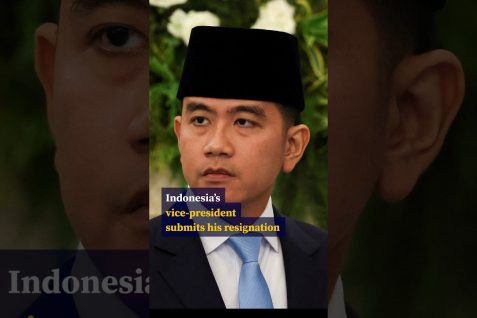
Thousands of protesters across Indonesia have demanded stronger government action over the country’s months-long forest and land fires. Some also called for the impeachment of Indonesian Vice-President Gibran Rakabuming Raka. Local media reported that he submitted his letter of resignation on Wednesday after questions about his educational qualifications were raised. The announcement also comes amid a growing political rift between his father, two-term former president Joko Widodo – better known as Jokowi – and President Prabowo Subianto. Tensions mounted after last week’s arrest of senior officials, including an ally of Jokowi, over an alleged wiretapping plot targeting the president.
Indonesia’s vice-president, Gibran Rakabuming Raka, has resigned, stepping down roughly two years into his five-year term after court rulings destroyed the legal standing of the school qualification on which his candidacy rested. Gibran, 39, formally submitted his resignation to President Prabowo Subianto and to parliament, meeting leaders of the People’s Consultative Assembly, the MPR, at the parliament complex in Jakarta on Thursday, November 12, and asking that his resignation be processed. MPR Speaker Ahmad Muzani confirmed the meeting, which lasted about twenty minutes, and reports citing people familiar with the matter said Prabowo has accepted the resignation. The departure is unprecedented in modern Indonesian politics and leaves the world’s third-largest democracy to fill its second-highest office through a parliamentary vote rather than a national election. It also marks the dramatic unravelling of the political bargain that won the 2024 election, in which the son of the outgoing president joined the ticket of his father’s former rival.
A Diploma Dispute That Became a Constitutional Crisis
The crisis centres on a deceptively simple requirement: candidates for president and vice-president must have completed senior high school or an equivalent qualification. Gibran completed his secondary schooling in Singapore before earning a marketing degree there, and his candidacy relied on an official certificate treating that overseas education as equivalent to an Indonesian senior high school qualification. Last month, both the Constitutional Court and the Supreme Court ruled that the documents he submitted did not meet the election requirements. The Supreme Court went further, annulling the equivalence certificate and stating that no evidence was found to show Gibran had a foreign diploma or certificate that could serve as the basis for equivalency with a senior high school qualification. With that ruling, the legal foundation of his place on the 2024 ticket was, in the courts’ eyes, gone.
Gibran’s exit unfolded over three days rather than in a single announcement. On Tuesday, November 10, he met Prabowo at the Presidential Palace and offered to resign, saying he wanted to avoid a prolonged political fight, while also asking for the chance to prove the validity of his documents through the State Administrative Court. State Secretary Prasetyo Hadi initially told reporters the vice-president would continue working as usual, and the palace stressed that the government remained focused on its duties. On Wednesday, however, 120 lawmakers from eight political parties filed a petition with House leaders that formally started a parliamentary process capable of ending in impeachment, on the grounds that he no longer met the constitutional requirements for the office. Analysts noted that had Gibran not stepped down himself, an impeachment procedure would likely have been initiated after the House plenary meeting scheduled for Thursday, making his resignation on that same day a matter of hours rather than choice.
What Happens Next, and What It Does to Prabowo
Indonesia’s constitution provides an orderly, if unusual, answer to a vacant vice-presidency. Under Article 8, paragraph 2 of the 1945 Constitution, the People’s Consultative Assembly must hold a plenary session within sixty days to elect a new vice-president. The choice is tightly controlled by the palace: Prabowo, as president, has the sole prerogative to nominate the two candidates, and the assembly simply selects between them. Until that vote takes place, the office remains vacant and there is no new national election, a design meant to preserve the mandate of the winning ticket while replacing the individual who can no longer serve. The nomination decision will be read in Jakarta as a map of Prabowo’s alliances, because the successful candidate will owe the vice-presidency entirely to his sponsorship.
The deeper question is what the resignation does to the ruling alliance between Prabowo and former president Joko Widodo, universally known as Jokowi, whose eldest son Gibran is. Their partnership was always transactional: Jokowi delivered his enormous popularity and political machine to Prabowo’s 2024 campaign, and Gibran’s place on the ticket was the visible bond of that deal. Relations had already been strained by a growing rift between the two camps, tensions sharpened last week by the arrest of senior officials, including a Jokowi ally, over an alleged wiretapping plot targeting the president. In a gesture clearly aimed at containing the damage, Jokowi publicly pledged that his camp will keep supporting Prabowo’s administration, especially its programmes for the broader public, after his son’s resignation was handed in. Whether that pledge holds once the replacement nomination is made will decide whether this episode ends as a contained crisis or the opening of a longer power struggle.
A Government Already Under Street Pressure
Gibran did not fall in calm weather, and the diploma scandal landed on a government already losing public patience on several fronts at once. Thousands of protesters have taken to the streets across Indonesia in recent weeks demanding stronger action over months of forest and land fires, among the worst in a decade, which have choked communities in toxic haze and made thousands of people ill. The demonstrations have also targeted economic hardship, corruption and what critics describe as a drift toward authoritarianism under Prabowo’s government. Beyond the streets, the administration’s flagship free school meals programme is struggling to secure its funding, and the national stock market has been in crisis amid allegations of widespread market manipulation. Student demonstrations on Tuesday added education and environmental grievances to the same rolling protest movement.
Against that backdrop, the vice-president’s departure cuts both ways for Prabowo. It removes, quickly and constitutionally, a deputy whose eligibility had become a daily liability and a rallying point for the impeachment movement, and it does so before parliament could turn the process into a spectacle. At the same time, losing a vice-president two years into a term, over a qualification that should have been settled before the election, raises uncomfortable questions about the vetting inside the winning coalition and about the courts’ willingness to revisit that coalition’s mandate. The sixty-day clock now running toward the MPR vote gives Prabowo a controlled arena in which to reassert his authority and reward the allies he needs most. Indonesia has replaced a scandal with a selection process, and the name Prabowo puts forward will tell the country who really holds power in Jakarta now.
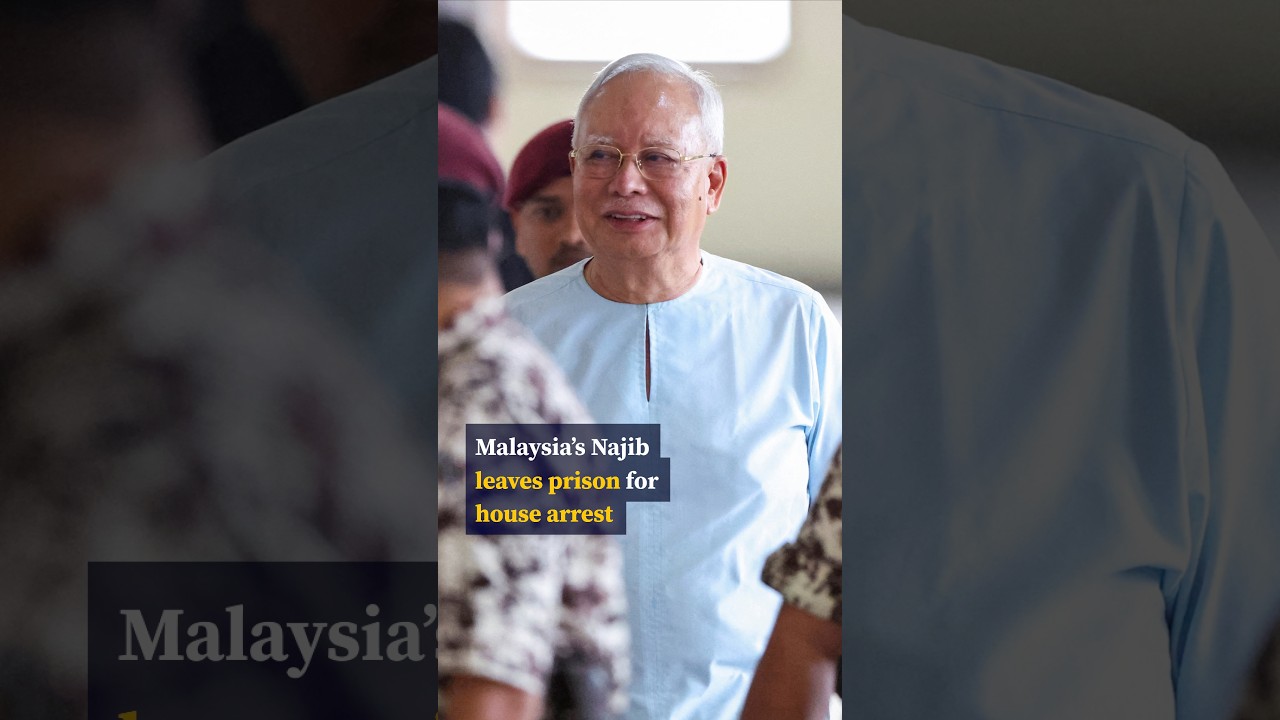
Malaysia’s former prime minister Najib Razak left jail to begin his house arrest on Tuesday. He was granted a conditional royal pardon to serve the rest of his sentence at home, provided he settled a fine of 50 million ringgit (US$12.3 million). In 2022, Najib was found to have misappropriated millions from SRC International, a former subsidiary of state investment fund 1Malaysia Development Berhad (1MDB). He is set to remain under house arrest until August 2028.
Malaysia’s former prime minister Najib Razak left Kajang Prison on Tuesday to serve the rest of his corruption sentence under house arrest at his Kuala Lumpur home, ending a legal dispute that had delayed his transfer for days. The Kuala Lumpur High Court issued a revised order on November 10 allowing the 73-year-old to serve the remainder of his reduced six-year sentence in the SRC International case at his residence in Jalan Langgak Duta, Taman Duta. The arrangement runs until August 23, 2028, under a conditional royal pardon granted by Malaysia’s king, Sultan Ibrahim. It became possible after the 50 million ringgit fine attached to the pardon — about US$12.3 million — was paid, with his former party UMNO raising the money. House arrest, officials stress, is not freedom: his home has been formally gazetted as a prison.
The transfer stalled last week over the wording of the pardon itself. An earlier court order dated November 6 was cancelled after it appeared to allow Najib’s release once the fine was paid, without clearly reckoning with the fact that he also faces a separate prison sentence in another case. High Court Judge Aslam Zainuddin replaced it with a new directive stating explicitly that Najib will serve the remaining part of his reduced SRC International sentence under house imprisonment. The distinction sounds technical, but it decides whether the former prime minister walks free or simply changes the address at which he is confined. Malaysia’s Home Minister, Saifuddin Nasution Ismail, gazetted the Langgak Duta residence as a prison under the 1995 Prison Act, giving the arrangement its legal footing.
The conditional pardon itself was granted on September 18 by Sultan Ibrahim, acting through the Federal Territories Pardons Board. It allows Najib to serve the rest of the SRC sentence at home provided he pays the commuted fine and complies with the conditions attached to the pardon. The Law Department of the Prime Minister’s Department warned at the time that any breach would void the pardon and send him straight back to prison to serve the remainder. UMNO, the party Najib once led as president, announced on November 6 that it had completed payment of the 50 million ringgit at the Kuala Lumpur High Court. With the fine settled and the court order rewritten, the prison service completed the transfer on Tuesday.
From a Twelve-Year Sentence to a House in Taman Duta
Najib’s road to house arrest began with one of the biggest financial scandals in the world. As prime minister from 2009 to 2018, he presided over 1Malaysia Development Berhad, the state fund from which billions of dollars were allegedly stolen in a fraud that reached from Kuala Lumpur to Hollywood and Wall Street. In July 2020 he was convicted in the first case to reach judgment, involving 42 million ringgit transferred from SRC International, a former 1MDB subsidiary, into his personal bank accounts. He was found guilty of criminal breach of trust, money laundering and abuse of power, and sentenced to twelve years in prison and a 210 million ringgit fine. He began serving that sentence at Kajang Prison in August 2022 after the Federal Court dismissed his final appeal.
The sentence then shrank in two stages. In January 2024, the pardons board under the previous king halved his prison term to six years and cut the fine from 210 million ringgit to 50 million. The September 2026 conditional pardon kept that reduced sentence but changed where it is served, moving it from a cell in Kajang to his home in one of Kuala Lumpur’s most exclusive neighbourhoods. Supporters frame the pardons as mercy toward an ageing former leader who maintains his innocence. Critics see the sequence — conviction, halving, house arrest — as proof that Malaysia’s accountability for the powerful dissolves with time. Both readings will now play out against the daily reality of a former prime minister confined to a mansion that is, legally, a prison.
House Arrest Is Not the End of His Legal Troubles
The most important limit on Tuesday’s ruling is what it does not cover. In December 2025, Najib was convicted in the separate 1MDB-Tanore trial, involving more than 2 billion ringgit, and sentenced to fifteen years in prison and a fine of 11.4 billion ringgit for abuse of power and money laundering. He is appealing that conviction, and the house-arrest order does not touch it. Under the court’s directive, when the SRC house arrest ends on August 23, 2028, he is expected to return to Kajang Prison the following day to begin serving the separate sentence if his appeal has not succeeded. In other words, the home confinement is an interlude between prison terms, not an exit from them — assuming the appeal fails.
Politically, the transfer lands in the middle of Malaysia’s long argument about what 1MDB accountability should look like. Najib remains a consequential figure inside UMNO and the wider Malay political establishment, and his party’s decision to raise the 50 million ringgit fine itself became a story about loyalty, resources and influence. Government critics ask why a fine arising from a corruption conviction should be settled by a political party rather than the convicted man. Supporters answer that the pardon process is constitutional, that the king’s decision is lawful, and that serving a sentence at home under prison rules is still punishment. The argument is unlikely to settle while he sits in Taman Duta, because every future court date in the larger case will revive it.
That structure explains why the drafting of the November orders mattered so much to the Attorney General’s Chambers and the court. A loosely worded release order risked colliding with the second conviction and letting Najib slip the boundary between the two cases. The revised order closes that gap, tying the house arrest strictly to the SRC sentence and its August 2028 end date. For Malaysia’s government, the episode is politically delicate in every direction: enforcing the pardon too loosely invites charges of favouritism, while obstructing a royal pardon invites a constitutional confrontation. For Najib, now 73, the calculation is simpler — two and a half years at home while his lawyers fight the bigger case. The 1MDB scandal, which brought down his government in 2018 and has run through Malaysian courts for most of a decade, is still deciding his future.
Over its 90 years of operations in the Asean region, UOB has stayed true to its founding mission to evolve alongside the communities it serves. Discover how the Singapore-based bank has introduced digital banking tools, such as its TMRW app and UOB Infinity platform, to innovate and influence the future of banking across the region.
Over its 90 years of operations in the Asean region, UOB has stayed true to its founding mission to evolve alongside the communities it serves. Discover how the Singapore-based bank has introduced digital banking tools, such as its TMRW app and UOB Infinity platform, to innovate and influence the future of banking across the region.
Fourteen crew members were rescued in a coordinated sea-and-air operation after a cargo ship sank off the coast of China’s eastern Jiangsu province. The vessel was reportedly loaded with steel and had sent out an emergency signal due to hazardous conditions that lead to flooding on board.
Fourteen crew members were rescued in a coordinated sea-and-air operation after a cargo ship sank off the coast of China’s eastern Jiangsu province. The vessel was reportedly loaded with steel and had sent out an emergency signal due to hazardous conditions that lead to flooding on board.
Watch the full podcast!
China wants to win big in the AI race against the US and will do ANYTHING to win. And—why the Iran War “had to happen,” according to Dave Stilwell, former Assistant Secretary of State.
Join our fight to expose the CCP at and get ALL the new full-length interviews!
And check out our other channel, China Uncensored:
Watch the full podcast!
China wants to win big in the AI race against the US and will do ANYTHING to win. And—why the Iran War "had to happen," according to Dave Stilwell, former Assistant Secretary of State.
Join our fight to expose the CCP at and get ALL the new full-length interviews!
And check out our other channel, China Uncensored:
On October 29, an affair-and-spy controversy thrust Nvidia founder Jensen Huang and Chinese businesswoman Alice Huang into the spotlight. At first, it seemed like gossip about a technology executive’s private life. But as more information emerged, it developed into suspicions of espionage.
On October 29, an affair-and-spy controversy thrust Nvidia founder Jensen Huang and Chinese businesswoman Alice Huang into the spotlight. At first, it seemed like gossip about a technology executive's private life. But as more information emerged, it developed into suspicions of espionage.
Do you find yourself buying more than you need to every time there is a megasale? As China’s Double 11 shopping spree approaches, a viral mini-program on the Chinese social app WeChat is helping people curb impulse buying. Launched in early September, the free tool, called “Wallet, Please Wait”, was built in just eight days by a product manager with the help of AI. Shoppers can post their purchase requests to a public “plaza”, where strangers vote to approve or reject their potential buys. Some also use the tool to seek advice on everything from dinner choices to career paths.
Do you find yourself buying more than you need to every time there is a megasale? As China’s Double 11 shopping spree approaches, a viral mini-program on the Chinese social app WeChat is helping people curb impulse buying. Launched in early September, the free tool, called “Wallet, Please Wait”, was built in just eight days by a product manager with the help of AI. Shoppers can post their purchase requests to a public “plaza”, where strangers vote to approve or reject their potential buys. Some also use the tool to seek advice on everything from dinner choices to career paths.
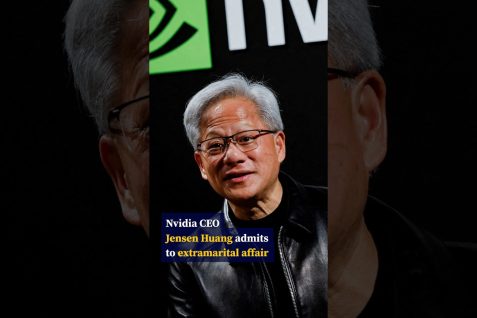
Nvidia CEO Jensen Huang admitted to having an extramarital affair in an internal memo to staff on November 8. Although Huang did not name the woman he had the affair with, she is reportedly Alice Huang, a Chinese businesswoman who once helmed Megaspeed International, a Singapore-based AI computing company that did business with Nvidia. Late last month, The New York Times reported that US intelligence assessed Alice Huang was recruited as a Chinese intelligence asset, a claim that China’s foreign ministry rejected as “groundless”.
Nvidia CEO Jensen Huang admitted to having an extramarital affair in an internal memo to staff on November 8. Although Huang did not name the woman he had the affair with, she is reportedly Alice Huang, a Chinese businesswoman who once helmed Megaspeed International, a Singapore-based AI computing company that did business with Nvidia. Late last month, The New York Times reported that US intelligence assessed Alice Huang was recruited as a Chinese intelligence asset, a claim that China’s foreign ministry rejected as “groundless”.
In today’s high-pressure working environment, employee stress and mental well-being can no longer be treated as personal issues. Michael Khan, CEO of Cigna Healthcare Hong Kong, discusses how mental health can affect productivity and workforce resilience, and why employers need to take a more proactive approach to the health of their staff.
Citing findings from Cigna Healthcare’s “International Health Study 2026”, Khan highlights how stress can affect employee productivity, and why business leaders need to view employee health as a strategic asset.
Videos circulating online Monday show an excavator tearing down the entrance and damaging the exterior of a government administrative service building in Fengdong New City in China’s northwestern Shaanxi province. Police arrested the suspect but no motive was given for his actions.
Videos circulating online Monday show an excavator tearing down the entrance and damaging the exterior of a government administrative service building in Fengdong New City in China’s northwestern Shaanxi province. Police arrested the suspect but no motive was given for his actions.
Hong Kong recorded its coolest morning so far this autumn on Tuesday, with the city’s weather forecaster posting a minimum temperature of 17.5 degrees Celsius (63.5 Fahrenheit). A strong northeast monsoon has brought cool and windy weather for the day, but temperatures are expected to rise again later in the week as the monsoon eases.
Hong Kong recorded its coolest morning so far this autumn on Tuesday, with the city’s weather forecaster posting a minimum temperature of 17.5 degrees Celsius (63.5 Fahrenheit). A strong northeast monsoon has brought cool and windy weather for the day, but temperatures are expected to rise again later in the week as the monsoon eases.
Democrats won a major victory in the U.S. midterm elections, giving them control of both the House Nvidia CEO Jensen Huang has admitted to having an affair with a Chinese woman. Alice Huang is suspected of being a Chinese spy who targeted one of America’s most critical chipmakers. We take a closer look.
Could a trilateral summit involving the leaders of the United States, Russia, and China take place next week? President Donald Trump has responded.
China has extended its tariff truce with the United States for another two months. But questions remain over whether Beijing will follow through on its commitment to purchase American agricultural products.
Taiwanese authorities have detained a Communist Party leader over alleged Chinese efforts to influence local elections.
Isaac Stone Fish, who runs China risk research firm Strategy Risks, tells veteran business journalist Deirdre Bosa it seems “very, very unlikely” Jensen Huang was the only Fortune 500 chief executive Beijing targeted, though nothing more has been documented. He calls the episode a net loss for China and expects tougher export control enforcement. Huang admitted an affair with a woman US intelligence officials believe was recruited by China; the allegations are unproven, Nvidia’s board is investigating, and China calls them a smear.
Isaac Stone Fish, Founder and Chief Executive Officer, Strategy Risks
Deirdre Bosa, Yahoo Finance
Isaac Stone Fish, who runs China risk research firm Strategy Risks, tells veteran business journalist Deirdre Bosa it seems "very, very unlikely" Jensen Huang was the only Fortune 500 chief executive Beijing targeted, though nothing more has been documented. He calls the episode a net loss for China and expects tougher export control enforcement. Huang admitted an affair with a woman US intelligence officials believe was recruited by China; the allegations are unproven, Nvidia's board is investigating, and China calls them a smear.
Isaac Stone Fish, Founder and Chief Executive Officer, Strategy Risks
Deirdre Bosa, Yahoo Finance
Watch the full podcast!
If you want the CCP back down, it turns out some guys with clipboards could be the answer. In this clip, we talk with Dave Stilwell, former Assistant Secretary of State, about how the U.S. got China to back down using just that.
Join our fight to expose the CCP at and get ALL the new full-length interviews!
And check out our other channel, China Uncensored:
Nvidia CEO Jensen Huang, who leads a computing empire valued at $4 trillion, has recently become the center of a storm over his relationship with a Chinese female spy close to him. The affair has attracted the attention of the U.S. government. There is concrete evidence, including footage showing the two behaving intimately. The scandal has also affected Huang’s family. His daughter, Madison Huang, abruptly canceled a planned visit to South Korea. His relationship with the woman has drawn scrutiny from U.S. authorities.
Nvidia CEO Jensen Huang, who leads a computing empire valued at $4 trillion, has recently become the center of a storm over his relationship with a Chinese female spy close to him. The affair has attracted the attention of the U.S. government. There is concrete evidence, including footage showing the two behaving intimately. The scandal has also affected Huang's family. His daughter, Madison Huang, abruptly canceled a planned visit to South Korea. His relationship with the woman has drawn scrutiny from U.S. authorities.
Help us make your Unmade in China 2026 Christmas Catalog!
China is building a massive floating island that could stay at sea for months, withstand typhoons, and deploy equipment deep beneath the ocean. Officially, it’s for scientific research. But with ties to China’s military and nuclear blast protection, could this be another weapon in Beijing’s growing Pacific ambitions?
Operation Honey Pot: Paste this emoji 🍯 in your comment below.
Want to go deeper than YouTube will let us? Check out our website:
Engineers have identified about 30 “substandard” columns at a Hong Kong railway station under construction, building authorities have revealed. The MTR Corporation has ordered the contractor to rectify the structures after discovering unauthorised remedial works.
Engineers have identified about 30 “substandard” columns at a Hong Kong railway station under construction, building authorities have revealed. The MTR Corporation has ordered the contractor to rectify the structures after discovering unauthorised remedial works.
Engineers have identified about 30 “substandard” columns at a Hong Kong railway station under construction, building authorities have revealed. The MTR Corporation has ordered the contractor to rectify the structures after discovering unauthorised remedial works.
About thirty concrete columns at a Hong Kong railway station still under construction have been found defective, in a quality failure that engineers and lawmakers have called almost unimaginable for a project of this scale. The station is Tung Chung West, part of the Tung Chung Line Extension on Lantau Island, and the defects were confirmed by the Buildings Department after formwork was progressively removed. Photographs circulated in Hong Kong media showed columns whose concrete stopped short of the slab above them, leaving clear voids at the top. The MTR Corporation has ordered the main contractor to rectify the structures and has halted the related work while investigators establish how so many columns could be poured short. For a city that prides itself on building some of the most complex rail infrastructure in the world, the episode is an embarrassment that has landed squarely on the desks of two government departments.
The fullest account, pieced together from the Buildings Department and MTR statements, runs in stages. The project’s registered structural engineer’s team first spotted one defective concrete column in early October and ordered the registered contractor to rectify it. On October 27, Buildings Department officers carrying out a routine site inspection and quality audit reviewed the same issue and confirmed two defective columns on the spot. As formwork and concrete were progressively removed for a wider check, similar defects appeared in column after column. By November 6, after all the formwork had come down, about thirty columns showed the problem.
Reporting by HK01, which broke the story, put the alleged shortfall at roughly twenty to thirty centimetres between the tops of the concourse columns and the underside of the floor above, with steel reinforcement exposed. The concourse reportedly contains about sixty columns, meaning roughly half of them may be affected. MTR’s own confirmed discovery concerns the platform level, where a routine October inspection found that material had been used to fill the upper ends of some columns without the corporation’s prior approval. The operator has not publicly confirmed the concourse figure of thirty short-poured columns itself, and it has not directly answered whether those columns were poured short of the floor above. Keeping those two threads separate — the reported concourse gaps and the confirmed unapproved platform repairs — is essential to understanding what is established and what is still allegation.
An Unapproved Repair Made It Worse
What transformed a construction defect into a governance story was the discovery that remedial work had already begun without permission. MTR said its inspectors found that the tops of some platform-level columns had undergone a material-filling repair that the corporation had never approved. It immediately ordered the main contractor, the Bouygues-Dragages joint venture, to stop that repair process and to examine columns and construction procedures across both the platform and concourse levels. The Highways Department formally learned of the problem on November 2, then carried out site checks and met the operator before setting its deadline. A contractor that quietly patches a defect, rather than reporting it up the chain, breaks the supervision system that projects like this depend on.
The official line, from both MTR and the departments, is that the station is not in danger. The temporary supports propping the floor slabs have not been removed, so the defective columns are not yet carrying the loads they were designed for, and officials say the flaws pose no risk to the structural integrity of the unfinished station. The Buildings Department’s preliminary review found no evidence of an intentional deviation from the approved plans, and no sign that the personnel in charge broke the relevant codes in their follow-up actions. That framing matters, because it points the investigation toward procedure and supervision rather than deliberate corner-cutting. It does not, however, answer the basic question of how a pour could finish twenty or thirty centimetres short and pass unnoticed until the formwork came off.
Deadlines, Costs and a 2029 Opening Under Scrutiny
The accountability machinery is now moving on a tight timetable. The Buildings Department has told the registered structural engineer to submit an investigation report and proposed remedial measures by the middle of this month. The Highways Department has separately required MTR to submit a detailed investigation report by November 16, and has instructed it to press the contractor to prepare a detailed repair plan. Remedial work is to be carried out at the contractor’s own expense, and no restart date for the stopped repairs has been announced. The Tung Chung Line Extension carries a budget of about HK$19.5 billion, so even a localised rebuild sits inside a very expensive programme.
Officials are holding the public schedule steady for now. The Highways Department says the extension’s target of opening in 2029 remains unchanged, and the station’s main structure is still aimed for completion in the first half of 2027. Tung Chung West is being built as a three-level station — ground, concourse and platform — using a top-down method in which slabs are cast first and the structural columns and walls follow. That method is precisely why the temporary supports matter so much to the official safety case. The supports may be struck only when the structural engineer’s team is satisfied, which gives engineers a hard checkpoint before the station ever carries a passenger.
Why a Simple Pour Became a Political Problem
The professional reaction has been disbelief as much as anger. Engineering-sector lawmaker Aaron Bok Kwok-ming, deputy chairman of the Legislative Council’s railways subcommittee, said filling concrete into columns was a simple task and that such a mistake should not happen. He called the failure unimaginable and very rare for a contractor of Bouygues-Dragages’ experience. Senior engineer Ho Wing-ip offered a cooler reading, arguing that no contractor would deliberately save about one percent of concrete only to cripple a column. Together, those reactions sketch the puzzle investigators face: the defect looks too basic to be sabotage and too widespread to be a single worker’s slip.
For MTR, which is developing the extension under an ownership model that makes it responsible for design, construction, operation and maintenance, the deeper issue is oversight. Lawmakers have urged the corporation to strengthen supervision and to make it easier for frontline workers to flag problems before they are patched over. The Highways Department, for its part, says it monitors progress, safety and quality through site visits and checks of key construction processes, and that it will review supervision and acceptance procedures. The mid-November reports will be the first real test of whether the explanations match the photographs. Until then, thirty short columns under a propped slab in Tung Chung stand as a rare, visible crack in Hong Kong’s reputation for getting big infrastructure right.
The board of US AI chip giant Nvidia has announced an independent investigation as chief executive Jensen Huang on Sunday said in a memo to employees that he had been unfaithful to his wife. The board said the inquiry followed reports that Huang had been targeted by a foreign intelligence operation.
The chief executive of the world’s most important AI chip company has admitted to an extramarital affair, and his own board has opened an independent investigation into whether he was the target of a foreign intelligence operation. Jensen Huang, the 63-year-old founder and CEO of Nvidia, told employees in a memo on Sunday that he had been unfaithful to his wife, apologising to his family and to the company in unusually blunt language. Nvidia’s board announced the same day that a committee of independent directors, assisted by outside counsel, would examine reporting that a foreign intelligence service had targeted him. The board stressed that it has no reason to believe national security or Nvidia’s secrets were compromised, but said its inquiry would examine all available information. Huang remains in his job, with the board publicly expressing confidence in his leadership while the review runs.
Huang’s memo to staff was short and left nothing hedged. “I owe my family and all of you an apology,” he wrote. “I was unfaithful to my wife. My actions hurt her and our children. There is no excuse for what I did. I am deeply sorry.” He said he takes full responsibility for the hurt he caused, and he addressed the security reporting directly only to endorse the board’s response. “Regarding the national security concerns raised in news reports, NVIDIA’s Board of Directors has initiated an independent investigation,” he wrote. “I support the investigation and will cooperate fully.”
What the memo does not do is name the other party or confirm any connection between the affair and the intelligence allegations. Huang admitted infidelity, nothing more, and neither he nor Nvidia has publicly drawn a line from the affair to any foreign service. That distinction matters, because the espionage side of the story rests on government suspicions and press reporting rather than on anything Huang has conceded. No criminal charge has been brought against anyone in connection with the case. Huang has also committed to remaining chief executive without interruption while the investigation proceeds.
The Intelligence Allegation Behind the Probe
The board’s investigation follows a series of reports that US officials believe Huang was targeted through a close relationship with Alice Huang, a Chinese citizen and former senior executive at Megaspeed International, a Singapore-based data-centre company and major Nvidia customer. According to the reporting, the US government suspects she was recruited by a Chinese intelligence agency, and the Financial Times reported on Saturday that an American intelligence memo naming Huang exists. The New York Times reported late last month that officials believed he had struck up a close relationship with the businesswoman and that she was feeding information directly to Beijing. A further report on Sunday said Secretary of State Marco Rubio had overseen a top-secret memo this spring warning other officials about the tie.
Huang had previously described his relationship with Alice Huang as a normal business relationship, and she is no longer at Megaspeed. Nobody has publicly charged her or her former employer with a crime, and no report has accused Jensen Huang of knowing about any intelligence activity. Chinese state media have denied any Beijing link to the affair and called the spy narrative fabricated. The board’s statement framed its inquiry squarely around security rather than conduct, saying it prioritises US national and economic security. It named neither the committee members nor the law firm retained to run the review.
Washington Is Closing In
The affair has already moved from the business pages into congressional oversight. On November 5, three House Republicans — John Moolenaar of the Select Committee on China, Brian Mast of the Foreign Affairs Committee and Rick Crawford of the Permanent Select Committee on Intelligence — wrote to Huang asking him to take part in a joint closed-door briefing on November 18. Senator John Cornyn has called for a congressional investigation of his own. Analysts expect the case to draw parallel scrutiny from the board’s review, from the US government and from Congress at the same time. Each of those tracks will ask the same underlying question: whether the relationship created any channel through which information about Nvidia’s restricted AI chips could have flowed.
That question carries weight far beyond one executive’s private life because of where Nvidia sits in the US-China technology contest. The company’s accelerators are the choke point of the global AI build-out, and American export controls on those chips are a central instrument of Washington’s China policy. Huang has been a prominent public advocate for looser controls, arguing that restrictions hand the Chinese market to domestic rivals. Reporting that he may have been cultivated by a suspected intelligence asset inevitably reframes that advocacy in the eyes of investigators, whether or not any influence was ever exercised. It is precisely that gap — between suspicion and proof — that the board’s inquiry now has to work through.
A Governance Crisis at the Centre of the AI Boom
Markets reacted immediately. Nvidia shares fell about 4.2 percent in overnight trading ahead of Monday’s session, a move analysts attributed to leadership risk rather than to any change in the company’s business. Some governance specialists have speculated that Huang could ultimately lose the chief executive title even though he is not accused of a crime, on the grounds that his judgment and code of conduct will be judged harshly. Others, including veteran analyst Patrick Moorhead, have focused on the sheer number of investigations now converging on the company. The board, for its part, moved to steady the ship, saying Huang fully supports the review and that it retains confidence in him and his leadership team.
For now, the established facts are narrow: the CEO admitted an affair, the board opened an independent investigation into reported foreign targeting, and both sides say no compromise of secrets is currently believed to have occurred. Everything beyond that — the identity and role of the alleged asset, the contents of the intelligence memos, and whether Beijing gained anything at all — remains allegation and reporting, not finding. The November 18 closed-door briefing and the board’s eventual report will be the first real tests of what the US government actually holds. Until then, the world’s most valuable chipmaker is being run by a chief executive under investigation, at the exact moment its products sit at the heart of the rivalry between Washington and Beijing.
How can doctors participate in one of the world’s most horrifying human rights abuses? A new report reveals how the Chinese Communist Party controls China’s medical system, creating a system where loyalty to the Party can matter more than the lives of patients. We look at the allegations of forced organ harvesting and why doctors may be afraid to speak out.
Don’t let YouTube erase China Uncensored! Support the show at
Operation Honey Pot: Paste this emoji 🍯 in your comment below.
How can doctors participate in one of the world's most horrifying human rights abuses? A new report reveals how the Chinese Communist Party controls China's medical system, creating a system where loyalty to the Party can matter more than the lives of patients. We look at the allegations of forced organ harvesting and why doctors may be afraid to speak out.
Don't let YouTube erase China Uncensored! Support the show at
Operation Honey Pot: Paste this emoji 🍯 in your comment below.
Watch the full podcast!
President Trump didn’t meet Xi on the tarmac of his September visit to show him a warm welcome, it was to show him just how powerful the American military is. In this episode, we talk with Dave Stilwell, former Assistant Secretary of State, about all the ways the White House pretended to be extending an olive branch while actually poking fun at its guests.
Join our fight to expose the CCP at and get ALL the new full-length interviews!
And check out our other channel, China Uncensored:
Angry residents of Indonesia’s Batam island staged spontaneous protests in October 2026, outside a park where a new cluster of data centres is under construction. Taps at home had run dry for the residents for months, which they blamed on severe outages that hit the municipal water service after the arrival of the data centres.
Batam has everything a data centre developer could want: cheap land, a free-trade zone, generous tax treatment and a location just a short ferry ride from Singapore, the region’s digital capital. What it does not have is water to spare. The Indonesian island’s push to become Southeast Asia’s next data centre powerhouse has collided with a basic physical fact — Batam has no rivers of consequence and no natural freshwater sources, and its 1.3 million people depend entirely on rain collected in a handful of artificial reservoirs. When residents of one village found their taps dry for three months while server halls rose nearby, the island’s grand digital ambitions met their first serious public test.
The confrontation came to a head on October 5, when around 300 residents of Bakau Serip village marched on the entrance of Nongsa Digital Park carrying empty bottles and jerry cans. Their message, repeated in interviews since, was stark: not a single drop had come through their taps in three months, and their supply had been reliable until the data centres came. Protesters blocked access roads and demanded to know why facilities cooling the world’s AI models could find water that households could not. It was the third month of protests, following earlier demonstrations in August and September, and it turned a local utility failure into an international story about the hidden costs of the AI boom.
Why Batam, and Why So Fast
Batam’s rise is no accident. Singapore, facing land and power constraints and having imposed a moratorium on new data centres between 2019 and 2022, pushed demand outward, and Batam — along with Malaysia’s Johor — was positioned to catch it. The island’s free-trade status, administered by the agency BP Batam, offers investors streamlined permits and fiscal incentives a short distance from one of the world’s great internet exchanges. Subsea cables already link Batam into regional networks, and Nongsa Digital Park was purpose-built as the landing zone for the industry. For developers serving Singaporean and regional demand, Batam promised Singapore-grade connectivity without Singapore-grade prices.
The money followed quickly. BP Batam has approved ten data centres on the island, six of them inside Nongsa Digital Park, with at least six more applications under review and total investment officially put at more than US$6.7 billion as of mid-2026. Committed projects include a facility by Hong Kong’s Gaw Capital with Indonesian developer Sinar Primera, a planned 450-megawatt campus by Singapore’s DayOne, and a 360-megawatt AI data centre announced in June by Nvidia-backed Firmus, also with DayOne. Official estimates put Batam’s data centre power demand above 1,100 megawatts by 2030.
The Water Underneath the Story
The problem is what data centres drink. Modern facilities use enormous volumes of water to cool the servers and graphics processors that train and run AI systems, and the industry’s standard figures are sobering: a typical data centre consumes around 300,000 gallons of water a day, roughly the usage of a thousand American households, and larger campuses use far more. Indonesia’s environmental forum Walhi has estimated that around ten AI data centres could require some 32 million litres a day — the daily needs of roughly 320,000 people. Batam’s actual facilities do not publish their consumption, which is itself part of the grievance. Residents are being asked to trust that the numbers are small, in a place where every litre is counted by the weather.
Batam’s supply system was fragile before the first server hall was built. The island’s reservoirs — six by most official counts — are filled by rainfall, and a prolonged dry spell this year, possibly linked to a strong El Niño, has drawn levels down sharply. Local environmental group Akar Bhumi Indonesia has simulated that the Nongsa reservoir, which supplies Bakau Serip, could run dry within a month without rain, and its output reportedly fell from around 90 litres per second to 25 during the October drought. Ageing pipes and weak interconnections between reservoir networks mean water cannot easily be moved to where it is needed. In January, the regional ombudsman had already identified 18 water-stressed areas on the island, some receiving water for only a few hours a day.
Drought, Say the Authorities — Diversion, Say the Villagers
BP Batam and the island’s water utility deny that household water is being diverted to data centres, blaming the shortages squarely on the prolonged dry spell. The agency has pointed out that Nongsa Digital Park was promised supply through a dedicated pipeline from the much larger Duriangkang Reservoir, while Bakau Serip depends on the small Nongsa reservoir — a structural separation, officials argue, not a diversion. As an emergency measure, BP Batam has connected Nongsa’s distribution network to Duriangkang, while warning that the fix could reduce pressure and supply hours elsewhere on the island. The utility says it is working to improve supplies but has not publicly addressed whether data centre demand is contributing to the shortage.
The villagers’ counter-argument is about priorities rather than plumbing. From Bakau Serip, the visible facts are dry taps at home and construction cranes at the digital park, and the assurance that the two are unrelated requires a trust that three months without water has exhausted. Their protests have already changed policy: after the August and September demonstrations, Batam authorities instructed data centre developers to build their own seawater desalination plants rather than draw on the island’s freshwater reservoirs. That instruction is a significant precedent. It concedes, in practice, that a rain-dependent island cannot simply allocate its drinking water to the AI industry and hope the weather cooperates.
A Test Case for Asia’s AI Build-Out
Batam is not an outlier; it is an early example of a collision now repeating across the region. Malaysia’s data centre boom has raised the same questions about power grids and water, with a single 300-megawatt facility reported to consume more energy and water than many residential townships. Environmental groups in Indonesia are calling for a moratorium on new data centres until comprehensive rules on water and environmental protection exist. The Indonesia Data Center Ecosystem Council is due to bring operators, regulators and community representatives together in Batam later this month to address power, water and community impact. What is decided there will be watched from Johor to Jakarta, because every government courting AI investment faces the same equation.
So can Batam be Asia’s next data centre powerhouse? The honest answer is that the question has changed. A decade ago it was a question about land, cables and tax breaks, and Batam wins on all three. Today it is a question about whether an island that runs on captured rainwater can host one of the thirstiest industries on Earth without taking water out of its own residents’ taps. Desalination, if the operators actually build it, could square that circle — at a price that will test the economics that drew them to Batam in the first place. The cranes at Nongsa are still moving, and the investment figures are still rising. But the villagers of Bakau Serip, carrying their empty jerry cans, have made sure that the next chapter of Batam’s digital story will be written in water as much as in data.