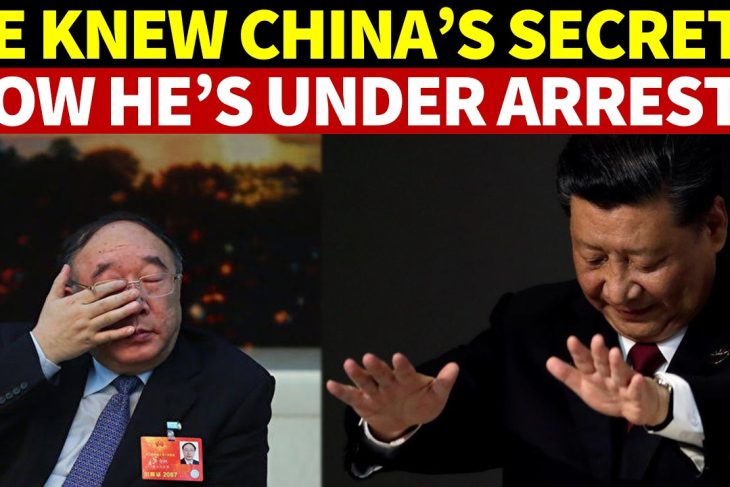
China is flooding again—and fears about the Three Gorges Dam are returning. But the dam may have unleashed more than an engineering crisis. From a severed “dragon vein” to the repeated …
China is flooding again—and fears about the Three Gorges Dam are returning. But the dam may have unleashed more than an engineering crisis. From a severed “dragon vein” to the repeated downfall of Chongqing’s police chiefs and political leaders, this program explores why the city associated with the Three Gorges has become known as China’s “political Bermuda Triangle”—and whether the so-called Chongqing curse is more than a legend, but a political killing field.
From maritime clashes to a potential fall summit: Secretary of State Marco Rubio lands in the Philippines with a firm message for China that America is staying focused on the Pacific. …
From maritime clashes to a potential fall summit: Secretary of State Marco Rubio lands in the Philippines with a firm message for China that America is staying focused on the Pacific. President Donald Trump is taking aim at U.S. reliance on China. The Pentagon is rolling out tougher rules for defense supply chains. We’ll break down what’s in the order. Harvard University is under investigation. The Justice Department says the Ivy League school may be providing financial aid to foreign students, presumably from China, at the expense of American students. In the space race between the United States and China, NASA’s Artemis III mission is moving forward despite an explosion in May. This year marks the 27th anniversary of the start of the deadly persecution of the Falun Gong meditation practice in China. We spoke with Steve Lance, host of NTD’s Capitol Report and executive producer of the award-winning documentary “Unbroken: The Untold Story of Shen Yun.” Rubio Pushes Back on China’s Influence in Southeast Asia Rubio to Meet China’s Wang Yi Amid Escalating Tensions U.S. Condemns China’s Actions Against Philippine Navy Trump Tightens Defense Supply Chain Rules DOJ Probes Harvard’s Financial Aid Practices New State Department Report Describes Cuban Infiltration in U.S. Report: Cuba Recruits American University Students as Agents Cuban Regime’s Strategic Partnerships With China, Russia U.S. Imposes 50 Percent Tariffs on $20 Billion of Canadian Goods Trump Administration to Unveil Forced Labor Trade Action NASA’s Artemis III Mission Still on Track for 2027 2026 Rally to End Persecution of Falun Dafa
In today’s show: Opposition Politicians Question Government’s Role In Contaminated Oil Scandal Mountain Barrier Lake in Eastern Taiwan Still On Brink of Flooding TSMC Expands US Investment As Taiwan Defends Tech …
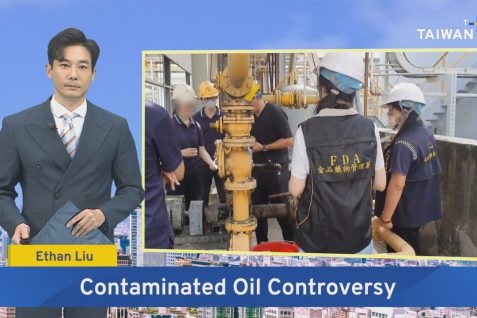
In today’s show: Opposition Politicians Question Government’s Role In Contaminated Oil Scandal Mountain Barrier Lake in Eastern Taiwan Still On Brink of Flooding TSMC Expands US Investment As Taiwan Defends Tech Leadership Global Tech Stocks Slide On China AI Competition Analysis: How Frontier AI Models Reshape US-China Tech Race US Expresses “Deep Concern” Over Papua New Guinea Closing Taiwan Office 3D-Printed Recycled Structures Help Support Coral Growth in Penghu
Ten years after the landmark South China Sea arbitration ruling, its biggest legacy may not be the legal defeat of China’s Nine-Dash Line claim but what Beijing’s response revealed about its …
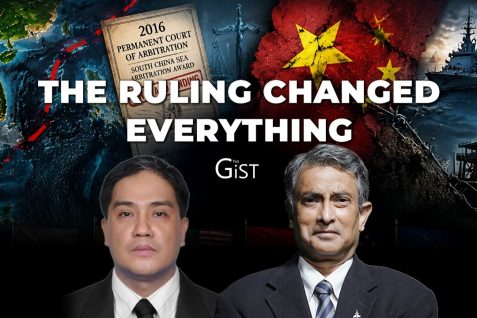
Ten years after the landmark South China Sea arbitration ruling, its biggest legacy may not be the legal defeat of China’s Nine-Dash Line claim but what Beijing’s response revealed about its strategic ambitions. Speaking to StratNewsGlobal, Philippine strategic affairs expert Dr Renato Cruz de Castro argues that China’s refusal to recognise the 2016 Permanent Court of Arbitration award fundamentally changed how countries across the Indo-Pacific viewed its rise. “The ruling revealed to us what kind of a great power China would be,” he says, arguing that Beijing demonstrated its willingness to ignore international law in pursuit of broader geopolitical objectives. According to de Castro, China’s ambitions extend beyond the South China Sea to controlling the First Island Chain and eventually replacing the United States as the region’s principal maritime power. He believes Japan, Australia, the United States, the European Union and India have all adjusted their strategic outlook in response. For the Philippines, the turning point came after years of attempting accommodation with Beijing. “Whether you appease or challenge China, you will get the same result—subjugation and expansion,” he says. De Castro also highlights India’s growing importance in regional security, describing the BrahMos missile sale as a significant step in strengthening Philippine deterrence. Looking ahead, he argues that New Delhi and Manila should deepen cooperation beyond defence trade into a broader security partnership to counter coercion, influence operations and what he describes as China’s continuing regional expansion.
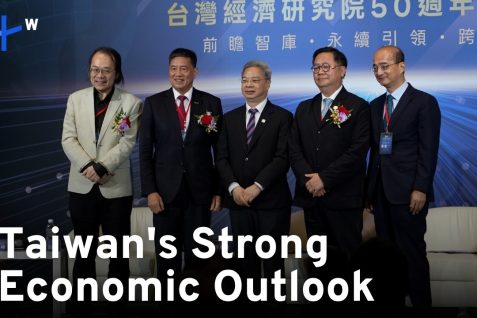
Taiwan’s top economic think tank, TIER, forecasts GDP growth of over 10% in 2026, driven by strong exports and the ongoing AI boom. Economy Minister Kung Ming-hsin says Taiwan is expanding …
Taiwan’s top economic think tank, TIER, forecasts GDP growth of over 10% in 2026, driven by strong exports and the ongoing AI boom. Economy Minister Kung Ming-hsin says Taiwan is expanding global cooperation in AI, semiconductors and other “non-red” supply chains.
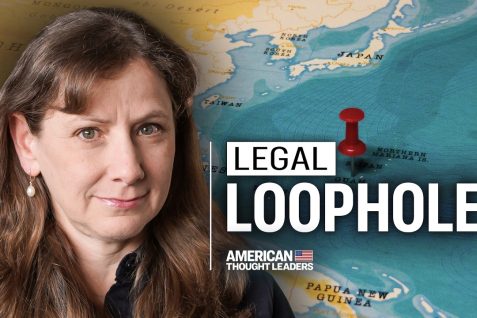
There’s one place in America where Chinese nationals can enter without a visa. It’s called the Commonwealth of the Northern Mariana Islands (CNMI), a U.S. territory in the Pacific, right by …
There’s one place in America where Chinese nationals can enter without a visa. It’s called the Commonwealth of the Northern Mariana Islands (CNMI), a U.S. territory in the Pacific, right by Guam. And it has become a major security loophole for Chinese Communist Party (CCP) influence operations as well as Chinese organized crime and birth tourism ventures, said Cleo Paskal, a senior fellow at the Compass Institute. Yet there has been little political will in Washington to close this loophole, Paskal argues. In this episode, Paskal breaks down the CCP’s aggressive influence and gray-zone warfare operations in this region—areas critical to U.S. defense in any Taiwan conflict—and why this matters for U.S. security. Every U.S. president who served in the Pacific theater in World War II understood that the security of the American mainland depends on a secure Pacific perimeter, Paskal said. As such, in addition to two U.S. territories in the region, the United States has maintained Compacts of Free Association with Palau, the Federated States of Micronesia, and the Marshall Islands since the end of World War II. These treaties give the U.S. military exclusive defense and strategic access to these countries in exchange for U.S. security guarantees and economic support. But the Chinese Communist Party has sought to aggressively expand its influence in these islands through pressure, gray zone warfare, and disinformation campaigns. Amid all this, U.S. funding for these compacts nearly lapsed in recent years, because many in Washington apparently have forgotten their importance. In this episode, Paskal walks me through a key question: if the security of America’s mainland has always depended on control of the central Pacific, what consequences will we pay now that so few Americans know these islands—or their citizens—even exist?