• TwoTigers24, New York
  • November 29, 2026

0 Comments

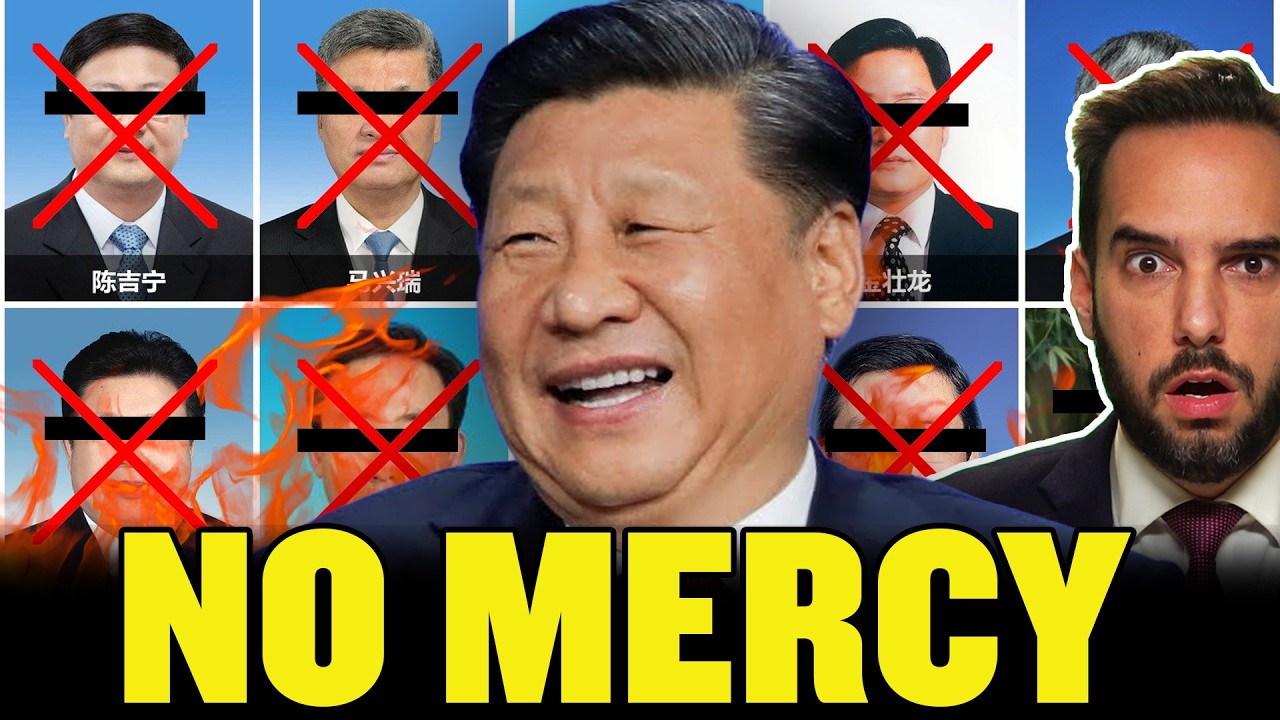
Iran’s decapitation after a massive U.S.–Israel strike is sending shockwaves far beyond the Middle East — all the way to Zhongnanhai. With President Trump’s visit to Beijing just weeks away, the timing has major strategic implications. From China’s oil dependence on Iran to broader geopolitical alignments with Russia, Tehran’s crisis could reshape U.S.–China calculations. Is this just a regional conflict or a warning to authoritarian powers? We break down the strategic, economic, and psychological impact of Iran’s decapitation on global dynamics.

Source: Iran’s Decapitation Sends Shockwaves to Zhongnanhai

Summary

This video from Lei's Real Talk examines the geopolitical fallout following a reported massive U.S. and Israel strike on Iran, which has reportedly led to the death of its leadership. The analysis suggests that these events are sending shockwaves far beyond the Middle East, reaching directly into Chinese strategic circles in Zhongnanhai. With President Trump scheduled to visit Beijing shortly after the incident, the timing is presented as having significant implications for international relations.

The content explores how China's heavy reliance on Iranian oil and its broader geopolitical alignment with Russia could be affected by Tehran's crisis. The discussion questions whether this situation represents merely a regional conflict or serves as a warning to other authoritarian powers regarding U.S. military capabilities. The overview covers the strategic, economic, and psychological impacts of such an event on global dynamics. Additional context is drawn from related discussions on historical parallels involving Ming emperors and their relevance to contemporary Chinese leadership concerns. The video aims to break down these complex factors for viewers interested in current affairs and international strategy.

Watch “Iran’s Decapitation Sends Shockwaves to Zhongnanhai” on YouTube
Author

YNOT — Two Tigers Consulting From Building Bridges to Watching China About 15 years ago, I founded a small company called Two Tigers Consulting with a relatively simple idea: help American and Chinese businesses work together. At the time, China represented one of the greatest business opportunities in the world — a rapidly expanding economy, extraordinary manufacturing capabilities, and ambitious entrepreneurs eager to build relationships with American companies. Two Tigers Consulting was created to help bridge that gap. For a while, it worked. We attended trade shows, arranged meetings, and introduced companies across both cultures. But after one particularly promising trade show, several Chinese businesspeople we had met were reportedly arrested upon returning to China — apparently for traveling without proper authorization. That experience taught me something important: in China, being a successful entrepreneur doesn't necessarily mean being free to conduct business. As Xi Jinping consolidated power and the political environment shifted, we concluded the potential rewards of doing business in China no longer justified the risks. Rather than abandon our knowledge entirely, Two Tigers evolved into a platform for following, discussing, and analyzing developments inside China — its economy, political leadership, and increasingly complicated relationship with the United States. I want to make absolutely clear that I have tremendous respect for the Chinese people — their entrepreneurs, engineers, and workers are extraordinarily capable. But I also believe China's political system creates fundamental contradictions: enormous private fortunes can be accumulated, yet ultimate political authority remains firmly concentrated, making relationships based on mutual trust and predictable rules extremely difficult to sustain. Today, Two Tigers is an independent publication examining China's achievements, challenges, ambitions, and contradictions — where they intersect with the United States and the broader world. What began as a small business venture now attracts roughly 10,000 visits a day. Understanding China is no longer optional: what happens there affects businesses, economies, and people throughout the world. And that is why Two Tigers continues.

Leave a Reply

Your email address will not be published. Required fields are marked *

Quantum24 Network