All 460 people on board a ferry that caught fire en route to Indonesia’s Java island were safely evacuated. The ferry, KMP Batumandi, had been crossing from Bakauheni Port in Lampung when the incident occurred on Tuesday. Rescue teams were immediately dispatched to the scene.
All 460 people on board a ferry that caught fire en route to Indonesia’s Java island were safely evacuated. The ferry, KMP Batumandi, had been crossing from Bakauheni Port in Lampung when the incident occurred on Tuesday. Rescue teams were immediately dispatched to the scene.
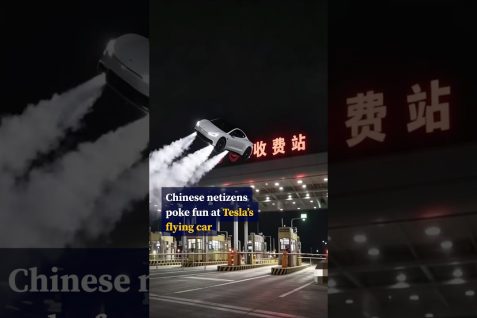
Tesla’s new “flying car” has drawn mixed reactions on Chinese social media. While many supporters and critics have debated whether the car is science fiction or hi-tech fact, some netizens have gone online to brainstorm ways to integrate the car into everyday life.
Tesla’s new “flying car” has drawn mixed reactions on Chinese social media. While many supporters and critics have debated whether the car is science fiction or hi-tech fact, some netizens have gone online to brainstorm ways to integrate the car into everyday life.
More than 1.9 million hectares of land, an area 12 times the size of London, have burned in wildfires that have raged for months across Indonesia. Hundreds of thousands of people in the country and across Southeast Asia have suffered from respiratory illnesses related to toxic haze from the fires. Protests have also erupted in Indonesia against authorities blamed for ineptitude and corruption in handling the fires.
More than 1.9 million hectares of land, an area 12 times the size of London, have burned in wildfires that have raged for months across Indonesia. Hundreds of thousands of people in the country and across Southeast Asia have suffered from respiratory illnesses related to toxic haze from the fires. Protests have also erupted in Indonesia against authorities blamed for ineptitude and corruption in handling the fires.
This video is part of a series produced with support from the Hong Kong SAR government.
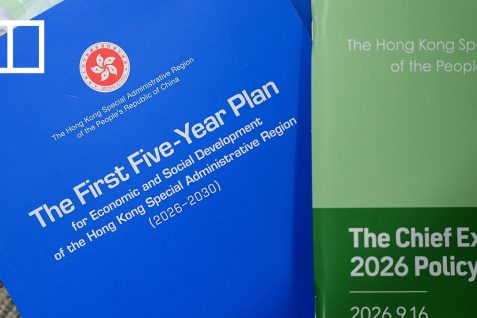
Hong Kong Chief Executive John Lee unveiled the city’s first five-year plan in September, setting out five binding and 17 aspirational goals aimed at keeping the city competitive and attractive to international investors, while improving the livelihoods of its residents. Lee also unveiled the final annual policy address of his current term, which contained a series of concrete measures to help the city attain the ambitious goals outlined in the five-year plan.
Elon Musk has really pushed the limits this time! Tesla’s new Roadster 2 made a stunning debut. It can drive upside down like Spider-Man, launch into the air, flip over, and land safely. It left people across China stunned.
Elon Musk has really pushed the limits this time! Tesla’s new Roadster 2 made a stunning debut. It can drive upside down like Spider-Man, launch into the air, flip over, and land safely. It left people across China stunned.
The staff across from our booth spent the first three days just playing on their phones, and today’s day four of the Canton Fair. Today they’re taking it even further—they’re already asleep in their booth.
The staff across from our booth spent the first three days just playing on their phones, and today's day four of the Canton Fair. Today they're taking it even further—they're already asleep in their booth.
A vlogger posted a video on October 15, 2026, showing an unfinished light rail project in Liuzhou, Guangxi. He said construction was already underway when he arrived in 2017. Nearly 10 years later, it remained unfinished. Judging by the number of people around, he said, it would lose money even if it opened.
A vlogger posted a video on October 15, 2026, showing an unfinished light rail project in Liuzhou, Guangxi. He said construction was already underway when he arrived in 2017. Nearly 10 years later, it remained unfinished. Judging by the number of people around, he said, it would lose money even if it opened.
A 3-year-old girl was spotted hanging from a window screen in Zhangping, China. Her mother had reportedly left her alone in the 12th-floor flat to go grocery shopping. Neighbours and a security guard held out a stool to support the girl while they waited for firefighters to arrive.
A 3-year-old girl was spotted hanging from a window screen in Zhangping, China. Her mother had reportedly left her alone in the 12th-floor flat to go grocery shopping. Neighbours and a security guard held out a stool to support the girl while they waited for firefighters to arrive.
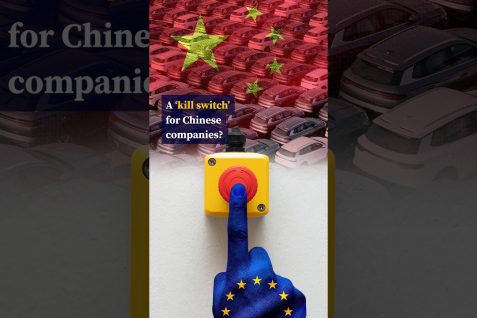
Emboldened by a recent deal capping hybrid car exports, the EU is preparing to accelerate a crackdown on Chinese trade practices. Backed by a dramatic pivot from Germany, Brussels is developing a new “kill switch” that could immediately kick Chinese companies out of the single market if Beijing is deemed to be engaging in economic coercion. In response, Beijing has warned the bloc not to “fantasise” that a hardline approach will foarce it into further concessions.
The European Union is preparing the most aggressive trade weapon in its history, and officials in Brussels are not shy about the nickname it has acquired: a “kill switch” for Chinese companies. The proposed instrument would let the bloc cut off access to its single market — the richest consumer market on earth — if a trading partner is found to be flooding Europe with subsidised goods or using trade itself as a tool of economic coercion. EU leaders broadly backed the idea at a summit in Brussels on October 15–16 and asked the European Commission to turn the concept into a formal proposal by the end of the year. What began as a Franco-German initiative has, in the space of a few weeks, become the centrepiece of Europe’s new China policy. For Beijing, which has warned Brussels not to “fantasise” about forcing concessions, the message is that the era of case-by-case complaints is ending.
From Hybrid Cars to a Standing Weapon
The immediate trigger was a deal, struck only days before the summit, under which China accepted a cap on hybrid car exports to Europe, set at 350,000 vehicles a year from 2027. That agreement followed the tariffs the EU had already imposed on Chinese battery-electric vehicles after a long anti-subsidy investigation. Rather than treating the hybrid cap as a settlement, Brussels treated it as proof of concept: if export volumes could be negotiated for cars, similar safeguards could be extended sector by sector. Commission President Ursula von der Leyen told reporters after the summit that the car deal would not fix the structural imbalance and that more safeguards were coming. The Commission has already begun analysing trade data to see where the hybrid template might be applied next.
The numbers behind the urgency are stark. Von der Leyen has noted that the EU’s goods trade deficit with China is running at more than €1 billion a day, a figure she has repeatedly called unsustainable. Chinese exports to the Union expanded by a further 25 per cent in the first eight months of 2026 alone, and the pressure has spread far beyond the car industry. A decade ago Europe ran a €71 billion deficit with China in industrial machinery and a €6 billion surplus in chemicals; today the machinery deficit has ballooned to €206 billion and chemicals have swung to a €24 billion annual deficit. Those two sectors — chemicals and machinery — are now named by von der Leyen as needing swift protection, with wind turbines also in the frame. Anti-dumping investigations into chemicals, pharmaceuticals and machinery are expected within weeks.
Germany’s Pivot Changes the Politics
None of this would be possible without the dramatic pivot in Berlin. Germany, whose carmakers and chemical giants depend heavily on the Chinese market, spent decades as the brake on any European trade confrontation with Beijing. That changed with the joint letter sent on October 5 by French President Emmanuel Macron and German Chancellor Friedrich Merz, arguing that the Commission should be granted powers to, in their words, “cut off access to the European single market if needed if another trading nation deliberately ignores calls for the restoration of fair trade conditions.” France and Germany formally proposed the kill-switch mechanism that leaders then discussed at the summit. When the EU’s two largest economies sponsor a measure together, the rest of the bloc usually follows. Belgium and Denmark were among the member states backing fast action, and officials described support for the instrument as broad.
Lithuanian President Gitanas Nausėda gave the bluntest public account of what the tool could mean in practice. If China engages in specific unfair trade practices, he said, Europe can limit the entry of Chinese products into its market — and may consider closing the market completely. He called that an extreme measure, but also a very powerful tool. The trigger would not be limited to import surges: the proposal is also designed for coercion scenarios, such as a country cutting off supplies of critical raw materials to avoid serious discussion of trade imbalances. In that event, one German official explained, the EU must be able to inflict damage comparable to the damage being done to it. The philosophy is deterrence — a weapon built in the hope that its existence makes using it unnecessary.
Why Beijing Is Pushing Back
China’s response combined dismissal with warning. Beijing told the bloc not to fantasise that a hardline approach would force it into further concessions, a signal that Chinese officials see the kill switch less as a negotiating lever than as a precedent they cannot afford to accept. The precedent is indeed the point: a mechanism built for hybrid cars today could be aimed at chemicals, machinery and wind turbines tomorrow, and at sectors nobody has named yet the year after. Chinese exporters have spent two years absorbing EU electric-vehicle tariffs and anti-subsidy probes; a standing market-access switch would raise the stakes from individual product lines to entire industries. Beijing also holds cards of its own, from rare-earth export controls to the European companies whose factories and sales inside China could be exposed to retaliation. That mutual exposure is precisely why the debate inside the EU is not finished, even after the summit’s show of unity.
Sceptics note that a kill switch is easier to announce than to operate. EU officials have pointedly refused to name any country the provision would apply to, partly for legal reasons and partly to preserve diplomatic room. Any measure would have to survive scrutiny over proportionality, due process and the bloc’s international trade obligations, and defining “economic coercion” in a way 27 governments can apply consistently is a genuine drafting challenge. There is also the question of who pays: European manufacturers that rely on Chinese components, and European exporters selling into China, would feel a market closure as keenly as Chinese firms would. Von der Leyen has paired the stick with December proposals to reduce EU companies’ reliance on single sources for critical supplies, plus a “solidarity mechanism” to help member states or sectors hit by outside coercion or retaliation. Those companion measures acknowledge that pulling the switch would hurt inside Europe too.
What to Watch Next
The Commission’s formal proposal is expected in December, and its design will matter more than the summit rhetoric. Key questions include how quickly the instrument could be triggered, whether it requires a full investigation or can act on a faster emergency track, and whether it targets companies, sectors or entire countries. Beijing’s behaviour in the meantime — on rare earths, on the hybrid cap’s implementation, and in the follow-up to Trade Commissioner Maroš Šefčovič’s October talks in Beijing — will shape how hard a line the proposal takes. European industry, meanwhile, will be lobbying in both directions at once: protection from Chinese overcapacity on one side, protection of its own China business on the other. Either way, the direction of travel is set. Europe is moving from case-by-case anti-subsidy probes to a standing deterrent, and the kill switch — once drafted into law — will permanently change the terms on which Chinese companies operate in the world’s largest single market.
Title: How Are Countries Weaponising the World’s Sea Routes?
Thumbnail: HORMUZ. RED SEA. BLACK SEA. TRADE UNDER ATTACK
Two commercial ships have sunk near the Strait of Hormuz. Drone attacks have damaged vessels in the Black Sea. And shipping through the Red Sea continues to face security risks following repeated Houthi attacks.
These are not isolated incidents. They show how conflicts in different parts of the world are disrupting the routes that keep global trade moving.
And India’s Defence Minister Rajnath Singh has now warned about precisely this problem: the weaponisation of critical trade routes, vital sea lanes and vulnerable maritime chokepoints.
But how does a narrow stretch of water become a weapon? And why can a conflict thousands of kilometres away affect the entire world?
Let’s start with the Strait of Hormuz.
Before the current conflict, roughly one-fifth of global oil and liquefied natural gas trade passed through this narrow waterway connecting the Persian Gulf with the Gulf of Oman.
Title: How Are Countries Weaponising the World’s Sea Routes?
Thumbnail: HORMUZ. RED SEA. BLACK SEA. TRADE UNDER ATTACK
Two commercial ships have sunk near the Strait of Hormuz. Drone attacks have damaged vessels in the Black Sea. And shipping through the Red Sea continues to face security risks following repeated Houthi attacks.
These are not isolated incidents. They show how conflicts in different parts of the world are disrupting the routes that keep global trade moving.
And India's Defence Minister Rajnath Singh has now warned about precisely this problem: the weaponisation of critical trade routes, vital sea lanes and vulnerable maritime chokepoints.
But how does a narrow stretch of water become a weapon? And why can a conflict thousands of kilometres away affect the entire world?
Let's start with the Strait of Hormuz.
Before the current conflict, roughly one-fifth of global oil and liquefied natural gas trade passed through this narrow waterway connecting the Persian Gulf with the Gulf of Oman.
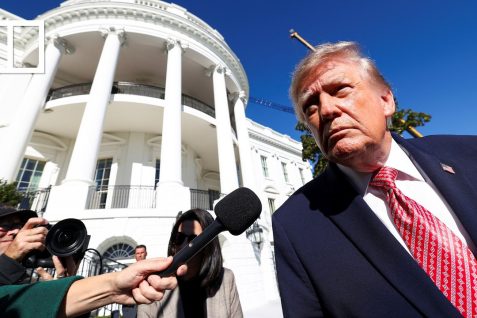
US President Donald Trump says he would welcome a three-way discussion with Chinese President Xi Jinping and Russian President Vladimir Putin on nuclear weapons during his visit to China next month. However, no date or format has been agreed for the proposed meeting.
US President Donald Trump says he would welcome a three-way discussion with Chinese President Xi Jinping and Russian President Vladimir Putin on nuclear weapons during his visit to China next month. However, no date or format has been agreed for the proposed meeting.
People offered advice in the comments: “Brother, I raise livestock too. After hearing this, I’d sell. Just think about how much feed they eat each day. These aren’t piglets that still have room to grow. Yours are already fully grown. You keep feeding them and working yourself to exhaustion, but the numbers still show a loss. You need to cut your losses. Even if prices rise a little later, that won’t cover the feed and labor. And you’ll still be exhausted.”
People offered advice in the comments: “Brother, I raise livestock too. After hearing this, I’d sell. Just think about how much feed they eat each day. These aren’t piglets that still have room to grow. Yours are already fully grown. You keep feeding them and working yourself to exhaustion, but the numbers still show a loss. You need to cut your losses. Even if prices rise a little later, that won’t cover the feed and labor. And you’ll still be exhausted.”
A travel survey found that 93 percent of travelers had regretted a trip at least once. Nearly a third had felt that way more than twice. Using an analysis of travel reviews from 2025, media outlets listed the five countries most likely to disappoint visitors. China was the only country in Asia on the list, dragged down by its capital and showcase city, Beijing.
A travel survey found that 93 percent of travelers had regretted a trip at least once. Nearly a third had felt that way more than twice. Using an analysis of travel reviews from 2025, media outlets listed the five countries most likely to disappoint visitors. China was the only country in Asia on the list, dragged down by its capital and showcase city, Beijing.
Limited Time: Get your free Tank Man set when you join the 50-Cent Army:
Join the Oct 24 China Uncensored Horror Livestream
Want to lose weight? Ozempic might help—but what if the ingredients come from a Chinese factory where FDA inspectors found black mold, bugs, and workers allegedly dumping samples and hiding paperwork? Nothing says “quality control” quite like a pharmaceutical factory behaving like a crime scene. Meanwhile, untested Chinese peptides are popping up online. Because apparently, getting skinny shouldn’t be the only gamble you take with your health.
Operation Honey Pot: Paste this emoji 🍯 in your comment below.
Want to go deeper than YouTube will let us? Check out our website:
Indonesia’s disaster agency is turning to innovative solutions in a bid to reduce the impact of its annual wildfires. In Palembang, South Sumatra, 2.4 tonnes of dry ice were dropped by plane above the city, reducing haze levels and improving visibility in a test that may now be expanded to other affected regions.
Indonesia’s disaster agency is turning to innovative solutions in a bid to reduce the impact of its annual wildfires. In Palembang, South Sumatra, 2.4 tonnes of dry ice were dropped by plane above the city, reducing haze levels and improving visibility in a test that may now be expanded to other affected regions.
Two separate incidents, including a stampede and an out-of-control truck that ploughed into a crowd, have left at least 32 people dead in India during Hindu religious festivities. On Saturday, 19 people were killed and dozens injured in Kolkata, West Bengal, when the stampede started as crowds tried to escape a sudden downpour during Durga Puja festivities. The following day, a speeding, out-of-control truck struck devotees gathered for Navratri events at a temple in Gwalior, Madhya Pradesh, killing at least 13 people.
Two separate incidents, including a stampede and an out-of-control truck that ploughed into a crowd, have left at least 32 people dead in India during Hindu religious festivities. On Saturday, 19 people were killed and dozens injured in Kolkata, West Bengal, when the stampede started as crowds tried to escape a sudden downpour during Durga Puja festivities. The following day, a speeding, out-of-control truck struck devotees gathered for Navratri events at a temple in Gwalior, Madhya Pradesh, killing at least 13 people.
Amid the ongoing trial over the murder of 28-year-old socialite Abby Choi Tin-fung in 2023, we revisit some of the other shocking crimes in Hong Kong’s history.
Amid the ongoing trial over the murder of 28-year-old socialite Abby Choi Tin-fung in 2023, we revisit some of the other shocking crimes in Hong Kong’s history.
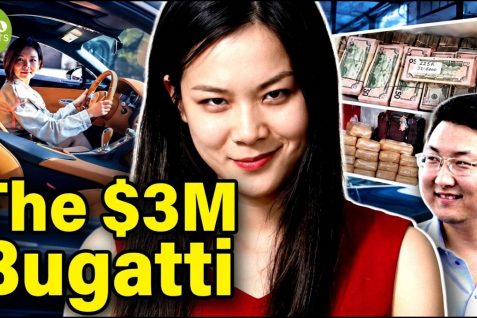
A $3 million Bugatti. A California real estate agent accused of acting on behalf of China. A mysterious business network with connections to Cambodia’s notorious scam industry.
What could these seemingly unrelated stories have in common?
As new court documents and media investigations bring additional details to light, questions are emerging about the relationships surrounding Wanying Zhang, a California real estate agent accused of conducting surveillance connected to Taiwan’s president.
The story leads from luxury homes in Southern California to suspected money-laundering operations, Cambodia’s Prince Group, and an undercover investigation by Al Jazeera into the country’s sprawling scam compounds.
Could criminal money networks also play a role in overseas intelligence operations?
In this episode, we examine the reported connections, the allegations in court documents, and the unanswered questions surrounding this extraordinary case.
Important: Some of the connections discussed in this episode are based on allegations, reported associations, or analysis. They do not establish that all individuals or organizations mentioned participated in a single coordinated criminal operation.
A $3 million Bugatti. A California real estate agent accused of acting on behalf of China. A mysterious business network with connections to Cambodia's notorious scam industry.
What could these seemingly unrelated stories have in common?
As new court documents and media investigations bring additional details to light, questions are emerging about the relationships surrounding Wanying Zhang, a California real estate agent accused of conducting surveillance connected to Taiwan's president.
The story leads from luxury homes in Southern California to suspected money-laundering operations, Cambodia's Prince Group, and an undercover investigation by Al Jazeera into the country's sprawling scam compounds.
Could criminal money networks also play a role in overseas intelligence operations?
In this episode, we examine the reported connections, the allegations in court documents, and the unanswered questions surrounding this extraordinary case.
Important: Some of the connections discussed in this episode are based on allegations, reported associations, or analysis. They do not establish that all individuals or organizations mentioned participated in a single coordinated criminal operation.
Limited Time: Get your free Tank Man set when you join the 50-Cent Army:
The Iran War may have revealed a surprisingly cheap way for America to defend Taiwan from a Chinese invasion. Could $35,000 drones help stop the Chinese military—and change the future of warfare?
Want to go deeper than YouTube will let us? Check out our website:
Do you know what these people are doing? It’s hard to believe, but people in China are scrambling just to get an appointment to buy gold. That’s right. In mainland China, you sometimes can’t even buy gold on the spot. You have to make a reservation first, and people are lining up just to get those reservation slots.
Do you know what these people are doing? It's hard to believe, but people in China are scrambling just to get an appointment to buy gold. That's right. In mainland China, you sometimes can't even buy gold on the spot. You have to make a reservation first, and people are lining up just to get those reservation slots.
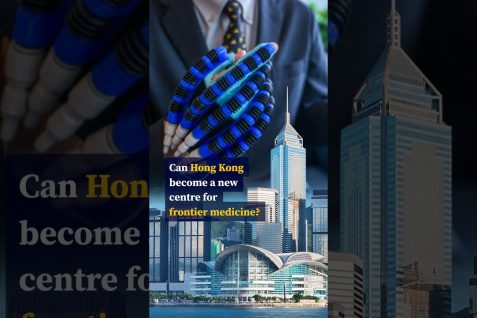
Hong Kong is pouring vast resources into healthcare innovation, developing breakthroughs ranging from high-speed diagnostic chips to surgical robots. But the city’s researchers and universities face steep hurdles when it comes to finding private investment, local manufacturing and commercialisation of what is developed.
In a four-part series, the SCMP takes you inside the local laboratories shaping the future of global healthcare innovation, from treatment, diagnostics to prevention, and explores what it might take for Hong Kong to become the “Silicon Valley of the East”.
Hong Kong has world-class universities, deep capital markets and some of the most densely packed hospital talent in Asia. What it has never quite had is a medical-technology industry to match. A four-part South China Morning Post series asks whether that is finally changing, touring the laboratories where researchers are building high-speed diagnostic chips, surgical robots and AI-driven treatment tools. The ambition, as the series frames it, is nothing less than becoming a “Silicon Valley of the East” for healthcare. The obstacles, it makes equally clear, are money, manufacturing and the long road from a working prototype to a product a hospital will actually buy.
The question is not whether the science is real — on the evidence of the past two years, it plainly is. Hong Kong teams have produced a string of results that would flatter any research hub on earth. The harder question is whether a city built on finance and property can learn the slower, messier business of turning discoveries into companies. That tension, between laboratory brilliance and commercial follow-through, runs through every part of the series. It is also what makes Hong Kong’s experiment worth watching for anyone interested in where medical innovation happens next.
Robots Smaller Than a Grain of Rice
Start with the machines. Engineers at the Hong Kong University of Science and Technology have built what they describe as the world’s smallest multifunctional surgical robot: a device 0.95 millimetres across, some 60 percent smaller than existing endoscopic robots. It combines imaging, high-precision motion and multiple functions — sampling, drug delivery and laser ablation — in a single hollow-skeleton body threaded with an optical-fibre array. In laboratory tests it widened the imaging field dramatically and detected obstacles well beyond previous theoretical limits. Lead researcher Professor Shen Yajing argues that solving this “impossible trinity” of size, vision and function opens the way to diagnosis and treatment in parts of the body that today’s instruments simply cannot reach, with in-vivo trials the next step.
Across the harbour of academia, a Chinese University of Hong Kong team led by Professor Zhang Li has tackled the companion problem: knowing where a tiny robot is once it is inside a patient. Their AI-powered magnetic tracking system follows millimetre-scale wireless medical robots in real time, achieving millimetre-level accuracy at depths of up to ten centimetres in tissue, even amid the magnetic interference of a working clinical environment. Published in Science Robotics, the work was validated in animal tests that steered micro-robots through the spinal canal and bile duct. Tracking sounds like a footnote to robotics; in practice it is the difference between a laboratory curiosity and a tool a surgeon can trust.
From the Laboratory to the Operating Theatre
Hong Kong’s flagship bet on this translation problem is the Multi-Scale Medical Robotics Center, part of the government’s InnoHK research clusters, where medicine and engineering faculty work on endoluminal robots, magnetically guided endoscopes and image-guided surgical platforms under one roof. The centre has already produced a demonstration with genuine symbolic weight: an intercontinental telesurgery exercise in which specialists in Shanghai and London remotely operated a robotic platform hosted in Hong Kong on a live model, in real time. CUHK’s Professor Philip Chiu framed the point explicitly — Hong Kong sits at the heart of Asia, and the exercise showcased the city as the connective tissue between world-class surgical teams. Two local medical students took part, and nearly 200 secondary school students watched, a deliberate investment in the talent pipeline.
The commercial proof point arrived from the private market. Cornerstone Robotics, a Hong Kong surgical-robotics company founded by Professor Kwok Wai Samuel Au, drew a strategic investment of roughly US$700 million from Medtronic, the global medical-device giant, which also took distribution rights for Cornerstone’s Sentire surgical system in markets outside the United States. Sentire had already won approval from China’s National Medical Products Administration in 2024, and in May 2026 added a European CE Mark and Singapore approval covering general, gynaecological, thoracic and urological procedures. A Hong Kong-designed robot, approved on three regulatory regimes and backed by the industry’s largest player, is exactly the trajectory the city’s planners describe. It is also, so far, the exception rather than the rule.
The Valley Between Discovery and Product
The SCMP series is candid about why such cases remain rare. Hong Kong researchers compete well for grants and publications, but private investment in local medical technology is thin, and the city’s near-total lack of manufacturing means prototypes must be built elsewhere — usually across the border in Shenzhen and the Greater Bay Area. Commercialisation expertise, from regulatory strategy to clinical-trial management to hospital procurement, is scarce and expensive. A diagnostic chip that performs beautifully in a university laboratory still faces years of validation before a single patient benefits. Many Hong Kong inventions have historically been sold, licensed or simply lost at precisely this stage.
Artificial intelligence is the newest front in the same contest. The Centre for Artificial Intelligence and Robotics in Hong Kong has unveiled systems such as the CARES multimodal clinical AI agent, alongside diagnostic agents, ultrasound foundation models and an embodied-intelligence operating room, presented to hospital leaders from Hong Kong and Shenzhen at its CREATE Symposium. The pitch is end-to-end: AI that assists diagnosis, guides robots and supports surgery, developed where the patients and clinicians are. Whether hospitals adopt such systems at scale will depend less on demonstrations than on evidence, liability frameworks and budgets. Those are unglamorous determinants, but they decide which technologies survive.
What Success Would Look Like
Hong Kong does hold structural cards few rivals can match. It offers common-law intellectual-property protection, internationally recognised universities and hospitals, free movement of capital, and a position inside China’s vast healthcare market without being wholly of it — a combination neither Singapore nor Shenzhen can replicate exactly. An ageing population across the region guarantees demand for exactly the minimally invasive, AI-assisted, robot-delivered care its laboratories are building. If the Greater Bay Area supplies manufacturing scale while Hong Kong supplies research, regulation and finance, the “frontier medicine centre” stops being a slogan. The next few years will show whether more Cornerstone-style deals follow, or whether the valley between discovery and product keeps claiming the city’s best ideas. On the laboratory evidence alone, the raw material for success is already there.
In mid-October 2026, Gao Xiaoxing Noodle Shop near People’s Square in Shanghai closed less than two months after opening, drawing attention across the restaurant industry. The restaurant covered about 8,740 square feet (812 square meters) and was designed to operate 24 hours a day. A bowl of beef broth noodles cost just 12 yuan, an attractive price in one of Shanghai’s most expensive shopping districts. But the bargain-priced restaurant failed in under two months. Its owner had spent nearly 3 million yuan (about US$420,000) on renovations and lost the investment. A closure notice now hangs at the entrance. Some 400 chairs remain neatly arranged inside as the property seeks a new tenant.
In mid-October 2026, Gao Xiaoxing Noodle Shop near People's Square in Shanghai closed less than two months after opening, drawing attention across the restaurant industry. The restaurant covered about 8,740 square feet (812 square meters) and was designed to operate 24 hours a day. A bowl of beef broth noodles cost just 12 yuan, an attractive price in one of Shanghai's most expensive shopping districts. But the bargain-priced restaurant failed in under two months. Its owner had spent nearly 3 million yuan (about US$420,000) on renovations and lost the investment. A closure notice now hangs at the entrance. Some 400 chairs remain neatly arranged inside as the property seeks a new tenant.
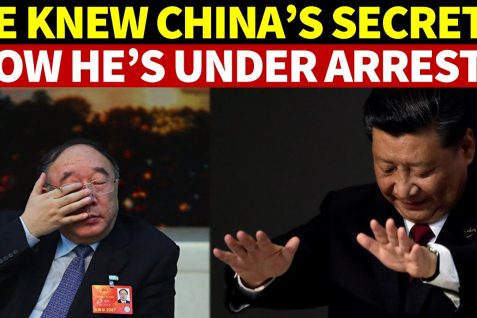
On October 13, 2026, authorities announced that Huang Qifan, the former mayor of Chongqing, China, was under investigation. The veteran financial technocrat continued giving speeches across China after retirement and became a celebrity economist online. The reasons for his downfall remain unclear.
On October 13, 2026, authorities announced that Huang Qifan, the former mayor of Chongqing, China, was under investigation. The veteran financial technocrat continued giving speeches across China after retirement and became a celebrity economist online. The reasons for his downfall remain unclear.
The report explains how such a steep decline could happen within 74 years, a period approaching an average human lifespan. As people age and die, the population can shrink rapidly if births remain too low to replace them. Still, Yi’s projection of 320 million depends on a specific starting population and fertility trends. It is not a certain outcome.
The report explains how such a steep decline could happen within 74 years, a period approaching an average human lifespan. As people age and die, the population can shrink rapidly if births remain too low to replace them. Still, Yi’s projection of 320 million depends on a specific starting population and fertility trends. It is not a certain outcome.