• TwoTigers24, New York
  • October 22, 2026

0 Comments

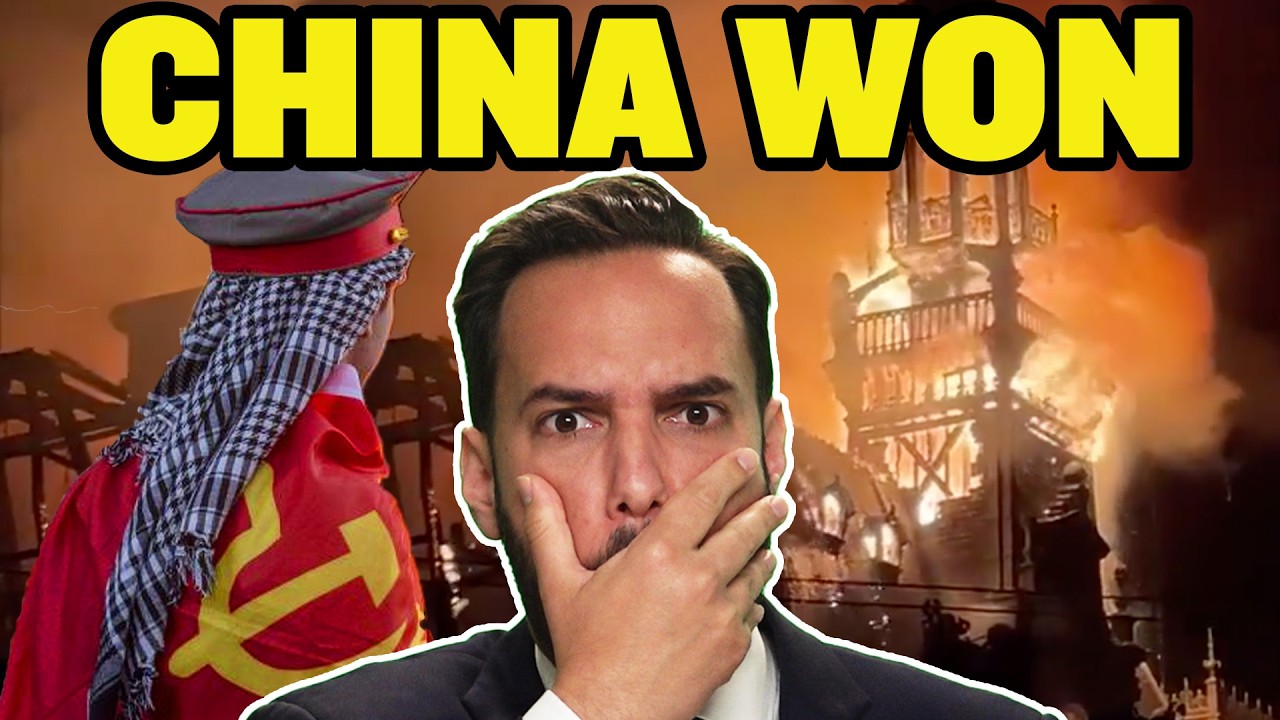
The largest Chinese embassy in Europe is set to rise in the heart of London: a 20,000 square meter complex at Royal Mint Court. Local councillors rejected it twice. But the government approved it anyway, and a High Court challenge from residents was dismissed this summer. Standing against it is Luke de Pulford, founder of the Inter-Parliamentary Alliance on China—an international coalition of lawmakers opposing CCP infiltration. Why does this embassy matter, and why should America care? The site sits directly above fiber-optic cables carrying sensitive financial data between the City of London and Canary Wharf, Britain's two main financial districts. The architectural drawings are also conspicuously redacted. "Nearly an entire floor is redacted, so we don't know what the use of those buildings are, and some of those rooms are in the basement area," de Pulford says. "If the Chinese were able to, in some way, sabotage or hack this cabling … They would be impacting any financial services from anywhere in the world who are located in those two financial centers, which of course includes the United States." MI5 lists China as one of the most serious national security threats facing the UK. So why was the embassy approved? "It's partly down to the leverage that China exacts, it's partly down to the carrots that it dangles around economic opportunities, and it's partly down to the blunt coercion it's willing to mete out."

Source: China’s Mega Embassy With Secret Rooms Beneath London | Luke de Pulford

Author

YNOT — Two Tigers Consulting From Building Bridges to Watching China About 15 years ago, I founded a small company called Two Tigers Consulting with a relatively simple idea: help American and Chinese businesses work together. At the time, China represented one of the greatest business opportunities in the world — a rapidly expanding economy, extraordinary manufacturing capabilities, and ambitious entrepreneurs eager to build relationships with American companies. Two Tigers Consulting was created to help bridge that gap. For a while, it worked. We attended trade shows, arranged meetings, and introduced companies across both cultures. But after one particularly promising trade show, several Chinese businesspeople we had met were reportedly arrested upon returning to China — apparently for traveling without proper authorization. That experience taught me something important: in China, being a successful entrepreneur doesn't necessarily mean being free to conduct business. As Xi Jinping consolidated power and the political environment shifted, we concluded the potential rewards of doing business in China no longer justified the risks. Rather than abandon our knowledge entirely, Two Tigers evolved into a platform for following, discussing, and analyzing developments inside China — its economy, political leadership, and increasingly complicated relationship with the United States. I want to make absolutely clear that I have tremendous respect for the Chinese people — their entrepreneurs, engineers, and workers are extraordinarily capable. But I also believe China's political system creates fundamental contradictions: enormous private fortunes can be accumulated, yet ultimate political authority remains firmly concentrated, making relationships based on mutual trust and predictable rules extremely difficult to sustain. Today, Two Tigers is an independent publication examining China's achievements, challenges, ambitions, and contradictions — where they intersect with the United States and the broader world. What began as a small business venture now attracts roughly 10,000 visits a day. Understanding China is no longer optional: what happens there affects businesses, economies, and people throughout the world. And that is why Two Tigers continues.

Leave a Reply

Your email address will not be published. Required fields are marked *

Quantum24 Network