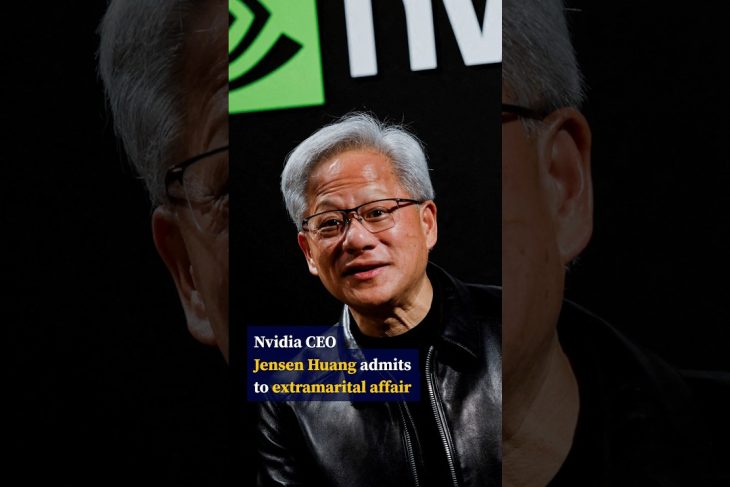
The chief executive of the world’s most important AI chip company has admitted to an extramarital affair, and his own board has opened an independent investigation into whether he was the target of a foreign intelligence operation. Jensen Huang, the 63-year-old founder and CEO of Nvidia, told employees in a memo on Sunday that he had been unfaithful to his wife, apologising to his family and to the company in unusually blunt language. Nvidia’s board announced the same day that a committee of independent directors, assisted by outside counsel, would examine reporting that a foreign intelligence service had targeted him. The board stressed that it has no reason to believe national security or Nvidia’s secrets were compromised, but said its inquiry would examine all available information. Huang remains in his job, with the board publicly expressing confidence in his leadership while the review runs.
Source: South China Morning Post
What Huang Admitted — and What He Did Not
Huang’s memo to staff was short and left nothing hedged. “I owe my family and all of you an apology,” he wrote. “I was unfaithful to my wife. My actions hurt her and our children. There is no excuse for what I did. I am deeply sorry.” He said he takes full responsibility for the hurt he caused, and he addressed the security reporting directly only to endorse the board’s response. “Regarding the national security concerns raised in news reports, NVIDIA’s Board of Directors has initiated an independent investigation,” he wrote. “I support the investigation and will cooperate fully.”
What the memo does not do is name the other party or confirm any connection between the affair and the intelligence allegations. Huang admitted infidelity, nothing more, and neither he nor Nvidia has publicly drawn a line from the affair to any foreign service. That distinction matters, because the espionage side of the story rests on government suspicions and press reporting rather than on anything Huang has conceded. No criminal charge has been brought against anyone in connection with the case. Huang has also committed to remaining chief executive without interruption while the investigation proceeds.
The Intelligence Allegation Behind the Probe
The board’s investigation follows a series of reports that US officials believe Huang was targeted through a close relationship with Alice Huang, a Chinese citizen and former senior executive at Megaspeed International, a Singapore-based data-centre company and major Nvidia customer. According to the reporting, the US government suspects she was recruited by a Chinese intelligence agency, and the Financial Times reported on Saturday that an American intelligence memo naming Huang exists. The New York Times reported late last month that officials believed he had struck up a close relationship with the businesswoman and that she was feeding information directly to Beijing. A further report on Sunday said Secretary of State Marco Rubio had overseen a top-secret memo this spring warning other officials about the tie.
Huang had previously described his relationship with Alice Huang as a normal business relationship, and she is no longer at Megaspeed. Nobody has publicly charged her or her former employer with a crime, and no report has accused Jensen Huang of knowing about any intelligence activity. Chinese state media have denied any Beijing link to the affair and called the spy narrative fabricated. The board’s statement framed its inquiry squarely around security rather than conduct, saying it prioritises US national and economic security. It named neither the committee members nor the law firm retained to run the review.
Washington Is Closing In
The affair has already moved from the business pages into congressional oversight. On November 5, three House Republicans — John Moolenaar of the Select Committee on China, Brian Mast of the Foreign Affairs Committee and Rick Crawford of the Permanent Select Committee on Intelligence — wrote to Huang asking him to take part in a joint closed-door briefing on November 18. Senator John Cornyn has called for a congressional investigation of his own. Analysts expect the case to draw parallel scrutiny from the board’s review, from the US government and from Congress at the same time. Each of those tracks will ask the same underlying question: whether the relationship created any channel through which information about Nvidia’s restricted AI chips could have flowed.
That question carries weight far beyond one executive’s private life because of where Nvidia sits in the US-China technology contest. The company’s accelerators are the choke point of the global AI build-out, and American export controls on those chips are a central instrument of Washington’s China policy. Huang has been a prominent public advocate for looser controls, arguing that restrictions hand the Chinese market to domestic rivals. Reporting that he may have been cultivated by a suspected intelligence asset inevitably reframes that advocacy in the eyes of investigators, whether or not any influence was ever exercised. It is precisely that gap — between suspicion and proof — that the board’s inquiry now has to work through.
A Governance Crisis at the Centre of the AI Boom
Markets reacted immediately. Nvidia shares fell about 4.2 percent in overnight trading ahead of Monday’s session, a move analysts attributed to leadership risk rather than to any change in the company’s business. Some governance specialists have speculated that Huang could ultimately lose the chief executive title even though he is not accused of a crime, on the grounds that his judgment and code of conduct will be judged harshly. Others, including veteran analyst Patrick Moorhead, have focused on the sheer number of investigations now converging on the company. The board, for its part, moved to steady the ship, saying Huang fully supports the review and that it retains confidence in him and his leadership team.
For now, the established facts are narrow: the CEO admitted an affair, the board opened an independent investigation into reported foreign targeting, and both sides say no compromise of secrets is currently believed to have occurred. Everything beyond that — the identity and role of the alleged asset, the contents of the intelligence memos, and whether Beijing gained anything at all — remains allegation and reporting, not finding. The November 18 closed-door briefing and the board’s eventual report will be the first real tests of what the US government actually holds. Until then, the world’s most valuable chipmaker is being run by a chief executive under investigation, at the exact moment its products sit at the heart of the rivalry between Washington and Beijing.