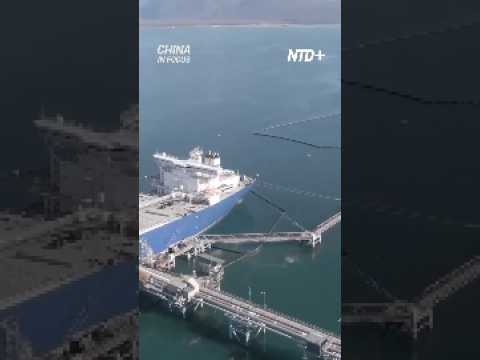
Taiwan has agreed to buy nearly a third of the liquefied natural gas from a planned export project in Alaska and invest up to $4.4 billion to help build it, in what President Donald Trump is calling one of the biggest energy deals ever made. Trump announced the commitments on Tuesday night, October 13, 2026, at a campaign rally in Wasilla, Alaska, saying the Taiwanese purchases “guarantee the success” of a development that has struggled for decades to get off the ground. Taiwan’s Ministry of Economic Affairs confirmed on Wednesday that state-owned CPC Corp has made significant progress with the project developer after nearly a year and a half of negotiations. The announcement weaves together energy security, alliance politics, and midterm election strategy in a single headline.
The numbers involved are enormous. Under the plan described by both sides, Taiwan would purchase 6 million metric tons of LNG per year from the Alaska project once production begins, roughly 30 percent of its planned 20-million-ton annual output, over a 20-year period. Commerce Secretary Howard Lutnick told the Wasilla crowd that Taiwan had committed to investing $4.4 billion to see the project completed. In a follow-up post on Truth Social, Trump put the total value of Taiwan’s 20-year purchase commitment at between $70 billion and $80 billion.
A Project Decades in the Making
The Alaska LNG venture is one of the great unbuilt projects of American energy. Discussed in various forms for decades, it would move natural gas from Alaska’s remote North Slope through an 800-mile pipeline across the state to liquefaction facilities on the coast, where the supercooled gas would be loaded onto tankers bound for Asia. The estimated price tag runs from $44.5 billion to $54.5 billion, making it one of the most expensive energy infrastructure proposals in the world. It has repeatedly failed to secure the binding long-term contracts and committed investment needed to reach a final investment decision.
The current developer, Glenfarne, is targeting mechanical completion of the roughly 739-mile pipeline in 2028 and first gas in 2029. Taiwan’s ministry said that if the project stays on schedule, deliveries to the island could begin as early as 2032. Trump’s announcement is the most serious political commitment the project has ever received, but the gap between a rally announcement and flowing gas remains vast.
Why Taiwan Wants In
For Taiwan, the logic is about survival, not just economics. The island imports nearly all of its energy, and its leaders have watched global gas markets convulse as war in the Middle East disrupts flows through the Strait of Hormuz, which used to carry roughly a fifth of the world’s LNG supplies. Diversifying supply sources has become a strategic imperative, and the United States is the diversification partner of choice. Taiwanese officials said in February 2026 that they planned to increase purchases of American natural gas to about a third of the island’s imports this year while reducing purchases from elsewhere. Last year, the government announced a goal of tripling the US share of Taiwan’s LNG imports to 30 percent over the next decade.
The courtship has been building for some time. CPC Corp signed a non-binding letter of intent with the Alaska Gasline Development Corp in March 2025 to buy LNG and explore investment, and a senior Taiwanese official visited the proposed project site in Alaska during 2025. From Taipei’s perspective, locking in American gas does double duty: it secures fuel for the island’s power plants and deepens the economic bond with the United States, Taiwan’s main informal backer and arms supplier, at a moment when China is intensifying military pressure and the island awaits a proposed $14 billion American arms package.
The Geography Argument
Supporters of the project make a straightforward geographic case. Unlike LNG shipped from the Gulf Coast, which must pass through the Panama Canal or travel around the Horn of Africa, gas from Alaska would sail directly across the Pacific to Taiwan and other Asian buyers. That means shorter transit times, lower shipping costs, and routes that avoid the world’s most contested maritime chokepoints. For an island that China claims as its own and threatens to blockade, that resilience has value far beyond the per-unit price of gas.
The Trump administration has been actively marketing the project to Asian allies on exactly these grounds, presenting Alaska LNG as a strategic alternative to Middle Eastern and Russian supplies. Taiwan is the first major buyer to step forward at this scale, and American officials clearly hope others will follow. Japan and South Korea, both heavy LNG importers with their own alliance considerations, have been lobbied on the project before. A Taiwanese anchor commitment makes the sales pitch to the next buyer considerably easier.
The Skeptics’ Case
None of this has silenced the doubters. Taiwan’s own economy ministry, while confirming the progress in talks, pointedly did not say whether a binding sale-and-purchase agreement had been signed. The letter of intent from March 2025 records a direction of travel, not a finalized commercial obligation. The ministry’s careful language, that arrangements “will be determined through subsequent negotiations and commercial contract procedures,” is the language of a government keeping its options open. Taiwan’s Premier Cho Jung-tai, asked about Trump’s remarks, offered only that the government’s responsibility was to stabilize energy supply and build resilience, like governments everywhere.
The commercial objections are real and longstanding. Building an 800-mile pipeline across Alaska to serve export markets has defeated every previous attempt, and analysts who have studied the project warn that its delivered gas would struggle to compete with cheaper Gulf Coast LNG. The three-year gap between Glenfarne’s first-gas target of 2029 and Taiwan’s earliest delivery date of 2032 hints at how much work remains between mechanical completion and actual export operations. And the entire structure rests on a political foundation: a future administration in either Washington or Taipei could lose enthusiasm, leaving the project stranded once again.
What It Means for the US-China Energy Chessboard
Step back, and the deal looks like something larger than a gas contract. The United States is using energy exports as an instrument of alliance management, binding Taiwan’s economy more tightly to America’s at the same time it is arming the island. Taiwan is using energy imports as an instrument of security policy, paying a premium for supply that cannot be cut off by a Chinese blockade. China, which watches every deepening of US-Taiwan ties with fury, now sees the island planning to anchor a decades-long energy partnership with Washington. Every element of the transaction carries a geopolitical charge.
Whether the pipeline ever gets built, the announcement itself has already done political work. Trump got a made-for-television energy triumph at a midterm rally for a Republican senator in a tight race. Taiwan got a public American embrace and a tangible deliverable to show for its courtship of Washington. The only question that matters now is the oldest one in the Alaska LNG saga: this time, will the pipeline actually get built? The answer will arrive not at a rally, but years from now, in the form of steel in the ground or another round of broken promises.
Source: China in Focus – NTD