 by YNOT
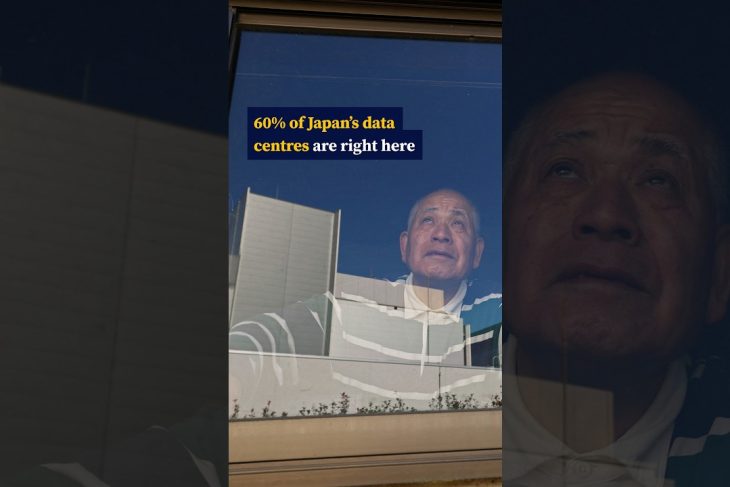
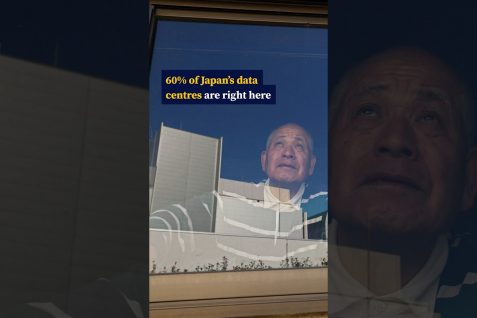
60% of Japan’s data centres are right here
Communities across Japan are bearing the brunt of data centre construction and development, but few as much as the Tokyo metro area, home to 60 per cent of new data centre construction in the country. Japan is betting on data centres to boost its economy, but residents living next door are pushing back.
One Region Carrying a National Bet
Japan is betting heavily on data centres to power its digital economy, and nowhere is that bet more visible than in the Tokyo metropolitan area. According to the report in the video above, the Tokyo metro area is home to around 60 per cent of new data centre construction in the country. Communities across Japan are bearing the brunt of that construction and development, but few as much as the neighbourhoods in and around the capital. Japan sees data centres as economic infrastructure for the age of artificial intelligence and cloud computing. Residents living next door to the new facilities, however, are increasingly pushing back.
The concentration is not an accident of geography alone. Data centres need reliable electricity, fast fibre connections, cooling, transport links and proximity to the customers whose data they store and process. The Tokyo region offers all of those advantages at a scale no other Japanese region can easily match. For operators, building near the capital reduces latency and simplifies staffing and maintenance. For the national government, the building boom looks like investment, jobs and a stronger position in the global technology race.
Why Neighbours Are Pushing Back
For people who live beside a construction site, the national strategy arrives in a much more concrete form. Data centres are large, windowless industrial buildings that can transform the character of a residential or semi-rural district. Construction brings heavy traffic, noise and years of disruption before a facility even opens. Once operating, the buildings raise local questions about electricity demand, water use for cooling and heat. Residents quoted in coverage of the boom ask a simple question: if the benefits are national, why are the costs so local?
There is also a question of what a community actually gains from hosting a data centre. Unlike a factory, a finished data centre employs relatively few people on site relative to its size and power consumption. The servers inside may serve companies and customers across Japan and beyond, while the host municipality receives a large building and a large electricity bill for its grid. That imbalance sits at the heart of the pushback now being reported. It is not simply opposition to construction, but a debate about how the gains and burdens of digital infrastructure should be shared.
The Energy Question Behind the Boom
Every new data centre is, in physical terms, a commitment to supply large amounts of electricity continuously, day and night. The growth of artificial intelligence has sharply increased the expected demand, because training and running AI models is far more power-hungry than ordinary web services. Japan’s grid, still shaped by the long shadow of the Fukushima disaster and the slow restart of nuclear capacity, faces real constraints. Concentrating 60 per cent of new construction around Tokyo concentrates that demand on one regional grid. Planners therefore have to think about generation, transmission and backup supply at the same time as they approve buildings.
This is where the local and national stories meet. A resident worried about a new facility next door and an energy official worried about peak demand are, in different ways, asking about the same resource. Japan’s experience is being watched across Asia, where Singapore, Malaysia, Indonesia and other economies are also competing for data centre investment. Each country is discovering that land and tax incentives are only part of the offer. Power, water and public consent are becoming the real limits on how fast the industry can grow.
What a Fairer Spread Could Look Like
One obvious answer to concentration is dispersal: encouraging more construction in regions outside the capital that have land, power and a need for investment. Regional cities in Japan could welcome facilities that Tokyo-area neighbourhoods now resist, especially where renewable energy or former industrial land is available. Dispersal also reduces risk, because data spread across regions is less vulnerable to a single earthquake or grid failure. The Tokyo concentration cuts both ways for resilience, a serious consideration in one of the world’s most earthquake-prone countries. A more even map would be slower to build, but potentially sturdier.
Another part of the answer is earlier and more honest consultation with host communities. Residents are more likely to accept infrastructure when they understand what is being built, what it will consume and what the community receives in return. Clear rules on energy sourcing, cooling and building design can address specific fears instead of leaving them to rumour. Some operators internationally have begun offering community funds, district heating from waste heat, or commitments to renewable power. Whether such measures become normal in Japan will shape how the next wave of projects is received.
A Debate Japan Cannot Postpone
Japan’s data centre boom is not going to stop, because the demand behind it is real and growing. Cloud services, streaming, finance and artificial intelligence all depend on exactly this kind of facility, and Japan intends to remain a major digital economy. The argument in the Tokyo suburbs is therefore not really about whether data centres should exist. It is about where they should go, who should host them, and on what terms. Those are political questions, and they are arriving faster than the planning system expected.
The figure at the centre of this report — 60 per cent of new construction in one metropolitan area — is the clearest sign that the current pattern has limits. Concentration made the boom fast, but it is also what has made the backlash concentrated and visible. How Japan responds, by spreading construction, tightening consultation, or pressing ahead regardless, will be a test case for every advanced economy trying to build AI-era infrastructure in places where people actually live. Watch the video above for the voices of the communities living with that national bet, quite literally, right next door.
Source: South China Morning Post