The most dangerous weapon China is building in the artificial intelligence race is not a smarter machine. It is a cheaper one. While America’s biggest technology companies spend trillions of dollars convincing the world that intelligence is something you rent by the month, Chinese developers are giving capable AI away — and that may be the most effective strategy in what has become a genuine world war over who controls the intelligence of tomorrow.
There are no invading armies in this war and no generals moving tanks across borders. The battlefield is made of data centers, computer chips, electricity, and standards. On one side stands the United States, the world’s leading technological superpower, with the most advanced semiconductor designs and the richest technology companies ever created. On the other stands China, an industrial giant with enormous manufacturing capacity, a government that thinks in decades, and a fast-growing stable of AI systems that are closing on America’s lead.
Two Empires, Two Business Models
The fight comes down to two very different ideas about how intelligence should be sold. America’s leading labs — OpenAI, Anthropic, and Google’s top proprietary systems — build extraordinary machines and then rent access to them. You may use their intelligence, but you cannot have it. You pay every month, follow their rules, and send your questions to their servers.
China’s leading developers have chosen the opposite path. Alibaba’s Qwen, DeepSeek, Moonshot AI, MiniMax, and Z.ai release open-weight models that anyone can download, run on their own servers, and adapt to their own needs. In July 2026, Moonshot unveiled Kimi K3, a 2.8-trillion-parameter open-weight model that showed how close Chinese developers have come to the frontier.
Imagine if every car maker required you to rent its engine by the hour. You could own the car, wash it, and insure it — but every time you turned the key, somebody in Detroit sent you a bill. That is an excellent business model, for Detroit. The trouble begins the day a competitor offers to sell you the engine outright. That is exactly the disruption now arriving in artificial intelligence.
China Does Not Have to Be Better. It Has to Be Everywhere.
Here is the part that should worry Washington. China does not need to build better AI than America to win. It may only need AI that is good enough, cheap enough, and available enough that the rest of the world builds on Chinese technology instead of American technology.
Picture a developing country modernizing its hospitals, schools, and factories. An American firm offers a superb proprietary system with recurring subscription fees, priced in dollars, forever. A Chinese alternative offers a capable open model its own engineers can operate at home. Price and independence matter enormously — and once a generation of developers, universities, and ministries has learned to build on one technology, switching becomes painful and expensive.
Governments rarely hand out strategic technology out of generosity. The company that sells the product makes the money, but the country that sets the standard shapes the entire industry. Microsoft understood that with operating systems. Google understood it with search. Beijing appears to understand it with AI.
America’s Second War: Against Itself
The strangest part of this war is that America is fighting on two fronts. While Washington battles Beijing over chips and export controls, American companies are battling each other over whether AI should be open or closed in the first place.
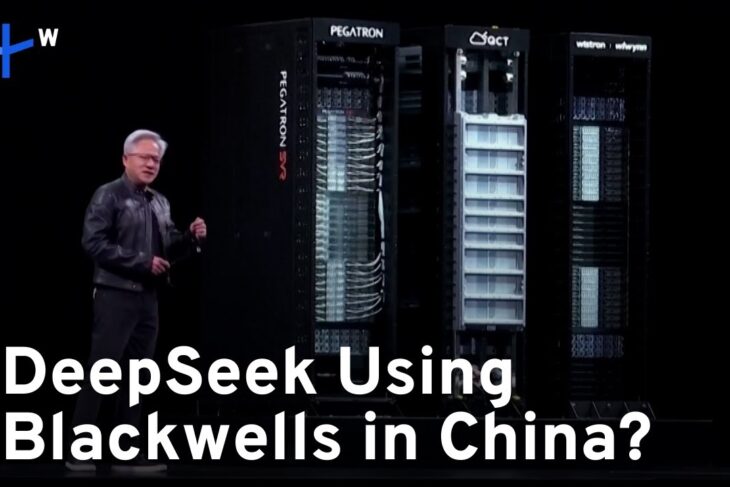
Nvidia sits at the center of it. The company became one of the most valuable corporations in history by selling the computing hardware the whole AI industry runs on — the shovels in the gold rush. It profits whether prospectors strike gold or not, as long as everybody keeps digging. That is why Nvidia has backed open-weight AI: reporting based on its financial disclosures indicated plans to invest roughly $26 billion over five years in open-weight models, and in July, CEO Jensen Huang publicly supported an industry letter — backed by Nvidia, Microsoft, Meta, and others — warning Washington that restricting open AI could hand the global developer ecosystem to China.
The argument is hard to dismiss. You cannot win a worldwide competition for technological adoption by making your technology harder to adopt. Security risks are real, but regulation that mainly protects the biggest incumbents from competition would accomplish for them what they have dreamed of for generations — eliminating the competition and calling it public protection.
The Fall of Jensen Huang
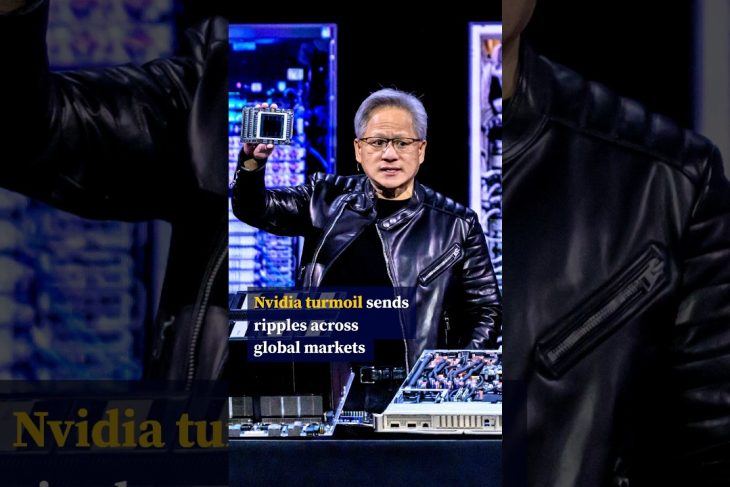
Then came the shock. On November 12, 2026, Nvidia announced that Jensen Huang — its co-founder, longtime CEO, and the most prominent corporate champion of open AI — had resigned, with Colette Kress named interim CEO. The departure followed reports about Huang’s personal relationships, including an affair with a businesswoman whom American intelligence officials reportedly suspected of passing information to Beijing. Nvidia opened an investigation and stated it had no reason to believe its secrets or national security were compromised. The espionage allegations remain allegations, and a resignation is not evidence of wrongdoing.
But the symbolism is impossible to miss. At the very moment the industry is deciding who will control artificial intelligence, the man who built its central hardware supplier fell amid a national-security scandal touching China itself. Beijing will be watching what Nvidia does next — whether its commitment to open AI survives its founder, and whether Washington responds with still tighter restrictions that push the world further toward Chinese alternatives.
The Real Battlefield Is Electricity
Underneath the software fight sits a physical one. AI may live in a virtual world, but its appetite for electricity is entirely real. The International Energy Agency estimates the world’s largest data-center operators will spend more than $700 billion on capital expenditures in 2026, and projects global data-center electricity consumption could more than double by 2030.
That is a contest China is built for: massive industrial capacity, extensive power infrastructure, and strong positions in electrical equipment and critical materials. America’s advantages lie in chip design, software, finance, and research — but it does not fight alone. Taiwan fabricates the most advanced chips, the Netherlands supplies the lithography machines, and South Korea and Japan provide memory and materials. This is not really a duel between two self-sufficient countries. It is a struggle between rival technological ecosystems, and the winner may be decided as much by transformers and transmission lines as by algorithms.
Who Wins, Who Loses
If China wins the battle for global adoption, American proprietary AI firms face brutal pricing pressure — why pay premium monthly fees for a capable model a hospital or factory can run itself? Chinese developers would gain influence as their technology becomes part of the world’s economic infrastructure, and AI would become dramatically cheaper for everyone, including American businesses. The irony is sharp: China could win influence while American consumers win lower prices, and the clearest losers would be the shareholders of companies that priced AI like a luxury good.
If America wins the battle for technological superiority, its companies capture the value and its workers gain productivity — but a victory that leaves a handful of giant corporations controlling access to intelligence, at whatever price they choose, would be a strange kind of triumph for the nation that invented modern competition.
The most likely outcome is messier: America keeps its lead in advanced chips and frontier research, China becomes a leading supplier of open AI to the world, and intelligence itself becomes a global utility — valuable to everyone, and far less profitable to rent than today’s investors expect. The victor in World War AI will not be the nation that controls the most territory. It will be the nation whose technology becomes so useful, so affordable, and so deeply embedded that the rest of the world cannot imagine functioning without it. China understands that. The open question is whether America still does.
Adapted from “World War AI” by YNOT at In Search of Your Passions.