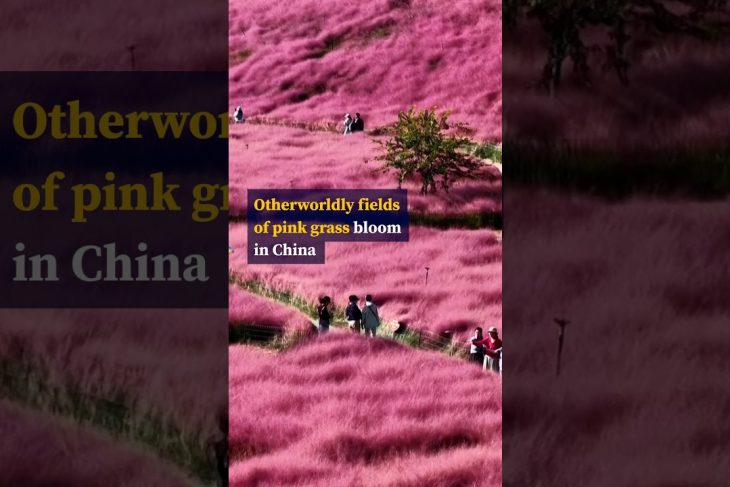
Spanning more than four hectares, the park’s blooming pink grass creates a soft, cloudlike sea against a backdrop of distant hills and autumn woodlands. What was once an abandoned mining site has been revived through ecological restoration efforts into a vibrant park. Today, visitors can explore the landscape thanks to winding boardwalks, scenic viewing platforms and a direct shuttle service.
Spanning more than four hectares, the park’s blooming pink grass creates a soft, cloudlike sea against a backdrop of distant hills and autumn woodlands. What was once an abandoned mining site has been revived through ecological restoration efforts into a vibrant park. Today, visitors can explore the landscape thanks to winding boardwalks, scenic viewing platforms and a direct shuttle service.
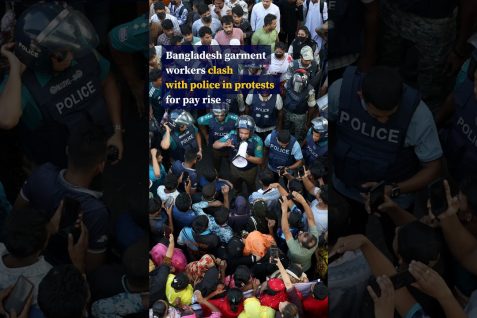
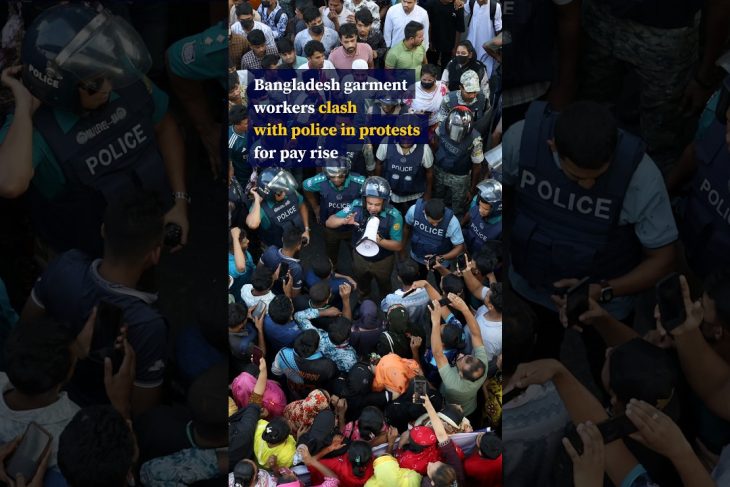
Thousands of Bangladeshi garment workers blocked highways and clashed with police on Sunday and Monday. The workers are demanding a 30,000 taka monthly wage (US$241), more than double their current pay. The protests came despite a government announcement on Sunday to establish a wage board to review the minimum wage in the country’s garment industry, which employs millions of people and generates the bulk of Bangladesh’s export earnings.
Thousands of garment workers across Bangladesh’s industrial belt have spent four days on the streets, blocking highways and facing tear gas and water cannon in the country’s most serious labour unrest in years. The workers are demanding a minimum monthly wage of 30,000 taka, about 245 US dollars, which is more than double the current minimum of 12,500 taka. The protests began on Saturday in Ashulia, a major garment manufacturing hub on the outskirts of Dhaka, and quickly spread to Gazipur and the capital itself. On Sunday the government announced it was setting up a wage board to review pay, but the announcement did not calm the streets. According to the Bangladesh Garment Manufacturers and Exporters Association, the unrest forced 529 factories to shut down, leaving 987,190 workers temporarily out of work across the main industrial hubs.
The Pay Packet That No Longer Covers Life
For the workers on the roadblocks, the dispute is arithmetic rather than politics: the price of food, housing, transport and healthcare has risen sharply while their pay has stood still. The current minimum of 12,500 taka was set in 2023, when it already represented a hard-fought compromise between unions and factory owners. Since then, persistent inflation has steadily eaten away at its real value, and workers say a month’s wages no longer cover a family’s basic needs. Much of the garment workforce is made up of women whose earnings support entire households, often including remittances to villages far from the factory districts. Union leaders argue that 30,000 taka is not a windfall but a survival figure, the minimum at which a worker can eat adequately, pay rent near the factories and still send something home. Factory owners counter that their margins are squeezed by the global brands that buy the clothes, and that a sudden doubling of wages would push orders to cheaper countries.
Roadblocks, Tear Gas and Shuttered Factories
The confrontation turned violent as demonstrators blocked a busy intersection in Dhaka and threw bricks at police, who responded with tear gas and water cannon. A police vehicle and a police box were set on fire in separate incidents as the clashes spread. In Gazipur, hundreds of workers blocked a major highway, disrupting transport through one of the country’s key industrial belts, and authorities deployed Border Guard Bangladesh personnel to help keep order. Gazipur’s industrial police said owners there shut 25 to 30 factories as the protests rolled on, on top of the dozens that had already suspended operations in Ashulia on Saturday. By Tuesday the protests had entered a fourth day, with police again firing tear gas to disperse demonstrators as unrest continued to disrupt factory operations and transport links.
A Wage Board, and a Race Against Patience
Labour and Employment Minister Ariful Haque Choudhury said the six-member wage board was formed after discussions with workers’ representatives and industry leaders, and he urged employees to return to work. The board is balanced by design, with two representatives each from workers and employers, alongside a government representative and a neutral member. Its task is to review wages across the garment sector and recommend revised pay rates. Wage boards in Bangladesh have historically moved slowly, however, and previous rounds have taken months of negotiation before producing a figure. That history explains the scepticism on the streets: without a number and a date attached, many workers see the board as a device for cooling the protests rather than answering them, and the demonstrations have continued despite its creation.
Why the World Is Watching Bangladesh’s Factory Gates
The stakes extend far beyond Dhaka’s suburbs, because Bangladesh is the world’s second-largest apparel exporter after China. The garment industry employs millions of people and generates the bulk of the country’s export earnings, making it the backbone of the national economy. The clothes sewn in Ashulia and Gazipur fill the shelves of major retailers in Europe and North America, so a prolonged shutdown ripples quickly through global supply chains. For the government, the dispute is a balancing act between keeping Bangladesh competitive as a low-cost manufacturing hub and ensuring the workers who built that status can live on what they earn. Until the wage board produces a figure the streets will accept, both the sewing lines and the roadblocks are likely to remain a daily fact of life in the world’s garment workshop.
This is not the first time Bangladesh’s wage question has spilled into the streets, and the pattern is well established. The last minimum wage settlement, in 2023, followed weeks of protests and roadblocks before the figure of 12,500 taka was announced, below what unions had demanded then as well. International brands that source from Bangladesh routinely publish commitments on living wages, yet factory owners say the prices those brands pay per garment have barely moved in years. That squeeze, between Western pledges and Eastern price tags, is passed down the chain until it lands on the sewing floor. Resolving it, economists say, requires the brands, the owners and the government to move together, because no wage board in Dhaka can rewrite the economics of a five-dollar T-shirt on its own.
A growing interest among Hong Kong women in an anti-ageing injection containing human tissue has prompted a recent crackdown by health authorities, as the product, widely known in Chinese as the “cadaver skin jab”, has not been registered for use in the city.
This story has been updated to clarify that Singapore health authorities have not approved the product as a drug, and that it is listed only in a government self-declaration database.
CCTV footage captured a fleeing driver stopping to pay a highway toll during a police chase in Malaysia on Saturday. Police said the 25km (15.5 mile) chase began in a suburb of Kuala Lumpur when the driver refused to pull over after police spotted him using his phone. The 41-year-old tested positive for methamphetamine after he was eventually stopped and arrested, according to police.
CCTV footage captured a fleeing driver stopping to pay a highway toll during a police chase in Malaysia on Saturday. Police said the 25km (15.5 mile) chase began in a suburb of Kuala Lumpur when the driver refused to pull over after police spotted him using his phone. The 41-year-old tested positive for methamphetamine after he was eventually stopped and arrested, according to police.
Hong Kong police arrested a 61-year-old man on Monday for allegedly spiking the drink of Japanese DJ Mao Hamasaki at a Hong Kong nightclub Halloween event over the weekend. The incident incapacitated Hamasaki and left her hospitalised in intensive care. The man is being investigated for allegedly administering poison with intent to injure.
Hong Kong police arrested a 61-year-old man on Monday for allegedly spiking the drink of Japanese DJ Mao Hamasaki at a Hong Kong nightclub Halloween event over the weekend. The incident incapacitated Hamasaki and left her hospitalised in intensive care. The man is being investigated for allegedly administering poison with intent to injure.
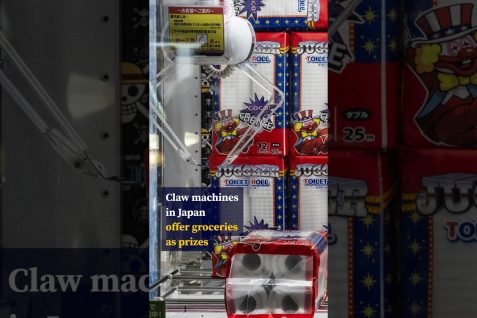
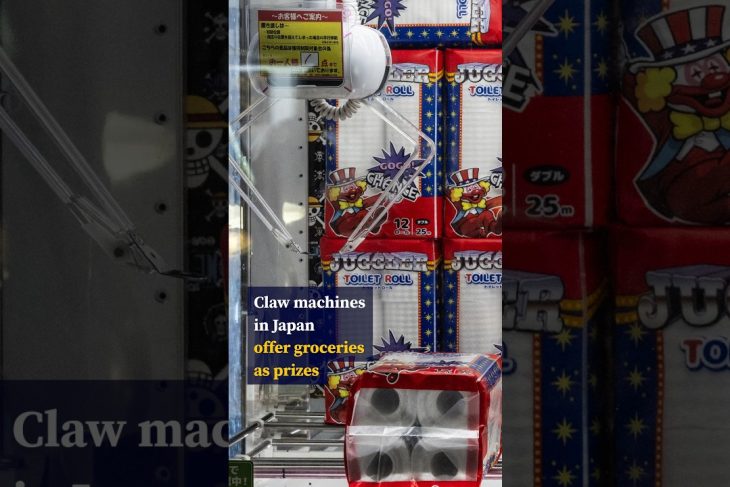
Amid a prolonged wave of inflation, arcades in Japan’s suburbs are filling claw machines with staples like eggs, rice, and detergent. These destinations blend shopping with entertainment, giving families a fun, cost-effective way to get essentials.
Amid a prolonged wave of inflation, arcades in Japan’s suburbs are filling claw machines with staples like eggs, rice, and detergent. These destinations blend shopping with entertainment, giving families a fun, cost-effective way to get essentials.