Title: How Are Countries Weaponising the World’s Sea Routes?
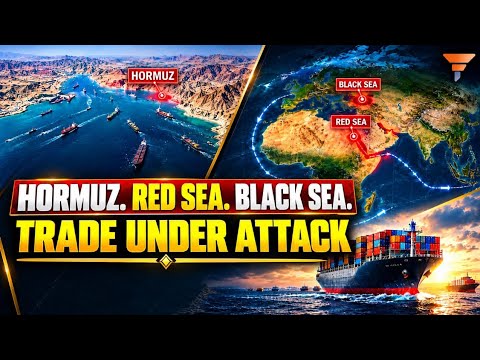
Thumbnail: HORMUZ. RED SEA. BLACK SEA. TRADE UNDER ATTACK
Two commercial ships have sunk near the Strait of Hormuz. Drone attacks have damaged vessels in the Black Sea. And shipping through the Red Sea continues to face security risks following repeated Houthi attacks.
These are not isolated incidents. They show how conflicts in different parts of the world are disrupting the routes that keep global trade moving.
And India's Defence Minister Rajnath Singh has now warned about precisely this problem: the weaponisation of critical trade routes, vital sea lanes and vulnerable maritime chokepoints.
But how does a narrow stretch of water become a weapon? And why can a conflict thousands of kilometres away affect the entire world?
Let's start with the Strait of Hormuz.
Before the current conflict, roughly one-fifth of global oil and liquefied natural gas trade passed through this narrow waterway connecting the Persian Gulf with the Gulf of Oman.
Source: TFIGlobal