State authorities are turning to generative AI to produce microdramas that promote Chinese culture, history and values in the latest propaganda push from Beijing. Can they find an audience amid a flood of cheaply made dramas for small screens? SCMP’s Caroline Lin reports.
State authorities are turning to generative AI to produce microdramas that promote Chinese culture, history and values in the latest propaganda push from Beijing. Can they find an audience amid a flood of cheaply made dramas for small screens? SCMP’s Caroline Lin reports.
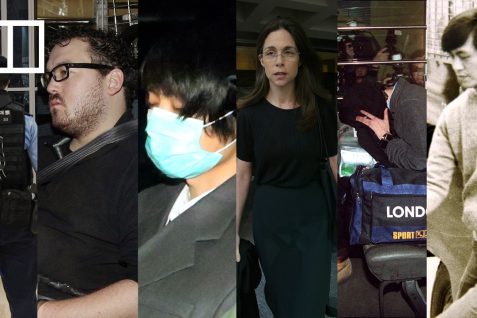
Amid the ongoing trial over the murder of 28-year-old socialite Abby Choi Tin-fung in 2023, we revisit some of the most shocking crimes in Hong Kong’s history.
Amid the ongoing trial over the murder of 28-year-old socialite Abby Choi Tin-fung in 2023, we revisit some of the most shocking crimes in Hong Kong’s history.
In recent years, wave after wave of P2P lending defaults has swept across China, wiping out the life savings of countless families and tearing households apart. Yet, just when people thought the dust had finally settled on this fintech meltdown, the ultimate bombshell detonated—CreditEase, a colossal titan that dominated China’s shadow banking landscape for two full decades, widely recognized as the ‘forefather of P2P’ of the industry, has completely imploded!
In recent years, wave after wave of P2P lending defaults has swept across China, wiping out the life savings of countless families and tearing households apart. Yet, just when people thought the dust had finally settled on this fintech meltdown, the ultimate bombshell detonated—CreditEase, a colossal titan that dominated China’s shadow banking landscape for two full decades, widely recognized as the 'forefather of P2P' of the industry, has completely imploded!
A Taiwanese TV star attended a political rally in Taipei—and suddenly found himself at the center of a cross-strait controversy.
Kevin Tsai, a popular television host who built a successful career in mainland China, appeared at a campaign event for Taipei mayoral candidate Puma Shen. Chinese state-linked media criticized his appearance, and a major Chinese brand moved to distance itself from him.
Is Tsai walking away from the Chinese entertainment market? And why has Shen’s growing campaign attracted so much attention from Beijing?
We examine the controversy, Tsai’s remarkable family history, and the political battle unfolding ahead of Taipei’s mayoral election.
A Taiwanese TV star attended a political rally in Taipei—and suddenly found himself at the center of a cross-strait controversy.
Kevin Tsai, a popular television host who built a successful career in mainland China, appeared at a campaign event for Taipei mayoral candidate Puma Shen. Chinese state-linked media criticized his appearance, and a major Chinese brand moved to distance itself from him.
Is Tsai walking away from the Chinese entertainment market? And why has Shen's growing campaign attracted so much attention from Beijing?
We examine the controversy, Tsai's remarkable family history, and the political battle unfolding ahead of Taipei's mayoral election.
A security expert warns that reported Chinese missile components and targeting assistance to the Houthis could escalate the conflict with Saudi Arabia, raisi
A security expert warns that reported Chinese missile components and targeting assistance to the Houthis could escalate the conflict with Saudi Arabia, raising questions about Beijing's involvement and the threat to U.S. interests. #FoxNews #China #Houthis #SaudiArabia #MiddleEast #Missiles #NationalSecurity #BreakingNews
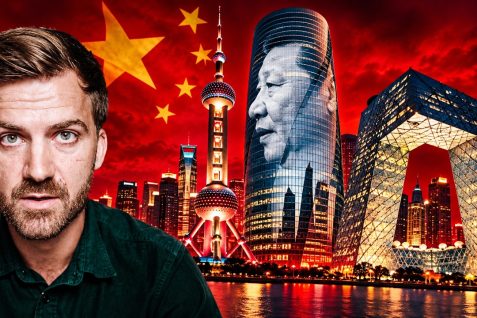
Do you have an insider tip or unique information on a story? Do you have a suggestion for a story you want us to cover? Submit to the Tip Line: https://docs.google.com/forms/d/e/1FA… — VIDEO CHAPTERS — 00:00 Intro 4:42 Chinese Characteristics 10:11 Party-State 15:38 Modest Prosperity 22:53 Eating In Separate Kitchens 29:29 To Get Rich, First Build Roads 33:59 Lying Flat 38:24 Maintaining Stability 42:18 A Pat on the Shoulder 46:38 The New Era Correction: 35:35 – This timeline incorrectly labels Hua Guofeng in Chinese using his birth name, 苏铸. He adopted the name 华国锋 in the 1930s and was known by that name during his political career.
China is racing to power a future of artificial intelligence and robots with renewables. But as it builds more electricity capacity than ever before, it face
China is racing to power a future of artificial intelligence and robots with renewables. But as it builds more electricity capacity than ever before, it faces a new challenge: whether the grid can keep up. #China #Energy #Power
Mammouth AI gives you access to the best AI models (Claude, GPT, Gemini, Mistral, Grok and more) in a single interface, from €10/month 👉 https://mammouth.ai Timestamps: 00:00 – Chinese AI Infrastructure Boom 6:36 – Closer Look at the AI Chips
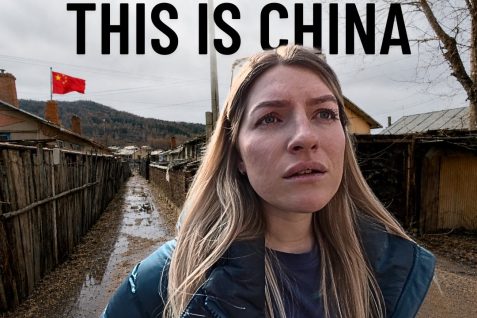
China, this, China that. China is everywhere in 2026, from videos of flashy modern mega cities, to delivery drones, and clips of their bustling streets. But there are two sides to China, the reality in the cities, and real life in small towns and rural villages. But how different is life in the remote, rural communities? There is only one way to find out what real life is like out here, lets leave the China we all know (& see every day on social media), and travel in to rural Manchuria and enter the other side of the Middle Kingdom.
China’s military expansion defies easy summary. Its navy outsails America’s in hull count, its air force produces stealth fighters at staggering rates, and i
China's military expansion defies easy summary. Its navy outsails America's in hull count, its air force produces stealth fighters at staggering rates, and its nuclear arsenal has doubled since 2020. From AI-driven drone swarms to unmatched shipbuilding capacity, Beijing builds both quality and quantity at a pace no rival matches.
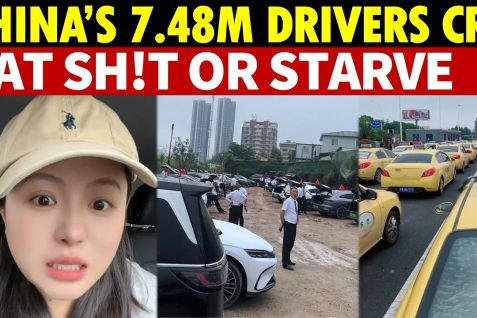
By July 2026, China had more than 7.48 million licensed ride-hailing drivers and 402 platforms. Their numbers were growing faster than demand. Beijing had about 580,000 gig workers in ride-hailing and food delivery: 250,000 delivery workers and 330,000 drivers. In Guangzhou, average daily active drivers rose from more than 70,000 in January 2025 to over 100,000 in January 2026, an increase of nearly 30,000 in a year. Driver numbers have outpaced demand for rides. The industry, sometimes called a refuge for middle-aged men, is getting increasingly crowded.
By July 2026, China had more than 7.48 million licensed ride-hailing drivers and 402 platforms. Their numbers were growing faster than demand. Beijing had about 580,000 gig workers in ride-hailing and food delivery: 250,000 delivery workers and 330,000 drivers. In Guangzhou, average daily active drivers rose from more than 70,000 in January 2025 to over 100,000 in January 2026, an increase of nearly 30,000 in a year. Driver numbers have outpaced demand for rides. The industry, sometimes called a refuge for middle-aged men, is getting increasingly crowded.
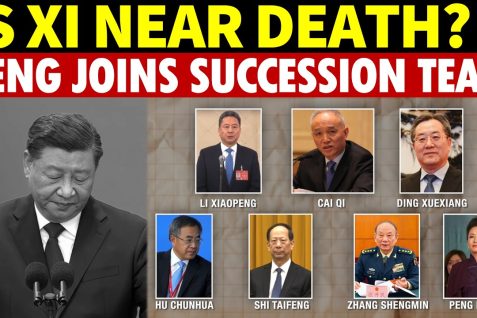
On October 9, independent Chinese political commentator Cai Shenkun said on his program that sources in Zhongnanhai had raised serious concerns about Xi Jinping’s health. Senior Chinese officials had secretly set up a seven-member emergency group, including Xi’s wife, Peng Liyuan. The group would handle a political crisis and a transfer of power if Xi died or suddenly became severely incapacitated.
On October 9, independent Chinese political commentator Cai Shenkun said on his program that sources in Zhongnanhai had raised serious concerns about Xi Jinping's health. Senior Chinese officials had secretly set up a seven-member emergency group, including Xi's wife, Peng Liyuan. The group would handle a political crisis and a transfer of power if Xi died or suddenly became severely incapacitated.
Limited Time: Get your free Tank Man set when you join the 50-Cent Army:
Chinese workers return from vacation to find EVERYTHING GONE! A once untouchable Chinese official has been purged. And more in Europe’s ongoing failure to China. That and more on this week’s China news headlines.
Operation Honey Pot: Paste this emoji 🍯 in your comment below.
Want to go deeper than YouTube will let us? Check out our website:
Limited Time: Get your free Tank Man set when you join the 50-Cent Army:
Chinese workers return from vacation to find EVERYTHING GONE! A once untouchable Chinese official has been purged. And more in Europe’s ongoing failure to China. That and more on this week's China news headlines.
Operation Honey Pot: Paste this emoji 🍯 in your comment below.
Want to go deeper than YouTube will let us? Check out our website:
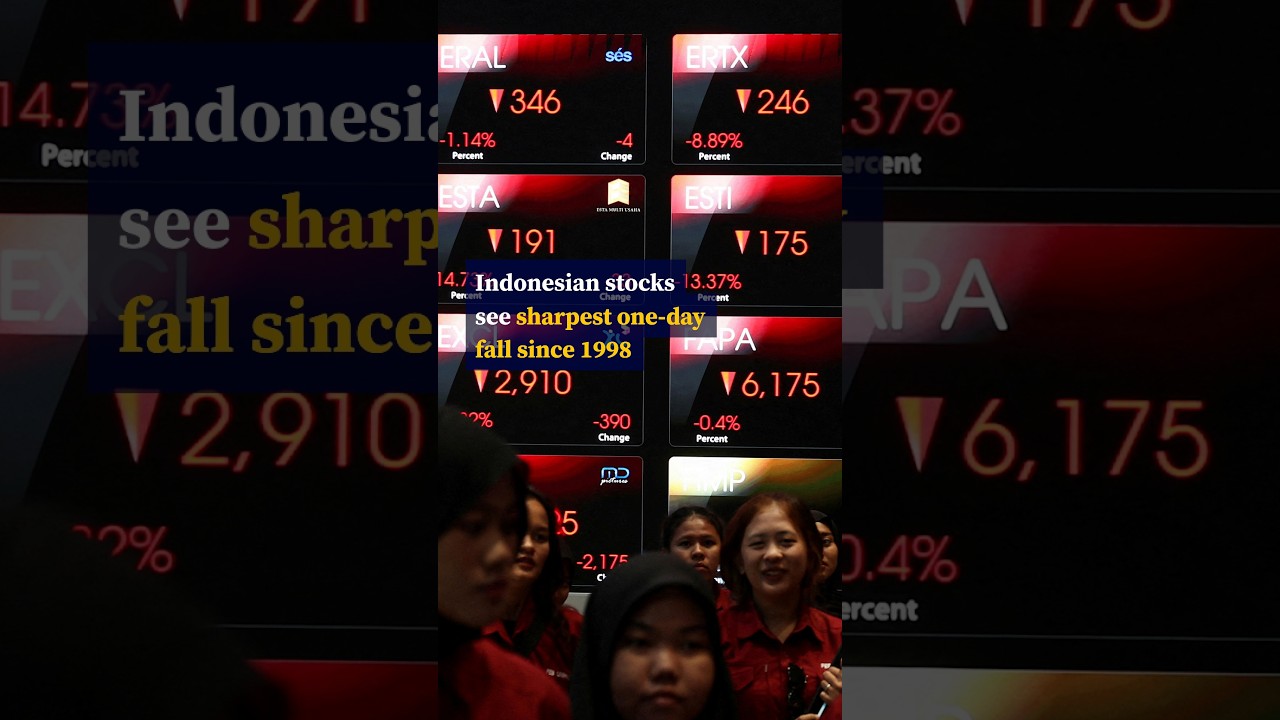
Indonesian stocks suffered their worst one-day drop in 28 years on Friday, with the Jakarta Composite Index plunging as much as 11.4 per cent after MSCI proposed stripping the country of its “emerging market” status.
Indonesia’s stock market suffered its worst day in nearly three decades on Friday, as the benchmark Jakarta Composite Index collapsed more than 11 percent after global index provider MSCI declared the country’s market no longer worthy of emerging-market status. The index plunged 8 percent within minutes of the opening bell, triggering an automatic 30-minute trading halt, and then sank even further when trading resumed — putting it on course for its steepest single-day decline since January 1998, when the Asian Financial Crisis was tearing through Southeast Asia. The rupiah crumbled alongside equities, sliding to 18,070 per U.S. dollar, its weakest level since late July and within sight of its all-time low. For Southeast Asia’s largest economy, already the world’s worst-performing major stock market this year, Friday’s rout was a humiliation years in the making. MSCI’s verdict was blunt: Indonesia’s continued classification as an emerging market, it said, is “no longer appropriate.”
What MSCI Announced
MSCI said Friday it was launching a formal consultation on a proposal to reclassify Indonesia as a “standalone” market — a category that sits outside its main global groupings of developed, emerging and frontier markets. The proposed change would skip over frontier status entirely and drop Indonesia into a grouping it would share with markets like Jamaica, Panama and Palestine, a remarkable demotion for an economy of nearly 280 million people. Standalone status would exclude Indonesian stocks from the global indexes tracked by trillions of dollars in passive investment, forcing index funds and benchmark-hugging managers to sell their Indonesian holdings whether they want to or not. The announcement came a full month ahead of a scheduled review, and its severity stunned even investors who had been bracing for bad news. Jakarta authorities had spent months insisting that reforms were underway; MSCI’s answer was that those efforts had not gone nearly far enough.
A Year of Warnings Ignored
The seeds of Friday’s crash were planted in January, when MSCI froze Indonesia in its indexes and threatened a downgrade to frontier status over deep concerns about market opacity. Investors had flagged murky shareholding structures, suspected coordinated trading and what MSCI described as “significant concerns” around market dysfunction — problems that made it genuinely difficult to know who really owned what on the Jakarta exchange. Indonesian authorities announced a package of reforms in April and later said the work was complete, insisting the threat of a downgrade had been addressed and the market was on a sound footing. MSCI disagreed with that assessment in the strongest possible terms. On Friday the index provider said the reforms had not made sufficient progress and, in a striking escalation, declared that even a downgrade to frontier status would not adequately reflect the severity of the problems it had found.
The consultation now underway gives Jakarta one final window to demonstrate meaningful improvement, but MSCI made clear it will proceed with the reclassification unless it sees clear evidence of genuine change. That sets up a high-stakes race between Indonesian regulators and the calendar, with billions of dollars in forced selling hanging on the outcome. Market participants who raised the original alarms — unclear ownership, coordinated trading patterns, dysfunctional price discovery — will be watching to see whether this time the promises are followed by action. For an index provider that typically moves with glacial caution, the decision to jump straight past frontier status signals a loss of patience that is hard to walk back.
The Billions at Stake
The financial consequences of a standalone reclassification are enormous and largely mechanical. UBS estimated the move could trigger about $4 billion in forced selling from passive funds alone, with active investors potentially pulling another $15 billion on top of that as they reposition ahead of the exclusion. Foreign investors have already been heading for the exits all year, net selling $4.7 billion worth of Indonesian stocks in 2026 before Friday’s crash even began. The benchmark index has now lost nearly 40 percent of its value this year, making it the worst-performing share market in the region by a wide margin, and it closed Friday at a six-year low. The rupiah’s slide to 18,070 per dollar — approaching its lifetime low of 18,190 — adds a currency loss on top of the equity losses for any foreign investor still holding Indonesian assets.
The contrast with Indonesia’s neighbors could hardly be sharper. On the same Friday that Jakarta was in freefall, South Korean equities rebounded more than 2 percent, while stocks in Taiwan and Singapore each gained about 1 percent. Indonesia stood alone in the red, a regional outlier in the worst possible way. That divergence tells its own story: this was not a global risk-off day or an Asia-wide selloff, but a verdict rendered specifically on Indonesia’s market governance. When capital flees one country while flowing into its neighbors, the problem is not the weather — it is the house.
Jakarta Fires Back
Indonesian officials did not take the news quietly. Senior economic minister Airlangga Hartarto said there was “a big question mark” over MSCI’s decision, noting that the index provider had met with Indonesian officials in Bangkok earlier in the week without ever raising the possibility of a standalone downgrade. The timing — arriving a month before the scheduled review — added to Jakarta’s sense of grievance, and officials framed the move as an ambush rather than the conclusion of a transparent process. Behind the public anger lies a deeper embarrassment for a government that has spent years pitching Indonesia as Southeast Asia’s rising investment destination. A vast consumer market of 280 million people, a young workforce, abundant natural resources — Friday’s crash suggested that to global capital, the plumbing of the market matters more than any of it.
What Comes Next
The consultation process now moves into its decisive phase, with a final MSCI decision expected by the end of June 2027 — giving Jakarta roughly eight months to prove that real reform has taken hold. That means tackling the core complaints head-on: transparent ownership structures, credible enforcement against coordinated trading, and trading mechanics that foreign investors can actually trust. Whether Indonesia’s political system can deliver that kind of technocratic fix, and quickly, is an open question — the same concentrated ownership networks that MSCI is punishing are politically powerful and deeply entrenched. For now, fund managers are left to decide whether to wait for the verdict or sell into the stampede, knowing that every other passive fund will be forced to do the same thing if the downgrade goes through. Friday’s crash may not be the end of the story. If history is any guide, the selling feeds on itself until the forced sellers are done — and in Jakarta, the forced selling may only just be beginning.
Authorities in Pakistan said the owner of a school in the northwestern city of Peshawar has been arrested and an investigation has been launched, after the roof of the building collapsed during morning classes on Thursday. Police said at least 34 pupils and a teacher died and dozens more were wounded. Most of the victims were under the age of 13.
Authorities in Pakistan said the owner of a school in the northwestern city of Peshawar has been arrested and an investigation has been launched, after the roof of the building collapsed during morning classes on Thursday. Police said at least 34 pupils and a teacher died and dozens more were wounded. Most of the victims were under the age of 13.