China is flying 16 large drones to carry over 100 tons of steel and concrete up steep, roadless mountains to build new mountain solar power station at altitudes up to 1,650m …
China is flying 16 large drones to carry over 100 tons of steel and concrete up steep, roadless mountains to build new mountain solar power station at altitudes up to 1,650m in its southwestern Yunnan Province.These drones, each carrying up to 420 kg and traveling 1.3 km at a time, can finish the task used to take a month in just three days. This method cuts road-building costs by 80%, reduces labor by 60% and boosts efficiency by a factor of 10.Apart from lifting heavy loads, drones in Guangdong are also helping with typhoon disasters. China’s independently-developed unmanned drone, Wing Loong, was used before and after Typhoon Wipha, the nation’s first-ever typhoon early warning monitoring using a large fixed-wing drone. It flew through wind and rain, using its onboard synthetic aperture radar to scan thick cloud and rain barriers and sent live data to emergency teams. After the storm passed, the drone kept flying to support rescue missions, check river levels and find blocked roads.It even acted as a flying mobile tower, restoring network services and sending over 6,000 emergency messages to people in disaster areas.
Today, we’re going to talk about a trillion-dollar magic trick.It takes a company worth billions and transforms it into a trillion-dollar empire.It takes a battery from the lab and elevates it …
Today, we’re going to talk about a trillion-dollar magic trick.It takes a company worth billions and transforms it into a trillion-dollar empire.It takes a battery from the lab and elevates it to a status of greatness.It turns the concept of “engineering cost-saving” into “life-saving technology.”
The site of the Subic Bay Freeport Zone in the Philippines was the United States’ largest Pacific naval base up until the 1980s, with deep-enough water to berth aircraft carriers and …
The site of the Subic Bay Freeport Zone in the Philippines was the United States’ largest Pacific naval base up until the 1980s, with deep-enough water to berth aircraft carriers and with an enormous ship repair and logistics facility. In fact, it was known as the “logistics backbone” of U.S. Pacific operations. Now, it’s being quietly revived, more than 30 years after it was closed down. When Ferdinand Marcos Jr. met Donald Trump this week for the first time, they were asked about a proposed Subic Bay ammunitions base. Trump’s said: “Yeah, it’s very important. Otherwise we wouldn’t. We need ammunition. … We’ll have more ammunition than any country has ever had. We’re going to have more missiles than any country has ever had … It’s very important to me.” Why is such a hub key for the US and the Philippines? And what does a revived Subic Bay mean for regional security? Our guests: Renato Cruz de Castro National Chengchi University MOFA Taiwan Fellow De La Salle University Department of International Studies Distinguished Professor Guermantes Lailari Taiwan’s Institute of National Defense and Security Research Visiting Researcher Retired U.S. Air Force Foreign Area Officer Chapters 00:00:00 – Subic Bay’s Role in Philippine-U.S. Ties 00:01:47 – Proposal for Joint Subic Ammo Hub 00:11:51 – Recent Defense Developments at Subic 00:23:24 – Deepening Philippine-U.S. Security Relations #SubicBay #SubicBayFreeportZone #PhilippineUSRelations #Manila #Washington #USMilitary #USNavy #PACOM #IndoPacific #PacificOcean #PhilippineMilitary #PhilippineNavy #DonaldTrump #FerdinandMarcos #PeteHegseth #TaiwanStrait #SouthChinaSea #DefenseCooperation #SecurityTies #AircraftCarrier #Missiles #ChineseMilitary #PeoplesLiberationArmy #PLA #NavalBase #AmmunitionHub #RegionalSecurity #TaiwanTalks
China’s Q2 GDP growth of 5.2% reflects a managed economic narrative, though deflation persists. Despite robust household income growth outpacing CPI, consumption weakened, with a 300 billion yuan trade-in program failing …
China’s Q2 GDP growth of 5.2% reflects a managed economic narrative, though deflation persists. Despite robust household income growth outpacing CPI, consumption weakened, with a 300 billion yuan trade-in program failing to sustain June’s growth. A liquor ban targeting public sector spending curbed catering revenue, while food delivery platforms shifted subsidy burdens to merchants, undermining income goals. Real estate struggles, with negative eastern investment and no significant policy relief, as urban renewal replaces quick-fix land finance. Anti-involution efforts address critical overcapacity, with industrial utilization at 74%. Policy-driven A-share gains, particularly in bank stocks, mask weak fundamentals and low market confidence. Economic reliance on policy support faltered by June, with declines in investment and consumption. Future policy hinges on U.S. trade talks and Federal Reserve rate decisions.Narration Body:00:00:00 Intro00:06:20 The GDP Facade01:22:13 Consumption Conundrum02:27:23 The Liquor Ban Blunder04:39:21 Food Delivery Fiasco07:22:04 Real Estate’s Rough Road08:57:17 Urban Renewal’s Empty Promise09:59:00 Anti-Involution Ambitions11:00:00 A-Share Mirage12:47:16 Policy Crutches and Economic Truth13:33:00 What Lies Ahead
A California water utility has seen more than 6 million hacking attempts from China in just one week. What’s driving these persistent scans? We break it down.The number of victims in …
A California water utility has seen more than 6 million hacking attempts from China in just one week. What’s driving these persistent scans? We break it down.The number of victims in the Microsoft server hack keeps growing. Over 400 organizations are now compromised, including the United States government. The spy campaign took off after Microsoft missed a critical software security hole. Who’s behind the attacks?The United States is racing to catch up as Russia and China dominate drone warfare. Why are we behind in this critical field? Retired Lt. Col. Darin Gaub says: “It’s not that we don’t have the capabilities, the technology, and the manufacturing base to do so. We’ve just never engaged it in a way that prioritized drone development and manufacturing over other, more large-scale capital projects.”The Chinese communist regime is facing growing fears of a sudden collapse. Experts say Washington should prepare for the fallout now. A new think tank report outlines what could follow—and how U.S. Special Operations might be called in.00:00 Intro01:32 6 Million China-Based Hacks Hit California Water Utility03:13 More Than 400 Victims Hit in Microsoft SharePoint Cyberattacks04:51 Pentagon Boosts Drone Production Like Never Before07:40 Think Tank: U.S. Special Forces’ Role in a Collapsing China10:38 Bank CEOs Subpoenaed for Ties to CCP Military Tech13:01 Shipbuilding Is South Korea’s Leverage in Tariff Talks16:41 France: China Sets Up 9 Secret Police Stations19:08 UK Risks Being ‘Dumping Ground’ for Forced Labor Goods
Gatestone Institute senior fellow Gordon Chang discusses China purchasing Russian oil and the impact of President Donald Trump withdrawing the U.S. from UNESCO.
Gatestone Institute senior fellow Gordon Chang discusses China purchasing Russian oil and the impact of President Donald Trump withdrawing the U.S. from UNESCO.
China’s gold crisis is spiraling, private vaults are being raided, and desperate citizens are lining up to sell family heirlooms. From wedding bangles to legacy bars, what once symbolized security is …
China’s gold crisis is spiraling, private vaults are being raided, and desperate citizens are lining up to sell family heirlooms. From wedding bangles to legacy bars, what once symbolized security is now being liquidated in public. Right now, pawnshops are overflowing, and panic is rising across cities. And it’s not just happening in the shadows, it’s government-sanctioned. But the scariest part? This may only be the beginning.Why is the Chinese government quietly seizing private gold reserves? What pushed ordinary families to start melting their own heirlooms? And could this signal a deeper collapse that’s yet to be announced?To understand how China got here, we have to go back, not years, just weeks, to the first signs that something was very wrong.
TIER expects 5% GDP growth for the first half of this year with a potential drop to under 1% in the second half ahead of next week’s U.S. tariff rate announcement. …
TIER expects 5% GDP growth for the first half of this year with a potential drop to under 1% in the second half ahead of next week’s U.S. tariff rate announcement. Experts say local businesses’ response to the tariffs will be critical. TIER also says CPI rose to 1.37% last month.
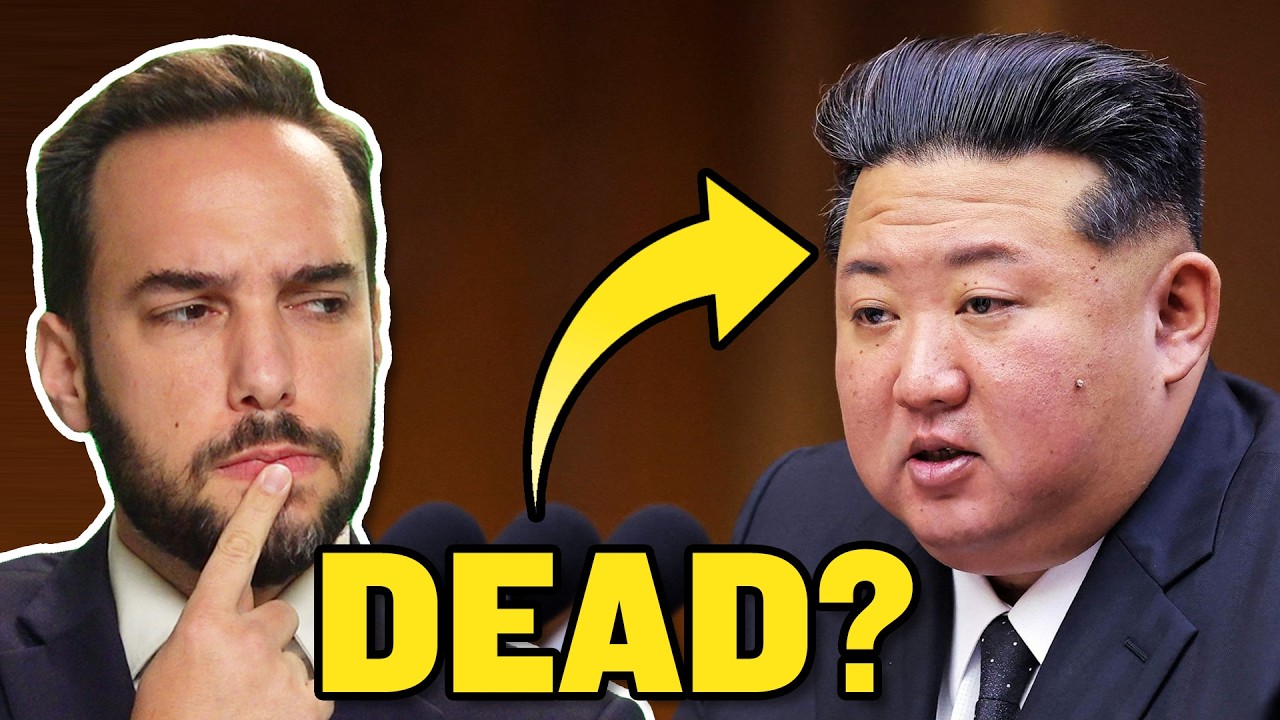
As Xi Jinping’s grip on power weakens, one name keeps surfacing inside China’s opaque political world: Liu Yuan. The son of former president Liu Shaoqi, Liu was once sidelined by Xi …
As Xi Jinping’s grip on power weakens, one name keeps surfacing inside China’s opaque political world: Liu Yuan. The son of former president Liu Shaoqi, Liu was once sidelined by Xi and has turned down offers to lead. But now he may be back, with the backing of Party elders and the military. In this episode, we unpack Liu’s dramatic journey from Cultural Revolution exile to general, whistleblower, and now potential successor. Is this red princeling the reform-minded leader China has been waiting for? Or is he part of an internal power play to end Xi’s era? This is a story of rivalry, betrayal, and a high-stakes return.
Tensions flared at the meeting between Chinese president Xi Jinping and European Commission chief Ursula Von Der Leyen in Beijing. After Leyen called the European bloc’s relations with Beijing at an …
Tensions flared at the meeting between Chinese president Xi Jinping and European Commission chief Ursula Von Der Leyen in Beijing. After Leyen called the European bloc’s relations with Beijing at an ‘inflection point’, Jinping responded at the meet. Watch out for more.(Contains AI translation)#xijinping #china #europeanunion #ursulavonderleyen #russiaukrainewar #russia